Weaver ants are remarkable insects known for their cooperative nest-building behavior, where they weave leaves together using larval silk. Belonging to genera such as Oecophylla and Polyrhachis, these ants thrive in tropical and subtropical regions worldwide. They are territorial, aggressive defenders, and play key ecological roles as predators and pest controllers. This guide explores 15 types of weaver ants, covering their identification, habitat, behavior, diet, and lifecycle.
1. Oecophylla smaragdina
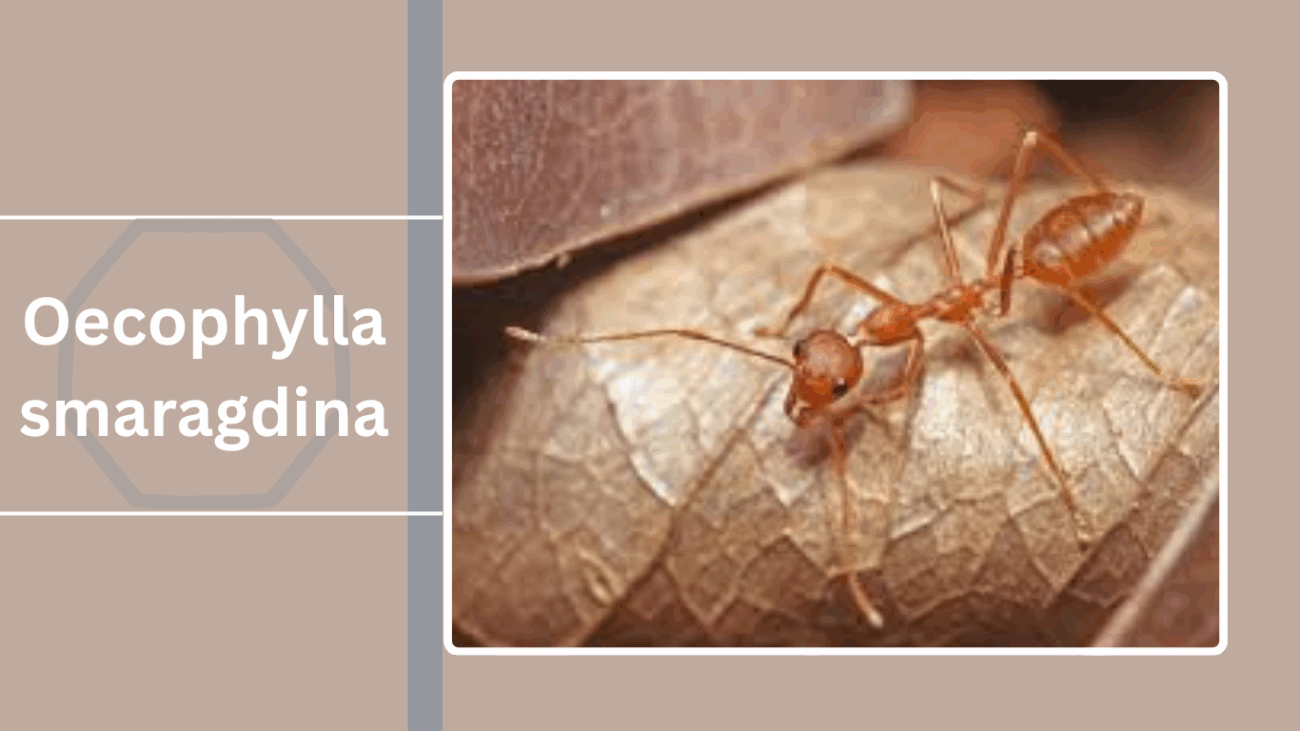
Oecophylla smaragdina, commonly called the Asian weaver ant, is well known for its unique nest-building behavior, where workers weave leaves together using silk produced by their larvae. They are highly territorial, aggressive, and play a significant ecological role as natural pest controllers in tropical regions.
Identification
- Medium to large-sized ants, workers range from 5 mm to 10 mm in length.
- Bright reddish-orange to reddish-brown body color.
- Long legs and antennae giving them a slender appearance.
- Polymorphic workers: major workers for defense and minor workers for brood care.
- Powerful mandibles used for cutting, gripping, and fighting.
Habitat
These ants are widespread across tropical Asia and northern Australia. They typically inhabit trees in forests, plantations, and gardens, building large nests by stitching leaves together with larval silk.
Behavior
Oecophylla smaragdina exhibits cooperative nest construction, with workers pulling leaves together while others use larval silk to bind them. Colonies are highly organized, with distinct worker roles. They are aggressive defenders of their territory and often form mutualistic relationships with humans as biological pest control in agriculture.
Diet
Weaver ants primarily feed on honeydew secreted by sap-sucking insects such as aphids and scale insects. They also prey on various arthropods, providing protein for their larvae. The major workers hunt, while the minor workers tend to the colony and care for the brood.
Lifecycle
The lifecycle begins with a queen establishing a colony after mating. Eggs hatch into larvae, which produce the silk used for nest construction. As the colony matures, it can expand across multiple interconnected nests in the same tree or nearby trees. A single colony may contain millions of workers and survive for many years under the queen’s reign.
2. Oecophylla longinoda
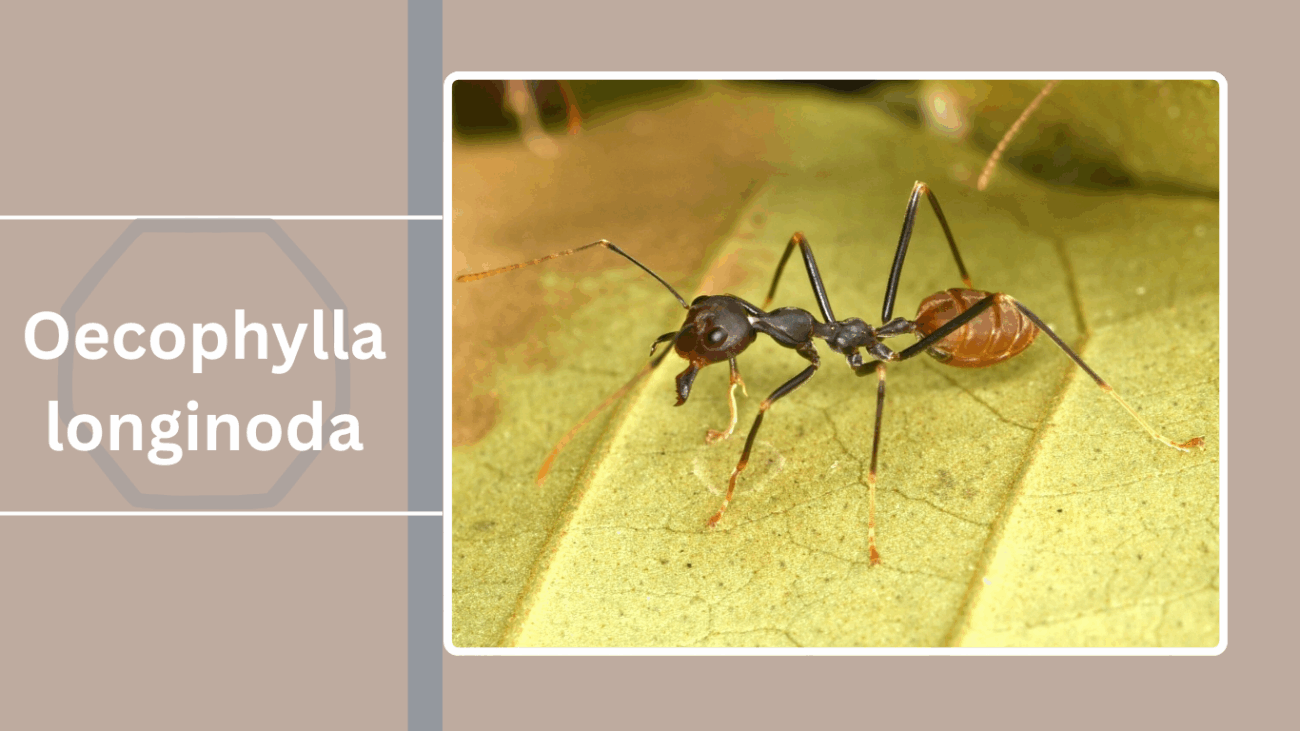
Oecophylla longinoda, also known as the African weaver ant, is a close relative of the Asian weaver ant (Oecophylla smaragdina). It is renowned for its elaborate nest-building abilities and strong territorial behavior. These ants are widespread across tropical Africa and are commonly used in traditional agriculture as natural pest controllers.
Identification
- Workers measure between 4 mm and 10 mm in length.
- Body color ranges from yellowish-green to light brown.
- Long legs and antennae, similar to O. smaragdina.
- Distinctive large eyes compared to many other ant species.
- Major workers possess strong mandibles for defense and hunting.
Habitat
Oecophylla longinoda is found throughout sub-Saharan Africa in savannas, rainforests, plantations, and orchards. Their nests are constructed in the canopies of trees, where leaves are bound together with larval silk. Colonies often spread across several trees, forming extensive territories.
Behavior
These ants are highly social and aggressive in defending their nests and food sources. They display cooperative nest-building, pulling leaves together and securing them with silk produced by larvae. Oecophylla longinoda has long been associated with humans, particularly for its role in agricultural pest management, where farmers encourage colonies to protect crops.
Diet
Their diet consists of honeydew from sap-sucking insects such as aphids and mealybugs, as well as small arthropods they capture and bring back to the colony. The honeydew is a primary energy source, while prey provides protein essential for larval development.
Lifecycle
The queen starts a new colony after mating, laying eggs that develop into larvae, pupae, and workers. Colonies grow steadily, eventually housing millions of ants and expanding across multiple interconnected nests. With a lifespan of many years, the colony thrives under the queen’s continuous reproduction and the cooperative efforts of its workers.
3. Polyrhachis dives
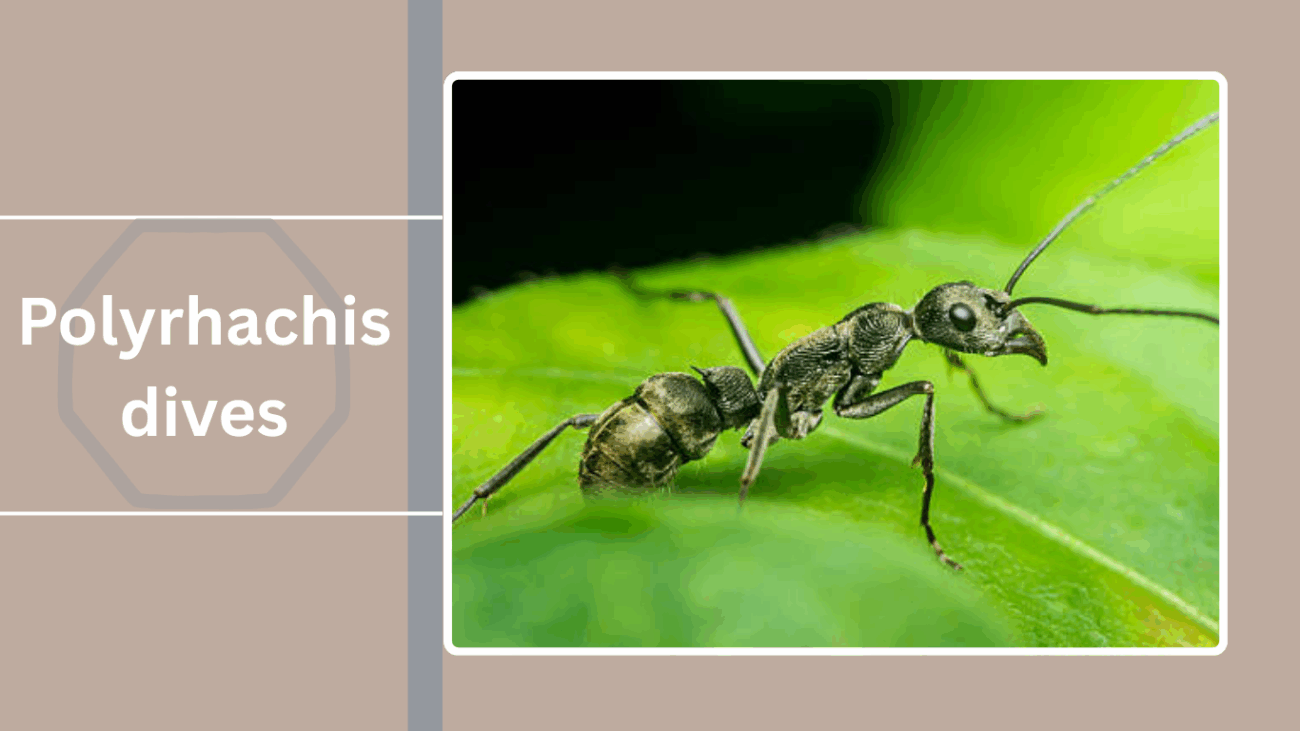
Polyrhachis dives, often referred to as the black weaver ant, is a species of weaver ant known for its remarkable nest-building behavior and wide distribution across Asia. Unlike Oecophylla species, its colonies are typically smaller, but they still display sophisticated social cooperation and defensive strategies.
Identification
- Workers measure between 5 mm and 7 mm in length.
- Shiny black or dark brown body with a robust exoskeleton.
- Characterized by spines on the thorax and petiole, giving them a spiky appearance.
- Long legs and strong mandibles suited for carrying food and weaving leaves.
- Polymorphic workers: larger ones for defense and smaller ones for foraging and care.
Habitat
Polyrhachis dives inhabit tropical and subtropical regions of Asia, particularly Southeast Asia. They prefer forested areas, plantations, and gardens, building nests by stitching leaves together with larval silk. Colonies are often located in tree canopies, providing safety and access to resources.
Behavior
These ants are cooperative builders, working together to bend and weave leaves into enclosed nests. They are aggressive defenders of their colonies, often swarming intruders with painful bites. Colonies are generally smaller than those of Oecophylla, but they can establish multiple nests within the same territory.
Diet
Polyrhachis dives primarily feeds on honeydew from sap-feeding insects such as aphids and mealybugs. They also capture small arthropods, which provide essential proteins for the larvae. Foragers actively patrol their territory to secure both plant-based and animal-based food sources.
Lifecycle
The colony begins when a fertilized queen establishes a new nest. Eggs develop into larvae, pupae, and adult workers. The larvae produce silk used in weaving nest structures. Colonies can last for years, gradually expanding to multiple nests within tree canopies, though typically not as massive as those of Oecophylla.
4. Polyrhachis militaris
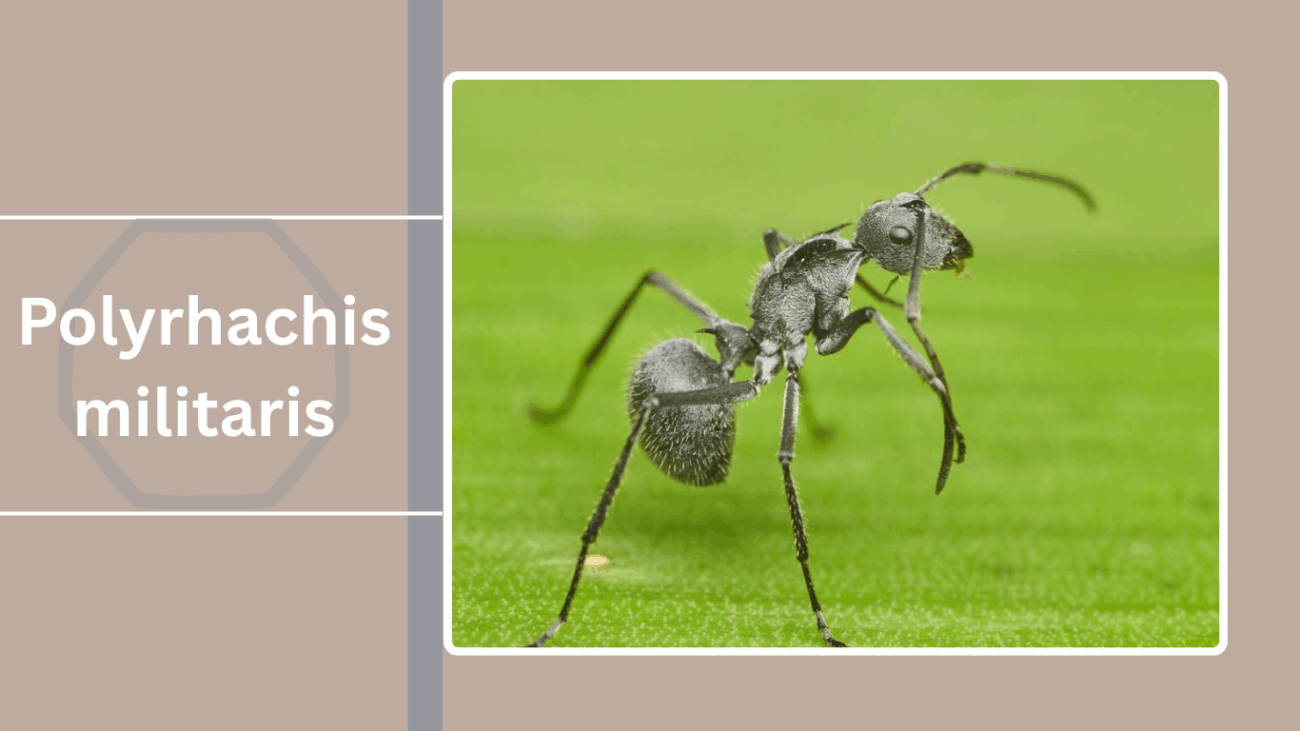
Polyrhachis militaris is a distinctive species of weaver ant belonging to the genus Polyrhachis. It is recognized for its spiny body structure and cooperative behavior in nest construction. While less widespread than Oecophylla species, it still demonstrates remarkable social organization and adaptability in forest habitats.
Identification
- Workers average 6 mm to 8 mm in length.
- Dark brown to black body with a metallic sheen.
- Prominent thoracic and petiole spines, used as a defensive adaptation.
- Strong mandibles adapted for gripping and carrying materials.
- Long legs that assist in canopy movement and nest weaving.
Habitat
Polyrhachis militaris inhabits tropical forests and woodland areas across parts of Asia. It is usually found in elevated tree canopies, where colonies construct leaf nests bound together with larval silk. These nests are often clustered, forming small networks within limited tree territories.
Behavior
This species is highly cooperative, with workers engaging in group tasks such as pulling leaves together and weaving them into nest chambers. They are defensive and respond aggressively to disturbances. Although their colonies are smaller than those of Oecophylla, they maintain strict territorial boundaries.
Diet
The primary food sources include honeydew from sap-feeding insects and small arthropods hunted by the worker ants. Protein from captured prey supports larval growth, while honeydew provides essential carbohydrates for worker activity.
Lifecycle
Colonies are founded by a single queen after mating. She lays eggs that hatch into larvae, which are tended by early worker generations. These larvae produce the silk essential for nest construction. Colonies gradually expand into multiple leaf nests but remain moderate in size compared to the massive supercolonies of Oecophylla.
5. Polyrhachis bihamata
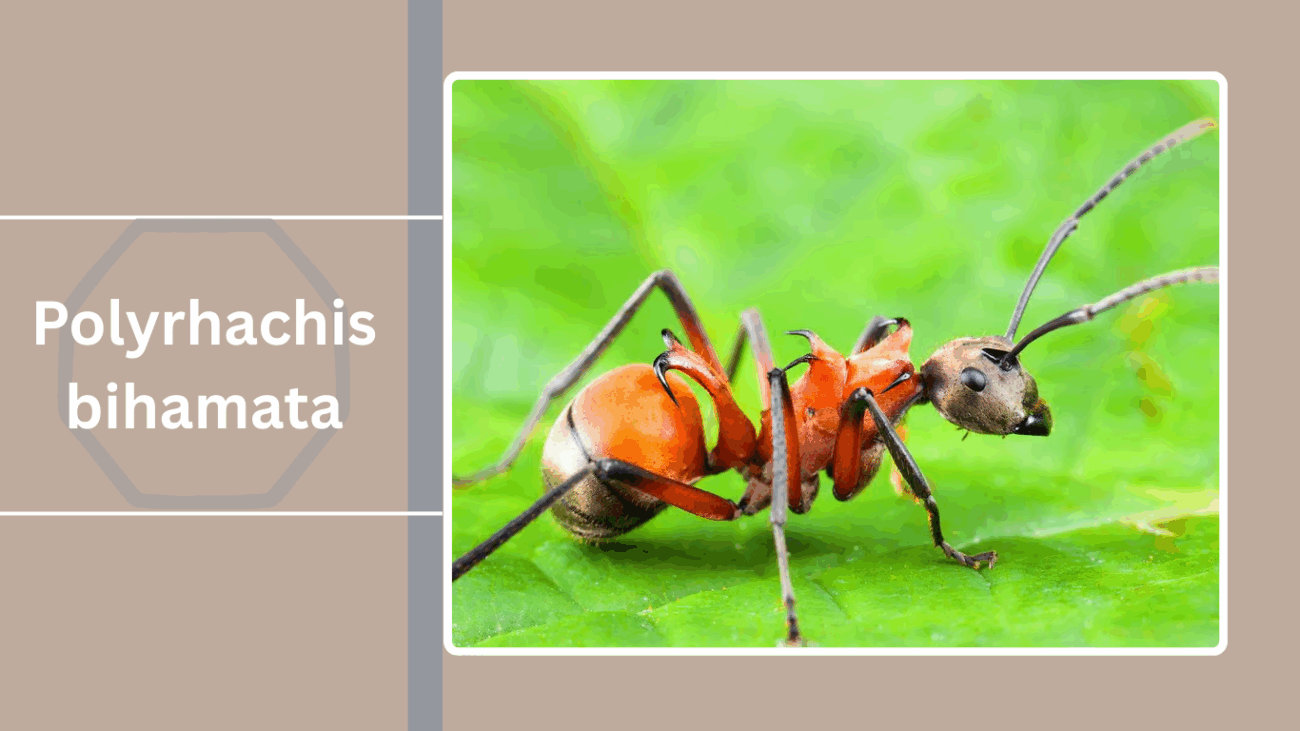
Polyrhachis bihamata is a striking species of weaver ant noted for its unusual body structure and nest-building behavior. It belongs to the diverse genus Polyrhachis, which is characterized by ants with spines and a high degree of adaptability to arboreal life.
Identification
- Workers measure about 6 mm to 9 mm in length.
- Distinctive backward-curving spines on the thorax and petiole, giving a “hooked” appearance.
- Body is usually dark brown to black, sometimes with a slight metallic sheen.
- Long legs and antennae adapted for life in the tree canopy.
- Strong mandibles for gripping, cutting, and manipulating nest material.
Habitat
Polyrhachis bihamata is primarily distributed in tropical Asia, often inhabiting rainforests and dense woodland canopies. They construct nests by stitching leaves together with larval silk, usually in trees where food resources and protection are abundant.
Behavior
Like other weaver ants, this species exhibits cooperative nest-building, with workers working in groups to bend leaves and bind them using larval silk. They are territorial and defend their colonies aggressively against intruders. The hooked spines are thought to aid in defense and may help in anchoring the ants during confrontations.
Diet
Their diet consists largely of honeydew collected from sap-feeding insects and small arthropods they capture. The honeydew provides carbohydrates for adult workers, while insect prey supplies protein for developing larvae. Foragers patrol actively to secure resources for the colony.
Lifecycle
The queen establishes a colony after mating, laying eggs that hatch into larvae. The larvae produce silk that workers use to weave leaf nests. Colonies expand steadily and may occupy several leaf nests within the same tree. Although smaller in scale compared to Oecophylla, their lifecycle follows a similar eusocial pattern, with longevity depending on the queen’s lifespan.
6. Polyrhachis illaudata
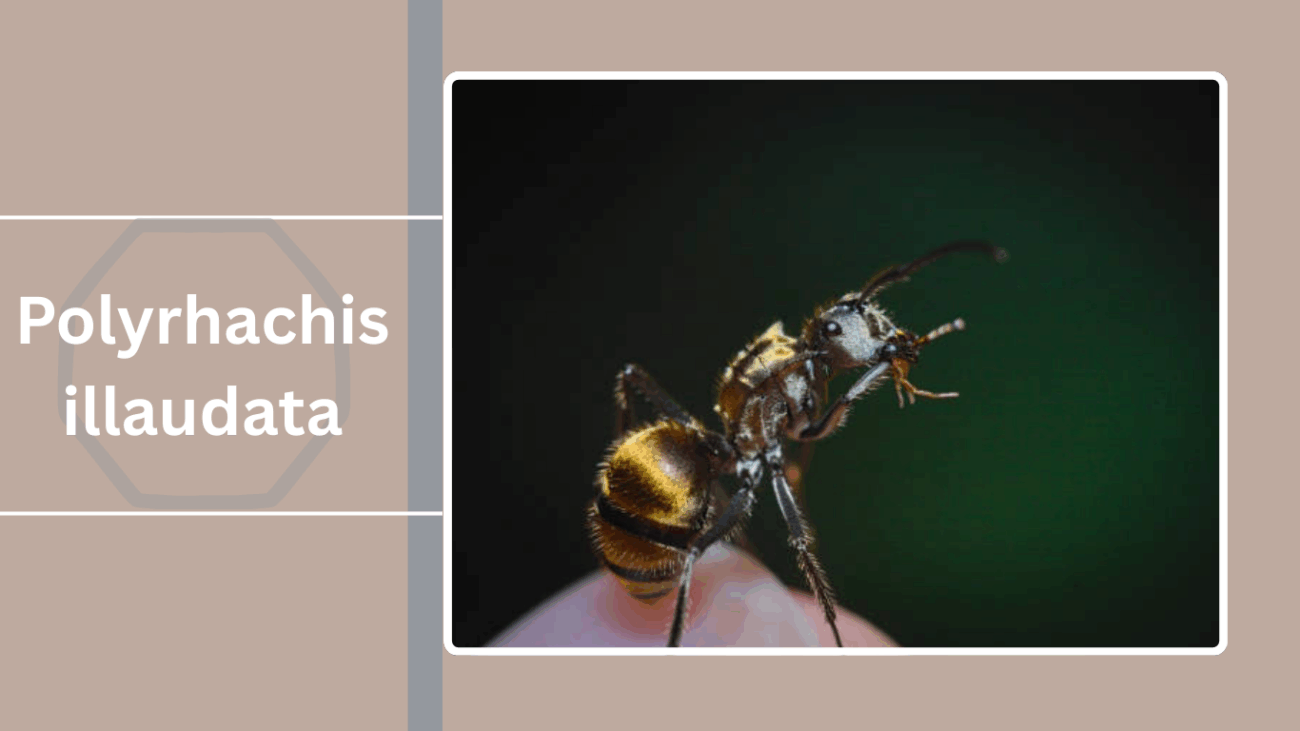
Polyrhachis illaudata is an arboreal weaver ant species within the Polyrhachis genus, recognized for its defensive adaptations and silk-bound leaf nests. Though less well-known than Oecophylla, it demonstrates the same cooperative nest-building behavior and strong colony organization typical of weaver ants.
Identification
- Workers range from 5 mm to 8 mm in length.
- Dark brown to black coloration, sometimes with faint metallic reflections.
- Distinctive thoracic spines that project backward, aiding in defense.
- Long legs and antennae adapted for climbing and foraging in trees.
- Mandibles well-suited for carrying food and manipulating nest material.
Habitat
This species is primarily found in the tropical and subtropical regions of Asia. It prefers living in the canopies of trees in forests, orchards, and plantations, where leaf abundance allows for efficient nest construction.
Behavior
Polyrhachis illaudata is highly cooperative and displays typical weaver ant behavior. Workers pull leaves together and weave them into nests using silk produced by larvae. Colonies tend to be smaller than those of Oecophylla but are still fiercely defended. Their spines and aggressive swarming behavior provide effective protection against predators and intruders.
Diet
The species feeds on honeydew secreted by aphids, mealybugs, and other sap-feeding insects. Workers also hunt small arthropods to provide protein for the larvae. This dual diet ensures a balance between carbohydrate energy and protein nutrition for colony growth.
Lifecycle
A new colony begins when a mated queen establishes her first nest. She lays eggs that develop into larvae, pupae, and workers. The larvae produce silk essential for nest weaving. Over time, colonies expand to occupy multiple nests across a single tree or adjoining trees, maintaining a stable and well-coordinated eusocial structure.
7. Polyrhachis armata

Polyrhachis armata is a distinctive member of the Polyrhachis genus, easily recognized by its heavily spined body. Like other weaver ants, it builds nests by binding leaves together with larval silk and thrives in arboreal habitats. Its spiny armor offers an additional layer of protection against predators.
Identification
- Workers typically measure 6 mm to 9 mm in length.
- Body is dark brown to black with a glossy surface.
- Prominent spines on the thorax and petiole, more pronounced than in many related species.
- Long, slender legs adapted for movement across leaves and branches.
- Robust mandibles suited for cutting, carrying, and defense.
Habitat
This species inhabits tropical and subtropical forests across parts of Asia. It prefers the upper canopy of trees where leaves are abundant for nest construction. Colonies may spread over multiple interconnected nests within one or more neighboring trees.
Behavior
Polyrhachis armata shows strong cooperative behaviors in nest building, with workers joining forces to bend leaves and secure them with silk threads produced by larvae. They are territorial and aggressive in defense, often swarming intruders with painful bites. Their spiny exoskeleton provides both intimidation and physical protection during conflicts.
Diet
Their diet centers on honeydew from sap-feeding insects such as aphids and mealybugs, supplemented with arthropods they capture. The honeydew sustains adult workers with carbohydrates, while insect prey provides protein vital for larval development.
Lifecycle
The colony lifecycle begins with a queen after a nuptial flight. She establishes the first nest and rears the initial brood. As the population grows, the workers expand the colony by weaving additional nests. Colonies may last for years, structured around a single queen and a highly organized workforce of polymorphic ants.
8. Polyrhachis sexspinosa
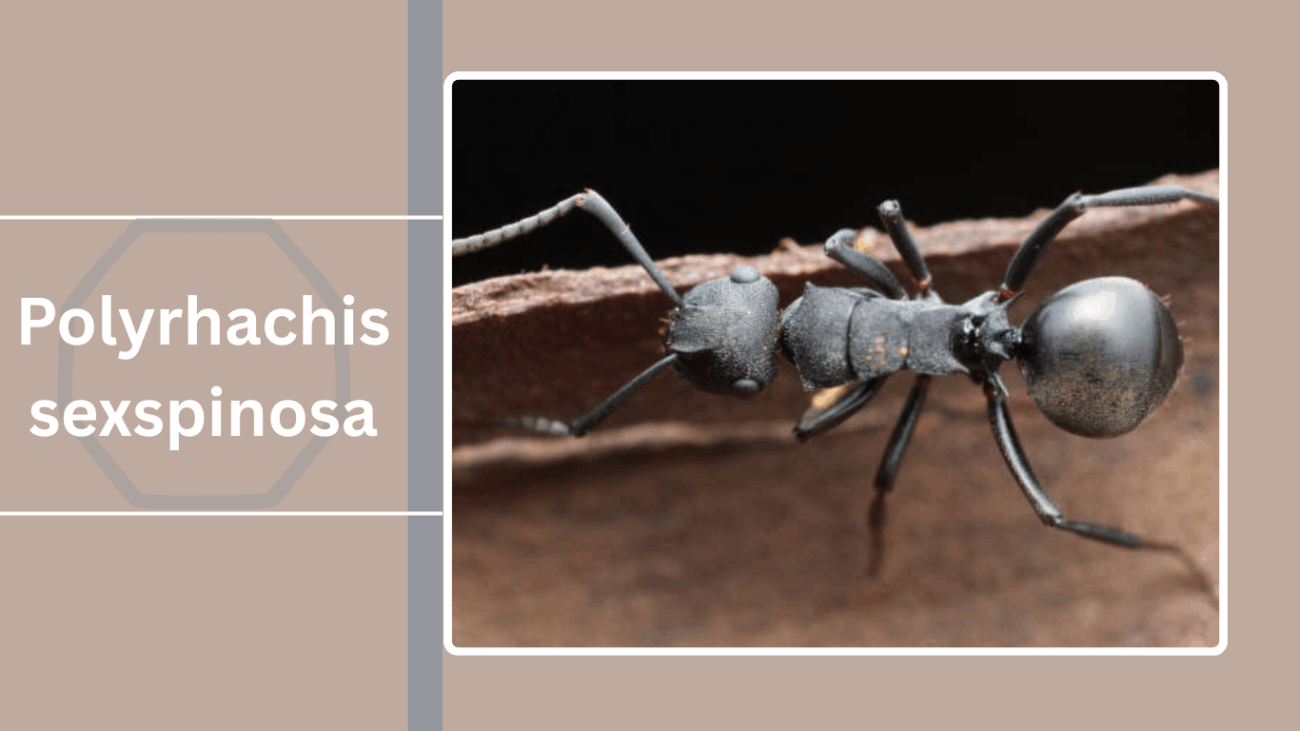
Polyrhachis sexspinosa is a remarkable spiny ant species within the Polyrhachis genus. Like other weaver ants, it is known for its arboreal lifestyle and nest-building behavior using larval silk. Its six prominent spines give it both its name and a unique defensive advantage.
Identification
- Workers are medium-sized, about 6 mm to 8 mm long.
- Dark brown to black body, often with a slight metallic shine.
- Distinctive six sharp spines on the thorax and petiole, arranged in pairs.
- Long antennae and legs adapted for maneuvering in tree canopies.
- Strong mandibles for cutting, carrying, and defending.
Habitat
This species is found in tropical and subtropical Asia, especially in forested regions. It builds its nests in trees by weaving leaves together with larval silk, usually high in the canopy for safety and access to resources.
Behavior
Polyrhachis sexspinosa is highly cooperative in nest construction, with workers collaborating to bend and secure leaves. Colonies are moderately sized but fiercely defended. The spines act as deterrents against predators and give the species an armored appearance. Like many Polyrhachis ants, they are territorial and aggressive when threatened.
Diet
The ants feed mainly on honeydew from sap-feeding insects like aphids and mealybugs. They also hunt small insects and arthropods, providing protein for larvae. This diet balance ensures steady colony development and sustains their active foraging lifestyle.
Lifecycle
Colonies begin when a fertilized queen establishes a small nest and raises the first brood. As worker numbers increase, nests expand and multiply across tree branches. Larvae produce silk that workers use for nest weaving. Colonies can survive for many years under the leadership of the queen, maintaining a well-structured eusocial system.
9. Polyrhachis rastellata

Polyrhachis rastellata is another fascinating arboreal ant from the Polyrhachis genus. It is notable for its defensive spines and cooperative nest-building behavior. Though not as well-studied as some other species, it shares the core traits of weaver ants, including territorial aggression and silk-bound leaf nests.
Identification
- Workers range from 6 mm to 9 mm in length.
- Body is dark brown to black, often with a polished sheen.
- Thorax and petiole bear distinct spines, giving a sharp, armored appearance.
- Long legs and antennae suited for canopy navigation.
- Mandibles strong enough for cutting, gripping, and carrying food or nest material.
Habitat
This species is found in tropical and subtropical regions of Asia, usually inhabiting forest canopies, orchards, and plantations. Nests are constructed by pulling leaves together and binding them with larval silk, often located high in trees for protection and easy access to food.
Behavior
Polyrhachis rastellata demonstrates strong social cooperation in both nest-building and defense. Workers collaborate to weave nests and aggressively protect their territory from intruders. Colonies are moderately sized but highly organized, with a clear division of labor between worker castes.
Diet
Their diet primarily consists of honeydew from sap-feeding insects such as aphids and mealybugs, which provides energy for the colony. Additionally, they capture small insects and other arthropods to supply protein for the larvae. This combination ensures balanced nutrition for both adults and developing young.
Lifecycle
Colonies begin with a single queen following a nuptial flight. She establishes the initial nest and rears the first generation of workers. As the colony grows, multiple nests are created across the canopy, all interconnected and coordinated. The larvae supply silk for nest weaving, maintaining the colony’s distinctive leaf shelters.
10. Polyrhachis beccarii
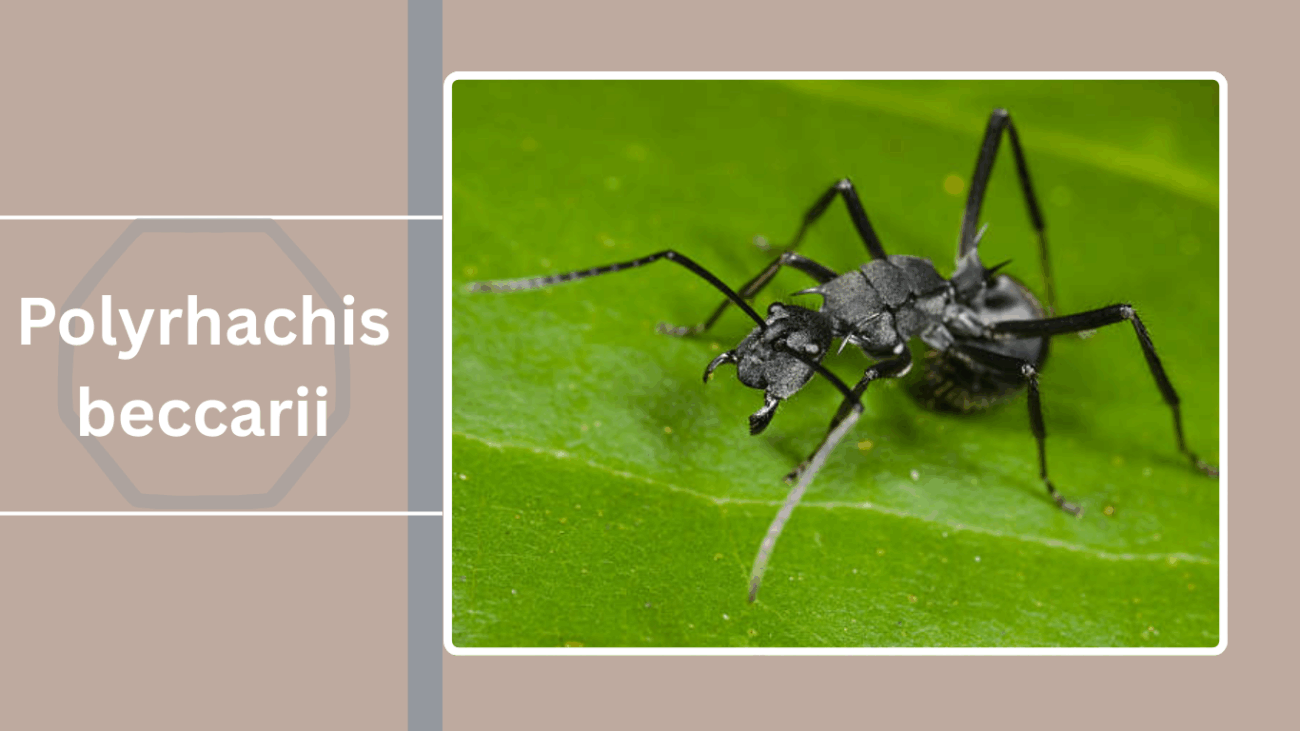
Polyrhachis beccarii is an arboreal ant species within the diverse Polyrhachis genus. Like its relatives, it is characterized by spiny body structures and the ability to construct leaf nests using larval silk. Though not as widely recognized as Oecophylla species, it remains a key representative of weaver ants in tropical ecosystems.
Identification
- Workers measure around 6 mm to 8 mm in length.
- Dark brown to black body with a slightly glossy finish.
- Thorax and petiole equipped with notable spines for defense.
- Long antennae and legs adapted for climbing and canopy activity.
- Mandibles designed for gripping food and manipulating nest material.
Habitat
This species is found mainly in Southeast Asia, where it inhabits forested areas and plantations. Colonies are arboreal, building silk-bound leaf nests in the upper canopy of trees, providing both safety from ground predators and access to food resources.
Behavior
Polyrhachis beccarii displays the typical cooperative behavior of weaver ants. Workers pull leaves together and secure them with silk produced by larvae. They are territorial, aggressively defending their nests and foraging areas. Colonies may form several interconnected nests within a tree or across neighboring trees.
Diet
The species feeds on honeydew produced by aphids, mealybugs, and scale insects, which provides carbohydrates for the workers. They also hunt and capture small insects, offering essential protein for larval growth. This dual feeding strategy sustains colony expansion and survival.
Lifecycle
Colonies originate from a single queen after mating flights. She establishes the initial nest and rears the first brood of workers. The larvae play an important role by producing silk for nest construction. Over time, the colony grows to include multiple leaf nests, functioning as a coordinated eusocial system that can persist for years.
11. Polyrhachis proxima
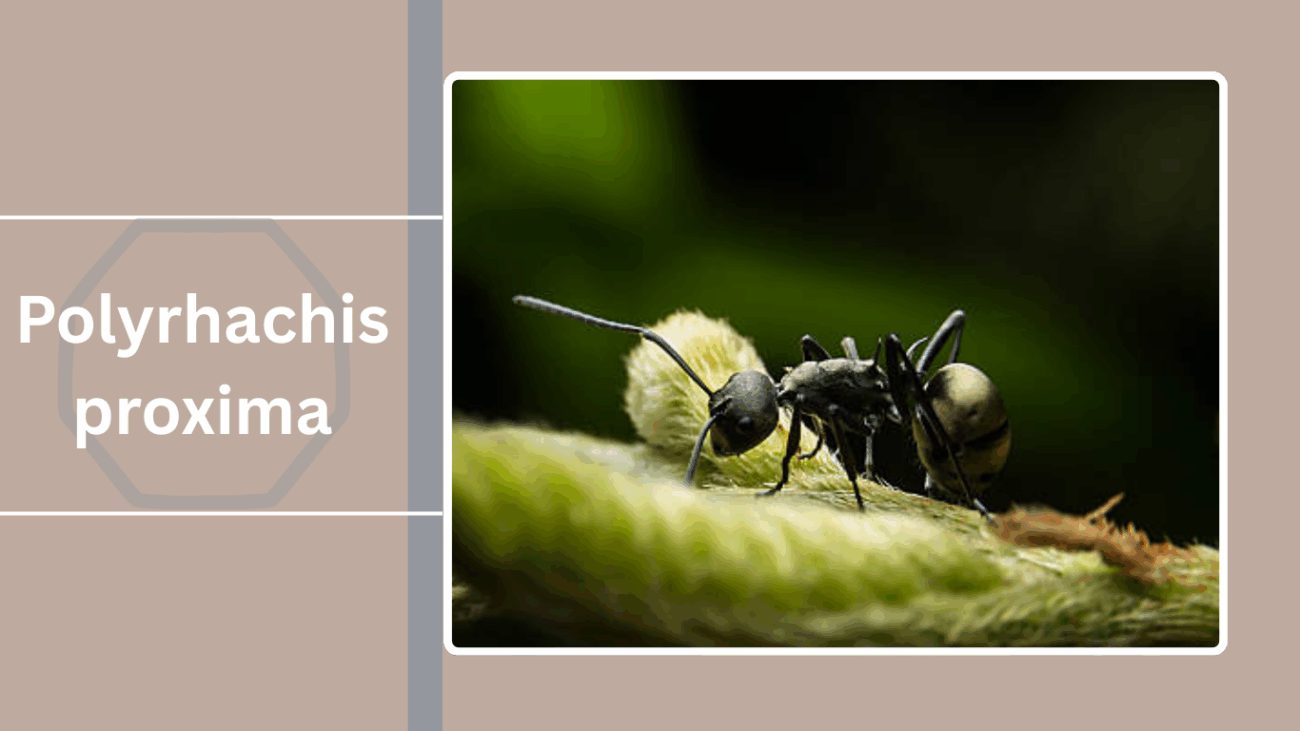
Polyrhachis proxima is a tree-dwelling weaver ant belonging to the Polyrhachis genus. Like its relatives, it exhibits nest-weaving behavior using larval silk and is recognized for its defensive spines and cooperative colony structure.
Identification
- Workers measure about 5 mm to 8 mm in length.
- Body color ranges from dark brown to nearly black, often with a subtle metallic gloss.
- Distinctive thoracic and petiole spines provide defense and a sharp appearance.
- Long legs and antennae aid in canopy navigation.
- Strong mandibles suitable for gripping, cutting, and nest weaving.
Habitat
This species inhabits tropical and subtropical forests, primarily in Asia. Colonies are arboreal, weaving nests from leaves in the canopy. They are often located in tall trees, where resources are abundant and colonies can expand across interconnected nests.
Behavior
Polyrhachis proxima demonstrates cooperative nest construction, with groups of workers pulling leaves together and binding them with silk from larvae. They are territorial and quick to defend their colonies against threats. Colonies are moderately sized compared to Oecophylla species but remain well-coordinated.
Diet
The ants feed on honeydew secreted by aphids, mealybugs, and other sap-feeding insects, which provides carbohydrates for adults. They also capture small insects and arthropods, supplying protein for the larvae. This balance ensures sustained growth and survival of the colony.
Lifecycle
The lifecycle begins with a mated queen establishing a colony after her nuptial flight. She lays eggs, and the resulting larvae produce silk used for nest weaving. Over time, the colony expands, building multiple interconnected leaf nests in the canopy. Colonies are long-lived, thriving under the leadership of the queen and the collective efforts of workers.
12. Polyrhachis aristata
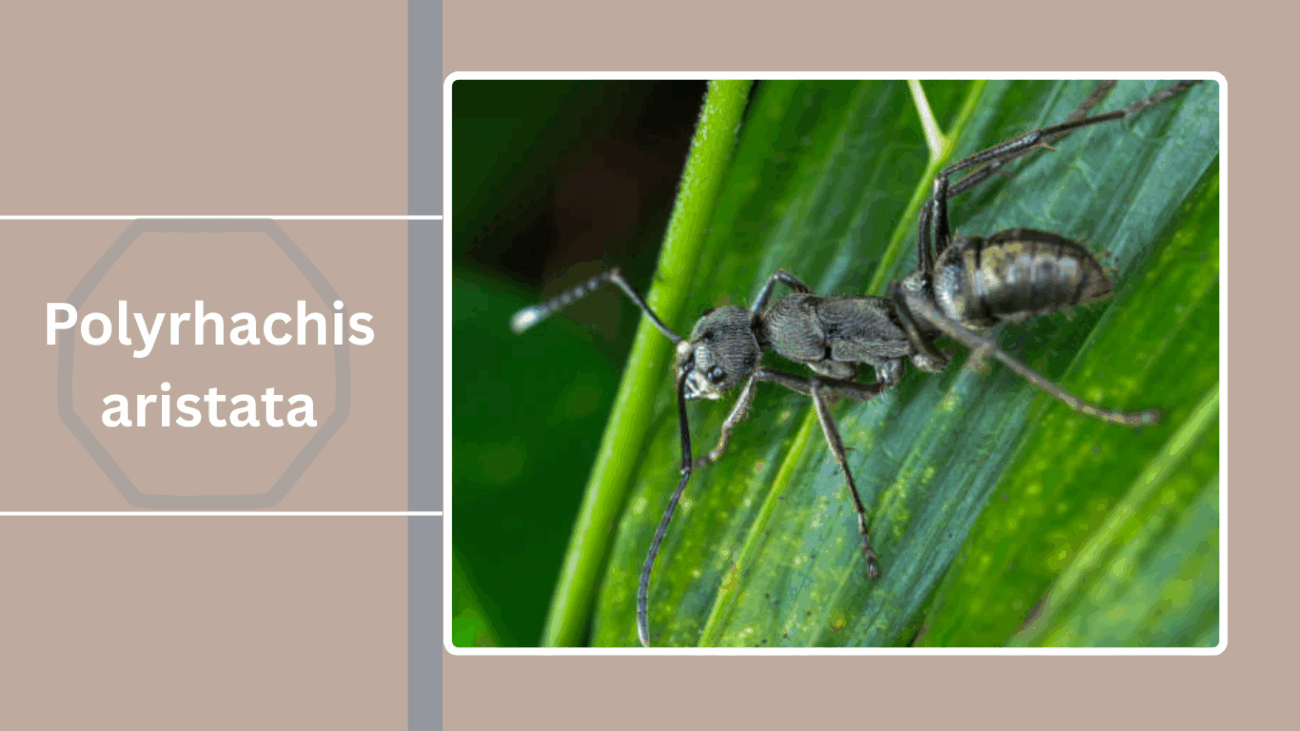
Polyrhachis aristata is a spiny arboreal ant from the Polyrhachis genus, known for its leaf-weaving nest construction and cooperative social structure. Its distinct body spines provide both defense and structural support, making it a well-adapted canopy dweller.
Identification
- Workers range between 6 mm and 9 mm in length.
- Body is dark brown to black, sometimes with a metallic tint.
- Characterized by long, sharp spines on the thorax and petiole.
- Long antennae and slender legs aid in movement across foliage.
- Strong mandibles for manipulating leaves, carrying food, and defense.
Habitat
This species is typically found in tropical forests across Asia. It builds nests in tree canopies by stitching leaves together with larval silk. Colonies often spread across multiple nests in the same or nearby trees, providing stability and access to food sources.
Behavior
Polyrhachis aristata exhibits cooperative nest-building, with workers working together to weave leaf shelters. They are territorial and aggressive toward intruders, defending both nests and foraging grounds. Colonies are smaller than those of Oecophylla but remain highly organized and efficient.
Diet
Their primary diet includes honeydew from aphids, mealybugs, and scale insects, serving as a carbohydrate source. Workers also capture small insects and other arthropods, which provide protein for the larvae. This dual feeding strategy supports both adult workers and brood development.
Lifecycle
A queen establishes the colony after mating, laying eggs that develop into larvae. The larvae provide the silk needed for nest weaving, enabling the workers to create multiple leaf nests. Colonies expand gradually, and under the queen’s leadership, they can remain stable and long-lived.
13. Polyrhachis hortensis
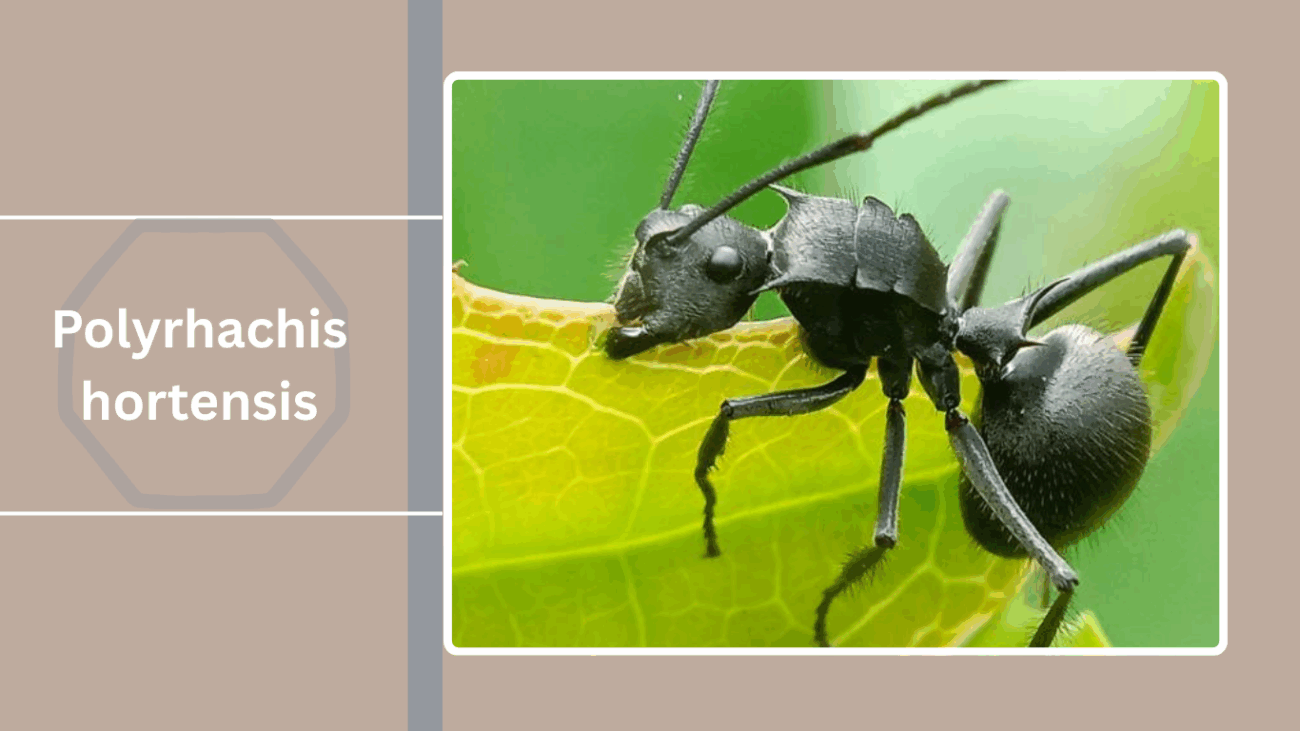
Polyrhachis hortensis is an arboreal weaver ant species belonging to the Polyrhachis genus. It is known for constructing silk-bound leaf nests and for its distinctive spiny body, which provides both protection and structural strength.
Identification
- Workers measure about 5 mm to 8 mm in length.
- The body is usually dark brown to black with a slightly glossy surface.
- Possesses sharp spines on the thorax and petiole.
- Long antennae and legs suited for canopy life.
- Strong mandibles for nest weaving, carrying, and defense.
Habitat
This species is distributed across tropical Asia, particularly in forested regions. Colonies reside in tree canopies, where leaves are bound together using larval silk to form secure nests. They prefer areas with dense foliage that offers both resources and protection.
Behavior
Polyrhachis hortensis displays strong social cooperation, with workers collaborating to construct and maintain nests. They are territorial, aggressively defending their colonies against invaders. Like many Polyrhachis ants, they form interconnected nests across branches, maintaining a well-coordinated colony structure.
Diet
Their diet consists of honeydew from sap-feeding insects, which serves as the main carbohydrate source for workers. They also prey on small insects and arthropods, providing protein necessary for larval growth. This combination supports both worker energy and colony development.
Lifecycle
The lifecycle begins with a queen after her nuptial flight. She establishes the first nest and raises the initial brood. The larvae produce silk essential for nest construction. As the colony expands, multiple leaf nests are created within the same or adjacent trees, ensuring colony stability and growth over many years.
14. Polyrhachis tubifex
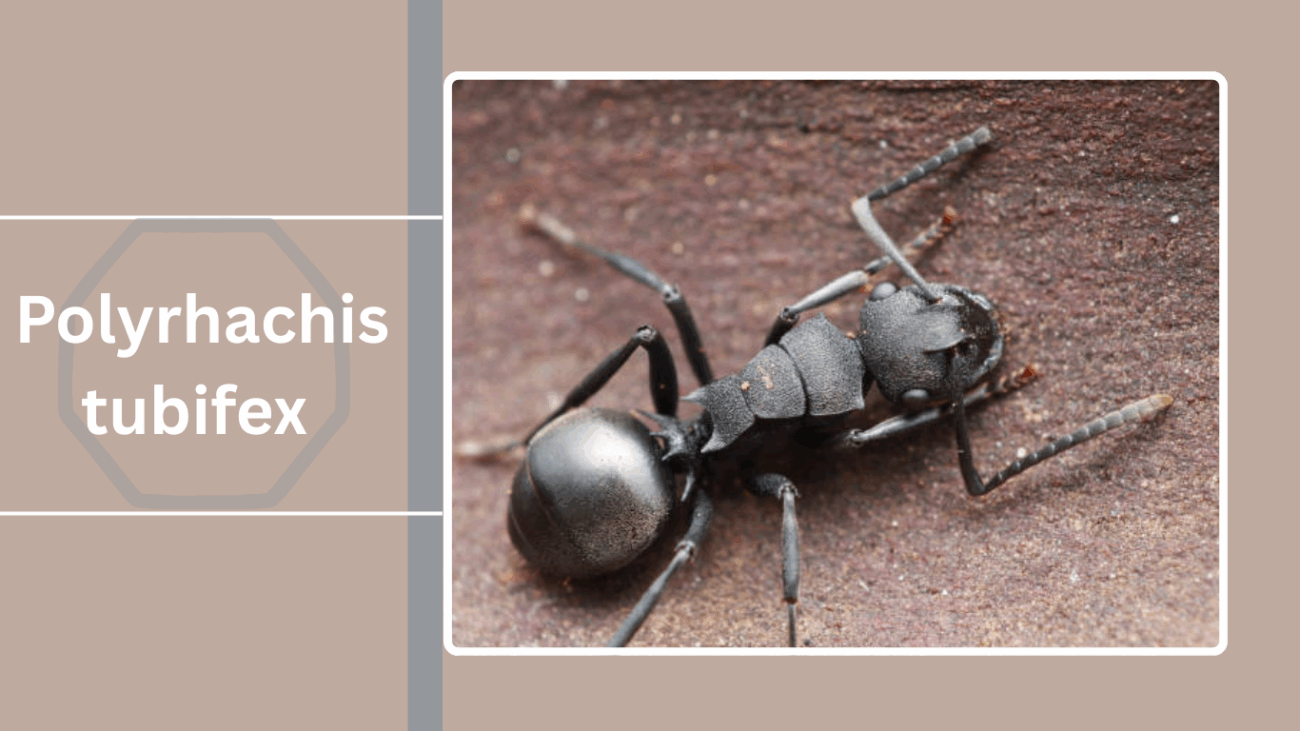
Polyrhachis tubifex is a lesser-known arboreal ant species within the Polyrhachis genus. Like its relatives, it is recognized for its spiny body and silk-bound leaf nests, which highlight its cooperative social behavior and adaptation to canopy life.
Identification
- Workers typically measure 5 mm to 8 mm in length.
- The body is dark brown to black with a hardened exoskeleton.
- Notable spines present on the thorax and petiole, aiding in defense.
- Long antennae and legs specialized for movement across leaves and branches.
- Strong mandibles used for defense, carrying food, and manipulating nest materials.
Habitat
This species inhabits tropical and subtropical forested regions of Asia. Colonies are arboreal, creating nests by weaving leaves together with larval silk. Nests are generally positioned in the upper tree canopy, providing safety and access to abundant resources.
Behavior
Polyrhachis tubifex shows typical weaver ant cooperation, with workers collectively bending and stitching leaves to form protective nests. They are highly territorial and aggressive toward intruders. Colonies tend to spread across multiple nests but remain moderate in size compared to Oecophylla species.
Diet
Their diet includes honeydew collected from aphids, mealybugs, and other sap-feeding insects. This provides the carbohydrates needed by adult workers. They also prey on small insects and arthropods, ensuring protein intake for larvae and brood development.
Lifecycle
Colonies originate from a single queen after her nuptial flight. She establishes the first nest and rears the initial workers. Larvae play a crucial role by producing silk used for weaving nests. Over time, colonies expand into multiple interconnected leaf nests, sustaining themselves for many years under the queen’s leadership.
15. Polyrhachis curtinotus
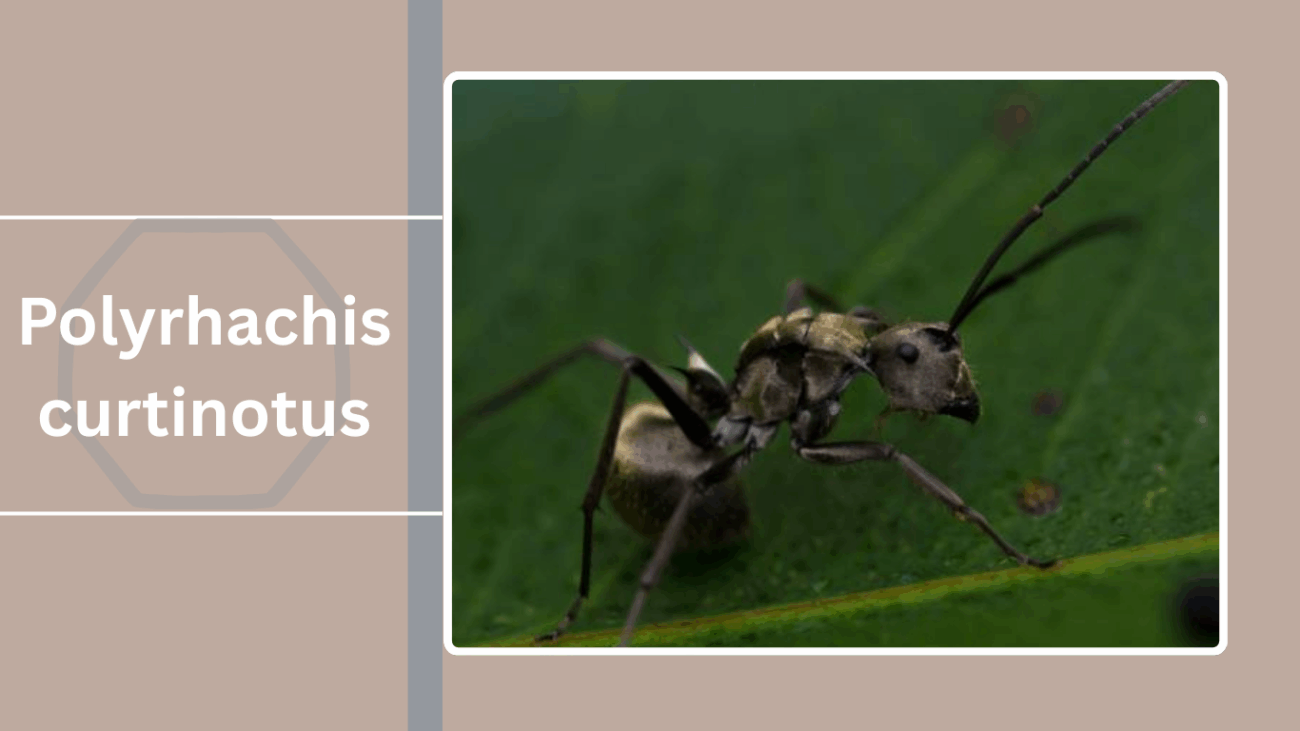
Polyrhachis curtinotus is an arboreal ant species within the Polyrhachis genus, notable for its spiny body structure and cooperative nest-weaving behavior. Like other members of its genus, it thrives in tree canopies where it constructs protective leaf nests bound with larval silk.
Identification
- Workers measure between 5 mm and 8 mm in length.
- Body color is typically dark brown to black, sometimes with a glossy appearance.
- Distinct thoracic and petiole spines serve as defensive adaptations.
- Long antennae and slender legs specialized for canopy navigation.
- Strong mandibles effective for gripping, nest weaving, and colony defense.
Habitat
This species is found in tropical and subtropical Asia, where it occupies forested areas and plantations. Colonies establish themselves in tree canopies, weaving multiple nests from leaves to form a secure and interconnected network.
Behavior
Polyrhachis curtinotus is highly cooperative, with workers jointly pulling leaves together and weaving them into nests using larval silk. Colonies are moderately sized, but ants defend them aggressively against intruders. Their spiny armor provides additional protection during conflicts.
Diet
The primary food sources include honeydew from aphids, mealybugs, and other sap-feeding insects, supplying carbohydrates for adult workers. In addition, they capture small insects and arthropods, which provide protein essential for larval growth.
Lifecycle
The lifecycle begins with a single queen establishing a colony after mating. She lays eggs that develop into larvae, pupae, and adult workers. Larvae produce silk used in nest construction, enabling the creation of multiple interconnected nests. Colonies remain stable and long-lived, thriving under the queen’s leadership.