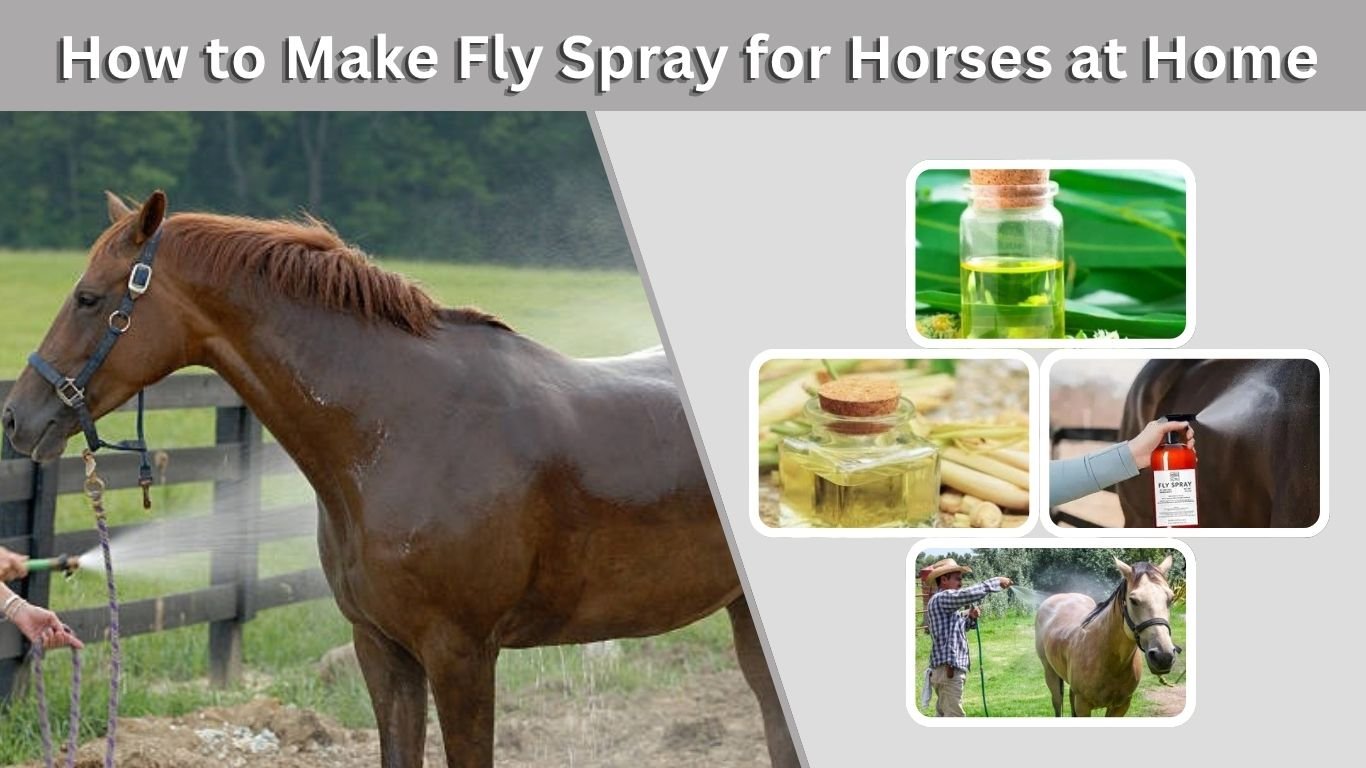
Homemade fly spray for horses can provide temporary relief from house flies, stable flies, mosquitoes, and other irritating insects. A commonly studied recipe combines water, white vinegar, bath oil, and diluted citronella oil. However, homemade mixtures are not tested as extensively as registered equine products and may irritate horses with sensitive skin. Always prepare the spray at the correct dilution, test it on a small area, and keep it away from the eyes, nose, mouth, genitals, and open wounds. Fly spray works best as part of a larger control plan that includes manure removal, dry bedding, fans, masks, sheets, and leggings.
Homemade Fly Spray Recipe for Horses
The following citronella mixture was included in a University of Minnesota Extension study of fly-protection methods for horses.
Ingredients
- 12 fluid ounces of water
- 12 fluid ounces of distilled white vinegar
- 4 fluid ounces of bath oil
- 1 fluid ounce of citronella oil
- One clean 32-ounce spray bottle
- A measuring cup and small funnel
This recipe makes approximately 29 fluid ounces of spray, leaving enough room in the bottle for proper mixing. Do not increase the citronella concentration because stronger does not necessarily mean safer or more effective. Some homemade ingredients can irritate horses with sensitive skin.
Mixing Instructions
- Clean and completely rinse the spray bottle.
- Pour the water and distilled white vinegar into the bottle.
- Add the bath oil.
- Measure and add the citronella oil carefully.
- Close the bottle securely and shake it thoroughly.
- Label the bottle with its contents and preparation date.
- Store it upright in a cool place away from children and animals.
The oils will naturally separate from the water, so shake the bottle before every application.
How to Apply Homemade Fly Spray Safely
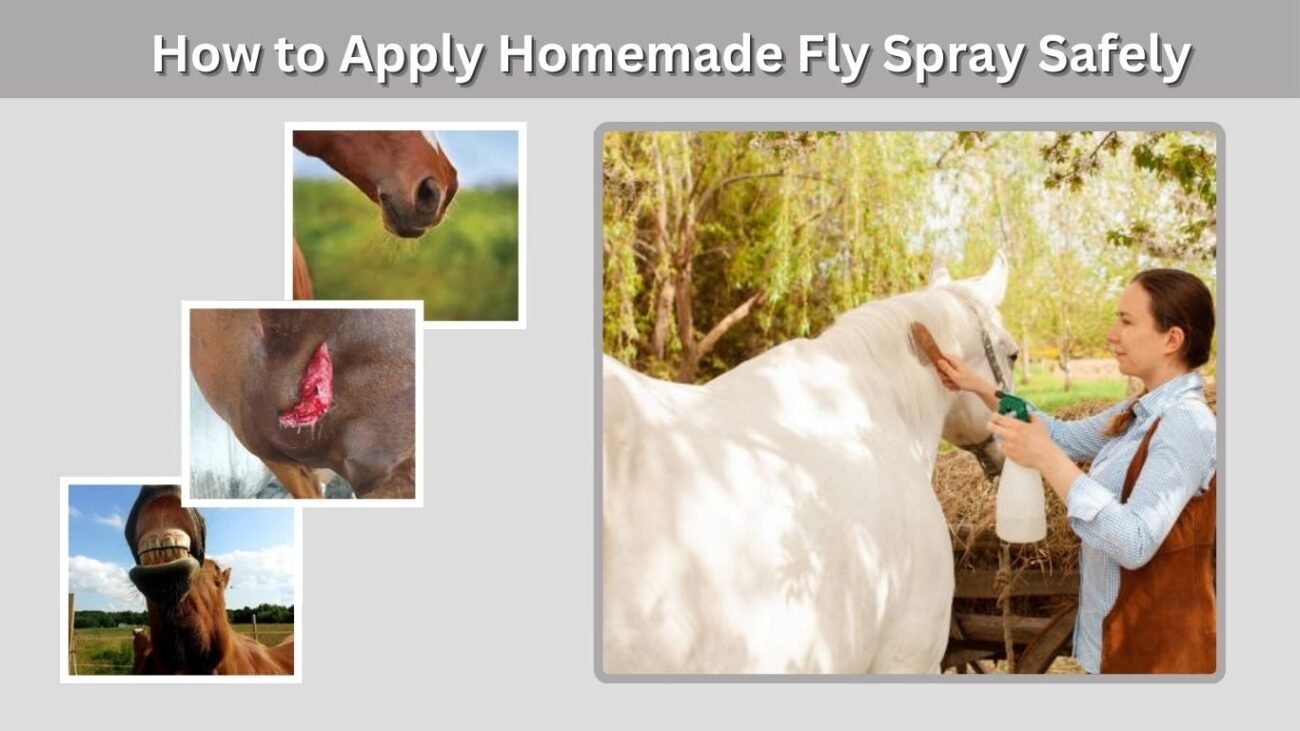
Before covering the horse, apply a small amount to one limited area of the shoulder or neck. Wait approximately 24 hours and examine the skin for swelling, redness, welts, itching, hair loss, or sensitivity.
Discontinue use and wash the area with water if irritation develops. Contact a veterinarian when the reaction is severe, spreads across the body, or does not improve.
Applying It to the Body
Shake the bottle and lightly mist the coat, paying particular attention to areas where flies frequently land. These may include the shoulders, neck, chest, belly, back, and legs.
The coat should be lightly covered rather than dripping wet. Avoid spraying directly beneath tack immediately before riding because oil-based ingredients may make the coat slippery or contribute to rubbing.
Applying It Around the Face
Do not spray directly toward the horse’s head. Spray a small amount onto a clean cloth and gently wipe the cheeks and other safe facial areas while avoiding:
- Eyes and eyelids
- Nostrils
- Lips and mouth
- Inner ears
- Cuts and abrasions
Applying fly spray with a towel can also help horses that become frightened by the sound or sensation of a spray bottle.
When to Reapply It
Homemade fly spray generally offers temporary protection. Reapplication may be necessary after heavy sweating, rain, bathing, or walking through wet vegetation.
Do not continuously add more product throughout the day without checking the skin. Repeated application can increase the risk of irritation and oily buildup.
Does Homemade Horse Fly Spray Work?
In the University of Minnesota trial, the homemade citronella spray reduced certain fly-avoidance behaviors, including tail swishing and shoulder twitching. However, it did not eliminate every sign of fly irritation, and no single treatment controlled all fly-related behavior. Leggings and leg bands were also helpful for some behaviors.
Results can vary depending on:
- The fly species present
- Weather and humidity
- How much the horse sweats
- The horse’s coat condition
- Application coverage
- Nearby breeding habitats
- Individual skin sensitivity
Homemade spray may be useful during light or moderate fly activity. A properly labeled commercial product may provide more dependable protection during severe infestations because registered products undergo safety evaluation and provide specific application instructions.
Can You Make Horse Fly Spray With Essential Oils?
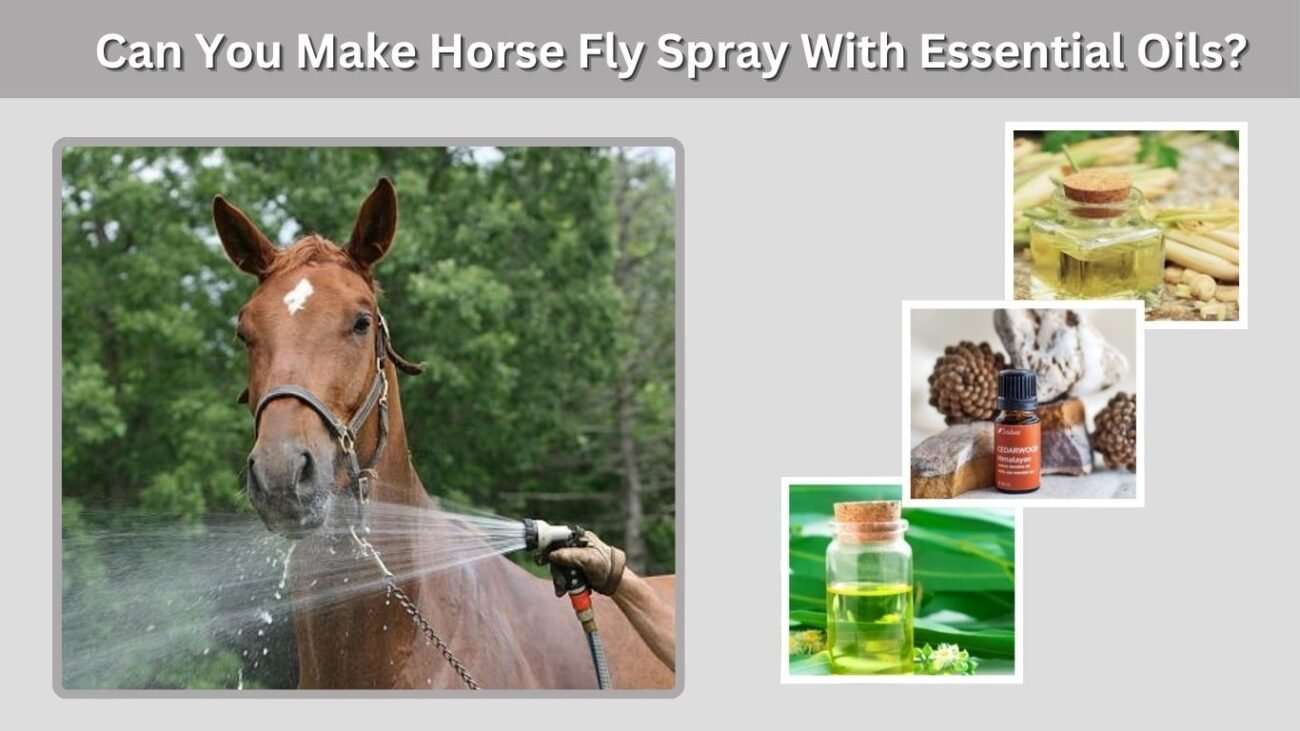
Citronella is one of the most frequently used plant oils in natural fly repellents. Other homemade recipes may include peppermint, eucalyptus, lavender, lemongrass, cedarwood, neem, or tea tree oil.
However, essential oils are highly concentrated substances. Adding several different oils or using an excessive amount can irritate the horse’s skin. Water and oil also separate unless the mixture contains an appropriate emulsifying ingredient, which can cause concentrated droplets to land on the coat.
Avoid applying undiluted essential oil directly to a horse. Do not assume an ingredient is harmless simply because it is described as natural. University of Minnesota Extension notes that plant oils may repel some insects but are generally less effective than commercial products, while certain homemade ingredients may harm sensitive horses.
Consult a veterinarian before using homemade essential-oil products on:
- Foals
- Pregnant or nursing mares
- Horses with allergies
- Horses with skin disease
- Animals receiving topical medication
- Horses with extensive wounds or sunburn
Ingredients to Avoid in Homemade Fly Spray
Do not use ingredients that could burn, poison, or severely dry the horse’s skin. Avoid recipes containing:
- Gasoline or kerosene
- Bleach
- Undiluted disinfectants
- Household surface insecticides
- Concentrated essential oils
- Products not intended for animal contact
- Excessive amounts of dish detergent
- Unlabeled agricultural pesticide concentrates
Do not combine commercial insecticides with a homemade mixture. Follow the product label exactly whenever using a pesticide. Equine fly-control products may contain pyrethrins or pyrethroids in carefully formulated concentrations, and some have age or application restrictions.
Homemade Spray vs. Commercial Horse Fly Spray
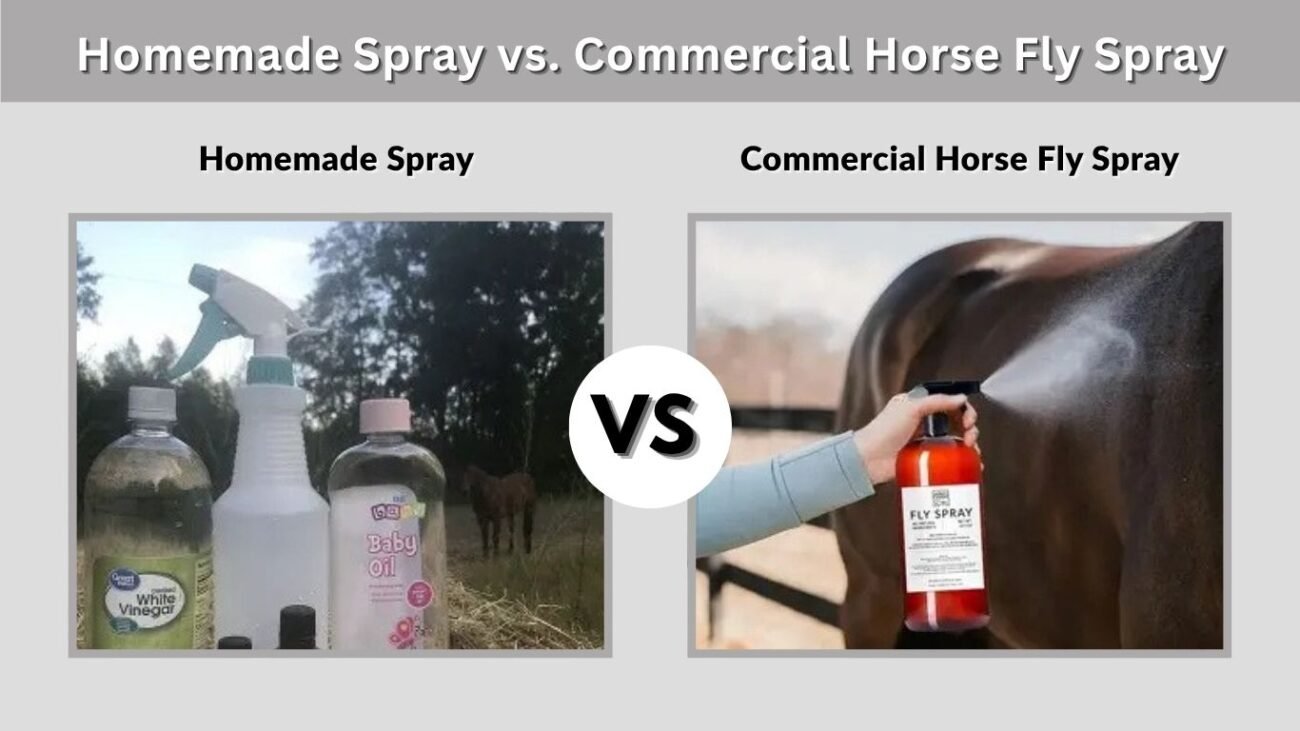
| Feature | Homemade spray | Commercial equine spray |
|---|---|---|
| Cost | Usually inexpensive | Varies by formulation |
| Ingredients | Selected and mixed by the owner | Formulated by a manufacturer |
| Protection time | Usually brief | May provide longer protection |
| Safety testing | Limited or unavailable | Registered products undergo testing |
| Instructions | General precautions | Detailed label directions |
| Skin reaction risk | Depends heavily on preparation | Still possible, but directions are provided |
| Best use | Light, temporary fly pressure | Moderate or severe fly conditions |
A homemade spray is not automatically safer than a manufactured one. Incorrect measurements, concentrated oils, contaminated bottles, and repeated application can all create problems.
Fly Spray Will Not Control Every Fly
Different flies require different control methods. Stable and house flies breed in moist manure, dirty bedding, spilled feed, and decaying plant material. Horse and deer flies normally develop around wetlands and moist soil and are difficult to control with topical repellents alone.
Improve protection by combining spray with the following methods:
Keep the Barn Clean and Dry
Remove manure and wet bedding frequently. Clean spilled feed, rotting hay, grass clippings, and other moist organic debris where house and stable flies can develop.
Maintaining dry surroundings is often more effective than relying entirely on chemical control.
Use Fans and Screens
Strong airflow makes it harder for some flies and biting midges to land. Securely installed barn fans, fine screens, and screened doors can reduce insect exposure while horses are indoors.
Add Fly Masks, Sheets, and Leggings
Fly masks protect the face and eyes, while sheets create a physical barrier over much of the body. Leggings can be especially useful against stable flies that attack the lower legs.
Choose breathable, correctly fitted equipment and inspect it every day for rubbing, trapped moisture, damaged straps, and excessive sweating. Remove sheets when a horse needs rapid cooling because covering the body can interfere with heat loss.
FAQs
How long does homemade horse fly spray last?
Protection may last only a few hours and can disappear sooner after rain, sweating, bathing, or contact with wet vegetation. Observe the horse’s behavior and skin rather than following an excessive fixed application schedule.
Can I use only vinegar and water?
Diluted vinegar may be included in homemade recipes, but reliable evidence that vinegar and water alone provide strong, lasting fly protection is limited. It should not replace physical barriers, sanitation, or a properly labeled repellent during severe fly activity.
Is citronella safe for horses?
Properly diluted citronella has been used in equine fly sprays, including a mixture tested by University of Minnesota Extension. However, concentrated citronella can irritate sensitive skin. Never apply the undiluted oil, and test any mixture on a small area first.
Can homemade fly spray cause welts?
Yes. Vinegar, bath oil, essential oils, fragrances, or other ingredients can cause contact irritation or an allergic response. Stop using the mixture, rinse the affected skin, and contact a veterinarian if the welts are widespread or accompanied by facial swelling or breathing difficulty.
Do fly sheets make horses hot?
Breathable mesh sheets are designed for warm-weather insect protection, but any covering may retain some heat or moisture. Check frequently for heavy sweating and discomfort, particularly during hot, humid weather. Remove the sheet when the horse is overheating or requires active cooling.