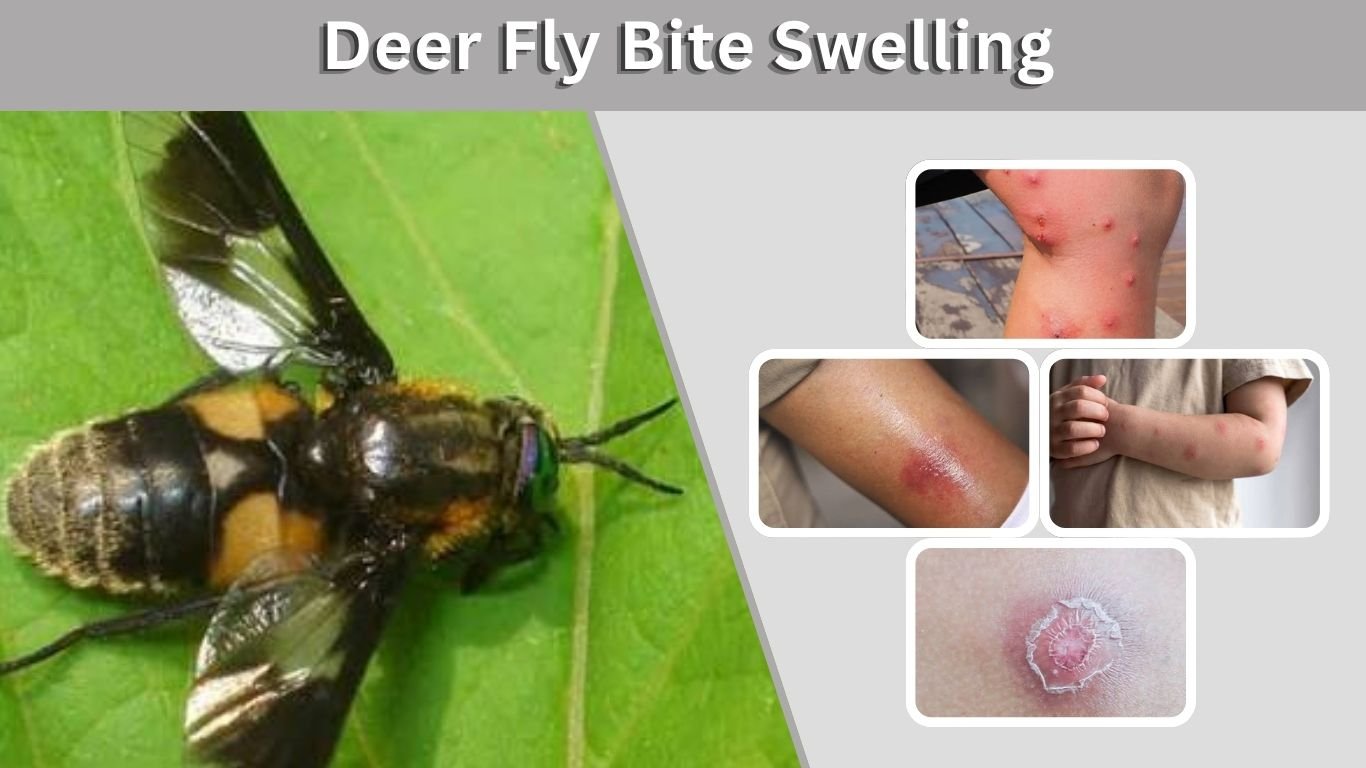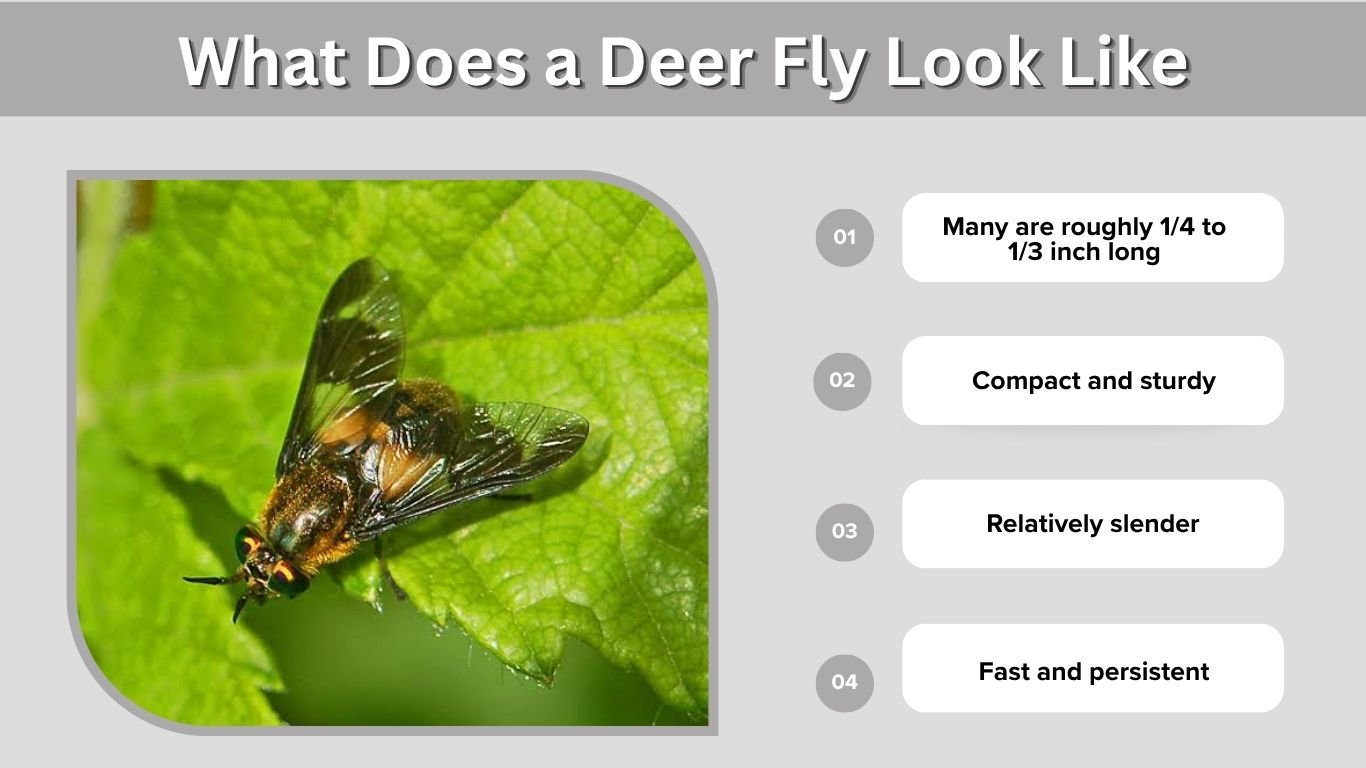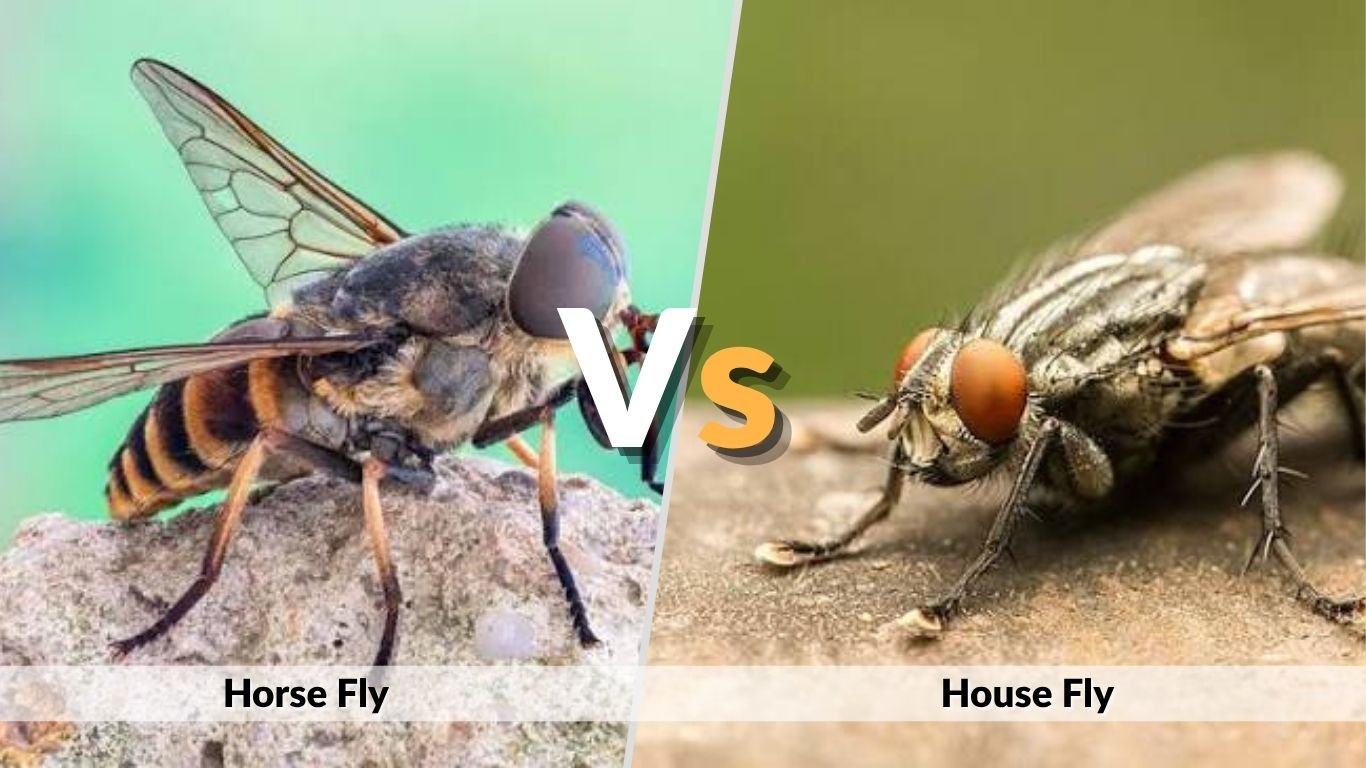
A horse fly and house fly differ greatly in size, feeding behavior, habitat, and risk to humans. Horse flies are large outdoor insects whose females deliver painful blood-feeding bites. House flies are much smaller, cannot bite, and commonly gather around garbage, manure, food waste, and buildings. A single large horse fly may accidentally enter through an open door or window, but numerous “horse flies” suddenly appearing indoors are often misidentified blow flies, flesh flies, cluster flies, or house flies. Correct identification helps you locate the source and select an effective removal method.
Horse Fly vs. House Fly: Quick Comparison
Horse flies belong to the family Tabanidae, while the common house fly is Musca domestica. They are both true flies, but they belong to different families and have different life cycles.
| Feature | Horse fly | House fly |
| Typical size | About ⅜–1 inch | About ⅙–¼ inch |
| Body | Large, broad, and heavy | Small, compact, and gray |
| Eyes | Very large and often colorful | Reddish compound eyes |
| Bites humans | Females can bite | No |
| Main food | Females take blood; both sexes use plant sugars | Liquefied food and organic waste |
| Breeding habitat | Wet soil, marshes, pond edges, and wetlands | Manure, garbage, feed waste, and decaying matter |
| Common indoors | No | Yes |
| Main concern | Painful bites | Food contamination |
Horse flies can reach approximately 25 millimeters, or one inch, whereas house flies usually measure only 4–7 millimeters. Therefore, a large horse fly may be several times longer and considerably heavier than a house fly.
Size and Appearance
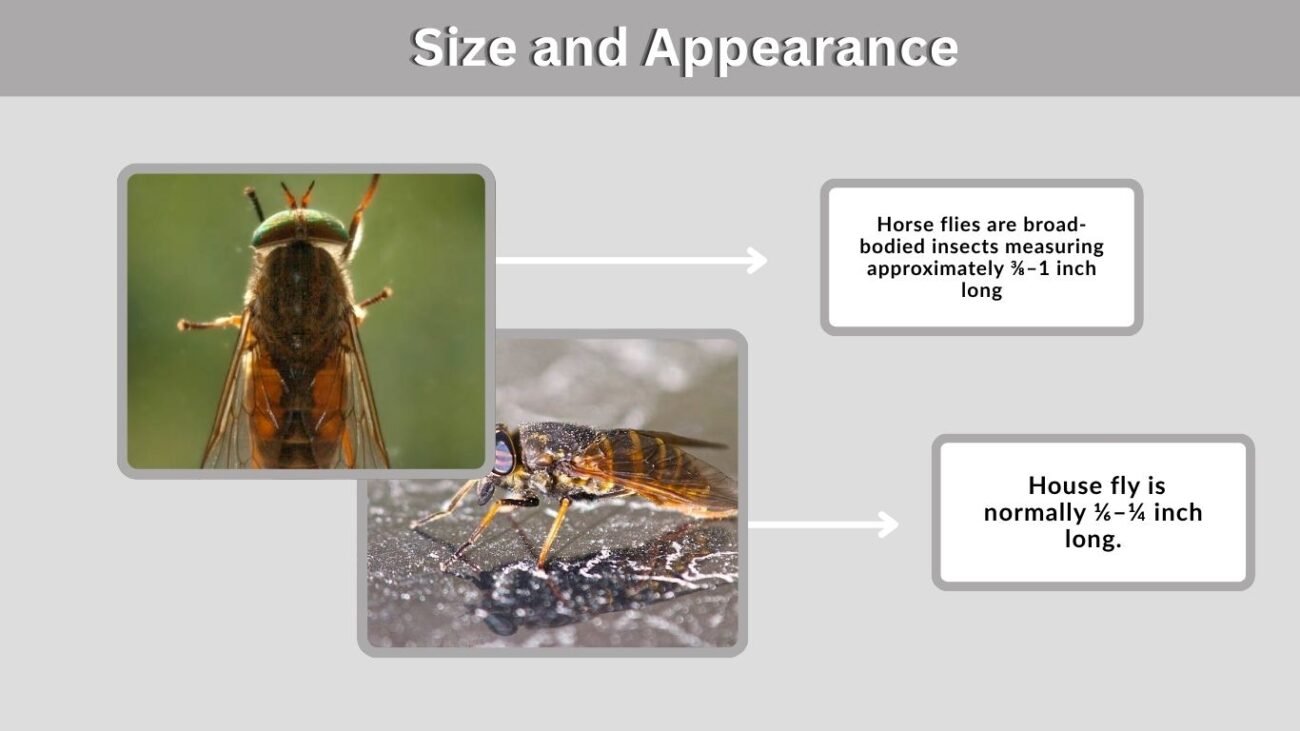
Size is usually the easiest way to distinguish a horse fly from a house fly. However, color, eyes, antennae, mouthparts, and body shape offer additional clues.
Horse Fly Identification
Horse flies are broad-bodied insects measuring approximately ⅜–1 inch long. They may be black, brown, gray, greenish, or patterned, depending on the species.
Their most distinctive features include:
- A large, heavy body
- Extremely large compound eyes
- Green, bronze, purple, black, or iridescent eye colors
- Short, three-segmented antennae
- Clear or slightly smoky wings
- Powerful flight
- Wide separation between the eyes of females
Horse flies generally have broader heads and thicker bodies than house flies. Female horse flies also possess cutting mouthparts that create a flowing wound rather than piercing the skin with a narrow tube.
House Fly Identification
A house fly is normally ⅙–¼ inch long. Its body is dull gray, and the thorax has four narrow, dark stripes running lengthwise. The sides of the abdomen may have pale or yellowish areas.
House flies have sponging mouthparts rather than cutting or piercing structures. They release fluid onto solid food, dissolve it, and then draw the liquefied material into the mouth.
| Identification feature | Horse fly | House fly |
| Body shape | Wide and muscular | Smaller and moderately slender |
| Thoracic stripes | Variable | Four dark stripes |
| Eye appearance | Large and often brightly colored | Usually reddish |
| Antennae | Short and noticeable | Small and less obvious |
| Mouthparts | Cutting and blood-feeding in females | Sponging and non-biting |
| Flight | Fast, direct, and powerful | Quick but less forceful |
Do Horse Flies or House Flies Bite?
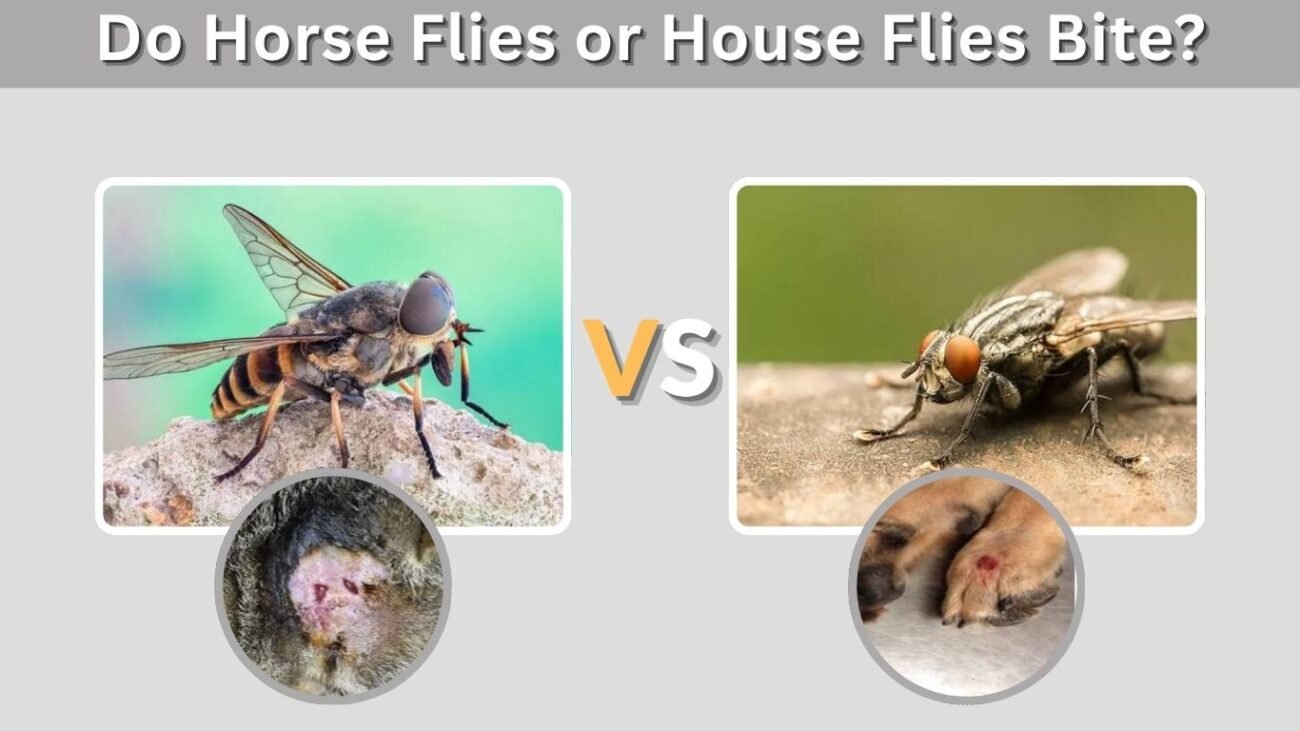
Female horse flies bite humans, horses, cattle, dogs, and other warm-blooded animals. Their scissor-like mouthparts cut the skin, while saliva helps keep blood flowing. A bite can cause immediate pain, bleeding, redness, itching, and swelling.
Male horse flies do not take blood meals. They primarily obtain energy from nectar and other plant sugars.
House flies cannot bite because their mouthparts are designed to sponge up liquids. Nevertheless, they may land on food, faces, wounds, garbage, manure, and other contaminated materials. They can mechanically transfer bacteria through their bodies, regurgitated fluids, and fecal spots.
Is It a Stable Fly Instead?
Stable flies are often mistaken for biting house flies. They are close to house-fly size but have a rigid, bayonet-like mouthpart extending from the head.
Both male and female stable flies feed on blood and may bite people around the ankles and lower legs. They also attack horses and livestock, frequently causing stamping and defensive behavior.
Habitat and Life Cycle
Horse flies usually develop outdoors near aquatic or consistently damp habitats. House flies develop in moist, decomposing organic material, including sources commonly found around homes, farms, and barns.
| Life-cycle feature | Horse fly | House fly |
| Egg location | Vegetation or objects above wet soil or water | Garbage, manure, feed waste, or decaying plants |
| Larval habitat | Mud, wetlands, marshes, and pond edges | Moist organic waste |
| Larval diet | Small animals or organic matter, depending on species | Bacteria and decomposing material |
| Development time | Commonly months; sometimes more than a year | May complete a cycle in about two weeks |
| Indoor breeding | Very unlikely | Possible when suitable waste is present |
Horse fly eggs hatch above wet ground or water, and the larvae drop into moist material. Many horse fly larvae prey on worms, insect larvae, crustaceans, and even other horse fly larvae.
House flies lay batches of eggs in moist garbage, animal waste, spilled feed, manure, and decaying vegetation. Warm conditions can allow them to complete their egg-to-adult development rapidly and produce multiple generations.
Why Are Horse Flies in My House?
A true horse fly usually enters a house accidentally through an open door, window, damaged screen, attic vent, or garage. It may follow movement near an entrance or become trapped after flying toward bright windows.
Horse flies use sight as their main host-finding method. They are especially responsive to movement and dark objects, while carbon dioxide and animal odors also help them locate potential hosts. They normally breed outside and are unlikely to establish a household infestation.
Why Do Horse Flies Suddenly Appear Indoors?
Finding many large flies at once does not necessarily indicate horse flies. Several other species are more likely to appear suddenly inside.
| Indoor situation | Most likely explanation |
| One large fly near an open window | Accidental horse fly or blow fly |
| Metallic green or blue flies | Blow flies |
| Large gray flies with checkered abdomens | Flesh flies |
| Slow flies at windows during cool weather | Cluster flies |
| Small gray flies around garbage | House flies |
| Repeated large flies from one room | Possible dead animal in a wall, attic, or chimney |
Large numbers of blow flies or flesh flies appearing during warm weather may indicate a dead mouse, rat, squirrel, bird, or another animal in a wall void, attic, chimney, or crawl space. Cluster flies commonly shelter inside buildings and may become active around windows when indoor areas warm.
What Attracts Horse Flies to a House?
Horse flies are not normally attracted by indoor garbage in the same way as house flies. Their presence is more likely related to nearby people, pets, livestock, wetlands, swimming pools, outdoor activity, or an easy entrance into the building.
Possible attractants and entry factors include:
- Moving people or animals
- Dark clothing and dark outdoor objects
- Carbon dioxide from breathing
- Animal odors
- Open doors and unscreened windows
- Bright windows that trap flies indoors
- Nearby ponds, marshes, mud, or wet pasture
A horse fly repeatedly striking a window is usually attempting to escape rather than searching for an indoor nesting site.
How to Get Rid of Horse Flies in the House
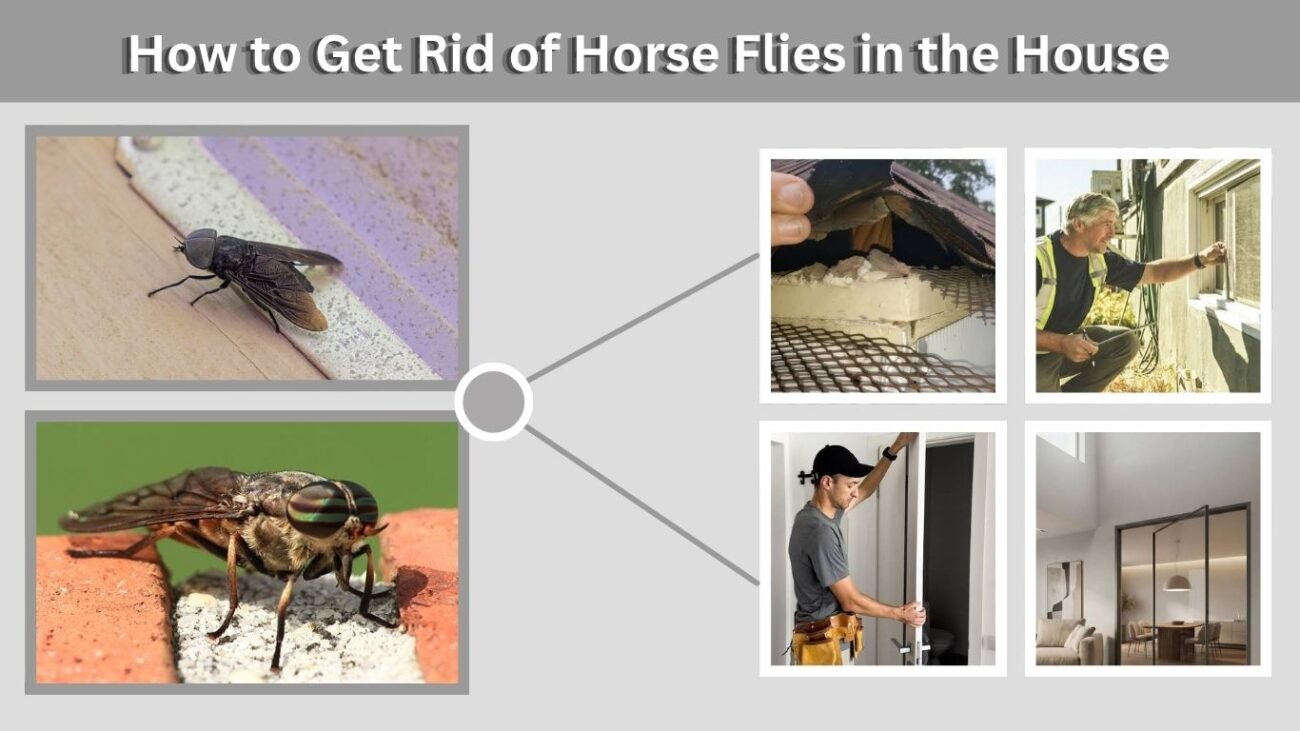
A single horse fly can usually be removed without treating the entire house.
Remove the Fly
Close interior doors to confine it to one room. Turn off unnecessary lights, open one exterior door or screened opening, and allow daylight from the exit to guide the fly outside.
A vacuum, fly swatter, or suitable indoor fly trap can remove an insect that will not leave. Avoid attempting to catch a live female horse fly with bare hands because it may bite.
Inspect Entry Points
Repair window screens and seal openings around:
- Doors and windows
- Utility pipes
- Attic vents
- Roof edges
- Exhaust fans
- Air-conditioning lines
- Garage doors
Screening, caulking, and sealing gaps are important for preventing flies that originate outdoors from entering buildings.
Investigate Repeated Appearances
When several flies continue appearing, capture one for identification before assuming they are horse flies. Check garbage containers, pet waste, spoiled food, manure, and damp organic material for house-fly breeding.
For large blow flies or flesh flies, inspect attics, chimneys, crawl spaces, wall voids, and areas where rodents or birds may have died. Removing the breeding source is more effective than repeatedly spraying adult flies.
FAQs
Are horse flies bigger than house flies?
Yes. Horse flies commonly measure ⅜–1 inch long, while house flies are normally only ⅙–¼ inch long. A horse fly also has a wider body, larger eyes, and a much heavier appearance.
Are horse flies related to house flies?
Both belong to the insect order Diptera, meaning they are true flies with one functional pair of wings. However, horse flies belong to the family Tabanidae, while house flies belong to Muscidae.
Can horse flies infest a house?
A true indoor infestation is unlikely because horse fly larvae require wet soil, mud, marshes, or similar outdoor habitats. One may enter accidentally, but repeated sightings often involve a different large fly species.
How long can a horse fly live inside a house?
An adult may survive for several days if it has access to water or sugar, but a trapped horse fly usually dies sooner from dehydration or exhaustion. It cannot complete its normal life cycle inside an ordinary dry home.
What is the fastest way to remove a horse fly?
Confine it to one room, darken unnecessary areas, and provide one bright exterior exit. A vacuum or fly swatter can remove it when it does not leave. Repair the opening through which it entered.