Tsetse flies (Glossina species) are blood-feeding insects found across sub-Saharan Africa. Known primarily as vectors of trypanosomiasis (sleeping sickness in humans and nagana in animals), they pose major medical and economic challenges. These flies inhabit diverse ecosystems, from savannahs to riverine forests. Each species or subspecies differs in its habitat, host preference, and disease risk, making their study crucial for understanding and controlling trypanosome transmission.
1. Glossina morsitans morsitans
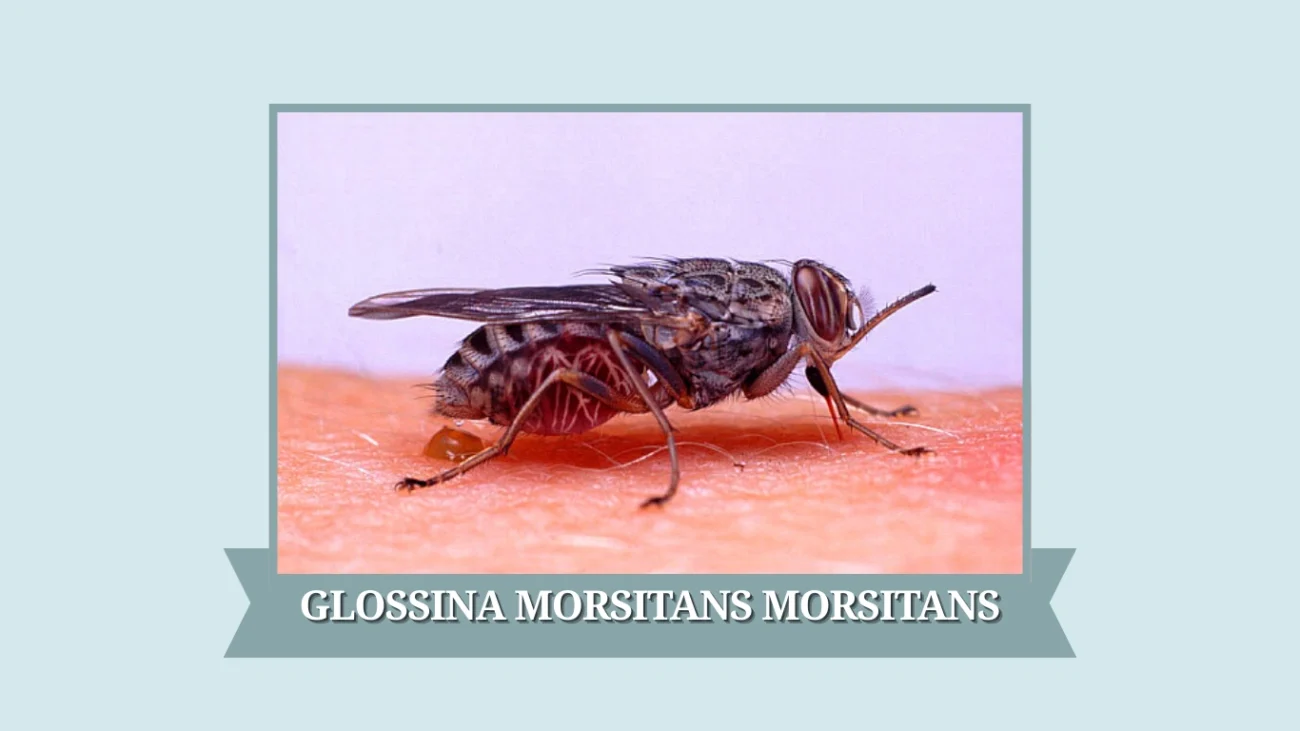
Overview:
Glossina morsitans morsitans is one of the most well-known subspecies of the tsetse fly, often referred to as the “savannah tsetse.” It is widely studied because of its role as a primary vector of African trypanosomiasis (sleeping sickness in humans and nagana in cattle).
Identification
- Medium-sized fly (8–13 mm in length)
- Brown to yellowish body coloration
- Characteristic hatchet-shaped cell in the wing venation
- Proboscis projects forward from the head
- Antennae with feathery arista
Habitat
Glossina morsitans morsitans is typically found in savannah and woodland regions of East and Southern Africa. It thrives in areas with scattered trees and shrubs, often near water sources where hosts are abundant.
Behavior
This species is highly aggressive in feeding and is strongly attracted to large mammals such as cattle, antelope, and humans. They are diurnal, most active during morning and late afternoon when temperatures are moderate.
Diet
The diet consists exclusively of blood (hematophagous). Both males and females feed on the blood of vertebrate hosts to obtain the nutrients required for survival and reproduction.
Lifecycle
The female tsetse fly gives birth to live larvae (viviparous reproduction). The larva pupates in the soil, emerging as an adult fly after several weeks depending on environmental conditions. The average lifecycle is about 30–50 days, though it can vary with climate.
2. Glossina morsitans centralis

Overview:
Glossina morsitans centralis is a subspecies of the savannah tsetse group, closely related to G. morsitans morsitans. It plays a significant role in transmitting trypanosomes to both livestock and wildlife, impacting rural communities across central Africa.
Identification
- Medium-sized fly, similar in size to G. morsitans morsitans (8–13 mm)
- Brownish-yellow body with slightly darker markings
- Distinctive hatchet-shaped wing venation
- Forward-projecting proboscis
- Antennae with plumose arista (feathery structure)
Habitat
This subspecies is primarily distributed in central Africa, especially in woodland savannah zones. It is commonly found in Zambia, Angola, and parts of the Democratic Republic of Congo. Preferred habitats include open woodland areas with scattered vegetation and regular access to host animals.
Behavior
Glossina morsitans centralis is strongly zoophilic (animal-feeding), preferring wild ungulates and livestock. Activity patterns are diurnal, with peaks during cooler morning and late afternoon hours.
Diet
Both male and female flies depend entirely on vertebrate blood. Typical hosts include antelope, buffalo, warthogs, and occasionally domestic cattle and humans.
Lifecycle
The reproductive cycle is viviparous. Females nourish a single larva internally until it reaches the third instar, after which it is deposited in shaded soil to pupate. Adult flies emerge in about 3–4 weeks depending on temperature and humidity.
3. Glossina morsitans submorsitans

Overview:
Glossina morsitans submorsitans is another subspecies within the savannah tsetse group. It is considered one of the most widespread tsetse flies across West and Central Africa and is a significant vector of both human and animal trypanosomiasis.
Identification
- Medium-sized tsetse fly (about 8–14 mm in length)
- Light brown body coloration with slightly darker thoracic patterns
- Typical hatchet-shaped wing venation
- Forward-pointing proboscis, used for piercing skin
- Antennae with characteristic feathery arista
Habitat
This species primarily inhabits savannah and woodland ecosystems of West Africa, extending into parts of Central Africa. It is often associated with riverine and bushy environments where wild and domestic hosts are present.
Behavior
G. m. submorsitans are strongly zoophilic but can also bite humans, especially in rural settings. It shows diurnal activity, particularly active during cooler parts of the day. Its aggressive feeding behavior makes it a prominent vector for disease.
Diet
As with other tsetse species, the diet consists exclusively of blood. Hosts include antelope, cattle, buffalo, warthogs, and occasionally humans, providing the fly with necessary nutrients for survival and reproduction.
Lifecycle
The lifecycle follows the typical tsetse reproductive strategy. Females produce one larva at a time, nourished internally until the third instar. The larva is then deposited in shaded soil to pupate, eventually emerging as an adult fly after several weeks. Environmental factors like temperature and humidity influence pupal development duration.
4. Glossina pallidipes
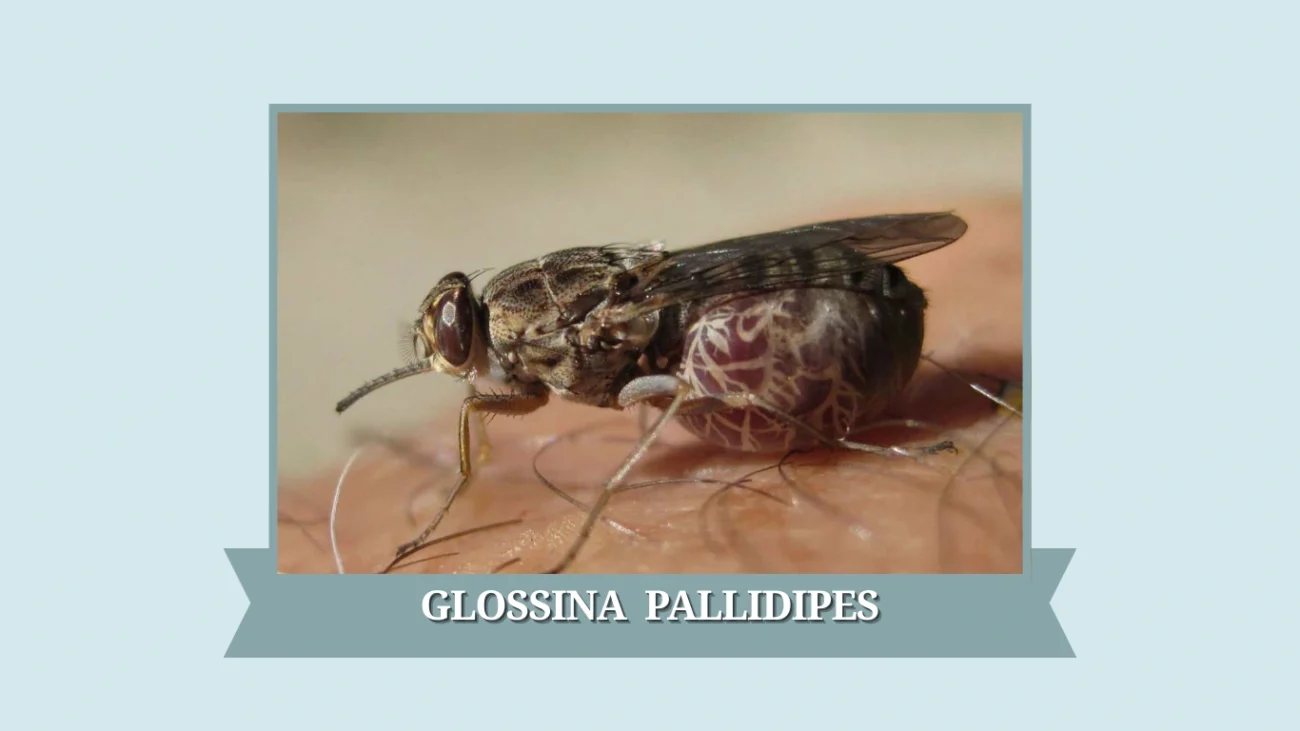
Overview:
Glossina pallidipes is one of the largest and most widely distributed tsetse species in East and Southern Africa. It is a highly important vector of both human sleeping sickness and animal trypanosomiasis, making it a major concern in livestock production areas.
Identification
- Large tsetse fly, reaching up to 15 mm in length
- Pale brown to yellowish coloration with dark thoracic bands
- Distinctive hatchet-shaped wing venation
- Long forward-pointing proboscis
- Antennae with prominent feathery arista
Habitat
G. pallidipes is commonly found in woodland, savannah, and riverine habitats. Its range extends across Kenya, Tanzania, Uganda, Zimbabwe, and parts of southern Ethiopia. It prefers areas with both wild hosts and domestic livestock.
Behavior
This species is highly aggressive in feeding and is attracted to large wild animals such as buffalo, giraffes, and antelope, as well as cattle. It is active during daylight hours, with peak biting times in the morning and late afternoon.
Diet
The diet is exclusively hematophagous, with both males and females feeding on blood. Preferred hosts are large wild ungulates and domestic livestock, though humans are also bitten when in proximity.
Lifecycle
The reproductive cycle is viviparous, with the female nourishing a single larva internally until it reaches full development. The larva is deposited in loose, shaded soil where it pupates. Adult emergence occurs after 3–5 weeks depending on environmental conditions. The average adult lifespan ranges from one to three months.
5. Glossina austeni

Overview:
Glossina austeni is a member of the fusca group of tsetse flies, notable for its association with forested and coastal habitats. It is a smaller species compared to savannah tsetse and is a known vector of trypanosomes affecting both animals and, occasionally, humans.
Identification
- Small to medium-sized fly (6–11 mm long)
- Dark brown body with slight metallic sheen
- Characteristic hatchet-shaped wing venation
- Short, forward-pointing proboscis
- Antennae with distinct feathery arista
Habitat
This species is primarily found in coastal and forested regions of East Africa, including Tanzania, Kenya, and Mozambique. It thrives in humid habitats with dense vegetation, often near the coast or in shaded forest areas.
Behavior
Glossina austeni shows strong zoophilic tendencies, feeding mainly on wild animals and livestock. It is less aggressive toward humans compared to savannah tsetse species but will bite when disturbed. Activity is generally limited to shaded environments, with feeding occurring throughout the day in cooler spots.
Diet
Exclusively hematophagous. Hosts include wild pigs, cattle, and various forest-dwelling mammals. Occasionally, it bites humans working or traveling through forested areas.
Lifecycle
Like other tsetse species, G. austeni reproduces viviparously. Females deposit fully developed larvae into shaded soil where they pupate. Pupal development typically lasts 3–4 weeks, after which adult flies emerge. Their lifecycle is closely tied to stable, humid environments.
6. Glossina swynnertoni

Overview:
Glossina swynnertoni is a savannah tsetse species with a relatively limited distribution but great medical and veterinary importance. It is a known vector of human African trypanosomiasis (sleeping sickness) and animal trypanosomiasis, especially in East Africa.
Identification
- Medium-sized fly (7–12 mm in length)
- Brownish body with darker thoracic stripes
- Characteristic hatchet-shaped wing venation
- Strong forward-projecting proboscis
- Antennae with feather-like arista
Habitat
This species is found primarily in northern Tanzania and southwestern Kenya, often in areas around the Serengeti ecosystem. It inhabits open savannah and bushland, typically in regions where both wildlife and livestock are present.
Behavior
G. swynnertoni is highly aggressive and readily bites humans as well as animals. It is active during daylight hours, especially in cooler periods of the morning and late afternoon. Its feeding behavior makes it a particularly dangerous vector in tourist and rural communities.
Diet
The diet is entirely blood-based. Hosts include cattle, antelope, buffalo, warthogs, and humans. Its high tendency to bite humans increases its medical significance compared to other savannah tsetse species.
Lifecycle
As with all tsetse flies, reproduction is viviparous. Females give birth to mature larvae, which are deposited in shaded, loose soil. The larvae quickly pupate and develop into adults within 3–5 weeks, depending on environmental conditions. Adults typically live for several weeks to months, sustaining transmission cycles.
7. Glossina longipalpis

Overview:
Glossina longipalpis belongs to the fusca group of tsetse flies. It is less widespread compared to other species but plays a role in the transmission of animal trypanosomiasis. Its distribution is patchy, mainly restricted to certain regions of Central and West Africa.
Identification
- Medium-sized fly (8–12 mm long)
- Dark brown body with slightly elongated shape
- Noticeably long palps (hence the name longipalpis)
- Hatchet-shaped cell in the wing venation
- Forward-projecting proboscis with feathered arista on the antennae
Habitat
This species is primarily found in moist woodland and forest margins, especially in shaded areas near rivers and streams. It is distributed across parts of Central Africa and some regions of West Africa.
Behavior
Glossina longipalpis is strongly zoophilic, preferring to feed on wild animals rather than humans. It tends to remain in shaded environments, showing limited dispersal compared to more aggressive savannah species. Feeding activity usually occurs during the day, with peaks in cooler hours.
Diet
Blood-feeding is obligatory for both sexes. Primary hosts include wild ungulates, antelope, and occasionally domestic livestock. Human bites are relatively rare.
Lifecycle
Like all tsetse flies, it reproduces viviparously. A single larva is nourished internally until full development, then deposited in shaded soil where pupation occurs. Pupal development generally takes 3–4 weeks, and the adult lifespan can extend for several weeks depending on climate and host availability.
8. Glossina fuscipes fuscipes

Overview:
Glossina fuscipes fuscipes is one of the most significant riverine tsetse species and a major vector of human African trypanosomiasis (sleeping sickness). It is widespread in East and Central Africa, particularly in riverine and wetland ecosystems.
Identification
- Medium-sized fly (6–12 mm long)
- Dark brown to black body coloration
- Prominent hatchet-shaped wing venation
- Forward-projecting proboscis
- Antennae with feathery arista
Habitat
This species thrives in riverine habitats, swamps, and areas with dense vegetation near water bodies. It is commonly found in Uganda, Kenya, South Sudan, and parts of the Democratic Republic of Congo. Its distribution is strongly tied to humid, shaded environments.
Behavior
Glossina fuscipes fuscipes is both anthropophilic (feeding on humans) and zoophilic (feeding on animals). It is highly adaptive in its host preferences, which increases its role in transmitting trypanosomes. Activity is diurnal, with biting occurring throughout the day but more intense in shaded riverine zones.
Diet
Exclusively hematophagous, feeding on humans, cattle, pigs, and wild mammals. Its adaptability in host choice makes it a particularly dangerous disease vector in rural communities.
Lifecycle
Reproduction is viviparous, with a single larva nourished within the female before being deposited in moist soil. The larva pupates, and adults emerge in 3–5 weeks depending on temperature and humidity. The average adult lifespan is several weeks, allowing continuous disease transmission.
9. Glossina fuscipes quanzensis

Overview:
Glossina fuscipes quanzensis is a subspecies of the riverine group of tsetse flies. It is an important vector of human African trypanosomiasis, particularly in Central Africa. Its distribution overlaps with other fuscipes subspecies but is most common in the Congo Basin.
Identification
- Medium-sized fly (7–12 mm long)
- Dark brown to black body with faint thoracic markings
- Distinctive hatchet-shaped wing venation
- Proboscis projecting forward from the head
- Antennae with characteristic feather-like arista
Habitat
This species thrives in riverine and swampy environments with dense vegetation. It is especially abundant in the Democratic Republic of Congo and neighboring regions. Its preference for humid areas near rivers makes it a constant presence in human settlements close to water.
Behavior
Glossina fuscipes quanzensis is opportunistic in its feeding behavior, readily biting both humans and animals. It is active throughout the day, with peak activity in shaded areas along rivers and streams. Its proximity to rural communities makes it a high-risk species for transmitting sleeping sickness.
Diet
The diet consists entirely of vertebrate blood. Hosts include humans, pigs, cattle, and wild animals such as antelope and bushbuck. Its adaptability in host preference increases its epidemiological importance.
Lifecycle
Like other tsetse flies, it reproduces viviparously. A single larva develops inside the female before being deposited in moist, shaded soil. After pupation, adults emerge within 3–4 weeks depending on environmental factors. Adults typically live for several weeks to months, sustaining transmission cycles in endemic areas.
10. Glossina fuscipes martinii
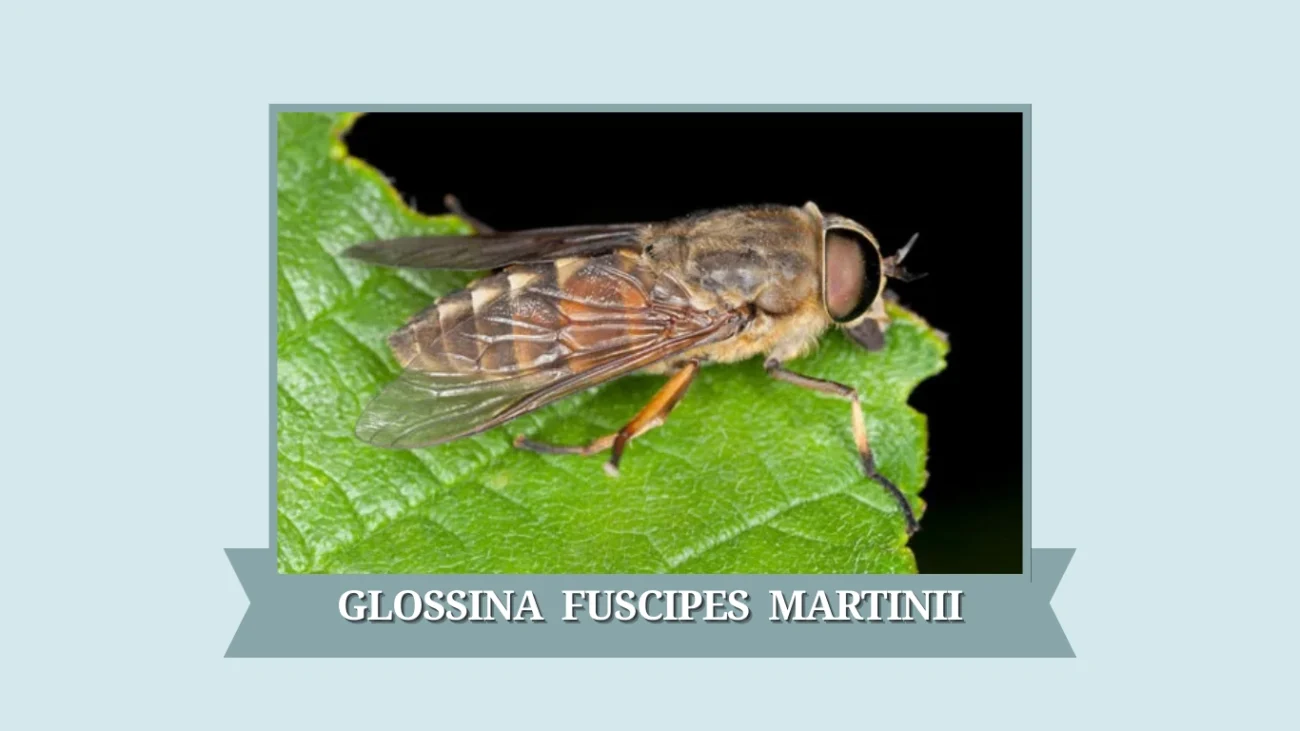
Overview:
Glossina fuscipes martinii is another subspecies of the riverine tsetse group. It is less widely distributed compared to G. f. fuscipes and G. f. quanzensis but still plays a role in transmitting human and animal trypanosomiasis in localized areas of East Africa.
Identification
- Medium-sized fly (6–11 mm long)
- Dark brown body with slightly lighter abdominal segments
- Hatchet-shaped wing venation characteristic of tsetse
- Forward-pointing proboscis
- Antennae with distinct feathery arista
Habitat
This subspecies is typically found along rivers, swamps, and wetlands with thick vegetation. Its distribution is concentrated in parts of East Africa, particularly in Tanzania and surrounding regions. It thrives in shaded, humid environments close to water bodies.
Behavior
G. f. martinii is diurnal, with activity concentrated in the cooler morning and late afternoon hours. It is opportunistic in its feeding behavior, biting both humans and animals, though it shows a slightly higher preference for domestic livestock than some related subspecies.
Diet
The diet is exclusively blood-based. Hosts include cattle, pigs, goats, antelope, and occasionally humans. This broad feeding range makes it a potential bridge vector for transmitting trypanosomes between wildlife, livestock, and humans.
Lifecycle
Reproduction is viviparous, with females producing one larva at a time. The larva is nourished internally until it reaches full development, then deposited in damp soil near water. Pupation lasts 3–4 weeks, after which adult flies emerge. The adult lifespan ranges from several weeks to a few months, depending on environmental conditions.
11. Glossina tachinoides

Overview:
Glossina tachinoides is a riverine species of tsetse fly, widely distributed across West and Central Africa. It is a key vector of human and animal trypanosomiasis, particularly in regions where communities live close to rivers and streams.
Identification
- Medium-sized fly (7–11 mm long)
- Dark brown to black body with lighter abdominal stripes
- Hatchet-shaped wing venation, typical of tsetse flies
- Forward-projecting proboscis for blood feeding
- Antennae with feather-like arista
Habitat
This species inhabits gallery forests, riverbanks, and swampy areas. It thrives in shaded, humid zones with dense vegetation along rivers and streams, often close to human settlements and farmland. Its distribution extends from Senegal through Nigeria and into parts of Central Africa.
Behavior
Glossina tachinoides is both anthropophilic and zoophilic, readily feeding on humans, livestock, and wild animals. It shows strong diurnal activity, particularly in cooler morning and late afternoon hours. Because it lives near rivers, it often comes into contact with people fetching water or farming.
Diet
Exclusively hematophagous. Hosts include humans, cattle, pigs, and wild mammals such as antelope and bushbuck. Its adaptability in host selection makes it an effective vector for trypanosome transmission across species.
Lifecycle
The female produces a single larva at a time through viviparous reproduction. The larva is deposited in shaded, moist soil where it pupates. Adult emergence occurs in 3–4 weeks depending on temperature and humidity. Adults live for several weeks, ensuring sustained disease transmission cycles.
12. Glossina palpalis palpalis

Overview:
Glossina palpalis palpalis is one of the most important riverine species of tsetse flies and a principal vector of human African trypanosomiasis (sleeping sickness). It is widely distributed in West and Central Africa and is highly associated with human settlements along rivers.
Identification
- Medium-sized fly (6–11 mm long)
- Dark brown body with lighter abdominal bands
- Distinctive hatchet-shaped wing venation
- Forward-projecting proboscis
- Antennae bearing a characteristic feathery arista
Habitat
This species thrives in riverine ecosystems, swamps, and mangrove areas. It is widespread across Nigeria, Cameroon, Ivory Coast, and the Congo Basin. It commonly occurs in places where humans and livestock live near rivers, increasing disease risk.
Behavior
G. p. palpalis is highly anthropophilic and often bites humans, especially people working, fishing, or fetching water near rivers. It is diurnal, with peak biting activity in cooler hours of the morning and evening. Its behavior makes it one of the most dangerous tsetse flies for human health.
Diet
Exclusively hematophagous. Preferred hosts include humans, pigs, cattle, and wild animals. Its strong tendency to bite humans makes it particularly effective in transmitting sleeping sickness.
Lifecycle
Reproduction is viviparous, with the female producing one larva at a time. The larva is deposited in shaded, moist soil near water. Pupation lasts 3–5 weeks depending on environmental conditions. Adults live for several weeks to months, ensuring sustained transmission of trypanosomes in endemic regions.
13. Glossina palpalis gambiensis

Overview:
Glossina palpalis gambiensis is a riverine species of tsetse fly and a major vector of human African trypanosomiasis in West Africa. It is particularly important in rural communities where people depend on rivers for daily activities, making human-fly contact frequent.
Identification
- Medium-sized fly (6–11 mm long)
- Dark brown to black body with lighter abdominal bands
- Typical hatchet-shaped wing venation of tsetse flies
- Forward-projecting proboscis
- Antennae with feathery arista
Habitat
This species is found mainly along rivers, mangroves, and swampy areas in West Africa. It is common in Senegal, Guinea, Burkina Faso, Mali, and Ivory Coast. The species thrives in shaded, humid zones close to water where humans, livestock, and wild animals coexist.
Behavior
Glossina palpalis gambiensis is strongly anthropophilic, frequently biting humans in riverside villages. It is also opportunistic, feeding on both livestock and wild animals. Activity is diurnal, with peak feeding occurring in the morning and late afternoon when temperatures are moderate.
Diet
Entirely blood-feeding. Hosts include humans, pigs, cattle, and wild ungulates. Its preference for humans, combined with proximity to villages, makes it a high-risk species for spreading trypanosomiasis.
Lifecycle
Reproduction is viviparous. The female nourishes a larva internally until it reaches the third instar, then deposits it in moist soil. Pupation takes 3–5 weeks depending on environmental conditions. Adults can survive for several weeks to months, depending on climate and host availability, enabling persistent transmission.
14. Glossina brevipalpis

Overview:
Glossina brevipalpis is one of the largest species of tsetse fly, belonging to the fusca group. Though less aggressive toward humans than some other species, it is an important vector of animal trypanosomiasis, particularly affecting cattle in East and Southern Africa.
Identification
- Large tsetse fly, often 12–15 mm in length
- Dark brown to black body, robust in build
- Characteristic hatchet-shaped wing venation
- Relatively short palps compared to body size (hence the name brevipalpis)
- Antennae with feathery arista
Habitat
This species inhabits forest margins, riverine vegetation, and coastal thickets. It is found in countries such as Tanzania, Kenya, South Africa, Mozambique, and Zimbabwe. It prefers humid, shaded areas with dense vegetation and abundant wildlife.
Behavior
Glossina brevipalpis is predominantly zoophilic, feeding mostly on wild animals and livestock. It rarely bites humans, making it less significant medically but highly important in veterinary contexts. Activity occurs during daylight hours, with preference for shaded environments.
Diet
Entirely hematophagous. Primary hosts include cattle, buffalo, antelope, and other wild mammals. Its strong association with cattle makes it a key species in spreading animal trypanosomiasis (nagana).
Lifecycle
The reproductive cycle is viviparous. Females produce one larva at a time, nourished internally before being deposited in shaded, moist soil. Pupation lasts 3–5 weeks, after which adults emerge. Adults typically live several weeks to months, ensuring continued transmission in livestock areas.
15. Glossina nigrofusca

Overview:
Glossina nigrofusca is a member of the fusca group of tsetse flies. It is less commonly encountered than the major savannah and riverine species but still contributes to the spread of animal trypanosomiasis in certain forested regions of Africa.
Identification
- Medium to large tsetse fly (10–14 mm long)
- Dark brown to nearly black body
- Distinctive hatchet-shaped wing venation
- Forward-pointing proboscis
- Antennae with the typical feathery arista
Habitat
This species is primarily associated with dense forests and forest margins. It is found in parts of West and Central Africa, where it inhabits humid, shaded zones with abundant vegetation and wildlife hosts.
Behavior
Glossina nigrofusca is strongly zoophilic, feeding mainly on wild animals. It rarely bites humans, which makes it less medically significant, though it plays a role in transmitting trypanosomes to livestock. Its activity is largely diurnal, with movements concentrated in shaded forest environments.
Diet
Exclusively blood-feeding. Main hosts include antelope, buffalo, wild pigs, and cattle. Human feeding is extremely rare and incidental.
Lifecycle
Reproduction follows the viviparous system typical of tsetse flies. Females give birth to a single fully developed larva, which is deposited in moist forest soil to pupate. After 3–5 weeks, adults emerge. Adults may survive several weeks to months depending on environmental conditions and host availability.
16. Glossina medicorum

Overview:
Glossina medicorum is a lesser-known member of the fusca group of tsetse flies. While not as widespread or aggressive as some of the major savannah and riverine species, it still plays a role in the ecology of trypanosome transmission, especially to animals in forested habitats.
Identification
- Medium-sized fly (8–12 mm long)
- Dark brown to black body, slightly slender compared to larger fusca species
- Characteristic hatchet-shaped wing venation
- Forward-pointing proboscis
- Antennae with feathered arista
Habitat
This species is primarily associated with humid forest environments in West and Central Africa. It favors shaded zones along forest margins and riverine areas where wild hosts are abundant.
Behavior
Glossina medicorum is predominantly zoophilic, showing a strong preference for feeding on wild animals rather than humans. It is less aggressive compared to savannah species and tends to remain in shaded, forested habitats with limited dispersal.
Diet
Obligate blood-feeder. Hosts mainly include wild ungulates, forest-dwelling mammals, and occasionally domestic livestock. Human feeding is rare and incidental.
Lifecycle
The reproductive cycle is viviparous. Females produce a single larva at a time, which develops internally before being deposited in shaded, moist soil. Pupation lasts 3–4 weeks, after which adult flies emerge. Adult longevity ranges from several weeks to months, depending on host availability and environmental conditions.