











Blue parrots are among the most stunning and beloved bird species in the world. Their dazzling blue feathers, intelligence, and playful nature make them favorites among pet owners and bird enthusiasts alike. From large, majestic macaws to small, talkative ringnecks, blue parrots come in many fascinating varieties. This guide explores the most popular types of blue parrots, their diet, lifespan, and how to care for them properly.
Overview of Blue Parrots

What Is a Blue Parrot?
The term “blue parrot” doesn’t refer to a single species—it represents several parrot species that feature brilliant shades of blue plumage. These birds range from small, chirpy finches to large macaws that can live for decades. The blue hue in their feathers isn’t caused by pigment but by the way light refracts through microscopic feather structures, creating a shimmering blue effect.
Common Characteristics
Blue parrots are known for their intelligence, vibrant colors, and affectionate personalities.
- Size: Small species like the Ringneck average 12–14 inches, while large macaws reach over 36 inches.
- Temperament: Curious, playful, and social—many enjoy human company.
- Intelligence: They can mimic speech, solve puzzles, and form strong emotional bonds.
Their combination of beauty and intelligence has made them some of the most sought-after parrots in the world.
Popular Types of Blue Parrots

Blue Macaw Parrot
The Blue Macaw, or Hyacinth Macaw, is the largest flying parrot species on Earth. It has deep cobalt-blue feathers and a striking yellow ring around the eyes. Native to Brazil and parts of South America, it is known for its gentle nature and strong bond with owners.
Blue Macaws can live up to 80 years in captivity, making them lifelong companions.
Blue Macaw Parrot for Sale and Price Range
These parrots are among the most expensive due to their rarity and conservation status. Prices typically range from $3,000 to $10,000, depending on the breeder and training level. Because they are protected under CITES regulations, buyers should ensure they purchase from certified, ethical sources.
Blue Fronted Amazon Parrot
The Blue Fronted Amazon Parrot is native to South America and easily recognized by its bright green body with a vivid blue patch above its beak. They are among the most talkative parrot species and can mimic words and songs accurately.
Highly social and affectionate, these birds love being part of the family and thrive on daily attention. They typically live 40–60 years and require plenty of playtime to stay mentally stimulated.
Care Tips for Blue Fronted Amazon Parrots
- Provide a balanced diet of pellets, vegetables, and fruit.
- Offer daily out-of-cage time for exercise.
- Keep them entertained with toys and human interaction.
- Maintain regular vet checkups for long-term health.
Blue Indian Ringneck Parrot
The Blue Indian Ringneck is one of the most popular medium-sized parrots kept as pets. It has sleek turquoise feathers, a long tail, and a distinctive black neck ring (more visible in males). Known for its intelligence and speech ability, the Ringneck can learn a wide vocabulary and mimic human voices clearly.
Training and Socialization
Start taming and socializing the bird early—Ringnecks can become shy or defensive if ignored.
- Use repetition and positive reinforcement to teach speech.
- Avoid shouting or punishment, which can create fear.
- Spend at least an hour daily interacting with your parrot.
With consistent care, these birds live 25–35 years and develop charming personalities.
Blue Quaker Parrot
The Blue Quaker Parrot, also known as the Blue Monk Parakeet, is a small, friendly species loved for its gentle demeanor. This color variation is a mutation of the traditional green Quaker Parrot. Despite their small size (about 12 inches), they are outgoing and highly interactive.
Blue Quaker Parrot for Sale
Blue Quakers are popular for first-time owners due to their manageable size and sweet temperament. Prices typically range between $400 and $700. However, some U.S. states restrict Quaker ownership because of their nesting habits, so always check local regulations before buying.
Blue Headed and Blue Monk Parrots
The Blue Headed Parrot is another delightful medium-sized bird with bright blue head feathers and a green body. Calm and affectionate, it enjoys companionship and can live up to 30 years.
Meanwhile, the Blue Monk Parrot (a Quaker mutation) is an excellent talker and very adaptable, making it ideal for apartment living.
Other Unique Blue Parrot Species
Several other parrots display blue variations worth mentioning:
- Blue Eclectus Parrot – A rare color mutation in the Eclectus species, mainly seen in females.
- Blue Faced Parrot Finch – Small, colorful, and energetic, often mistaken for a parakeet.
- Blue African Grey Parrot – A stunning blue-tinted genetic mutation of the traditional African Grey.
- Norwegian Blue Parrot – A fictional species made famous by the Monty Python comedy sketch.
These species showcase the incredible range of blue tones found across parrot families, from deep sapphire to bright turquoise.
Diet and Nutrition for Blue Parrots

Recommended Foods
A healthy diet keeps blue parrots vibrant and energetic. Their meals should include:
- Pellets (60%) – Provide essential vitamins and minerals.
- Fresh fruits (20%) – Apples, mangoes, bananas, blueberries, and pears.
- Vegetables (20%) – Kale, spinach, carrots, and bell peppers.
- Occasional treats – Nuts and seeds in moderation.
Foods to Avoid
Some foods are toxic to parrots and must be avoided at all costs:
- Avocado
- Chocolate
- Caffeine
- Alcohol
- Salty or fried foods
Feeding Routine
Feed your parrot twice daily with small portions to prevent overeating. Always provide fresh water and remove leftover food promptly to avoid spoilage. A varied diet ensures strong immunity, bright plumage, and longevity.
Housing and Environment
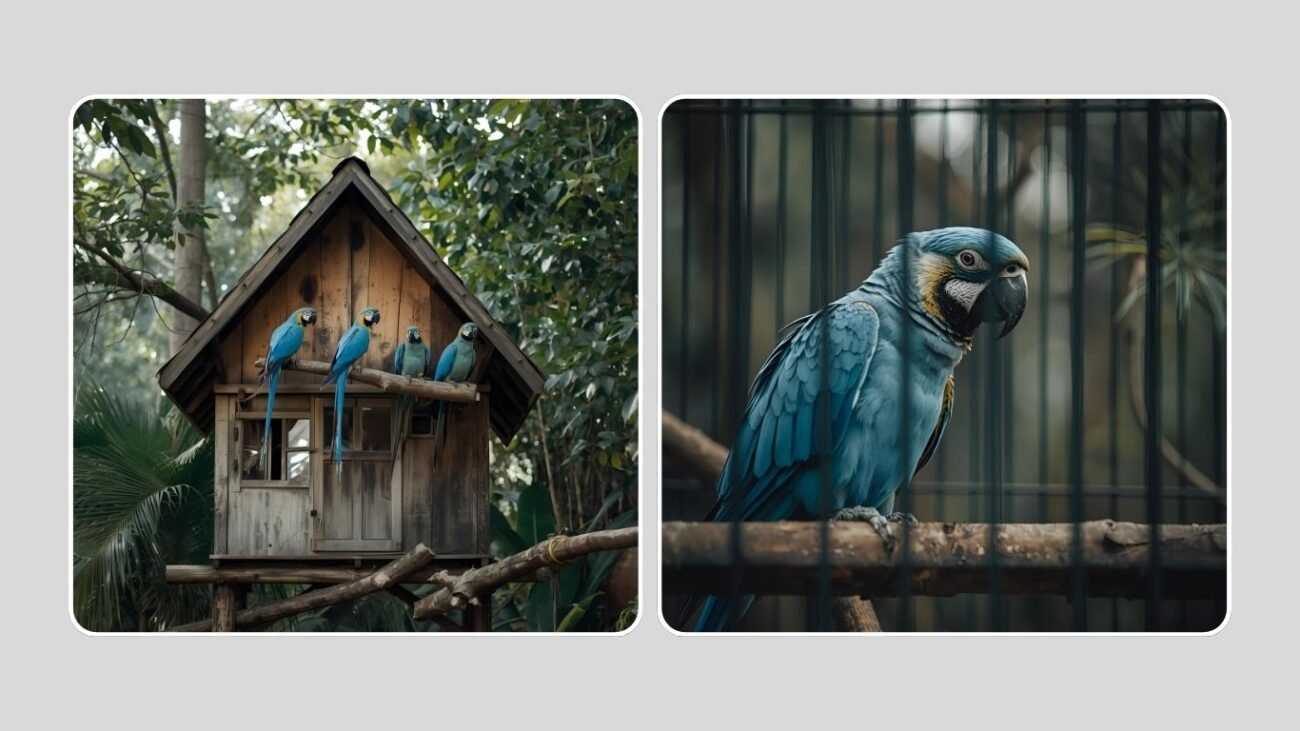
Creating the right living space is vital for a blue parrot’s health and happiness. Because these birds are active and intelligent, they need room to move, climb, and explore.
Ideal Cage Setup
Choose a spacious cage that fits the bird’s size. Large parrots like macaws need a minimum cage size of 36 x 48 x 60 inches, while smaller species such as Ringnecks or Quakers do well in 24 x 24 x 36 inches.
Use stainless steel cages to avoid rust and toxicity. Add perches of varying diameters to promote foot health and include chew toys, ladders, and bells for mental stimulation.
Environmental Needs
Blue parrots are tropical birds that thrive in warm, well-lit environments. Keep the temperature between 70–85°F and ensure the area has good air circulation.
Place the cage where the bird can observe daily household activity without exposure to drafts or direct sunlight. Provide 10–12 hours of sleep in a quiet, dark room at night to support their immune system and reduce stress.
Behavior and Intelligence
Blue parrots are known for their remarkable intelligence and engaging personalities. Their ability to mimic human speech and respond to emotional cues makes them extraordinary companions.
Talking and Mimicry
Species like the Blue Macaw, Ringneck, and Quaker Parrot are outstanding talkers. They can learn hundreds of words and use them in context.
- Start training early with short, simple words.
- Use repetition and rewards like fruit treats.
- Speak in a calm, happy tone — parrots mimic the emotions they sense.
Social and Playful Nature
Blue parrots crave attention and mental stimulation. They enjoy listening to music, solving puzzles, and interacting with their owners. Neglect or lack of stimulation can cause anxiety and behavioral issues like feather plucking.
Daily interaction, even for 30–60 minutes, helps strengthen their trust and bond.
Health and Lifespan
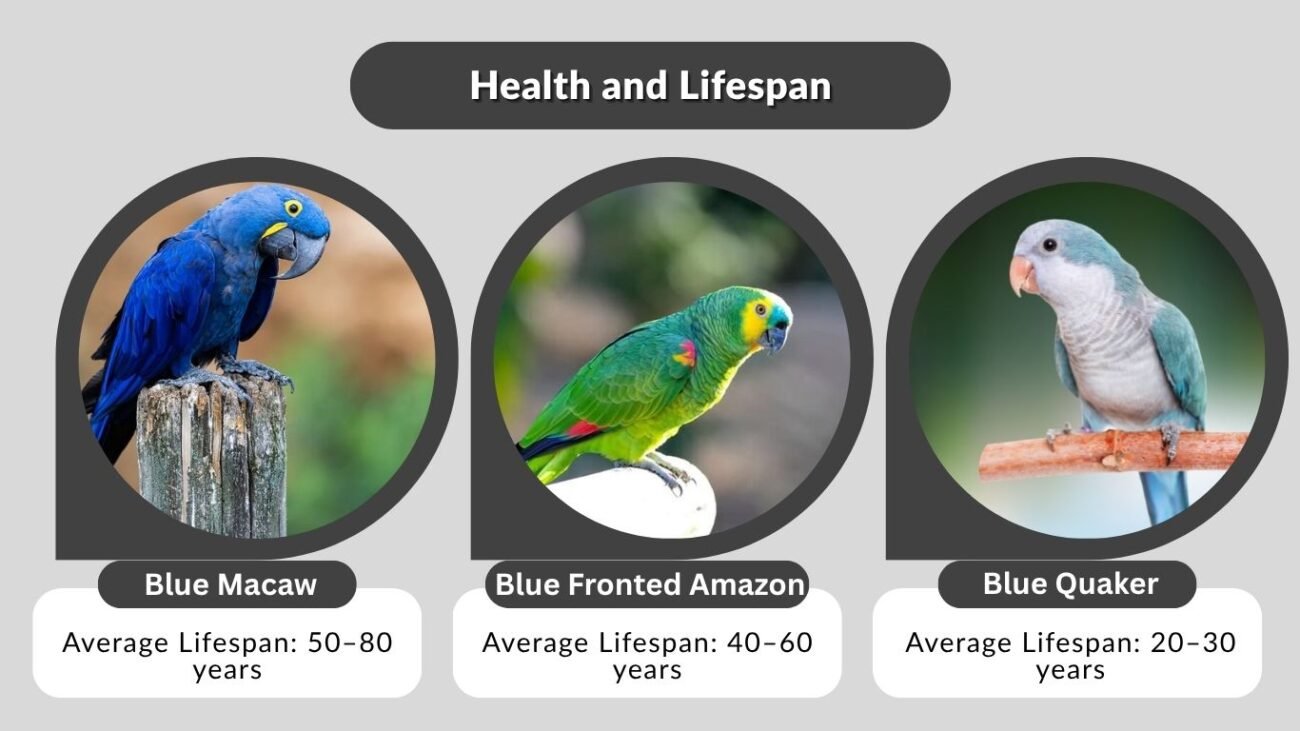
Average Lifespan by Species
| Species | Average Lifespan | Notable Traits |
| Blue Macaw | 50–80 years | Largest and longest-living parrot |
| Blue Fronted Amazon | 40–60 years | Excellent talker, strong bond with owners |
| Blue Indian Ringneck | 25–35 years | Smart and playful, easy to train |
| Blue Quaker | 20–30 years | Hardy and affectionate companion |
| Blue Headed Parrot | 25–30 years | Calm, social, good for apartments |
Common Health Issues
- Feather Plucking: Often caused by boredom or stress. Provide toys and interaction.
- Respiratory Infections: Triggered by drafts, mold, or unclean cages. Keep the cage dry and hygienic.
- Calcium or Vitamin Deficiencies: Lead to weak bones and dull feathers. Feed a balanced diet with leafy greens.
- Psittacosis (Parrot Fever): A bacterial infection transmissible to humans; requires immediate veterinary care.
Veterinary Care
Regular checkups with an avian veterinarian are essential. Annual health exams help detect problems early. Trim nails and wings as needed and allow for occasional baths or gentle misting to maintain feather health.
Buying and Legal Considerations
Where to Buy a Blue Parrot
Buy only from certified breeders or licensed adoption centers to ensure the parrot is legally and ethically sourced. Reputable breeders provide proper documentation, health records, and information about the bird’s origin.
Avoid black-market sellers or online listings with suspiciously low prices, as these may involve illegal trade or unhealthy birds.
Price Range Overview
| Type | Average Price |
| Blue Macaw | $3,000 – $10,000 |
| Blue Fronted Amazon | $800 – $1,200 |
| Blue Indian Ringneck | $400 – $800 |
| Blue Quaker | $300 – $700 |
| Blue Headed Parrot | $500 – $900 |
Legal Ownership
Some regions have restrictions on owning certain parrot species, especially Quakers or endangered macaws. Check local wildlife laws before purchase. Always request CITES certification for exotic birds to ensure they are not wild-caught.
Tips for Caring for Blue Parrots

Daily Care Routine
- Feed twice a day with fresh, balanced meals.
- Replace water daily and clean feeding bowls.
- Provide out-of-cage time for exercise and exploration.
- Rotate toys weekly to prevent boredom.
- Allow 10–12 hours of uninterrupted sleep.
Bonding with Your Parrot
Bonding is key to maintaining a happy parrot. Talk softly, offer treats by hand, and respect their space when they’re resting. Parrots remember kindness—and also neglect—so consistent affection is vital.
Fascinating Facts About Blue Parrots
- Blue color in parrots comes from light refraction, not pigment.
- The Hyacinth Macaw is the largest parrot in the world.
- Blue Quakers can build intricate stick nests.
- Ringneck Parrots have been known to mimic full sentences.
- Many blue parrots mate for life, forming deep emotional bonds.
FAQs
What is the most popular blue parrot species?
The Blue-and-Gold Macaw and the Blue Indian Ringneck are among the most popular for their striking color and intelligence.
How long do blue parrots live?
Depending on species, blue parrots can live 20 to 80 years. Larger species like macaws live the longest, often outliving their owners.
Can blue parrots talk?
Yes. Many blue parrots are excellent talkers and can mimic human speech, sounds, and even laughter with remarkable accuracy.
Are blue parrots good pets for beginners?
Smaller types like Blue Quakers and Blue Ringnecks are suitable for beginners. Larger species like macaws require experienced owners due to their size and long lifespan.
How much does a blue parrot cost?
Prices range from $300 for small parrots to $10,000 for large or rare species. Factors like age, training, and breeder reputation influence the price.


