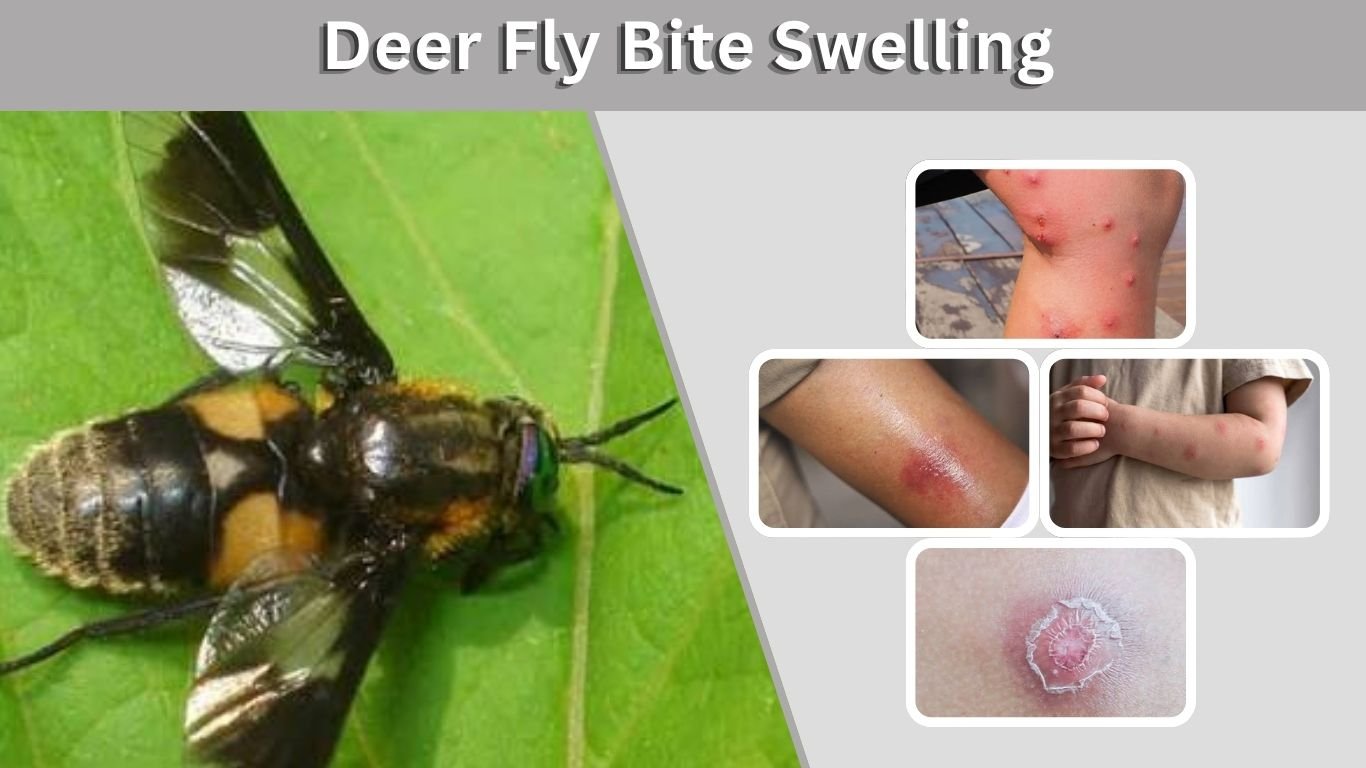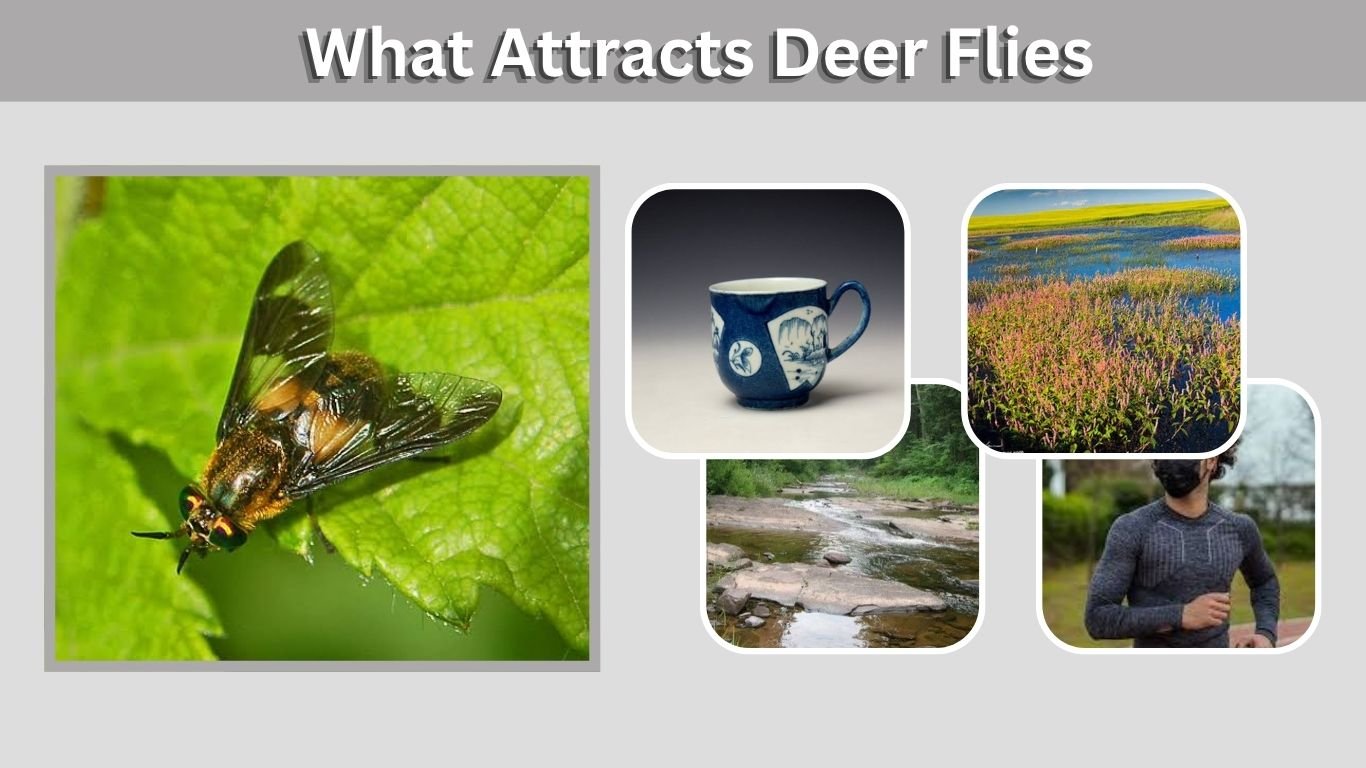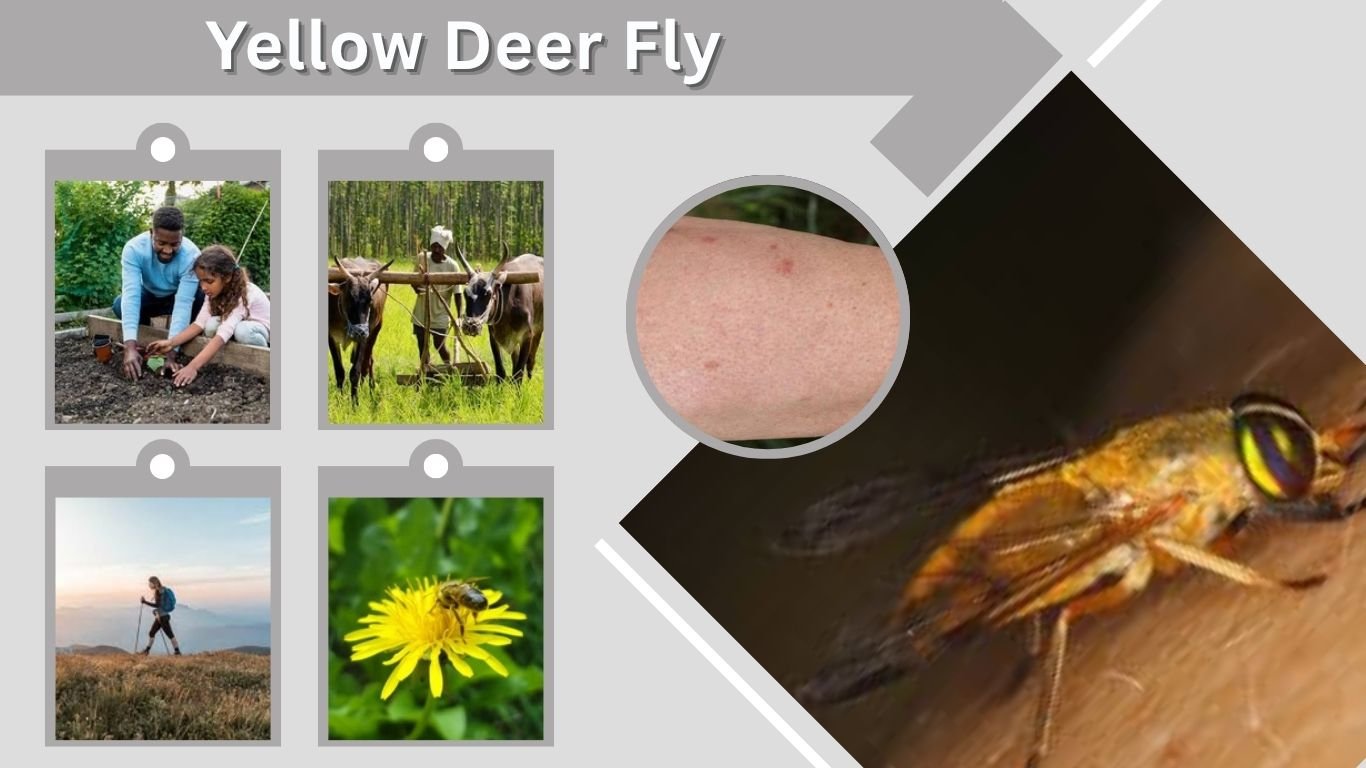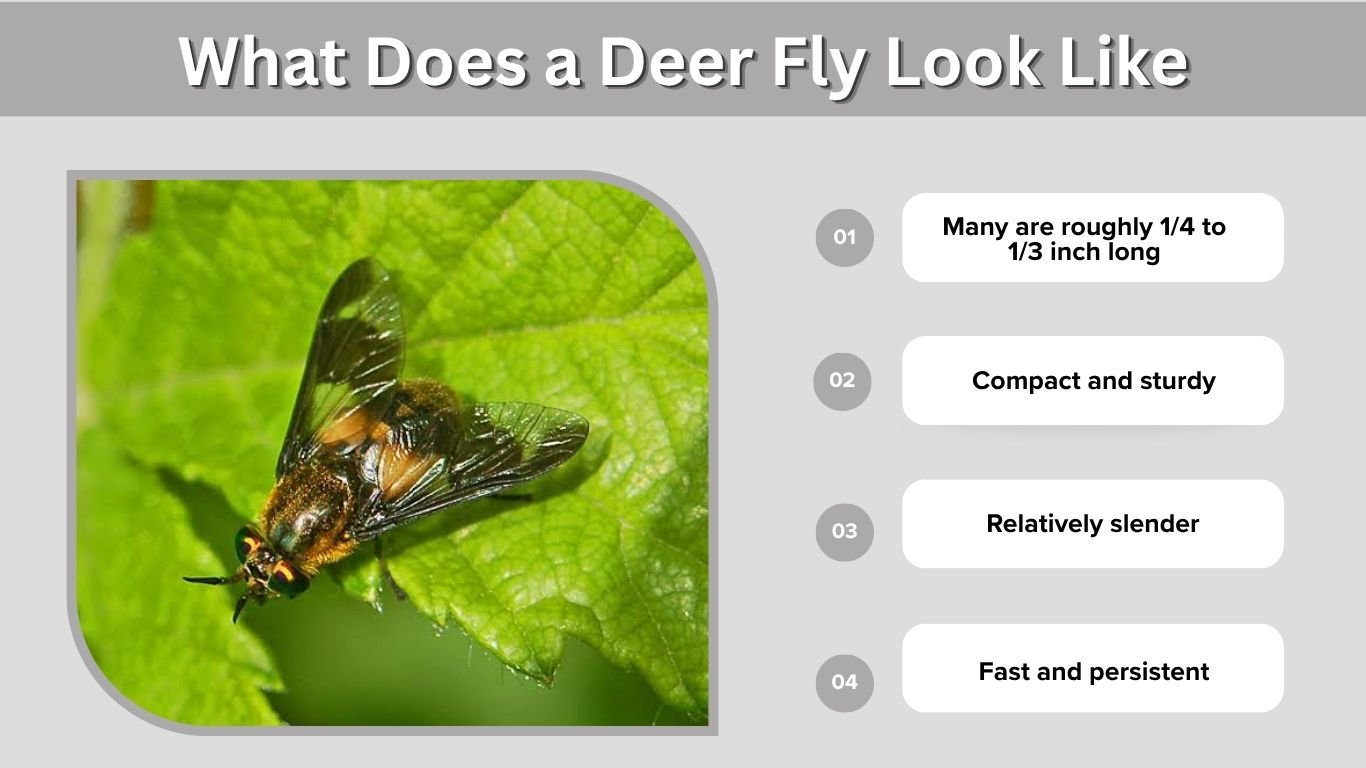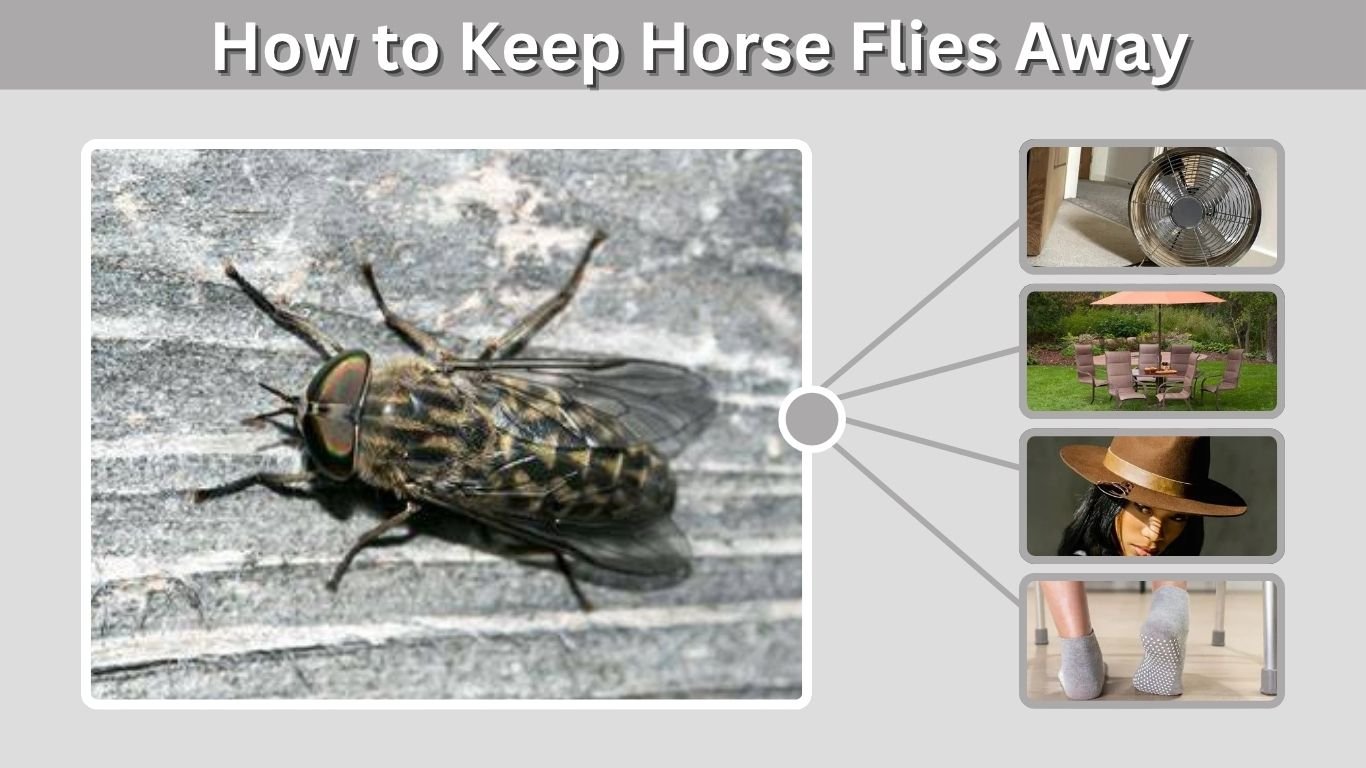
Horse flies are large, persistent insects that can deliver painful bites to people, horses, dogs, cattle, and other warm-blooded animals. They are especially common near wetlands, ponds, streams, damp pastures, woodland edges, and livestock areas during warm daylight hours.
Keeping horse flies away requires several methods working together. Protective clothing, approved repellents, physical barriers, correctly designed traps, and changes to outdoor routines are generally more dependable than vinegar, garlic, deodorant, or essential-oil remedies.
Why Are Horse Flies Difficult to Control?
Horse flies are strong fliers that can travel into a property from breeding areas some distance away. Their larvae usually develop in wet soil, marshes, muddy pond edges, and other moist environments rather than in household garbage or ordinary manure piles.
Adult females locate hosts using movement, body heat, exhaled carbon dioxide, contrast, and large dark shapes. This is why they may repeatedly circle or follow a person, horse, or moving vehicle. Eliminating every horse fly from a large outdoor space is rarely realistic, but reducing bites and local activity is possible.
1. Wear Light-Colored Protective Clothing
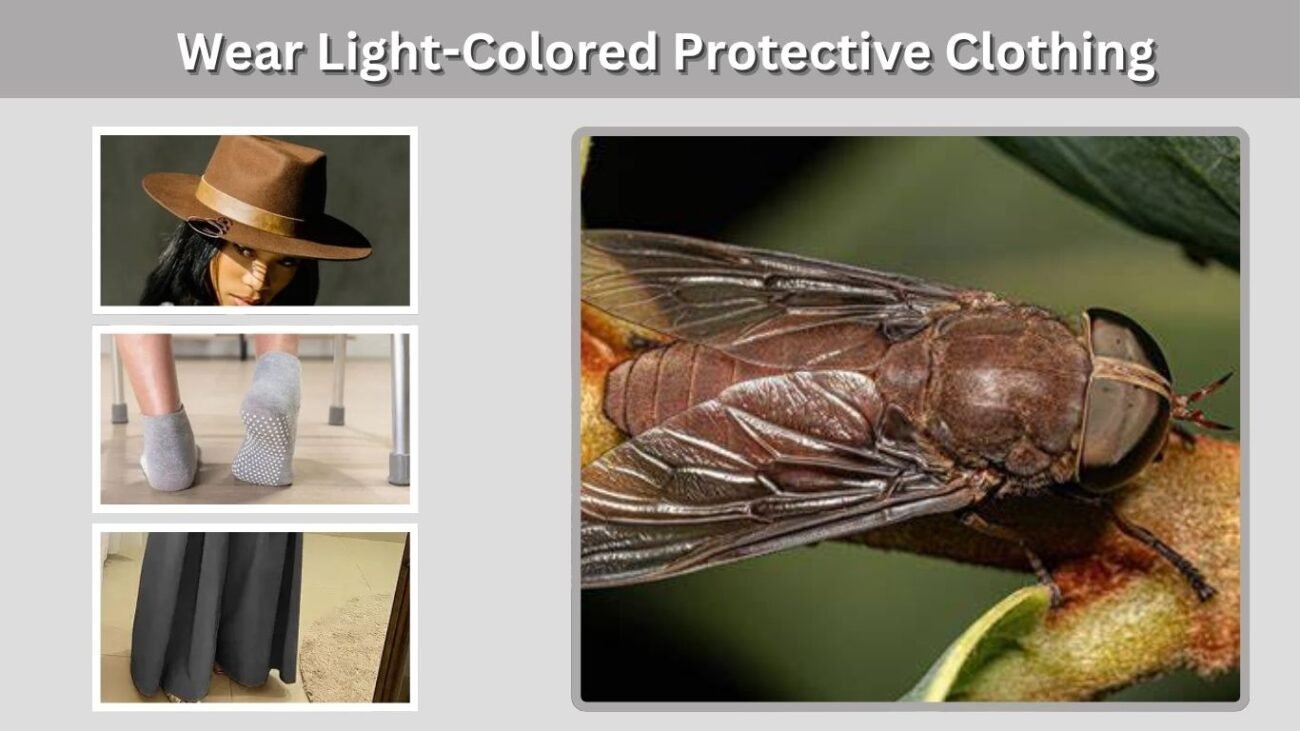
Cover exposed skin when walking, hiking, swimming, gardening, or working near horse fly habitat.
Wear:
- Loose, long-sleeved shirts
- Long trousers
- Socks covering the ankles
- Closed shoes
- A hat with a brim
- Tightly woven, light-colored fabrics
Horse flies may bite through very thin clothing or reach skin where fabric is stretched tightly. Loose, dense material creates a better barrier. Check openings around collars, sleeves, waistbands, and trouser legs because flies may crawl beneath clothing.
2. Apply an Approved Insect Repellent
Use a skin repellent specifically labeled for human use. EPA-registered active ingredients include DEET, picaridin, IR3535, oil of lemon eucalyptus, para-menthane-diol, catnip oil, and 2-undecanone.
Not every product works equally well against every biting fly, so read the label to confirm that it lists horse flies, deer flies, biting flies, or a similar target. Apply it only as directed and wash treated skin after returning indoors. Never spray repellent beneath clothing or onto irritated skin.
Permethrin products designed for clothing can provide additional protection, but they should be applied only to approved garments or equipment—not directly to human skin.
3. Avoid Peak Horse Fly Activity
Horse flies depend heavily on vision and are mainly active during warm daylight hours. Encounters are often worse on sunny, humid days near water, woods, farms, and pastures.
Consider moving outdoor activities to early morning, evening, or cooler periods when fly activity is lower. During hiking or beach trips, avoid remaining beside marshy vegetation, muddy shorelines, or wet woodland edges for long periods.
When a fly repeatedly follows you, moving indoors, into a vehicle, or into a screened shelter is more effective than continually swatting at it.
4. Use Fans in Small Outdoor Areas
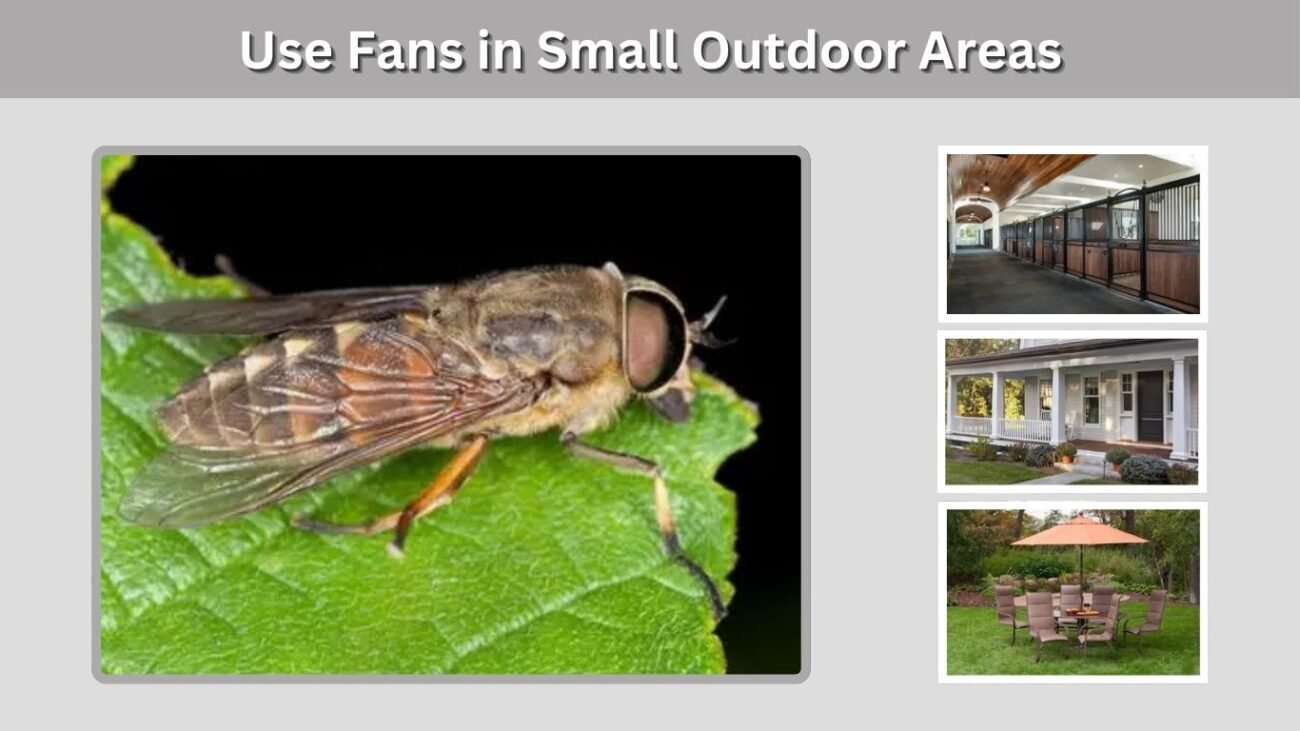
A powerful fan can make it harder for biting flies to land and can disperse body odors and exhaled carbon dioxide around a patio, porch, stable aisle, or sheltered poolside sitting area.
Fans will not protect an entire yard, pasture, or swimming pool. Position them so airflow crosses the area where people or animals remain. Keep electrical equipment safely away from water and use outdoor-rated equipment where required.
Fans are also used with fly sheets and repellents to reduce insect annoyance around confined horses.
5. Install the Correct Horse Fly Trap
Horse fly traps work differently from traps designed for house flies. Many effective designs use a large dark ball, dark panel, or box that imitates a warm animal. The fly approaches the visual target and is directed into a collection chamber.
Common designs include:
- Dark-ball traps
- H-traps
- Box traps
- Large dark-panel traps
Place traps between the suspected breeding area and the space you want to protect. Position them away from patios, barn entrances, pools, and other places where people or animals gather so the trap does not draw flies toward the activity area.
Ordinary sticky ribbons, ultraviolet indoor traps, baited jugs, and house-fly traps may perform poorly against horse flies because these insects respond strongly to visual targets rather than food odors.
6. Reduce Attraction Around a Pool
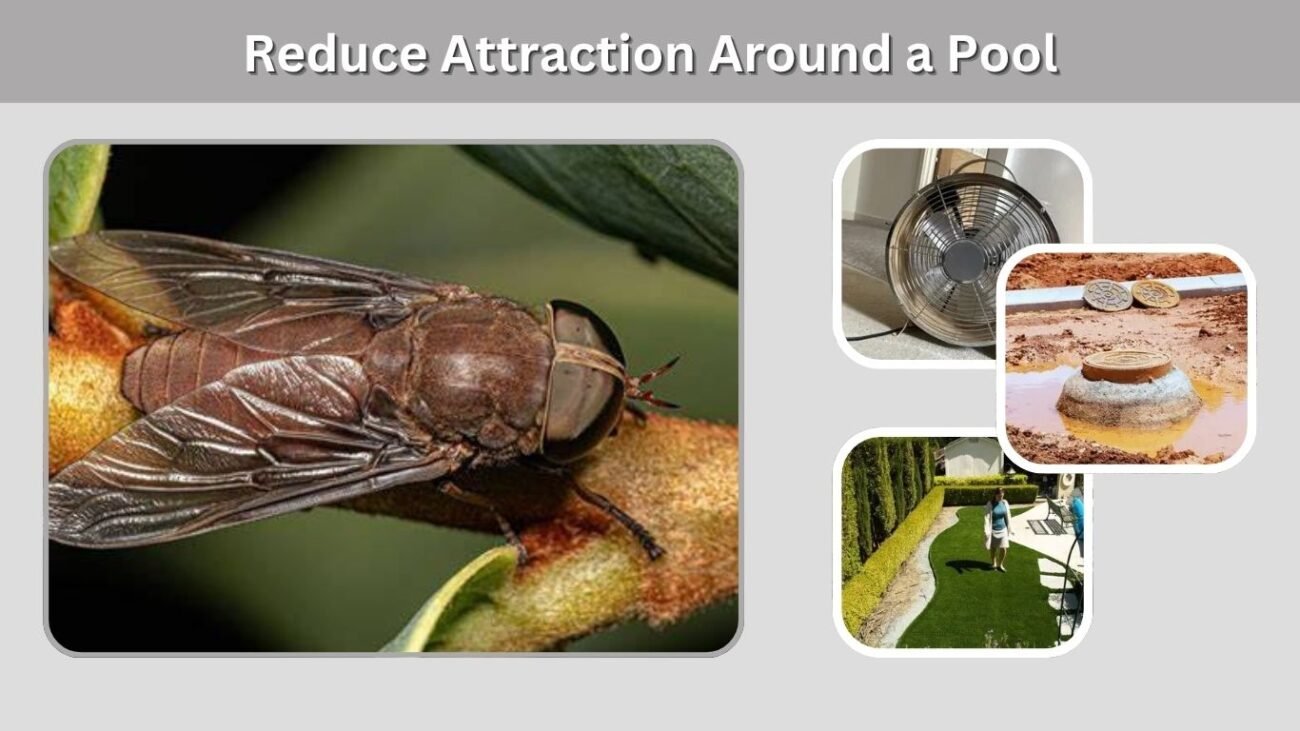
Horse flies may visit swimming pools because water, movement, reflective surfaces, and people provide strong visual signals. They do not normally breed in a properly maintained chlorinated pool, but nearby muddy soil, drainage areas, wetlands, or pond edges may support larvae.
To reduce activity:
- Keep grass and weeds trimmed around the pool
- Repair areas where water collects in muddy soil
- Use fans near seating areas
- Install a trap away from the pool
- Cover the pool when it is not being used
- Wear repellent before swimming, following label instructions
- Dry off and move into shade or shelter after leaving the water
Do not add household insecticides, essential oils, or homemade mixtures to pool water. Products used around a pool must be labeled for that location.
7. Protect Horses With Physical Barriers
Fly masks, sheets, neck covers, and fly boots can reduce the amount of exposed skin available to biting flies. A properly fitted mask protects the eyes and face without rubbing the skin or interfering with vision.
Use lightweight, breathable fly sheets in warm weather and check horses regularly for sweating, rubbing, trapped debris, or damaged straps. Sheets and masks should remain clean, dry, and correctly fitted.
A horse can generally see through the mesh of a suitable fly mask, but the mask should be removed and inspected regularly. Any product that becomes wet, twisted, or damaged should be adjusted or replaced.
8. Use Horse-Safe Repellents Correctly
Select a fly spray labeled for horses and follow its directions regarding application, reapplication, sensitive areas, and weather conditions. Some products provide only temporary protection, especially after sweating, rain, bathing, or heavy exercise.
Avoid spraying directly into the horse’s eyes, nostrils, mouth, or open wounds. Apply a small amount to a cloth when treating the face, provided the label permits this method.
Physical barriers, fans, shelter, traps, and labeled repellents usually work better together than relying on spray alone.
9. Protect a Horse’s Eyes, Legs, and Wounds
Horse flies often attack exposed areas where they can land easily. Fly masks protect the face and eyes, while fly boots or leg wraps can reduce bites around the lower legs.
Open wounds require special attention because flies may cause irritation or contamination. Keep wounds clean and follow a veterinarian’s treatment instructions. Do not apply homemade fly mixtures or ordinary insect repellent directly to broken skin.
Contact a veterinarian when a wound becomes swollen, hot, painful, foul-smelling, or produces discharge.
10. Keep Horse Flies Away From Dogs
Bring dogs indoors during periods of intense fly activity and avoid walks beside wetlands or livestock areas during the warmest part of the day. A lightweight canine shirt may provide some physical protection, depending on the dog and temperature.
Never use a horse, cattle, or human insect spray on a dog unless the product label specifically approves use on dogs. Some ingredients or concentrations that are appropriate for horses may be unsafe for dogs, particularly if licked.
Ask a veterinarian to recommend a suitable canine repellent or parasite-control product.
11. Secure the House and Barn
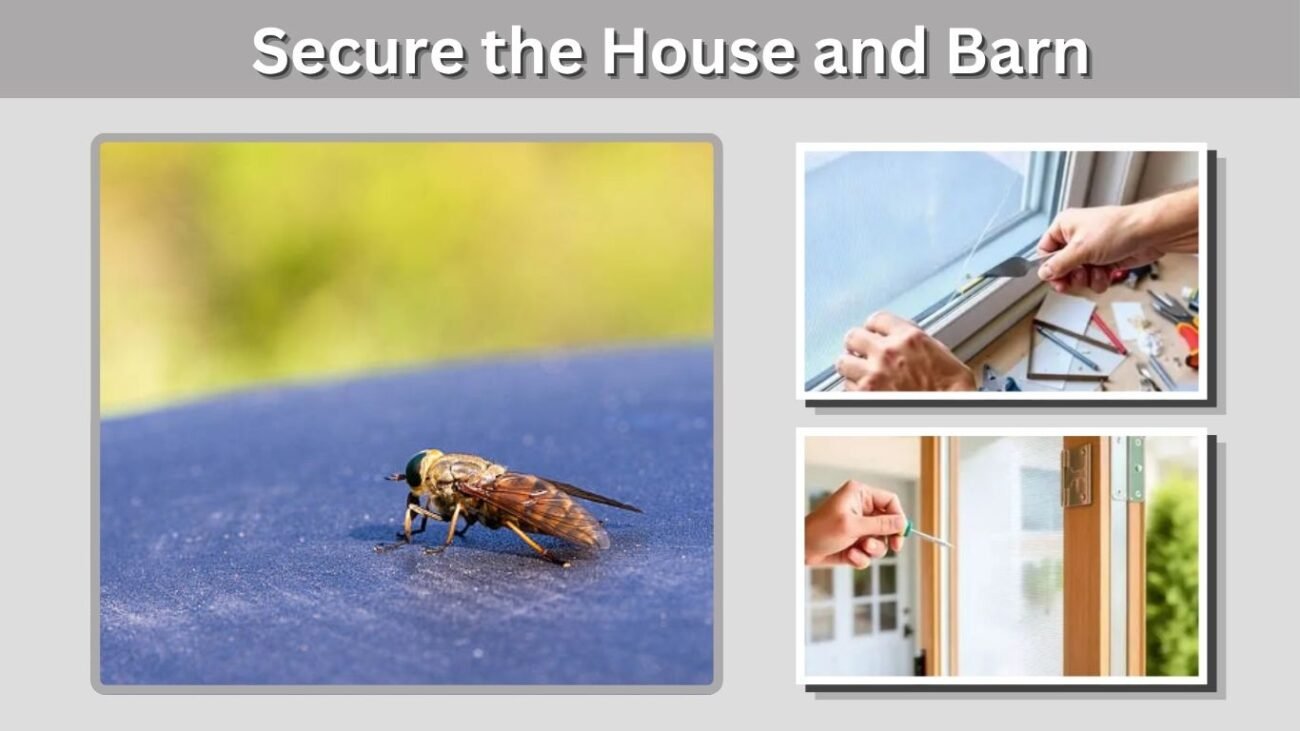
Horse flies do not usually establish permanent indoor infestations. Those found inside commonly entered through an open door, damaged screen, barn entrance, or window.
Reduce entry by:
- Repairing window and door screens
- Installing self-closing screen doors
- Sealing gaps around windows
- Keeping doors closed when possible
- Using fans near frequently opened entrances
- Removing individual flies with a vacuum
Finding several horse flies indoors does not necessarily mean they are breeding inside the building. Check nearby wet ground, open doors, and damaged screens first.
12. Be Careful With Natural and Homemade Remedies
Vinegar, apple cider vinegar, garlic, coconut oil, Old Spice deodorant, and essential oils are frequently suggested as horse fly repellents. However, their effectiveness is inconsistent, often brief, or poorly demonstrated.
Essential oils and homemade mixtures may irritate skin, damage eyes, trigger allergic reactions, or be toxic to pets when concentrated or swallowed. Garlic supplements can also create nutritional or health concerns when given in unsuitable amounts.
Use registered products with clear instructions instead of experimenting with concentrated homemade sprays.
Do Fake Dragonflies Keep Horse Flies Away?
Some people attach artificial dragonflies to hats, backpacks, or horses because dragonflies prey on other flying insects. Reports of success are largely anecdotal, and fake dragonflies should not replace clothing, approved repellents, barriers, or traps.
Real dragonflies may consume biting insects, but they do not provide predictable control over horse flies in a yard, pasture, or pool area.
What Keeps Horses Flies Away Most Effectively?
The most dependable approach combines several methods.
| Situation | Most Practical Methods |
| Hiking or walking | Long clothing, labeled repellent, avoid wet areas |
| Swimming pool | Fans, vegetation management, traps placed away |
| Horses | Masks, sheets, boots, labeled spray, shelter |
| Dogs | Indoor shelter and veterinarian-approved protection |
| Barns | Fans, screens, traps, proper facility management |
| House | Screens, closed doors, sealing entry points |
Because horse flies can arrive from distant wetlands, control measures normally reduce exposure rather than eliminate every fly.
FAQs
Does bug spray keep horse flies away?
Some repellents can reduce horse fly bites, but effectiveness varies. Choose a product labeled for biting flies or horse flies and use it exactly as directed. Clothing and avoidance measures provide useful additional protection.
Does citronella repel horse flies?
Citronella may provide limited, short-lasting protection in some products, but it is generally less reliable than registered repellents with proven active ingredients. Do not apply concentrated citronella oil directly to people or animals.
How do you keep horse flies from biting while swimming?
Use repellent before entering the area, keep towels and clothing nearby, avoid swimming beside marshy shorelines, and use fans around seating areas. Leave the water and seek shelter when flies become persistent.
What should you feed horses to repel flies?
No food or supplement reliably prevents horse fly bites. Garlic and similar feed additives should not replace masks, sheets, traps, fans, and approved topical products. Discuss supplements with a veterinarian or equine nutritionist.
Can horse flies be completely eliminated?
Usually not from an open property. Their larvae may develop across extensive wetlands, and adults are powerful fliers. A combined plan using barriers, repellents, traps, and activity changes can substantially reduce bites.