










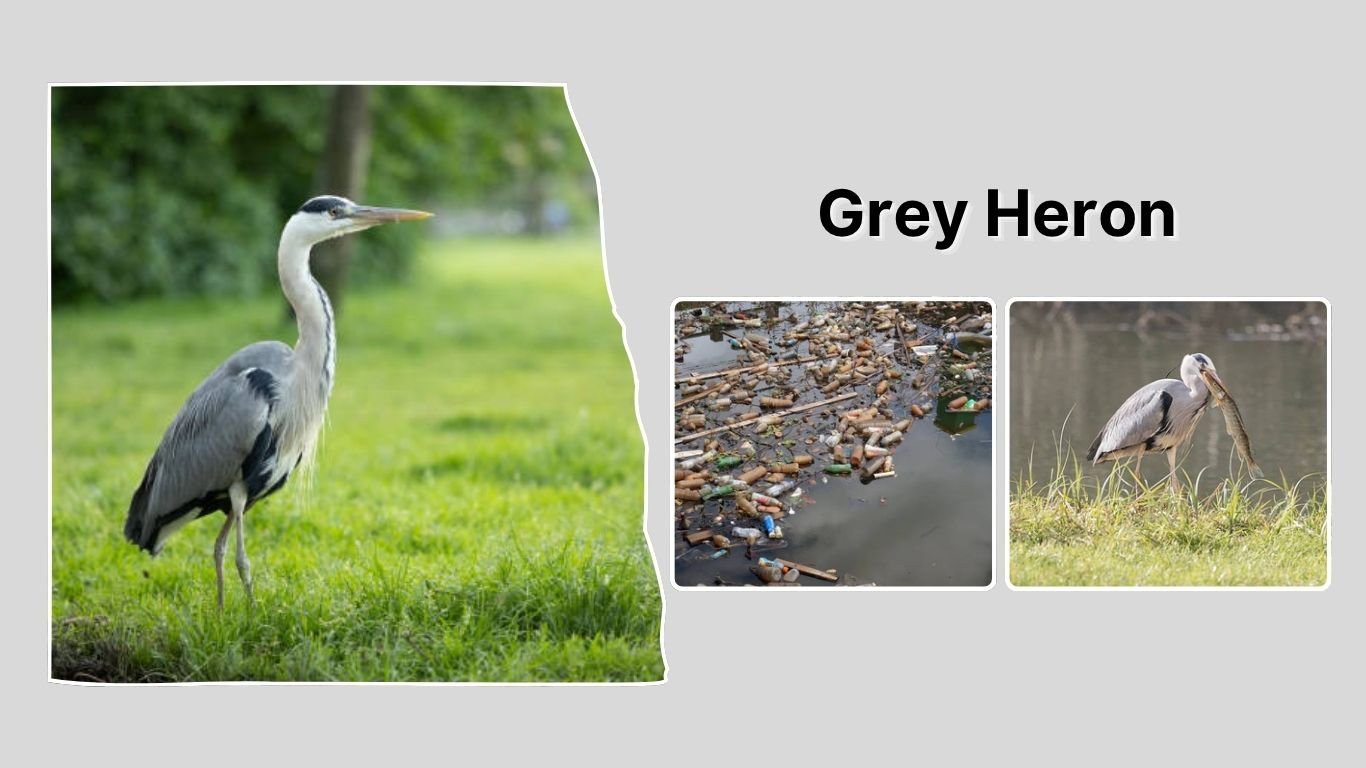
The grey heron (Ardea cinerea) is one of the most elegant and familiar wading birds found across Europe, Asia, and parts of Africa. Known for its tall stature, long neck, and calm, patient nature, the grey heron symbolizes stillness, wisdom, and balance. Whether spotted by a quiet riverside or soaring gracefully across wetlands, this bird has captivated both birdwatchers and artists for centuries. Beyond its beauty, the grey heron plays a vital role in maintaining healthy aquatic ecosystems.
Overview of the Grey Heron
Scientific Classification and Description
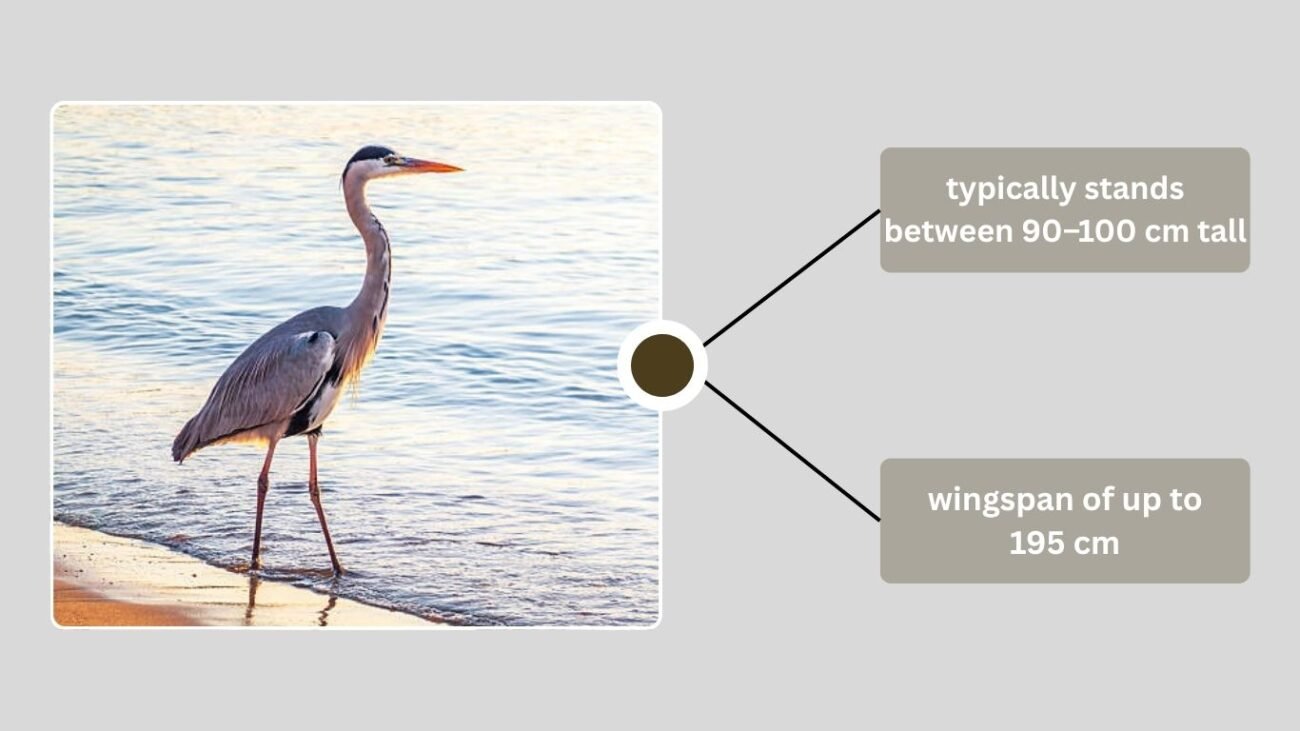
The grey heron belongs to the family Ardeidae and is closely related to egrets and bitterns. Its scientific name, Ardea cinerea, translates to “ash-colored heron,” perfectly describing its sleek grey feathers and refined posture. This species typically stands between 90–100 cm tall with a wingspan of up to 195 cm, making it one of the largest herons in its range.
Its plumage combines soft grey upperparts with white underparts, a white face, and a black crest extending behind the eyes. The long, dagger-shaped yellow bill and thin dark legs are perfectly adapted for spearing and wading through shallow waters. During breeding season, adults develop ornamental plumes on their head, neck, and back, adding to their graceful appearance.
Identifying Features
- Distinctive black eyebrow streak continuing into a crest.
- A long, S-shaped neck is often tucked while standing or flying.
- Large, slow wingbeats and silent gliding flight.
- Sharp, pointed bill for spearing fish or frogs.
The grey heron’s posture — still, watchful, and alert — reflects its reputation as a patient hunter and a symbol of focus and composure.
Habitat and Distribution

Where Grey Herons Live
Grey herons are found throughout Europe, most of Asia, and parts of Africa. They thrive in wetlands, lakes, rivers, estuaries, and coastal marshes, often standing motionless at the water’s edge waiting for prey. Their adaptability allows them to live even near urban areas, where they can often be seen fishing in ponds, canals, and reservoirs.
Notable Locations
- United Kingdom: Common and widespread year-round; often seen in parks and along rivers.
- Japan: Regularly spotted in temple ponds and gardens, often associated with peace and patience in Japanese culture.
- Florida and Texas: Migratory sightings occur in subtropical wetlands.
- Africa: Found along major rivers and lakes, particularly during the dry season when fish are concentrated in shallow water.
Wherever there is water and an abundance of fish, the grey heron can adapt and thrive.
Migration and Nesting
Grey herons are resident birds in warmer climates, while northern populations migrate south during winter. They nest in large colonies called heronries, building bulky stick nests high in trees, sometimes shared with cormorants.
Both male and female herons participate in nest building and feeding the young. The chicks hatch after about 25 days and fledge within seven weeks. Juvenile herons are duller in color, with less contrast and no head plumes, making them easy to distinguish from adults.
Diet and Behavior

Feeding Habits
Grey herons are carnivorous and primarily feed on fish, but they also eat frogs, small mammals, crustaceans, and insects. They are known for their signature “stand-and-strike” hunting technique — standing perfectly still in shallow water until a fish swims close enough, then striking with lightning speed.
Their diet varies depending on habitat. In coastal regions, they catch small marine fish and crustaceans, while inland herons prefer freshwater species like roach and perch. With their keen eyesight and precision timing, grey herons are among the most efficient hunters in the avian world.
Behavior in Flight and on Land
In flight, grey herons are instantly recognizable by their slow, deep wingbeats and retracted necks, forming a distinctive “S” shape. This separates them from cranes, which fly with necks extended. On the ground, they walk gracefully, often moving slowly through reeds or shallow water.
They are mostly solitary hunters, though they may gather in groups at abundant feeding spots. When alarmed, they emit a harsh, croaking call — a deep “fraaank” sound that echoes across wetlands.
Their patience and precision in movement are what make the grey heron such a powerful symbol of focus and mindfulness across many cultures.
Grey Heron vs Blue Heron
Visual Differences
The grey heron and the great blue heron (Ardea herodias) are closely related species, and at first glance, they appear almost identical. However, there are several key differences:
| Feature | Grey Heron (Ardea cinerea) | Great Blue Heron (Ardea herodias) |
| Color | Pale grey with white head and black crest | Bluish-grey overall, darker body |
| Range | Europe, Asia, Africa | North America |
| Height | Up to 1 m (3.3 ft) | Up to 1.2 m (4 ft) |
| Wingspan | 6.4 ft (195 cm) | 7 ft (213 cm) |
| Beak Color | Yellow to orange | Dull yellow or grayish-yellow |
The grey heron tends to have a lighter, cleaner appearance, with a white face and strong contrast from the black head plumes, while the great blue heron appears more uniformly bluish-grey. Their habitats rarely overlap, though both species play similar ecological roles as expert fish hunters in their respective continents.
Behavioral Comparison
Behaviorally, both species are almost identical. They use the same hunting methods, nesting habits, and solitary feeding routines. The main difference lies in their vocal tones and climate tolerance. The grey heron’s call is deeper and raspier, while the blue heron’s is slightly softer.
Whereas the great blue heron dominates North American wetlands, the grey heron is its Old World counterpart, equally elegant and vital to aquatic ecosystems.
Grey Heron vs Crane

Key Differences
The grey heron is often confused with cranes due to their similar size and shape, but they belong to entirely different bird families. The easiest way to distinguish them is by observing their flight posture — cranes fly with their necks extended forward, while herons keep their necks tucked in an S-shape.
Cranes are also generally larger and have bulkier bodies, whereas herons are slender with sharper, spear-like bills. Cranes are usually social and seen in flocks, while herons prefer solitude, especially when hunting.
Common Confusion
From a distance, both birds can appear almost identical, especially when standing still in wetlands. However, the grey heron’s distinct black crest, shorter neck, and graceful flight easily set it apart. While cranes favor open fields and grasslands, herons stay close to water — rivers, ponds, and marshes where they can hunt fish and amphibians.
Symbolism and Spiritual Meaning
Cultural Symbolism
Throughout history, the grey heron has been revered as a symbol of patience, precision, and reflection. In Celtic mythology, it represented wisdom and balance, often linked to the spiritual realm of water. In Japanese culture, herons appear in art and poetry as emblems of tranquility, longevity, and good fortune.
Ancient Egyptians considered herons sacred birds of creation and rebirth, associating them with the rising sun. In some African traditions, the bird’s stillness and watchfulness symbolize divine awareness — the ability to wait calmly for the right moment.
Spiritual Interpretation
Spiritually, seeing a grey heron can represent self-reliance and intuition. Its deliberate movements and calm demeanor remind us to trust our instincts and move with purpose rather than haste. Many people interpret a grey heron encounter as a message to slow down, observe, and act only when the timing feels right.
In dreams, the heron often symbolizes renewal and emotional clarity, suggesting it’s time to restore balance in life. Its connection to water — a symbol of emotion and flow — reinforces its meaning as a guide for mindfulness and adaptability.
Sound and Communication
Grey Heron Call
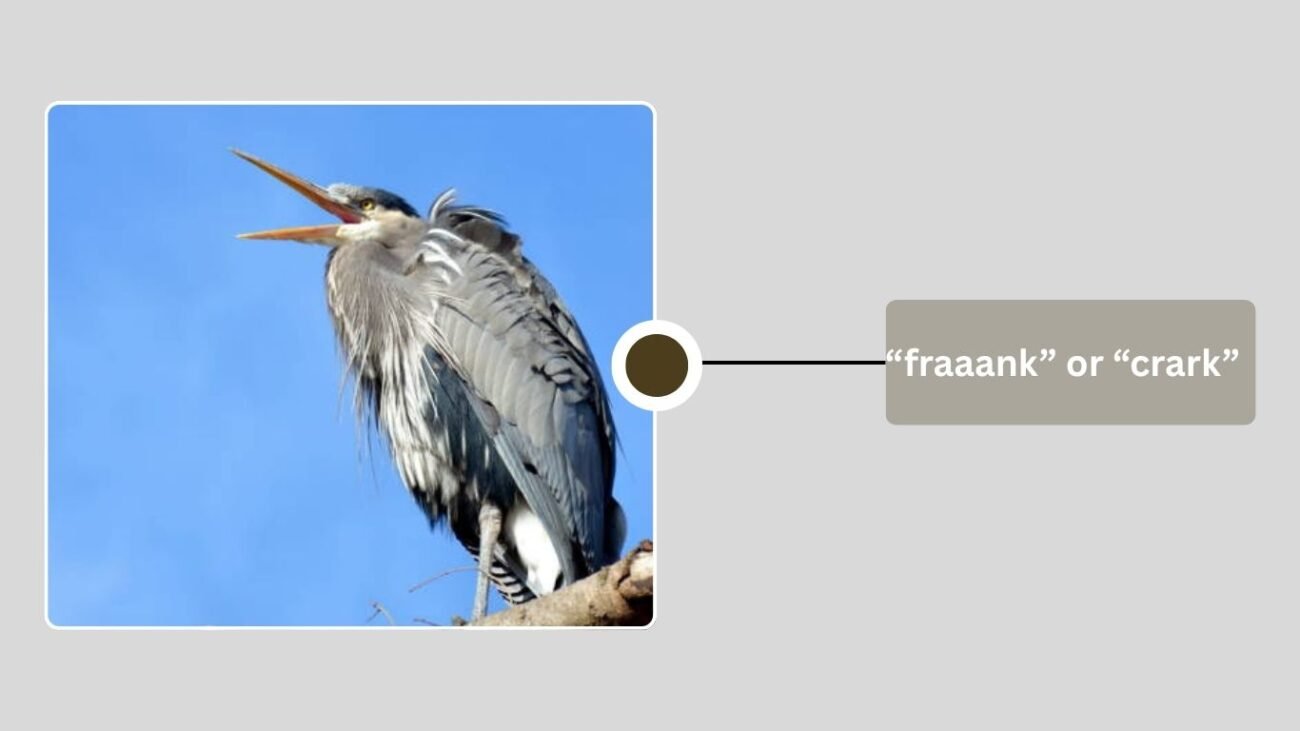
The grey heron has a deep, rasping voice that carries across wetlands. Its flight call is often described as a loud “fraaank” or “crark”, typically heard when it’s startled or flying overhead. During breeding season, pairs use softer, guttural croaks to communicate.
While not considered melodious, their vocalizations play an important role in territorial defense and mate bonding. Hearing a heron’s harsh cry near dawn or dusk is often a sign of active nesting colonies nearby.
Behavioral Communication
Herons also use body language — such as neck extension, feather ruffling, and wing displays — to express dominance or attract a mate. During courtship, they perform slow, synchronized movements, often accompanied by mutual preening and bowing. This ritual strengthens pair bonds before the breeding season begins.
Conservation and Importance

Status and Protection
The grey heron is listed as Least Concern by the International Union for Conservation of Nature (IUCN). Populations remain stable across Europe, Asia, and Africa, thanks to their adaptability and broad range of habitats. In the UK and much of Europe, their numbers have even increased in recent decades due to improved wetland management and legal protection.
Although not endangered, they are sensitive to water pollution, habitat loss, and overfishing, which can reduce their food supply. Conservation programs that maintain clean wetlands and balanced fish populations directly support heron survival.
Ecological Role
Grey herons are important predators in aquatic ecosystems. By controlling fish and amphibian populations, they help maintain ecological balance. Their nesting colonies also provide nutrient enrichment for surrounding vegetation through droppings. Because they rely on healthy waterways, their presence often indicates a clean and functioning environment — making them valuable bioindicators for conservationists.
Grey Heron in Art and Modern Culture
Art and Literature
The grey heron’s graceful form has inspired countless artists throughout history. In Japanese sumi-e ink paintings, it symbolizes purity and focus, while European painters often portray it in calm, reflective landscapes. Poets and writers describe it as a messenger of stillness — a living embodiment of patience.
The bird also features in photography, where its poised stance and mirror-like reflection on the water make it a favorite subject among nature enthusiasts.
Pop and Design References
Beyond nature, “Grey Heron” has found its way into modern design and branding.
- Sherwin Williams Grey Heron and Benjamin Moore Grey Heron are paint colors inspired by the bird’s soft, natural tones.
- Tory Burch Grey Heron and other fashion products borrow the name for its association with calmness and sophistication.
- The Heron & Grey restaurant in Dublin drew inspiration from the heron’s elegance and rarity, symbolizing balance between art and cuisine.
Even in film and literature, the bird occasionally appears as a symbol of solitude or transformation, reflecting its timeless allure.
Interesting Facts About Grey Herons
- The oldest recorded grey heron lived for over 25 years.
- They can eat prey up to half their body length, including large fish.
- They often hunt alone but roost and nest in large colonies.
- Their flight speed averages around 30 km/h (18 mph).
- Juvenile herons lack the striking head crest and appear browner.
- Herons are highly intelligent — they’ve been observed using bait, such as bread or insects, to lure fish closer.
- Their ability to remain motionless for minutes makes them exceptional hunters.
FAQs
What does the grey heron symbolize spiritually?
It represents patience, self-discipline, and mindfulness. Spiritually, it teaches the importance of observation and waiting for the perfect moment before taking action.
How big is a grey heron?
An adult grey heron can reach up to one meter in height, with a wingspan close to two meters, making it one of the largest wading birds in its range.
Where do grey herons live?
They live in wetlands, lakes, rivers, and coastal regions throughout Europe, Asia, and Africa. They’re highly adaptable and can even thrive in urban parks and ponds.
How can you tell a grey heron from a blue heron?
Grey herons are paler with white heads and black crests, while great blue herons are darker and slightly larger, found mainly in North America.
Are grey herons endangered?
No, they are classified as “Least Concern.” Their numbers are stable, but conservation of wetlands remains crucial for their continued survival.


