The great horned owl’s feathers are among the most striking in the bird world. Each feather serves as a perfect blend of beauty and function, helping this powerful raptor hunt silently in the dark. Their intricate patterns and spiritual associations have fascinated humans for centuries. Many people who discover a great horned owl feather feel an instant sense of awe and curiosity about its meaning, significance, and legality.
Feather Identification
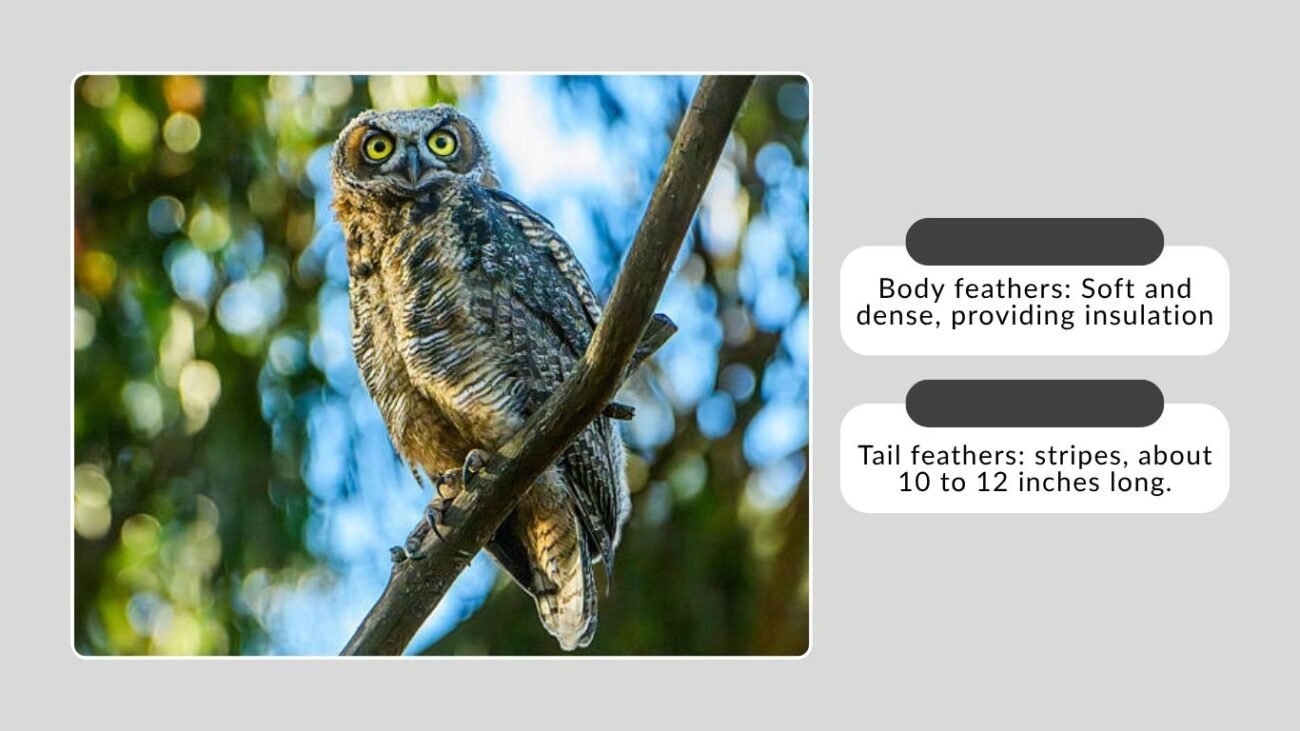
Appearance and Color Pattern
Great horned owl feathers are large, soft, and finely detailed, showing a mix of brown, gray, black, and cream tones. The upper surface usually appears mottled, while the underside is paler with horizontal bars. This coloration helps the owl blend seamlessly with tree bark or rocky surroundings. The feathers’ velvety texture reduces sound during flight, making the owl nearly silent while hunting.
Types of Feathers
Each type of feather serves a unique purpose:
- Primary flight feathers: Long and broad, they form the outer edge of the wings and are fringed to muffle air turbulence.
- Secondary feathers: Shorter, forming the inner part of the wing and aiding lift and control.
- Tail feathers: Rounded and banded with light and dark stripes, about 10 to 12 inches long.
- Body feathers: Soft and dense, providing insulation and streamlining the owl’s body.
- Facial tufts (“horns”): These are not true ears but clusters of feathers used for camouflage and communication.
Color Variations
While most great horned owl feathers are brown-gray, shades vary by habitat. Birds in northern or desert regions may have lighter plumage, while forest owls tend to display deeper browns and grays for better concealment.
Comparison With Other Bird Feathers
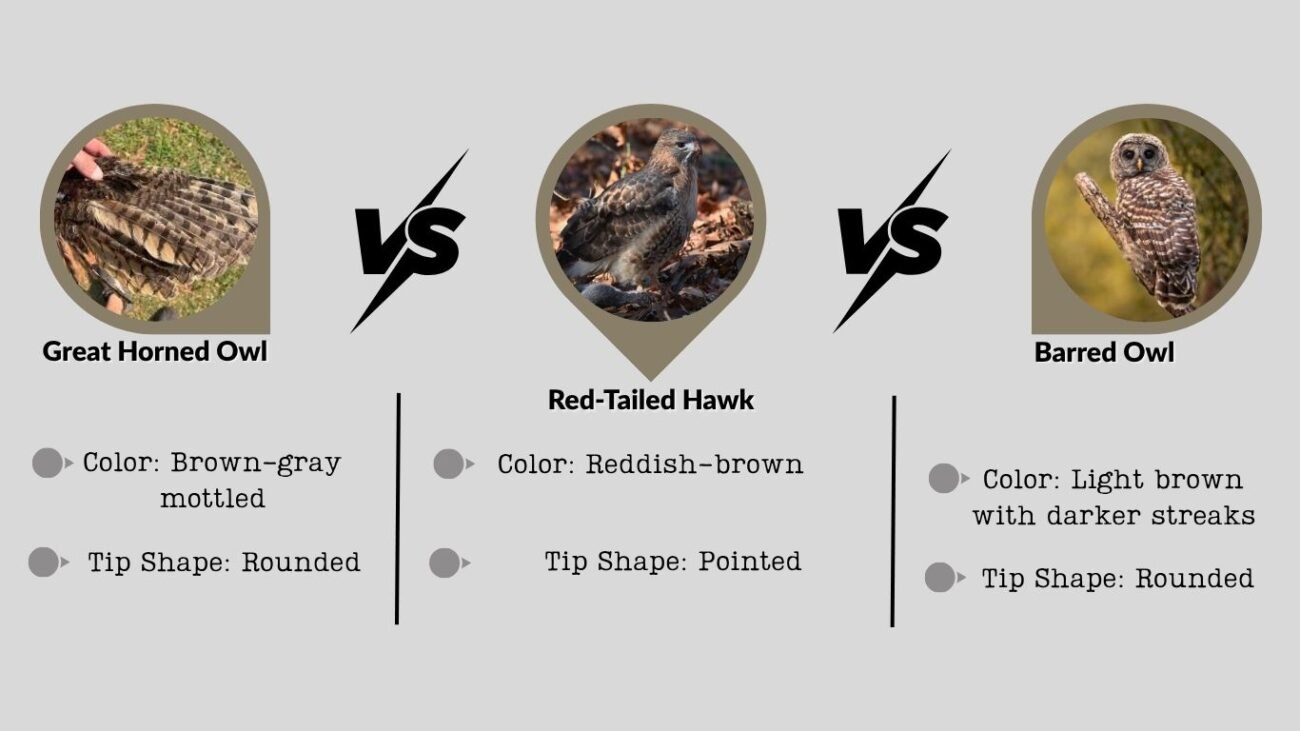
Distinguishing a great horned owl feather from those of other raptors can be challenging. However, several key traits make them unique.
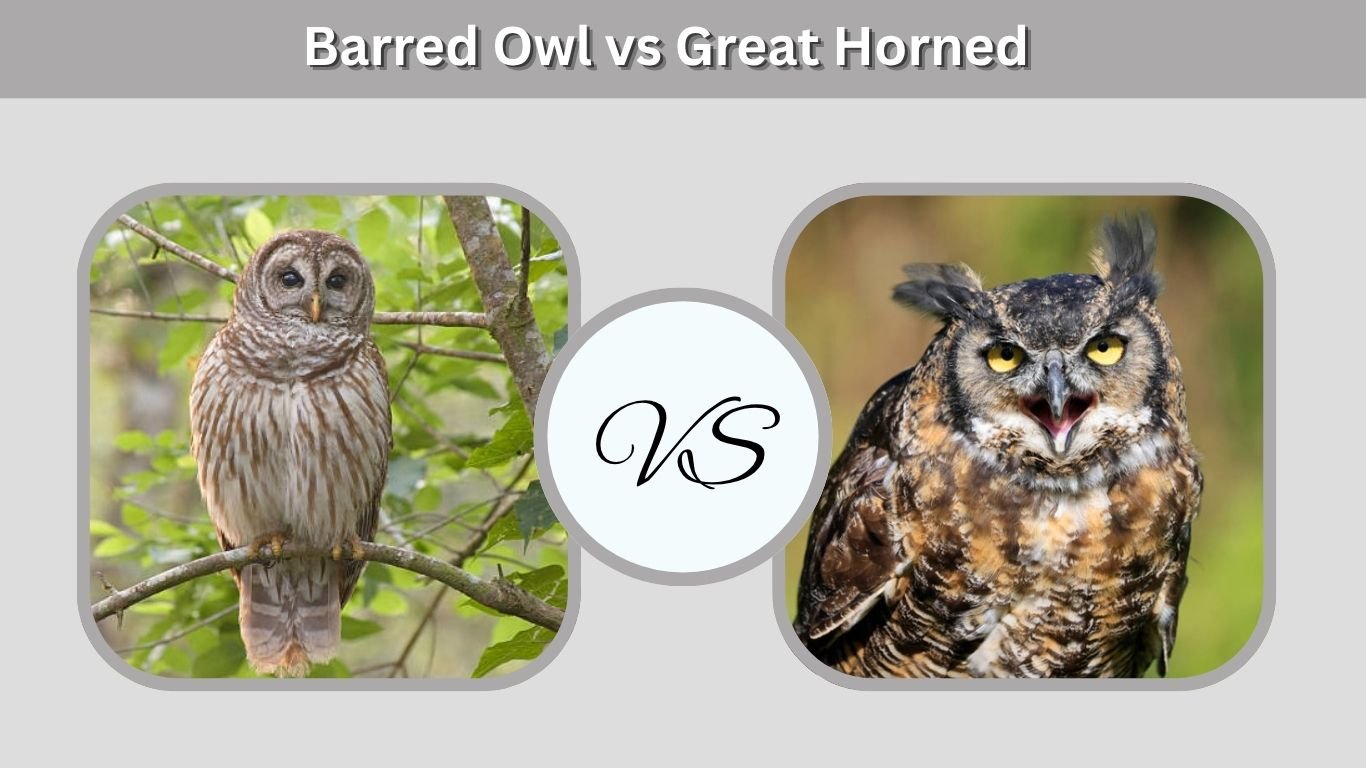
| Feature | Great Horned Owl | Red-Tailed Hawk | Barred Owl |
| Color | Brown-gray mottled | Reddish-brown | Light brown with darker streaks |
| Texture | Soft, velvety edges | Glossy and firm | Smooth with clear horizontal bars |
| Purpose | Silent flight | Speed and gliding | Camouflage and stealth |
| Tip Shape | Rounded | Pointed | Rounded |
Because of their soft texture and muted tones, owl feathers feel lighter and less rigid than hawk feathers. This difference reflects the owl’s need for quiet flight rather than rapid pursuit.
Feather Functions
Silent Flight Mechanism
One of the most remarkable traits of the great horned owl feather is its ability to eliminate flight noise. The leading edges of their primary feathers have tiny comb-like serrations that break up air turbulence. The trailing edges are fringed, allowing air to flow smoothly. Combined with the velvety surface, these adaptations make the owl’s flight almost completely silent—a vital advantage for nocturnal hunting.
Camouflage and Protection
Their feather patterns mimic tree bark and foliage, creating perfect camouflage during daylight hours when the owl roosts. The subtle mix of colors allows it to remain virtually invisible, even when perched in plain sight. The feathers also insulate the owl, trapping air close to the body to maintain warmth in cold weather.
Spiritual and Symbolic Meaning
Spiritual Significance
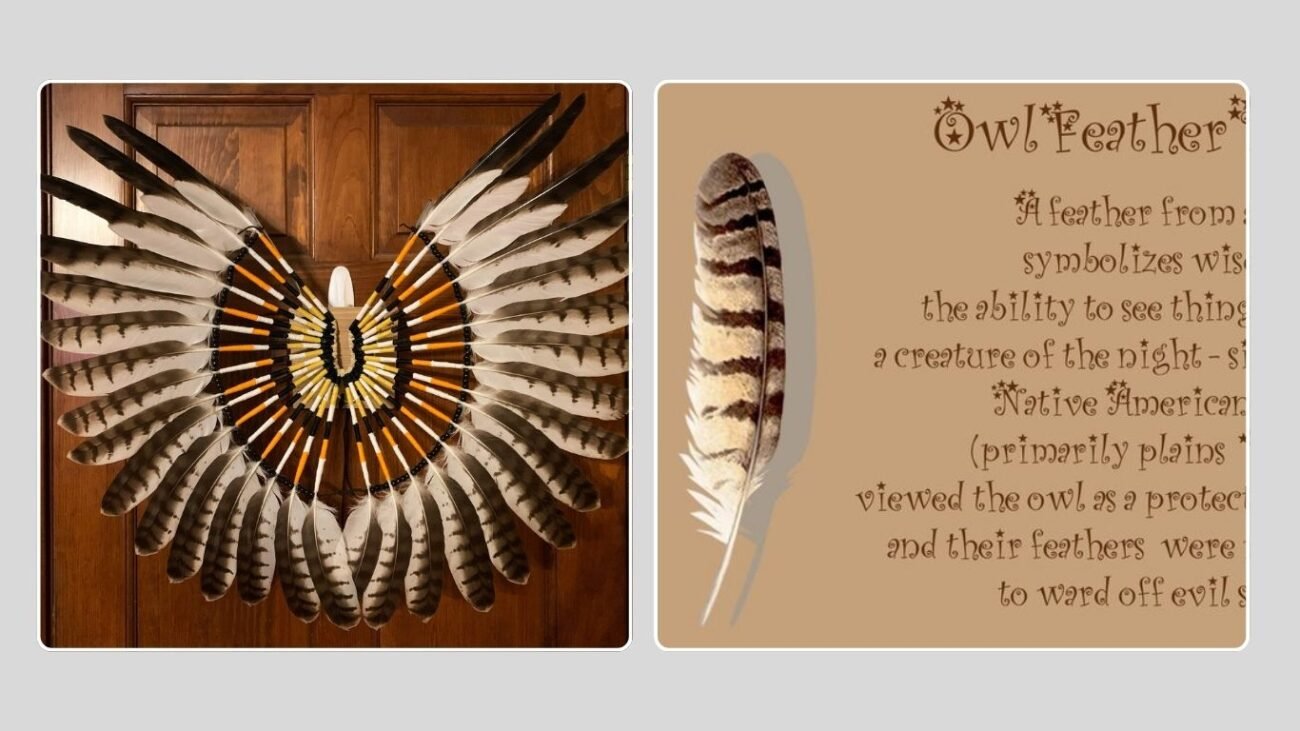
In many cultures, the great horned owl feather symbolizes wisdom, intuition, and transformation. Finding one is often interpreted as a message from the spiritual realm—a reminder to listen to inner guidance and to be aware of hidden truths. The owl’s nocturnal nature links it with the mysteries of the unseen world, representing the ability to see beyond illusions.
Symbolism Across Cultures
Different cultures attribute varied meanings to owl feathers:
- Native American traditions: Often viewed as symbols of protection and heightened awareness. Some tribes regard owl feathers as sacred, while others see them as warnings or omens of change.
- Modern interpretations: They represent insight, spiritual awakening, and strength during uncertain times.
- In dreams: Seeing or finding an owl feather can signify the revelation of hidden knowledge or a call to embrace inner wisdom.
Meaning of Finding a Great Horned Owl Feather
Discovering a great horned owl feather in nature often feels like a moment of quiet significance. Many people describe a sense of peace or mystery when encountering one. Spiritually, finding a feather is thought to represent divine guidance, inner strength, and awareness of hidden truths. Because owls are nocturnal and symbolize the unseen, a feather may serve as a message to trust intuition, remain patient, and observe life’s subtler details before taking action.
Some also interpret it as a sign of protection—a reminder that unseen forces are guiding or watching over you. For those going through change or transformation, it can represent wisdom gained from experience and the courage to move forward silently yet powerfully.
Feather Legality and Protection Laws
Is It Illegal to Possess a Great Horned Owl Feather?
While the feather may carry spiritual meaning, it’s important to understand the legal side. Under the U.S. Migratory Bird Treaty Act (MBTA), it is illegal to collect, possess, sell, or gift feathers, eggs, or any body parts of native birds—including great horned owls—without a federal permit. This law protects over 1,000 bird species from illegal trade and exploitation.
Even if you find a feather naturally on the ground, keeping it can lead to fines or penalties. The intent of the law is conservation: by limiting possession, it discourages poaching and disturbance of nesting sites.
Legal Exceptions
There are a few exceptions under U.S. law:
- Permitted researchers or educators who use feathers for scientific or educational purposes.
- Members of federally recognized Native American tribes, who may receive feathers through the National Eagle Repository for ceremonial use.
- Wildlife rehabilitators or museums with government authorization.
For most people, photographing or sketching the feather is the best legal way to appreciate its beauty.
Ethical Alternatives and Photography
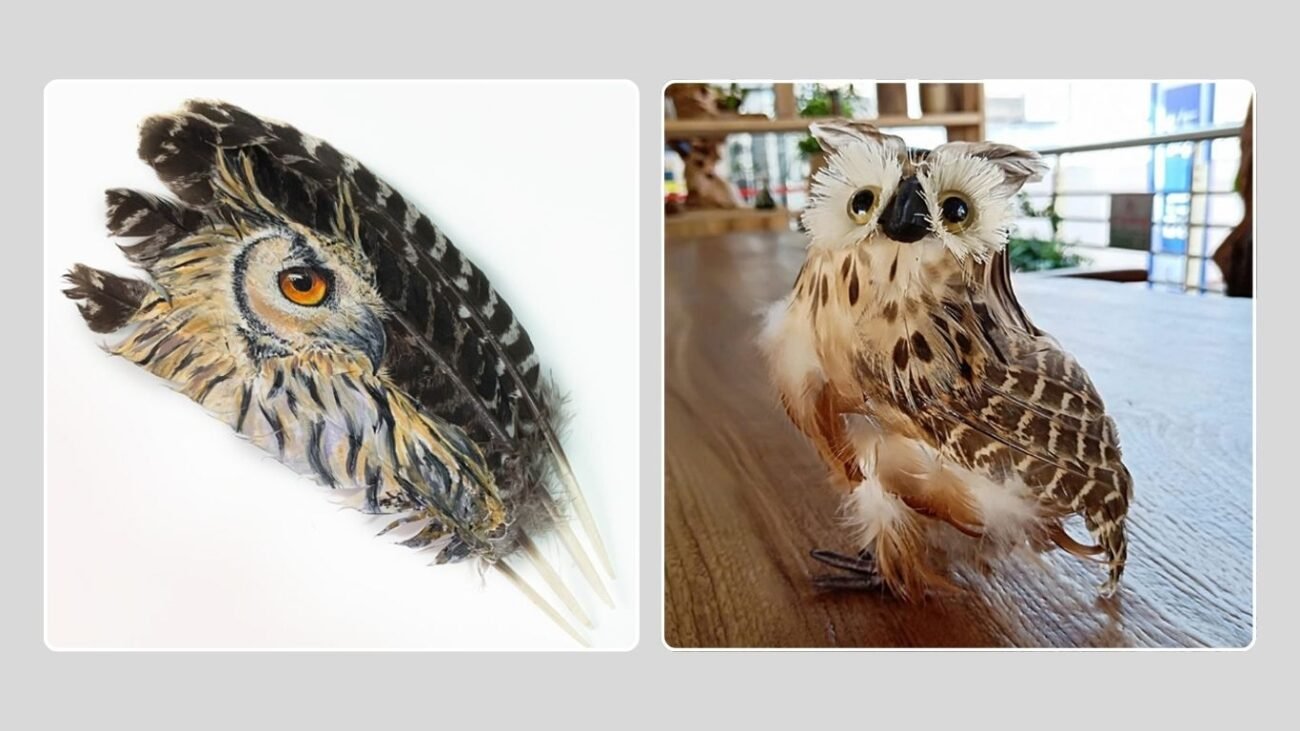
You can still honor and admire the symbolism of the great horned owl feather without owning it physically. Consider these alternatives:
- Photography: Capture detailed images in natural light to study feather patterns.
- Art and crafts: Create hand-painted replicas or symbolic artwork.
- Spiritual reflection: Use the moment of finding the feather as inspiration for meditation or journaling rather than collecting it.
These approaches allow you to respect both the bird’s sanctity and the law while still connecting spiritually with its symbolism.
Feather Symbolism and Personal Reflection
Holding or even observing a great horned owl feather can inspire a deep sense of wisdom and stillness. Spiritually, it embodies balance between strength and silence, much like the owl itself. The feather’s softness reminds us that power doesn’t always come from loudness or aggression—it can exist in calm, deliberate focus.
Many people associate the feather with spiritual awakening, clarity of thought, or messages from ancestors and guides. The symbolism also ties to protection in darkness, both literal and emotional. Just as the owl thrives in the night, the feather represents courage to navigate uncertain paths guided by intuition.
FAQs
What does a great horned owl feather look like?
A great horned owl feather is broad and soft with mottled brown, gray, and cream colors. The edges are fringed and velvety, designed to silence flight. Tail feathers are banded and rounded, while body feathers are fluffy for insulation.
Is it illegal to have a great horned owl feather?
Yes. All owl species are protected by the U.S. Migratory Bird Treaty Act. Possessing their feathers without a federal permit is illegal, even if the feather was found naturally outdoors.
What is the spiritual meaning of finding a great horned owl feather?
Spiritually, finding one often symbolizes wisdom, protection, and spiritual insight. It’s seen as a reminder to trust your intuition and pay attention to unseen messages or subtle guidance from the universe.
How can I tell a great horned owl feather from a hawk feather?
Owl feathers are much softer, with fringed edges and muted brown-gray patterns for silent flight. Hawk feathers are firmer and glossier, with reddish tones and sharper points suited for fast gliding.
Can I paint or photograph great horned owl feathers?
Yes. You can legally photograph, paint, or create artistic representations of owl feathers. However, it remains illegal to keep or sell the actual feathers without proper authorization.