The house sparrow (Passer domesticus) is one of the most familiar birds around homes, cities, and farms. Found hopping along sidewalks, nesting in buildings, and crowding bird feeders, it often goes unnoticed due to its abundance. Despite its ordinary appearance, the house sparrow is one of the most controversial birds in North America. Many people question why house sparrows are considered invasive, whether they harm other birds, what they eat, and how to keep them out of bluebird houses. Understanding their behavior, diet, and origins explains why this small bird creates such big problems.
What Is a House Sparrow?
A house sparrow is a small, stocky songbird closely associated with human settlements. Its scientific name is Passer domesticus, and it belongs to the Passeridae family. Despite the name, house sparrows are not true sparrows native to North America, nor are they finches.
House sparrows thrive almost anywhere people live. They are highly adaptable, social, and opportunistic, which allows them to outcompete many native bird species. Their success is directly tied to buildings, agriculture, bird feeders, and urban development.
What Does a House Sparrow Look Like?
Male vs Female Appearance
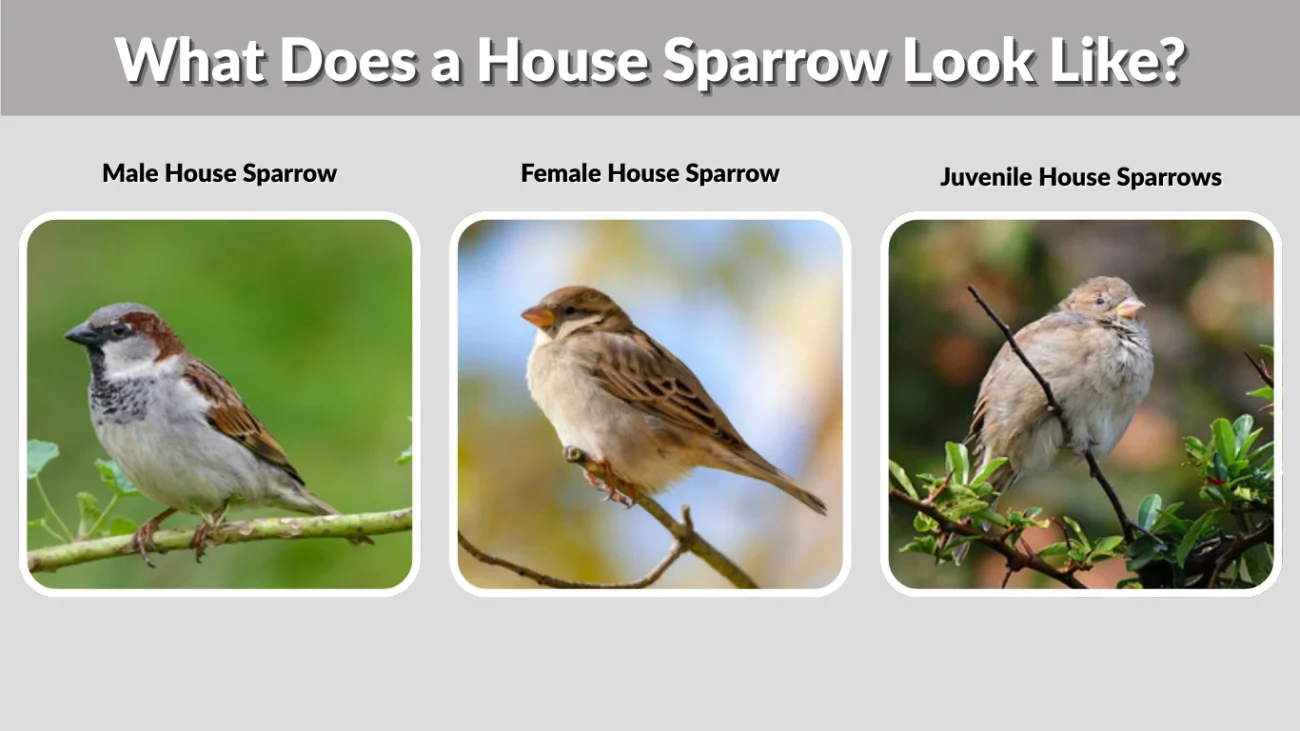
Male and female house sparrows look noticeably different. Adult males have a gray crown, white cheeks, chestnut-colored neck, and a distinctive black throat patch known as a “bib.” The size of the bib often signals dominance among males.
Females are more subtly colored. They are mostly brown and tan with streaked backs and a pale stripe behind the eye. Females lack the black bib and gray crown, which often leads to confusion with other small brown birds.
Juvenile House Sparrows
Juvenile house sparrows resemble females but appear duller and less defined. Their feathers are softer in color, and their bills often look pale or yellowish. Juveniles are frequently mistaken for female sparrows or finches until they mature.
Where Are House Sparrows From?
House sparrows are native to Europe, Asia, and parts of North Africa. For thousands of years, they lived alongside humans, following the spread of farming and permanent settlements. Their close relationship with people made them ideal candidates for introduction elsewhere.
In the mid-1800s, house sparrows were intentionally brought to North America. The primary reason was pest control—people believed they would reduce insect populations in cities and farms. Unfortunately, this introduction had lasting ecological consequences.
Once established, house sparrows spread rapidly across the continent. By the early 1900s, they were found in nearly every U.S. state and much of Canada.
Are House Sparrows Native or Invasive?
Are House Sparrows Invasive in North America?
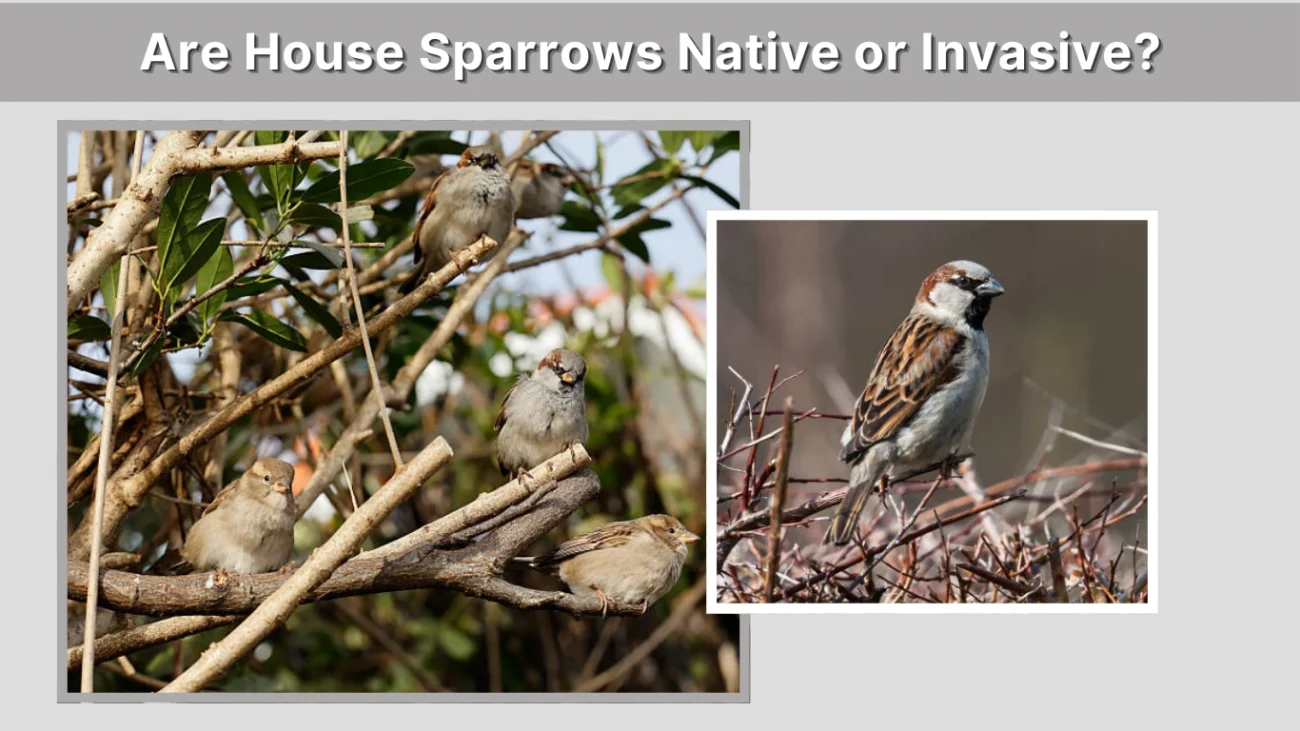
House sparrows are not native to North America. They are considered an invasive species because they spread aggressively and cause harm to native wildlife. Invasive species are organisms introduced outside their natural range that disrupt local ecosystems, and house sparrows fit this definition well.
Their ability to produce multiple broods each year, combined with their adaptability and lack of fear around humans, allows their populations to grow quickly.
Why Are House Sparrows Considered Bad?
House sparrows are often labeled “bad” because of their impact on native cavity-nesting birds. They aggressively compete for nesting sites and frequently take over birdhouses meant for bluebirds, tree swallows, purple martins, and wrens.
They do not simply occupy empty nests. House sparrows are known to destroy eggs, kill nestlings, and sometimes even attack adult birds. This behavior has contributed to the decline of several native bird populations, especially in urban and suburban environments.
Are House Sparrows Aggressive?
Do House Sparrows Kill Other Birds?
Yes, house sparrows can and do kill other birds. They are highly territorial during the breeding season and will aggressively defend nesting sites. They often peck eggs, remove nestlings, or trap adult birds inside nest boxes, causing fatal injuries.
Bluebirds and purple martins are especially vulnerable because they rely on nest cavities and are less aggressive by nature.
Are House Sparrows Aggressive to Humans?
House sparrows are not aggressive toward humans. Their boldness—such as feeding close to people or nesting on buildings—can make them seem fearless, but they rarely interact physically with humans.
Where Do House Sparrows Live and Nest?
Habitat
House sparrows live almost exclusively near people. They are commonly found in cities, towns, farms, parking lots, and residential neighborhoods. Unlike many native birds, they rarely inhabit forests or undeveloped wilderness.
Nesting Sites
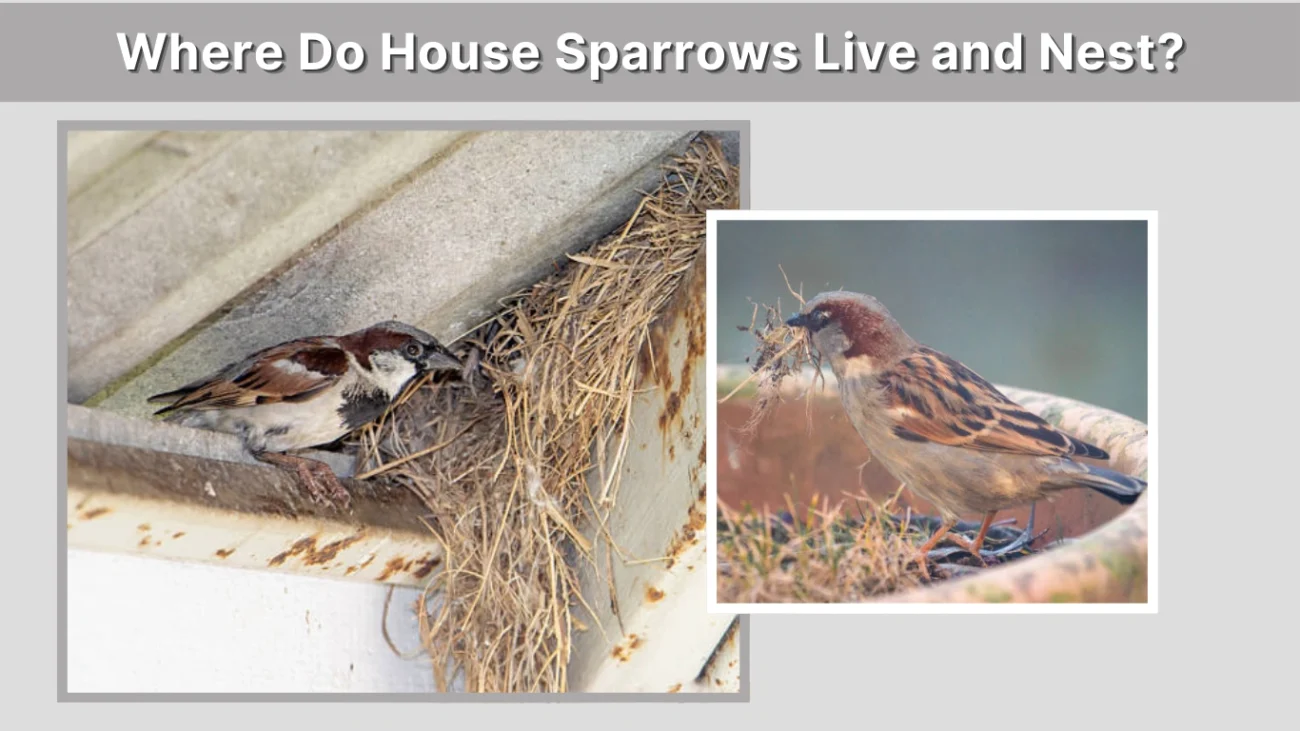
House sparrows nest in a wide variety of locations, including birdhouses, building vents, roof eaves, signs, and streetlights. They often reuse the same nest repeatedly, adding more material over time.
What Does a House Sparrow Nest Look Like?
A house sparrow nest is messy and bulky. It is made from grass, straw, feathers, paper, string, and other debris. These nests often block ventilation openings or crowd nest boxes, making them unsuitable for other birds.
House Sparrow Eggs and Breeding
When Do House Sparrows Lay Eggs?
House sparrows begin breeding early in the spring, often earlier than many native birds. In warmer regions, egg-laying can start as early as March and continue through late summer. Their long breeding season is one reason their populations grow so quickly.
What Do House Sparrow Eggs Look Like?
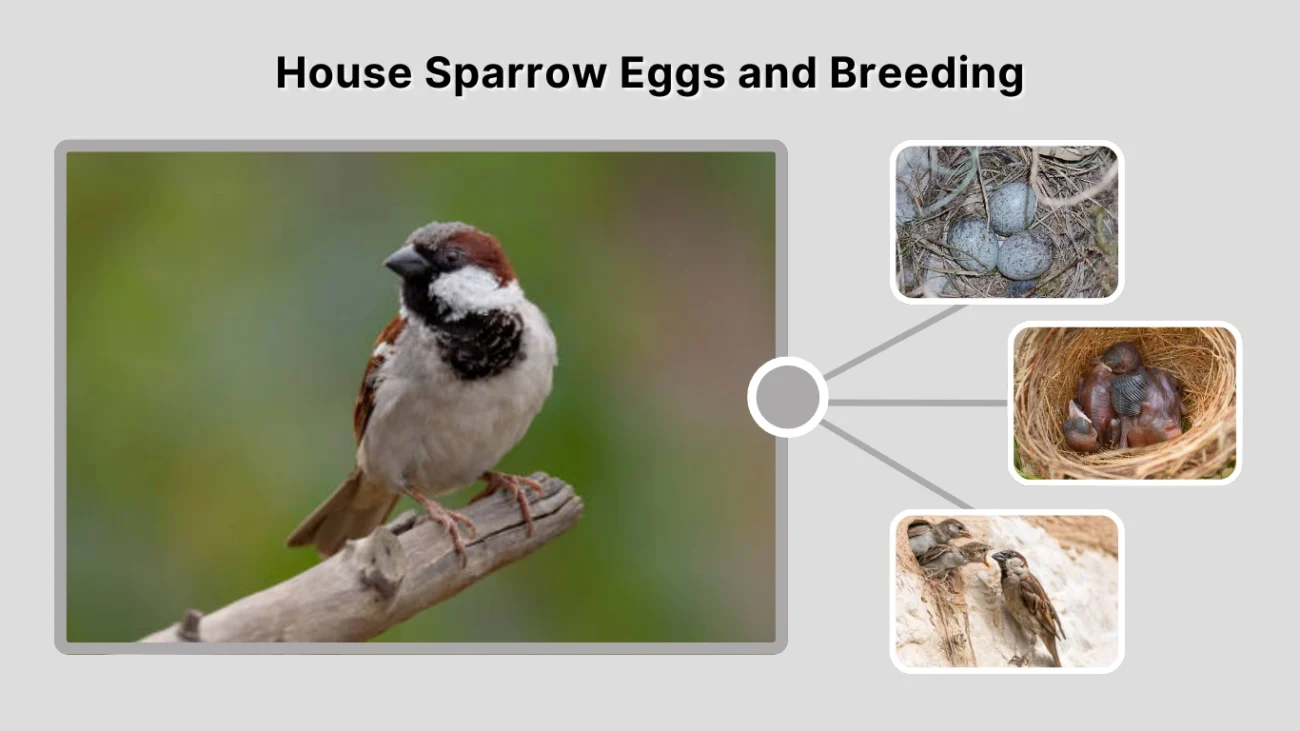
House sparrow eggs are small and variable in appearance. They are usually white, pale blue, or gray, marked with brown or gray speckles. This variability can make them difficult to identify without observing the adult birds.
How Many Eggs Do House Sparrows Lay?
A typical clutch contains three to seven eggs. House sparrows commonly raise two to four broods per year, meaning a single pair can produce more than 20 offspring in one breeding season.
How Long Do House Sparrows Stay in the Nest?
Eggs hatch after about 11 to 14 days. The nestlings remain in the nest for roughly 14 to 17 days before fledging. Even after leaving the nest, young sparrows are fed by their parents for another one to two weeks.
What Do House Sparrows Eat?
Natural Diet
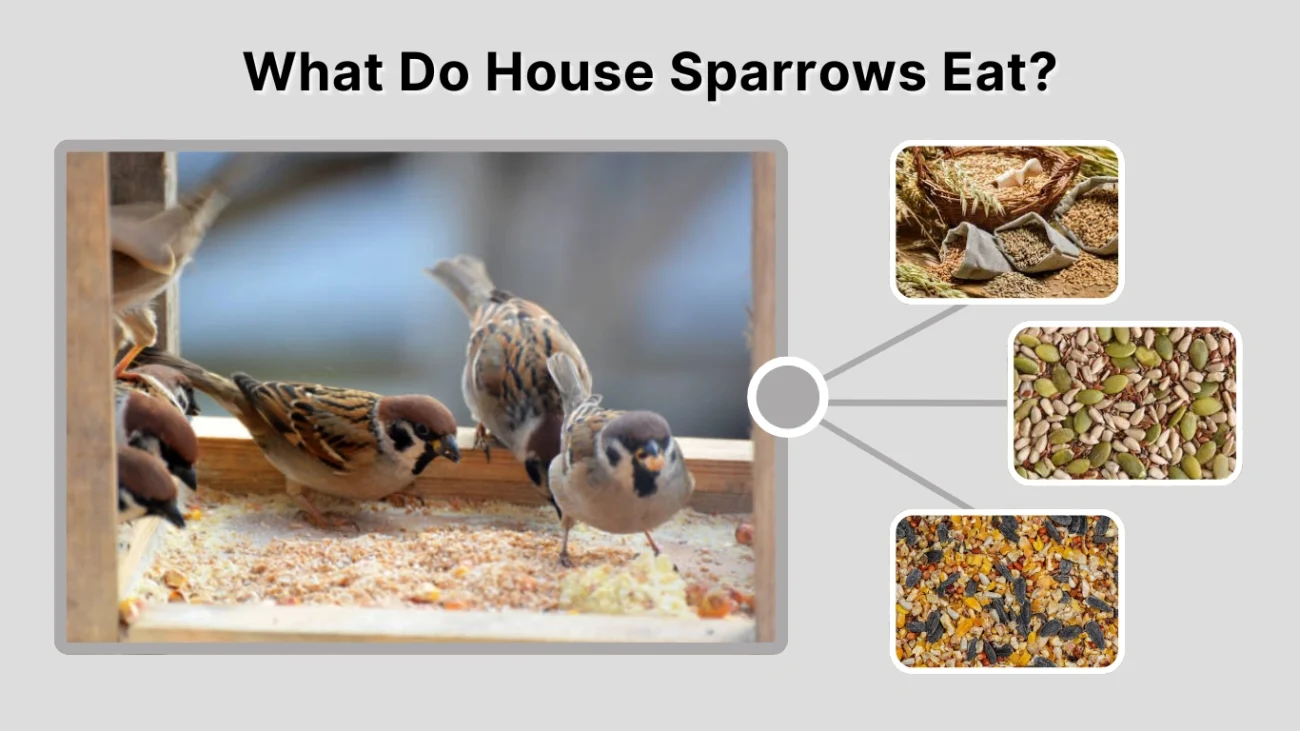
House sparrows are primarily seed eaters. In natural settings, they feed on grains, grasses, and weed seeds. During the breeding season, they also eat insects, which provide protein for growing chicks.
Feeder Foods
At bird feeders, house sparrows eat a wide range of foods, including:
- Black oil sunflower seeds
- Cracked corn and millet
- Peanuts (especially crushed)
- Mealworms
They are aggressive feeders and often chase away smaller or less dominant birds.
Foods to Avoid
House sparrows will eat bread and other processed human foods, but these offer little nutrition and can lead to health problems. Feeding bread also encourages large, unhealthy populations near homes.
Do House Sparrows Carry Diseases?
House sparrows can carry and spread diseases, particularly where birds congregate at feeders. Salmonella outbreaks are commonly associated with dirty feeders and dense bird populations. House sparrows have also been linked to avian pox and are considered potential carriers of bird flu strains.
Regularly cleaning bird feeders and reducing overcrowding helps lower disease risk for all birds.
How Long Do House Sparrows Live?
The average lifespan of a house sparrow in the wild is three to five years. Many do not survive their first year due to predation, disease, or harsh weather. However, in urban environments with abundant food and shelter, some individuals can live significantly longer.
Do House Sparrows Migrate?
House sparrows do not migrate. They are year-round residents and stay close to the same area throughout their lives. During winter, they often form large flocks that forage together for food and roost communally for warmth.
Are House Sparrows Protected or Legal to Control?
Are House Sparrows Protected?
In the United States, house sparrows are not protected under the Migratory Bird Treaty Act because they are non-native. This means they can be legally controlled where they cause problems. In contrast, many native bird species are fully protected.
Are House Sparrows Good Pets?
House sparrows are not domesticated and do not make good pets. Keeping them is often illegal or requires special permits. They are social, active birds that do poorly in captivity and require specialized care.
How to Get Rid of House Sparrows (Ethical Control)
Managing house sparrows focuses on prevention rather than elimination. Effective methods include removing nests as soon as they appear, eliminating food sources that attract them, and modifying structures to reduce nesting opportunities.
Habitat changes, such as avoiding mixed seed feeders and reducing access to buildings, can significantly lower sparrow numbers around homes.
How to Repel or Deter House Sparrows
Visual deterrents like reflective tape or predator silhouettes may provide temporary relief, but house sparrows quickly adapt. More effective deterrence involves feeder management, regular nest monitoring, and limiting access to preferred nesting sites.
How to Keep Sparrows Out of Bluebird Houses
Sparrow-Proofing Techniques
Bluebird houses can be protected using slot-style entrances instead of round holes. These entrances allow bluebirds to enter but discourage house sparrows.
Placement and Monitoring
Placing bluebird houses away from buildings and human activity reduces sparrow interest. Regular weekly checks are essential to remove sparrow nests before eggs are laid.
Keeping Sparrows Out of Martin Houses
Purple martin houses should be placed in open areas away from trees and buildings. Delaying opening houses until martins arrive can also prevent early-season sparrow occupation.
Should House Sparrows Be Killed?
While lethal control is legal in many areas, it remains controversial. Many bird enthusiasts prefer non-lethal methods such as exclusion, nest removal, and habitat modification. The goal is to protect native birds rather than simply reduce sparrow numbers.