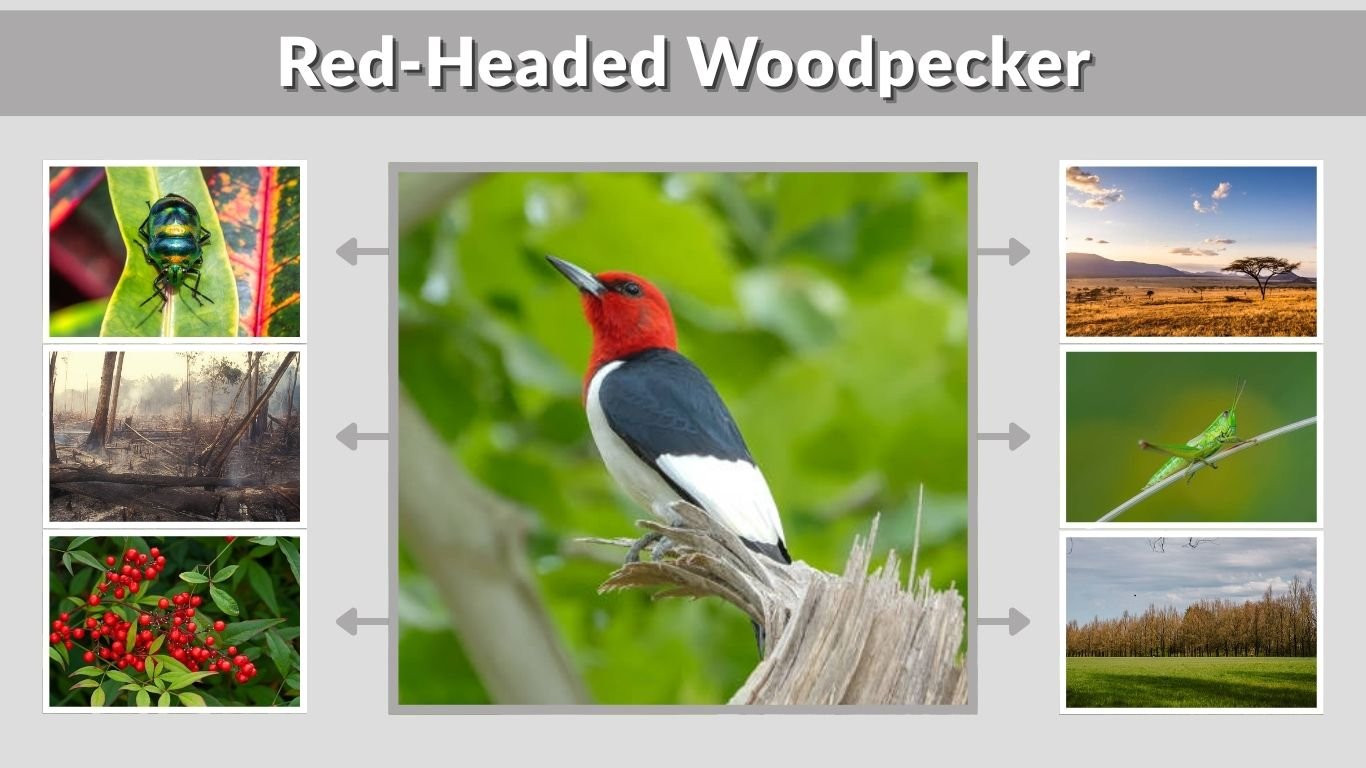
The Red-Headed Woodpecker is one of the most eye-catching birds found in North America. Known for its vivid red head and bold black-and-white body, it stands out even from a distance. This bird is not only admired for its beauty but also valued for its role in maintaining ecological balance. From controlling insect populations to creating nesting spaces for other species, it plays a vital role in its environment. Understanding its identification, habitat, and behavior helps bird enthusiasts and nature lovers appreciate it even more.
Physical Identification
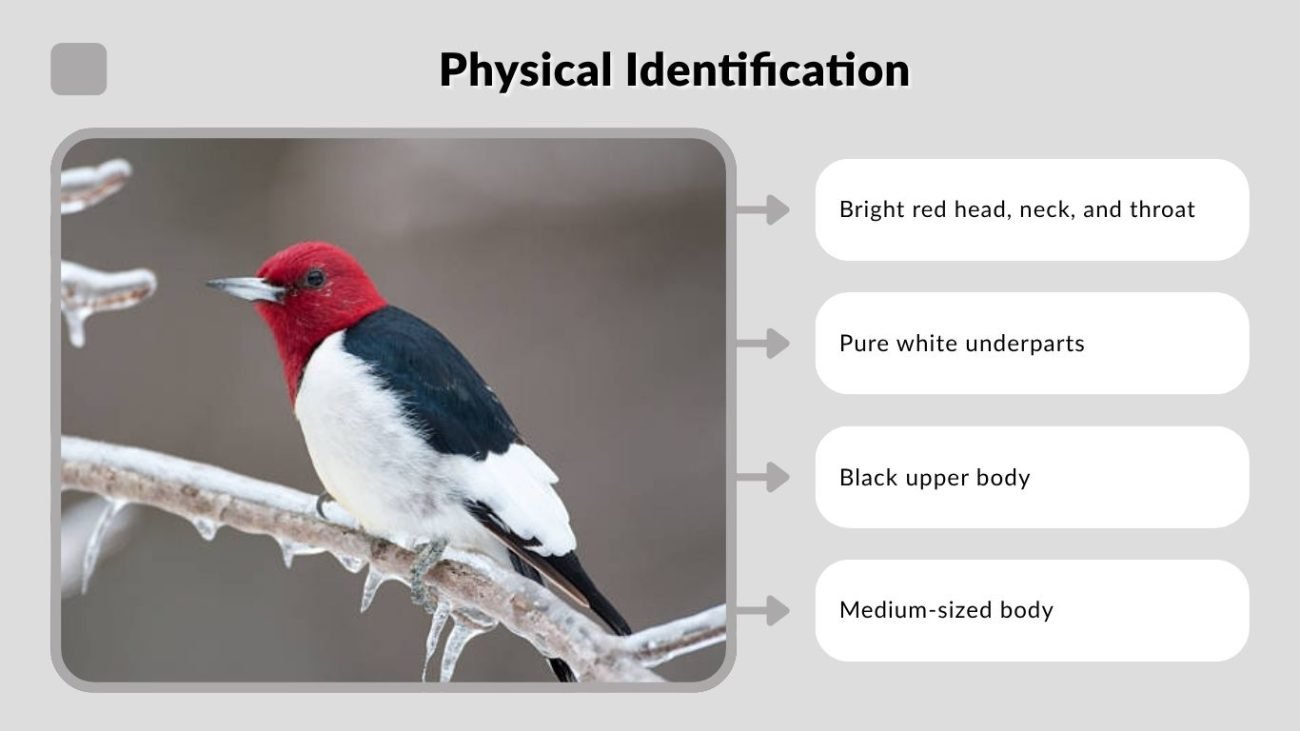
The Red-Headed Woodpecker is instantly recognizable due to its clean and striking color pattern. Unlike many birds that have mixed or dull tones, this species displays sharp contrasts that make identification easier.
Key Identification Features
- Bright red head, neck, and throat that appear almost glossy in sunlight
- Pure white underparts that contrast strongly with the dark back
- Black upper body with large white patches on the wings
- Medium-sized body with a sturdy, chisel-like bill
Juvenile vs Adult Appearance
Adult birds have a fully red head, which is their most defining feature. In contrast, juveniles lack this bright coloration. Their heads are usually brownish or gray, giving them a more muted appearance. As they mature, the red coloration gradually develops, making it easier to distinguish adults from younger birds in the wild.
Habitat and Distribution
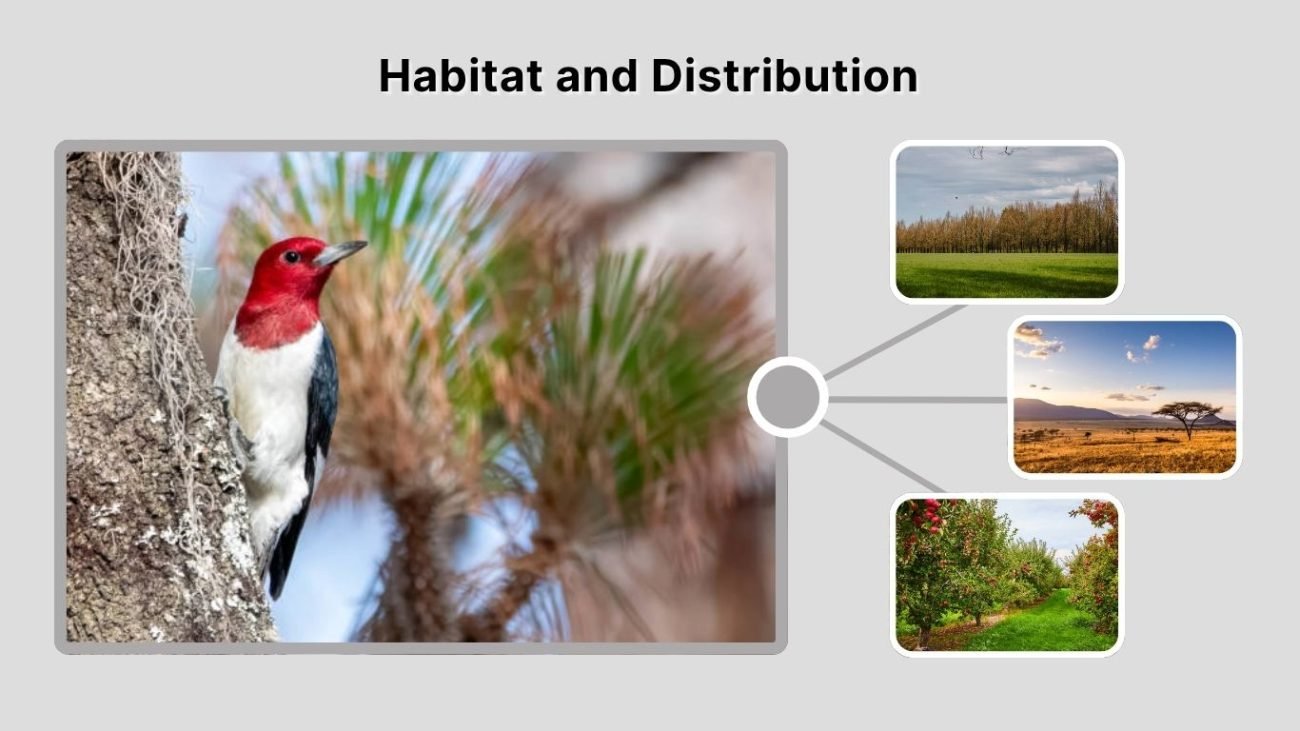
The Red-Headed Woodpecker is widely distributed across parts of North America, although its numbers have decreased in certain areas over time. It prefers environments that provide both open space and access to trees for nesting and feeding.
Geographic Range
This bird is primarily found in the eastern and central regions of the United States. Its range also extends into southern parts of Canada. In some areas, it may be seen year-round, while in others it appears only during specific seasons.
Preferred Habitat
The species thrives in open woodlands, savannas, orchards, and agricultural lands. Unlike woodpeckers that prefer dense forests, the Red-Headed Woodpecker is more commonly seen in areas with scattered trees and clear spaces. These habitats allow it to hunt insects more efficiently and spot potential threats.
Seasonal Movement
Not all Red-Headed Woodpeckers migrate. Northern populations often move south during colder months when food becomes scarce. However, birds living in regions with stable food supplies may remain in the same area throughout the year.
Behavior and Lifestyle
The behavior of the Red-Headed Woodpecker is as fascinating as its appearance. It is known for being active, bold, and highly adaptable compared to many other woodpecker species.
Feeding Behavior
Unlike most woodpeckers that rely mainly on drilling into tree bark, this species frequently catches insects in mid-air. This behavior is more similar to flycatchers and highlights its versatility as a hunter. It may also forage on the ground or pick insects from tree surfaces.
Territorial Nature
Red-Headed Woodpeckers are strongly territorial, especially during the breeding season. They defend their nesting sites aggressively against other birds and even animals that come too close. This behavior ensures the safety of their eggs and chicks.
Social Patterns
These birds are generally solitary, preferring to live and forage alone. However, they may gather in small groups during migration or when food sources are abundant. Despite these occasional gatherings, they maintain a strong sense of individual territory.
Diet and Feeding Habits
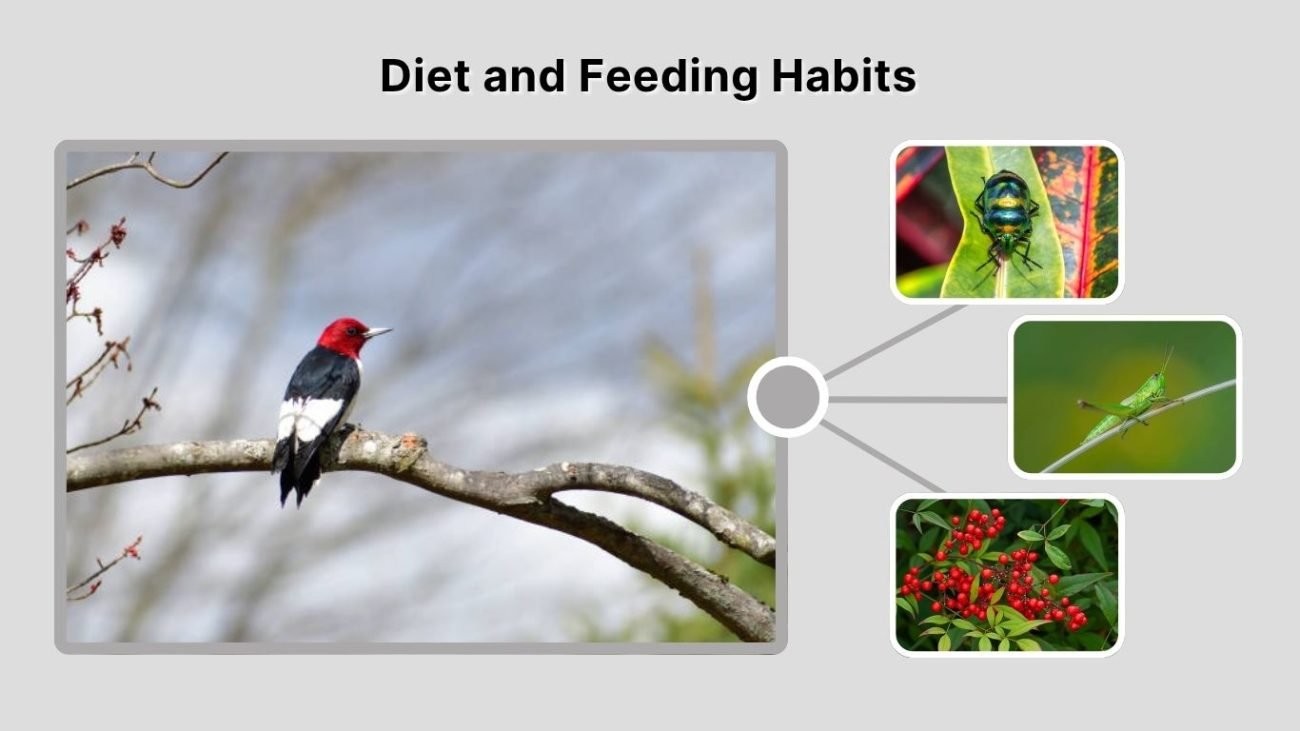
The Red-Headed Woodpecker has a highly varied diet, which helps it survive in different environments and seasons.
- Primary Food Sources: Insects such as beetles, ants, grasshoppers, and other small invertebrates make up a large portion of its diet.
- Plant-Based Diet: It also consumes nuts, seeds, and fruits, including berries and acorns.
- Feeding Techniques: This bird uses multiple strategies like drilling into wood, picking insects from surfaces, and catching prey mid-air.
- Seasonal Variation: During winter, it depends more on plant-based foods and stored items when insects are less available.
Breeding and Reproduction
The breeding cycle of the Red-Headed Woodpecker is closely connected to the availability of suitable nesting sites and food resources. It typically breeds once a year, although conditions can influence this pattern.
Courtship Behavior
During the breeding season, males perform a variety of displays to attract females. These include drumming on trees, calling loudly, and performing short aerial movements. These actions help establish territory and signal readiness to mate.
Nesting Process
Both the male and female take part in creating a nest. They usually excavate a cavity in dead or decaying trees, which provides a safe and sheltered environment. This process may take several days, as they carefully carve out enough space for eggs and future chicks.
Egg Laying and Care
The female typically lays between 4 and 7 white eggs. Both parents share the responsibility of incubation, which lasts around two weeks. After hatching, the parents work together to feed and protect the chicks until they are ready to leave the nest.
Lifecycle and Development
The lifecycle of the Red-Headed Woodpecker reflects its adaptability and resilience. From egg to adulthood, each stage is crucial for survival in the wild.
- Incubation Period: Eggs hatch after about 12–14 days of incubation by both parents.
- Nestling Stage: Chicks remain in the nest for around 3–4 weeks, relying entirely on their parents for food.
- Fledging Stage: After leaving the nest, young birds begin to fly but stay close to their parents for guidance and feeding.
- Maturity: Juveniles develop adult plumage over time and are ready to breed within one year.
- Lifespan: In the wild, they typically live several years, depending on environmental conditions and threats.
Vocalizations and Communication
Communication plays an important role in the daily life of the Red-Headed Woodpecker. It uses both vocal sounds and physical signals to interact with others and defend its territory.
Common Calls
This species produces sharp, distinct calls that are often described as “churr” or “queer.” These sounds are used to communicate with mates, warn of danger, and signal presence within a territory.
Drumming Behavior
Like other woodpeckers, it uses drumming as a form of communication. By rapidly pecking on hard surfaces such as tree trunks or poles, it creates a loud, rhythmic sound. This helps attract mates and establish dominance in a specific area.
Comparison with Similar Woodpeckers
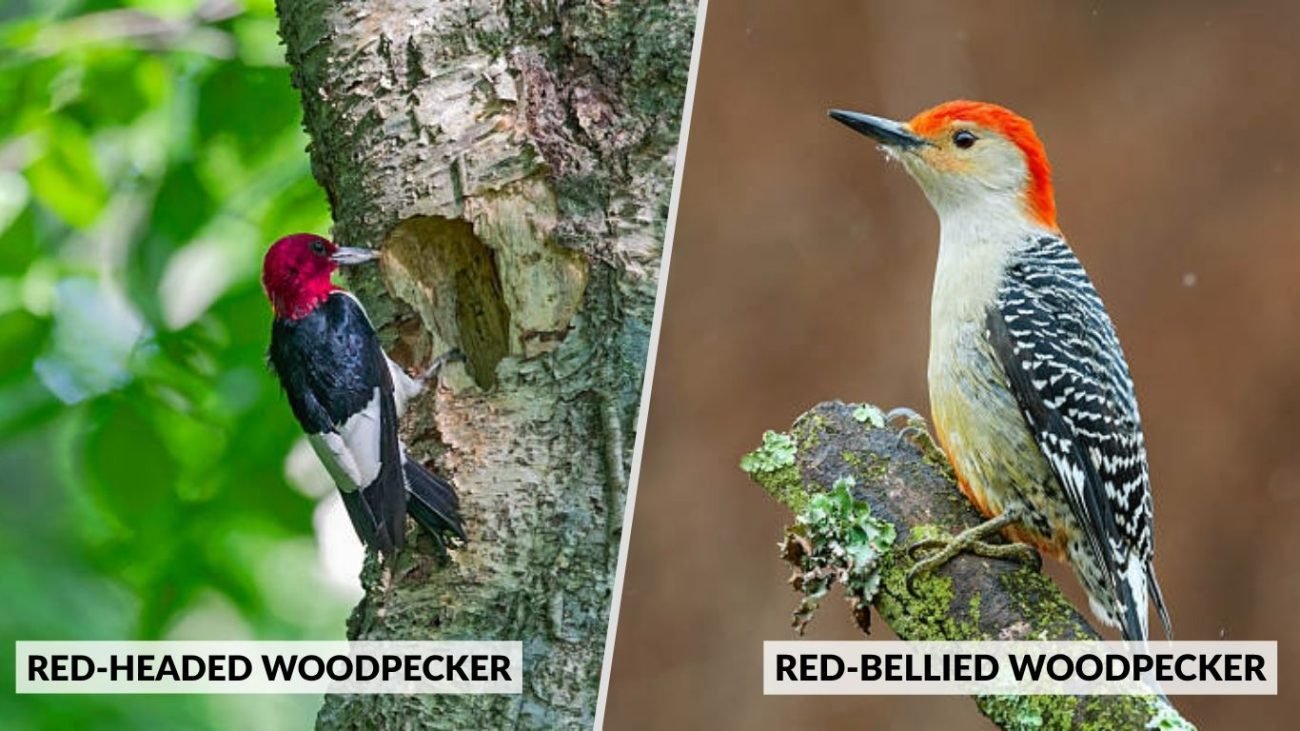
Understanding how the Red-Headed Woodpecker differs from similar species helps avoid confusion during birdwatching.
| Feature | Red-Headed Woodpecker | Red-Bellied Woodpecker | Downy Woodpecker |
| Head Color | Fully red | Red on crown only | Black & white |
| Body Pattern | Bold black & white | Barred black & white | Mostly white |
| Size | Medium | Medium | Small |
| Feeding Style | Air-catching insects | Tree foraging | Bark pecking |
Role in the Ecosystem
The Red-Headed Woodpecker plays a valuable role in maintaining ecological balance. One of its primary contributions is controlling insect populations, which helps protect trees and crops from damage. By feeding on various insects, it reduces the spread of pests in its habitat.
Another important role is seed dispersal. When the bird stores nuts and seeds for later use, some of these are never retrieved. This behavior contributes to plant growth and forest regeneration. Additionally, the cavities it creates for nesting are often reused by other birds and small animals, making it an important contributor to biodiversity.
Threats and Conservation
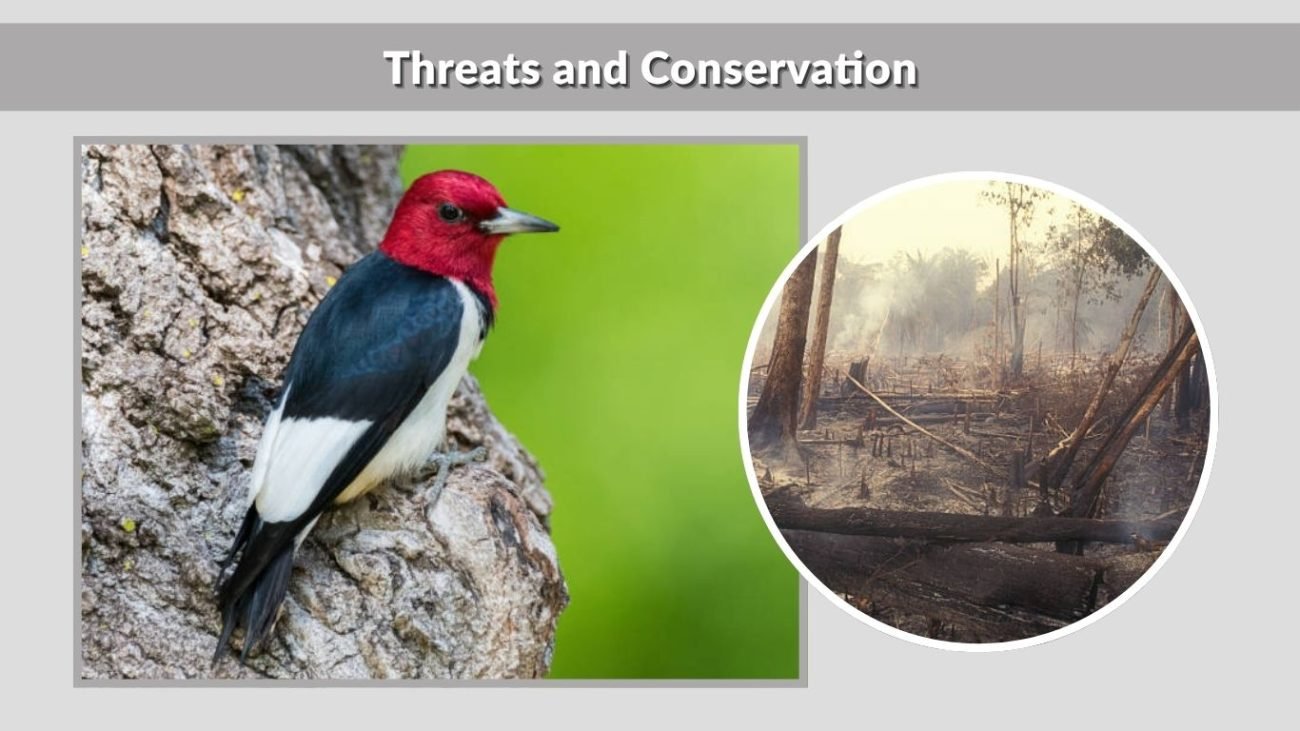
Despite its adaptability, the Red-Headed Woodpecker faces several challenges that have led to population declines in certain regions.
- Habitat Loss: Removal of dead trees and open woodland areas reduces nesting opportunities.
- Population Decline: Numbers have decreased in parts of its range due to environmental changes.
- Competition: Other cavity-nesting birds compete for limited nesting sites.
- Conservation Efforts: Protecting habitats and preserving dead trees can support population recovery.
Interesting Facts
The Red-Headed Woodpecker has several unique traits that make it especially interesting among bird species.
- One of the few woodpeckers that regularly catches insects in mid-air
- Stores large amounts of food in tree crevices for future use
- Has one of the boldest and most recognizable color patterns among birds
- Known for its strong territorial behavior and bold personality
FAQs
What makes the Red-Headed Woodpecker unique?
Its fully red head and bold black-and-white body make it one of the most visually striking birds in North America. It also stands out for its unusual habit of catching insects in mid-air, a behavior not commonly seen in other woodpeckers.
Where can you commonly find this bird?
It is commonly found in open woodlands, orchards, and farmlands across eastern and central North America. Areas with scattered trees and available dead wood provide ideal conditions for nesting and feeding.
What does it eat during winter?
During winter, the Red-Headed Woodpecker relies more on stored food such as nuts, seeds, and fruits. Its habit of caching food helps it survive when insect populations are low.
Is the Red-Headed Woodpecker endangered?
While not officially endangered, its population has declined in several regions due to habitat loss and reduced nesting sites. Conservation efforts focus on preserving natural habitats and maintaining dead trees for nesting.