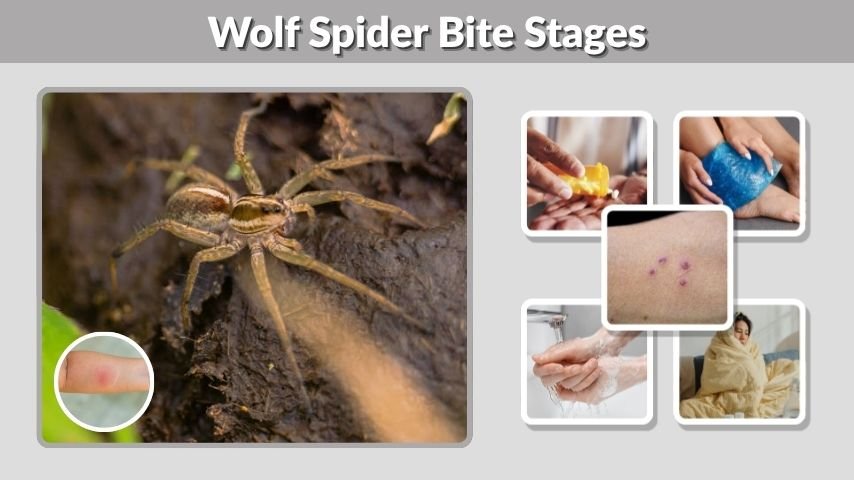
A wolf spider bite can look worrying at first, especially if the skin becomes red, swollen, or painful. Most wolf spider bites are mild and usually heal with basic care, but the stages can vary from person to person. Many marks blamed on spiders are actually caused by insects, skin irritation, or infection. This guide explains wolf spider bite stages from the early signs to healing, including day 1 symptoms, warning signs, treatment, and when to seek medical help.
What Do Wolf Spider Bite Stages Mean?
Wolf spider bite stages describe how the skin may react and heal after a bite. These stages are not the same for everyone. A mild bite may improve quickly, while a bite that is scratched or infected can look worse. Wolf spider bites are typically harmless, but any worsening bite should be watched carefully.
Are Wolf Spider Bites Usually Serious?
Wolf spider bites are usually not serious. They may break the skin and cause redness, pain, swelling, or itching around the bite area. For most people, the symptoms stay local and improve without medical treatment.
However, “usually mild” does not mean every skin reaction should be ignored. If symptoms spread, become severe, or involve the whole body, the bite should be checked by a healthcare professional.
Why Bite Stages Can Be Misleading
Bite stages can be misleading because many skin problems look alike. A red bump may come from a mosquito, ant, flea, tick, skin allergy, ingrown hair, or bacterial infection. Even doctors may not confirm a spider bite unless the spider was seen biting.
That is why wolf spider bite pictures should be used carefully. A photo can help track changes, but it cannot prove the cause.
Early Stage Wolf Spider Bite Symptoms
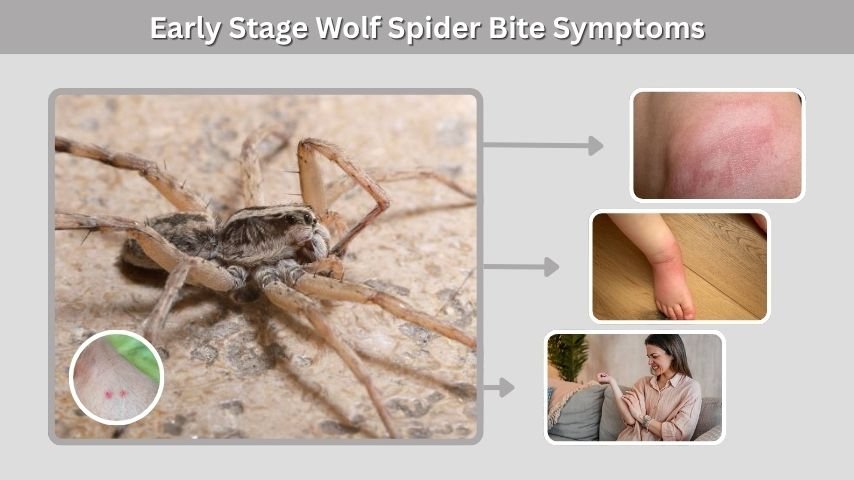
The early stage of a wolf spider bite usually happens within the first few minutes to several hours. This is when pain, redness, swelling, and itching may begin. Most early symptoms are limited to the bite area. If the reaction spreads quickly or causes serious discomfort, it may not be a simple wolf spider bite.
First Signs After the Bite
The first stage may feel like a small sting or pinch. Some people notice symptoms right away, while others may only see irritation later.
Common early stage wolf spider bite symptoms include:
- Sharp pinch or stinging feeling
- Mild pain near the bite
- Redness around the skin
- Slight swelling
- Itching or tenderness
- Warm feeling near the bite
- Possible small fang marks
Early Stage Bad Wolf Spider Bite
A bad early reaction is not typical for a normal wolf spider bite. Severe pain, fast swelling, dizziness, widespread hives, nausea, or breathing trouble may suggest an allergic reaction or a different medical problem.
If symptoms feel intense from the beginning, do not wait for the bite to “go through stages.” Get medical advice, especially if the person bitten is a child, elderly adult, or someone with allergies or a weak immune system.
Day 1 Wolf Spider Bite Stages
Day 1 is often when people search for answers because the bite is fresh and symptoms are noticeable. A normal day 1 wolf spider bite may be red, sore, itchy, or slightly swollen. It should not rapidly grow, turn black, drain pus, or cause severe whole-body symptoms.
What a Day 1 Wolf Spider Bite May Look Like
On day 1, the bite may look like a small red bump or a slightly swollen patch. The skin may feel warm, tender, or itchy. Some people may see two tiny puncture marks, but fang marks are not always visible.
Pain should usually be manageable. If the bite becomes extremely painful or the redness spreads far beyond the bite area, it may need medical attention.
Day 1 Early Stage Symptoms
The beginning stages of a wolf spider bite often stay mild. The area may look irritated, but it should not look like a deep wound. Mild swelling can happen as the body reacts to the bite.
A day 1 bite should be monitored rather than ignored. Marking the edge of redness with a pen can help you see whether it is shrinking, staying the same, or spreading.
What to Do on Day 1
Basic care on the first day can reduce irritation and lower the risk of infection. Keep the area clean and avoid scratching.
Helpful day 1 care steps include:
- Wash the bite with soap and water
- Apply a cold compress for 10 to 15 minutes
- Keep the area clean and dry
- Avoid scratching or squeezing the bite
- Use pain relief if safe for you
- Watch whether redness spreads
- Seek care if symptoms worsen
Wolf Spider Bite Healing Stages
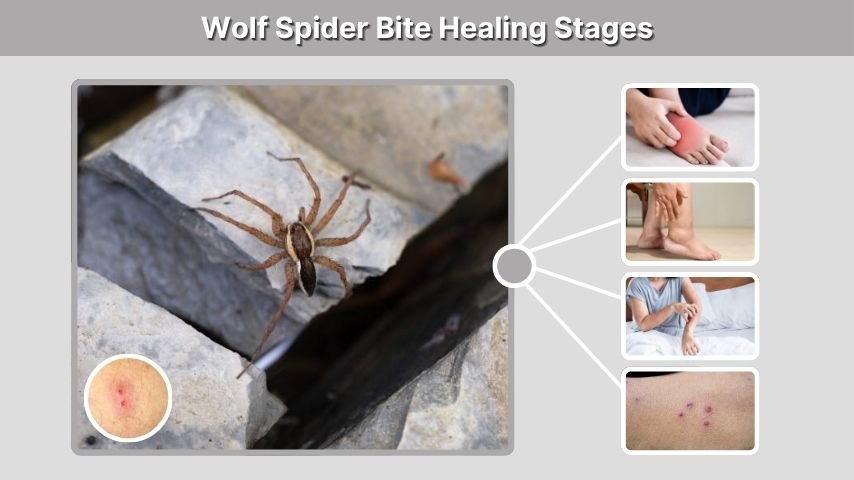
Wolf spider bite healing stages usually move from irritation to gradual improvement. The exact timeline can vary, but a mild bite should get better instead of worse. If the spot becomes more painful, more swollen, darker, or infected-looking after a few days, it may not be a normal healing process.
Stage 1: First Few Hours
During the first few hours, the bite may sting, burn, or ache. Redness can appear around the bite site, and the skin may feel warm. Some swelling or itching can also begin.
This stage is usually the body’s local reaction to the bite. The symptoms should remain close to the bite area.
Stage 2: Day 1 to Day 2
From day 1 to day 2, swelling or tenderness may peak. The bite may still look red and feel itchy. Some people may feel a small firm bump under the skin.
At this stage, the bite should not develop a growing wound, pus, red streaks, or severe spreading pain. Those signs may point to infection or another type of bite.
Stage 3: Day 3 to Day 5
By day 3 to day 5, a mild wolf spider bite should start improving. Redness may fade, swelling may decrease, and soreness should become less noticeable. Itching may still happen as the skin heals.
If the bite looks worse by this stage, take it seriously. A worsening spot may be infected, irritated from scratching, or caused by something other than a wolf spider.
Stage 4: About One Week and After
After about a week, most mild bites should be mostly healed or clearly improving. A faint mark, small scab, or mild irritation may remain for a short time.
A bite that keeps growing, opens into a sore, turns dark, or becomes more painful needs medical care. Normal healing should move toward less redness, less swelling, and less pain.
Wolf Spider Bite Pictures and Stages
Many people search for wolf spider bite stages pictures to compare their skin with examples online. Pictures can help show whether a bite is changing, but they are not reliable for diagnosis. A wolf spider bite can look similar to many other bites, rashes, and skin infections.
Why Pictures May Not Confirm the Bite
A photo cannot prove that a wolf spider caused the mark. Many bites look like red, swollen bumps. Some infections also start as small painful spots and may be mistaken for spider bites.
Unless the spider was seen biting, it is better to describe the skin reaction as a possible bite rather than a confirmed wolf spider bite.
How Photos Can Help Track Healing
Photos can still be useful if symptoms are changing. Take a clear picture in good light once or twice a day. This can help show whether redness is spreading or fading.
If you see a doctor, these photos may help explain how the bite changed over time. Avoid relying only on random online pictures to decide whether your bite is serious.
When to Worry About Wolf Spider Bite Stages
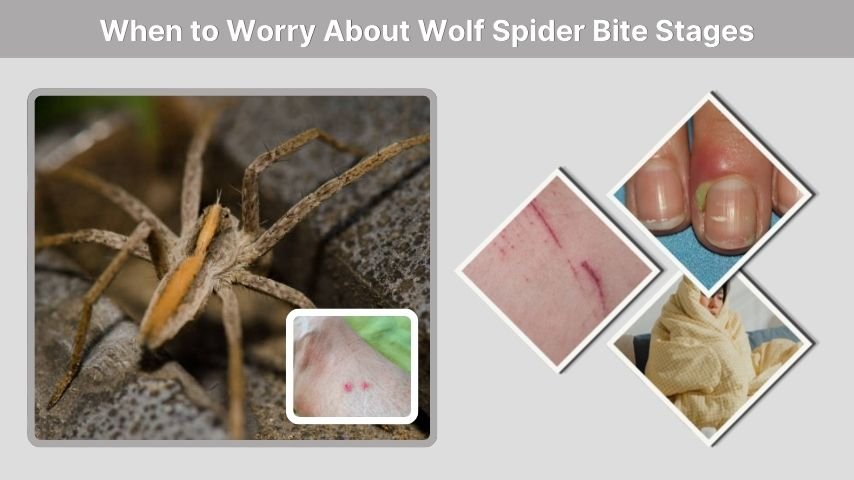
Most wolf spider bites are mild, but some symptoms should not be ignored. A bite that spreads, becomes very painful, or causes whole-body symptoms may need medical care. Mayo Clinic advises urgent care for severe pain, breathing or swallowing trouble, spreading redness, red streaks, or a growing wound.
Warning Signs That Need Medical Care
Get medical help if the bite is not following a normal healing pattern. Serious symptoms may mean infection, an allergic reaction, or a more dangerous spider bite.
Warning signs include:
- Severe or increasing pain
- Spreading redness
- Red streaks from the bite
- Pus or drainage
- Fever or chills
- A wound that grows or opens
- Dark or dead-looking skin
- Trouble breathing or swallowing
- Dizziness, fainting, or widespread hives
Could It Be a Brown Recluse or Black Widow Bite?
Some serious spider bites are blamed on wolf spiders by mistake. Brown recluse and black widow bites are more medically concerning. A brown recluse bite may cause a growing wound or tissue damage, while black widow bites may cause severe pain, cramps, or body-wide symptoms.
If you are unsure whether the spider was dangerous, it is safer to contact a healthcare provider or local poison control center.
How to Treat a Wolf Spider Bite at Home
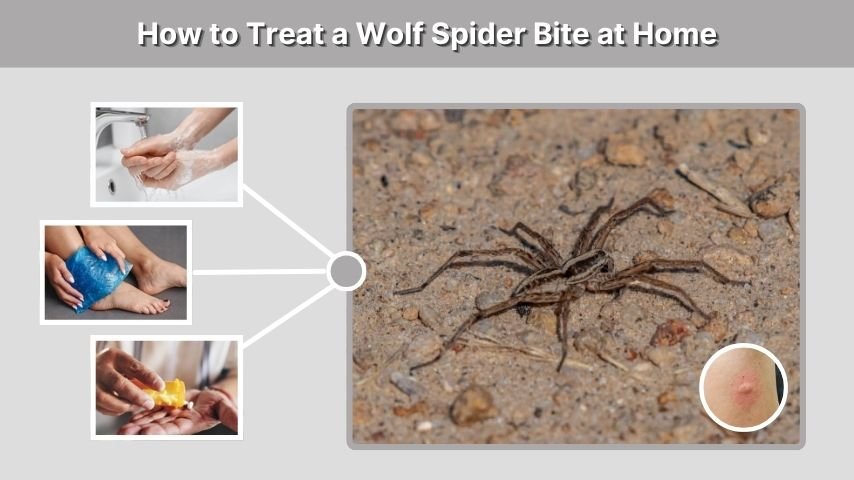
Home treatment for a mild wolf spider bite focuses on cleaning the skin, reducing swelling, easing discomfort, and watching for infection. Most mild bites do not need special treatment. Still, the bite should improve with time. If it gets worse, home care should not replace medical advice.
Basic Home Care Steps
Clean the bite as soon as possible. Simple first aid can help prevent irritation and infection.
Basic treatment steps include:
- Wash the area with soap and water
- Apply a cold compress
- Elevate the area if swollen
- Keep the bite clean and dry
- Avoid scratching the skin
- Cover it with a clean bandage if irritated
- Use pain relief or antihistamine only if safe
What Not to Do
Do not cut the bite, squeeze it, burn it, or apply harsh chemicals. These methods can damage the skin and increase infection risk. Do not try to drain the bite at home.
You should also avoid assuming every worsening bite is a wolf spider bite. If the skin becomes infected or the wound grows, get medical help.
How Long Does a Wolf Spider Bite Take to Heal?
A mild wolf spider bite often improves over several days, though healing time depends on the person and the skin reaction. The most important sign is the direction of change. A healing bite should become less painful, less swollen, and less red over time.
Normal Healing Timeline
A mild bite may begin improving within a few days. Redness and swelling should gradually fade. The skin may stay itchy for a short time, especially if it was irritated or scratched.
By about a week, many mild bites are much better. Some may leave a small mark that fades slowly.
Delayed Healing or Infection
Delayed healing can happen when the bite is scratched, irritated, or infected. It can also happen if the original problem was not a wolf spider bite.
If the area becomes more painful, drains fluid, smells bad, forms red streaks, or keeps spreading, it should be checked. Infection may need medical treatment.
FAQs
What are the stages of a wolf spider bite?
A wolf spider bite may start with a sting or pinch, followed by redness, mild swelling, itching, and soreness. Over the next few days, symptoms should slowly improve. If the bite grows, becomes very painful, or drains pus, seek medical care.
What does a day 1 wolf spider bite look like?
On day 1, a wolf spider bite may look like a small red bump or swollen patch. It may feel sore, warm, or itchy. Severe spreading redness, dark skin, fever, or intense pain is not typical and should be checked.
Are early stage wolf spider bite symptoms dangerous?
Early symptoms are usually not dangerous. Mild pain, redness, swelling, and itching can happen near the bite. Breathing trouble, widespread hives, dizziness, or rapidly worsening swelling may signal an allergic reaction or another medical issue.
Do wolf spider bite stages pictures help?
Pictures can help track whether redness is spreading or healing, but they cannot prove the bite came from a wolf spider. Many insect bites and skin infections look similar. Use photos as a record, not as a diagnosis.
When should I see a doctor for a wolf spider bite?
See a doctor if pain gets worse, redness spreads, red streaks appear, pus develops, the wound grows, or you have fever, breathing trouble, dizziness, or trouble swallowing. These signs may need medical treatment.