











The African ostrich is the world’s largest and fastest bird, renowned for its strength, endurance, and remarkable adaptability. Native to Africa’s open savannas and deserts, this flightless bird plays a vital role in both ecosystems and economies. Beyond its natural habitat, the ostrich is central to farming, art, and tourism across the African continent — especially in South Africa.
The Majestic Bird of Africa
The African ostrich (Struthio camelus) stands as a symbol of the wild African plains. Unlike most birds, it cannot fly, but its incredible legs make it a record-breaking runner capable of reaching speeds up to 70 km/h. Ostriches thrive in dry, open landscapes from the Sahara to the southern tip of Africa, where they coexist with wildlife like antelope and zebras.
These birds are not just fascinating for their size but also for their resilience. Their ability to survive intense heat, conserve water, and feed on tough vegetation makes them one of Africa’s most successful species.
Species and Regional Variations
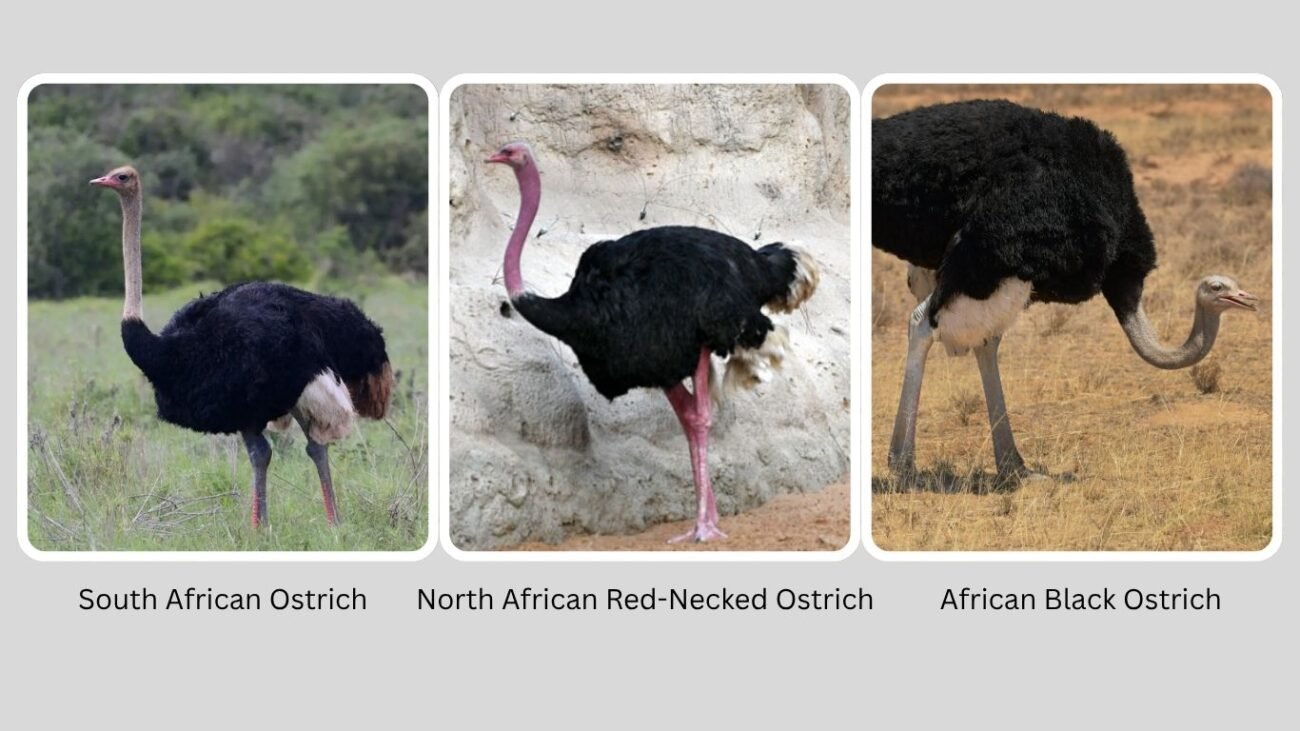
South African Ostrich
The South African ostrich is the most common and commercially farmed subspecies. Found throughout the Karoo and the Western Cape, it is known for its glossy black-and-white plumage in males and soft brown feathers in females. South Africa leads the world in ostrich production, exporting high-quality leather, feathers, and meat globally.
North African Red-Necked Ostrich
This subspecies, native to regions like Morocco and Chad, is easily recognized by its bright red neck and tall stature. Once widespread across North Africa, its numbers have declined due to habitat loss and hunting. Conservation programs now aim to reintroduce it into protected reserves to restore balance in desert ecosystems.
African Black Ostrich
Bred mainly for farming purposes, the African Black Ostrich is a hybrid of wild subspecies. It is smaller and tamer, making it ideal for breeding, riding attractions, and tourism. Its dense feathers and calm behavior make it a staple in ostrich farms.
Physical Traits and Speed
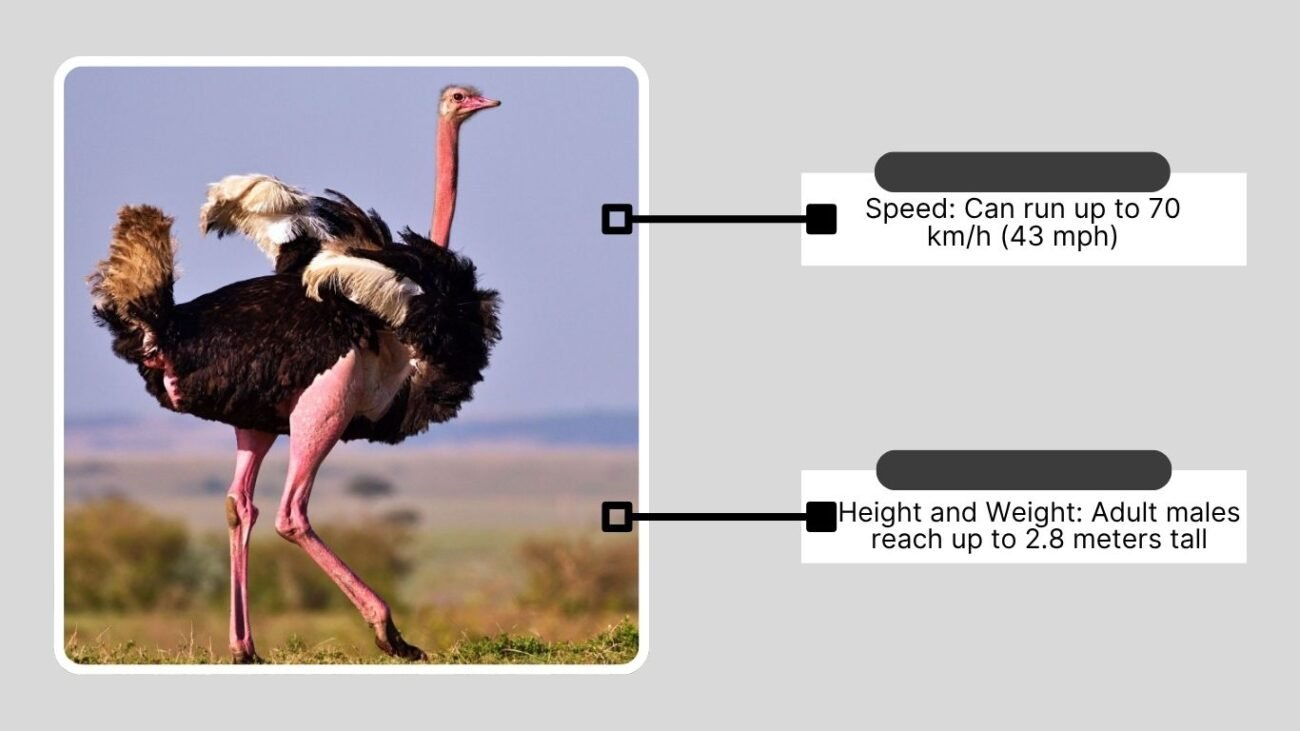
- Height and Weight: Adult males reach up to 2.8 meters tall and can weigh around 150 kilograms.
- Legs: Long, powerful legs built for sprinting and defense.
- Speed: Can run up to 70 km/h (43 mph) — the fastest land bird.
- Toes: Two toes on each foot, providing balance and traction.
- Vision: Large eyes (about 5 cm wide) for spotting predators from afar.
- Feathers: Soft and fluffy, designed for temperature control, not flight.
- Defense: Strong kicks capable of deterring large predators.
- Wings: Used for balance during running and for courtship displays.
- Adaptation: Can survive extreme heat with minimal water intake.
Habitat and Distribution
Where Ostriches Live in Africa
Ostriches inhabit a vast range of environments — from the dry Sahara Desert to the grassy plains of southern Africa. The largest populations are found in South Africa, Namibia, Botswana, and parts of East Africa like Kenya and Tanzania. They prefer open landscapes that allow them to detect predators early and run freely when threatened.
Population and Conservation
While millions of ostriches once roamed the wild, most are now farmed commercially. The wild population has declined in some regions, particularly in North Africa, but conservation efforts are helping restore numbers. Sanctuaries and ostrich reserves in South Africa and Namibia promote sustainable breeding and eco-tourism.
Organizations and scientific groups, including the Ostrich Journal of African Ornithology, monitor these populations to ensure their survival. Responsible farming practices and habitat protection remain essential to preserving Africa’s most iconic bird.
Ostrich Farming in South Africa
History and Economic Importance
Ostrich farming began in the 1800s in Oudtshoorn, South Africa, often called the “Ostrich Capital of the World.” Initially, ostrich feathers were prized for fashion accessories in Europe. Later, demand shifted toward ostrich leather and meat, creating a booming export industry. Today, ostrich farming contributes significantly to South Africa’s agricultural economy.
Famous Ostrich Farms
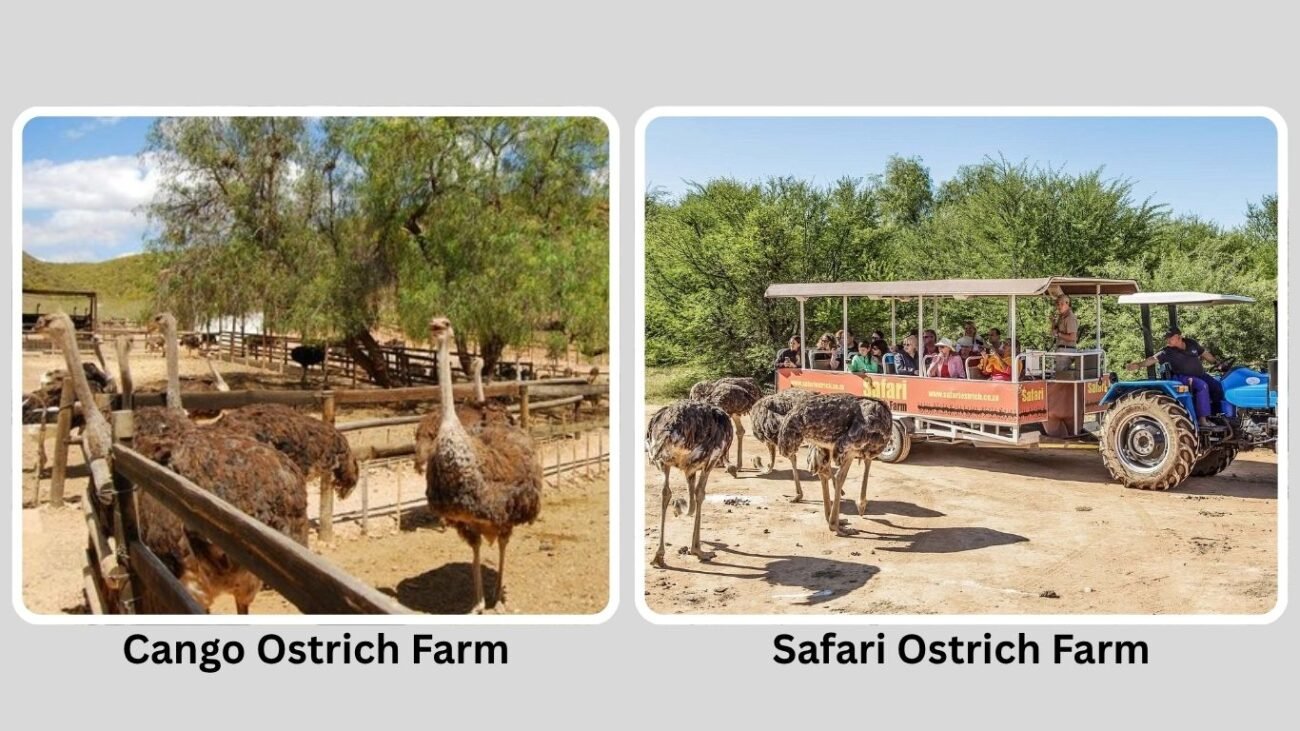
Oudtshoorn remains the heart of ostrich tourism, with attractions like the Cango Ostrich Farm, Safari Ostrich Farm, and Cape Town Ostrich Ranch. These farms offer visitors unique experiences — from guided tours and feeding sessions to ostrich riding and egg carving demonstrations. Tourists can also purchase souvenirs, such as hand-painted eggs and ostrich leather goods.
Ostrich Products and Global Trade

Ostrich Leather Industry
Ostrich leather is one of South Africa’s most valuable exports, prized for its distinctive quill pattern, durability, and soft texture. Luxury brands worldwide use it to craft handbags, purses, shoes, and wallets. The towns of Oudtshoorn and Cape Town serve as the primary centers for tanning and leather processing.
Ostrich farming not only supplies the fashion industry but also creates thousands of jobs in rural communities. The leather’s unique appearance and resilience make it a sought-after material for exclusive products, often competing with exotic leathers like crocodile and python.
Ostrich Meat and Feathers
Ostrich meat has gained popularity as a lean, protein-rich alternative to beef. It’s low in fat and cholesterol, making it ideal for health-conscious consumers. Many South African restaurants feature ostrich steaks, burgers, and sausages on their menus.
Feathers, once a symbol of wealth during the Victorian era, are still in demand today for costumes, décor, and ceremonial attire. The colorful plumes also play a role in traditional African dance and celebrations, connecting culture with commerce.
Ostrich Eggs: Art, Decoration, and Symbolism
Egg Size and Uses
The African ostrich lays the largest egg of any living bird — about 15 cm in diameter and weighing up to 1.5 kg. Each egg equals roughly two dozen chicken eggs and can withstand significant pressure due to its thick shell. Beyond food, ostrich eggs have deep cultural and artistic significance in Africa.
Historically, they symbolized fertility, prosperity, and life. Empty eggs were often used as water containers in arid regions or crafted into art pieces for trade and decoration.
Painted and Carved Ostrich Eggs
Artisans across South Africa transform ostrich eggs into exquisite decorative objects. In towns like Oudtshoorn and Cape Town, hand-painted eggs feature wildlife scenes, tribal patterns, and African landscapes. Some are carved into lamps, jewelry boxes, or candle holders, while others are intricately engraved using fine tools.
Visitors to ostrich farms can watch these artists at work and even purchase customized designs. Each piece reflects Africa’s cultural heritage, blending nature, art, and craftsmanship.
Commercial Value
The market for painted and carved ostrich eggs continues to thrive in local markets and international exports. Prices vary depending on design and quality, with finely detailed pieces fetching premium rates. Fertile ostrich eggs are also sold to breeders, supporting sustainable farming. These products showcase how Africa’s wildlife can contribute to both artistry and economic growth.
Cultural and Tribal Connections
The Ostrich in African Culture
Ostriches feature prominently in African folklore and mythology. Many tribes view them as symbols of alertness, speed, and wisdom. Their feathers are used in ceremonial attire to signify power and grace, especially in Southern African traditions.
Ancient rock art also depicts ostriches, emphasizing their spiritual and ecological significance. In some regions, ostrich eggshells are believed to bring good luck and protection when displayed in homes.
Ostrich People and Tribes
Certain African myths describe tribes with “ostrich feet,” possibly inspired by desert dwellers with strong endurance and distinctive footprints. These tales symbolize human adaptation to nature’s extremes and illustrate the deep relationship between people and the ostrich across generations.
Ostrich Tourism and Adventures
Riding and Racing Experiences
South Africa offers unique experiences like ostrich riding and racing — activities that draw tourists from all over the world. While not all farms permit riding due to animal welfare standards, visitors can still observe demonstrations and learn about the bird’s anatomy and behavior.
Oudtshoorn’s Safari Ostrich Farm and Cango Ostrich Farm are especially famous for these attractions. Ostrich races, once part of farm entertainment, now primarily serve as heritage displays rather than competitive sports.
Safari and Farm Visits
Ostrich tourism is a highlight of South Africa’s Western Cape region. Visitors can explore breeding facilities, hold giant eggs, and feed ostriches by hand. The combination of wildlife education and adventure makes these farms key destinations on African safaris.
Research and Ornithology
Scientific Studies and Journals
Academic research, especially through the Ostrich Journal of African Ornithology, provides insights into ostrich biology, ecology, and conservation. Scientists study topics such as breeding patterns, diet, migration, and adaptation to climate change. These findings help farmers and conservationists manage ostrich populations responsibly.
Future of Ostrich Conservation
The future of ostrich conservation depends on balancing trade, tourism, and environmental sustainability. Many farms now operate under eco-friendly standards, ensuring ethical breeding and minimal habitat disruption. Through education, research, and tourism, Africa continues to protect this extraordinary bird for future generations.
FAQs
What is the largest species of ostrich in Africa?
The North African Red-Necked Ostrich is the largest subspecies, known for its tall height and reddish neck. It can reach up to 3 meters in height and is adapted to arid regions. Conservation programs are underway to protect this rare bird across the Sahara and Sahel zones.
Where are most ostrich farms located in South Africa?
Most ostrich farms are found in Oudtshoorn, in the Western Cape province. This region has ideal dry conditions for ostrich farming. Visitors can tour farms like Cango, Safari, and Cape Town Ostrich Ranch to learn about breeding, feeding, and egg art production.
How fast can an African ostrich run?
An African ostrich can sprint up to 70 kilometers per hour (43 mph), making it the fastest-running bird on land. Its long, muscular legs and unique two-toed feet allow it to cover large distances efficiently while escaping predators in open plains.
Why are ostrich eggs popular for decoration?
Ostrich eggs are prized for their large size, smooth surface, and durability. Artists carve, paint, and decorate them with African motifs, transforming them into beautiful home décor or souvenirs. Each egg represents both the bird’s natural beauty and Africa’s rich artistic traditions.
Are ostriches still found in the wild in Africa?
Yes, wild ostriches still live across several African regions, especially in game reserves and national parks. While farming has become widespread, conservation efforts ensure that wild populations remain protected in countries like South Africa, Namibia, Kenya, and Botswana.


