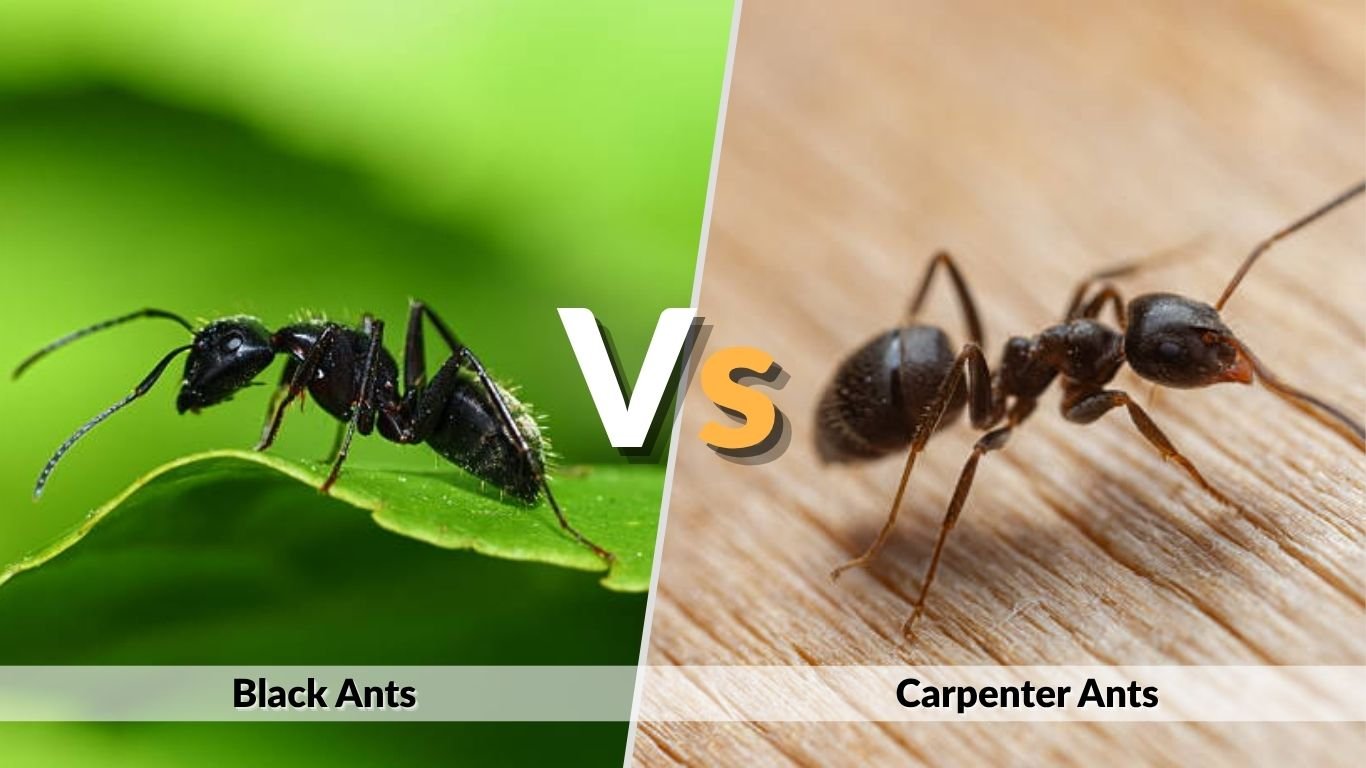
Many people notice black ants in their homes and immediately assume they are harmless. However, not all black ants are the same. Some may be carpenter ants, which can cause serious structural damage if left untreated.
Understanding the difference between black ants vs carpenter ants is essential for proper identification and effective control. In this guide, you’ll learn how to distinguish them, their behavior, and why it matters.
What Are Black Ants?
Black ants are one of the most common household pests. They are usually harmless and mainly considered a nuisance rather than a threat.
Identification Features
- Small size (typically 2–5 mm)
- Dark brown or black color
- Slim body with a less defined thorax
These ants are often seen in kitchens or near food sources.
Habitat & Behavior
Black ants typically build nests:
- In soil or gardens
- Inside walls or cracks
- Near food storage areas
They are strongly attracted to sugary foods, crumbs, and leftovers. This is why they commonly appear in homes.
Are All Black Ants Carpenter Ants?
No, not all black ants are carpenter ants. This is a very common misconception. Most black ants are harmless and do not damage wood, while carpenter ants are much larger and can cause structural issues.
What Are Carpenter Ants?
Carpenter ants are a more serious type of ant because they can damage wooden structures in homes.
Identification Features
- Larger size (6–12 mm)
- Black or red and black color
- Smooth, rounded thorax
- Strong mandibles
Their size alone often makes them stand out compared to regular black ants.
Habitat & Nesting
Carpenter ants prefer:
- Damp or decaying wood
- Wooden structures like beams, doors, and furniture
- Tree stumps and logs
Unlike termites, carpenter ants do not eat wood. Instead, they tunnel through it to build nests.
Types of Carpenter Ants
There are several common types:
- Black carpenter ants
- Red and black carpenter ants
- Eastern and western carpenter ants
Black Ants vs Carpenter Ants (Detailed Comparison)
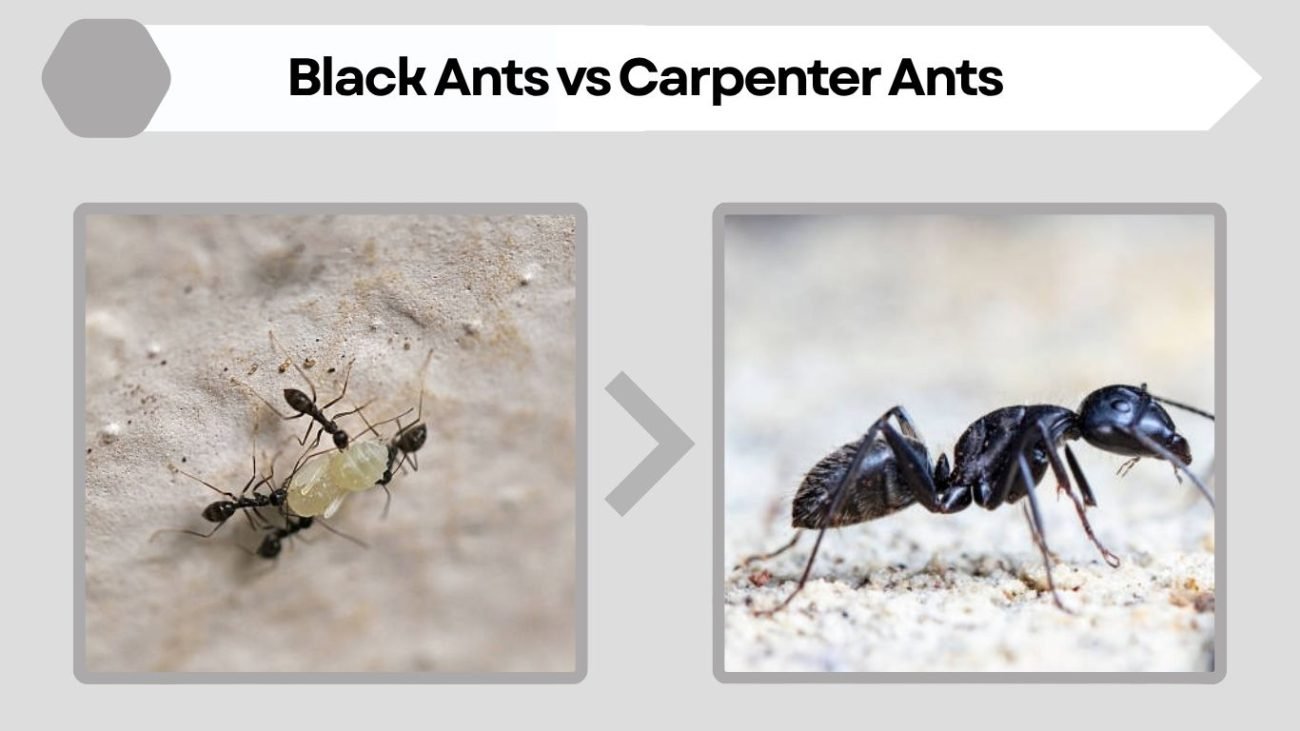
Understanding the difference between carpenter ants vs black ants helps you identify the problem quickly.
Size Difference
Carpenter ants are significantly larger than typical black ants. If you see big black ants, there’s a higher chance they are carpenter ants.
Appearance Difference
- Black ants: smaller, slimmer
- Carpenter ants: larger, more robust body
Behavior Difference
- Black ants: search for food indoors
- Carpenter ants: focus on nesting in wood
Nesting Habits
- Black ants: soil, cracks, walls
- Carpenter ants: wood, especially damp or damaged
Damage Potential
This is the most important difference:
- Black ants: harmless nuisance
- Carpenter ants: can weaken wooden structures over time
Carpenter Ant Size vs Black Ant Size
One of the easiest ways to identify them is by size.
- Black ants: small and barely noticeable
- Carpenter ants: large and clearly visible
If you notice large black carpenter ants inside your home, it’s a warning sign that should not be ignored.
Do Carpenter Ants Bite or Sting?
Many homeowners worry about safety when dealing with ants.
Carpenter Ant Bite
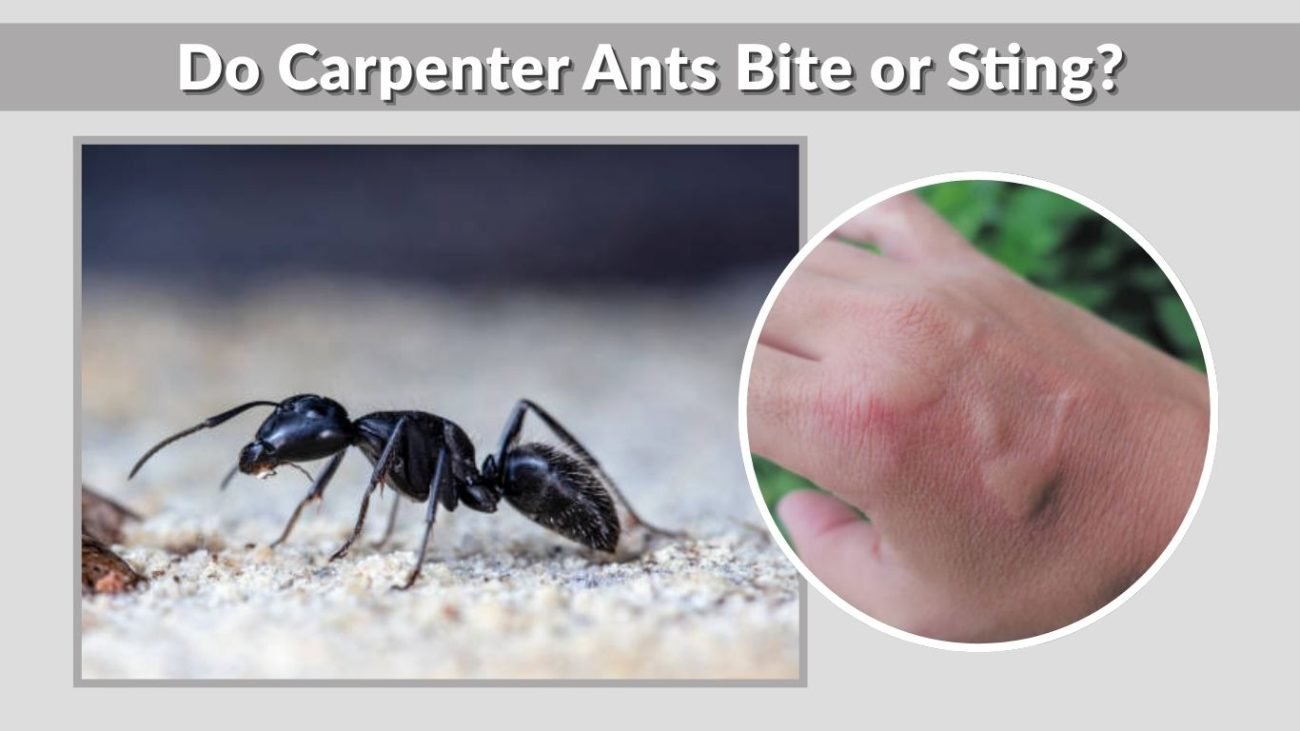
Carpenter ants can bite using their strong jaws. While not dangerous, the bite can be slightly painful. Some may also spray a mild acid, causing irritation.
Black Ant Bite
Black ants rarely bite and are generally harmless to humans.
Are They Dangerous?
Carpenter ants are not dangerous in terms of health, but they are dangerous to your property due to wood damage.
Carpenter Ant Colony & Lifecycle
Understanding their lifecycle helps in controlling infestations.
Queen Carpenter Ant
Each colony starts with a queen whose primary role is reproduction. She can live for many years and continuously produce workers.
Colony Size
A carpenter ant colony can grow to thousands of ants, including workers and reproductive ants.
Winged Carpenter Ants (Swarmers)
Winged carpenter ants appear during mating season. If you see black carpenter ants with wings, it may indicate a nearby mature colony.
Signs of Carpenter Ant Infestation
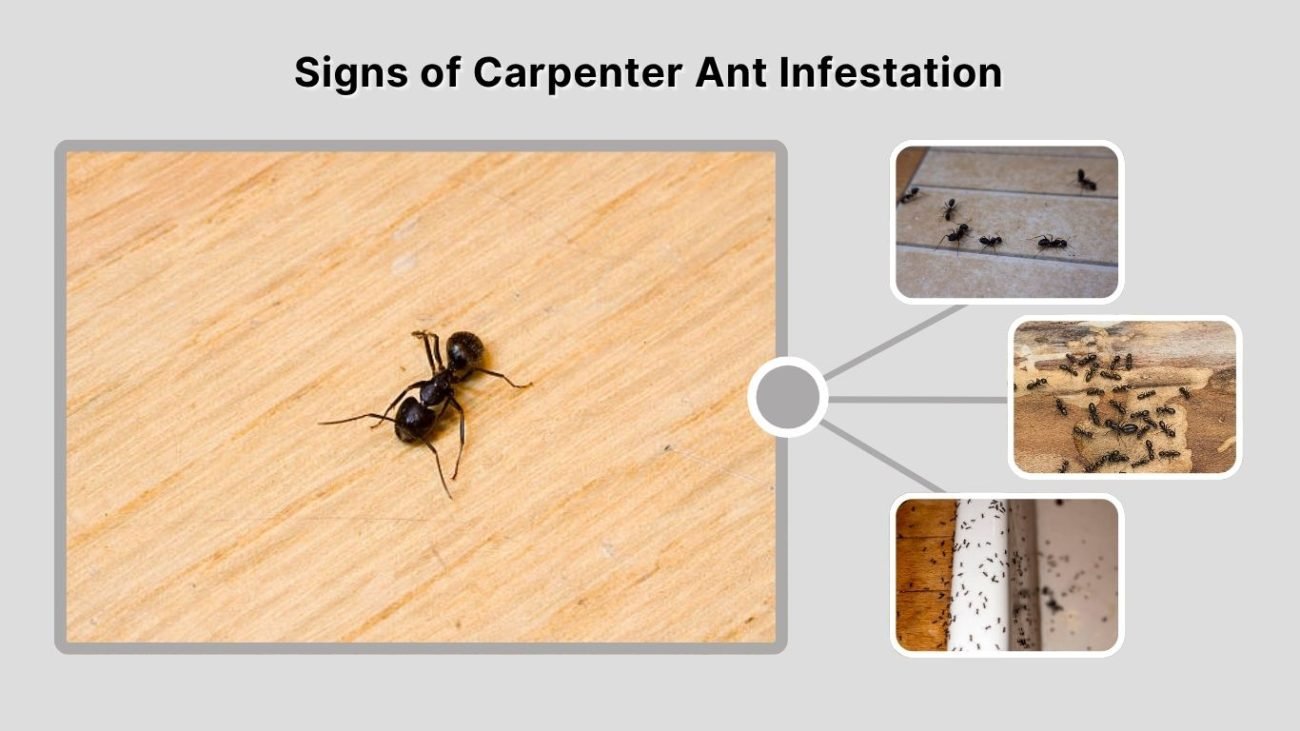
Early detection is crucial to prevent serious damage. Carpenter ants often remain hidden, so recognizing the signs can save you costly repairs.
Large Black Ants in House
If you frequently see large black carpenter ants indoors, especially at night, it’s a strong indication of an infestation nearby.
Sawdust (Frass)
Carpenter ants push out wood shavings called frass. This looks like fine sawdust and is usually found near wooden structures.
Rustling Sounds in Walls
You may hear faint rustling noises inside walls. This is caused by ants tunneling through wood.
Winged Ants Indoors
Seeing black carpenter ants with wings inside your home often means a mature colony is present.
Why Carpenter Ants Are More Dangerous Than Black Ants
While both may appear similar, their impact is very different.
- Black ants: mainly a nuisance
- Carpenter ants: damage wooden structures
Carpenter ants hollow out wood over time, weakening beams, floors, and walls. If ignored, this can lead to expensive repairs.
How to Get Rid of Black Carpenter Ants
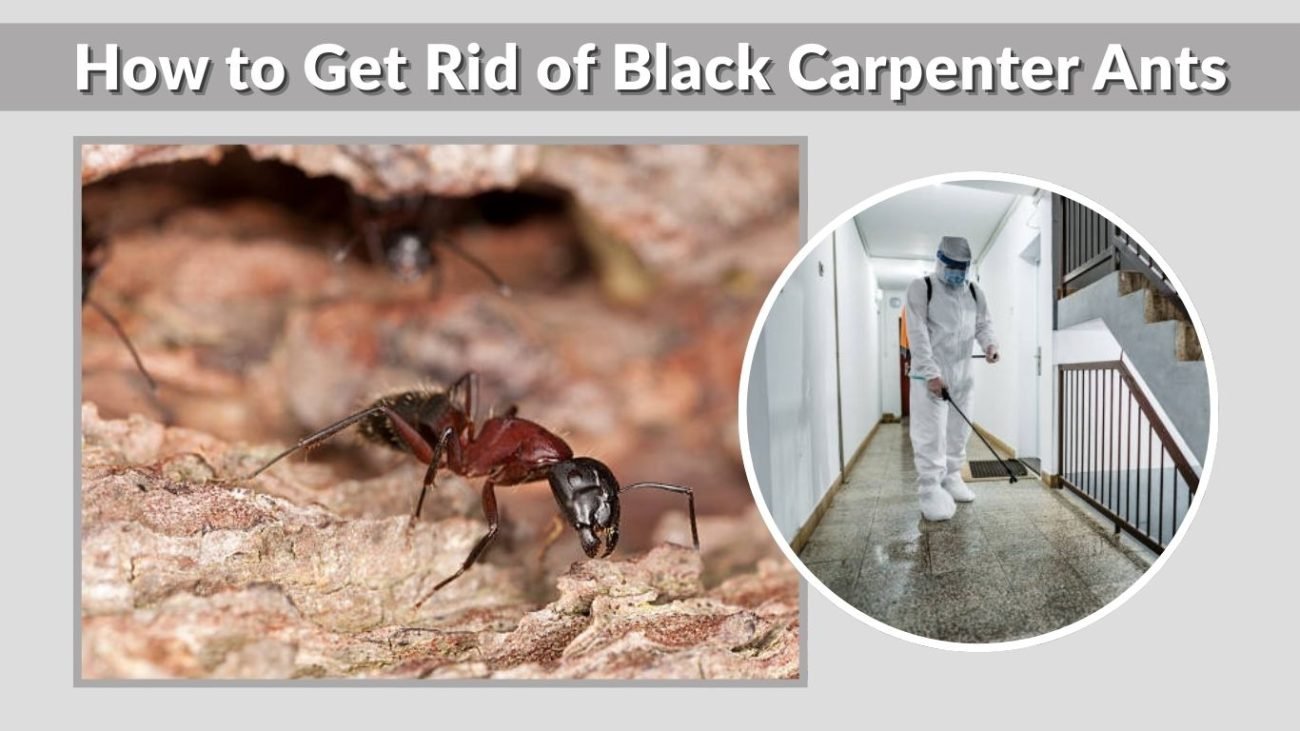
Effective removal requires targeting the colony, not just the visible ants.
Natural Methods
- Use vinegar to disrupt scent trails
- Apply borax mixed with sugar as bait
These methods are useful for minor infestations.
Chemical Treatments
- Ant baits (most effective long-term solution)
- Insecticide sprays for immediate control
Baits work best because ants carry poison back to the colony, eliminating the queen.
Professional Pest Control
For large infestations, hiring professionals is the safest and most effective option. They can locate hidden nests and treat them properly.
Best Way to Kill Black Carpenter Ants
Killing visible ants is not enough—you must eliminate the entire colony.
- Use bait systems instead of only sprays
- Locate and destroy the nest
- Combine treatment with prevention methods
The key is targeting the queen carpenter ant, as the colony cannot survive without her.
Prevention Tips
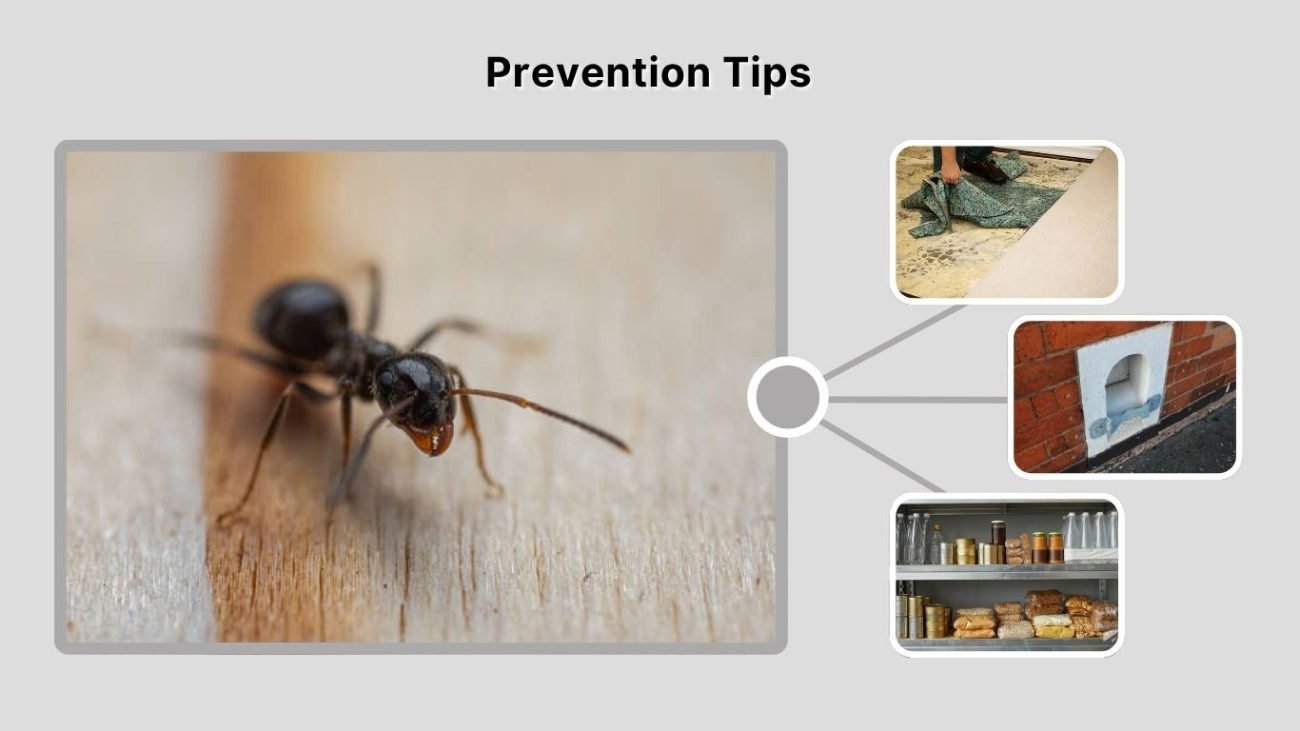
Preventing infestation is easier than dealing with one.
Remove Moisture
Carpenter ants prefer damp wood. Fix leaks and reduce humidity.
Seal Entry Points
Close cracks, gaps, and holes around doors and windows.
Store Food Properly
Keep food sealed and clean up spills to avoid attracting ants.
Regular Inspection
Check wooden structures and hidden areas regularly for early signs.
Black Carpenter Ants in House: What to Do Immediately
If you spot carpenter ants, act quickly.
- Identify whether they are carpenter ants or regular black ants
- Follow their trail to locate the nest
- Use bait instead of just spraying
- Call professionals if the infestation is severe
Quick action can prevent structural damage.
FAQs
Are black ants and carpenter ants the same?
No, they are different. Carpenter ants are larger and can damage wood, while most black ants are harmless and only search for food indoors.
Are big black ants always carpenter ants?
Not always. While size is a strong indicator, proper identification also depends on body shape, nesting habits, and behavior.
Do black carpenter ants have wings?
Yes, reproductive carpenter ants develop wings during swarming season to start new colonies.
What do black carpenter ants eat?
They prefer sugary substances, proteins, and insects. Unlike termites, they do not eat wood but tunnel through it.
How do you get rid of black carpenter ants permanently?
The best method is locating the nest, using bait systems to eliminate the colony, and removing moisture sources to prevent reinfestation.