











Blue Jays are among the most recognizable backyard birds in North America, admired for their vivid blue feathers and loud calls. While their striking appearance often grabs attention, their nesting behavior is just as fascinating. From carefully constructed nests to protective habits around their young, Blue Jays reveal a complex approach to survival. Learning about their nests, eggs, and seasonal behaviors helps bird enthusiasts better understand and support these intelligent creatures.
What Does a Blue Jay Nest Look Like?

Size and Structure of a Blue Jay Nest
A Blue Jay’s nest typically measures about 7 to 10 inches across and 4 to 6 inches deep. It is sturdy yet lightweight, often appearing as a cup-shaped structure. The outer framework is made with twigs and small sticks, while the inside is lined with softer materials for insulation and comfort.
Materials Used in Building the Nest
Blue Jays are resourceful builders. They gather twigs, roots, bark, and even paper or string when available. Inside, they line the nest with mud, feathers, moss, and grass. This layered construction ensures stability and warmth, making it suitable for raising hatchlings during the breeding season.
Images and Examples of Blue Jay Nests
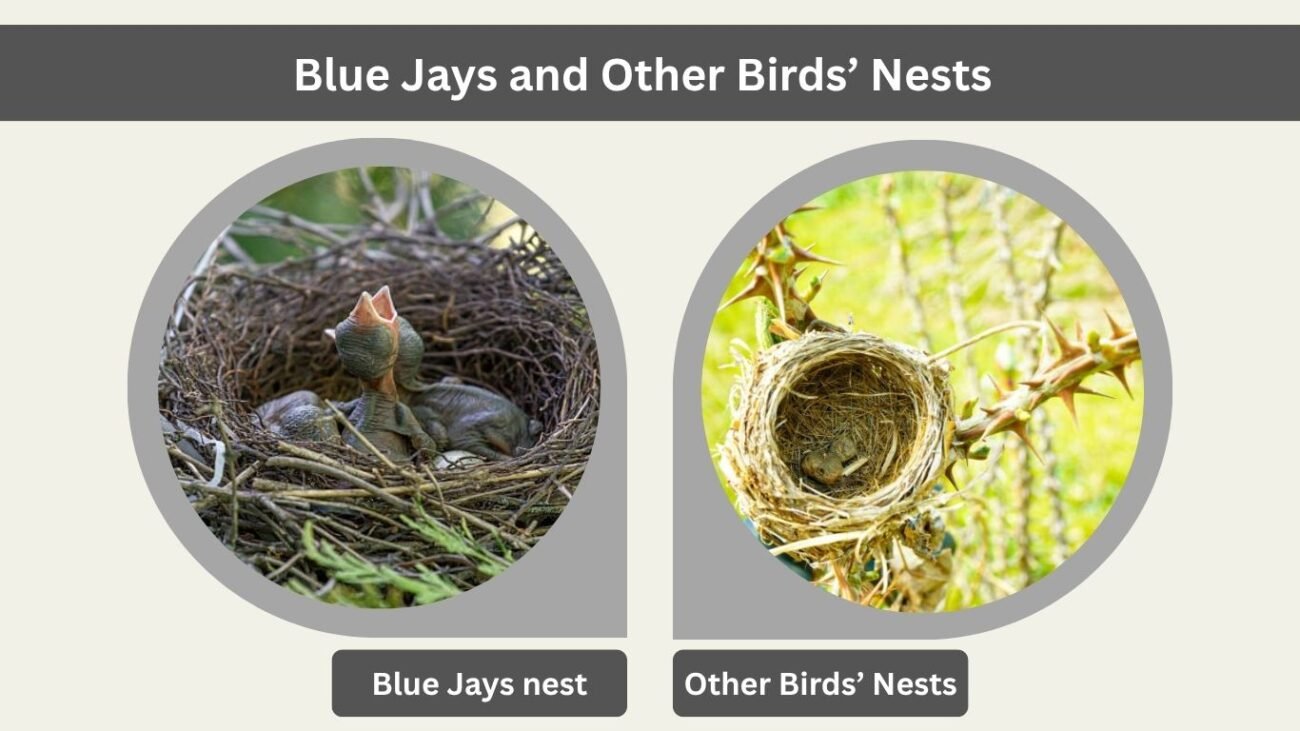
Photographs of Blue Jay nests often show messy twig constructions, but up close, their structure is neat and carefully arranged. While from a distance it may look like a loose pile of sticks, the inner layers reveal intricate craftsmanship.
Blue Jay Nesting Habits and Behavior
Typical Nesting Habits of Blue Jays
Blue Jays prefer to nest in trees and shrubs, often 10 to 25 feet above the ground. They usually choose dense foliage to help conceal the nest from predators. Both the male and female share in building duties, though the female typically spends more time arranging the lining inside.
How Blue Jays Build Their Nests
Nest building can take anywhere from 3 to 7 days. The process begins with the birds collecting twigs and stems to form the outer framework. Once stable, they pack the structure with mud and softer materials. This cooperative effort ensures that the nest can withstand wind, rain, and frequent activity from both parents.
Seasonal Nesting Patterns
Blue Jays usually nest during spring and early summer, with breeding season starting as early as March in warmer regions. They may raise one or two broods per year, depending on climate and food availability. During nesting season, Blue Jays become more territorial and vocal, often chasing away other birds and even squirrels.
Nesting Season and Locations
When Do Blue Jays Nest?
Blue Jays generally begin nesting from March through July. The exact timing depends on geographic location and weather conditions. In northern regions, nesting often starts later in spring, while in southern areas it may begin earlier.
Where Do Blue Jays Build Their Nests?
These birds usually choose deciduous or coniferous trees, particularly those with thick cover such as oaks, maples, or pines. Shrubs and hedges can also serve as nesting spots, especially in suburban areas where tall trees may be scarce.
Do Blue Jays Use Birdhouses or Ground Nests?
Although many backyard birds will use birdhouses, Blue Jays rarely do. They prefer open nests in trees. Ground nesting is highly uncommon, as it leaves eggs and chicks vulnerable to predators.
Do Blue Jays Return to the Same Nest?
Blue Jays may reuse the same nesting site in successive years, especially if the location proved safe and successful. However, they often build a new nest each season rather than reusing the old one, ensuring a fresh, sturdy structure.
Blue Jays and Other Birds’ Nests
Do Blue Jays Lay Eggs in Other Birds’ Nests?
Unlike Brown-headed Cowbirds, Blue Jays are not brood parasites. They build and tend to their own nests rather than laying eggs in others’ nests. While they may occasionally take advantage of abandoned nests, it is not a widespread behavior.
Do Blue Jays Steal or Raid Other Birds’ Nests?
Blue Jays have a mixed reputation. They are known to raid other nests for eggs and nestlings, particularly when food is scarce. Although this behavior has earned them the title of “nest robbers,” it does not define their entire nesting pattern. They also feed heavily on acorns, seeds, and insects.
Are Blue Jays Considered Nest Robbers?
Yes, Blue Jays sometimes raid nests, which makes some birdwatchers dislike them. However, such behavior is part of their survival strategy, just as hawks hunt small birds. It’s important to see this within the larger ecological context rather than labeling them as purely destructive.
Protecting and Encouraging Blue Jay Nests
Blue Jay Nest Boxes and Platforms
Although Blue Jays prefer natural tree branches, they may occasionally use nesting platforms designed for larger birds. Nest boxes are less common but can attract Jays if positioned high, near dense cover, and left open without a small entrance hole.
How to Get Blue Jays to Nest in Your Yard
Provide tall trees, shrubs, and access to water. Offering natural materials like twigs and grass can encourage them to build nearby. Avoid trimming dense foliage during spring to give them secure options for concealment.
How to Stop or Prevent Nesting in Unwanted Areas
Sometimes Blue Jays build nests in inconvenient places like gutters or porches. To discourage them, remove early nesting materials before eggs are laid, cover flat ledges, or create mild disturbances. Once eggs are present, however, the nest should be left undisturbed due to bird protection laws.
How Blue Jays Protect Their Own Nests
Blue Jays are fierce defenders of their young. They will mob predators such as hawks, crows, or squirrels, often screaming loudly and diving toward threats. This protective instinct is one of the reasons their chicks often survive to fledging.
Unusual Nesting Behaviors

Do Blue Jays Eat or Destroy Wasp Nests?
Yes, Blue Jays sometimes attack wasp or hornet nests. They peck them open to eat the larvae inside, which provide a protein-rich food source. This unusual behavior not only benefits the Jays but can also reduce wasp numbers around nesting sites.
Do Blue Jays Attack Other Birds’ Nests?
Blue Jays may attack smaller birds’ nests, especially during spring when protein-rich food is needed for growing chicks. While this can seem aggressive, it’s a natural part of their omnivorous diet and ecosystem role.
Key Takeaways
- Blue Jays build cup-shaped nests, usually in trees, using twigs, roots, and softer linings.
- Nesting season ranges from March to July, with one or two broods per year.
- Clutches average 3–6 eggs, and chicks stay in the nest for about 17–21 days.
- Blue Jays can raid other nests but also serve important ecological roles.
- While they rarely use birdhouses, they thrive in yards with tall trees, shrubs, and water sources.
FAQs
What does a Blue Jay nest look like?
Blue Jay nests are cup-shaped and about 7 to 10 inches wide. They are made from twigs, sticks, and roots on the outside, with a softer inner lining of grass, moss, and mud. Despite looking messy from afar, their structure is strong and carefully arranged.
Where do Blue Jays usually build their nests?
Blue Jays typically nest in trees or large shrubs, 10 to 25 feet above ground. They prefer oaks, maples, and pines, especially in areas with thick foliage that helps conceal the nest. They rarely nest in birdhouses or on the ground.
How long do baby Blue Jays stay in the nest?
Once hatched, baby Blue Jays remain in the nest for about 17 to 21 days. During this time, both parents bring them food and guard them from predators. After leaving the nest, fledglings are still fed by their parents for several weeks.
Do Blue Jays really steal other birds’ nests?
Blue Jays don’t usually steal nests to live in them, but they sometimes raid nests for eggs or nestlings. This behavior is opportunistic and tied to survival needs. However, they still build and use their own nests for breeding.
How can I safely encourage Blue Jays to nest in my yard?
To attract Blue Jays, plant trees or shrubs for cover, provide a birdbath or water source, and leave out natural nesting materials like twigs and moss. Avoid heavy pruning during spring and early summer so they have safe, concealed spots to raise their young.


