











Blue jays are one of the most recognizable birds in North America, admired for their bright blue plumage, crest, and noisy, intelligent behavior. A common curiosity among bird enthusiasts is how to tell the difference between male and female blue jays. Unlike many other bird species where males display brighter colors, blue jays are sexually monomorphic, meaning males and females look almost identical. In this first half of the article, we’ll explore their identification, appearance, and behavioral differences, focusing on the female blue jay.
Identification of Female Blue Jays
At first glance, a female blue jay looks exactly like a male. Both sexes share the same vibrant blue feathers, black necklace-like markings across the throat, and pale grayish-white underbellies. Their wings and tail are barred with black and blue patterns, which make them easy to identify as blue jays but not easy to distinguish by sex.
Because of this similarity, researchers and birdwatchers usually rely on behavioral cues, rather than appearance, to tell males and females apart. For example, females are often seen incubating eggs in the nest, while males are more likely to be bringing food during that time.
Appearance: Male vs. Female Blue Jay

Blue jays are medium-sized songbirds measuring 9–12 inches long with wingspans of 13–17 inches. Both males and females share the same measurements, though males may be slightly larger. However, this difference is often so subtle that it requires careful side-by-side comparison or measurement to notice.
Key Traits Shared by Both Sexes:
- Crest: The tall crest on top of their head can be raised or lowered depending on mood. Both males and females display this behavior.
- Plumage: Bright blue on the back, wings, and tail; white or light gray underparts; black band across the throat.
- Eyes and Bill: Dark eyes and a strong black bill, identical in both sexes.
In contrast to species like cardinals or mallards, where males are brightly colored and females duller, blue jays evolved to share identical plumage, likely to provide equal camouflage benefits to both parents during nesting.
Behavior of Female Blue Jays
While physical differences are minimal, behavior can sometimes help distinguish females:
- Nesting: Females take the primary role in incubating eggs and brooding young chicks. They stay in the nest more often than males, relying on the male to bring food.
- Males’ Role: Males defend the territory and supply food for the nesting female and young.
- Feeding Chicks: Both parents participate in feeding, but females usually remain closer to the nest during the earliest days after hatching.
Females are equally bold and intelligent as males. They are capable of mimicking hawk calls, mobbing predators, and working with family groups to defend food sources.
Vocalizations: Female Blue Jay Calls
Blue jays are famous for their wide range of calls, from the harsh “jay! jay!” scream to quieter whistles and clicks. Both sexes are capable mimics, often imitating hawks to scare away smaller birds from food sources.
Female blue jays may use softer, more subdued calls during nesting season, particularly when communicating with their mates or signaling young. This helps reduce the risk of attracting predators to the nest. While males and females share the same vocal repertoire, subtle differences in pitch or context may be noted by experienced observers.
Do Male and Female Blue Jays Look the Same?
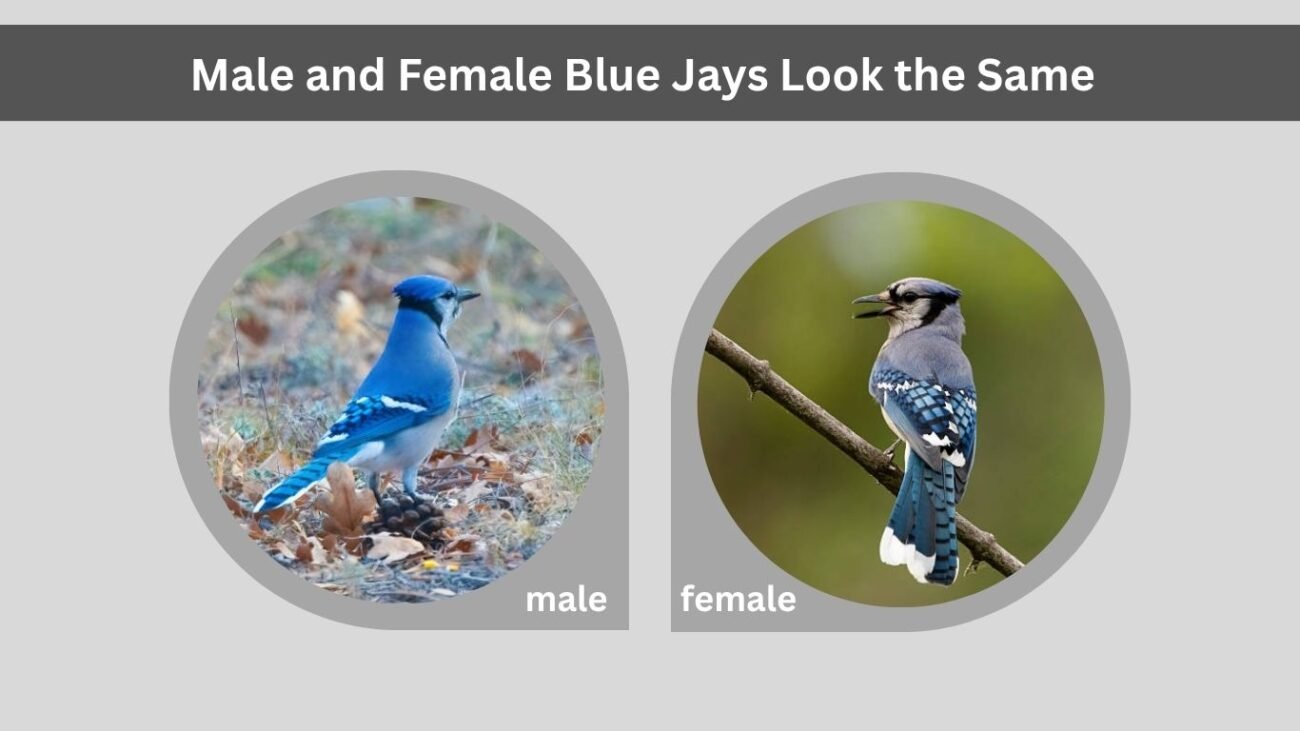
Yes — in almost every visible way, male and female blue jays appear identical. Both sexes exhibit the same striking coloration, crest, and body shape. The only consistent differences are slight size variations and their roles during breeding season.
This lack of distinction, known as sexual monomorphism, is relatively uncommon among songbirds. It likely evolved to ensure both male and female blue jays have the same level of protection and camouflage, especially since both are active around the nest during breeding and chick-rearing.
Lifespan of Female Blue Jays
Female blue jays have lifespans similar to males. In the wild, the average lifespan is around 7 years, although many individuals only survive 2–4 years due to predation or environmental challenges. The oldest known wild blue jay lived over 17 years.
In captivity, blue jays can live much longer — often 20–26 years — thanks to steady food, veterinary care, and protection from predators. Female survival depends heavily on nesting safety since they spend more time incubating eggs, leaving them more exposed to predators like snakes, raccoons, and hawks.
Nesting Roles of Female Blue Jays
During the breeding season, females are the central figures in nesting:
- Nest Construction: Both sexes participate, but females refine and line the nest with softer materials.
- Incubation: The female sits on the eggs, which hatch in about 16–18 days.
- Brooding: After hatching, the female remains with chicks for warmth and protection, especially in the first week.
- Feeding: Once chicks grow stronger, both parents feed them insects, nuts, and seeds until fledging.
Males contribute by bringing food to the female during incubation and helping feed the nestlings. This cooperative parenting helps improve chick survival rates.
Social Behavior and Group Living
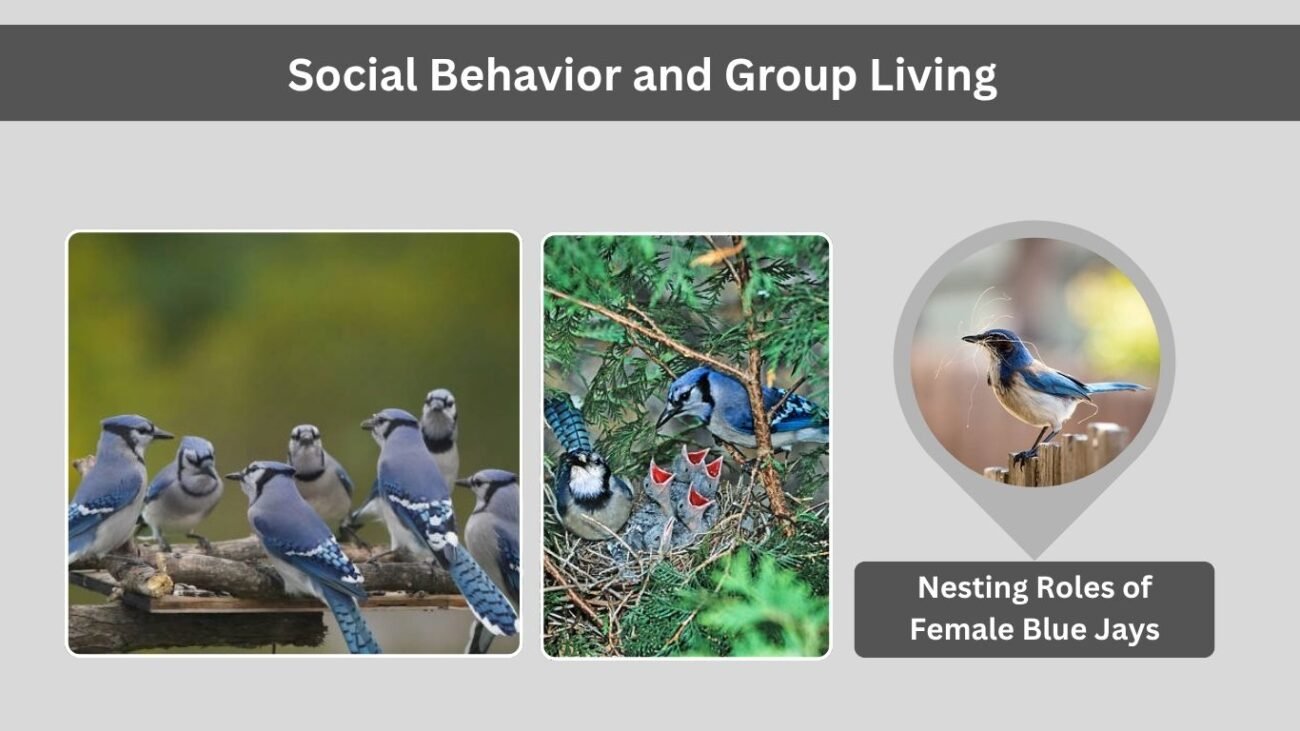
Blue jays are highly social birds, often spotted in pairs or family groups. Females participate fully in these dynamics.
- Family Bonds: Females stay close to their mates and young during the breeding season.
- Flocks: In fall and winter, female jays join small flocks that move together in search of food.
- Defense: Both males and females engage in “mobbing” behavior, aggressively calling and diving at predators to protect their nests or food sources.
Their intelligence and group strategies make them successful survivors in a wide range of environments, from forests to suburban yards.
Role of Female Blue Jays in Ecosystems
Female blue jays, along with males, play important ecological roles:
- Seed Dispersal: They collect and bury acorns, often forgetting some, which helps new oak trees grow.
- Pest Control: They feed chicks with insects, helping balance insect populations.
- Prey: Female jays, especially during nesting, are prey for hawks, snakes, and mammals, contributing to the food chain.
Their dual role as both predator and prey helps maintain ecosystem balance.
Key Takeaways
- Female blue jays look identical to males, sharing the same vivid plumage.
- They are distinguished by behavior, not appearance.
- Females take the lead in incubating and brooding chicks, while males supply food.
- Average lifespan: 7 years in the wild, up to 26 in captivity.
- Their role in seed dispersal and insect control makes them ecologically important.
FAQs
What is the lifespan of a female blue jay?
Female blue jays typically live around 7 years in the wild, though many survive only 2–4 years due to predation. In captivity, with care and protection, they may live 20–26 years. The oldest recorded wild individual reached over 17 years.
Do female blue jays incubate the eggs?
Yes, females incubate the eggs and brood the chicks after hatching. Males support them by bringing food to the nest. This division of labor allows females to protect and nurture young while males act as providers.
Do female blue jays live in groups?
Yes, female blue jays often live in pairs during breeding season and later join flocks in fall and winter. These groups help provide safety and improve food-finding success, especially when acorns and nuts are scarce.
How do female blue jays help the environment?
Female blue jays contribute to ecosystems by dispersing acorns and other seeds, supporting forest regeneration. They also help control insect populations by feeding young chicks with caterpillars, beetles, and other insects, balancing prey numbers in their habitats.
Do female blue jays look different from males?
No, females look virtually identical to males. Both sexes share the same blue plumage, black markings, and body size. Slight size differences exist, but behavior — especially nesting roles — is the most reliable way to distinguish them.


