











Elephants are some of the most intelligent and influential animals on Earth, with several species and regional types found across Africa and Asia. Each type has unique adaptations in size, behavior, and habitat, shaping the ecosystems they inhabit. While some populations thrive in open savannas or dense forests, others face threats from habitat loss and human conflict. This guide explores 15 elephant types with clear, detailed insights.
1. African Savanna Elephant
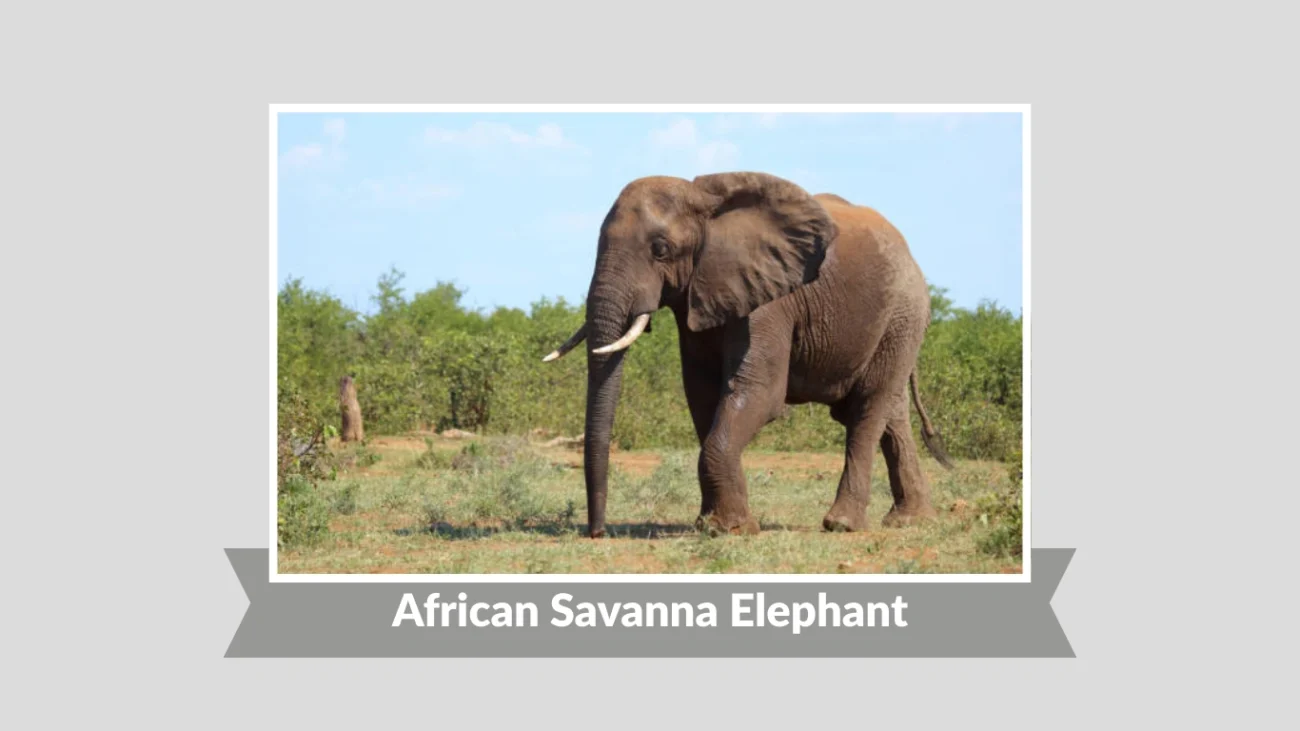
The African Savanna Elephant is the largest land animal on Earth, known for its massive size, large ears shaped like the African continent, and incredible intelligence. Found across sub-Saharan Africa, it plays a crucial role in shaping ecosystems by maintaining grasslands and dispersing seeds.
Identification
- Largest of all elephant species
- Very large, fan-shaped ears
- Curved tusks present in both males and females
- Wrinkled gray skin with a robust, tall body
Habitat
African savanna elephants inhabit open grasslands, savannas, woodlands, and lightly forested regions. They thrive in areas with abundant water sources and vegetation. Their wide range extends across multiple African countries, adapting well to varied climates.
Behaviors
They live in highly social, matriarchal herds led by the oldest female. These elephants communicate through vocal calls, rumbles, and even ground vibrations. They migrate seasonally in search of water and food, forming strong bonds among family members.
Diet
Their herbivorous diet includes grasses, leaves, bark, fruit, and shrubs. An adult savanna elephant may consume up to 300 pounds of vegetation daily. Their feeding habits greatly influence the landscape, helping maintain healthy ecosystems.
2. African Forest Elephant
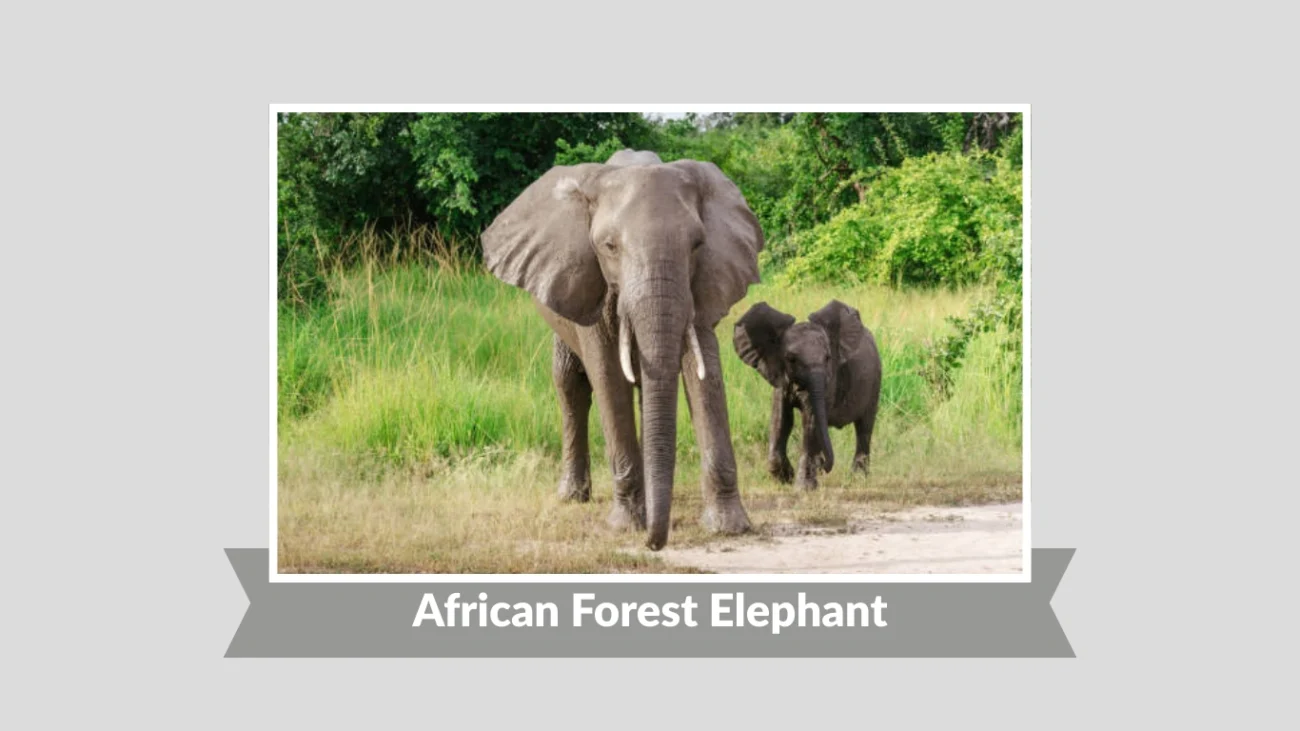
The African Forest Elephant is a smaller, more elusive elephant species that inhabits the dense rainforests of Central and West Africa. Known for its straight tusks and rounded ears, it plays a vital ecological role by dispersing seeds and shaping forest structure.
Identification
- Smaller and more compact than savanna elephants
- Rounded ears with smooth edges
- Straight, downward-pointing tusks
- Darker skin tone suited for forest environments
Habitat
African forest elephants live in tropical rainforests, swamp forests, and dense woodlands. Their habitat provides thick vegetation cover, making them difficult to observe in the wild. They thrive in humid climates with abundant fruit-bearing trees.
Behaviors
They are more solitary or live in smaller family groups compared to savanna elephants. Forest elephants move quietly through dense foliage and play a major role in seed dispersal. They communicate through low-frequency rumbles that travel long distances in the forest.
Diet
Their diet includes fruits, leaves, bark, tree roots, and seeds. They particularly rely on seasonal fruits and often carve out forest pathways as they forage, influencing forest diversity and growth patterns.
3. Asian Elephant
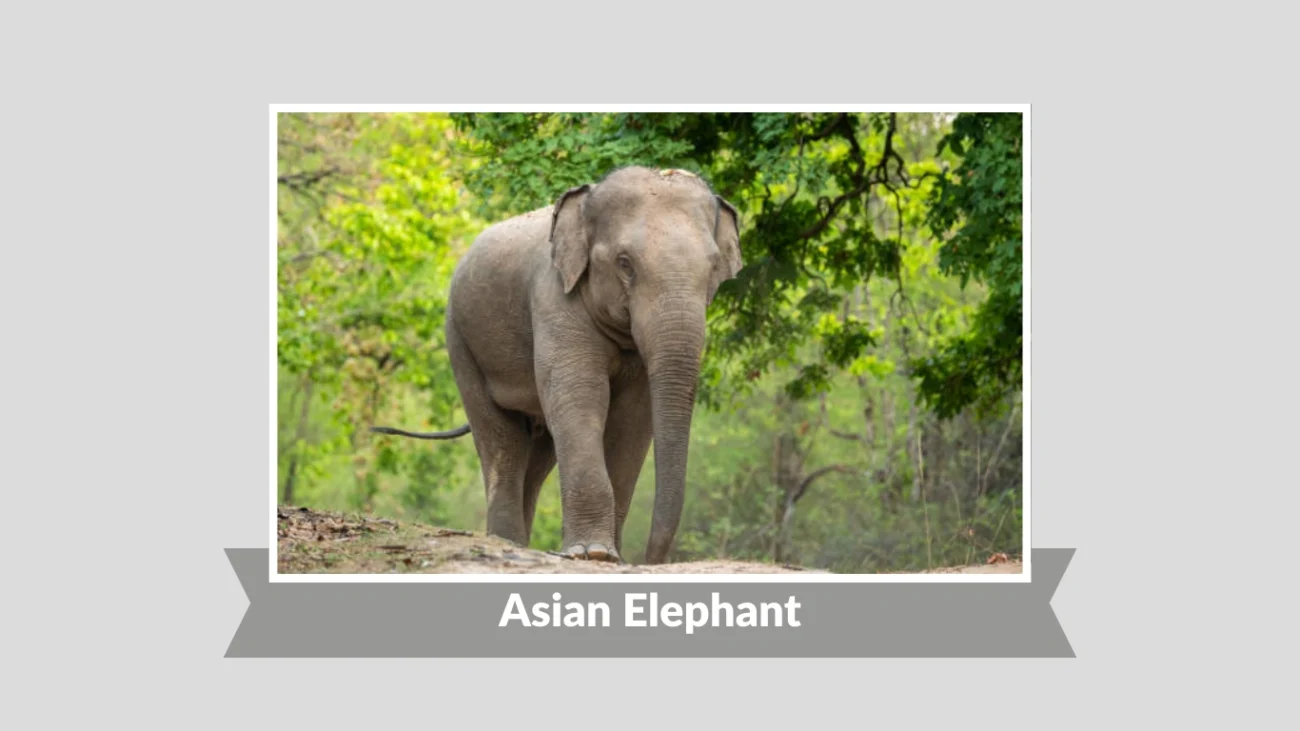
The Asian Elephant is the largest land animal in Asia, known for its smaller ears, curved back, and high intelligence. Found across South and Southeast Asia, it has deep cultural significance and plays an essential ecological role in maintaining forest and grassland ecosystems.
Identification
- Smaller ears compared to African elephants
- Convex or curved back
- Tusks only in some males; females rarely have visible tusks
- Smoother skin with a lighter grey tone
Habitat
Asian elephants inhabit tropical forests, grasslands, and scrublands across India, Sri Lanka, Thailand, Myanmar, and several Southeast Asian regions. They thrive in areas with dense vegetation and reliable water sources but face severe habitat fragmentation.
Behaviors
These elephants live in matriarchal family groups led by an elder female. They display strong social bonds, communication through vocalizations and rumbles, and cooperative care for calves. They migrate seasonally based on food and water availability.
Diet
Their diet includes grasses, bamboo, leaves, fruits, bark, and cultivated crops. Asian elephants consume large amounts of vegetation daily and play a major role in seed dispersal and maintaining healthy ecosystems.
4. Indian Elephant
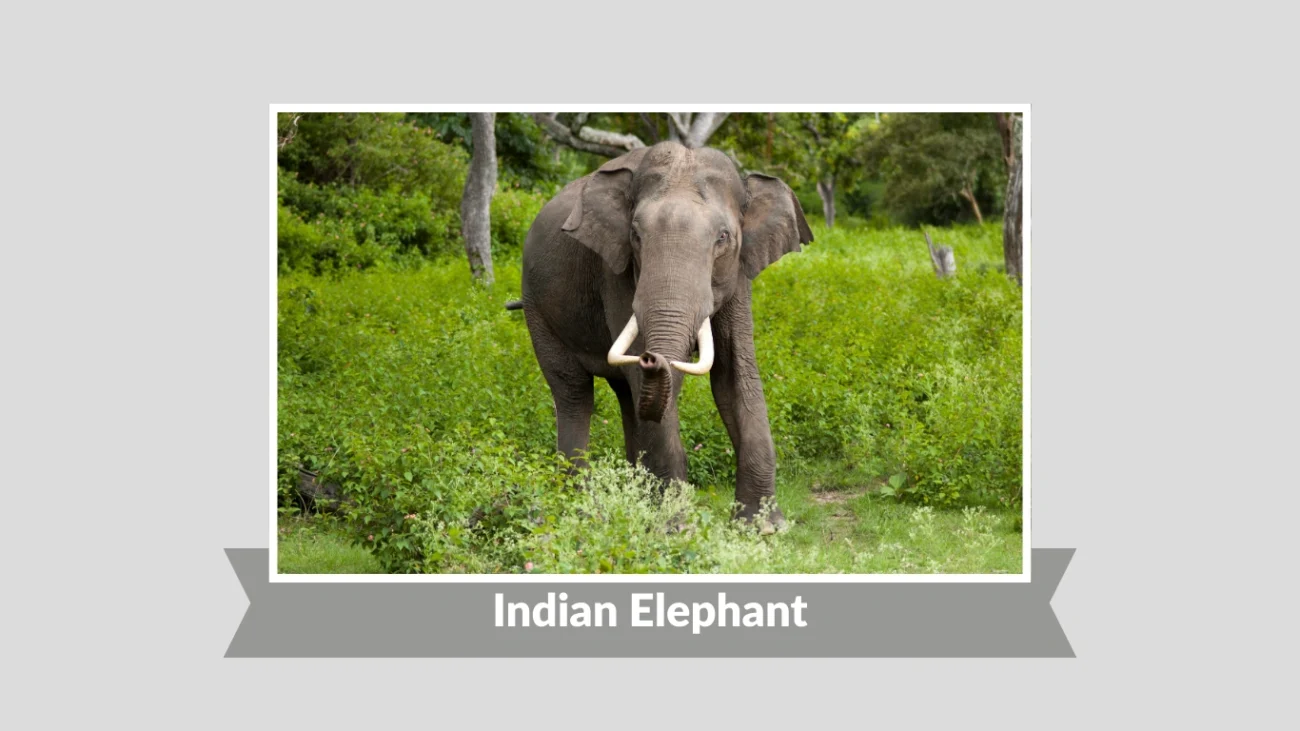
The Indian Elephant is a subspecies of the Asian elephant, primarily found in India and surrounding regions. Known for its gentle nature and cultural importance, it is slightly smaller than other Asian elephants and is widely recognized for its domed head and large, expressive eyes.
Identification
- Smaller ears compared to African elephants
- Twin-domed head with a deep central crease
- Males may have long tusks; females usually tuskless
- More rounded body shape and smoother skin
Habitat
Indian elephants inhabit tropical forests, grasslands, wetlands, and scrublands throughout India, Bhutan, Nepal, and Bangladesh. They migrate across long distances in search of food and water, often following ancient pathways.
Behaviors
They live in matriarch-led family herds, showing strong social bonds. Indian elephants engage in cooperative care of young calves and communicate using vocal calls, rumbles, and body language. They are generally peaceful but can become defensive when threatened.
Diet
Their diet consists of grasses, bamboo, fruits, bark, sugarcane, and cultivated crops. They consume large amounts of vegetation daily and help maintain biodiversity by dispersing seeds and shaping vegetation growth.
5. Sri Lankan Elephant
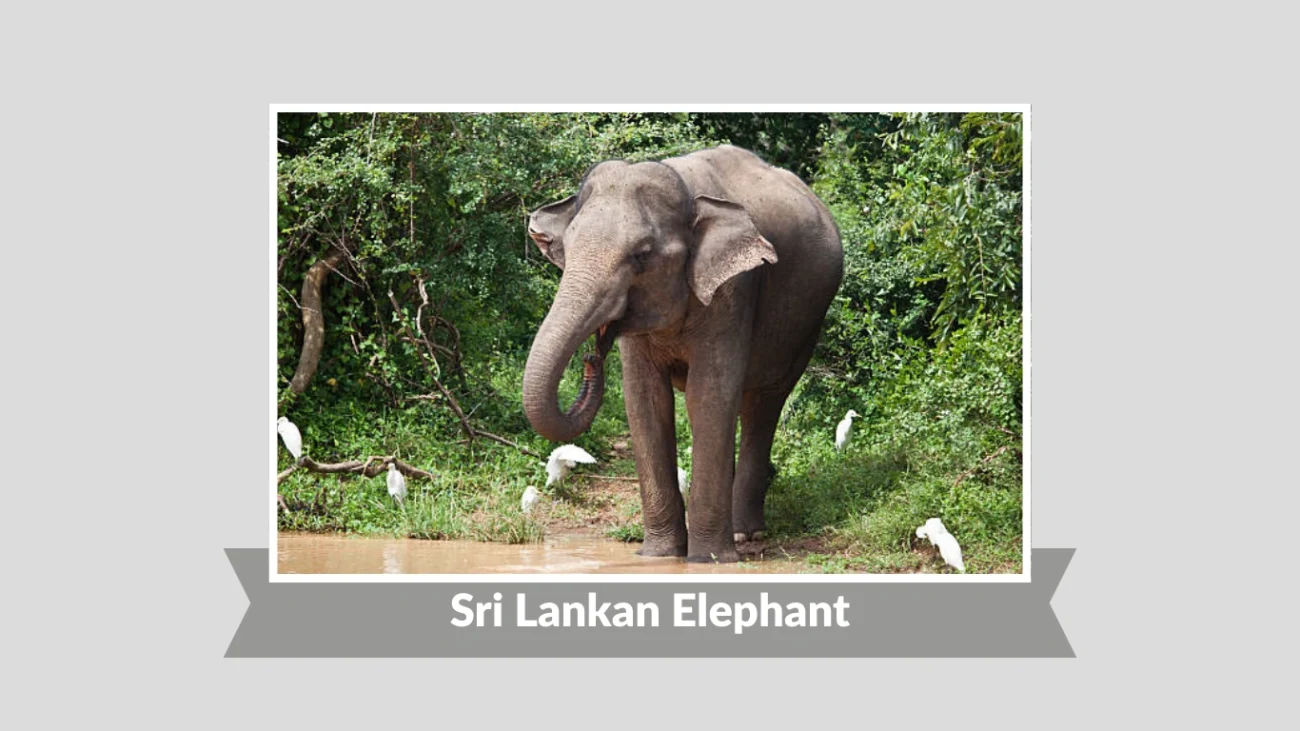
The Sri Lankan Elephant is the largest subspecies of the Asian elephant, found primarily in Sri Lanka. Known for its impressive size and darker skin tone, it is a culturally significant animal and plays an essential role in the island’s ecosystems.
Identification
- Largest Asian elephant subspecies
- Darker skin with depigmented patches
- Males rarely have tusks; tuskers are very rare
- Robust body with a rounded back
Habitat
Sri Lankan elephants inhabit dry forests, grasslands, and scrublands across Sri Lanka. They often migrate between wet and dry zones, especially during droughts, to access water and vegetation. Many live within protected national parks.
Behaviors
They are highly social, living in matriarch-led herds. Their behaviors include coordinated foraging, caring for calves, and traveling long distances for resources. Elephants in Sri Lanka frequently interact with human settlements due to overlapping habitats.
Diet
Their diet includes grasses, leaves, shrubs, fruits, and bark. They also feed on crops like bananas and sugarcane, which sometimes leads to human–elephant conflict. Their foraging habits help shape plant diversity and regenerate forest areas.
6. Sumatran Elephant
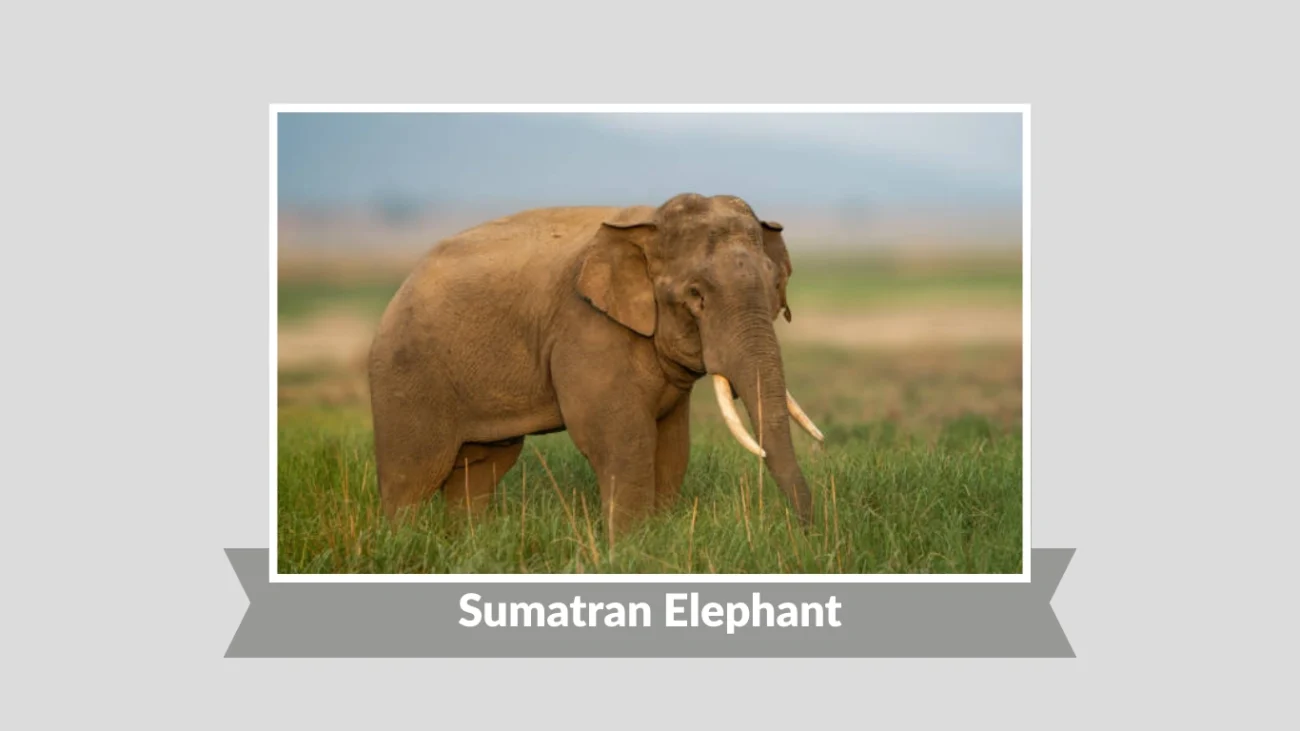
The Sumatran Elephant is a critically endangered subspecies of the Asian elephant, found only on the Indonesian island of Sumatra. It is smaller and more agile than other Asian elephants, adapted to dense tropical forests that are rapidly disappearing due to human activity.
Identification
- Smallest Asian elephant subspecies
- Lighter skin with pink depigmentation on ears and trunk
- Both males and some females can have short tusks
- Slimmer body and shorter legs for forest mobility
Habitat
Sumatran elephants inhabit tropical rainforests, lowland forests, river valleys, and peat swamps. These environments provide dense vegetation and abundant water sources. Rapid deforestation has severely reduced their natural range and fragmented their habitats.
Behaviors
They live in matriarch-led herds but may form smaller groups due to habitat loss. Sumatran elephants are highly social, intelligent, and capable of long migrations. They communicate using vocal calls, rumbles, and vibrations sensed through the ground.
Diet
Their diet includes grasses, leaves, fruits, tree bark, and cultivated crops. They consume a wide variety of vegetation, helping disperse seeds and maintain forest health. Habitat loss has increasingly brought them into contact with human settlements.
7. Borneo Pygmy Elephant
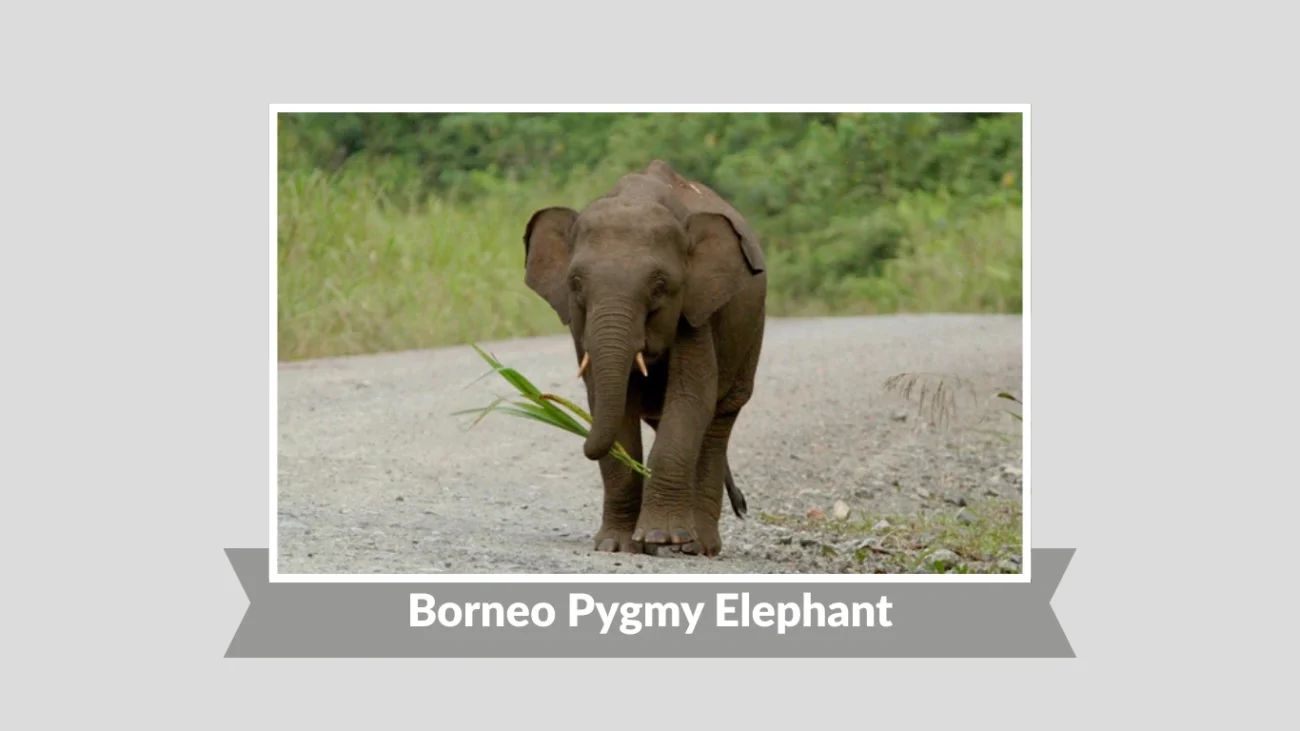
The Borneo Pygmy Elephant is the smallest living elephant, known for its baby-like appearance, long tail, and gentle temperament. Found only on the island of Borneo, this unique elephant population is genetically distinct and critically endangered.
Identification
- Smallest body size among all elephants
- Larger, rounder belly and shorter stature
- Longer tail that may touch the ground
- Smaller, rounded ears and youthful facial features
Habitat
Borneo pygmy elephants inhabit tropical rainforests, river valleys, and lowland jungles in Sabah and parts of Kalimantan. These environments offer dense vegetation and access to rivers, though deforestation has drastically reduced their habitat.
Behaviors
They are known for their calm and gentle nature. These elephants live in small family groups led by a matriarch. They migrate seasonally in search of food and water, often following river systems. Their movements help maintain forest pathways and plant diversity.
Diet
Their diet includes grasses, leaves, fruits, bark, palm shoots, and cultivated crops. Due to shrinking habitats, they occasionally feed on agricultural fields, increasing human–elephant conflict in some regions.
8. Chinese Elephant (Historic/Rare)
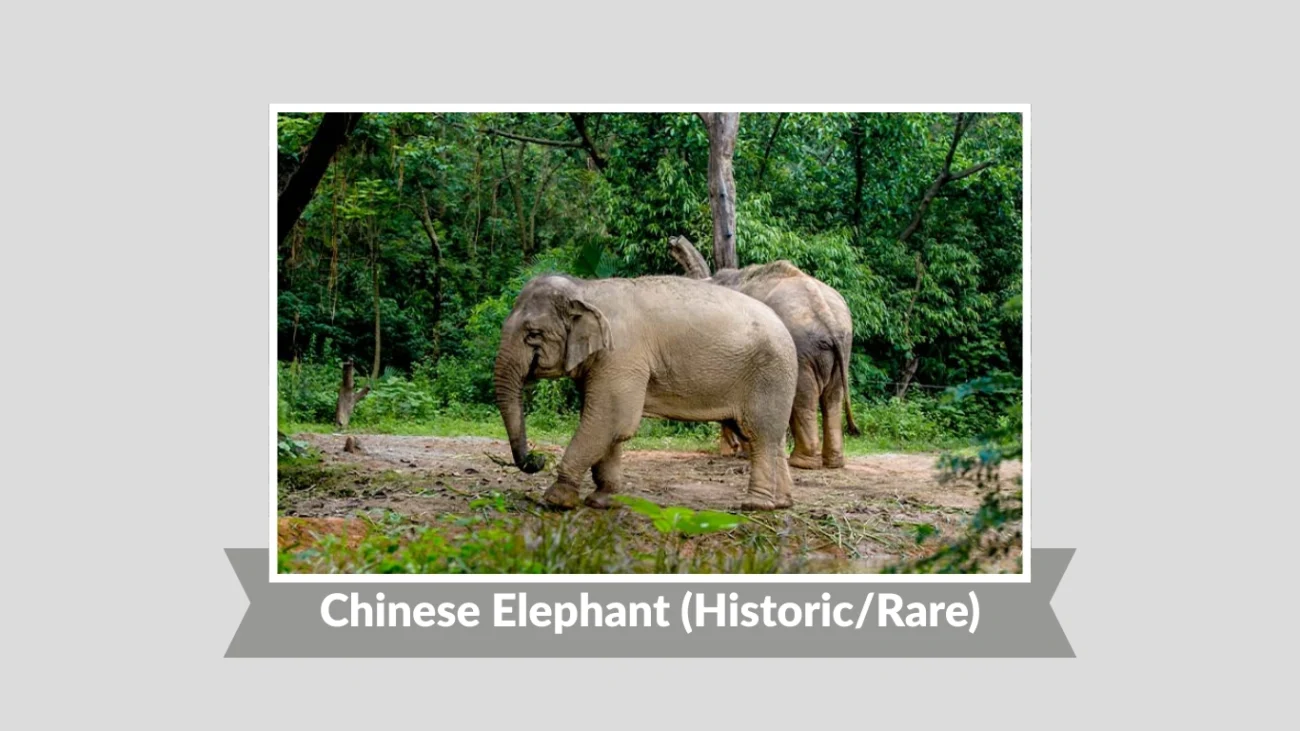
The Chinese Elephant refers to historic populations of Asian elephants that once roamed southern China. Although extremely rare today, small groups may still survive near the China–Myanmar border. Historically, they played an important role in local culture and forest ecosystems.
Identification
- Similar in appearance to Asian elephants
- Medium-sized body with smaller ears
- Light gray skin with occasional depigmentation
- Tusks present mostly in males
Habitat
Chinese elephants historically inhabited tropical forests, bamboo thickets, and river valleys across southern China. Today, their range is restricted to narrow forest patches influenced by human development and agricultural expansion.
Behaviors
They were social animals living in matriarchal herds. As habitats shrank, surviving elephants became more elusive and often moved across borders into Southeast Asia. They rely on strong social bonds, long-term migration routes, and diverse food sources.
Diet
Their diet includes leaves, bamboo, grasses, fruits, and bark. Historically, they shaped forest composition by dispersing seeds and maintaining vegetation balance. Modern habitat loss has limited their foraging range significantly.
9. Syrian Elephant (Extinct)

The Syrian Elephant was one of the largest Asian elephant subspecies, historically found in the Middle East. Known for its impressive size and long tusks, it became extinct in ancient times due to hunting, warfare use, and habitat loss.
Identification
- One of the largest Asian elephant subspecies
- Very long, curved tusks
- Large skull and strong body
- Features similar to Indian elephants but bigger
Habitat
Syrian elephants lived in dry forests, grasslands, and river valleys of Syria, Iraq, and surrounding regions. These areas once supported diverse vegetation and water sources but later became heavily altered by agriculture and human expansion.
Behaviors
They likely lived in matriarch-led herds, migrating seasonally in search of water and food. Historical records suggest they interacted closely with early civilizations and were occasionally captured for ceremonial or war use.
Diet
Their diet consisted of grasses, leaves, bark, fruits, and shrubs. In arid regions, they depended heavily on river systems and seasonal vegetation. Declining resources and excessive hunting contributed to their extinction.
10. North African Elephant (Extinct)
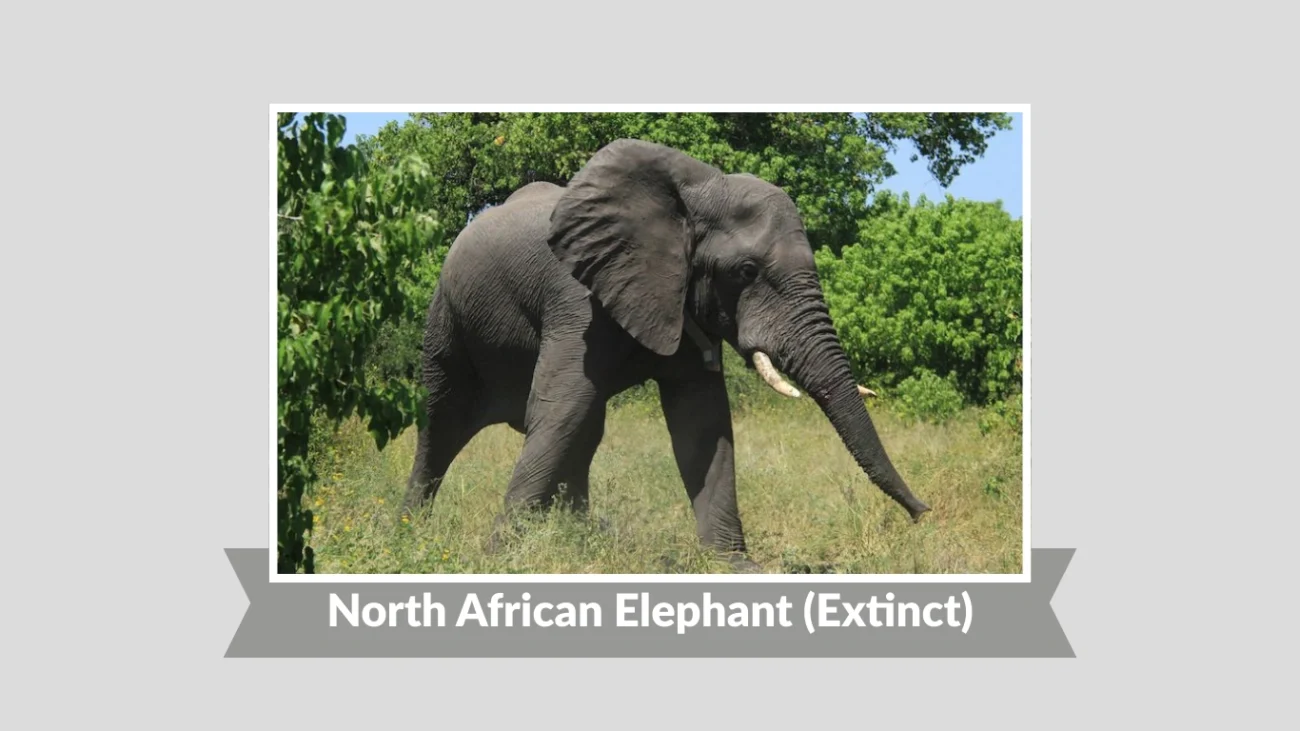
The North African Elephant was a small-bodied elephant population native to North Africa. Historically used by Carthaginians in warfare, it became extinct due to hunting, habitat changes, and overuse by ancient civilizations.
Identification
- Smaller than most African elephants
- Light gray skin with a slimmer frame
- Shorter tusks than other extinct elephant types
- Features resembled a mix of African and Asian characteristics
Habitat
North African elephants lived in grasslands, dry forests, and semi-arid regions across present-day Morocco, Algeria, Libya, and Tunisia. These environments provided limited but sufficient vegetation before extensive human activity altered the landscape.
Behaviors
They likely lived in small family groups and were well adapted to drier climates. Historical accounts suggest they were relatively easy to tame, leading to their use in warfare. Human exploitation played a major role in their disappearance.
Diet
Their diet included grasses, shrubs, bark, and leaves. Limited water sources in their habitat made seasonal movement essential. Overexploitation and shrinking resources eventually caused their decline.
11. Javan Elephant (Extinct)

The Javan Elephant is an extinct elephant population once found on the Indonesian island of Java. Very little physical evidence remains, but historical records suggest they were small and adapted to dense tropical forests.
Identification
- Smaller body size
- Shorter tusks compared to mainland elephants
- Compact, rounded shape
- Adapted for maneuvering through thick vegetation
Habitat
Javan elephants lived in tropical rainforests, mangrove areas, and dense island woodlands. These ecosystems provided abundant vegetation but were increasingly cleared for agriculture, contributing to their early extinction.
Behaviors
They likely lived in small, matriarch-led groups, traveling short distances within island forests. Javan elephants were probably shy and elusive, avoiding human settlements as deforestation expanded.
Diet
Their diet included leaves, fruits, bark, bamboo, and grasses. Limited island resources and competition for food may have made survival increasingly difficult as human activity intensified.
12. Ceylon Elephant (Historic Classification)
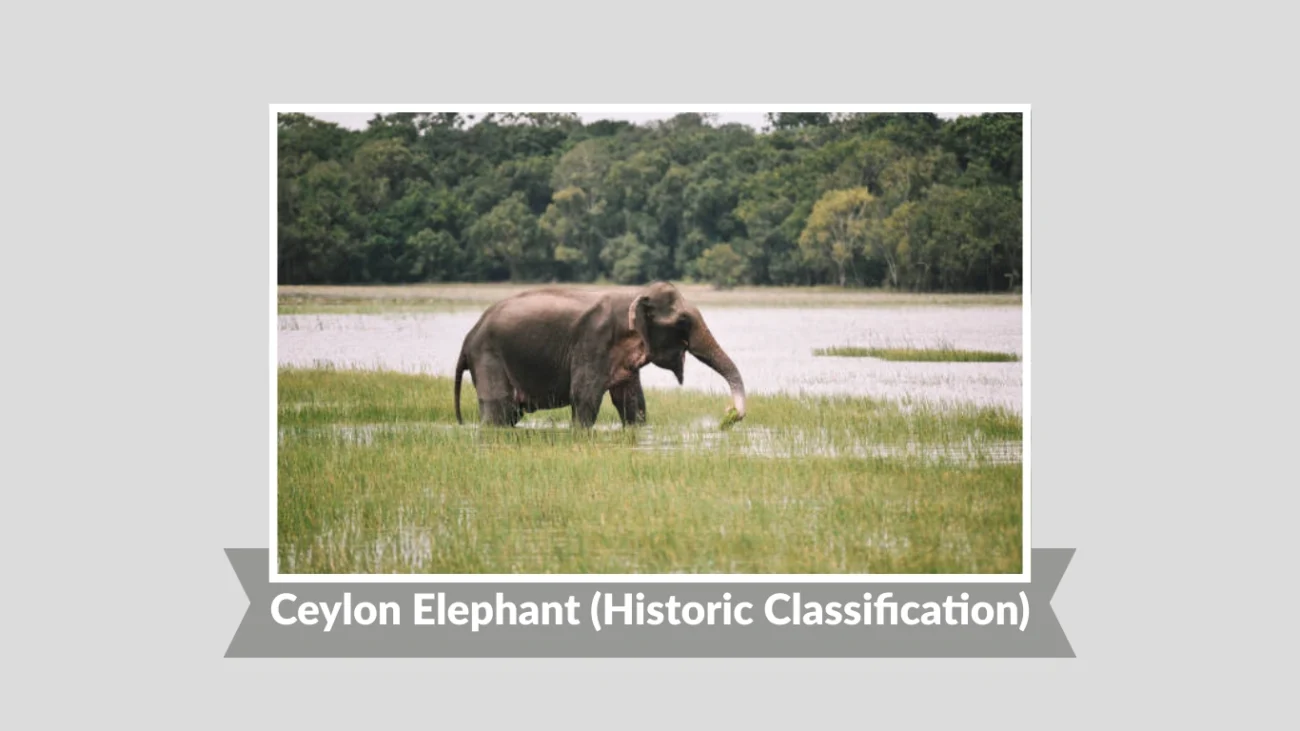
The Ceylon Elephant was once considered a separate elephant type but is now classified under the Sri Lankan elephant subspecies. Historically, these elephants were important in cultural ceremonies and played vital roles in forest ecosystems.
Identification
- Similar appearance to Sri Lankan elephants
- Large body with darker skin tone
- Males rarely have tusks
- Noticeable depigmentation on ears and face
Habitat
Ceylon elephants inhabited tropical dry forests, grasslands, and wetlands across Sri Lanka. These regions provided abundant vegetation and water, though increasing human settlement gradually reduced their available habitat.
Behaviors
They lived in matriarchal herds with strong social bonds. Historically, they were frequently captured for ceremonial use, transport, and labor, influencing their population distribution and behavior in the wild.
Diet
Their diet consisted of grasses, leaves, stems, fruits, and bark. As major seed dispersers, they contributed to the regeneration of forest ecosystems across Sri Lanka.
13. Malay Elephant (Historic Classification)
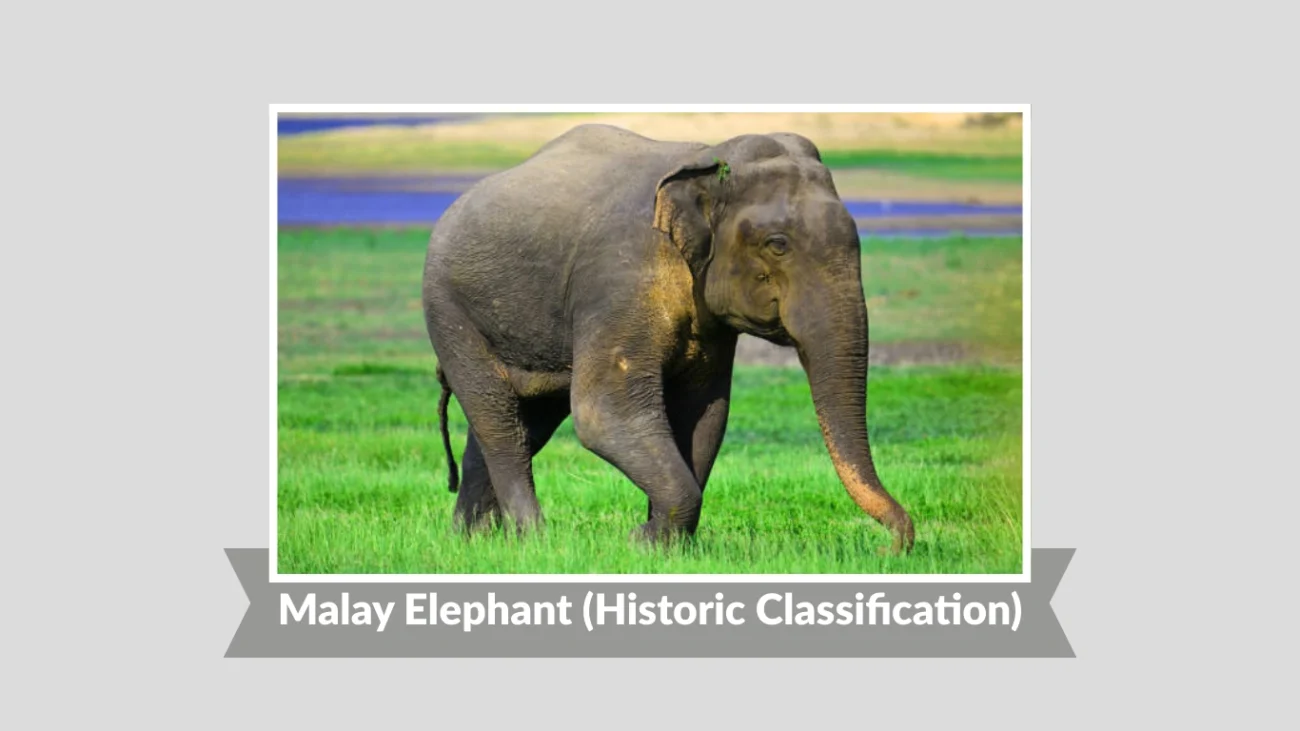
The Malay Elephant refers to historic populations of Asian elephants found in the Malay Peninsula. Although once thought to be a distinct type, modern classifications place them under the Asian elephant species, with characteristics similar to other Southeast Asian populations.
Identification
- Medium-sized body
- Smaller, rounded ears
- Light grey skin with occasional depigmented patches
- Males may have short to moderate tusks
Habitat
Malay elephants lived in tropical rainforests, lowland jungles, and swampy regions of the Malay Peninsula. These environments offered dense vegetation and water sources, making ideal habitats for foraging and long-distance travel.
Behaviors
They lived in matriarch-led family groups and were known for long migratory routes across forested landscapes. Their social behavior included strong bonds, coordinated movements, and communication through rumbles and trunk gestures.
Diet
Their diet included grasses, palm shoots, fruits, leaves, bark, and bamboo. As major seed dispersers, Malay elephants helped maintain forest structure and biodiversity.
14. Andaman Elephant
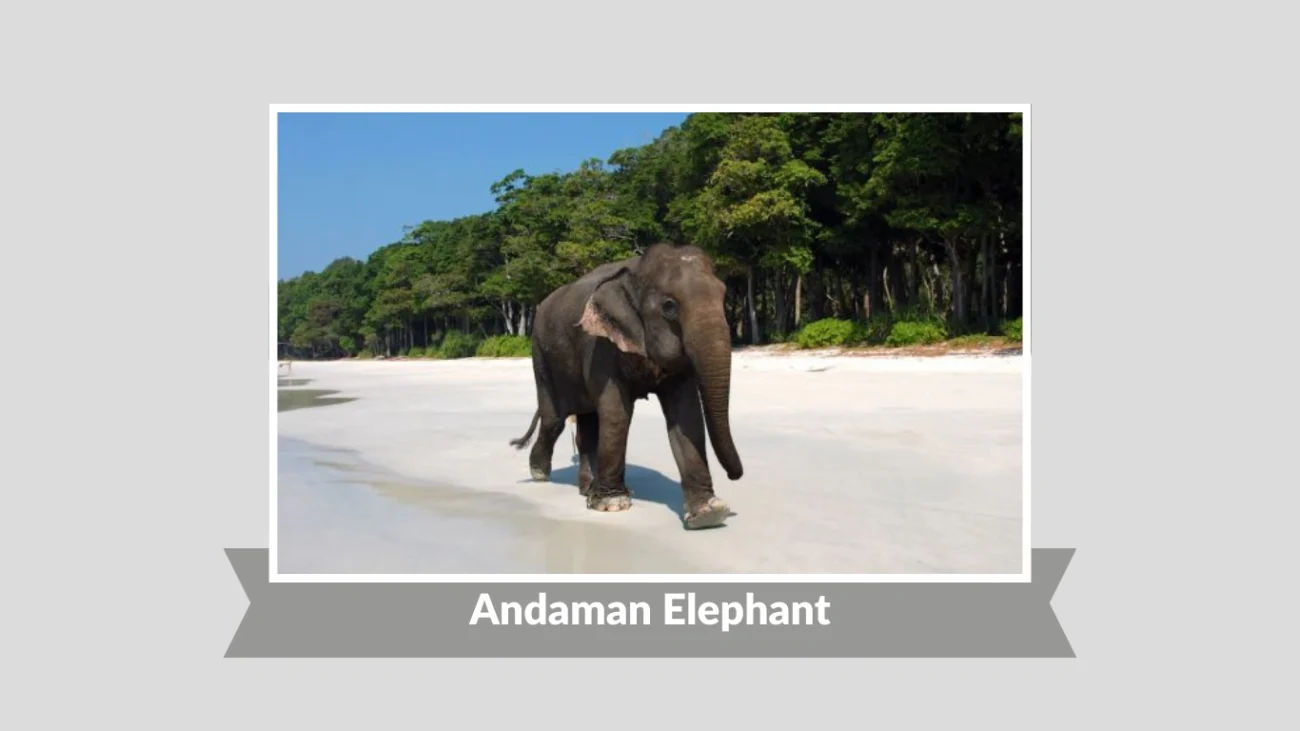
The Andaman Elephant refers to elephants introduced to the Andaman Islands, primarily for logging work. Over time, some became feral and adapted to the island environment. They are known for their intelligence, adaptability, and calm temperament.
Identification
- Medium-sized Asian elephant type
- Smaller ears and domed head
- Smooth skin with occasional depigmentation
- Males may develop tusks, though many are tuskless
Habitat
Andaman elephants inhabit tropical forests, coastal areas, and mangrove regions of the Andaman Islands. These areas provide abundant vegetation and access to water, allowing feral populations to survive long-term.
Behaviors
Originally trained as working elephants, feral groups adapted to island living. They show strong navigational memory and forest adaptability. Social structures vary, with some living in small herds while others remain solitary.
Diet
Their diet includes grasses, leaves, palm shoots, fruits, and tree bark. Island vegetation provides sufficient food, although seasonal variations influence their movement patterns.
15. Thai Elephant
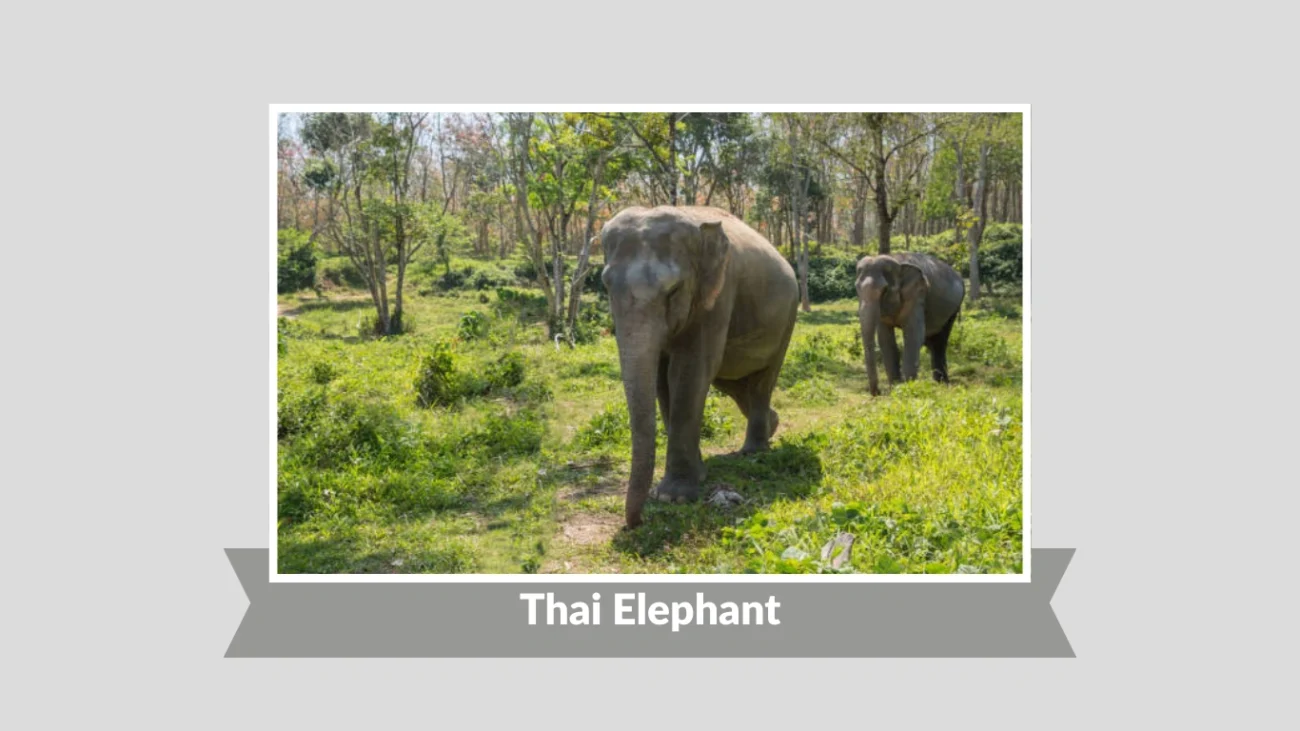
The Thai Elephant is a regional population of the Asian elephant found throughout Thailand. Highly revered in Thai culture, it is known for its intelligence, strength, and historical use in ceremonies and forestry work.
Identification
- Medium to large body size
- Smaller, rounded ears compared to African elephants
- Smooth skin with possible light depigmentation
- Males may have long tusks; many are tuskless
Habitat
Thai elephants inhabit tropical forests, grasslands, and hilly regions across Thailand. They rely on areas with abundant vegetation and water sources, though habitat fragmentation has pushed many into managed reserves and conservation centers.
Behaviors
They are social animals living in matriarch-led herds. Thai elephants display strong communication skills, emotional intelligence, and cooperative care of calves. Historically used in labor and ceremonial roles, they continue to play an important part in Thai heritage.
Diet
Their diet includes grasses, bamboo, fruits, leaves, and bark. In some regions, they may feed on agricultural crops, increasing human–elephant conflict. Conservation efforts focus on ensuring safe migration routes and sustainable food sources.
FAQs
1. How many types of elephants are there?
There are three main elephant species: the African Savanna Elephant, African Forest Elephant, and Asian Elephant. Within these species, several regional types or subspecies—such as the Sri Lankan, Indian, and Sumatran elephants—represent unique adaptations to specific habitats.
2. Why are some elephant types extinct?
Extinctions occurred mainly due to habitat loss, overhunting, climate changes, and human expansion. Ancient civilizations also captured or used elephants in warfare and labor, further reducing wild populations and contributing to the disappearance of types like the Syrian and North African elephants.
3. What is the smallest elephant type?
The Borneo Pygmy Elephant is the smallest living elephant, known for its short stature, long tail, and youthful appearance. It is genetically distinct and critically endangered due to rapid habitat loss on the island of Borneo.
4. What is the biggest elephant species?
The African Savanna Elephant is the largest land animal on Earth. Males can reach heights of over 13 feet and weigh more than 10 tons, with enormous ears, long tusks, and a strong, muscular body built for open landscapes.
5. Why are elephants important to the ecosystem?
Elephants are keystone species that shape their ecosystems by dispersing seeds, creating water access points, and maintaining vegetation balance. Their feeding and migration behaviors help forests and grasslands regenerate, making them essential for biodiversity and ecological health.


