











Lions are among the world’s most iconic big cats, represented by several distinct populations across Africa and Asia. While some types thrive in savannas and grasslands, others once lived in forests, mountains, and deserts. Understanding these variations—from appearance and behavior to habitat and conservation status—helps highlight their diversity and the challenges they face. This guide explores all ten lion types with clear, detailed insights.
1. African Lion

The African Lion is the most widespread and well-known lion subspecies, found across various regions of sub-Saharan Africa. Known for its impressive mane, strong social structure, and powerful presence, the African lion remains a symbol of strength and leadership in the animal kingdom.
Identification
- Large muscular body with tawny fur
- Males have manes ranging from light brown to black
- Females lack manes and are more slender
- Broad face with strong jaw muscles
Habitat
African lions inhabit savannas, grasslands, open woodlands, and semi-desert regions. These environments support large herbivore populations, offering ample prey. They prefer open landscapes that allow easier group hunting and visibility for protecting their pride.
Behaviors
They are highly social compared to other big cats, living in groups called prides. Lions cooperate during hunts, defend shared territories, and raise cubs collectively. Males protect the pride from rivals, while females are the primary hunters, using teamwork and strategy.
Diet
Their diet includes zebras, wildebeest, buffalo, antelope, and sometimes smaller animals. Lions also scavenge when the opportunity arises. Working as a group allows them to take down large prey that would be difficult for a single lion to overpower.
2. Asiatic Lion

The Asiatic Lion is a rare and endangered subspecies found mainly in India’s Gir Forest. Smaller than the African lion and known for its distinct physical traits, this lion has survived despite major population declines and now remains a symbol of conservation success.
Identification
- Slightly smaller than African lions
- Males have shorter, thinner manes
- A distinct skin fold runs along the belly
- Narrower face and less muscular build
Habitat
Asiatic lions inhabit dry deciduous forests, scrublands, and open grasslands. Their remaining wild population is confined primarily to the Gir Forest region, where conservation efforts have stabilized their numbers and improved habitat protection.
Behaviors
They live in smaller prides compared to African lions. Males may form coalitions, while females stay in family groups. Their hunting strategy relies on stalking and ambushing prey, often during cooler hours. Asiatic lions are also more tolerant of forested habitats.
Diet
Their diet includes deer, antelope, wild boar, and smaller mammals. In areas with human presence, they may occasionally prey on livestock. Conservation programs work to reduce conflict and ensure sufficient natural prey availability.
3. West African Lion

The West African Lion is one of the most critically endangered lion populations, found in a few fragmented regions of West Africa. Smaller and genetically distinct from other African lions, it faces severe threats from habitat loss and declining prey numbers.
Identification
- Smaller and leaner than East or South African lions
- Males often have shorter, lighter manes
- Narrow body frame with long, slender limbs
- Subtle facial features with less prominent mane growth
Habitat
West African lions inhabit savannas, dry forests, and grassland ecosystems. Much of their habitat has been reduced or fragmented due to agriculture and human settlement, pushing them into isolated protected areas across countries like Benin, Senegal, and Burkina Faso.
Behaviors
They form smaller prides compared to other lion subspecies, often due to limited prey availability. These lions tend to be more elusive and may travel long distances in search of food. Their social structure is flexible, adapting to the challenges of shrinking habitats.
Diet
Their diet includes antelope species, buffalo, warthogs, and smaller mammals. Reduced prey density in many regions has made hunting more difficult, contributing to their declining numbers. Conservation efforts aim to restore prey populations and secure protected habitats.
4. East African Lion

The East African Lion is one of the most recognized lion types, commonly seen in regions like Kenya and Tanzania. Known for its majestic appearance and strong social dynamics, it thrives in ecosystems with abundant prey and open landscapes ideal for group hunting.
Identification
- Medium to large body size
- Males often have fuller, darker manes
- Muscular build with a broad chest
- Prominent facial structure with strong jawlines
Habitat
East African lions inhabit savannas, grassy plains, and open woodlands. The Serengeti and Maasai Mara are among their most iconic habitats, offering vast territories, seasonal migrations of prey, and ideal conditions for pride-based hunting.
Behaviors
They are highly social, living in large prides with cooperative hunting and shared territory defense. East African lions also display strong family bonds, with females working together to raise cubs. Their activity peaks during early morning and evening when temperatures are cooler.
Diet
Their diet includes wildebeest, zebras, gazelles, buffalo, and sometimes smaller mammals. These lions rely heavily on teamwork, allowing them to bring down large, fast-moving prey during seasonal migrations.
5. Southwest African Lion

The Southwest African Lion, also known as the Namibian Lion, is a robust and resilient subspecies found in arid and semi-arid regions of southern Africa. These lions are well adapted to harsh environments with limited water sources and extreme temperatures.
Identification
- Large, muscular build
- Males often have thick, dark manes
- Broad head with strong facial structure
- Adaptations for desert survival, such as endurance and water efficiency
Habitat
Southwest African lions inhabit deserts, savannas, and dry woodlands in countries like Namibia, Botswana, and Angola. Their range includes harsh landscapes like the Namib Desert, where they survive with minimal water and rely on scarce prey resources.
Behaviors
These lions are highly adaptable and can travel long distances to locate food and water. They exhibit flexible social structures, sometimes forming smaller prides due to limited resources. Their behaviors reflect remarkable resilience, often hunting at night to conserve energy.
Diet
Their diet includes oryx, springbok, zebra, and smaller mammals. In desert regions, they may scavenge more frequently and take advantage of any available prey. Their ability to survive in extreme conditions makes them one of the most impressive lion populations.
6. Northeast Congo Lion

The Northeast Congo Lion is a lesser-known lion population found in the central and northeastern regions of the Congo Basin. Adapted to forested and savanna–forest transition zones, this lion type is more elusive than savanna lions and occupies challenging, dense environments.
Identification
- Medium-sized body structure
- Males usually have shorter, lighter manes
- Sleeker build adapted for navigating forested areas
- Subtle stripe-like markings on legs (occasional in some individuals)
Habitat
Northeast Congo lions inhabit tropical forests, savanna mosaics, and woodland regions of central Africa. These areas provide thick vegetation cover, making it easier for them to ambush prey, though such environments are also more difficult for large predators to thrive in.
Behaviors
They tend to be more solitary or form smaller prides due to the fragmented nature of their habitat. Their movement patterns often follow forest edges and river systems. These lions rely heavily on stealth and may hunt at night when temperatures are cooler.
Diet
Their diet includes antelopes, forest buffalo, smaller mammals, and occasionally primates. Prey availability varies widely across forested ecosystems, influencing their hunting strategies and territory sizes.
7. Transvaal Lion (South African Lion)
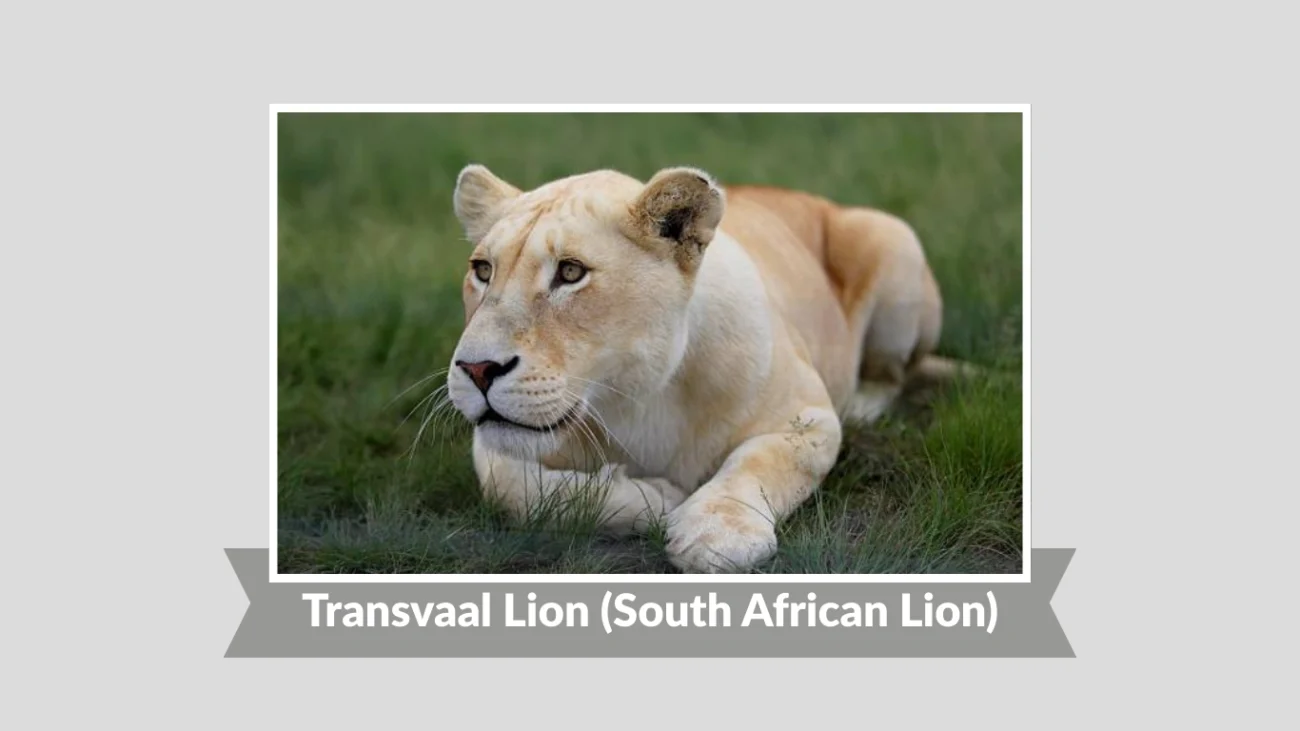
The Transvaal Lion, also known as the South African Lion, is one of the most iconic and robust lion populations in southern Africa. It is well known for its powerful build and the impressive dark manes seen on many adult males.
Identification
- Large, muscular body
- Males often have long, dark, and full manes
- Strong jaw and facial features
- Broad shoulders and powerful limbs
Habitat
Transvaal lions inhabit savannas, grasslands, and bushveld regions in South Africa, Botswana, and Zimbabwe. These environments provide abundant prey and open terrain, making them ideal for group hunting and territorial dominance.
Behaviors
They are highly social and form stable prides with strong territorial behaviors. Females cooperate in hunting and raising cubs, while males defend the pride from rivals. They are most active during cooler hours, resting during the heat of the day.
Diet
Their diet includes wildebeest, zebra, buffalo, antelope, and occasionally smaller mammals. The abundance of large prey in their habitat supports strong, cooperative hunting strategies, allowing prides to take down even the toughest animals.
8. Barbary Lion (Extinct in the Wild)
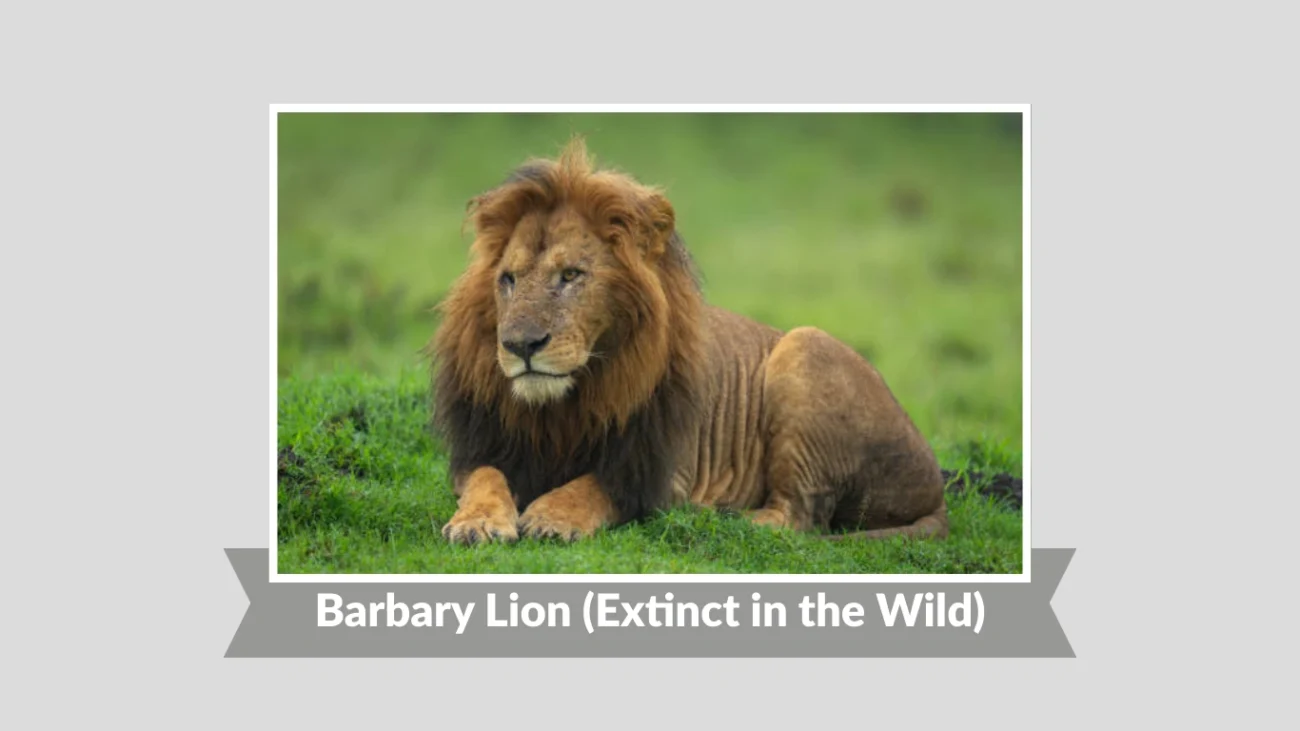
The Barbary Lion, once native to North Africa, was known for its impressive size and dark, thick mane that extended along the belly and shoulders. It became extinct in the wild in the early 20th century, though descendants survive in captivity.
Identification
- Large, powerful body
- Very long, dark mane spreading across the shoulders and chest
- Deep-set eyes and broad facial structure
- Thick fur adapted to cooler mountain climates
Habitat
Barbary lions inhabited the Atlas Mountains, scrublands, and forested regions of Morocco, Algeria, and Tunisia. Their native environment had cooler temperatures and rugged terrain, influencing their physical adaptations and hunting strategies.
Behaviors
They lived solitary or in small groups, unlike the large prides of sub-Saharan lions. Barbary lions were known for their elusive nature and powerful hunting skills, often targeting large prey in mountainous terrain. Historical accounts describe them as bold and territorial.
Diet
Their diet included Barbary stag, wild boar, gazelles, and occasionally livestock. Scarcity of natural prey and increased human conflict contributed significantly to their decline.
9. Cape Lion (Extinct)
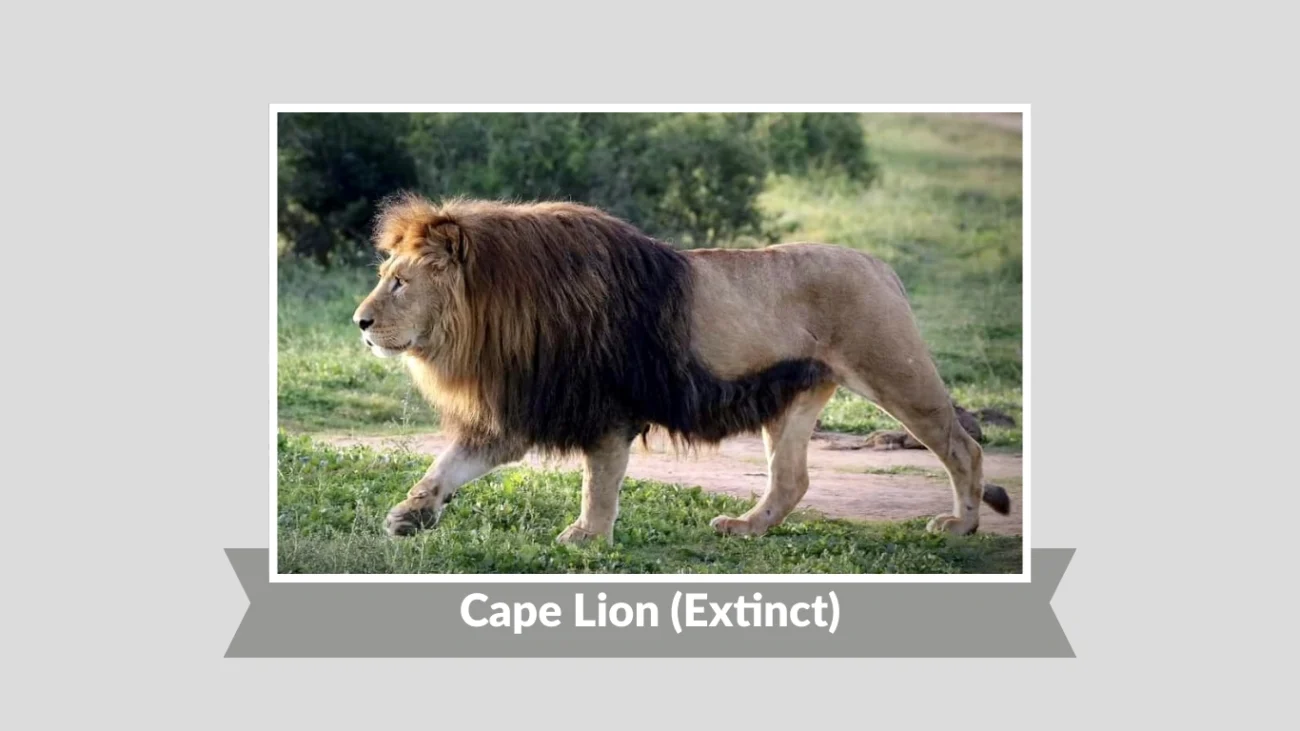
The Cape Lion was a large lion population native to South Africa’s Cape region. Known for its dark mane and distinct facial features, it was hunted to extinction in the 19th century. Only a few captive lions today may have partial Cape lineage.
Identification
- Large body size with muscular build
- Males had very dark, often black-tipped manes
- Distinctively broad muzzle
- Longer fur compared to typical savanna lions
Habitat
Cape lions once lived in the Cape Province’s grasslands, woodlands, and semi-arid plains. As human settlements expanded, their habitat became increasingly fragmented and unsuitable, leaving them little space to survive.
Behaviors
They likely formed small prides or lived semi-solitary due to the region’s limited prey. Historical reports suggest they were bold and strong hunters, adapted to stalk prey across open and rugged terrain.
Diet
Their diet included antelope, zebra, buffalo, and occasionally livestock. Overhunting by humans and reduced prey availability were major contributors to their extinction.
10. Ethiopian Lion (Abyssinian Lion)

The Ethiopian Lion, also called the Abyssinian Lion, is a unique lion population found primarily in the highlands of Ethiopia. Known for its distinct appearance and smaller size, it was once thought to be extinct until surviving groups were rediscovered.
Identification
- Smaller body size than many African lions
- Males have short but extremely dark, almost black manes
- More compact and muscular frame
- Distinct facial structure with intense, deep-set eyes
Habitat
Ethiopian lions inhabit highland forests, grasslands, and mountainous regions. Their environment includes cooler temperatures and rugged terrain, which influence their physical adaptations and movement patterns.
Behaviors
They tend to form smaller prides, possibly due to limited prey availability in highland regions. Ethiopian lions are more elusive and cautious around humans, relying on stealth and strategic movement to navigate their habitats safely.
Diet
Their diet includes antelopes, warthogs, and smaller mammals. In some areas, their hunting range overlaps with livestock, leading to occasional conflict. Conservation efforts aim to protect this rare lion population and stabilize its environment.
FAQs
1. How many types of lions are there?
There are ten commonly recognized lion types, including distinct regional populations such as the East African, West African, Transvaal, Southwest African, and Asiatic lions. Some types, like the Barbary and Cape lions, are extinct or survive only in captivity.
2. Why do lions have different subspecies or types?
Lion types developed due to geographic separation, climate differences, and unique environmental pressures. Over thousands of years, isolated populations adapted differently in size, behavior, and mane characteristics, creating distinct regional variations.
3. Which lion has the largest mane?
The Barbary Lion is known for having the longest and darkest mane, often extending down the chest and belly. Among living lions, some Transvaal and East African males can also develop large, impressive manes.
4. Which lion is the smallest?
The Ethiopian (Abyssinian) Lion is one of the smallest living lion populations. Its compact body and short, dark mane make it noticeably different from larger savanna lions such as the Transvaal lion.
5. Why are some lion types extinct?
Many lion types went extinct due to overhunting, habitat destruction, reduced prey, and human–wildlife conflict. As human populations expanded, lions lost territory and food sources, making survival increasingly difficult for isolated populations like the Barbary and Cape lions.


