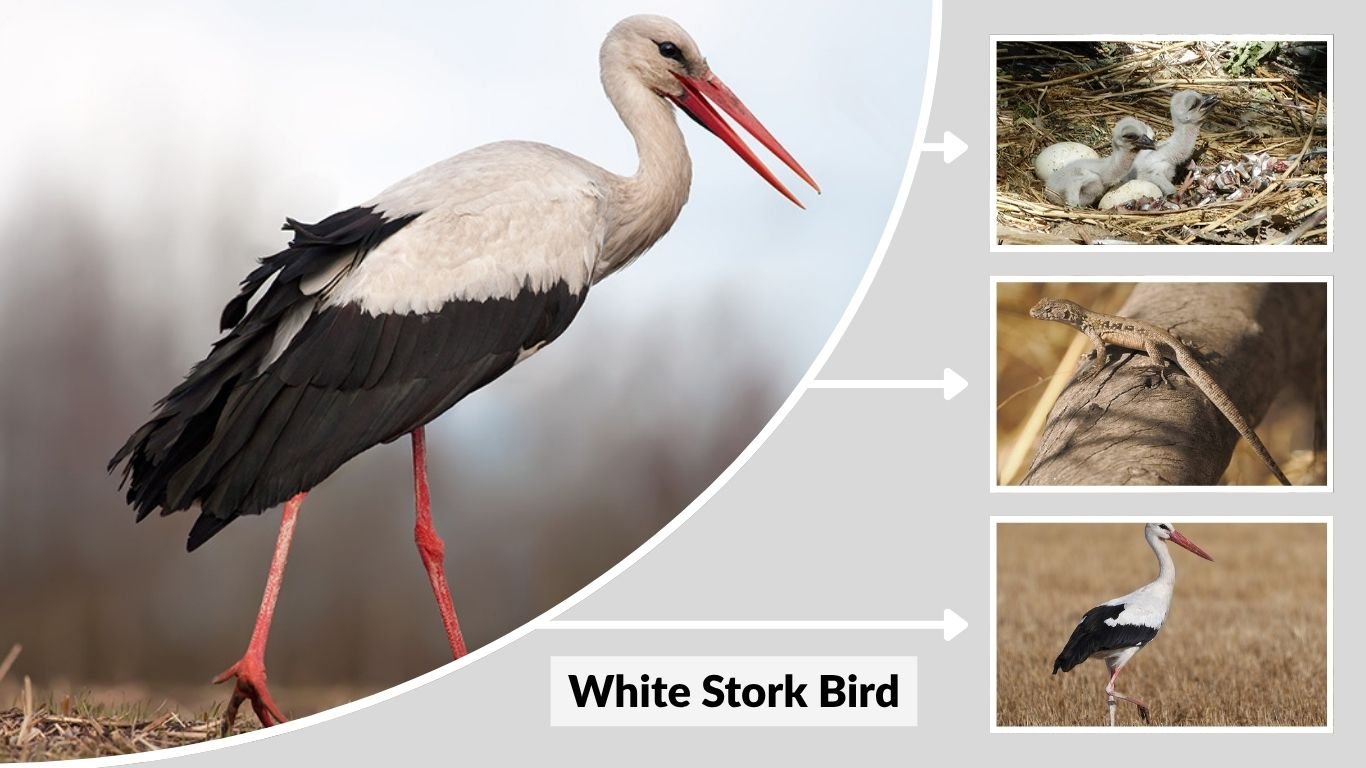
Storks are tall, graceful birds known for their long legs, wide wings, and unique behavior. From silent communication to record-breaking migrations, these birds are full of surprises. Found across the globe, storks play an important role in nature and local cultures. In this list, you’ll discover 20 interesting facts that show just how smart, helpful, and special these birds really are.
1. Storks Are Found on Every Continent Except Antarctica

Storks are widely distributed birds, living across Africa, Europe, Asia, Australia, and the Americas. They adapt well to different climates—from the tropical rainforests of Southeast Asia to the dry savannas of Africa. However, they are completely absent from Antarctica due to extreme cold and lack of feeding grounds.
2. Most Storks Are Silent Birds
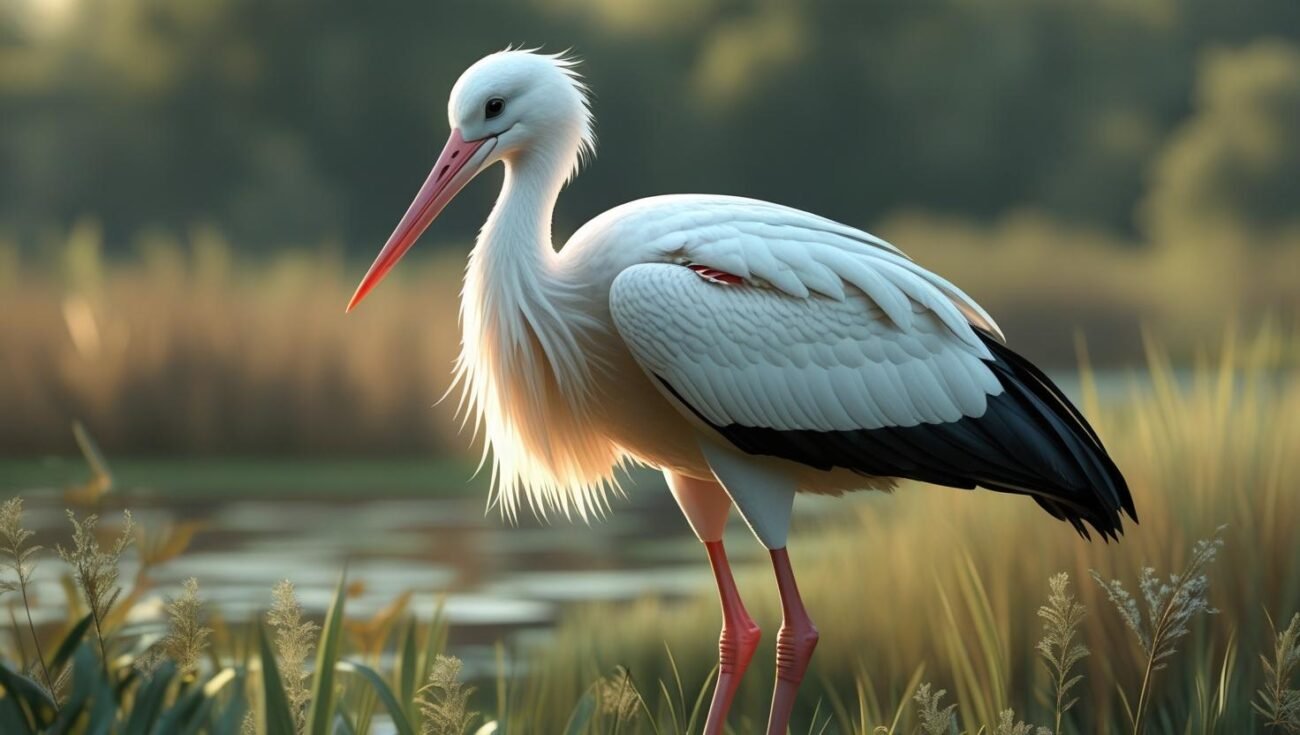
Unlike songbirds, storks do not have a voice box (syrinx), so they rarely produce sounds. Instead of singing or calling, they communicate by bill-clattering, especially during mating or when greeting a mate at the nest. Some species may hiss or grunt softly, but overall, storks are very quiet birds.
3. Some Stork Species Migrate Thousands of Kilometers
Storks like the White Stork are famous for their long migrations. They travel from Europe to sub-Saharan Africa each year, covering up to 10,000 km. They rely on rising warm air currents (thermals) to glide long distances, conserving energy during their journey. Their migration paths can be tracked using satellite tags by scientists.
4. Storks Build Some of the Largest Nests in the Bird World

Storks, especially the White Stork and Jabiru, are known for building huge nests made of sticks. These nests can measure over 2 meters wide and are often reused and added to year after year, sometimes becoming heavy enough to collapse roofs or branches.
5. Some Storks Are Important Scavengers
Species like the Marabou Stork and Greater Adjutant play a vital role in nature by cleaning up dead animals and waste. They feed on carrion and garbage, helping to prevent the spread of disease in both wild and urban areas.
6. The Openbill Stork Has a Unique Bill Shape

The Asian and African Openbill Storks have a gap between the upper and lower parts of their beak. This special shape helps them catch and grip slippery snails and mollusks, which make up most of their diet.
7. Storks Are Loyal to Their Nesting Sites
Many stork species, like the White Stork, return to the same nesting site every year. They often reunite with the same mate at the old nest and rebuild or repair it for the next breeding season.
8. Storm’s Stork Is One of the Rarest Storks on Earth
The Storm’s Stork is critically endangered and found only in isolated rainforests of Southeast Asia. With fewer than 500 individuals left, habitat destruction is the biggest threat to its survival. It is very shy and rarely seen in the wild.
9. Storks Usually Fly With Their Necks Outstretched

Unlike herons, which fly with their necks pulled back, storks fly with their necks and legs fully extended. This posture helps balance their large bodies in flight and is one of the easiest ways to identify them in the sky.
10. Not All Storks Are Social Birds

While species like the Painted Stork and Yellow-billed Stork nest in large colonies, others such as the Black Stork and Storm’s Stork are solitary nesters. These birds prefer quiet areas and avoid nesting near other birds.
11. The Marabou Stork Has One of the Largest Wingspans

The Marabou Stork can have a wingspan of up to 2.8 meters (over 9 feet), making it one of the largest flying birds in the world. Despite its size, it soars with ease using warm air currents, rarely needing to flap its wings.
12. Storks Help Control Pest Populations
Many stork species feed on insects, rodents, frogs, and snakes, helping to control pests in farmlands and wetlands. Farmers in some regions welcome storks because they reduce crop damage naturally.
13. Storks Don’t Carry Babies — That’s a Myth
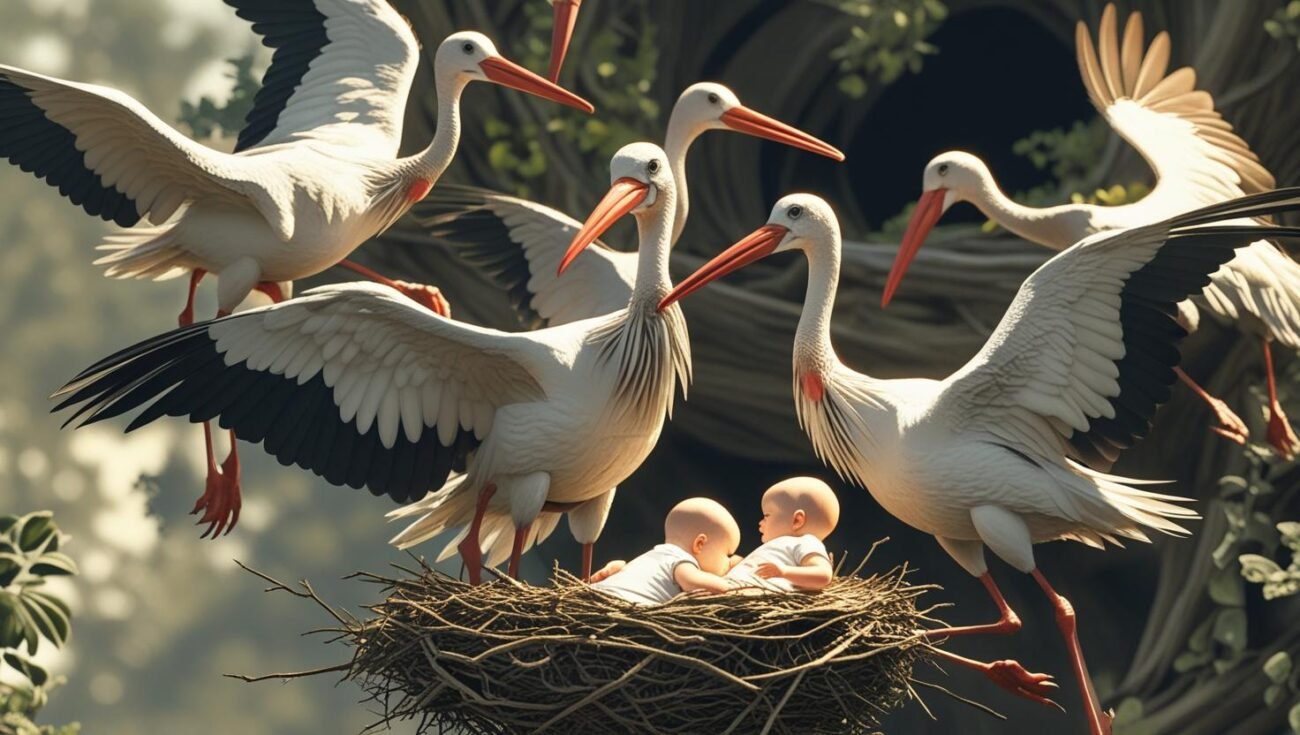
The idea that storks deliver babies comes from European folklore. In reality, storks have no connection to childbirth. The myth likely started because storks return to their nests in spring, around the same time many babies were born historically.
14. Storks Are Skilled Fish Hunters

Storks like the Wood Stork and Painted Stork are expert fishers. They walk slowly in shallow water, often with their bills slightly open, snapping shut when they touch fish. Some species even use one foot to stir the water and flush out prey.
15. Some Storks Nest on Rooftops and Chimneys

In countries like Poland, Spain, and Turkey, White Storks are famous for building nests on rooftops, church towers, and chimneys. People often build platforms to attract storks, believing they bring good luck to the home.
16. Both Stork Parents Care for the Chicks
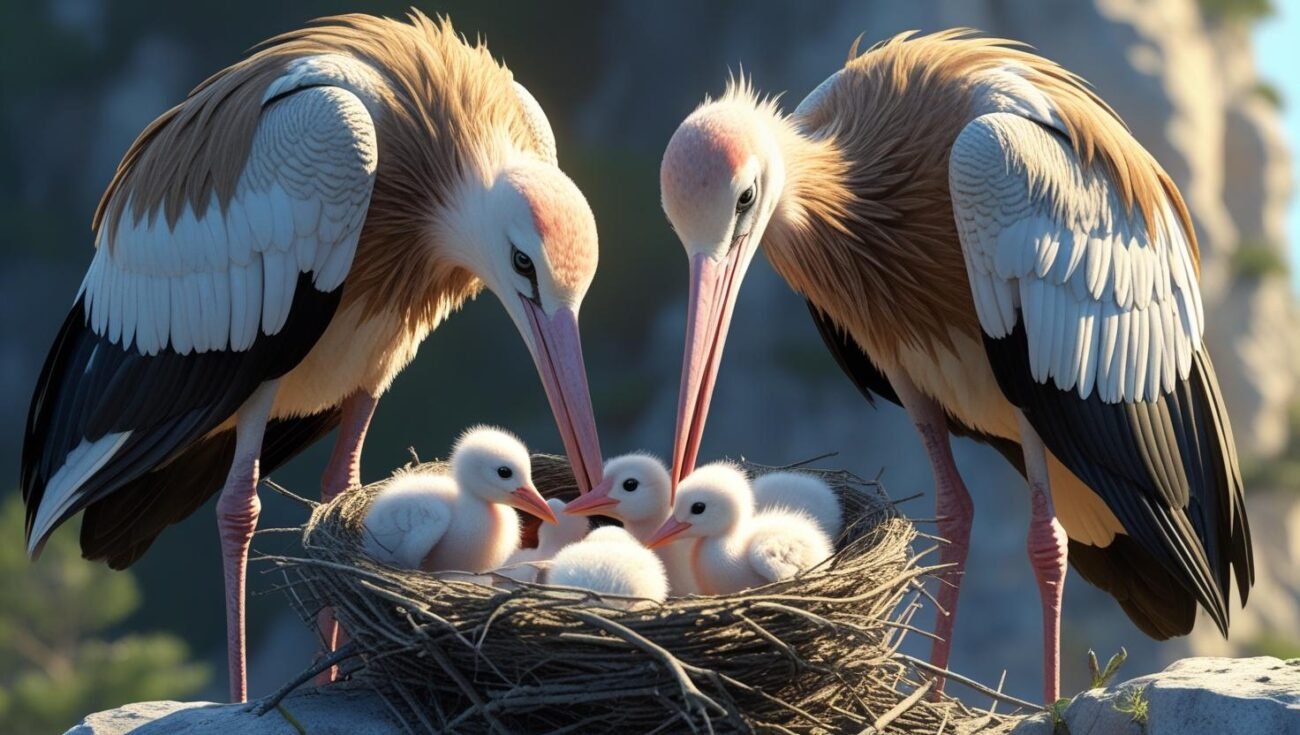
Stork pairs usually share parenting duties. They both help build the nest, incubate the eggs, and feed the chicks. Parents regurgitate food directly into the nest for the chicks to eat. Chicks grow fast and leave the nest within 2–3 months.
17. Storks Use Thermals to Soar Long Distances
During migration, storks like the White Stork use thermal air currents (rising warm air) to glide and save energy. They avoid flying over oceans because thermals are weak there, so they take longer land routes across continents.
18. Some Storks Are Culturally Protected
In parts of India and Bangladesh, birds like the Greater Adjutant are protected by local communities who view them as sacred or lucky. Community-driven conservation has helped these rare storks slowly increase in number.
19. Young Storks Often Look Duller Than Adults

Juvenile storks usually have duller feathers, paler legs, and smaller bills compared to adults. These changes help adults recognize and care for their young while also offering the chicks better camouflage.
20. Storks Can Live Over 30 Years

Many stork species have long lifespans. In the wild, they can live 20 to 30 years, and in protected environments like zoos, some individuals have reached over 35 years. Their long life helps them raise many chicks across several breeding seasons.