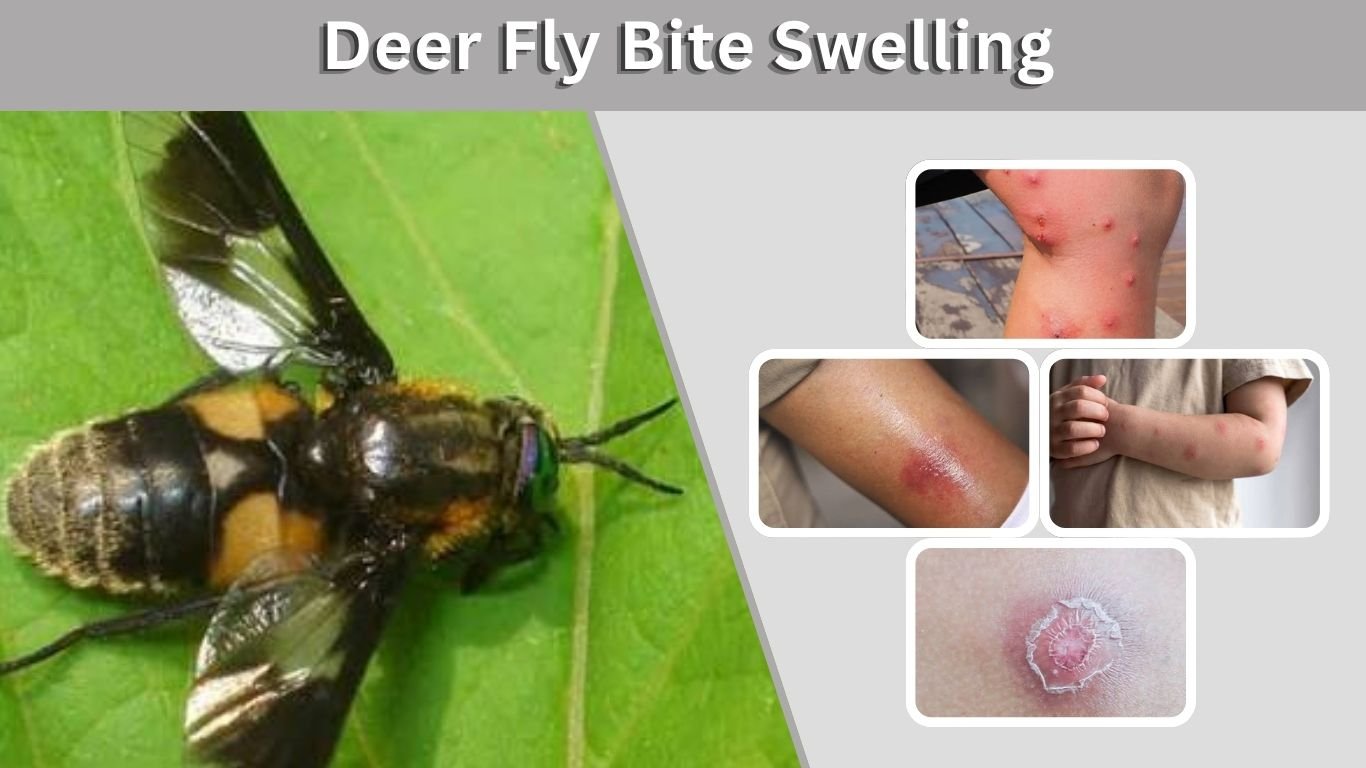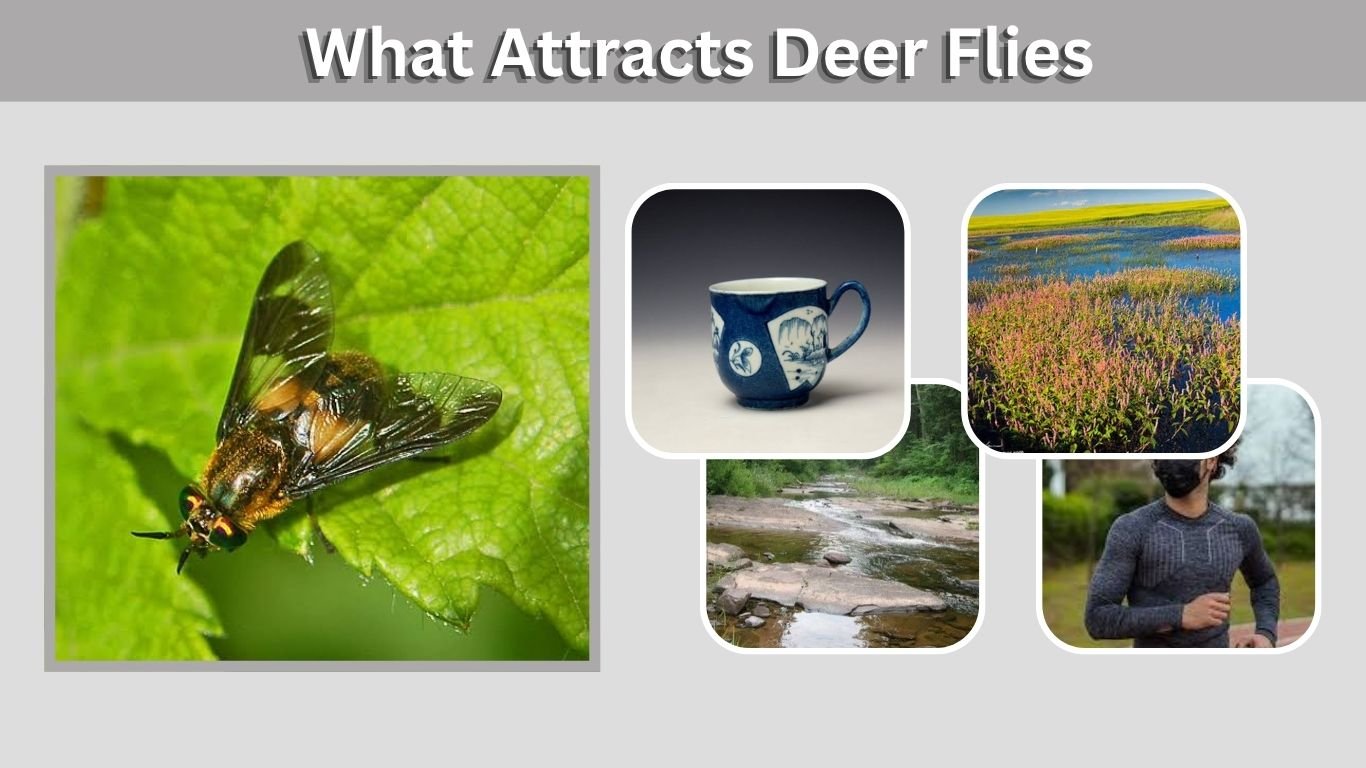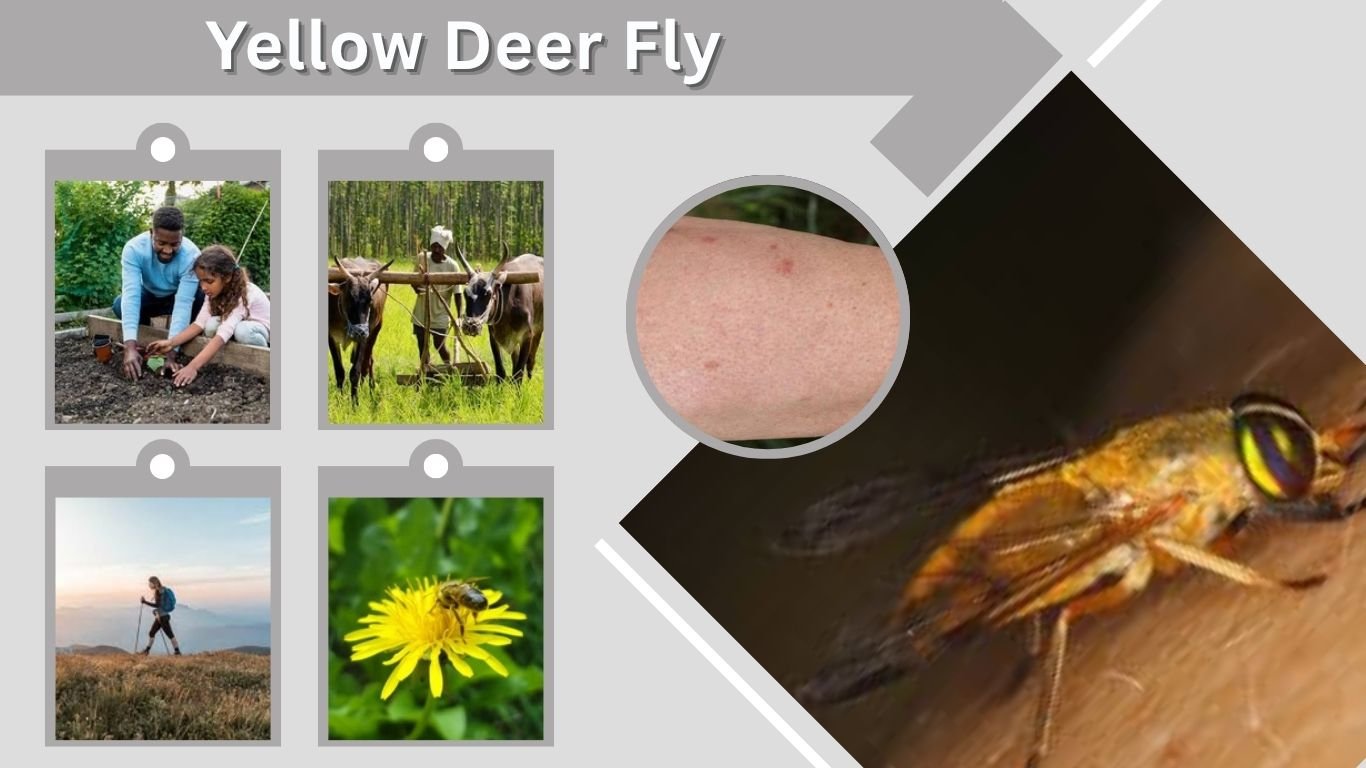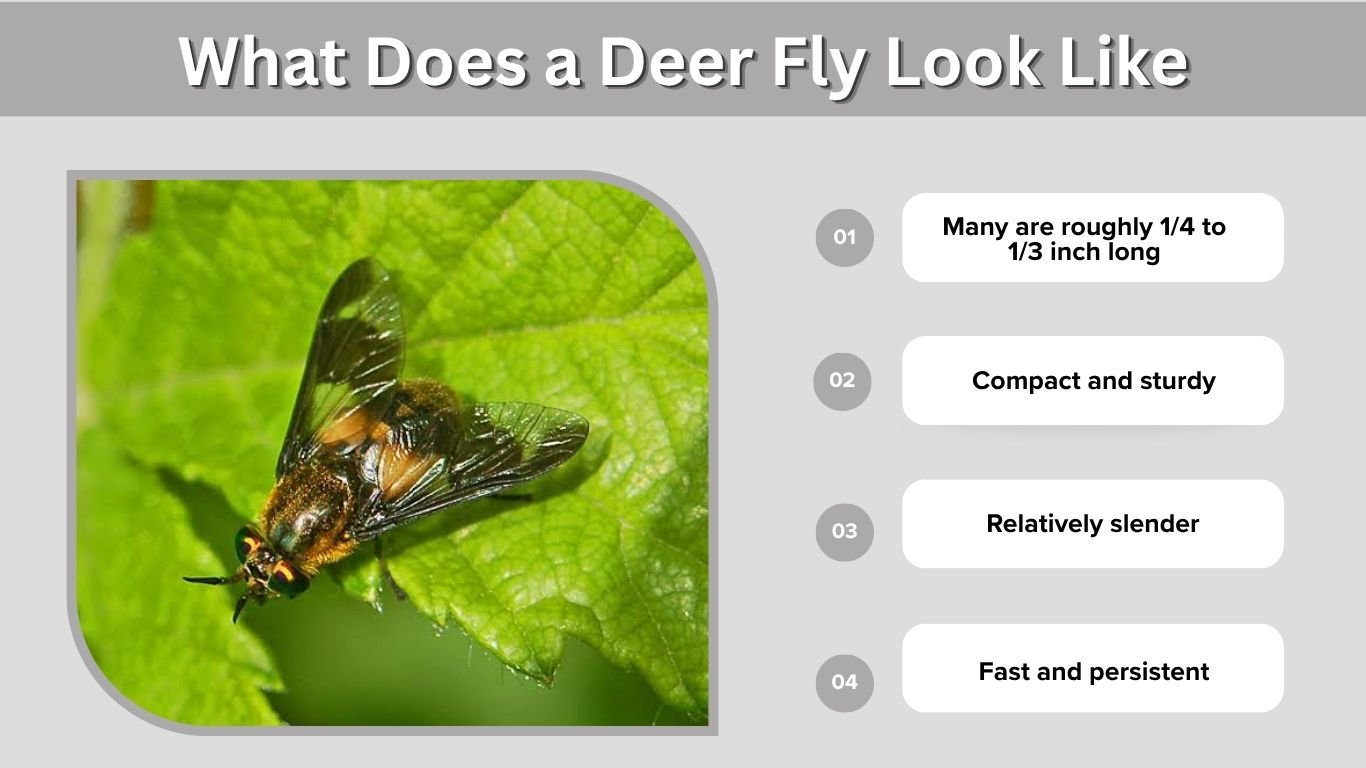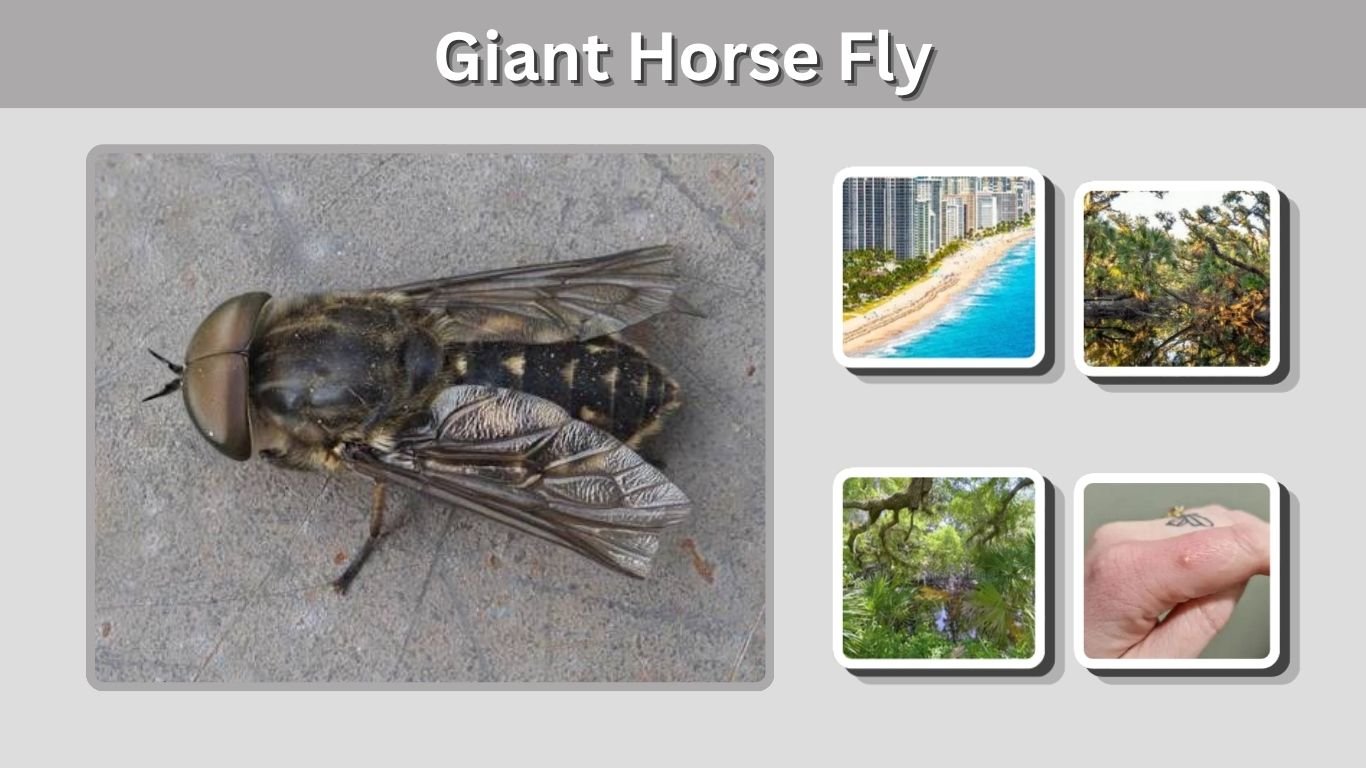
A giant horse fly is a large, heavy-bodied fly belonging to the family Tabanidae. The name does not identify one worldwide species. In North America, it often refers to the giant black horse fly, Tabanus atratus. In Europe, people may use it for large species such as the pale giant horse fly, Tabanus bovinus. Female giant horse flies can inflict painful bites on humans, horses, cattle, dogs, and other mammals.
What Is a Giant Horse Fly?
“Giant horse fly” is an informal name used for horse-fly species that appear unusually large. Most horse flies measure approximately 10–25 millimeters long, but some larger species approach or exceed one inch in body length.
These insects are true flies in the order Diptera. They have one functional pair of wings, large compound eyes, short antennae, powerful flight muscles, and broad bodies. Like other horse flies, they belong to the family Tabanidae.
Common Giant Horse-Fly Species
Two insects are frequently associated with this common name:
- Giant black horse fly: Tabanus atratus, found mainly in eastern North America
- Pale giant horse fly: Tabanus bovinus, a large European species
Other large Tabanus and Hybomitra species may also be described casually as giant horse flies. Identification requires more than size because several unrelated flies can look enormous when seen nearby.
Giant Black Horse Fly Identification
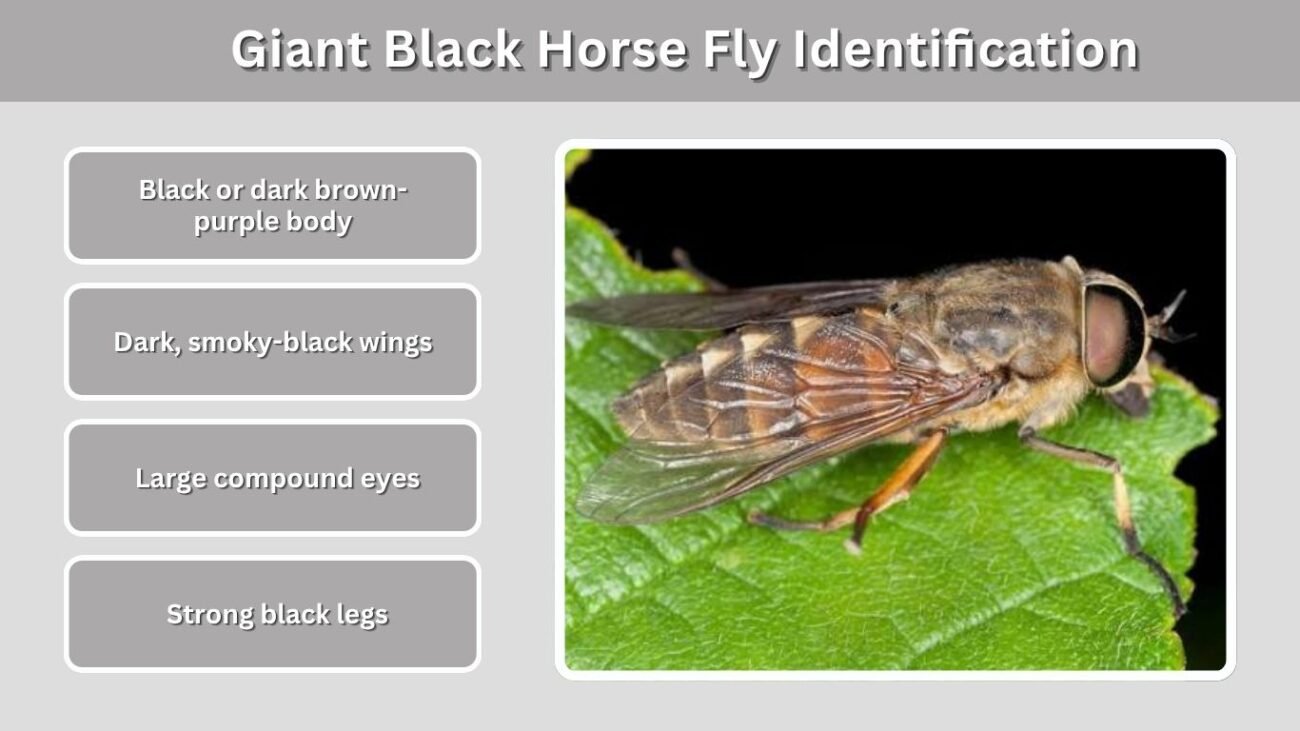
The giant black horse fly, Tabanus atratus, is one of the largest and most recognizable North American horse flies. Its body and wings are almost entirely black, giving it a dark, glossy appearance.
Physical Characteristics
- Black or dark brown-purple body
- Dark, smoky-black wings
- Broad and strongly built abdomen
- Large compound eyes
- Short, curved antennae
- Strong black legs
- Large cutting mouthparts in females
- Body length commonly around 20–28 millimeters
Its dark wings distinguish it from many horse flies that have clear, pale, or patterned wings. Some individuals appear nearly coal-black, while others show a subtle brown or purple sheen under bright light.
Male vs Female Giant Black Horse Fly
The eyes provide an important clue to the fly’s sex. A male’s eyes meet or nearly meet across the top of its head, while a female has a visible gap between them.
Only females possess the strong cutting mouthparts needed to take blood. Males cannot bite and instead obtain energy from nectar and other sugary plant liquids.
How Big Is a Giant Horse Fly?
The giant black horse fly generally measures 20–28 millimeters in body length, or roughly three-quarters of an inch to slightly over one inch. Its wings, broad head, and heavy body may make it look even larger in flight.
The pale giant horse fly can reach approximately 25–30 millimeters, placing it among Europe’s larger horse-fly species.
| Type | Typical appearance | Approximate size |
| Giant black horse fly | Nearly solid black with dark wings | 20–28 mm |
| Pale giant horse fly | Brown-gray body with pale abdominal markings | 25–30 mm |
| Common horse flies | Variable brown, gray or black coloring | 10–25 mm |
| Deer flies | Smaller, often with patterned wings | 7–10 mm |
Reports describing two-inch giant black horse flies frequently include the wings, overestimate the insect’s size, or involve another species. Measuring only the body from the head to the end of the abdomen provides a more reliable comparison.
Giant Horse Fly Range and Habitat
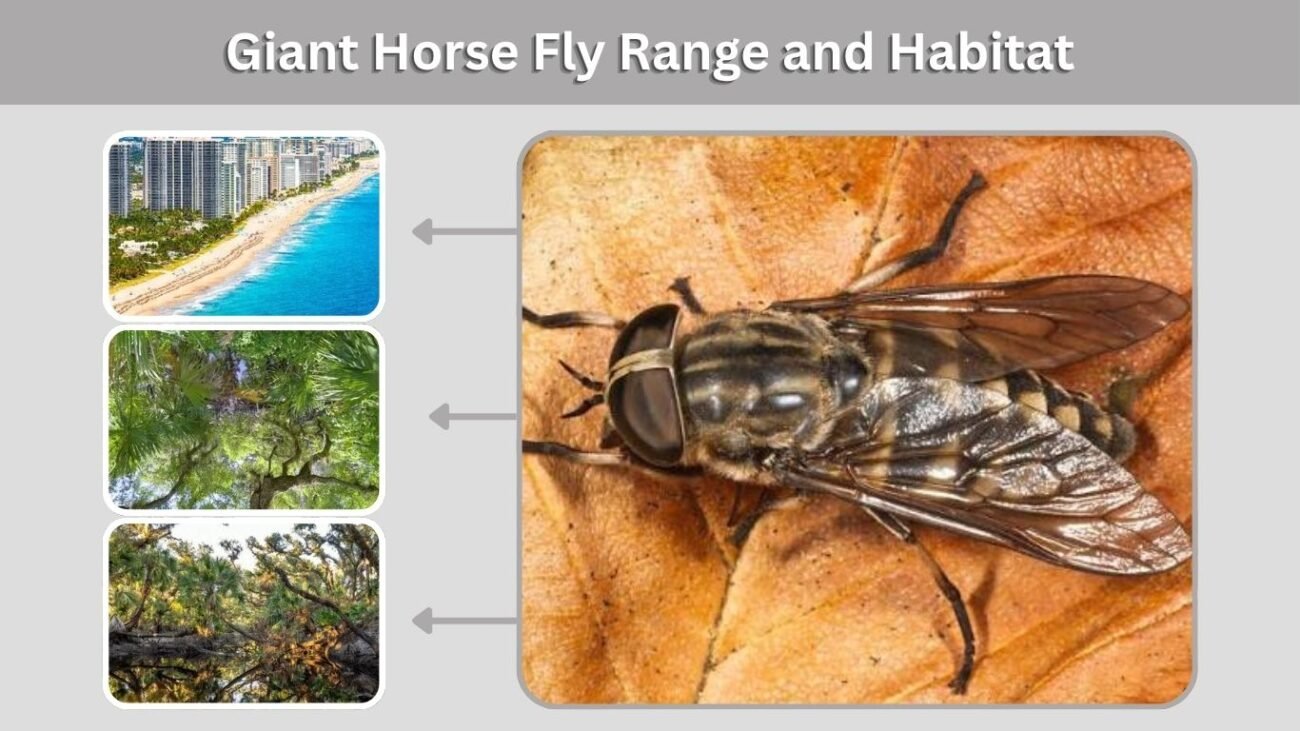
The giant black horse fly occurs primarily across eastern North America. Its range extends from southeastern Canada through much of the eastern United States, including areas of Florida and Texas, and reaches northern Mexico.
It may be encountered in states such as:
- Florida
- Texas
- Virginia
- Tennessee
- Massachusetts
- Michigan
- Pennsylvania
- Georgia
- New York
Horse flies are closely associated with moist environments because their larvae develop in aquatic or semi-aquatic habitats. Adults are commonly found around marshes, ponds, streams, wet forests, muddy fields, shaded pastures, swimming areas, and livestock facilities.
Why Is a Giant Horse Fly Near a Pool?
A horse fly near a pool is usually attracted by movement, dark objects, exposed people, and nearby wet habitat. It does not normally reproduce in clean, treated swimming-pool water.
The actual breeding area may be a nearby marsh, drainage ditch, muddy patch, pond edge, or waterlogged soil. Adult horse flies are strong fliers and can travel away from the place where they developed.
Why Is There a Giant Horse Fly in My House?
A single giant horse fly inside a house or apartment probably entered accidentally through an open door, window, damaged screen, or garage. Horse flies generally breed outdoors in wet soil, mud, or water rather than establishing household infestations. This is an inference based on their known breeding habitats.
Do Giant Horse Flies Bite?
Yes, female giant horse flies bite humans and other mammals. Males do not bite.
The female uses scissor-like mouthparts to cut through the skin and open small blood vessels. She then laps up the blood collecting around the wound. This cutting action explains why the bite feels much more painful than a typical mosquito bite.
What Does a Giant Horse-Fly Bite Feel Like?
The bite usually causes immediate sharp, burning, or pinching pain. You may notice the fly while it is still feeding because its bite is rarely subtle.
Common reactions include:
- A painful red bump
- Localized swelling
- Itching or burning
- A small central cut
- Minor bleeding
- Tender or warm skin
- Occasional bruising or blistering
The size of the fly does not necessarily mean its bite is medically more dangerous. However, a large female has substantial mouthparts and can create a noticeable wound.
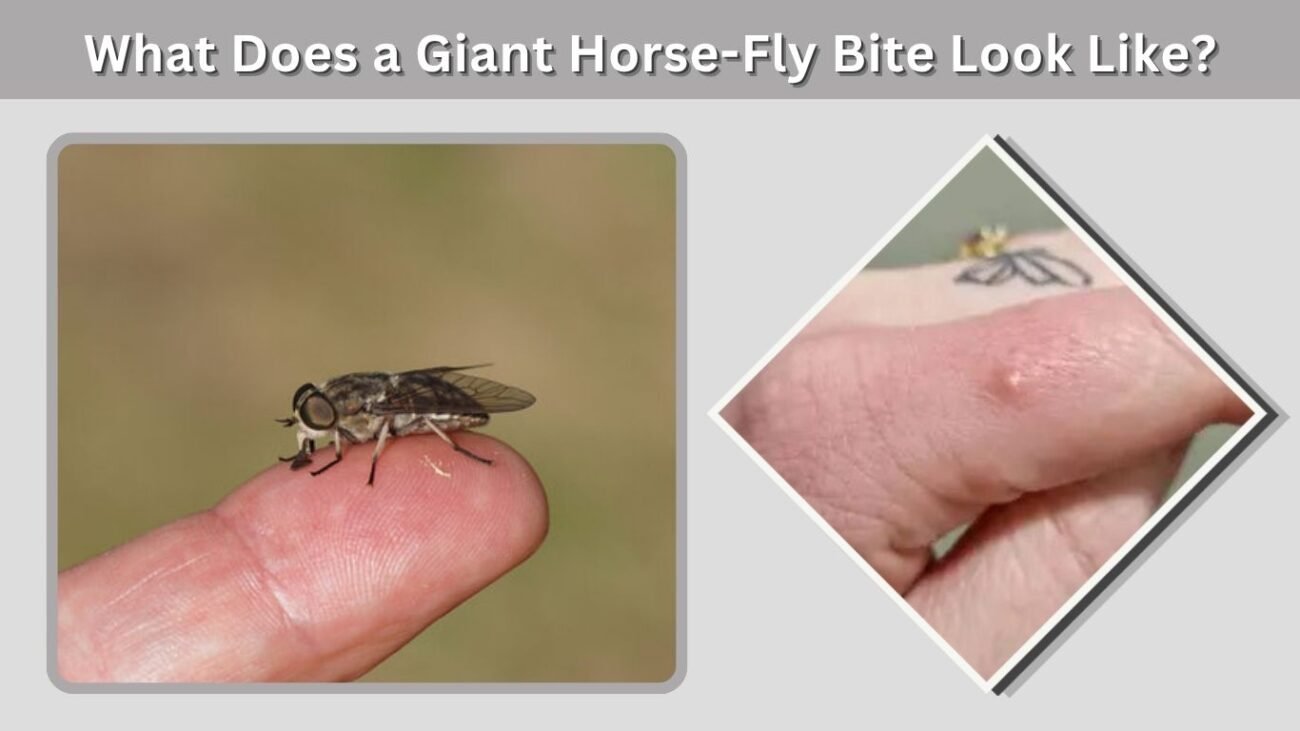
What Does a Giant Horse-Fly Bite Look Like?
A giant horse-fly bite often appears as a red, raised welt with a small cut or blood spot in the center. Swelling may develop quickly and spread around the bite.
Some people experience only mild irritation. Others develop a larger local reaction that becomes increasingly swollen over several hours before gradually improving over a few days.
How to Treat the Bite
Wash the wound gently with soap and clean water. Place a cold pack wrapped in cloth over the area for around 20 minutes to ease pain and swelling.
Avoid scratching because damaged skin can allow bacteria to enter. An appropriate antihistamine or hydrocortisone cream may help reduce itching and swelling, but medicines should always be used according to their directions.
Seek medical help when the bite becomes increasingly painful, hot, swollen, or filled with pus, or when you develop fever or swollen glands. Difficulty breathing, fainting, widespread hives, or swelling of the lips, tongue, mouth, or throat requires emergency medical attention.
Giant Horse Fly Life Cycle
Giant horse flies undergo complete metamorphosis with four stages: egg, larva, pupa, and adult.
Eggs and Larvae
Females attach egg masses to plants near ponds, marshes, streams, or saturated soil. After hatching, the larvae drop into the wet habitat below.
Horse-fly larvae are elongated predators that may eat insects, worms, snails, small crustaceans, tadpoles, and tiny fish. Depending on the species and conditions, the complete life cycle can take from about 70 days to two years.
Pupae and Adults
A mature larva moves into comparatively dry soil and forms a pupa. After development is complete, the adult emerges, expands its wings, and begins feeding.
Both sexes consume plant sugars for energy. Females of blood-feeding species also seek mammals to obtain nutrients needed for egg production.
Giant Horse Fly vs Other Large Flies
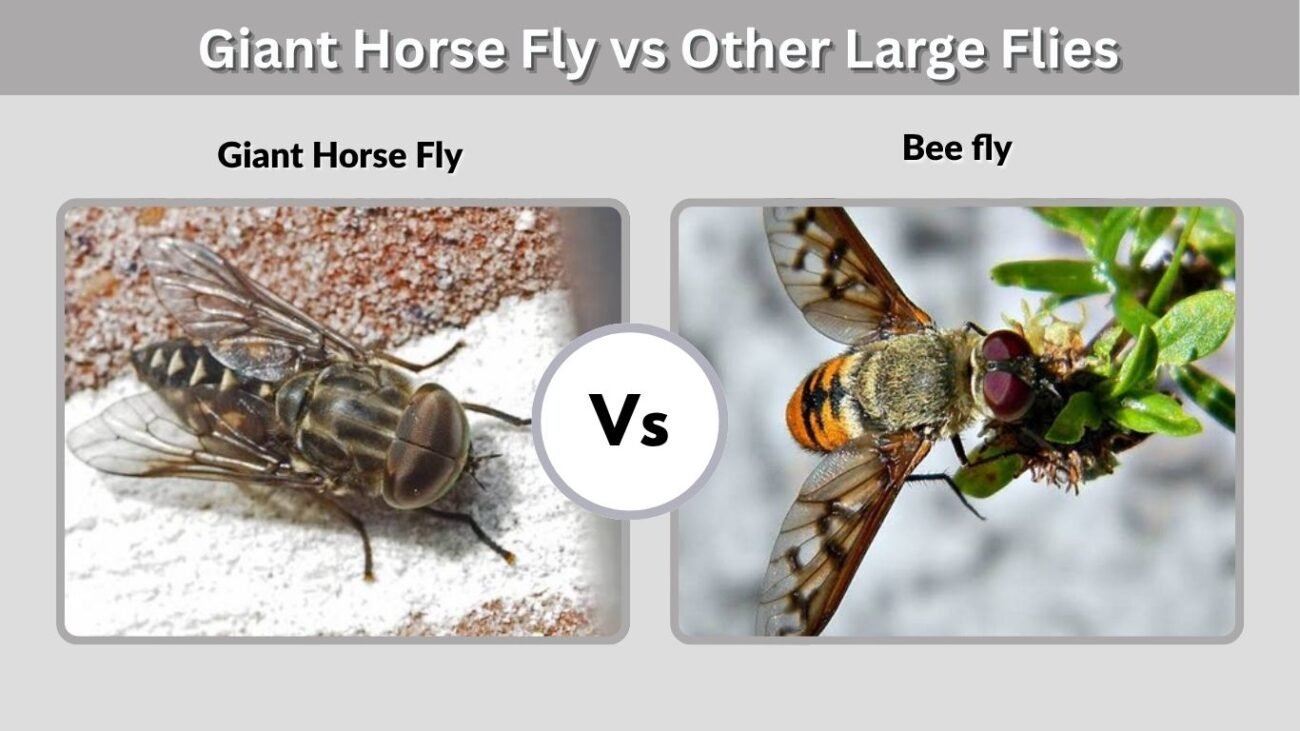
Several harmless insects may be mistaken for giant horse flies.
| Insect | Main difference |
| Black horse fly | Heavy body, large eyes and dark wings; female bites |
| Deer fly | Smaller, often with patterned wings |
| Bee fly | Hairy body and long proboscis; does not cut human skin |
| Black soldier fly | Long body and clear wings; does not bite |
| Robber fly | Predatory fly with a narrow body and bristly face |
| Bot fly | Thick, bee-like adult that does not feed on blood |
A bee-looking giant fly is not automatically a horse fly. The dark wings, broad head, short antennae, separated female eyes, and cutting mouthparts provide stronger identification clues.
How to Get Rid of Giant Horse Flies
Eliminating horse flies across a large property is difficult because their breeding sites may be extensive and adults can fly considerable distances. Wetland drainage or pesticide treatment may also be impractical or environmentally harmful.
For small outdoor areas:
- Repair window and door screens.
- Keep doors closed when flies are active.
- Wear light-colored, loose-fitting clothing.
- Cover the arms, legs, and ankles.
- Use a repellent labeled for biting flies.
- Place fans around patios or animal shelters.
- Remove standing mud where practical.
- Use a horse-fly trap in concentrated activity areas.
Commercial traps often use a large dark sphere because horse flies are attracted to dark, moving objects. These devices may reduce activity around small yards, pools, campsites, or confined livestock areas, but they will not eliminate every fly.
FAQs
Is a giant horse fly dangerous?
A female can inflict a painful bite, but most reactions remain localized and improve with basic care. The main concerns are severe allergic reactions and bacterial infection caused by scratched or damaged skin.
Is the giant black horse fly poisonous?
No. It does not have venom and does not sting. Its mouthparts physically cut the skin, while its saliva helps blood remain available during feeding.
Do giant horse flies attack dogs?
Yes. Females may bite dogs, horses, cattle, humans, and wildlife. Dogs may be bitten on the ears, belly, legs, or other areas where their fur is thin.
Are giant horse flies active at night?
Horse flies are primarily daytime insects. They are especially noticeable during warm, sunny weather around wetlands, wooded areas, farms, and livestock.
Does killing one giant horse fly attract more?
There is no good evidence that killing one directly attracts additional horse flies. However, more flies may already be nearby because the location contains suitable hosts, movement, dark objects, or nearby breeding habitat.