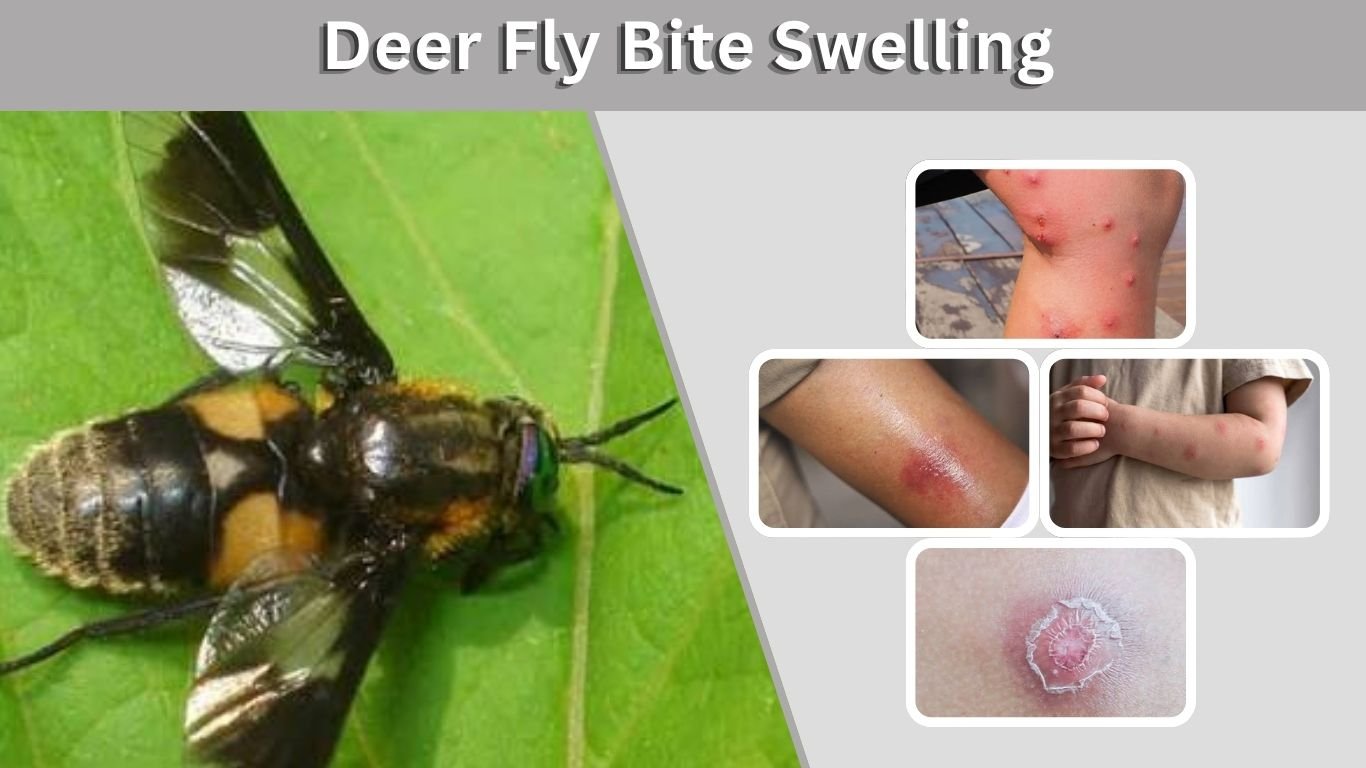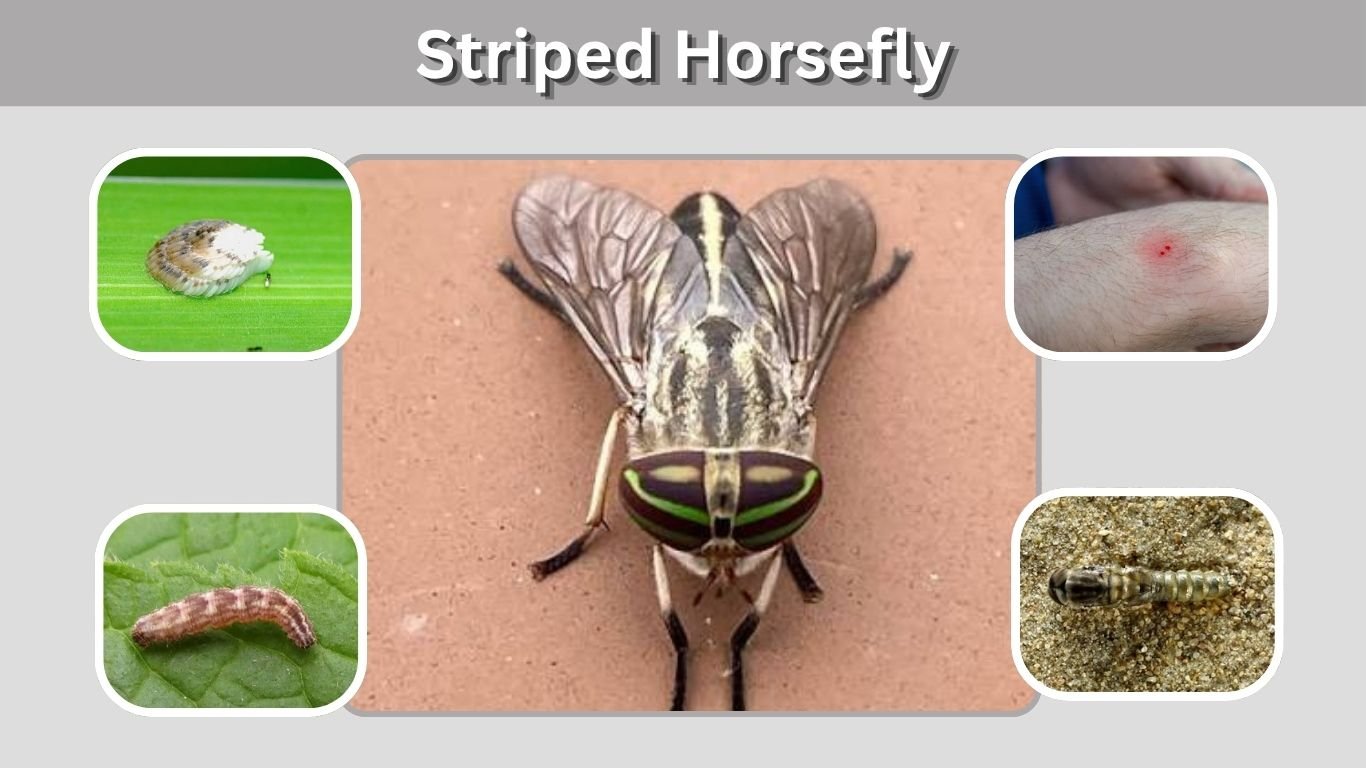
The striped horsefly is a large, fast-moving fly recognised by its prominent compound eyes and striped abdomen. However, the name can describe different species depending on location. In North America, it usually refers to Tabanus lineola, while the recognised British striped horsefly is Hybomitra expollicata. Females can deliver a painful bite when searching for blood, but males are harmless nectar feeders. These flies are most commonly encountered around wetlands, livestock fields, ponds, marshes, and other damp habitats during warm weather.
What Is a Striped Horsefly?
“Striped horsefly” is a common name rather than a description that applies to only one insect worldwide. Several horseflies have striped or lined abdomens, making location and detailed physical features important for identification.
Scientific Name and Classification
In North America, the striped horsefly generally refers to Tabanus lineola, also called the lined horse fly. It belongs to the family Tabanidae, which includes horseflies and deer flies.
The British species officially known as the Striped Horsefly is Hybomitra expollicata. This means a photograph taken in the UK should not automatically be identified as Tabanus lineola.
| Feature | North American species | British species |
| Common name | Striped or lined horse fly | Striped Horsefly |
| Scientific name | Tabanus lineola | Hybomitra expollicata |
| Family | Tabanidae | Tabanidae |
| Main range | United States and Canada | Localised parts of Britain and Europe |
| Do females bite? | Yes | Yes |
Striped Horsefly Identification
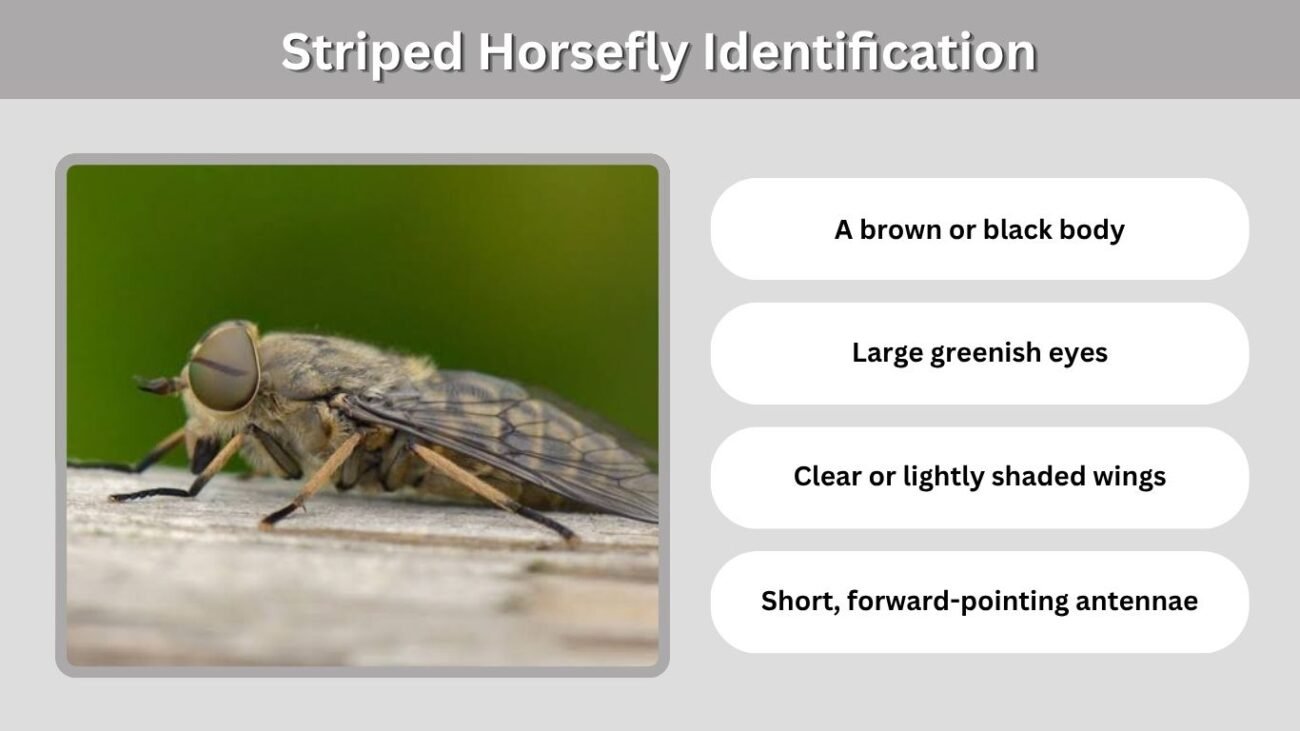
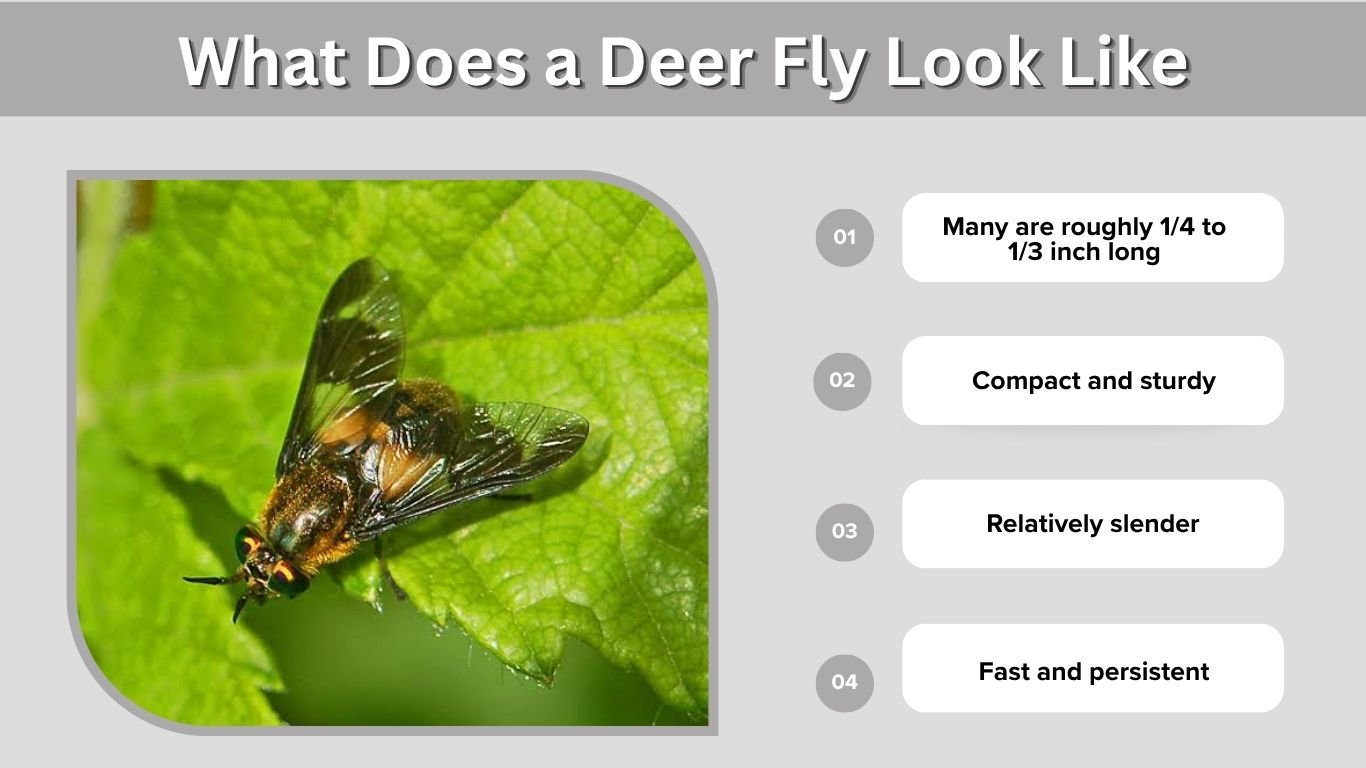
Striped horseflies are stout-bodied insects with broad heads, short antennae, clear wings and exceptionally large eyes. Their appearance can vary according to sex, location and lighting.
Size, Colour, and Body Markings
The North American Tabanus lineola is generally about 12–15 mm long. It normally has:
- A brown or black body
- Three pale grey longitudinal abdominal stripes
- Large greenish eyes
- A purple or darker band crossing the eyes
- Clear or lightly shaded wings
- Short, forward-pointing antennae
Coastal individuals may appear lighter than those found farther inland.
The British Hybomitra expollicata can resemble several other Hybomitra horseflies. Accurate identification may require clear photographs of the eyes, antennae, legs, abdomen and wing veins. UK recording guides distinguish it through a combination of features rather than abdominal stripes alone.
Male Striped Horsefly
Male striped horseflies do not feed on blood. They obtain energy from nectar and other plant sugars.
In males, the compound eyes usually meet across the top of the head. The upper part of a male Tabanus lineola eye contains enlarged visual units that help it detect and pursue females in flight.
Female Striped Horsefly
Female horseflies have eyes that are separated by a visible space. They also possess cutting mouthparts used to obtain blood needed for egg development.
Both sexes may visit flowers, but only females attempt to bite people, horses, cattle and other mammals.
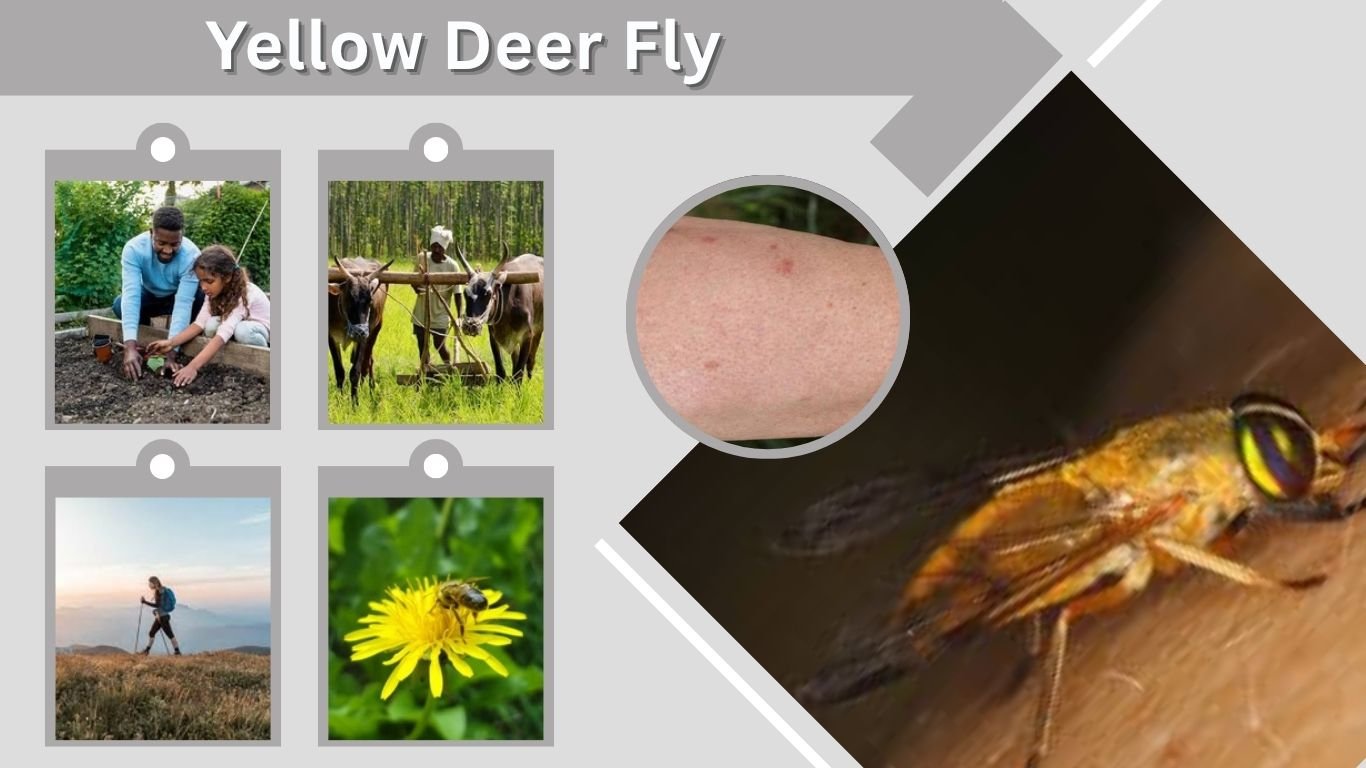
Yellow Striped Horsefly
A horsefly with yellow stripes is not necessarily a distinct species. Yellow, orange or cream abdominal markings occur in several horseflies and deer flies.
Hoverflies may also have yellow-and-black stripes, but they cannot bite or sting. Hoverflies usually have a smoother body, shorter antennae and a distinctive hovering flight. Species-level identification should not be based on colour alone.
Striped Horsefly in the UK
The British striped horsefly, Hybomitra expollicata, is a recognised UK species. It has historically been recorded from a relatively small number of locations, particularly in southern counties such as Dorset, Sussex, Kent and Essex.
Britain has around 30 horsefly species altogether. Other striped or patterned species can easily be mistaken for H. expollicata, including bright horseflies, hairy-legged horseflies, four-lined horseflies and several species of cleg.
A mobile identification application may label a UK horsefly as Tabanus lineola, even though that name is mainly associated with a North American species. Geographic location and specialist identification guides should therefore be considered.
Striped Horsefly Bite
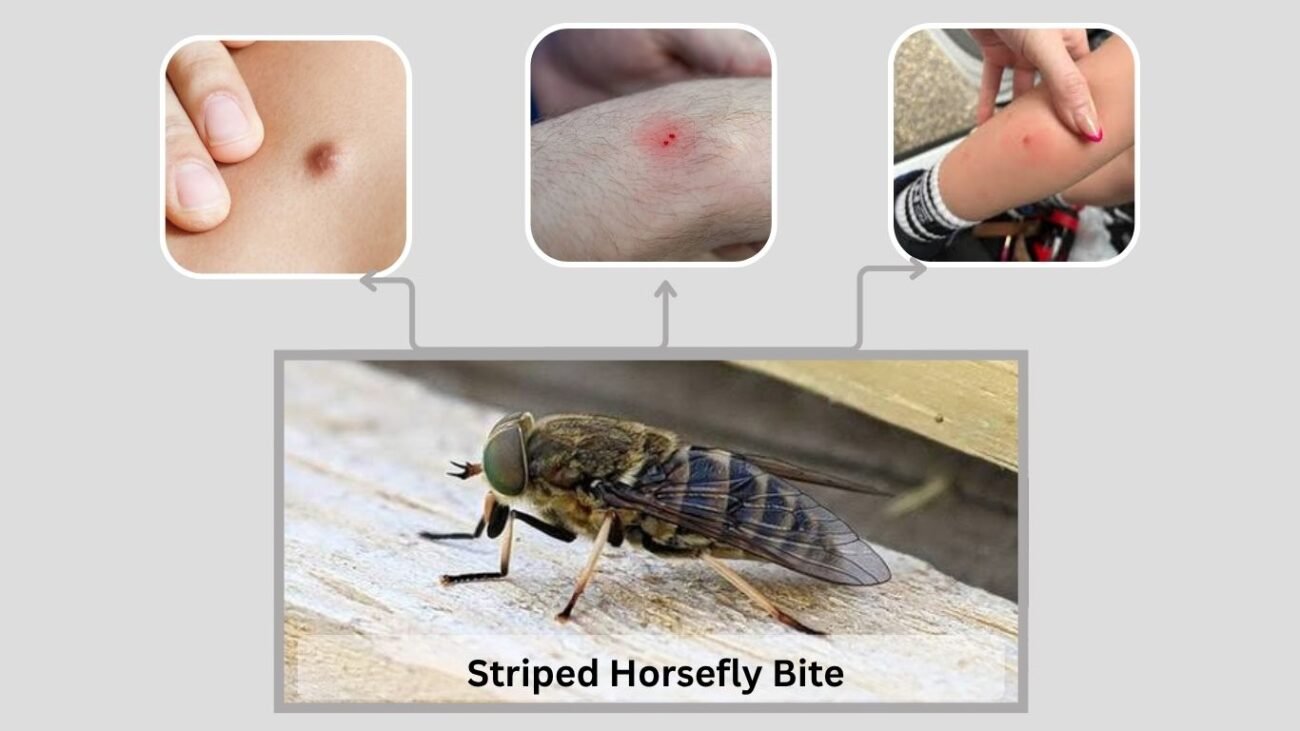
A striped horsefly bite can be immediately painful. Unlike mosquitoes, horseflies use blade-like mouthparts to cut the skin and then feed from the small pool of blood that forms.
What Does the Bite Look Like?
Common signs include:
- Sudden sharp or burning pain
- A small bleeding area
- A raised red or darkened bump
- Swelling around the wound
- Itching or tenderness
- A larger welt in sensitive individuals
Because the skin is cut rather than neatly pierced, a horsefly bite may take longer to settle than a typical mosquito bite. Scratching can introduce bacteria and increase the risk of infection.
How to Treat a Striped Horsefly Bite
Wash the affected skin with soap and water. Apply an ice pack wrapped in cloth or a clean cold compress for at least 20 minutes if swelling develops. Keep the area raised when possible and avoid scratching it.
A pharmacist may recommend an oral antihistamine, pain reliever or hydrocortisone cream depending on the symptoms and the person’s medical circumstances.
Seek medical advice if the area becomes increasingly hot, painful or swollen, or if pus, fever or swollen glands develop. Emergency assistance is required for breathing difficulty, throat tightness, faintness or sudden swelling of the lips, tongue or face.
Striped Horsefly Larvae and Life Cycle
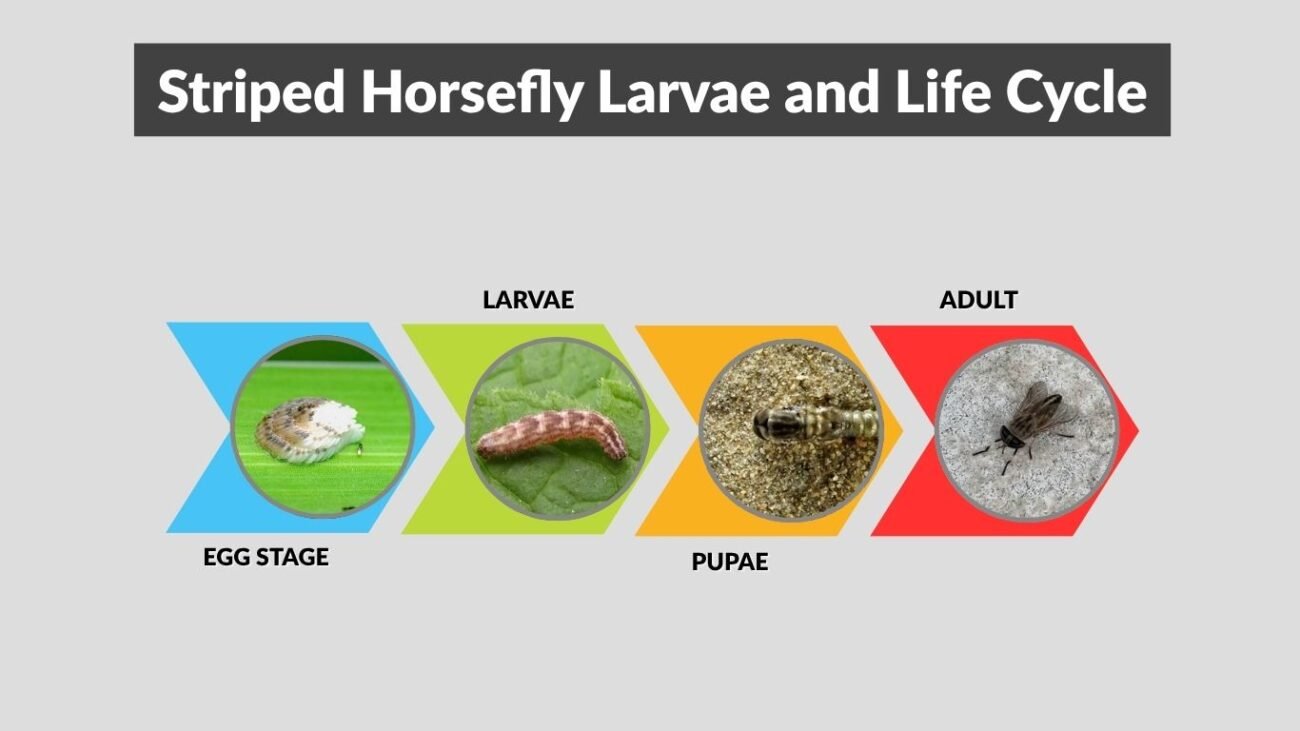
Striped horseflies undergo four stages: egg, larva, pupa and adult. Their immature stages are strongly associated with wet environments.
Eggs and Larvae
Females deposit clusters of eggs on grasses or other vegetation beside ponds, marshes, streams and wet ground. After hatching, the larvae fall into mud, shallow water or saturated soil.
Horsefly larvae are pale, legless and tapered at both ends. Many are predators that consume worms, insect larvae and other small invertebrates. Some may also feed on decaying organic material.
Pupae and Adults
When fully developed, a larva moves toward firmer or slightly drier soil and forms a pupa. The adult later emerges and becomes active above ground.
Development time varies considerably with species, temperature and habitat. Adults are most noticeable during warm seasons, particularly near wetlands and grazing animals.
Habitat and Behaviour
North American Tabanus lineola is closely associated with coastal salt marshes, wetlands and muddy pond margins. It occurs across parts of the United States and Canada, with especially strong associations with eastern and southern coastal habitats.
Horseflies are powerful daytime fliers. They locate hosts by detecting movement, body shape and visual contrast. Dark animals may attract more flies because they stand out clearly against their surroundings.
How to Prevent Striped Horsefly Bites
Wear long trousers, closed footwear and long sleeves when visiting marshes, lakeshores or livestock areas. Apply an appropriate insect repellent according to its label and avoid areas where large numbers of flies are actively circling animals.
For horses, fly rugs, masks, approved repellents and specialised horsefly traps may reduce attacks. However, controlling larvae is difficult because they develop across extensive natural wetland habitats.
FAQs
Are striped horseflies dangerous?
They are mainly a painful nuisance. Most bites cause temporary pain, swelling and itching. However, the broken skin can occasionally become infected, and sensitive individuals may experience a serious allergic reaction requiring urgent medical attention.
Are striped horseflies found in the UK?
Yes. Hybomitra expollicata is the recognised British Striped Horsefly. The North American species Tabanus lineola uses the same common name but should not automatically be assumed when identifying a horsefly photographed in Britain.
Do male striped horseflies bite?
No. Male striped horseflies feed mainly on nectar and plant sugars. Only females possess the specialised cutting mouthparts and reproductive need that lead them to take blood meals from mammals.
What do striped horsefly larvae look like?
The larvae are elongated, legless and usually cream, white or pale yellow. They live in wet soil, marsh mud or shallow water, where many feed on insect larvae, worms and other small invertebrates.
How long does a striped horsefly bite last?
Minor pain and swelling often improve within several days, although horsefly wounds can take longer to heal than mosquito bites. Medical advice is recommended when symptoms worsen, spread or show signs of infection.