










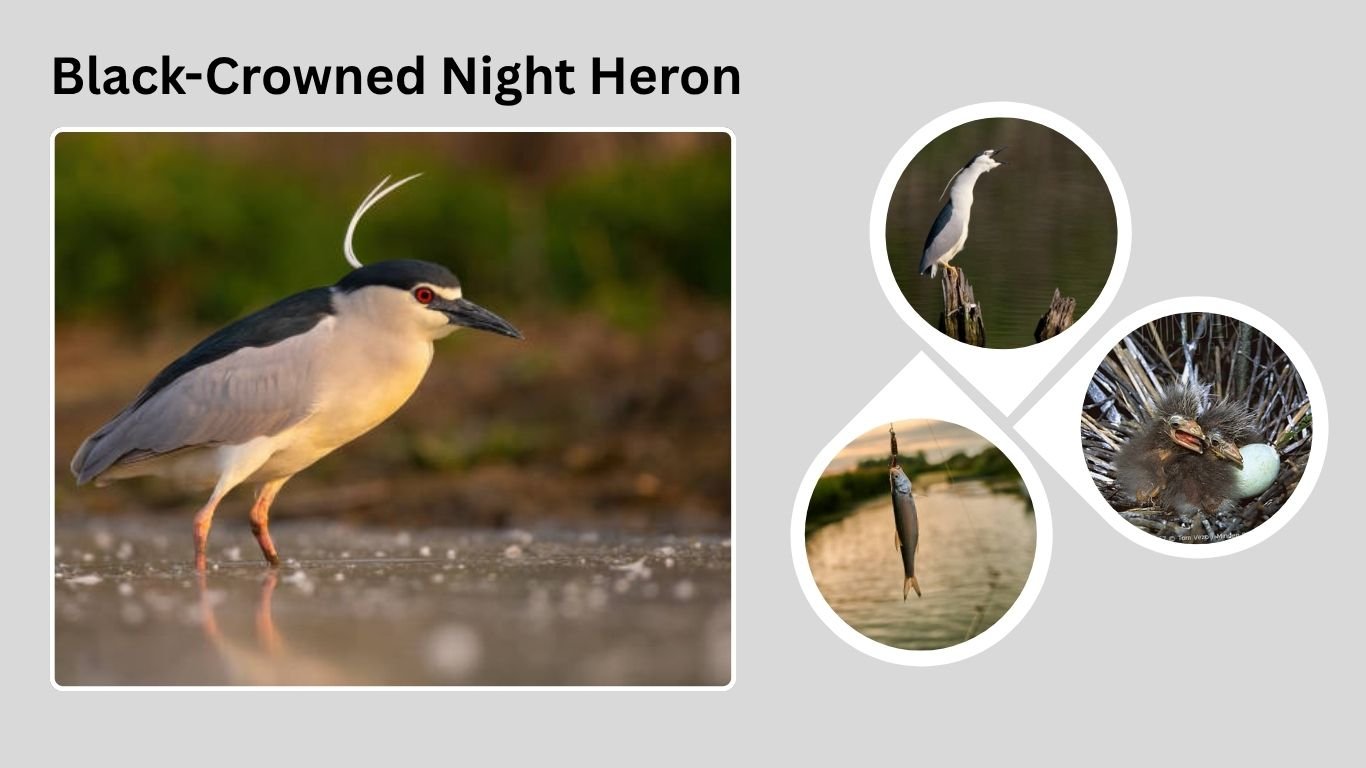
The Black-Crowned Night Heron (Nycticorax nycticorax) is one of the most distinctive and widespread members of the heron family. Unlike its taller and more slender relatives, this species is compact, stocky, and known for its nocturnal feeding habits. With its striking red eyes, black crown, and gray wings, it stands out as a symbol of mystery and adaptability. Found on nearly every continent, the Black-Crowned Night Heron plays a vital role in wetland ecosystems and carries deep spiritual symbolism tied to patience, balance, and observation.
Overview of the Black-Crowned Night Heron

Scientific Classification
- Scientific Name: Nycticorax nycticorax
- Family: Ardeidae (Herons, Egrets, and Bitterns)
- Genus: Nycticorax — Greek for “night raven,” referencing its croaking call
- Conservation Status: Least Concern (IUCN)
- Average Lifespan: 10–20 years in the wild
Quick Highlights
- Medium-sized heron active mostly at night.
- Recognizable by its black cap, white underside, and red eyes.
- One of the few herons to thrive in both wild and urban habitats.
- Plays a crucial ecological role by helping control fish and amphibian populations.
The Black-Crowned Night Heron is one of nature’s quiet observers — calm by day and efficient by night. Its nocturnal behavior gives it a unique niche, avoiding competition with other daytime waders.
Identification and Appearance
Adult Features
The adult Black-Crowned Night Heron is easily identified by its black crown and back, contrasting with gray wings and white underparts. It has short legs and a compact neck, making it appear stout compared to longer-limbed species like the Great Blue Heron. Its eyes are vivid red, and its bill is short but strong, adapted for quick strikes. During breeding season, the heron develops long white ornamental plumes on the back of its head, giving it a striking elegance.
Juvenile and Immature Birds
Young Black-Crowned Night Herons look completely different from adults. They are brown with streaked or spotted plumage and pale yellow eyes. This camouflage pattern helps them blend into reeds and tree branches while they mature. Over two to three years, they gradually transition to adult coloration — a change often confused with Yellow-Crowned Night Heron juveniles.
Male vs Female
Males and females appear almost identical, though males tend to be slightly larger and display brighter plumage during courtship. Both sexes participate equally in nesting and raising young.
Size and Flight Characteristics
- Length: 58–66 cm (23–26 inches)
- Wingspan: 105–110 cm (3.4–3.6 feet)
- Weight: 700–900 grams
When flying, the Black-Crowned Night Heron has a steady, deliberate wingbeat and a retracted neck, giving it a compact silhouette. Its flight is quiet and direct, contrasting with the more graceful glides of larger herons. In low light, its shadowy shape and silent movements make it an exceptional night hunter.
Habitat and Geographic Range

Preferred Habitat
Black-Crowned Night Herons thrive in freshwater and coastal wetlands, including:
- Marshes, ponds, and swamps
- Rivers, lakes, and lagoons
- Mangroves and tidal flats
They prefer areas with dense vegetation for roosting during the day and open water for nighttime feeding. The combination of cover and access to aquatic prey makes these environments ideal for their survival.
Global Distribution
This heron is one of the most widely distributed wading birds in the world. Populations are found throughout North and South America, Europe, Africa, and Asia. In the United States, they are common in Florida, Texas, California, and the Great Lakes region. They even inhabit islands such as Hawaii, where they have adapted to both natural and urban landscapes.
Migration Patterns
- Northern populations migrate south for the winter.
- Tropical populations are largely resident year-round.
- Urban colonies now exist in major cities like Oakland, Chicago, and Honolulu, where they roost in parks and feed in nearby waterways.
Their ability to adapt to human presence has allowed them to survive in places where many other wetland birds have declined.
Behavior and Lifestyle
Nocturnal Habits
True to its name, the Black-Crowned Night Heron is primarily a creature of the night. It spends daylight hours resting quietly in trees or dense vegetation, often in groups. As the sun sets, it becomes active, flying out to feeding sites with a low “quawk!” call that echoes across wetlands. Its night vision and patient hunting technique make it a master of stealth.
Social Behavior
While solitary when feeding, these herons are highly social during nesting season. They often form large breeding colonies (known as heronries) alongside Egrets, Ibises, and other herons. They are territorial yet tolerant, creating noisy, bustling communities near water.
Adaptability
Black-Crowned Night Herons are among the most adaptable wading birds. They hunt in both pristine wetlands and polluted urban waterways. In cities, they have learned to feed near docks, piers, and even artificial ponds — wherever small fish and crustaceans are abundant. Their resilience makes them one of the few heron species thriving amid global habitat change.
Diet and Feeding Habits

Primary Diet
The Black-Crowned Night Heron’s diet is diverse and opportunistic. It mainly feeds on:
- Small fish and minnows
- Frogs and tadpoles
- Crustaceans such as crayfish and crabs
- Aquatic insects, worms, and snails
- Occasionally small rodents or young birds
Hunting Technique
This heron employs a “stand-and-strike” method — it waits motionless at the water’s edge, then thrusts its bill forward to catch prey. Its short, strong bill allows for powerful and precise strikes. Thanks to its keen night vision, it hunts efficiently under moonlight or artificial light from nearby human structures.
Unique Feeding Behavior
Sometimes, it may scavenge or even raid nests of ducks or smaller birds for eggs or chicks. Juveniles are known to feed in groups, learning techniques by observing adults.
Nesting and Breeding
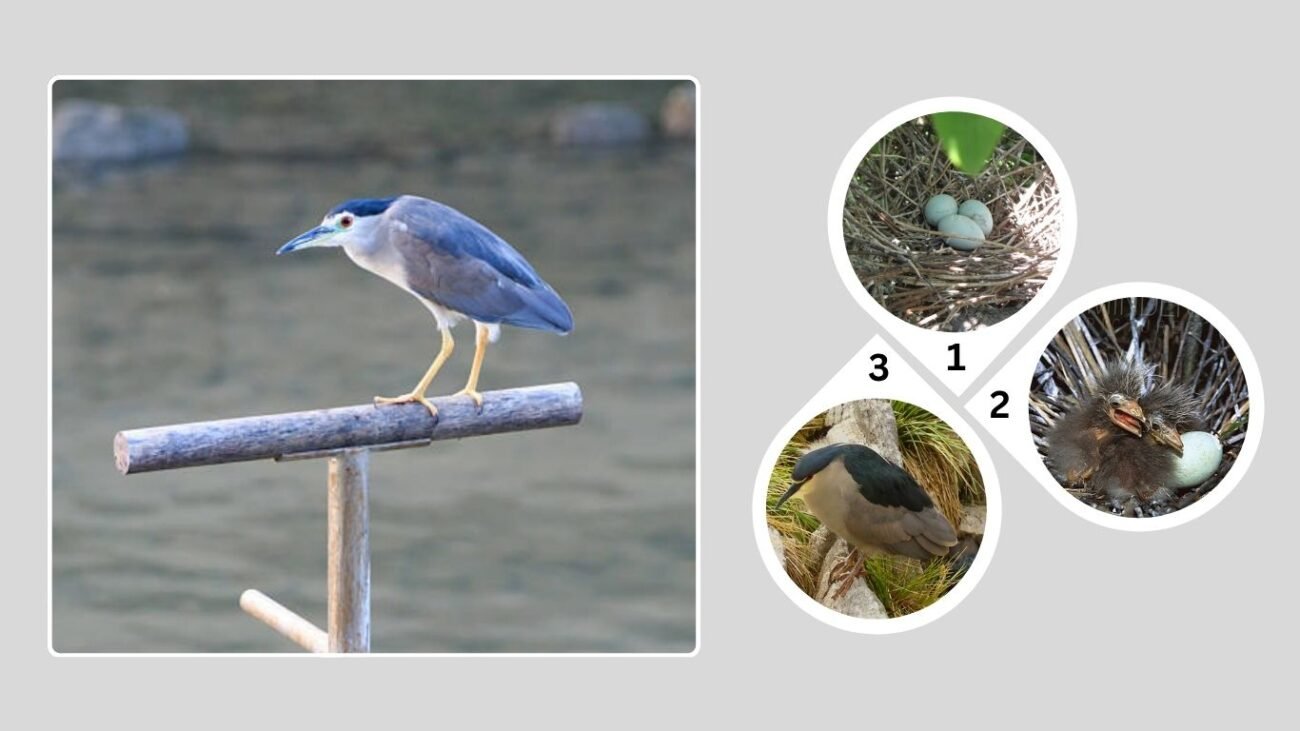
Breeding Season
The breeding season of the Black-Crowned Night Heron varies with geography but generally occurs from April to July in temperate regions. Colonies form near wetlands or along coastal edges, often shared with other heron and egret species. These heronries can include dozens or even hundreds of nests built close together, filling the air with croaks and calls during nesting time.
Nest Construction
Both male and female contribute to building the nest. The male gathers twigs, reeds, and sticks, while the female arranges them into a platform lined with softer plant material. Nests are usually positioned in trees, shrubs, or tall reeds—sometimes directly above water for extra protection from predators. The pair strengthens and reuses the same nest each year if conditions remain favorable.
Eggs and Chicks
A typical clutch contains three to five pale blue-green eggs. Both parents share incubation duties for about 24–26 days, rotating regularly to protect the eggs from heat or cold.
Newly hatched chicks are covered in soft gray down and completely dependent on their parents. Adults feed them by regurgitating small fish or insects. The young begin to climb and flap within three weeks and are capable of flight by six to seven weeks. Families often stay together in the colony until the young are ready to migrate.
Comparison with Similar Species
Black-Crowned vs Yellow-Crowned Night Heron
| Feature | Black-Crowned Night Heron | Yellow-Crowned Night Heron |
| Crown Color | Jet-black crown and back | Cream-yellow crown and gray back |
| Bill | Short, black, thick | Paler, heavier bill |
| Eye Color | Deep red | Orange-red |
| Activity Period | Primarily nocturnal | More crepuscular (active at dawn/dusk) |
| Habitat Preference | Freshwater wetlands | Coastal marshes and mangroves |
Although similar in shape, the Black-Crowned Night Heron tends to appear darker and stockier, while the Yellow-Crowned Night Heron shows longer legs and a more slender build.
Black Heron (Egretta ardesiaca) vs Black-Crowned Night Heron
The Black Heron of Africa is smaller and entirely black with an unusual “canopy-feeding” technique—spreading its wings like an umbrella to create shade that lures fish. The Black-Crowned Night Heron lacks this behavior and displays the distinctive tri-color pattern of black, gray, and white.
Black-Crowned vs Great Blue Heron
The Great Blue Heron towers over the Black-Crowned, reaching nearly four feet tall. It hunts by day, while the compact Black-Crowned prefers night. Their differences in size, color, and timing allow them to share wetlands without competition.
Sounds and Communication
Vocalizations
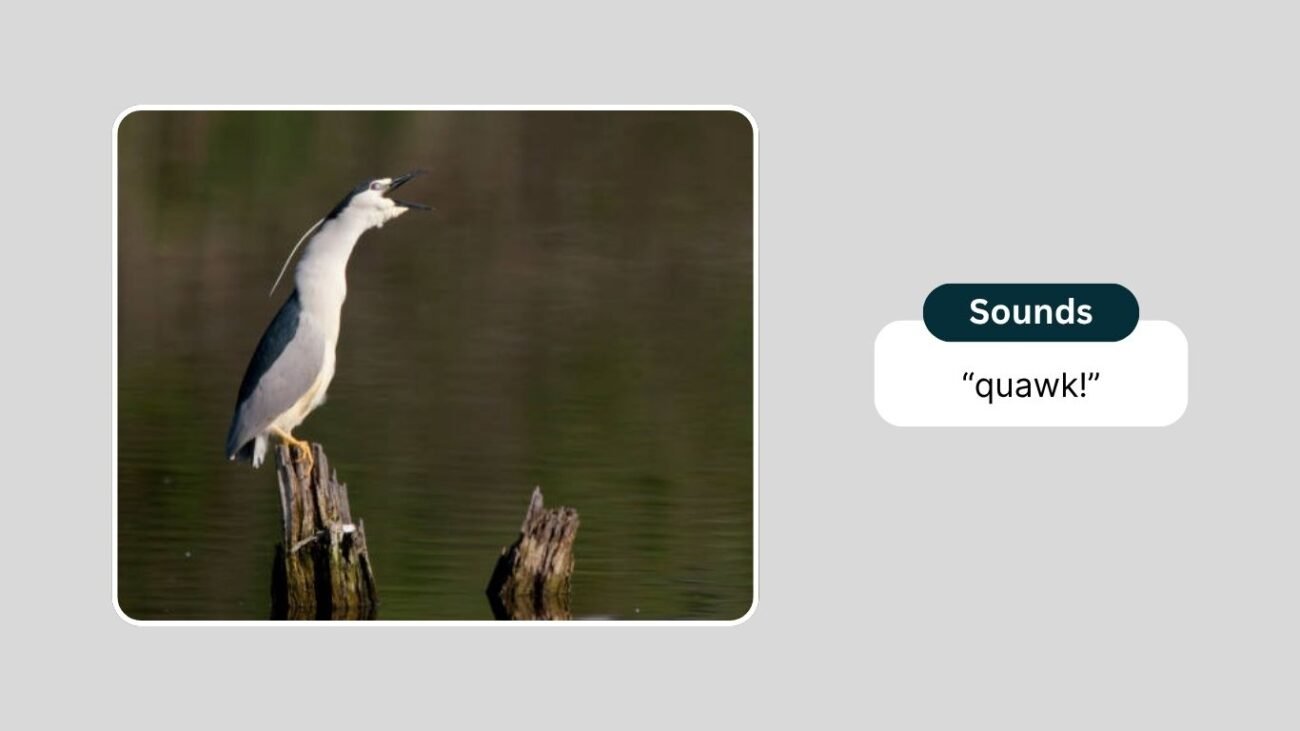
The Black-Crowned Night Heron’s signature call is a sharp, raspy “quawk!” often heard when the bird takes flight at dusk or returns to its roost at dawn. The sound carries across wetlands and has earned the species its nickname “Night Raven.”
During breeding season, males produce lower croaks and squawks as part of their courtship displays, while juveniles use high-pitched “peep” calls to beg for food.
Body Language
Courtship involves bowing, plume-fluffing, and bill-clapping displays. Adults may stretch their necks or snap their bills to signal dominance or defend territory. Their social colonies rely heavily on visual communication, especially at night when visibility is limited.
Conservation and Threats
Current Status
Although the Black-Crowned Night Heron is listed as Least Concern globally, local populations have declined in areas where wetlands have been drained or polluted. Because these birds feed at the top of aquatic food chains, they are vulnerable to contamination from pesticides and heavy metals.
Major Threats
- Habitat Loss: Urban expansion and agriculture destroy wetlands.
- Water Pollution: Chemical runoff affects prey abundance and quality.
- Disturbance: Human activity near nesting colonies can cause adults to abandon eggs.
- Climate Change: Rising sea levels threaten coastal breeding grounds.
Conservation Efforts
The species is protected under the U.S. Migratory Bird Treaty Act and similar international agreements.
Key actions include:
- Wetland restoration and pollution control.
- Protection of rookeries during nesting seasons.
- Public education encourages coexistence with urban colonies.
Their presence often indicates a healthy wetland ecosystem—protecting the heron means safeguarding many other species as well.
Symbolism and Spiritual Meaning
Cultural Symbolism
In art and mythology, the heron symbolizes wisdom, reflection, and patience. The Black-Crowned Night Heron, being nocturnal, adds a layer of mystery and introspection. Its red eyes and quiet demeanor evoke the idea of seeing truth in darkness and remaining composed in uncertain times.
Spiritual Lessons
Spiritually, this heron teaches balance between action and stillness. Just as it waits motionless before striking, it reminds us to move only when clarity is found. The bird’s nocturnal life represents intuition—trusting inner guidance even when the path is dimly lit.
For many observers, watching a Black-Crowned Night Heron gliding silently across a moonlit pond feels like witnessing nature’s calm intelligence at work.
Interesting Facts about the Black-Crowned Night Heron

- The scientific name Nycticorax nycticorax literally means “night raven.”
- They can live more than 20 years in captivity.
- Juveniles require up to three years to achieve full adult plumage.
- They are among the few herons active after sunset, avoiding competition with diurnal species.
- Urban colonies thrive in places like Oakland, California, where the heron is the official city bird.
- Their presence helps control populations of fish, amphibians, and aquatic insects.
FAQs
Why is it called a Black-Crowned Night Heron?
The name comes from its glossy black crown and its habit of feeding primarily after dark—making it one of the few truly nocturnal herons.
Where does the Black-Crowned Night Heron live?
It inhabits wetlands, lakes, mangroves, and marshes on every continent except Antarctica, thriving in both wild and urban environments.
What do Black-Crowned Night Herons eat?
Their diet includes fish, frogs, crustaceans, insects, and occasionally small mammals or bird eggs.
Are Black-Crowned Night Herons endangered?
No. Globally they are classified as Least Concern, though localized threats persist due to wetland destruction and water pollution.
What does the Black-Crowned Night Heron symbolize?
It symbolizes patience, perception, and the ability to act wisely in the dark—both literally and spiritually.


