











Falcons are among nature’s most extraordinary birds of prey, admired for their astonishing speed, sharp vision, and unmatched hunting abilities. Found on nearly every continent, these raptors have fascinated humans for centuries—both as wild predators and as trained companions in the art of falconry. Their beauty, intelligence, and independence make them both awe-inspiring and complex, sparking curiosity among bird enthusiasts and animal lovers worldwide.
Understanding the Falcon Bird
Physical Features and Adaptations
Falcons belong to the Falconidae family, characterized by their sleek bodies, long pointed wings, and powerful beaks. Unlike hawks or eagles, falcons use a unique “tooth” on their beak to kill prey swiftly. Their sharp talons allow them to grip and subdue animals mid-flight, while their aerodynamic build supports incredible agility.
One of their most remarkable traits is eyesight—up to eight times sharper than that of humans—allowing them to spot prey from miles away. The Peregrine Falcon, for instance, is the fastest animal on Earth, diving at speeds exceeding 240 miles per hour when hunting.
Global Distribution and Habitat
Falcons inhabit diverse environments, from deserts and grasslands to coastal cliffs and city skyscrapers. They have adapted exceptionally well to human-altered landscapes, nesting on tall buildings and bridges where pigeons—their common prey—are abundant. Peregrine Falcons are found worldwide, while smaller species like the American Kestrel prefer open fields and farmland. This adaptability has helped many falcon species survive despite habitat loss in some regions.
Types of Falcons Around the World

Peregrine Falcon
The Peregrine Falcon is the most famous and widespread falcon species. Known for its breathtaking dives, it can reach over 240 mph, earning it the title of the fastest animal on the planet. Its slate-gray back and barred underparts give it a sleek, commanding appearance. Once endangered due to pesticide use, strong conservation efforts have restored its population across North America and Europe.
American Kestrel
Also known as the Sparrow Hawk, the American Kestrel is the smallest falcon in North America. Despite its size, it’s a fierce hunter, capable of catching insects and small rodents with precision. Its striking orange, blue, and black plumage makes it one of the most colorful birds of prey. Adaptable and widespread, it thrives in open habitats and urban environments alike.
African Pygmy Falcon
Tiny yet powerful, the African Pygmy Falcon stands only about 20 cm tall. Native to the savannas and semi-arid regions of Africa, this bird is unique for its cooperative behavior—sometimes sharing nests with weaver birds. Its compact body and piercing eyes make it a favorite among birdwatchers and licensed falconers who appreciate its intelligence and charm.
Other Notable Species
Beyond the well-known falcons, other species like the Gyrfalcon, Saker Falcon, and Lanner Falcon also deserve attention. The Gyrfalcon, native to the Arctic, is the largest of all falcons and prized in traditional Middle Eastern falconry. The Saker Falcon, with its golden-brown plumage, is revered for its strength and endurance in desert hunts. Each species offers a glimpse into the evolutionary brilliance of this bird family.
Falcons in the Wild
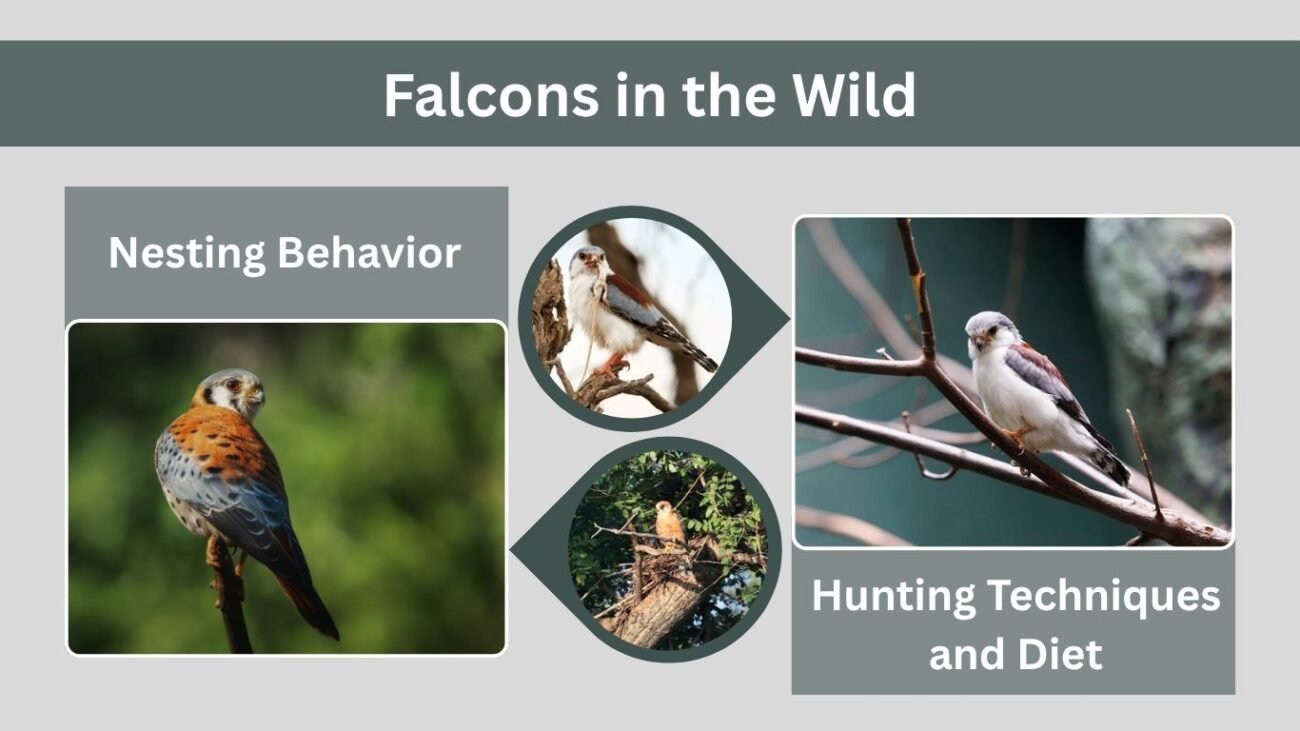
Hunting Techniques and Diet
Falcons are built for the hunt. Using astonishing speed and precision, they strike prey in mid-air with stunning force. Their diet typically consists of smaller birds, rodents, and occasionally insects or reptiles. The Peregrine Falcon’s hunting technique—called the stoop—involves soaring high above and diving vertically at its prey, striking with such velocity that the impact alone can kill.
Their speed, accuracy, and tactical intelligence have made falcons icons of power and efficiency in nature documentaries and cultural symbolism alike.
Breeding and Nesting Behavior
Falcons are generally monogamous and often return to the same nesting site each year. Instead of building traditional nests, they prefer ledges, cliffs, or cavities to lay eggs. Both male and female falcons share parenting duties, taking turns incubating eggs and feeding the chicks. After about six weeks, the fledglings begin flight training, guided by their parents’ example and instinctive hunting behavior.
Can You Have a Falcon as a Pet?
Legal and Ethical Considerations
While the idea of owning a falcon might sound exciting, it’s not as simple as keeping a parrot or a canary. In most countries, falcons are protected by wildlife laws, and private ownership without proper licensing is strictly prohibited. Falconry—the ancient art of training raptors for hunting—is the only legal pathway to owning a falcon.
Aspiring falconers must undergo years of training, obtain government permits, and demonstrate proper facilities for housing and care. Ethically, falcons are wild animals, not domesticated pets, and keeping them demands respect for their instincts and natural behavior.
Falconry vs. Pet Ownership
Falconry is a time-honored tradition that dates back over 4,000 years. It’s not about companionship but partnership between human and bird. Trained falcons hunt alongside humans, showcasing skill, trust, and coordination. Keeping a falcon purely as a pet, without training or purpose, is discouraged and often illegal. Unlike domesticated animals, falcons do not form emotional bonds; instead, they cooperate based on mutual respect and learned trust.
Costs of Owning and Maintaining a Falcon

Purchase and Permit Costs
Owning a falcon is not just a passion — it’s a serious financial and legal commitment. Prices vary widely depending on the species, age, and training level. Common falcons like kestrels may cost around $2,000, while larger or rarer birds such as the Gyrfalcon can exceed $10,000.
In addition to the purchase price, aspiring falconers must invest in falconry equipment — hoods, gloves, perches, telemetry gear, and scales — which can easily add another $1,000 to $3,000. Most countries also require a falconry license and housing inspection, ensuring the bird’s welfare and compliance with wildlife laws.
Ongoing Care and Feeding Expenses
Falcons have a specialized diet of raw meat, including quail, chicks, mice, or pigeons. A single bird may consume hundreds of dollars’ worth of food each month, especially during training season. Veterinary care is another ongoing expense, with routine health checks, vaccinations, and occasional treatments for parasites or infections.
Altogether, maintaining a falcon can cost between $3,000 and $5,000 annually, depending on its health, diet, and equipment needs. This makes falconry a lifestyle choice rather than a simple hobby.
Falcon Care and Daily Maintenance
Housing and Enclosure Requirements
Falcons need ample space to spread their wings, exercise, and maintain flight readiness. Falconers build mews — spacious, secure enclosures designed to protect the bird from predators and harsh weather. A proper mews includes perches, shaded areas, and enough height for limited flying.
Cleanliness is essential. Falcons are sensitive to bacterial buildup, so perches and feeding areas must be cleaned daily. The space should also allow for tethering during rest and free flight training when weather permits.
Feeding and Nutrition
A falcon’s diet in captivity mirrors what it would eat in the wild — primarily small birds and mammals. The goal is to maintain muscle strength and feather health. Frozen-thawed prey is often used to ensure freshness and safety.
Supplementation with vitamins and calcium supports bone and feather development. Overfeeding or providing poor-quality meat can cause obesity and nutrient imbalance, so falconers carefully measure each meal based on the bird’s weight and activity level.
Health, Grooming, and Medical Care
Healthy falcons display alertness, glossy feathers, and steady perching. Common health issues include fungal infections, parasites, and bumblefoot — a painful foot condition caused by improper perching.
Regular visits to an avian veterinarian are crucial. Grooming involves trimming overgrown talons and ensuring the feathers remain clean and aerodynamic. In trained falcons, maintaining wing strength through daily exercise prevents muscle atrophy and ensures peak hunting performance.
Training a Falcon
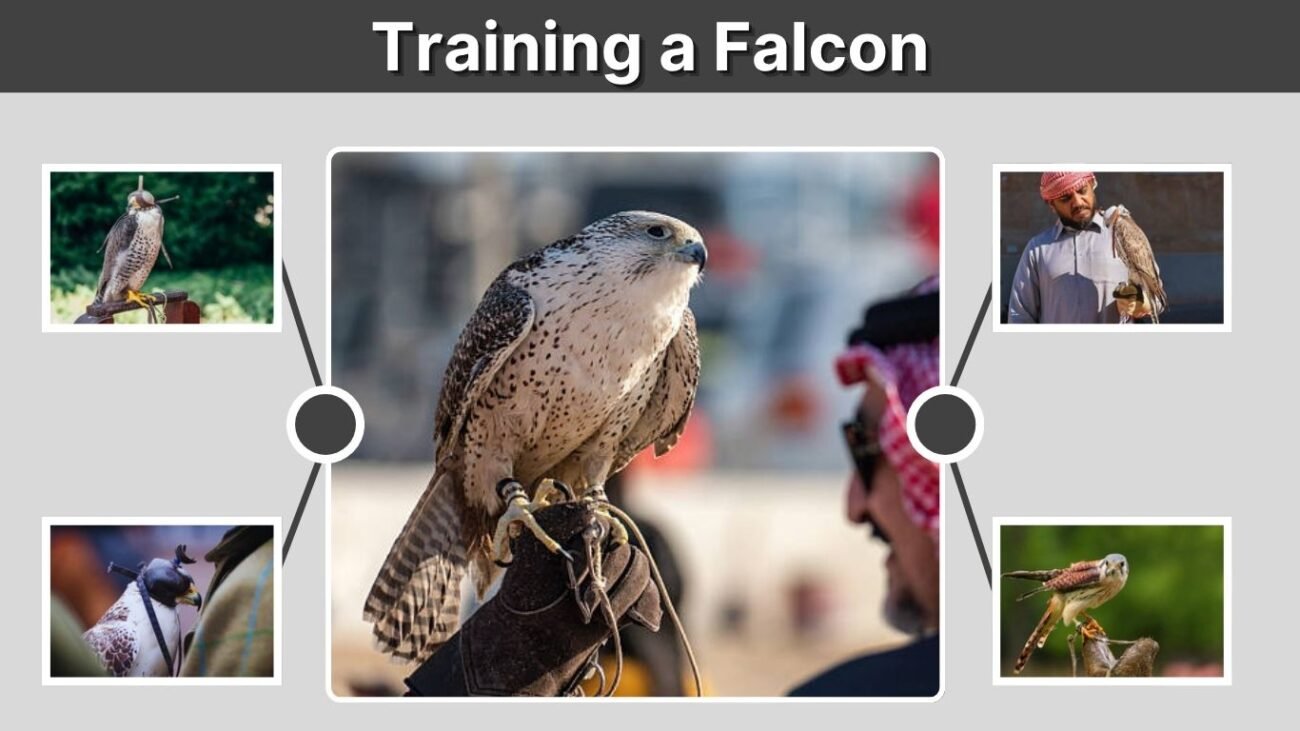
The Basics of Falconry Training
Training a falcon requires patience, precision, and deep respect. The first step is manning — helping the bird get accustomed to human presence, noise, and handling. Gradually, the falcon learns to associate the falconer’s glove with safety and food rewards.
Tools like hoods and jesses (leather straps) help manage behavior without stress. Over time, the falcon learns to fly short distances to the glove for food, building trust and cooperation. Training sessions are brief but frequent, emphasizing consistency over intensity.
Advanced Hunting and Flight Techniques
Once a falcon reliably returns to its handler, advanced training begins. This includes flying at greater distances and pursuing live prey under controlled conditions. The falcon learns to follow lures — pieces of meat tied to a rope — which simulate prey and sharpen reaction speed.
Successful falconry depends on maintaining the bird’s physical condition and mental focus. A falcon that trusts its handler will return even after hunting, a testament to the strong bond formed through disciplined training.
Falcons in Media and Popular Culture
The Maltese Falcon & Cultural Symbolism
Falcons have long symbolized nobility, precision, and freedom. In literature and film, The Maltese Falcon (1941) starring Peter Lorre and Humphrey Bogart popularized the bird as a symbol of mystery and desire. The falcon statue in the movie represented wealth, greed, and obsession — qualities that contrast sharply with the bird’s natural grace and purity.
Modern Depictions in Film and Art
More recent films like The Peanut Butter Falcon use the bird metaphorically — representing independence, courage, and self-discovery. Falcons frequently appear in heraldry, logos, and artworks, symbolizing speed, power, and vision. Their image endures as an emblem of human admiration for wild strength and focus.
Conservation and Protection of Falcons
Threats to Falcon Populations
Although many falcon species have recovered from past declines, several remain threatened by habitat destruction, hunting, and illegal wildlife trade. The use of pesticides like DDT in the mid-20th century nearly wiped out the Peregrine Falcon population. Modern threats include collisions with man-made structures, pollution, and climate change affecting migration routes.
Conservation Success Stories
The ban on DDT and extensive breeding programs have led to one of conservation’s greatest success stories: the return of the Peregrine Falcon. Today, these birds thrive even in major cities like New York and London, nesting on skyscrapers and bridges. Organizations worldwide now promote responsible falconry and protect natural habitats to ensure future generations can witness these magnificent birds in flight.
Interesting Facts About Falcons
- The Peregrine Falcon’s dive, or “stoop,” reaches over 240 mph — faster than any other creature on Earth.
- Falcons can see ultraviolet light, helping them detect prey trails invisible to humans.
- In ancient Egypt, the falcon-headed god Horus represented protection and divine power.
- Falcons have special nostril structures that allow them to breathe easily during high-speed dives.
- Modern airports often employ trained falcons to scare away smaller birds, preventing airplane collisions.
Key Takeaways
- Falcons are intelligent, high-speed hunters with unmatched vision and precision.
- Legally owning a falcon requires extensive training, permits, and responsibility.
- Caring for a falcon involves costly food, housing, and healthcare.
- Falcons hold symbolic importance in culture and history, representing power and freedom.
- Conservation efforts have successfully restored several endangered falcon species.
FAQs
Are falcons legal to keep as pets?
In most countries, falcons cannot be kept as pets without proper licensing. Only trained and certified falconers can own them under strict regulations. Unauthorized ownership can lead to heavy fines or imprisonment, as these birds are protected under international wildlife laws.
How much does a pet falcon cost?
The cost of a falcon ranges from $2,000 for small species like kestrels to over $10,000 for rare birds like Gyrfalcons. Permits, housing, and equipment add significantly to expenses, making falcon ownership one of the most expensive avian pursuits.
What do falcons eat?
Falcons are carnivorous birds that primarily eat smaller birds, rodents, and insects. In captivity, their diet includes raw meat such as quail, mice, and chicks, maintaining the same nutritional value as their wild prey.
Can a falcon bond with humans?
Falcons can recognize and respond to their handlers, but their “bond” differs from typical pet affection. It’s based on trust, routine, and consistent training rather than emotional attachment. They remain instinctively wild and independent.
How long do falcons live?
Wild falcons live about 12–15 years, while captive ones can survive up to 20 years due to regular feeding, protection, and veterinary care. Proper management ensures longer life and sustained performance in trained falcons.


