











Falcons are among the most fascinating birds of prey, admired for their speed, precision, and hunting skill. These raptors are carnivorous predators that occupy a vital role in maintaining ecological balance. Depending on their environment and species, falcons feed on a diverse range of prey—from small birds and rodents to insects and reptiles. Understanding what falcons eat provides insight into how they survive, adapt, and thrive across continents.
Overview of Falcon Diet

General Eating Habits
Falcons are obligate carnivores, meaning their diet consists entirely of meat. They rely on sharp eyesight and powerful flight to locate, chase, and capture prey. While most falcons prefer small to medium-sized birds, their diets vary depending on the region, prey availability, and the falcon’s size. Urban falcons often feast on city pigeons, while rural species may target songbirds, small mammals, or reptiles.
Falcons do not scavenge like vultures or consume carrion; they prefer to hunt live prey. Their excellent vision—eight times sharper than a human’s—allows them to spot a moving animal from hundreds of feet away. Once a target is identified, they dive at breathtaking speeds to secure their meal.
Key Prey Categories
Falcons have an incredibly diverse diet across different habitats. Below are the most common categories of prey falcons feed on:
- Birds: Falcons are specialized bird hunters. They commonly capture pigeons, doves, starlings, sparrows, and waterfowl mid-flight.
- Rodents: Mice, voles, and rats are a significant part of the diet for smaller falcons such as kestrels.
- Insects: Species like the American Kestrel consume beetles, crickets, grasshoppers, and dragonflies.
- Reptiles and Amphibians: Some falcons eat small lizards, snakes, or frogs when available.
- Occasional Mammals or Fish: Larger falcons may also hunt rabbits or catch fish near coasts and rivers.
This variety allows falcons to adapt easily to changing ecosystems and food sources, ensuring their survival even when certain prey populations decline.
How Falcons Hunt Their Prey
Hunting Techniques and Speed
Falcons are renowned for their breathtaking aerial skills. The most impressive technique used by falcons is the “stoop dive.” During a stoop, the falcon soars to a high altitude, spots its prey, and dives at incredible speeds—sometimes exceeding 200 miles per hour. This technique is primarily used by the Peregrine Falcon, making it the fastest bird and one of the fastest animals on Earth.
Once close to the target, the falcon strikes with its talons or wings, stunning the prey instantly. They often catch birds mid-flight, a skill requiring perfect timing and immense power.
Tools of the Hunt – Beak and Talons
A falcon’s anatomy is built for efficient hunting. Their sharp, curved talons are designed to grasp and hold onto struggling prey. Unlike hawks or eagles that crush prey with their talons, falcons rely more on speed and precision.
Their hooked beak features a distinctive “tooth-like notch” known as the tomial tooth, which helps sever the spinal cord of small animals swiftly, ensuring a quick and humane kill. This adaptation allows falcons to consume prey mid-air or on a perch soon after capture.
Diet of Different Falcon Species

Falcons are found worldwide, from arctic tundras to tropical deserts, and their diets differ widely among species. Below are examples of how various falcons adapt their feeding habits based on environment and prey size.
Peregrine Falcon
The Peregrine Falcon is perhaps the most famous bird of prey, renowned for its lightning-fast stoops. It feeds primarily on medium-sized birds, such as pigeons, ducks, shorebirds, and songbirds. Peregrines are known to hunt over cities, cliffs, and coastlines. Urban peregrines often focus on abundant pigeon populations, while wild ones chase migratory birds across open skies.
A single peregrine can consume one or two birds a day, depending on size. They often cache leftovers in rock crevices or building ledges for future meals.
Gyrfalcon
The Gyrfalcon, the world’s largest falcon, inhabits the Arctic and subarctic regions. Because of the harsh climate, its prey mainly consists of ptarmigans, ducks, seabirds, and snow buntings. When bird prey is scarce, gyrfalcons may hunt small mammals such as hares or lemmings. Their powerful bodies allow them to pursue larger animals than most falcon species.
Unlike peregrines that rely on high dives, gyrfalcons typically chase prey in level flight, demonstrating endurance rather than speed.
American Kestrel
The American Kestrel, the smallest falcon in North America, feeds on a more varied diet that includes insects, small rodents, and tiny birds. During summer, insects make up the majority of its diet, while in colder months, kestrels shift to mice and voles. Their light weight allows them to hover in the air, scanning for movement below before swooping down for the kill.
Merlin Falcon
The Merlin Falcon is a small, compact bird known for its speed and agility rather than height. It primarily feeds on small songbirds such as sparrows, finches, and larks. Merlins hunt using a unique tactic — instead of diving from great heights, they chase their prey in low, fast flights through trees or open grasslands.
They are also opportunistic hunters, sometimes catching bats, large insects, or even small mammals. Their hunting style is energetic and persistent, often resulting in extended aerial pursuits.
Lanner and Saker Falcons
The Lanner Falcon, native to Africa and parts of southern Europe, feeds on pigeons, doves, and small rodents. It hunts in open areas, using cooperative tactics when paired — one falcon drives a flock of birds toward the other for an ambush.
Similarly, the Saker Falcon, found across central Asia, preys on ground-dwelling birds like partridges and small mammals such as squirrels and hares. Sakers are powerful hunters and are often used in traditional falconry for their endurance and adaptability.
Both species show how falcons have evolved unique hunting behaviors to suit their surroundings and prey types.
Seasonal and Habitat-Based Diet Changes
Adaptation to Environment
Falcons are found on every continent except Antarctica, and they adapt their diets according to the ecosystem they inhabit.
- Urban falcons (like peregrines) primarily feed on pigeons, starlings, and city-dwelling songbirds.
- Rural or desert falcons target rodents, reptiles, or small mammals.
- Coastal falcons occasionally hunt seabirds or even fish when available.
This adaptability is a key reason falcons have thrived in both natural and man-made environments. Their hunting strategies shift based on prey abundance — if one species of bird migrates away, falcons quickly switch to another available food source.
Seasonal Availability of Prey
Seasonal changes also influence what falcons eat.
- In spring and summer, insect-eating falcons like kestrels rely heavily on grasshoppers, beetles, and dragonflies.
- During fall and winter, when insects vanish, they shift toward small mammals or resident birds.
- Migratory falcons time their movements with the migration of prey species, ensuring food availability throughout the year.
In colder climates, some falcons cache food in hidden spots to help them survive harsh winters when prey becomes scarce.
How Much Falcons Eat Daily
The amount a falcon eats depends on its size, age, and activity level. On average, adult falcons consume 10–15% of their body weight in food daily. For example, a peregrine weighing about 2 pounds may eat around 4 ounces of meat per day.
- Adult falcons typically eat once or twice daily, depending on prey size.
- Young falcons (eyases) require more frequent feeding—up to 5 or 6 times daily—to sustain rapid growth.
Falcons sometimes store extra prey, a behavior called caching, which allows them to eat later when food is unavailable. This practice is common in areas with unpredictable weather or limited prey during winter.
Role of Falcons in the Ecosystem
Controlling Bird and Rodent Populations
Falcons play a critical ecological role as natural pest controllers. By preying on pigeons, starlings, rodents, and insects, they help maintain a balance in population levels that could otherwise damage crops or spread disease.
In cities, peregrine falcons have become essential in controlling urban pigeon populations. Farmers also appreciate kestrels for reducing rodent infestations naturally, minimizing the need for harmful pesticides.
Indicator of Environmental Health
Because falcons occupy the top of the food chain, their diet reflects the overall health of an ecosystem. A decline in falcon populations often indicates pollution, habitat loss, or pesticide contamination affecting their prey. Conservationists frequently study falcon feeding patterns to monitor environmental quality and biodiversity.
Human Interaction and Feeding in Captivity
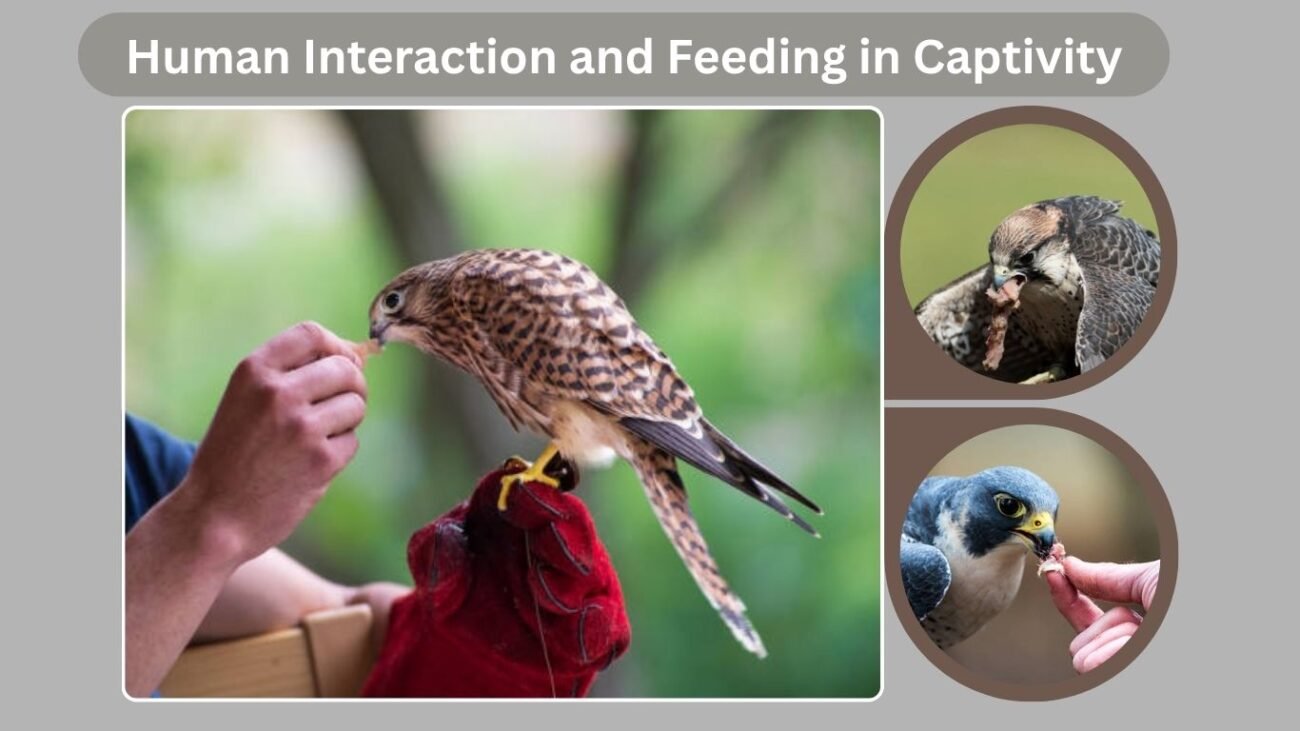
Diet in Falconry
In falconry, trained falcons are provided diets that replicate their natural feeding habits. Common food includes quails, chicks, mice, and rats, ensuring they receive the necessary protein and nutrients. The feeding schedule is carefully managed to keep falcons healthy and responsive during training and hunting sessions.
Falconers also weigh their birds regularly, as body weight affects flight performance and hunting motivation. A healthy, well-fed falcon remains alert and efficient.
Differences from Wild Diet
Captive falcons do not experience the same variety as wild falcons, as their prey is pre-selected and controlled. However, the diet is nutritionally balanced to maintain strength, feather quality, and stamina. Wild falcons, on the other hand, may face periods of feast or famine depending on weather and prey availability.
Key Takeaways
- Falcons are carnivorous raptors feeding primarily on birds, rodents, and small animals.
- Diet varies by species and habitat — from insects for kestrels to large birds for peregrines.
- Falcons use speed, precision, and aerial agility rather than strength to hunt.
- They adapt their diet based on seasonal and environmental changes.
- Their feeding habits help control prey populations and indicate environmental health.
FAQs
Do falcons eat other birds?
Yes, most falcon species primarily eat smaller birds. Peregrine falcons, in particular, are skilled at catching pigeons, doves, and songbirds mid-flight using high-speed dives. Their sharp talons and exceptional accuracy make them expert avian hunters.
Do falcons eat rodents or mammals?
Yes. Falcons such as kestrels and sakers often eat rodents like mice, voles, and rats. In harsh regions where birds are scarce, larger falcons may also prey on rabbits or hares, providing them with essential nutrients and energy.
How often do falcons eat in a day?
Adult falcons generally eat once or twice daily, depending on prey size and hunting success. Juvenile falcons require more frequent meals to support rapid growth, while adults may go a day without food if they have recently eaten a large prey item.
Do falcons eat reptiles or insects?
Yes, especially smaller species like kestrels. They frequently eat grasshoppers, beetles, and small lizards, particularly during warm months when such prey is abundant. This flexible diet allows falcons to survive in diverse habitats, from deserts to farmlands.
What is a falcon’s favorite food?
While preferences differ among species, most falcons favor small to medium-sized birds. Peregrine falcons prefer pigeons and ducks, kestrels enjoy rodents and insects, and gyrfalcons often favor ptarmigans and ducks in Arctic regions.


