











The Eastern Bluebird (Sialia sialis) is one of North America’s most beloved songbirds, recognized for its bright blue plumage and cheerful disposition. Often symbolizing happiness and renewal, this bird graces open meadows, orchards, and suburban gardens. Both male and female bluebirds display gentle behavior and a melodious song, making them a favorite among birdwatchers. This article explores their identification, habitat, behavior, diet, and nesting habits in detail.
Identification and Physical Characteristics

Here are the key features to help identify the Eastern Bluebird in the wild:
- Scientific Name: Sialia sialis – a small member of the thrush family, related to robins.
- Size: About 6.5–7 inches long, with a wingspan of 9–12 inches.
- Weight: Typically weighs between 25–30 grams.
- Body Shape: Rounded head, slender body, and short, straight beak ideal for catching insects.
Habitat and Range
Preferred Environment
Eastern Bluebirds prefer open areas with scattered trees, short grass, and minimal underbrush. Ideal locations include pastures, farmlands, orchards, golf courses, and large lawns. They rely heavily on open ground to spot and capture insects. While once common throughout the countryside, they faced decline due to competition from non-native birds like starlings and house sparrows — but conservation efforts and birdhouses have revived their populations.
Geographic Range
The range of the Eastern Bluebird spans across the eastern and central United States, parts of southern Canada, and down into Mexico. They are especially abundant in states like Texas, Georgia, Florida, and Maine, where mild winters and suitable habitats exist. Bluebirds tend to occupy open woodlands and rural areas rather than dense forests, staying near edges where they can easily find food and nesting sites.
Wintering Areas
While many bluebirds are permanent residents in southern regions, northern populations migrate southward as temperatures drop. In states like Maine and New York, most migrate to warmer areas such as Florida or the Gulf Coast during winter. However, if food sources like berries and mealworms remain available, bluebirds may stay year-round, forming small flocks that roost together for warmth.
Behavior and Vocalization
Eastern Bluebird Song
The Eastern Bluebird’s song is a series of soft, warbling notes — a gentle “cheer-cheerful-chur.” Males sing more frequently during breeding season to attract mates and mark territory. The female Eastern Bluebird also sings occasionally, usually near the nest. Their song is often described as soothing and hopeful, echoing across meadows and open fields, signaling the arrival of spring.
Social and Mating Behavior
Eastern Bluebirds are known for their calm and social nature. They form monogamous pairs during the breeding season, and though they may not stay together for life, some pairs reunite year after year. Males perform courtship displays by fluttering their wings, offering nest materials, and singing from perches near potential nesting sites. The pair then cooperatively builds and defends their territory.
Daily Activity Patterns
Bluebirds are diurnal, meaning they are active during the day. They spend mornings feeding and afternoons preening or sunbathing on open perches. Their keen eyesight allows them to spot insects from several yards away, swooping down gracefully to catch them. Bluebirds are also known to take brief dust baths to keep their feathers clean and parasite-free.
Nesting and Reproduction

Nesting Sites and Materials
Eastern Bluebirds are cavity nesters, meaning they prefer natural holes in trees or artificial nest boxes. The female typically constructs the nest using grass, pine needles, and feathers, forming a neat cup shape inside the cavity. They may reuse the same nest site for multiple broods in a season if conditions remain safe.
Birdhouses and Nest Boxes
Because natural cavities have become scarce, bird enthusiasts often build or install Eastern Bluebird houses or nest boxes. The ideal box has an entrance hole about 1.5 inches wide, a depth of 8–10 inches, and should be mounted 4–6 feet above the ground facing an open area. Placing several boxes 100–150 feet apart reduces competition and encourages multiple breeding pairs.
Diet and Feeding Habits
What Do Eastern Bluebirds Eat?
The Eastern Bluebird diet primarily consists of insects, making them valuable for natural pest control. During spring and summer, they feed on beetles, caterpillars, grasshoppers, spiders, and crickets. They often perch low on fences or branches and swoop down to capture prey. In colder months, when insects are scarce, they switch to berries such as holly, juniper, and dogwood, providing vital energy throughout winter.
Feeding Eastern Bluebirds at Home
Attracting bluebirds to your yard is easier than many believe. Offering mealworms — either live or dried — is one of the best ways to invite them. Platform feeders or mealworm-specific feeders work best since bluebirds do not typically use hanging seed feeders. They also appreciate shallow water sources for bathing and drinking. Avoid feeding them bread or processed foods, which lack nutrition. Keeping feeders clean and away from predators ensures safe feeding habits.
Predators and Threats
Common Predators
Despite their gentle nature, Eastern Bluebirds face threats from both predators and competitors. Snakes, raccoons, cats, and squirrels may invade nests to steal eggs or young. House sparrows and European starlings are particularly aggressive competitors, often driving bluebirds out of their nest boxes. Installing predator guards, choosing safe box locations, and regular monitoring help ensure bluebird safety.
Conservation and Protection
By the mid-20th century, Eastern Bluebird numbers declined due to habitat loss and invasive species. Thankfully, conservation programs like the North American Bluebird Society promoted nest box trails and awareness campaigns, leading to a strong recovery. Today, the species is listed as Least Concern by the IUCN, but continued habitat protection remains vital for sustaining healthy populations.
Migration and Seasonal Changes
Migration Patterns
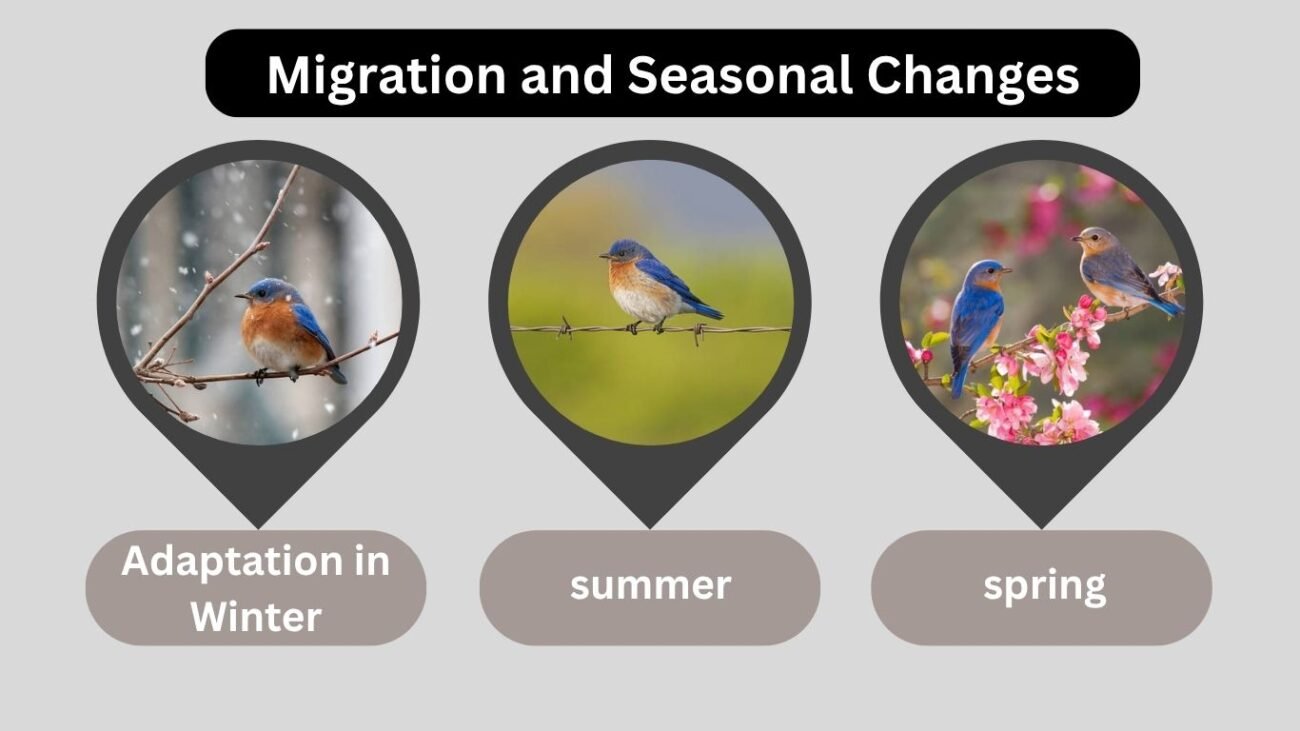
The migration behavior of Eastern Bluebirds varies by region. Northern populations migrate southward to avoid freezing conditions, while southern birds remain year-round residents. Migration is relatively short-distance — often only a few hundred miles — and bluebirds travel in family groups. They typically migrate in September or October and return north by early March.
Adaptation in Winter
During winter, Eastern Bluebirds form small flocks, roosting together in tree cavities or birdhouses for warmth. They adjust their diet from insects to fruits and berries and may even visit feeders during harsh weather. Observing Eastern Bluebirds in winter is particularly heartwarming — their bright plumage contrasts beautifully with snow-covered landscapes, symbolizing endurance and hope.
Symbolism and Spiritual Meaning
Cultural Symbolism
The Eastern Bluebird has long been a symbol of happiness, hope, and renewal. In Native American and European folklore, seeing a bluebird was considered a good omen — a sign of positive change or love on the horizon. The phrase “bluebird of happiness” has appeared in poetry, art, and song, representing inner peace and joy. Its soothing song and gentle demeanor have made it a timeless emblem of tranquility.
Modern Interpretations
In today’s culture, Eastern Bluebird tattoos often symbolize optimism, freedom, and the pursuit of happiness. Spiritualists associate them with communication from loved ones or a message of encouragement. Whether seen in nature or art, the Eastern Bluebird continues to remind us of beauty, calm, and resilience — qualities worth cherishing in everyday life.
Comparison with Other Bluebird Species
Eastern vs Western Bluebird
While both species share similar size and shape, the Eastern Bluebird has a reddish-brown throat and chest, while the Western Bluebird’s throat is blue. The Eastern species prefers open fields, whereas the Western one inhabits woodlands and mountain slopes. Their songs also differ slightly — the Eastern Bluebird’s melody is softer and more musical.
Eastern vs Mountain Bluebird
The Mountain Bluebird is entirely sky-blue, lacking the reddish breast of the Eastern species. It tends to live in high-altitude regions and open prairies. Observing these species side by side highlights the beauty of regional adaptation among bluebirds across North America.
Key Takeaways
- The Eastern Bluebird (Sialia sialis) is a brightly colored, insect-eating songbird found across eastern North America.
- Males display vivid blue and rust tones, while females are softer in color for camouflage.
- They prefer open fields and meadows with scattered trees for nesting and hunting.
- Their diet includes insects in summer and berries in winter.
- Symbolically, they represent joy, hope, and renewal — truly the “bluebird of happiness.”
FAQs
What is the scientific name of the Eastern Bluebird?
The scientific name is Sialia sialis. It belongs to the thrush family (Turdidae), closely related to robins and other insect-eating songbirds.
Do Eastern Bluebirds migrate every year?
Not all do. Northern bluebirds migrate south during winter, while southern populations remain resident. Their migration depends on temperature and food availability.
How can I attract Eastern Bluebirds to my yard?
Install a nest box facing open areas, provide live mealworms, and maintain clean water sources. Avoid pesticides, as they reduce insect food sources that bluebirds depend on.
How do male and female Eastern Bluebirds differ?
Males are bright blue with a rust-orange chest and white belly, while females are paler with grayish-blue wings. The difference helps females stay less visible while nesting.
What do Eastern Bluebirds symbolize spiritually?
They symbolize happiness, renewal, and peace. Many cultures view them as messengers of hope and positive energy, often associated with the coming of spring.


