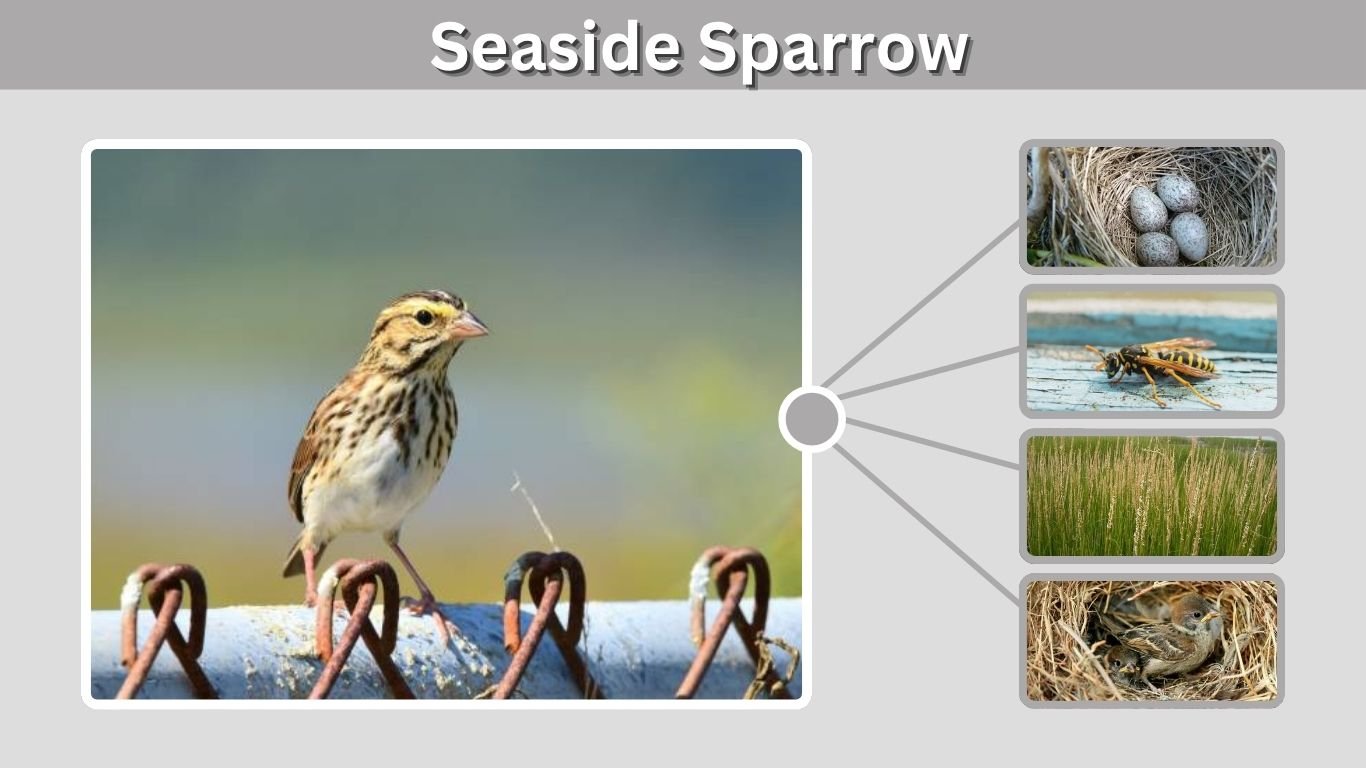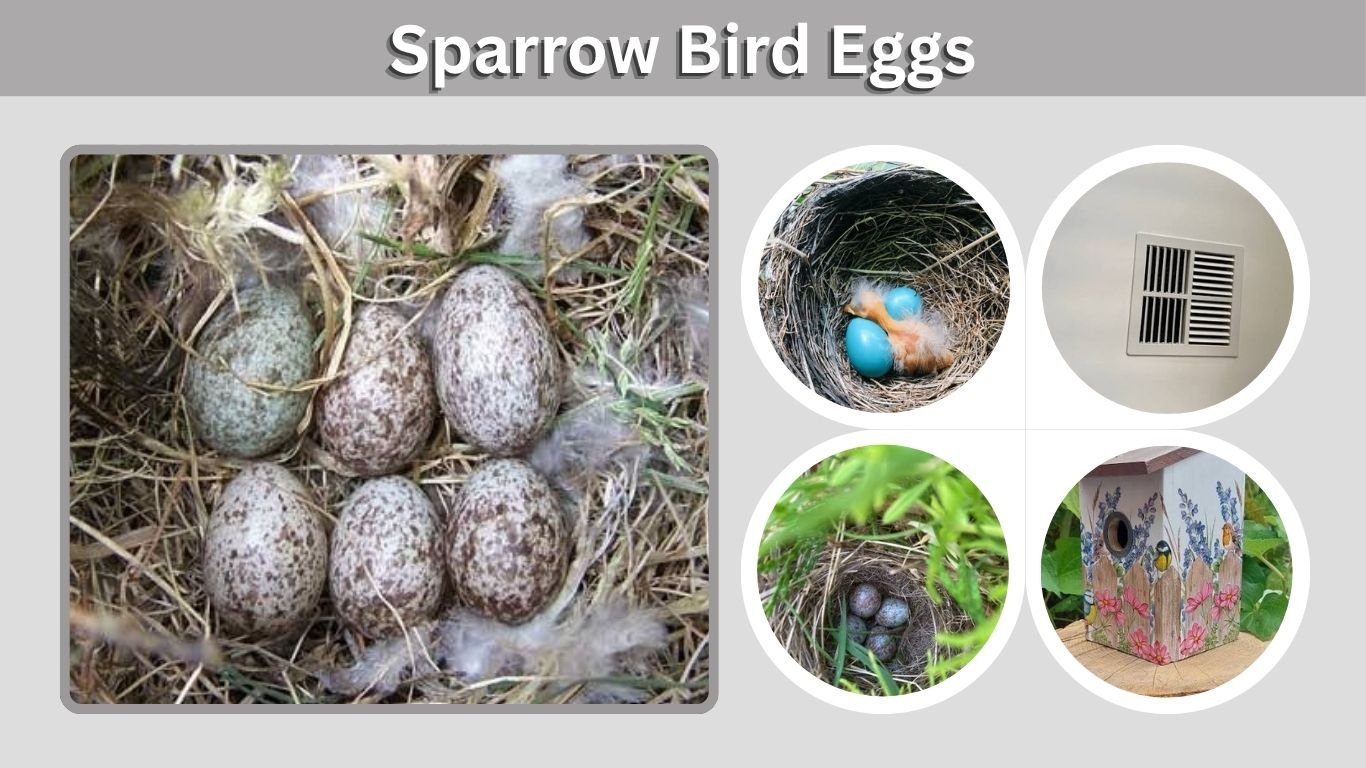
Sparrow bird eggs are usually small, oval, and lightly colored with brown, gray, or darker speckles. The most commonly noticed eggs around homes are House Sparrow eggs, because House Sparrows often nest in roof gaps, vents, wall cavities, nest boxes, signs, and other human-made spaces. Their eggs can look white, greenish-white, or bluish-white with gray or brown spotting, which can confuse people trying to identify backyard bird eggs.
What Do Sparrow Bird Eggs Look Like?
Sparrow eggs vary by species, but many are pale and marked with speckles. House Sparrow eggs are the most searched because this species lives close to people and nests around buildings. Cornell lists House Sparrow eggs as light white to greenish white or bluish white, usually spotted with gray or brown.
Sparrow Egg Identification
- Small oval eggs
- Usually pale white, grayish, greenish-white, or bluish-white
- Often marked with brown, gray, or darker speckles
- Usually laid in a cup-shaped or cavity nest
- Commonly found in roof spaces, boxes, vents, shrubs, or building gaps
- Often appear in a clutch rather than as a single egg
Egg color alone is not enough for perfect identification. Nest location, nest material, egg markings, adult bird behavior, and local species all matter.
House Sparrow Bird Egg Identification Chart
House Sparrow eggs are small and variable. Some clutches look mostly white with light speckles, while others look heavily marked and darker. A single nest may contain eggs with slightly different spotting patterns.
| Feature | House Sparrow Eggs |
| Egg color | White, greenish-white, or bluish-white |
| Markings | Gray or brown spots/speckles |
| Egg length | 0.8–0.9 in / 2–2.2 cm |
| Egg width | About 0.6 in / 1.4–1.6 cm |
| Clutch size | 1–8 eggs |
| Incubation period | 10–14 days |
| Nestling period | 10–14 days |
| Broods per year | 1–4 broods |
These measurements and nesting facts are listed by Cornell Lab’s All About Birds for the House Sparrow.
Sparrow Small White Bird Eggs
Many people search for “sparrow small white bird eggs” because House Sparrow eggs often look pale from a distance. However, they are rarely plain white like tiny pearls. Most have at least some gray, tan, brown, or dark speckling.
Are Sparrow Eggs White or Blue?
House Sparrow eggs may be white, greenish-white, or bluish-white with spots. This is why someone may think a House Sparrow laid blue eggs. But bright, clean blue eggs can belong to other birds. For example, Eastern Bluebird eggs are usually pale blue, and American Robin eggs are sky blue to blue-green and unmarked.
So, if the eggs are bluish-white with brown spots, House Sparrow is possible. If they are smooth bright blue with no spots, another bird may be more likely.
Where Do Sparrows Lay Eggs?
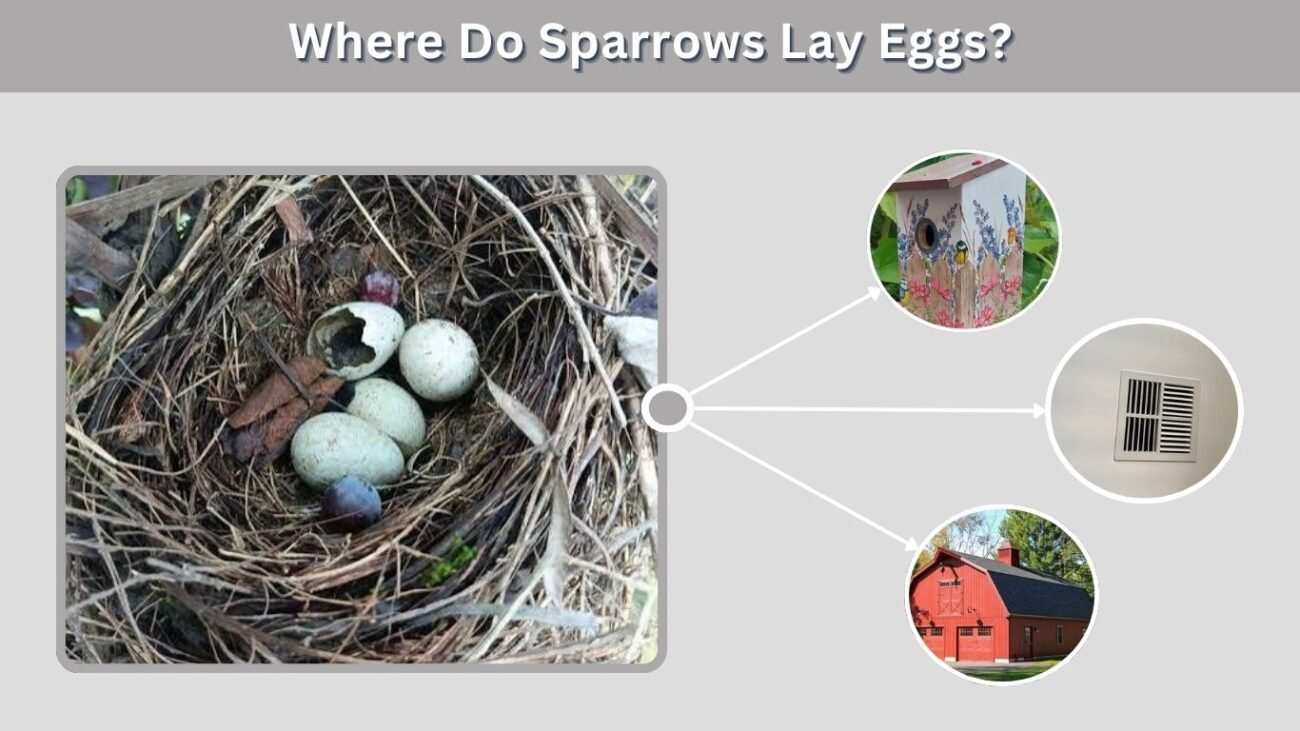
House Sparrows usually nest close to people. They may use holes, cracks, roof spaces, signs, streetlights, nest boxes, vents, barns, and other sheltered cavities. The RSPB notes that House Sparrows like holes or crevices in buildings, but they may also use hedges or nest boxes.
Common Nesting Places
- Building holes and wall gaps
- Roof edges and eaves
- Vents and signs
- Barns, sheds, and garages
- Nest boxes
- Dense shrubs or hedges
- Streetlights or outdoor fixtures
House Sparrow nests are usually bulky and messy compared with many native songbird nests. They often contain grasses, straw, feathers, paper, string, and other soft materials.
When Do Sparrow Birds Lay Eggs?
House Sparrows can breed multiple times in one season, especially where food and nesting sites are available. Cornell lists 1–4 broods per year for House Sparrows, which means the same pair may raise more than one group of chicks in a breeding season.
In many regions, nesting is most active in spring and summer. In warmer climates, breeding may begin earlier or last longer. Nest timing can change based on weather, food supply, daylight, and local conditions.
How Long Do Sparrow Bird Eggs Take to Hatch?
House Sparrow eggs usually hatch after 10–14 days of incubation. The young stay in the nest for another 10–14 days before leaving the nest.
Sparrow Egg Hatching Timeline
| Stage | Approximate Time |
| Nest building | Several days |
| Egg laying | Often one egg per day |
| Full clutch | Usually several eggs |
| Incubation | 10–14 days |
| Hatching | Chicks hatch naked and helpless |
| Nestling stage | 10–14 days |
| Fledging | Young leave the nest |
Newly hatched House Sparrows are naked, pink-skinned, blind, and helpless. They depend completely on the adults for warmth and food.
Do Sparrows Eat Other Birds’ Eggs?
Some sparrows are peaceful seed-eating birds, but House Sparrows can be aggressive around nest sites. NestWatch says House Sparrows can outcompete native cavity-nesting birds and are known to destroy nests and eggs, and kill nestlings and adults while taking over an occupied nest site.
This behavior is one reason House Sparrows are a problem in bluebird boxes and other cavity-nesting bird habitats. They may enter a nest box, damage eggs, remove nest material, or attack young birds.
Do Sparrows Lay Eggs in Other Birds’ Nests?
House Sparrows usually build or take over nests rather than acting like brood parasites. They do not normally lay eggs in another species’ nest the way cowbirds do. However, they may take over cavities or nest boxes already used by other birds.
If you find sparrow-like eggs in a nest box, check the nest structure and watch the adult birds from a distance. House Sparrows often use bulky grass nests, while bluebirds usually build neater grass or pine-needle nests. Egg color may overlap, so adult bird identification is important.
What to Do If You Find Sparrow Bird Eggs
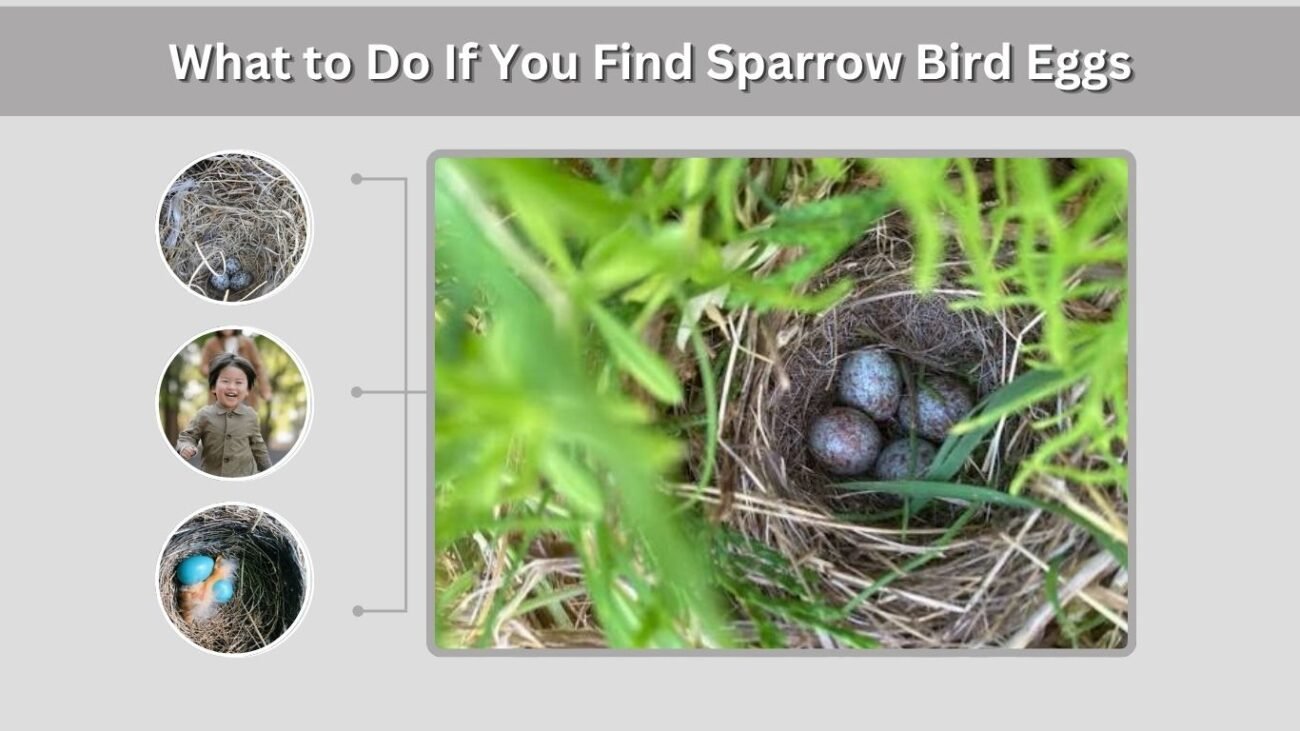
If you find small bird eggs, do not rush to touch or move them. Many active bird nests are legally protected, and disturbing eggs can harm the chicks. In the United States, the Migratory Bird Treaty Act protects many migratory bird species from being taken, killed, captured, sold, or transported without authorization.
House Sparrows are non-native in North America and are treated differently from many native birds under U.S. federal rules, but correct identification is important before taking any action. Federal Register information notes that House Sparrow belongs to a family that does not qualify for MBTA protection, but local rules and ethical bird management still matter.
Safe Steps
- Observe from a distance
- Identify the adult birds, not just the eggs
- Avoid touching active nests
- Do not move eggs to another nest
- Keep pets and children away
- Contact a local wildlife expert if unsure
Sparrow Eggs vs Other Common Bird Eggs
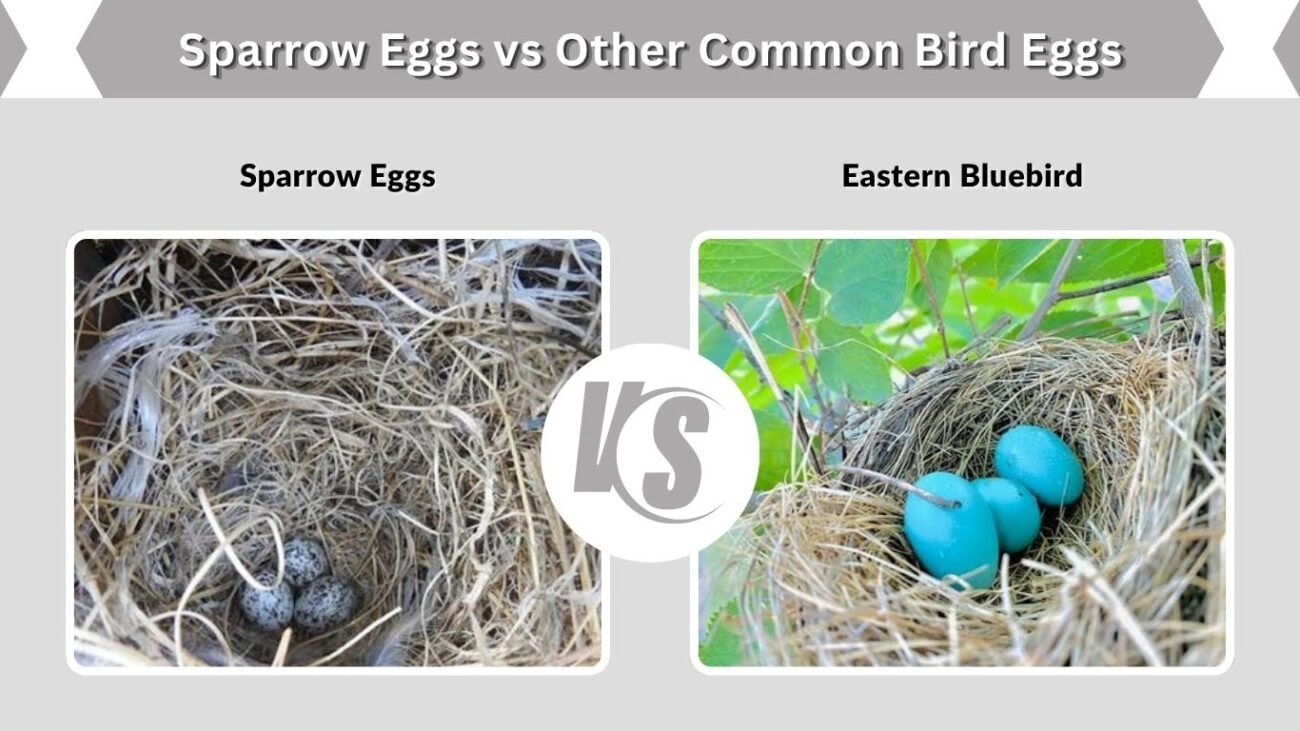
Sparrow eggs can be confused with eggs from wrens, finches, bluebirds, robins, and other backyard birds. The best clue is a combination of egg color, nest site, nest material, and adult bird activity.
| Bird | Egg Appearance | Main Difference |
| House Sparrow | White to greenish/bluish-white with gray or brown spots | Often in building gaps or nest boxes |
| Eastern Bluebird | Pale blue or rarely white | Usually cleaner blue and in cavity/nest box |
| American Robin | Sky blue or blue-green, unmarked | Larger, bright blue, open cup nest |
| Song Sparrow | Variable, often spotted | Usually in shrubs or low vegetation |
| House Finch | Pale eggs with markings | Often in ledges, wreaths, hanging plants |
Song Sparrows are an example of native sparrows with different nesting habits. NestWatch lists their incubation period as 12–15 days and notes that females build the nest, often low in vegetation.
Why Did a Sparrow Egg Turn Brown?
A sparrow egg may look darker or “turn brown” because of lighting, dirt, wet nest material, heavy speckling, or staining from the nest. Some eggs are naturally more heavily marked than others. If an egg becomes cracked, very dark, sunken, or foul-smelling, it may be damaged or no longer viable.
Avoid opening, washing, or moving eggs. Even a small change in temperature, humidity, or shell condition can affect development.
FAQs
What color are sparrow bird eggs?
Sparrow bird eggs are usually pale and speckled. House Sparrow eggs may be light white, greenish-white, or bluish-white with gray or brown spots. Other sparrow species can have different colors and markings, so nest location and adult bird identification are also important.
How long for sparrow bird eggs to hatch?
House Sparrow eggs usually hatch after about 10–14 days of incubation. After hatching, the chicks stay in the nest for another 10–14 days before fledging. Timing can vary slightly depending on weather, food supply, and local conditions.
Do sparrows lay blue eggs?
House Sparrow eggs can sometimes look bluish-white, but they are usually marked with gray or brown speckles. Bright, unmarked blue eggs may belong to another bird, such as an American Robin or Eastern Bluebird. Egg color alone should not be used for final identification.
Do sparrows eat other birds’ eggs?
House Sparrows may destroy other birds’ eggs when competing for nest boxes or cavities. They are especially aggressive around nesting sites and can harm eggs, chicks, and even adult birds during nest takeovers.
Should I move sparrow bird eggs if I find them?
No, do not move bird eggs unless a licensed wildlife professional tells you to. Many bird nests and eggs are protected, and moving eggs often causes harm. Watch from a distance, identify the adult birds, and contact a local wildlife expert if the nest is in a dangerous place.