











Deer are among the most diverse and widely distributed herbivores on Earth, found in forests, grasslands, mountains, and wetlands across the globe. Each species has unique adaptations—whether it’s the towering size of the moose, the spotted elegance of the axis deer, or the tusked appearance of the water deer. This guide highlights 19 distinct types of deer, exploring their identification, habitats, behaviors, and diets to better understand their incredible variety.
1. White-tailed Deer

The white-tailed deer is one of the most widespread and recognizable deer species in North America. Known for its iconic tail, which flashes white when alarmed, this deer thrives in a wide variety of habitats and adapts easily to human-altered landscapes.
Identification
- Reddish-brown summer coat; gray-brown winter coat
- Distinct white underside of the tail
- Slender body with long legs
- Males grow antlers that shed annually
Habitat
White-tailed deer inhabit forests, grasslands, farmlands, swamps, and suburban areas. They prefer regions with dense cover for protection and open spaces for feeding. Their adaptability allows them to flourish across North, Central, and parts of South America.
Behaviors
These deer are crepuscular, most active at dawn and dusk. White-tailed deer use their tails to signal danger and rely on keen hearing and smell to detect predators. They live in loose social groups, with females forming family units and males wandering more independently.
Diet
Their diet includes leaves, grasses, twigs, acorns, fruits, and agricultural crops. White-tailed deer are selective browsers, adjusting their diet based on seasonal availability. In winter, they rely more on woody vegetation, while summer offers abundant green plants and fruits.
2. Mule Deer

The mule deer is a well-known western North American species, easily recognized by its large, mule-like ears. It thrives in open landscapes and mountainous regions, showing strong seasonal migration patterns.
Identification
- Large, wide ears resembling those of a mule
- Black-tipped tail
- Stocky body with a gray-brown coat
- Antlers fork as they grow, forming a branching pattern
Habitat
Mule deer inhabit prairies, deserts, foothills, and mountainous areas across western North America. They prefer open terrain with access to shrubs and brush for feeding. Many populations migrate between lowland winter ranges and high-elevation summer ranges.
Behaviors
They are crepuscular, feeding mostly during dawn and dusk. Mule deer are known for their distinctive bounding gait called “stotting,” which helps them evade predators. They form small groups, with females and fawns staying together while males often roam alone outside breeding season.
Diet
Their diet includes shrubs, twigs, grasses, and forbs. Mule deer are primarily browsers, relying heavily on woody plants during winter and fresh vegetation in spring and summer. Their flexible diet helps them thrive in dry and rugged habitats.
3. Red Deer
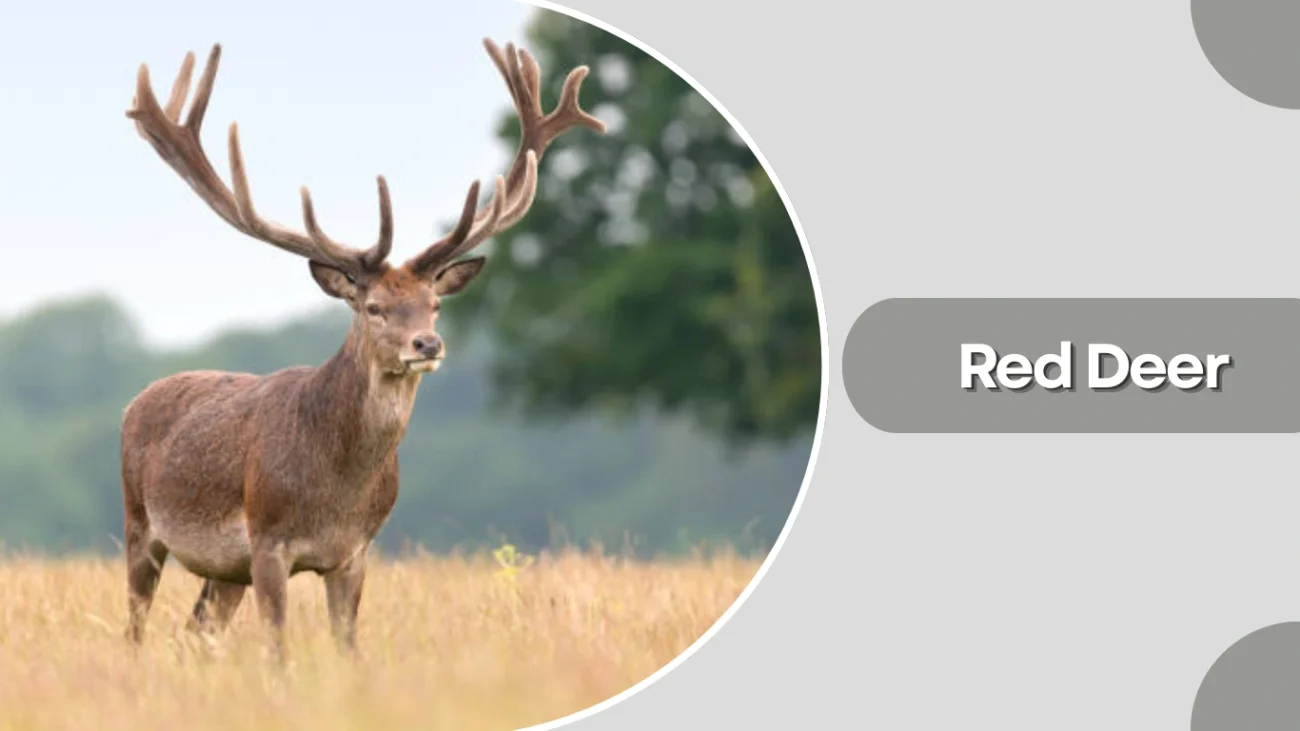
The red deer is one of the largest and most widely recognized deer species in Europe and parts of Asia. Known for its impressive antlers and reddish coat, it holds cultural significance in many regions.
Identification
- Reddish-brown summer coat, darker in winter
- Large, branching antlers on males
- Strong, muscular build
- Light rump patch contrasting with body color
Habitat
Red deer inhabit woodlands, grasslands, moorlands, and mountainous areas across Europe, the Caucasus, and parts of Asia. They prefer mixed environments with forest cover for shelter and open areas for grazing. Some populations have been introduced to New Zealand and other regions.
Behaviors
They live in separate male and female groups except during the rut. During breeding season, stags engage in vocal roaring contests and antler clashes. Red deer are crepuscular, using open areas for feeding and forests for resting and protection.
Diet
Their diet includes grasses, herbs, leaves, and shrubs. Red deer graze more than many other species but also browse when necessary. Seasonal variation influences their feeding habits, with rich summer vegetation replaced by woody plants and bark during winter.
4. Roe Deer
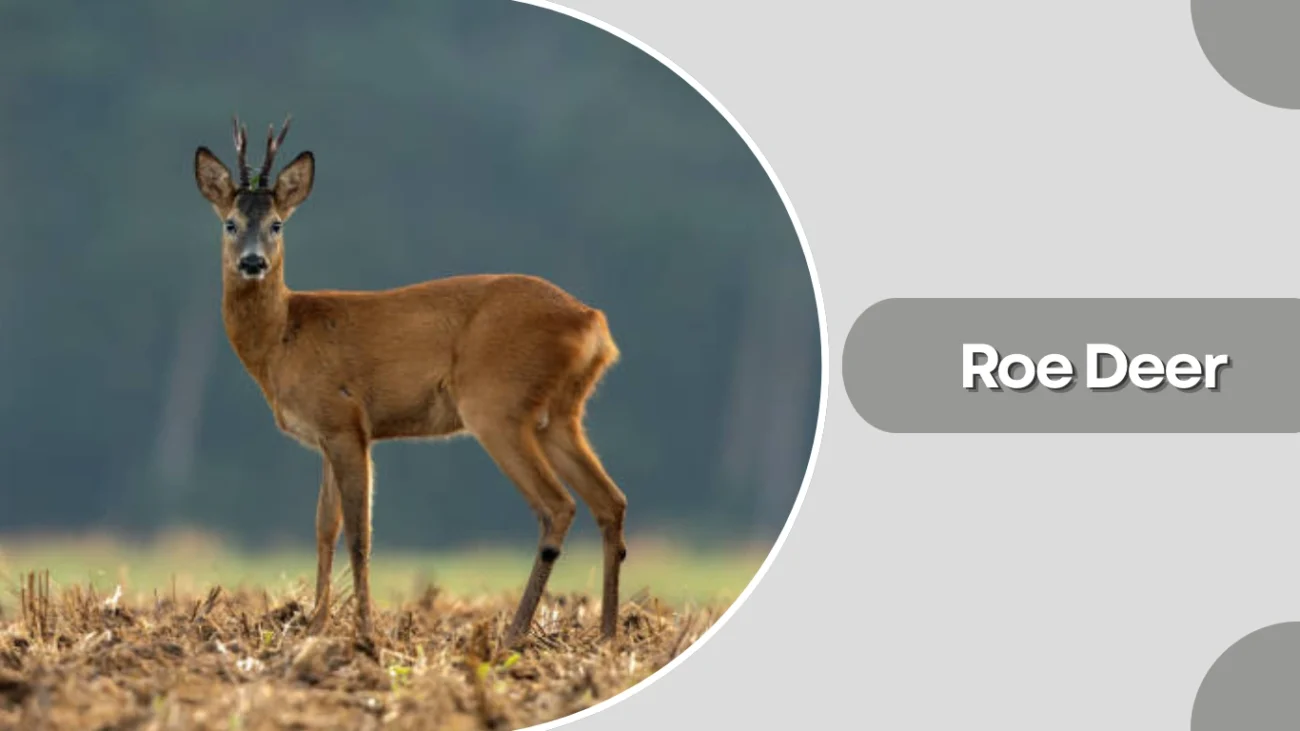
The roe deer is a small, agile deer species native to Europe and parts of Asia. Known for its delicate build and distinctive facial markings, it is highly adaptable and commonly found near woodlands and farmlands.
Identification
- Reddish-brown summer coat, grayish in winter
- Distinct black muzzle and white rump patch
- Short antlers on males, typically with 2–3 points
- Slender body and graceful movement
Habitat
Roe deer inhabit forests, woodland edges, agricultural fields, and grasslands. They prefer environments with dense cover for hiding and open areas for feeding. Their range spans much of Europe, from the Mediterranean to Scandinavia.
Behaviors
These deer are mostly solitary or travel in small family units. They are crepuscular, meaning most active during dawn and dusk. Roe deer are territorial, especially males during breeding season, and communicate with barking sounds and scent marking.
Diet
Their diet includes herbs, leaves, buds, berries, and agricultural crops. Roe deer are selective feeders, often choosing nutrient-rich plants. They adjust their diet seasonally, shifting to woody plants and evergreen vegetation during winter when food is scarce.
5. Fallow Deer
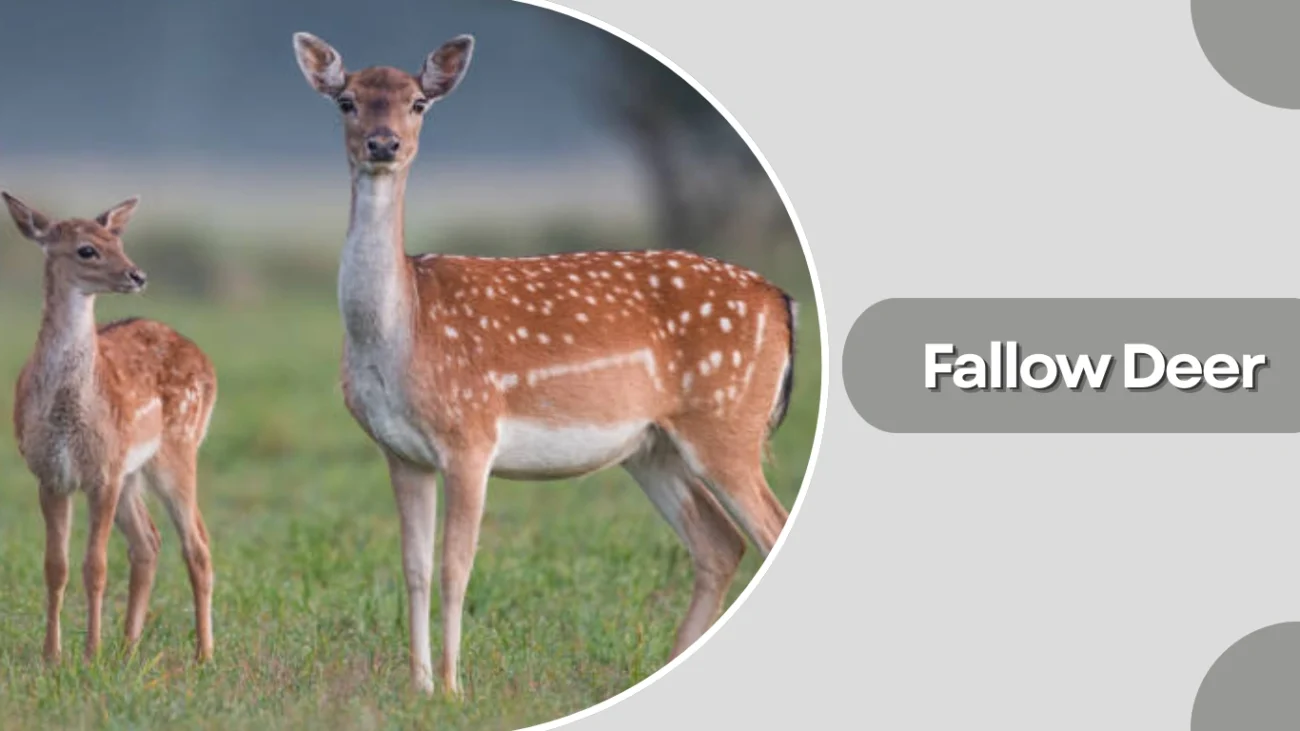
The fallow deer is a medium-sized deer species known for its variety of coat colors and distinctive palmated antlers. Native to Europe and the Middle East, it has been introduced to many regions worldwide.
Identification
- Multiple coat variations: spotted, dark brown, white, or menil (light with spots)
- Males have broad, palm-shaped antlers
- Long, slender legs and elegant body
- Distinct black dorsal stripe running down the back
Habitat
Fallow deer inhabit woodlands, grasslands, parklands, and lightly forested areas. They prefer habitats with mixed open spaces and tree cover. Due to historical introductions, they are now found in Europe, North America, Australia, and New Zealand.
Behaviors
They live in separate male and female groups for most of the year. During the rut, males compete through displays, groaning calls, and antler fights. Fallow deer are social and often seen in herds, especially in open areas where vigilance is shared.
Diet
Their diet includes grasses, herbs, leaves, acorns, and agricultural crops. Fallow deer are both grazers and browsers, adjusting their feeding style based on seasonal vegetation. Their adaptability contributes to their success in a wide range of habitats.
6. Sika Deer
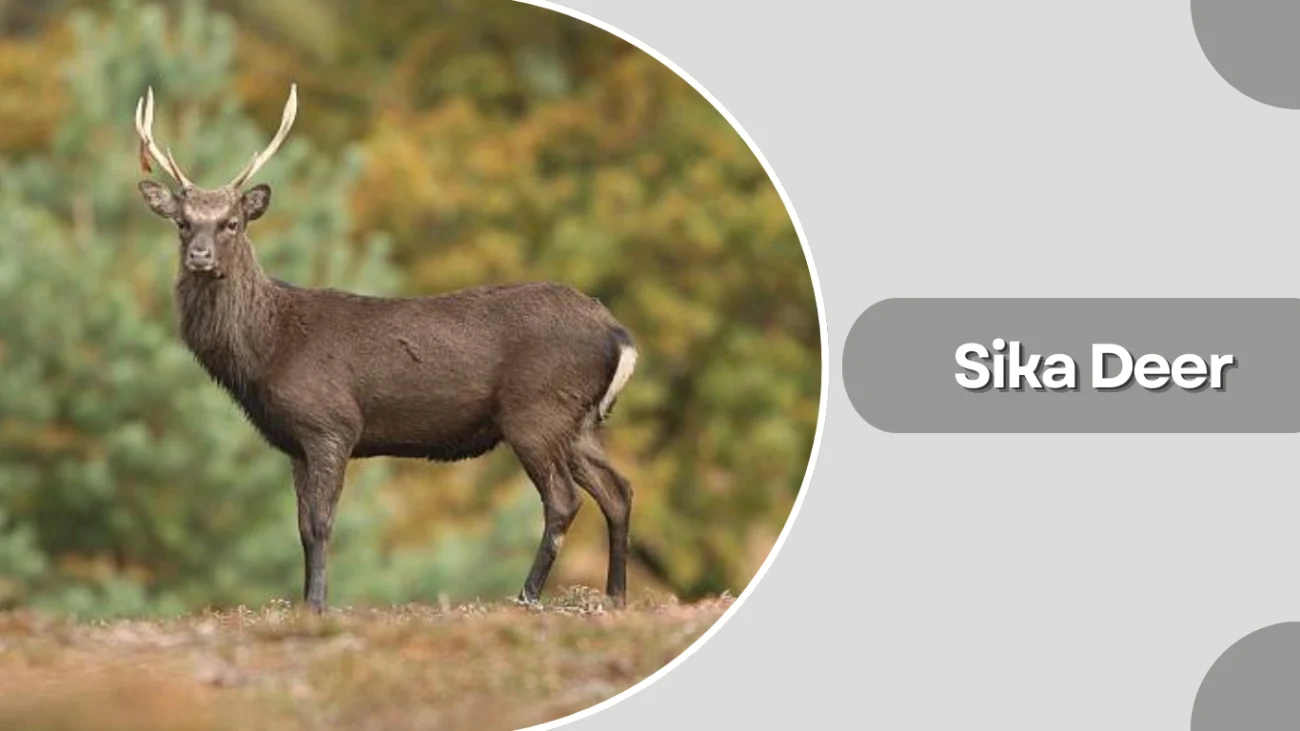
The sika deer is a small to medium-sized deer native to East Asia, known for its spotted coat and vocal nature. It has been introduced to several other countries, where it thrives in a variety of habitats.
Identification
- Chestnut coat with white spots (spots may fade in winter)
- White rump patch with black edging
- Small, branching antlers on males
- Compact body with slender legs
Habitat
Sika deer inhabit forests, wetlands, grasslands, and mountainous regions across Japan, China, Korea, and Russia. Introduced populations are found in Europe and parts of the United States. They prefer areas with dense cover and nearby open feeding spaces.
Behaviors
Highly vocal, sika deer produce whistles, screams, and barks for communication. They form small groups, and males become solitary during the rut. Their social structure varies by region, and they are known for their alertness and agility.
Diet
Their diet includes grasses, shrubs, leaves, bark, and berries. Sika deer are both grazers and browsers, adapting easily to seasonal plant availability. They may also feed in agricultural areas when natural food sources are limited.
7. Elk (Wapiti)
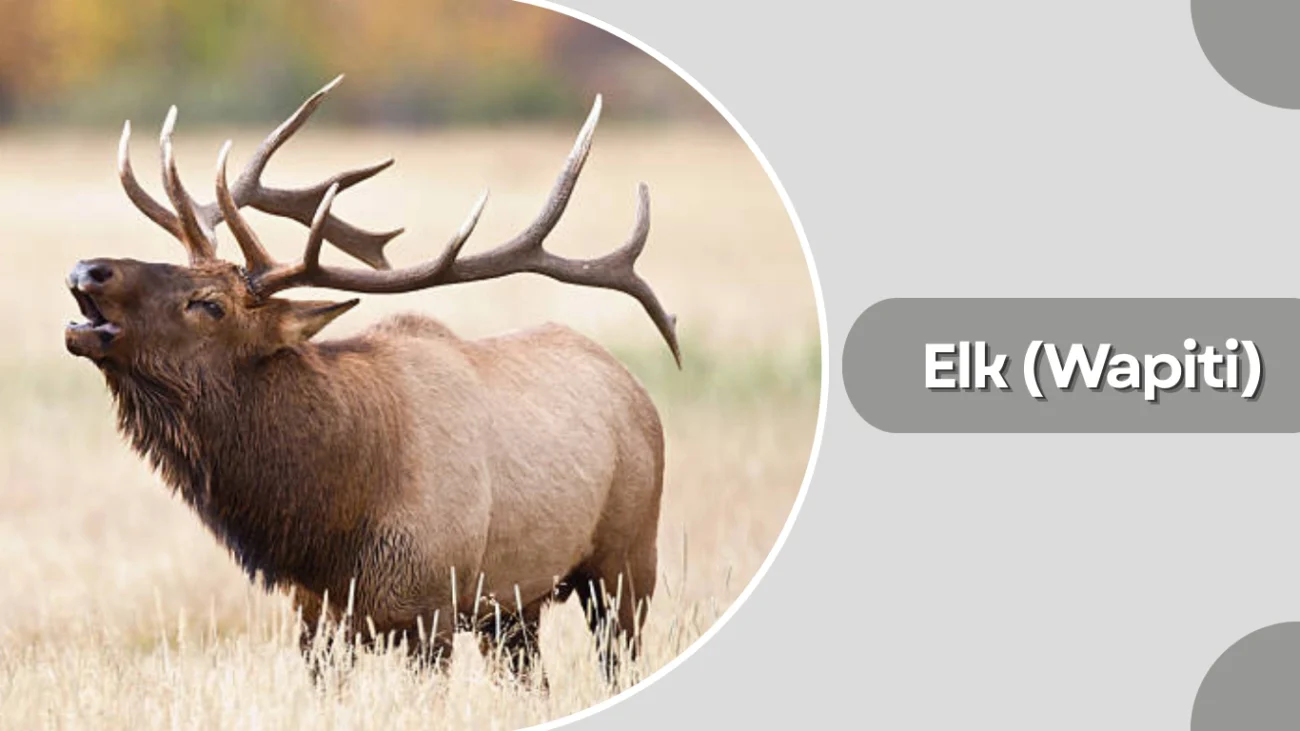
The elk, also known as the wapiti, is one of the largest deer species in the world. Famous for its impressive antlers and loud bugling calls, it is native to North America and parts of Asia.
Identification
- Large, muscular body with light brown coat
- Darker neck and mane on males
- Long, sweeping antlers that branch repeatedly
- Strong legs built for covering long distances
Habitat
Elk inhabit forests, grasslands, meadows, and mountainous regions. In North America, they are found throughout the Rocky Mountains, Pacific Northwest, and select eastern regions. They prefer areas with open grazing land bordered by tree cover for shelter.
Behaviors
Elk are highly social and live in herds. During the rut, males compete through dramatic bugling calls and antler clashes. They migrate seasonally, often moving between high-altitude summer ranges and lower winter habitats to access better food resources.
Diet
Their diet includes grasses, shrubs, bark, leaves, and agricultural crops. Elk are primarily grazers but shift to browsing when winter limits vegetation. Their strong digestive systems allow them to thrive on a wide variety of plant materials.
8. Moose

The moose is the largest member of the deer family, easily recognized by its towering size, long legs, and broad, flat antlers. It thrives in cold northern regions and wetlands with plentiful vegetation.
Identification
- Very large body with long, stilt-like legs
- Dark brown coat and distinctive humped shoulders
- Broad, palmate antlers on males
- Long, drooping nose and a dewlap (“bell”) under the throat
Habitat
Moose inhabit boreal forests, marshes, river valleys, and cold northern woodlands across North America, Europe, and Asia. They prefer wet areas with abundant aquatic plants and dense forest cover for shade and protection.
Behaviors
Generally solitary, moose are most active during dawn and dusk. They are strong swimmers and often feed in lakes or rivers. During the rut, males may become aggressive. Their movements are slow and deliberate, but they can run quickly when threatened.
Diet
Their diet includes twigs, bark, leaves, aquatic plants, and shrubs. Moose are browsers, depending heavily on woody vegetation in winter and water plants in summer. Their specialized digestive system supports their nutrient needs in cold environments.
9. Caribou (Reindeer)

The caribou, known as reindeer in Eurasia, is a highly migratory deer species adapted to Arctic and subarctic climates. It is famous for its large herds and the unique trait of both males and females growing antlers.
Identification
- Brown to gray coat with pale neck and belly
- Both sexes grow antlers; males’ are larger and more complex
- Large, rounded hooves adapted for snow and soft ground
- Stocky build with insulating fur for extreme cold
Habitat
Caribou inhabit tundra, boreal forests, and Arctic mountain regions across North America, Europe, and Asia. They rely on wide, open landscapes and migrate hundreds to thousands of miles annually to access food and avoid harsh conditions.
Behaviors
They are highly social and form large herds, especially during migration. Caribou use their hooves to dig through snow for food and communicate through vocalizations and scent. Seasonal migrations are among the longest of any terrestrial mammal.
Diet
Their diet includes lichen, grasses, mosses, shrubs, and mushrooms. In winter, caribou rely heavily on lichen found beneath snow, using their hooves to uncover it. Summer offers richer vegetation, allowing them to build fat reserves.
10. Axis Deer (Chital)
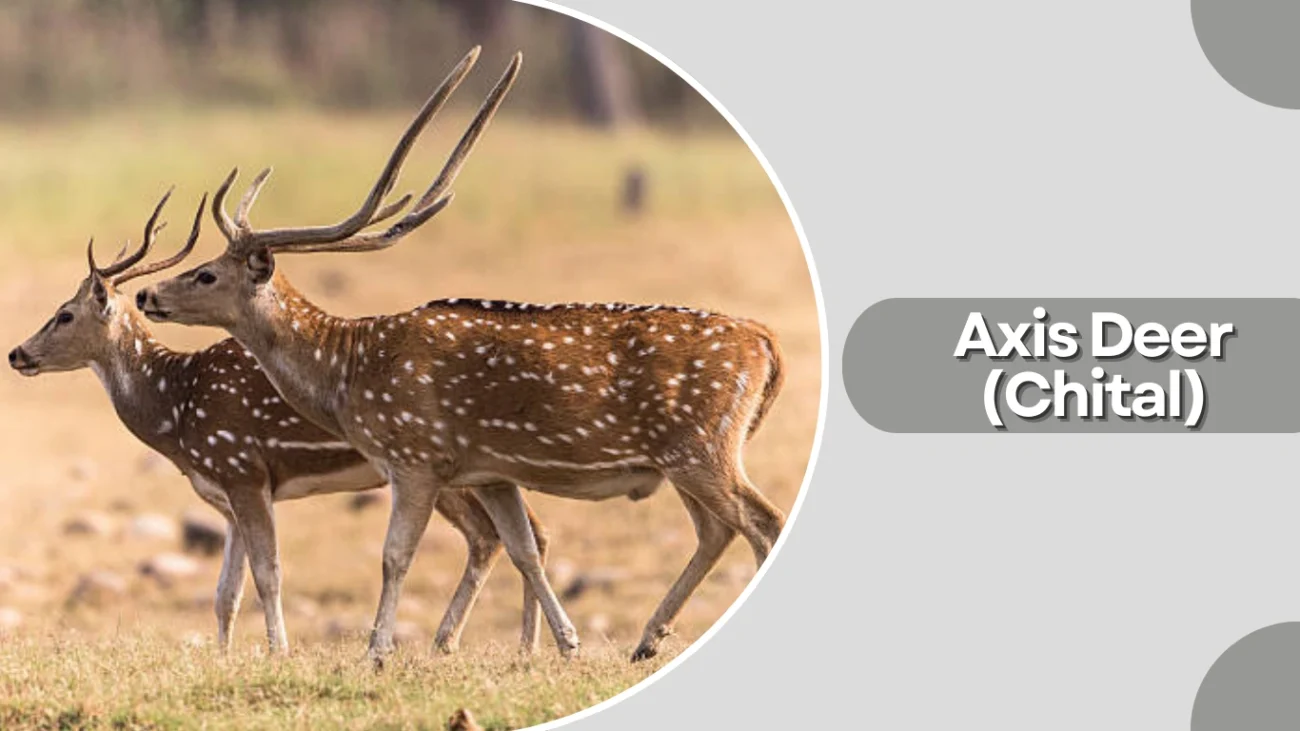
The axis deer, also known as the chital, is a beautifully spotted deer native to the Indian subcontinent. Known for its graceful movement and striking coat pattern, it is one of the most recognizable deer species in Asia.
Identification
- Reddish-brown coat covered in white spots year-round
- White throat patch and underbelly
- Slender body with long, delicate legs
- Males grow three-tined antlers that shed annually
Habitat
Axis deer inhabit forests, grasslands, and woodland edges across India, Nepal, Sri Lanka, and Bhutan. They prefer areas near water sources and thrive in habitats with mixed vegetation that offers both cover and open feeding grounds. They have also been introduced to Australia, the U.S., and other regions.
Behaviors
These deer are highly social and live in herds, sometimes numbering dozens of individuals. They communicate through alarm calls and body posture. Axis deer remain active throughout the day, though they often increase feeding during early morning and late afternoon.
Diet
Their diet includes grasses, leaves, fruits, and tender shoots. Axis deer are primarily grazers but will browse when necessary. Their preference for lush vegetation keeps them close to water and green landscapes, especially during dry seasons.
11. Barasingha
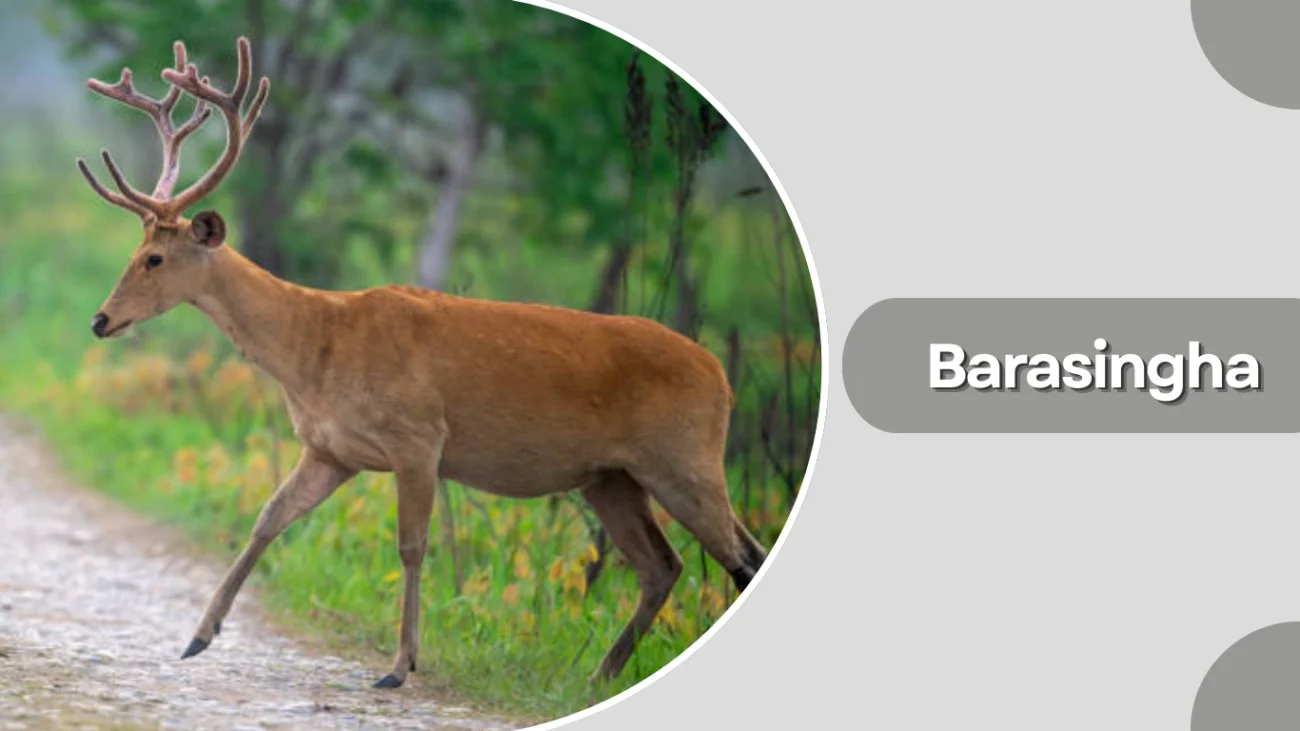
The barasingha, also called the swamp deer, is a large deer species native to the Indian subcontinent. It is known for its impressive antlers and preference for wet, marshy habitats.
Identification
- Golden-brown coat with lighter underparts
- Males have distinctive antlers with up to 12 or more tines
- Robust body with long legs
- Slightly elongated snout
Habitat
Barasingha inhabits swamps, wetlands, tall grasslands, and marshy forests across India and Nepal. They prefer areas with abundant water and dense grasses for feeding and cover. Their populations are now restricted to protected reserves due to habitat loss.
Behaviors
They are social animals and typically form herds, with males joining females during the breeding season. Barasingha are alert, cautious, and often wade through shallow water while grazing. Vocal calls and body language help maintain group coordination.
Diet
Their diet consists mainly of grasses, aquatic plants, and tender shoots. Barasingha are primarily grazers and rely heavily on wetland vegetation. Seasonal changes in water levels influence their feeding areas and movement patterns.
12. Pere David’s Deer

The Pere David’s deer is a unique and rare deer species native to China. Once extinct in the wild, it survived only in captivity and has since been reintroduced to natural habitats through conservation programs.
Identification
- Long tail compared to other deer
- Distinctive antlers that branch forward
- Shaggy coat that changes from reddish in summer to gray in winter
- Stocky body with large hooves suited for wet ground
Habitat
Historically, Pere David’s deer lived in marshes, river valleys, and wet grasslands. Today, reintroduced populations inhabit reserves and sanctuaries in China and other countries. They thrive in wet, swampy environments with abundant vegetation.
Behaviors
These deer are highly social and usually gather in groups. Males compete during the breeding season using loud calls and antler displays. Pere David’s deer are strong swimmers and often seek water for cooling and protection.
Diet
Their diet includes grasses, aquatic plants, leaves, and tender shoots. Because they favor wetlands, they consume a high proportion of water-rich plants. Their feeding habits reflect their adaptation to marshy ecosystems.
13. Water Deer

The water deer is an unusual deer species native to China and Korea, best known for its lack of antlers and prominent tusk-like canine teeth. Its unique appearance sets it apart from all other deer.
Identification
- No antlers in either sex
- Long, curved upper canine teeth resembling tusks
- Tawny-brown coat with lighter underparts
- Compact body with long hind legs
Habitat
Water deer inhabit wetlands, marshes, riverbanks, and tall-grass areas. They prefer habitats with dense vegetation that provides cover and moisture. Populations have also been introduced to the United Kingdom and France.
Behaviors
These deer are solitary or found in small groups. Water deer are strong swimmers and rely on dense reeds for protection. During breeding season, males become territorial and use their tusks in displays and combat.
Diet
Their diet includes grasses, sedges, herbs, and aquatic plants. Water deer graze near water sources and browse when necessary. Their feeding habits suit the lush, moist environments they occupy.
14. Muntjac Deer
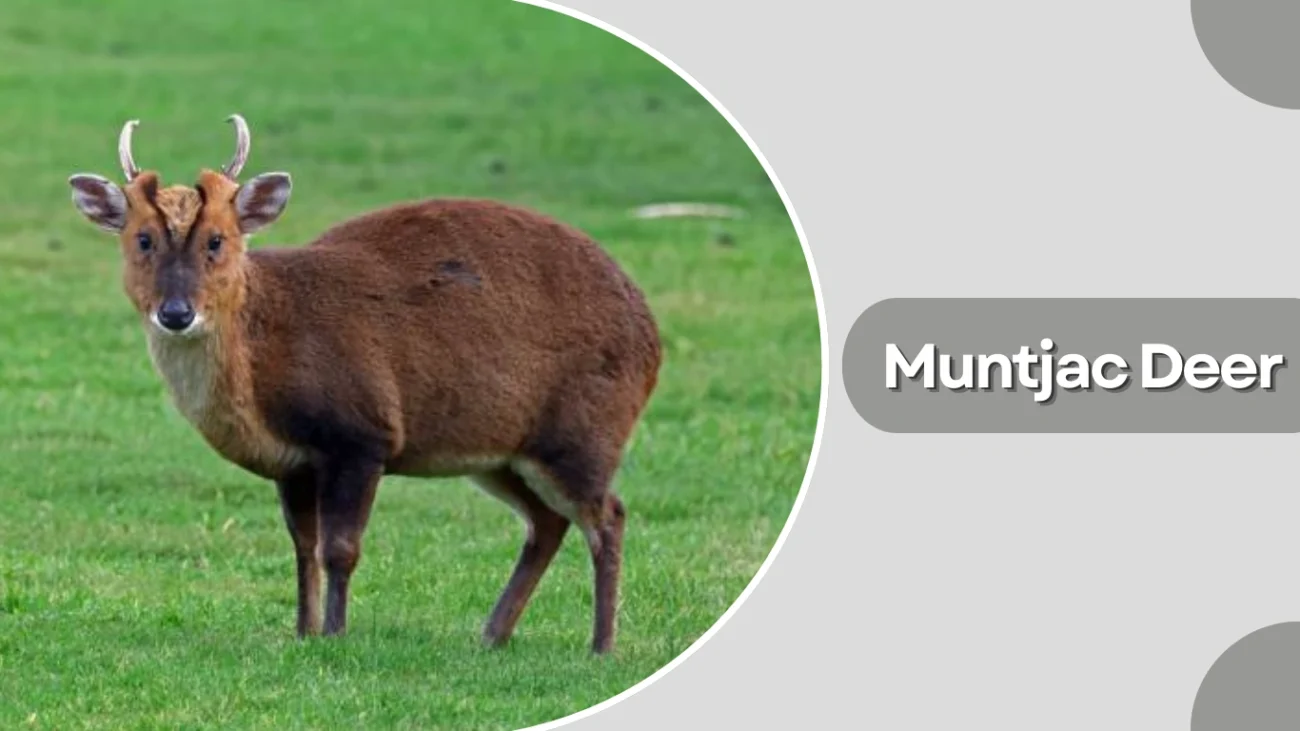
The muntjac deer, also called the barking deer, is a small, ancient deer species native to South and Southeast Asia. Known for its distinctive vocalizations and long canine teeth, it thrives in dense forests and varied terrains.
Identification
- Small body with reddish-brown coat
- Short antlers on males, regrowing annually
- Long, curved upper canine teeth (fangs) in males
- Rounded face and short legs
Habitat
Muntjac deer inhabit tropical forests, shrublands, hilly regions, and dense undergrowth across India, Sri Lanka, China, Indonesia, and Southeast Asia. They prefer thick vegetation that offers cover and food, and some species have adapted to suburban forest edges.
Behaviors
These deer are solitary and highly territorial. They are known for their sharp “bark,” used as an alarm call when sensing danger. Muntjacs move quietly through forests, using scent marking and vocal calls for communication. They are active both day and night.
Diet
Their diet includes leaves, fruits, shoots, bark, and tender plants. Muntjac deer also occasionally eat bird eggs and carrion, making them more omnivorous than many deer species. Their flexible diet supports survival in diverse forest environments.
15. Hog Deer
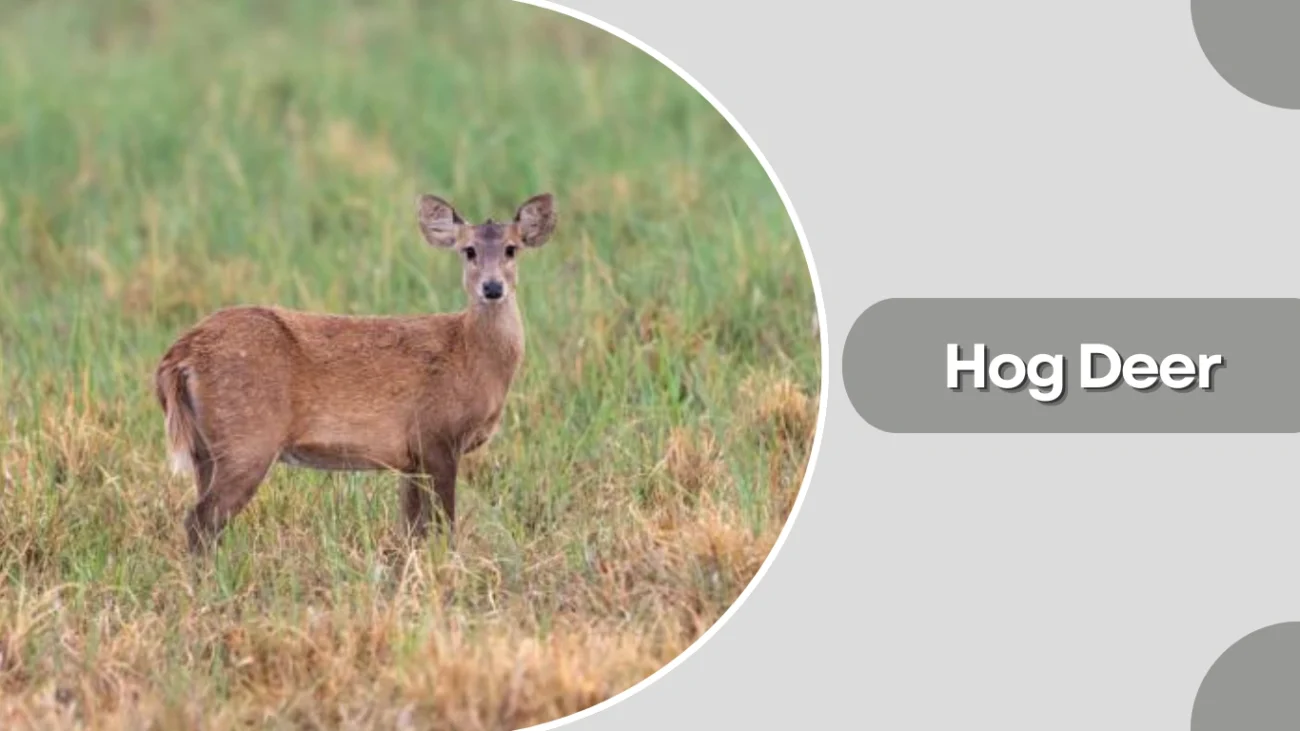
The hog deer is a small, stout-bodied deer species native to South and Southeast Asia. Named for its hog-like habit of running with its head low, it thrives in tall grasslands and wet habitats.
Identification
- Stocky build with short legs
- Dark brown coat with lighter underparts
- Males have short antlers with simple tines
- Distinctive low-running posture resembling a hog
Habitat
Hog deer inhabit marshes, floodplains, tall grasslands, and river valleys across India, Nepal, Bangladesh, and Southeast Asia. They prefer areas with dense grass cover where they can hide and forage safely.
Behaviors
These deer are mostly solitary and shy. When alarmed, they dash through grass with their heads lowered—a behavior that helps them move quickly through vegetation. Hog deer are crepuscular, feeding during early morning and evening hours.
Diet
Their diet includes grasses, aquatic plants, shoots, and fruits. Hog deer are grazers but will browse when food is scarce. Their feeding habits align with the lush vegetation found in wet and grassy environments.
16. Black-tailed Deer

The black-tailed deer is a subspecies of mule deer native to the coastal regions of western North America. It is known for its distinctive dark tail and preference for lush, forested environments.
Identification
- Brown to reddish-brown coat
- Distinct black tail and rump patch
- Large, mule-like ears
- Males have antlers that fork as they grow
Habitat
Black-tailed deer inhabit coastal forests, woodlands, mountains, and brushy areas from California to Alaska. They prefer regions with dense cover, mild coastal climates, and abundant vegetation for grazing and browsing.
Behaviors
These deer are crepuscular and often travel along established paths within their territories. They are agile climbers and accustomed to steep, forested landscapes. Black-tailed deer are cautious and alert, relying heavily on hearing and scent to detect predators.
Diet
Their diet includes shrubs, grasses, leaves, berries, and forest understory plants. They browse more than they graze, especially in dense forests where tender vegetation is abundant. Their diet shifts seasonally as plant availability changes.
17. Pampas Deer
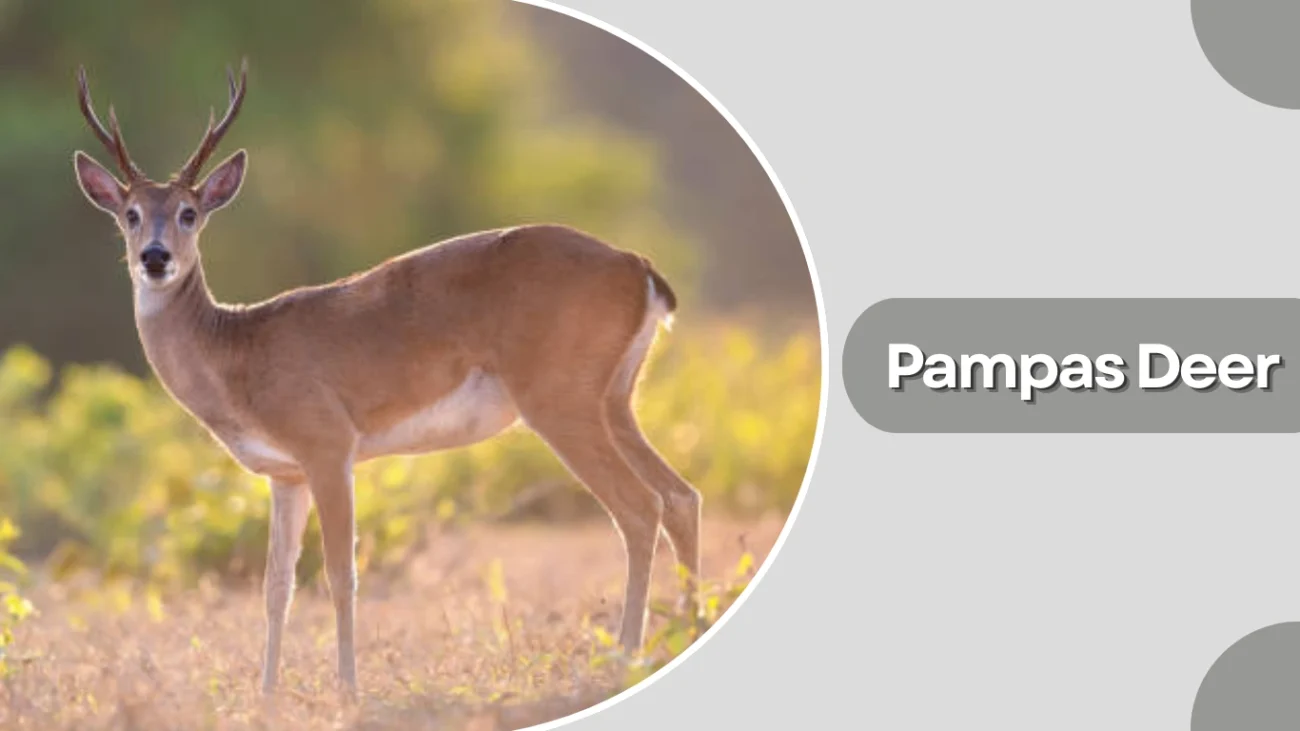
The pampas deer is a medium-sized deer native to the grasslands of South America. Known for its gentle appearance and pale coloring, it thrives in open plains with abundant grasses.
Identification
- Light tan to reddish coat
- White throat, belly, and inner legs
- Slender body with long, graceful legs
- Males have short, three-tined antlers
Habitat
Pampas deer inhabit grasslands, savannas, and open plains across Brazil, Argentina, Uruguay, and Paraguay. They prefer wide, open areas with tall grasses that offer both food and cover. Their populations have declined due to habitat loss and agriculture.
Behaviors
They are social and often found in small groups. Pampas deer are alert and rely on speed and agility to escape predators. They communicate through scent marking, ear movements, and soft vocal calls. Most activity occurs during early morning and late afternoon.
Diet
Their diet includes grasses, herbs, leaves, and flowering plants. Pampas deer are mainly grazers but will browse when necessary. Seasonal plant availability influences their feeding habits, especially in dry periods.
18. Marsh Deer
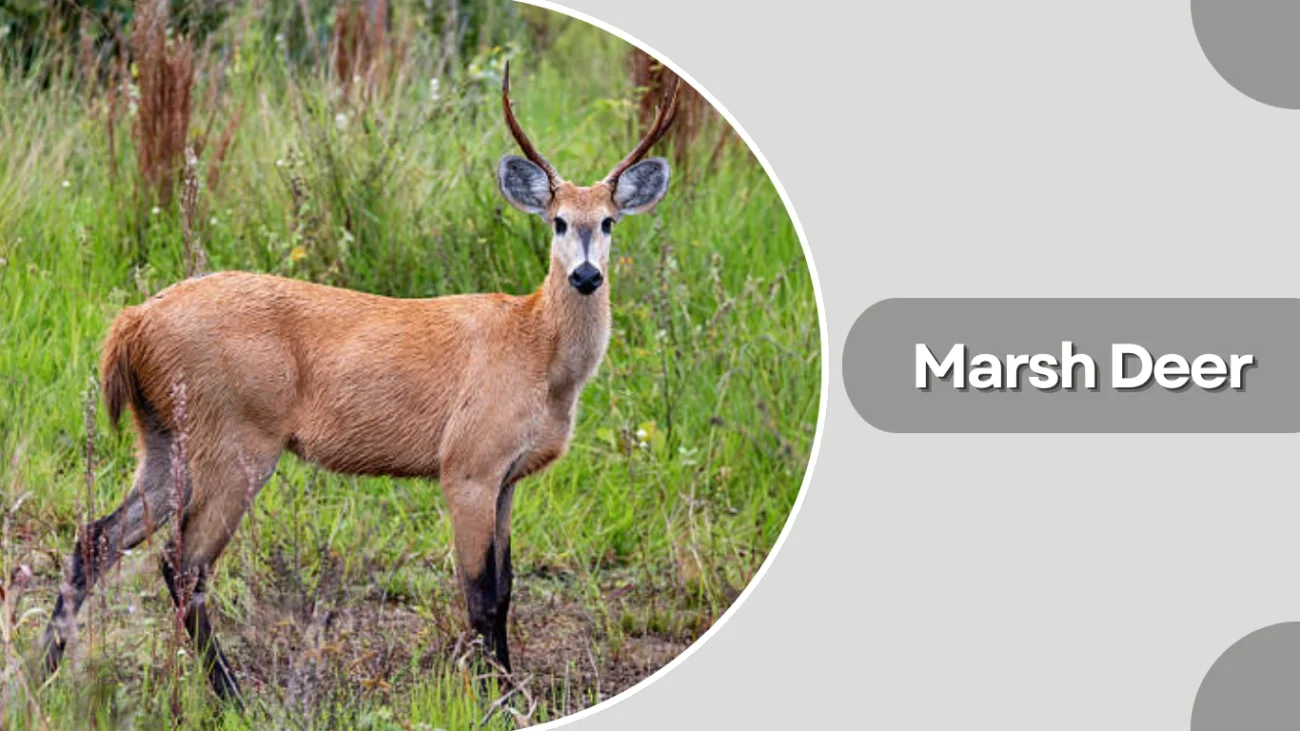
The marsh deer is the largest deer species in South America, adapted to wetlands and swampy environments. Known for its large ears and long legs, it is well suited to wading through deep water.
Identification
- Reddish-brown coat with lighter underparts
- Very large ears and elongated face
- Long legs adapted for moving through marshes
- Males have antlers with multiple tines
Habitat
Marsh deer inhabit wetlands, swamps, river floodplains, and seasonally flooded grasslands across Brazil, Bolivia, Argentina, and Paraguay. They rely on marsh vegetation and waterways for food and protection.
Behaviors
These deer are generally solitary or found in small groups. Marsh deer are strong swimmers and often retreat into deep water when threatened. They are most active during dawn and dusk, using vocal calls and scent to communicate.
Diet
Their diet includes aquatic plants, grasses, reeds, and tender shoots. Marsh deer graze extensively in wet areas and browse on plants that grow along water edges. Their feeding habits reflect their close association with marsh habitats.
19. Tufted Deer
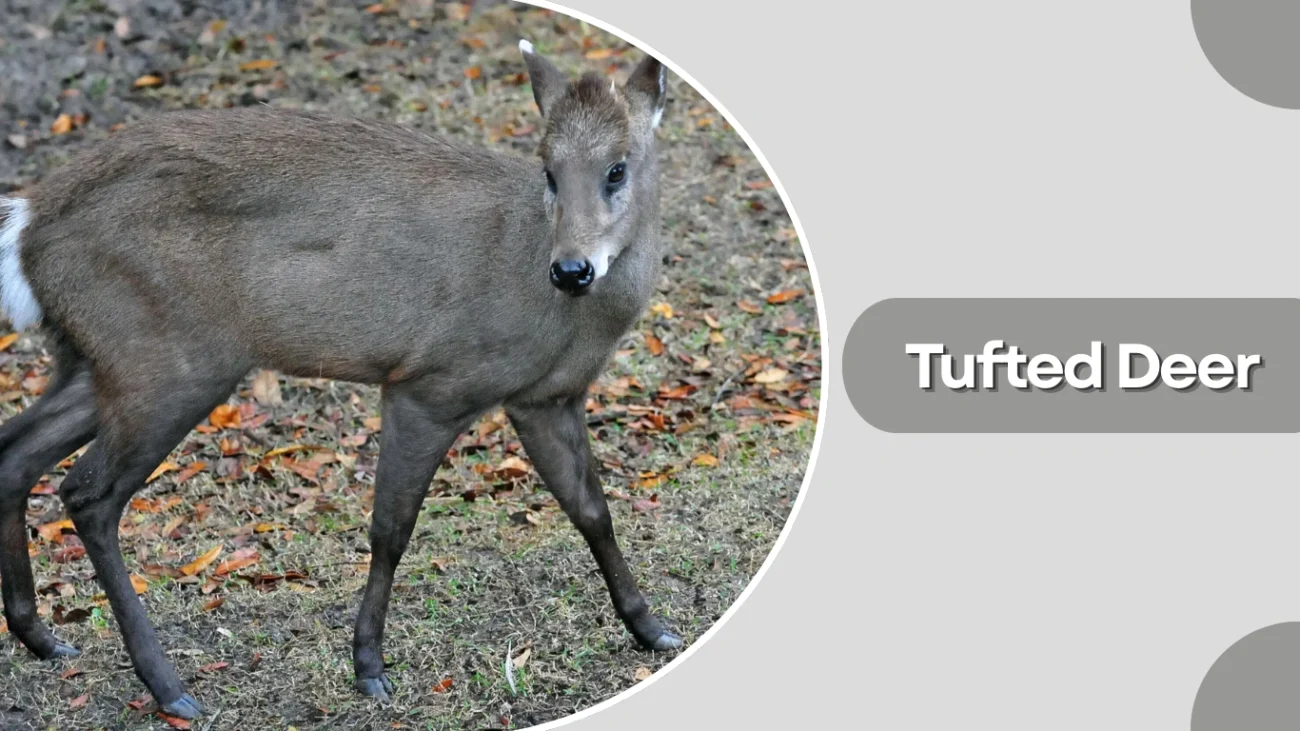
The tufted deer is a small, distinctive deer species native to central and southern China. Known for the tuft of dark hair on its forehead and the fang-like canines of males, it has a unique appearance unlike most deer.
Identification
- Dark brown coat with lighter underparts
- Prominent black tuft of hair on the forehead
- Males have long, curved upper canines
- Compact body with short legs and rounded ears
Habitat
Tufted deer inhabit mountainous forests, steep slopes, and dense understory vegetation at elevations often between 500–4,500 meters. They prefer cool, moist environments with abundant cover, making them difficult to spot in the wild.
Behaviors
These deer are solitary and highly secretive. Tufted deer move quietly through dense forests and use their canines for territorial disputes and defense. They are most active during dawn and dusk, relying on stealth rather than speed to avoid predators.
Diet
Their diet includes leaves, shoots, fruits, bark, and other forest vegetation. Tufted deer browse selectively and feed on nutrient-rich plants. Their foraging style allows them to survive in dense, mountainous habitats with limited open grazing areas.
FAQs
1. How many deer species exist worldwide?
There are over 45 recognized deer species worldwide, belonging to the Cervidae family. These include large species like moose and elk, as well as smaller ones like muntjacs and tufted deer. Many species have multiple subspecies adapted to different habitats.
2. What is the largest deer species?
The moose is the largest deer species, with adult males weighing over 1,200 pounds and standing more than 6 feet tall at the shoulder. Their massive palmate antlers and long legs make them uniquely adapted to cold, northern environments.
3. Which deer species has the most distinctive antlers?
The fallow deer and moose are often noted for their unique antlers. Fallow deer have broad, palm-shaped antlers, while moose antlers are massive and flat. Barasingha are also distinctive, with antlers that may have over twelve points.
4. Do all male deer grow antlers?
Most male deer grow antlers, but there are exceptions. The water deer has no antlers at all—instead, males have long tusk-like canines. In caribou (reindeer), both males and females grow antlers, which is unique among deer species.
5. What do deer typically eat?
Deer are herbivores, feeding on leaves, twigs, grasses, fruits, bark, shoots, and herbs. Their diet changes seasonally: they graze on fresh vegetation in spring and summer, then browse woody plants in autumn and winter. Some species also rely heavily on aquatic plants.


