Magpies are found across the world, but they aren’t all the same. Some belong to the crow family, while others—like the Australian magpie—are unrelated yet share similar looks and behaviors. From bold scavengers in North America to vivid forest-dwellers in Asia.
This guide introduces 15 different types of magpies, covering where they live, what they look like, and the unique traits that make each species stand out.
1. Eurasian Magpie

The Eurasian magpie (Pica pica) is a highly intelligent and widespread bird found throughout Europe and parts of Asia. Known for its striking appearance and complex behaviors, it is a true member of the crow family (Corvidae) and plays a significant role in folklore and rural ecosystems.
Identification
- Scientific Name: Pica pica
- Length: 44–46 cm
- Wingspan: 52–62 cm
- Color: Black head, chest, and tail with iridescent green-blue sheen; white belly and shoulder patches
- Tail: Long and wedge-shaped
- Voice: Harsh chattering “chack-chack” sound
Habitat and Distribution
Eurasian magpies inhabit a wide range of environments including farmlands, gardens, woodland edges, and urban parks. They are found from Western Europe through Central Asia, and their adaptability allows them to thrive in both rural and densely populated city areas.
Diet and Feeding Behavior
They are omnivorous, feeding on insects, small mammals, seeds, berries, bird eggs, and carrion. They often scavenge near human settlements and are known for caching food. Their foraging behavior includes flipping leaves, probing soil, and stealing from other birds.
Social Behavior and Breeding
Eurasian magpies are monogamous and form long-term pair bonds. They build large domed nests high in trees using sticks and mud. These birds live in small territorial groups and are extremely vocal, using a variety of calls for alarm, territory, and communication.
2. Black-billed Magpie

The black-billed magpie (Pica hudsonia) is a North American relative of the Eurasian magpie. Found mainly in western North America, it is known for its bold behavior, contrasting black-and-white feathers, and long iridescent tail. This magpie is often seen perched on fences or foraging near livestock.
Identification
- Scientific Name: Pica hudsonia
- Length: 45–60 cm
- Wingspan: 55–65 cm
- Color: Black head, chest, and back with white belly and shoulder patches; iridescent blue-green tail and wings
- Tail: Very long and graduated
- Call: Repetitive “mag-mag-mag” or harsh rattles
Habitat and Distribution
Black-billed magpies live throughout the western U.S., Canada, and parts of Alaska. They prefer open woodlands, grasslands, scrublands, and agricultural areas, often nesting near rivers or tall shrubs. They commonly inhabit ranchlands and are well adapted to human-altered landscapes.
Diet and Feeding Behavior
Their omnivorous diet includes insects, small rodents, carrion, berries, grains, and even dung beetles from cattle fields. They often scavenge roadkill and store excess food. These magpies follow large mammals to pick off parasites or food leftovers.
Nesting and Social Life
They build large dome-shaped nests lined with mud and hair. Both sexes help with nest building and chick rearing. Black-billed magpies are sociable birds that form loose colonies in winter and are known for mobbing predators like hawks or owls.
3. Yellow-billed Magpie
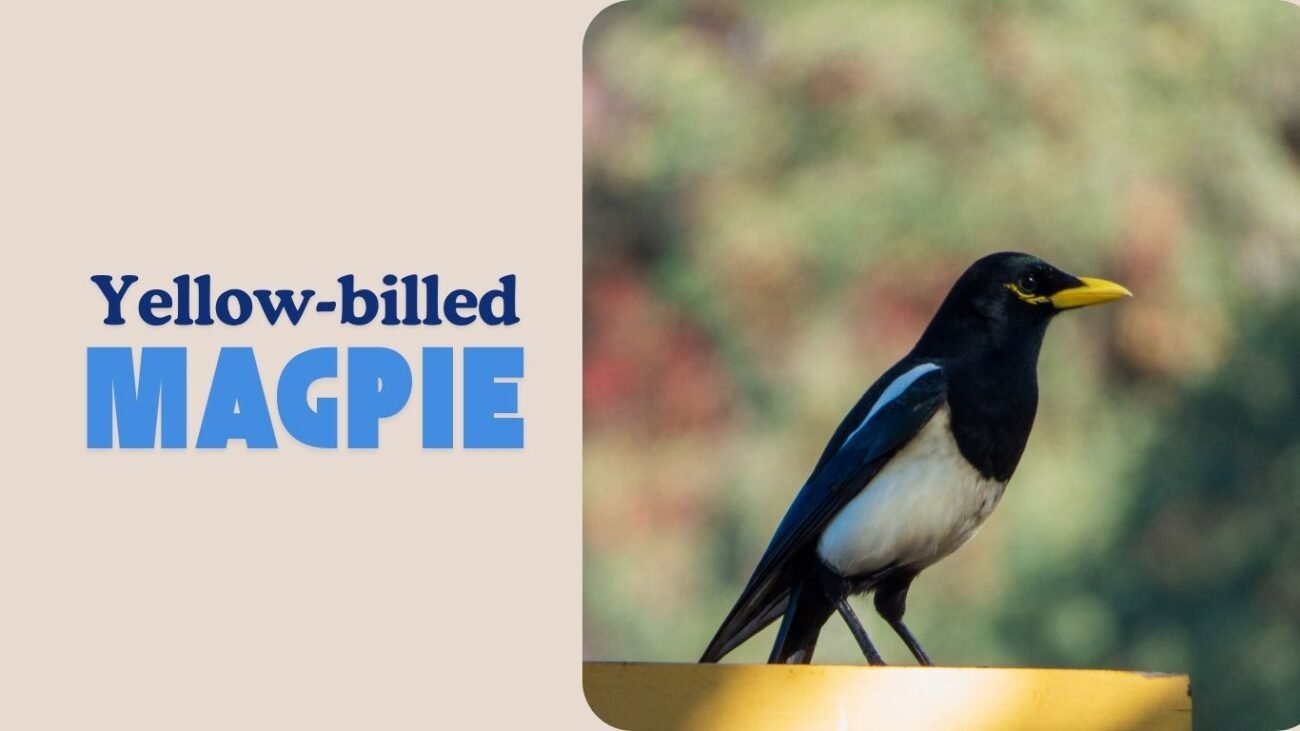
The yellow-billed magpie (Pica nuttalli) is a unique species found only in California’s Central Valley. It’s similar in appearance to the black-billed magpie but has a striking yellow bill and bare yellow skin around the eyes. This bird is one of the few corvids with such a limited range.
Identification
- Scientific Name: Pica nuttalli
- Length: 45–55 cm
- Wingspan: 55–60 cm
- Color: Black-and-white body with metallic blue-green tail; yellow bill and eye skin
- Tail: Long and shiny
- Call: Harsh chattering, similar to black-billed magpie
Habitat and Distribution
Yellow-billed magpies are restricted to oak savannas, grasslands, and riparian areas in California’s Central Valley. They rely heavily on native trees for nesting and roosting. Urbanization and habitat loss have limited their range further in recent years.
Diet and Feeding Behavior
They eat insects, spiders, fruit, grains, and carrion. During hot summers, they rely on shade and water sources near rivers and ranches. They’re ground foragers and are often seen hopping across open fields or roadsides.
Breeding and Conservation
This species is monogamous and builds bulky stick nests. They are colonial during non-breeding seasons but defend nesting territories in spring. Because of their limited distribution, they are vulnerable to disease (like West Nile Virus) and habitat degradation.
4. Maghreb Magpie
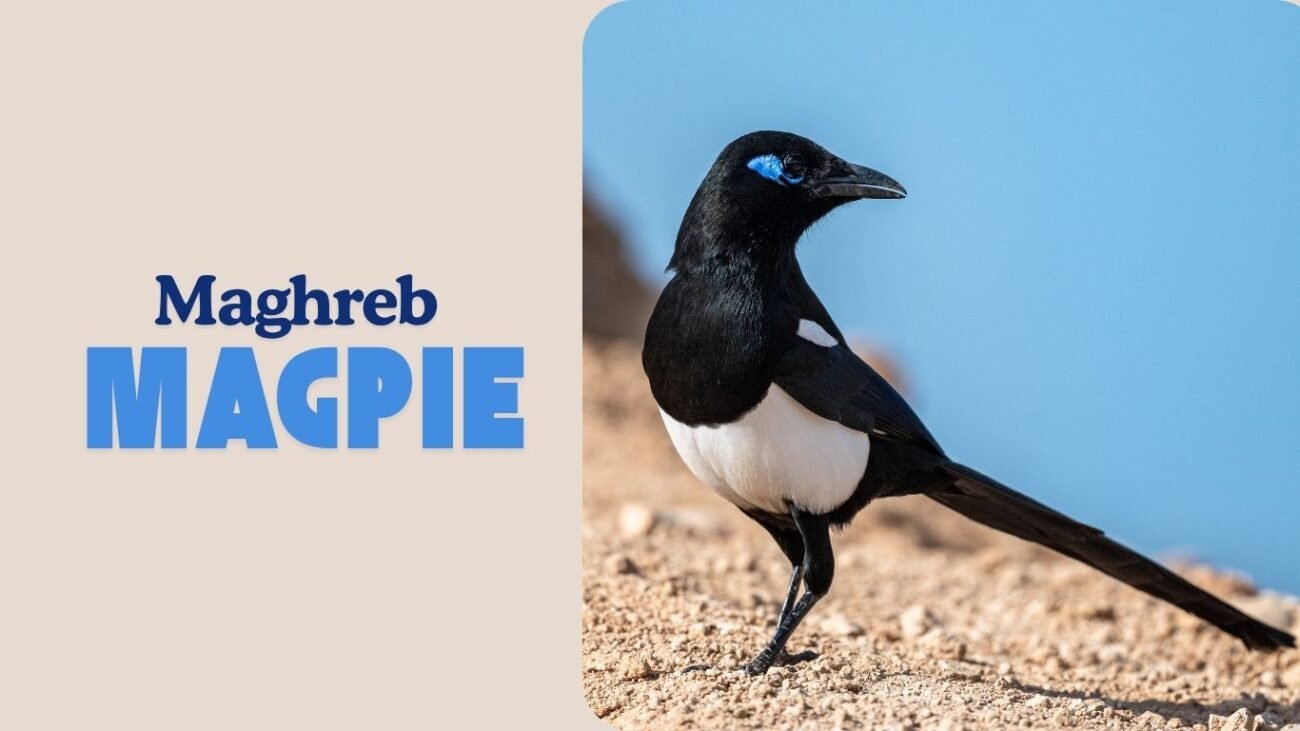
The Maghreb magpie (Pica mauritanica) is a North African species closely related to the Eurasian magpie but with subtle physical differences and a more limited range. It is primarily found in the Maghreb region, including Morocco, Algeria, and Tunisia.
Identification
- Scientific Name: Pica mauritanica
- Length: 45–50 cm
- Wingspan: 55–60 cm
- Color: Similar to the Eurasian magpie but with a distinct blue patch of bare skin behind the eye
- Tail: Long and iridescent with a greenish sheen
- Call: Raspy chattering and varied vocalizations
Habitat and Distribution
This species inhabits open forests, scrublands, agricultural lands, and urban gardens across northwest Africa. It prefers areas with scattered trees and shrubs, avoiding dense forests and deserts.
Diet and Feeding Behavior
Like its relatives, the Maghreb magpie is omnivorous. It feeds on insects, fruits, seeds, small vertebrates, and food waste. It forages both in trees and on the ground and often scavenges near human settlements.
Breeding and Territory
It builds a domed nest similar to other Pica magpies, using sticks and lining it with softer material. Breeding pairs are territorial, and both parents contribute to feeding the chicks. The population is generally stable but localized.
5. Oriental Magpie

The Oriental magpie (Pica serica) is a resident bird of East Asia, often considered a subspecies of the Eurasian magpie but now increasingly treated as a distinct species. It shares many features with Pica pica but is genetically and vocally different.
Identification
- Scientific Name: Pica serica
- Length: 40–50 cm
- Wingspan: 55–60 cm
- Color: Glossy black head and tail, white belly, and shoulders; slightly shorter tail than Pica pica
- Tail: Iridescent, but less vibrant than some other species
- Call: Higher-pitched and more varied than the Eurasian magpie
Habitat and Distribution
It is widespread in China, Korea, and parts of eastern Russia and Japan. It thrives in open countryside, farmlands, and city outskirts, often nesting near human dwellings.
Diet and Feeding Behavior
This magpie consumes insects, small animals, grains, berries, and kitchen scraps. It is an opportunistic feeder and adapts quickly to changes in food availability, often visiting garbage sites and rice fields.
Reproduction and Vocal Skills
The Oriental magpie is known for its vocal range and local dialects. It breeds in trees or utility poles and constructs large nests. Chicks are cared for by both parents, and families often stay close after fledging.
6. Azure-winged Magpie
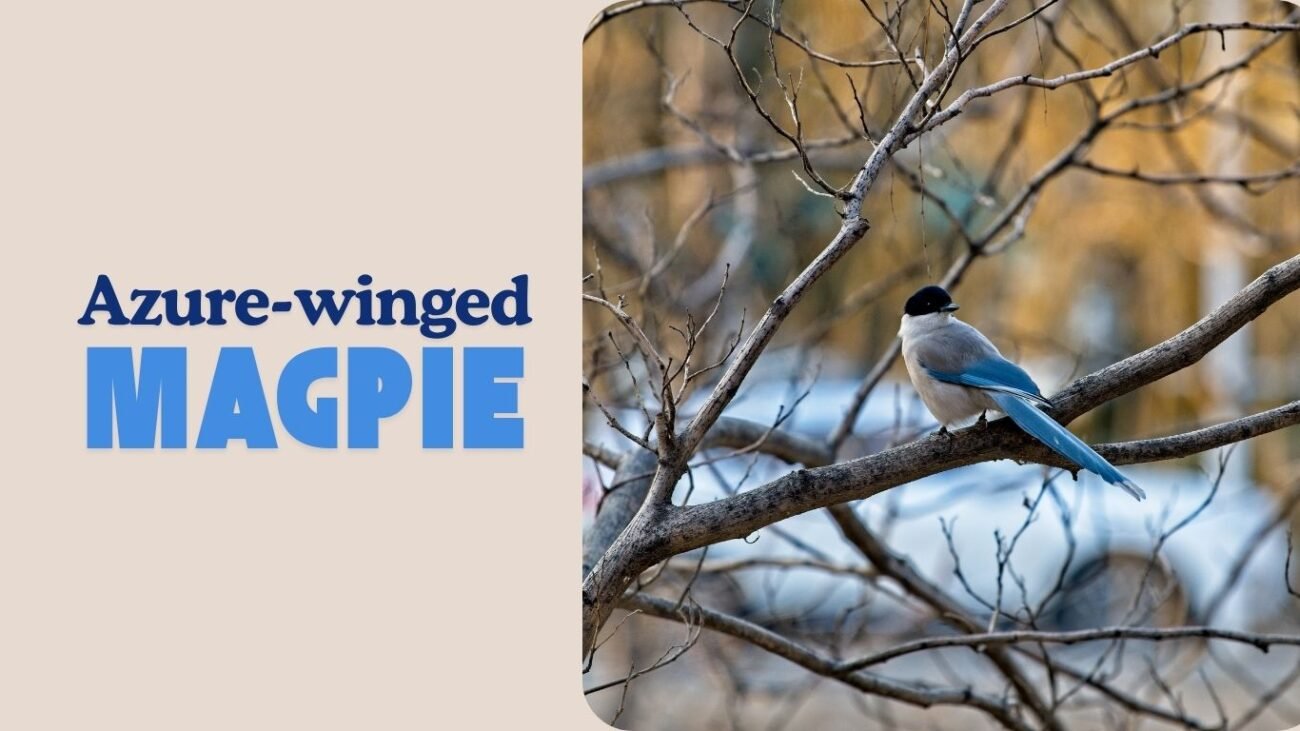
The azure-winged magpie (Cyanopica cyanus) is a slender, graceful bird found in parts of East Asia. It is easily recognized by its pale body and striking blue wings and tail. Unlike Pica magpies, it belongs to a different genus and shows more social flocking behavior.
Identification
- Scientific Name: Cyanopica cyanus
- Length: 31–35 cm
- Wingspan: 40–45 cm
- Color: Pale grayish-white body, glossy blue wings and tail, black cap
- Tail: Long, narrow, and bright azure blue
- Call: High-pitched and melodious, often heard in chorus
Habitat and Distribution
This species is found mainly in China, Korea, and Japan. It inhabits deciduous forests, bamboo groves, forest edges, and wooded farmland. It is also seen in suburban areas with sufficient tree cover.
Diet and Feeding Behavior
Azure-winged magpies feed on insects, berries, seeds, and small invertebrates. They are also known to raid bird nests for eggs. They forage mostly in groups, often moving through tree canopies and communicating constantly.
Flocking and Nesting Habits
Highly social, these magpies nest in colonies. Several pairs may breed close together, with communal roosting during non-breeding seasons. They build nests in shrubs or trees and share alert systems to warn against predators.
7. Iberian Magpie

The Iberian magpie (Cyanopica cooki) is a close relative of the azure-winged magpie but found only in the Iberian Peninsula. For a long time, it was considered the same species, but differences in genetics and calls led to its classification as distinct.
Identification
- Scientific Name: Cyanopica cooki
- Length: 34–36 cm
- Wingspan: Around 45 cm
- Color: Buff-white body, deep blue wings and tail, black crown and nape
- Tail: Long and vivid blue, often held upright
- Call: Soft, chattering “brrr” and “chek-chek” notes
Habitat and Distribution
Endemic to Spain and Portugal, the Iberian magpie prefers open oak woodlands, dehesa, scrubland, and farmland with scattered trees. It avoids dense forests and high-altitude areas, sticking to lowland regions with mild climates.
Diet and Feeding Behavior
Its diet includes caterpillars, beetles, seeds, olives, acorns, and grains. It often follows herds or farm activity to scavenge disturbed insects. Foraging is done in groups, with coordinated movement and communication.
Breeding and Social Structure
Iberian magpies are colonial nesters and highly cooperative. Some individuals help raise the young of others. Their nests are built close together, and families often stay connected even after the chicks fledge.
8. Formosan Magpie

The Formosan magpie (Urocissa caerulea), also known as the Taiwan blue magpie, is a vibrant and striking species endemic to Taiwan. It is admired for its brilliant coloration, long tail, and social nature, often moving in family groups through forest canopies.
Identification
- Scientific Name: Urocissa caerulea
- Length: 63–68 cm (including tail)
- Wingspan: 45–50 cm
- Color: Bright blue body and wings, black head and neck, white-tipped tail feathers, yellow eyes
- Tail: Extremely long, blue with white tips
- Call: Loud, varied clucks and screeches, often given in chorus
Habitat and Distribution
Found only in Taiwan, this species inhabits mid-elevation broadleaf forests, forest edges, and wooded valleys. It prefers undisturbed mountainous regions but can also be seen near villages in forested zones.
Diet and Feeding Behavior
Formosan magpies are omnivorous, feeding on snakes, insects, frogs, small mammals, fruits, and human scraps. They are ground foragers and often work cooperatively in groups while searching for food.
Group Dynamics and Nesting
These magpies are known for cooperative breeding and strong group bonds. They nest in tall trees and build large cup-shaped nests. Helpers often assist the breeding pair in feeding and defending the chicks.
9. Red-billed Blue Magpie

The red-billed blue magpie (Urocissa erythrorhyncha) is a long-tailed, colorful bird found in parts of the Himalayas and Southeast Asia. It is a highly vocal species, often moving in noisy flocks through hilly forests and river valleys.
Identification
- Scientific Name: Urocissa erythrorhyncha
- Length: 65–68 cm (including tail)
- Wingspan: 50–55 cm
- Color: Blue back and wings, white belly, black head and neck, long white-tipped tail, bright red bill
- Tail: Very long and flowing with distinctive white bands
- Call: Loud “kyak-kyak” or “tchak-tchak” sounds, often repeated
Habitat and Distribution
This species ranges from northern India through the Himalayas, southern China, Myanmar, Laos, and Vietnam. It favors hill forests, wooded ravines, and rural areas with scattered trees and shrubs.
Diet and Feeding Behavior
The red-billed blue magpie eats insects, small reptiles, fruits, eggs, and grains. It is opportunistic and may visit human settlements for food. Foraging is done on the ground or in low trees, often in groups.
Breeding and Behavior
Nesting usually occurs in dense shrubs or high branches. They are aggressive in defending their territory and highly social, often seen engaging in grooming, play, and cooperative foraging.
10. Sri Lanka Blue Magpie

The Sri Lanka blue magpie (Urocissa ornata) is a rare and vividly colored bird found only in the rainforests of Sri Lanka. With its deep blue feathers and contrasting chestnut head, it is considered one of the most beautiful magpies and a prized sighting among birdwatchers.
Identification
- Scientific Name: Urocissa ornata
- Length: 42–47 cm
- Wingspan: 40–45 cm
- Color: Bright blue body, chestnut-red head, red bill and legs, white-tipped tail
- Tail: Medium-long, blue with white tips
- Call: Whistling and chattering calls, often melodic and varied
Habitat and Distribution
This species is endemic to the wet zone forests of southwestern Sri Lanka. It inhabits dense, evergreen rainforests at low to mid-elevations and avoids open or disturbed areas.
Diet and Feeding Behavior
Sri Lanka blue magpies feed on insects, frogs, small lizards, and forest fruits. They forage mainly in the canopy but also descend to the forest floor. Their strong legs allow agile movement through thick vegetation.
Social Structure and Breeding
They live in small family groups and practice cooperative breeding. Nests are built high in trees and made from twigs and rootlets. Due to habitat loss, this species is classified as vulnerable and is protected under Sri Lankan law.
11. Yellow-billed Blue Magpie

The yellow-billed blue magpie (Urocissa flavirostris) is a colorful bird native to the Himalayan foothills. It resembles its red-billed cousin but is distinguished by its yellow beak and slightly different vocalizations. It thrives in mixed and coniferous forests.
Identification
- Scientific Name: Urocissa flavirostris
- Length: 60–65 cm
- Wingspan: 50–55 cm
- Color: Deep blue wings and tail, black head, white belly, yellow bill
- Tail: Long and flowing, blue with broad white tips
- Call: Loud, nasal “whee-whee” sounds and chattering calls
Habitat and Distribution
This magpie is found in northern India, Nepal, Bhutan, and parts of western China. It inhabits subtropical forests, river valleys, and wooded hillsides, usually at elevations between 1,500 and 3,000 meters.
Diet and Feeding Behavior
It feeds on a range of insects, berries, bird eggs, and small mammals. The bird often forages in pairs or small groups and is known to follow mixed-species feeding flocks in the forest.
Breeding and Lifestyle
Nesting takes place in spring, with cup-shaped nests hidden in dense tree branches. Both parents feed the chicks. Though bold and noisy, this magpie can be secretive in thick vegetation, making it tricky to spot.
12. White-winged Magpie

The white-winged magpie (Urocissa whiteheadi) is a striking and lesser-known member of the blue magpie group. With contrasting white and dark plumage, this forest-dwelling bird is found in parts of Southeast Asia and is often seen in small, active flocks.
Identification
- Scientific Name: Urocissa whiteheadi
- Length: 45–50 cm
- Wingspan: Around 50 cm
- Color: Glossy black head and chest, bluish-black wings with bold white patches, long white-tipped tail
- Tail: Medium-length, blue with white edges and tips
- Call: Sharp, metallic chirps and cackling notes
Habitat and Distribution
The white-winged magpie lives in southern China, northern Vietnam, and possibly Laos. It prefers subtropical or tropical moist lowland and montane forests, often at elevations of 500–2,000 meters.
Diet and Feeding Behavior
This magpie feeds on insects, fruit, seeds, and occasionally small vertebrates. It forages actively in the mid and upper canopy, moving quickly through trees in small groups while calling to one another.
Social Behavior and Conservation
They are highly social, rarely seen alone, and often engage in group feeding and roosting. Due to habitat destruction and limited range, the species is considered near threatened and is under observation for potential conservation efforts.
13. Rufous Treepie

The rufous treepie (Dendrocitta vagabunda) is a boldly colored bird with magpie-like traits found widely across the Indian subcontinent. Though not a true magpie, it shares similar behaviors and appearance, especially its long tail and loud calls.
Identification
- Scientific Name: Dendrocitta vagabunda
- Length: 45–50 cm
- Wingspan: 40–45 cm
- Color: Rufous-orange body, black head, and bluish-grey wings with white patches
- Tail: Long, black-tipped with grey base
- Call: Wide variety of musical whistles, harsh caws, and rasping notes
Habitat and Distribution
This species is found throughout India, Nepal, Pakistan, Bangladesh, and Sri Lanka. It thrives in dry forests, open woodlands, gardens, and urban parks, making it one of the most adaptable treepies.
Diet and Feeding Behavior
Omnivorous and opportunistic, it eats fruits, insects, nectar, small reptiles, and scraps. It is often seen foraging on the ground or leaping between branches and is known to raid bird nests for eggs or chicks.
Breeding and Daily Life
Rufous treepies are monogamous and build open cup nests in trees. They are bold, inquisitive birds often seen near humans and can become quite tame in rural settings. Their vocal range and active foraging make them highly noticeable.
14. Grey Treepie

The grey treepie (Dendrocitta formosae), also known as the Himalayan treepie, is a quiet but widespread forest bird in South and Southeast Asia. It shares many traits with magpies, including a long tail, social behavior, and varied diet, though it’s more subtly colored.
Identification
- Scientific Name: Dendrocitta formosae
- Length: 36–40 cm
- Wingspan: Around 45 cm
- Color: Grey body with a black facial mask, black wings with white bars, and a long black-tipped tail
- Tail: Long, grayish with black tip and pale outer edges
- Call: Soft whistles, cackles, and croaks—less harsh than other treepies
Habitat and Distribution
The grey treepie is found across the Himalayas, northeast India, southern China, Taiwan, and Southeast Asia. It prefers evergreen forests, wooded valleys, gardens, and secondary growth areas up to 2,400 meters in elevation.
Diet and Feeding Behavior
It feeds on insects, fruit, seeds, and occasionally small birds or eggs. It forages in pairs or small groups, gliding silently through the mid and upper forest levels. It’s more secretive compared to the rufous treepie.
Breeding and Temperament
Breeding occurs during spring and early summer. Nests are placed in tall trees and made of twigs. Grey treepies are less aggressive than other magpie-like species and are often overlooked due to their quiet and discreet behavior.
15. Australian Magpie
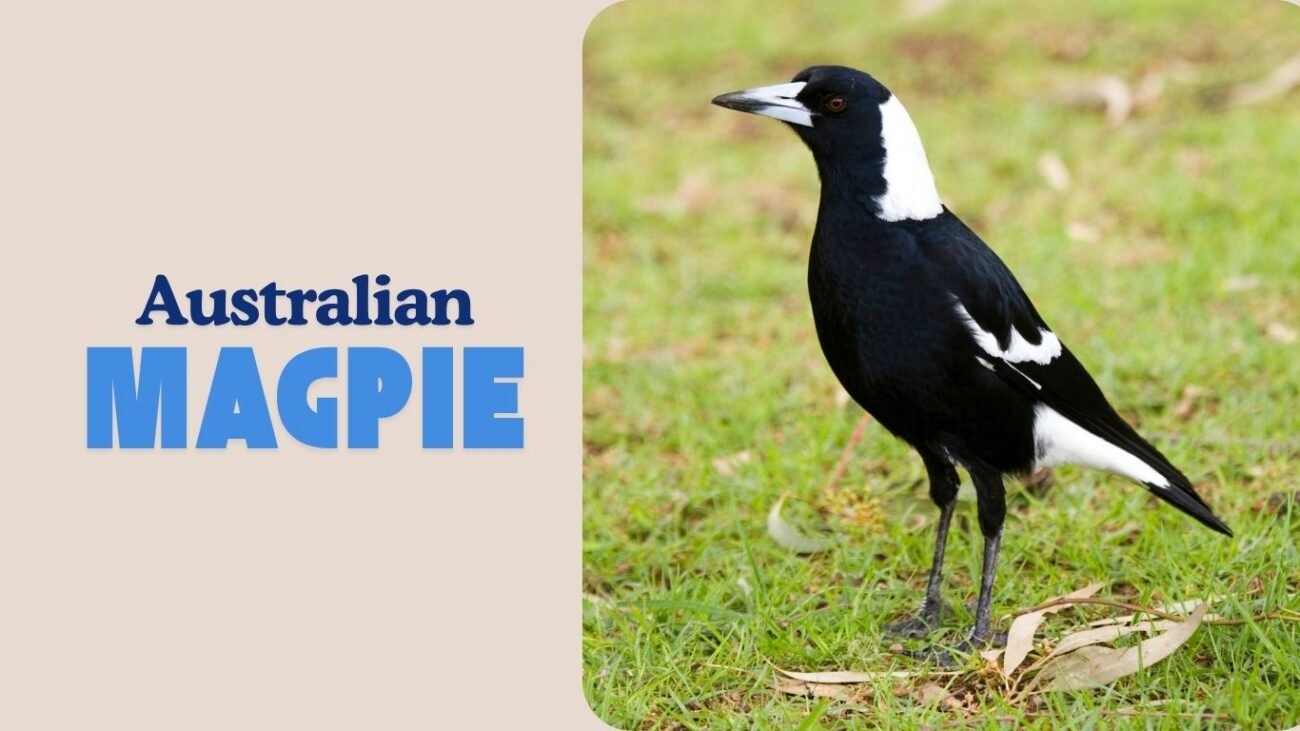
The Australian magpie (Gymnorhina tibicen) is one of the most iconic and widely recognized birds in Australia. Though called a magpie, it is not part of the Corvidae family but belongs to the Artamidae family. It’s known for its intelligence, complex songs, and bold personality.
Identification
- Scientific Name: Gymnorhina tibicen
- Length: 37–43 cm
- Wingspan: 65–85 cm
- Color: Black and white plumage varies by region; males are more vividly marked than females
- Tail: Shorter than corvid magpies, fan-shaped
- Call: Melodic, flute-like warbling; one of the most beautiful bird calls in Australia
Habitat and Distribution
Australian magpies are found throughout mainland Australia, Tasmania, and introduced populations in New Zealand. They thrive in open grasslands, suburban gardens, farmlands, and schoolyards, preferring areas with scattered trees and open ground.
Diet and Feeding Behavior
They feed on insects, worms, spiders, small reptiles, grains, and food scraps. They forage mainly on the ground, using their strong beak to dig for prey, and are known to store food for later use.
Social Life and Swooping
They are territorial and live in family groups. During breeding season (spring), they may swoop to protect their nests, particularly targeting cyclists or pedestrians. Despite this, they’re admired for their loyalty, intelligence, and ability to recognize human faces.
FAQs
1. Are all magpies part of the crow family (Corvidae)?
No, not all magpies belong to the crow family. While species like the Eurasian and black-billed magpies are true corvids, others, like the Australian magpie, belong to the Artamidae family and are not closely related.
2. What is the most intelligent magpie species?
The Eurasian magpie (Pica pica) is considered one of the most intelligent bird species. It can recognize itself in mirrors, solve problems, use tools, and even remember individual human faces.
3. Do magpies live in groups or alone?
Most magpie species are social and live in pairs or family groups. Some, like the azure-winged and Iberian magpies, form larger flocks, especially outside of breeding season. They often work together to forage and defend territories.
4. Which magpie species is the most colorful?
Species in the Urocissa genus, like the red-billed blue magpie and the Formosan magpie, are among the most colorful. They feature vivid blue feathers, long flowing tails, and contrasting head colors.
5. Where can I see Australian magpies?
Australian magpies are found throughout mainland Australia and Tasmania. They are common in backyards, parks, and rural fields, often seen foraging on the ground or perched on fences and rooftops