





Porcupines are fascinating mammals known for their sharp quills, diverse habitats, and unique adaptations. Found across forests, mountains, and tropical regions worldwide, each species has its own distinct characteristics. From large ground-dwelling porcupines to tiny arboreal species with prehensile tails, these animals play important ecological roles in their environments. This list highlights 15 different porcupine species, showcasing their variety, behavior, and natural habitats.
1. North American Porcupine

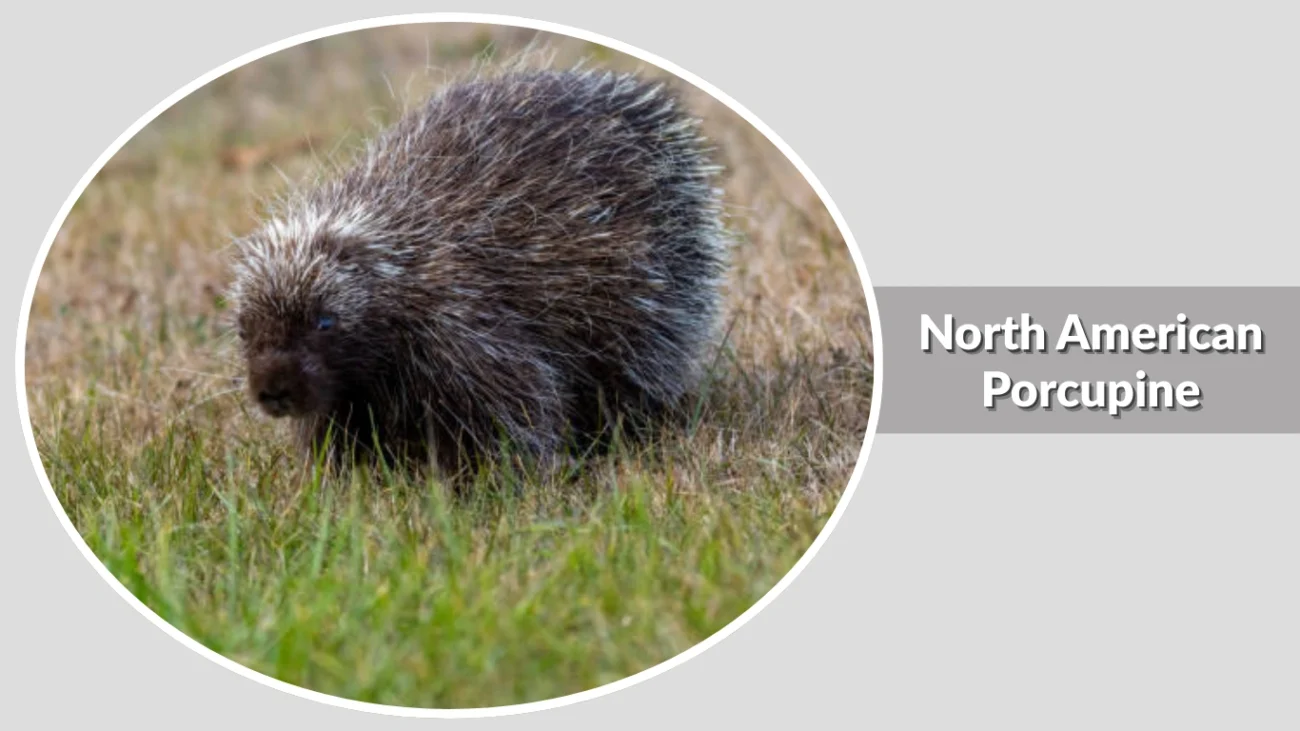
The North American porcupine (Erethizon dorsatum) is one of the largest and most well-known porcupine species, found throughout forests, tundra, and shrublands across North America. Covered in thousands of sharp quills, this slow-moving herbivore relies on its defensive armor to deter predators.
Identification
- Medium to large porcupine with a rounded body
- Covered in long guard hairs mixed with sharp quills
- Typically dark brown to black in color
- Short legs with strong climbing claws
- Small face with noticeable orange or yellowish teeth
Habitat
The North American porcupine thrives in a wide range of environments, including coniferous forests, mixed woodlands, rocky slopes, and sometimes open tundra. It is an excellent climber and spends much of its time in trees, especially during winter when food is scarce on the ground.
Behaviors
This species is solitary and mostly nocturnal, though it may be seen during the day. It moves slowly but climbs efficiently and uses its quills as a powerful defense against predators. When threatened, it raises and rattles its quills, backing into danger rather than fleeing.
Diet
The porcupine feeds primarily on vegetation. In summer, it consumes leaves, herbs, twigs, and berries. During winter months, it shifts to bark, evergreen needles, and the inner layers of trees. Its strong, ever-growing teeth allow it to strip bark and chew through tough plant material.
2. Cape Porcupine
The Cape porcupine (Hystrix africaeaustralis) is the largest porcupine species in the world, native to southern and central Africa. Known for its impressive black-and-white quills, it is a powerful burrower and highly adaptable to a variety of environments.
Identification
- Very large, heavy-bodied porcupine
- Distinct black-and-white banded quills
- Long crest of erectile quills along the back
- Short legs with strong digging claws
- Blunt, rounded head with small eyes
Habitat
Cape porcupines inhabit savannas, grasslands, rocky hillsides, and dry forests. They prefer areas with access to caves, rock crevices, or burrows they can dig themselves. Their ability to thrive in arid regions makes them widespread across southern Africa.
Behaviors
These porcupines are mainly nocturnal and live in monogamous pairs or small family groups. They are strong diggers and create complex burrow systems. When threatened, they stamp their feet, rattle hollow tail quills, and may charge backward to drive their sharp quills into predators.
Diet
Cape porcupines are herbivorous, feeding on roots, tubers, bulbs, bark, and fallen fruits. They are known to dig extensively for underground food sources and may gnaw on bones to obtain minerals like calcium.
3. Indian Crested Porcupine
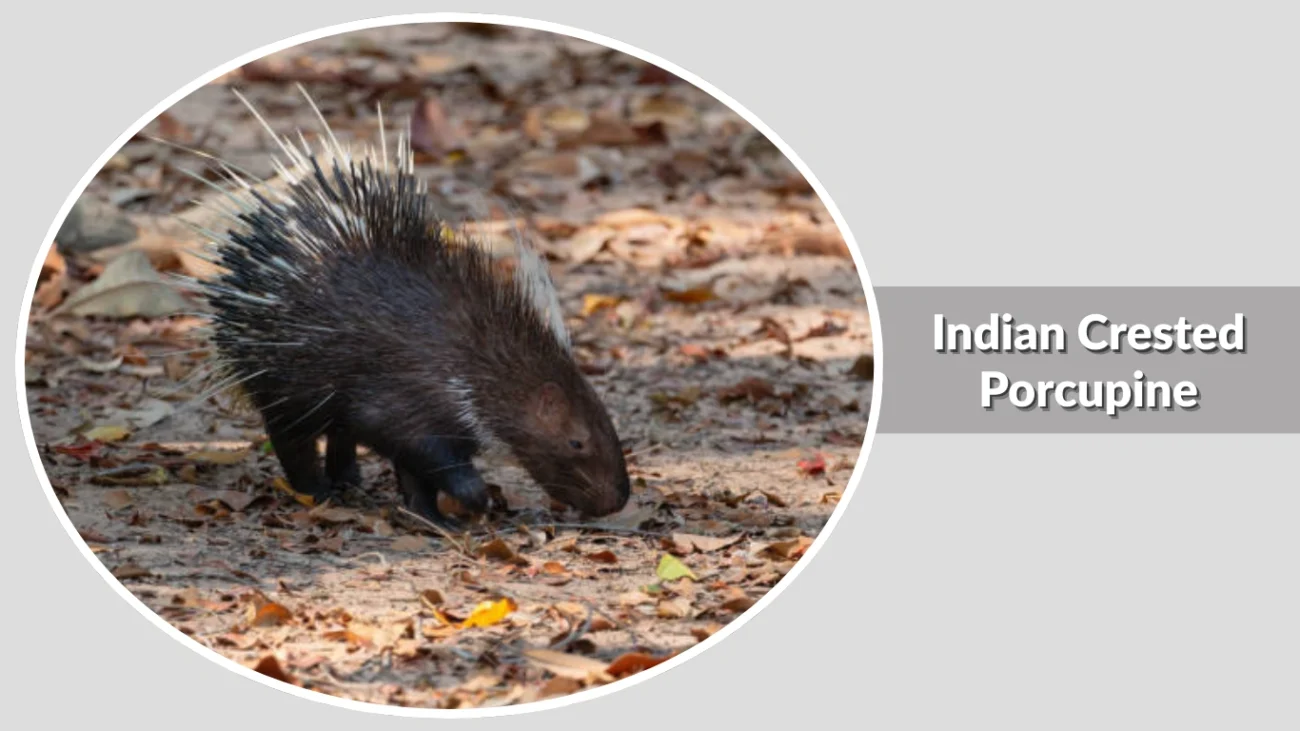
The Indian crested porcupine (Hystrix indica) is a large, striking porcupine known for the tall crest of quills along its head and back. Found across South Asia and the Middle East, it is adaptable, hardy, and well-known for raiding agricultural fields.
Identification
- Large body with a tall crest of long, erectile quills
- Quills are black-and-white banded and very sharp
- Stout legs with strong digging claws
- Broad head with prominent whiskers
- Tail tipped with hollow rattling quills
Habitat
This species inhabits forests, scrublands, grasslands, rocky hills, and agricultural areas. It prefers dry, open environments but can also be found in mountainous regions. Indian crested porcupines typically shelter in burrows, caves, or abandoned dens.
Behaviors
The porcupine is mostly nocturnal and highly territorial. When threatened, it raises its crest, rattles its hollow tail quills, and may charge backward to impale a predator. They also dig elaborate burrow systems and often live in family groups.
Diet
Indian crested porcupines are primarily herbivores, feeding on roots, tubers, crops, fruits, nuts, and bark. They are known to cause significant damage to farmland due to their preference for cultivated plants.
4. African Brush-Tailed Porcupine
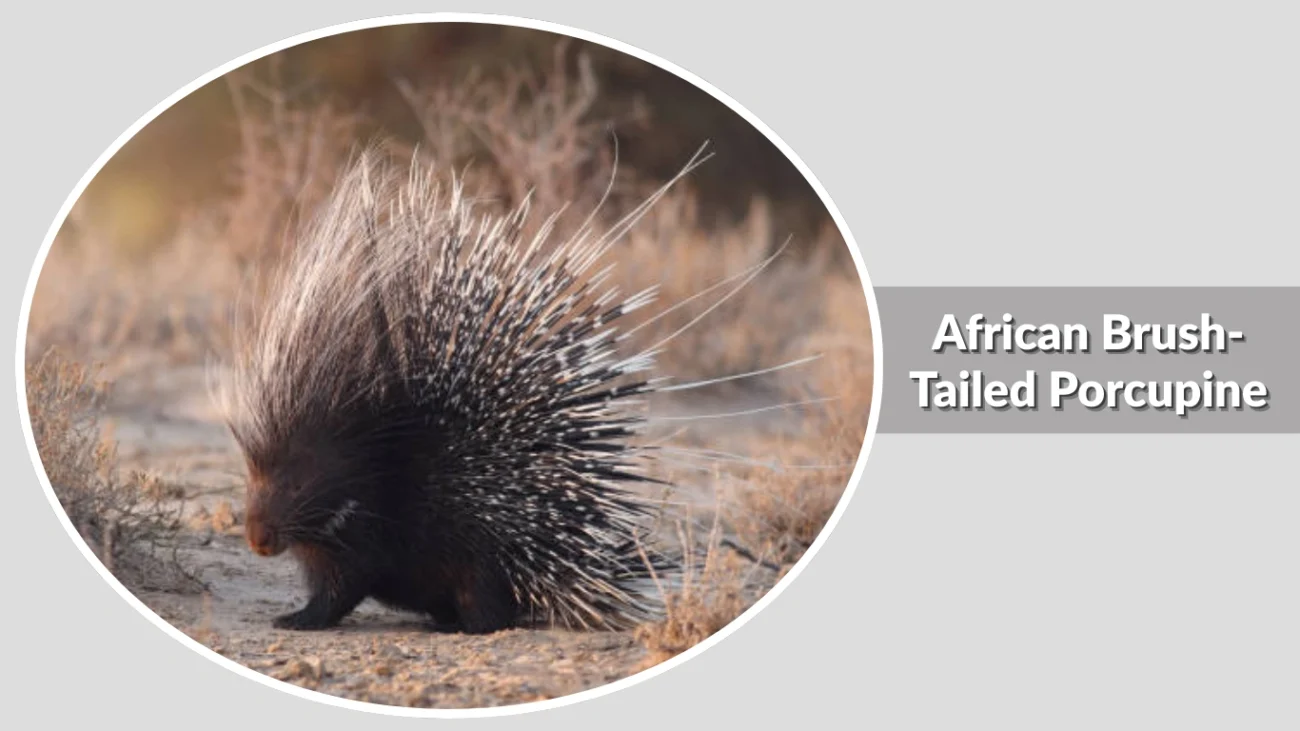
The African brush-tailed porcupine (Atherurus africanus) is a medium-sized porcupine known for its slender body and distinctive tail tipped with brush-like quills. Found throughout Central and West Africa, it is more agile and faster than its larger relatives.
Identification
- Medium-sized with a long, slender body
- Tail ends in brush-like quills that rattle when shaken
- Short, dense spines rather than long quills
- Brown to gray coloration
- Relatively long legs compared to other porcupines
Habitat
This species inhabits tropical rainforests, wooded savannas, and dense undergrowth. It prefers moist environments and often uses burrows, hollow logs, or dense vegetation for shelter. They are commonly found near water sources.
Behaviors
African brush-tailed porcupines are nocturnal and live in small family groups. They are known for being quick and agile, capable of running fast when threatened. Instead of relying heavily on long quills, they use their rattling tail to scare predators and may deliver sharp bites if cornered.
Diet
Their diet consists of fruits, roots, leaves, tubers, and fallen nuts. They also occasionally gnaw on bones for calcium. As opportunistic feeders, they consume a variety of forest vegetation and play a role in seed dispersal.
5. Asiatic Brush-Tailed Porcupine
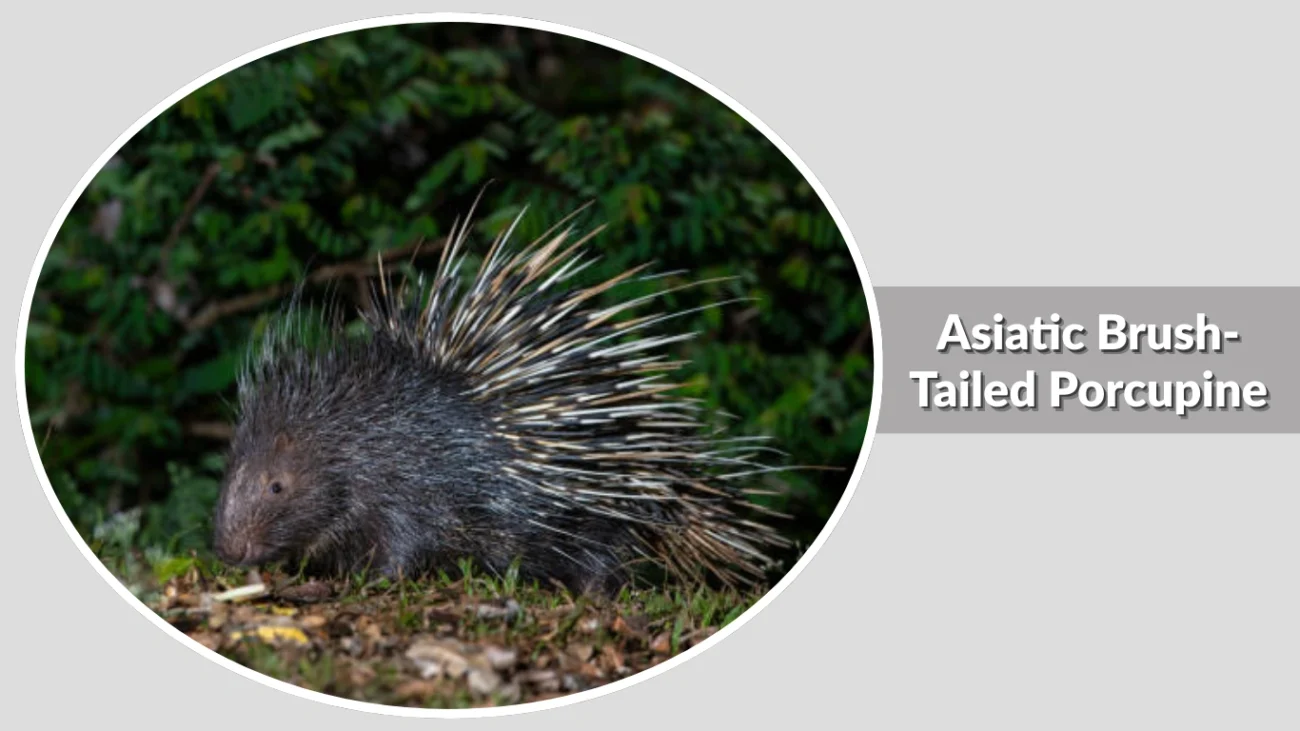
The Asiatic brush-tailed porcupine (Atherurus macrourus) is a small, fast-moving porcupine species native to Southeast Asia. Recognized for its elongated tail tipped with brush-like quills, it is more slender and agile than larger quilled species.
Identification
- Small, slender body with short spines
- Long tail ending in a brush of stiff quills
- Brown to grayish coat
- Lightweight build suited for speed
- Short face with small ears
Habitat
This species inhabits tropical and subtropical forests, bamboo thickets, and mountainous regions. It prefers dense vegetation and often shelters in burrows, rock crevices, or hollow logs. It is commonly found in moist environments with abundant plant cover.
Behaviors
Asiatic brush-tailed porcupines are nocturnal and highly active. They are fast runners and rely on agility rather than long defensive quills. When threatened, they shake their tail to produce a rattling sound. They often live in small groups and dig simple burrows or use natural shelters.
Diet
Their diet includes fruits, tubers, roots, shoots, and leaves. They also consume bark and fallen nuts. As opportunistic foragers, they play a role in forest ecology by dispersing seeds and feeding on a wide variety of plant materials.
6. Brazilian Porcupine
The Brazilian porcupine (Coendou prehensilis) is an arboreal porcupine found throughout South America. Known for its prehensile tail and tree-dwelling lifestyle, it is covered in short, sharp spines and has excellent climbing ability.
Identification
- Medium-sized body with short, stiff spines
- Strong prehensile tail used for climbing
- Coat ranges from yellowish to brown or black
- Rounded face with a pink or dark nose
- Limbs adapted for gripping branches
Habitat
This porcupine inhabits tropical rainforests, woodlands, and forest edges across northern and central South America. It spends most of its life in trees, nesting in hollows, dense foliage, or abandoned bird nests. Its range includes various elevations depending on forest density.
Behaviors
The Brazilian porcupine is primarily nocturnal and solitary. It moves slowly but skillfully among branches, using its tail for balance and grip. When threatened, it arches its back to display its spines and may release a strong odor. Vocalizations include grunts, whines, and clicks.
Diet
Its diet consists mainly of fruits, leaves, flowers, shoots, and tree bark. It also feeds on seeds and occasionally agricultural crops. As a frugivore and folivore, it contributes to seed dispersal and maintains an important role in forest ecosystems.
7. Mexican Hairy Dwarf Porcupine
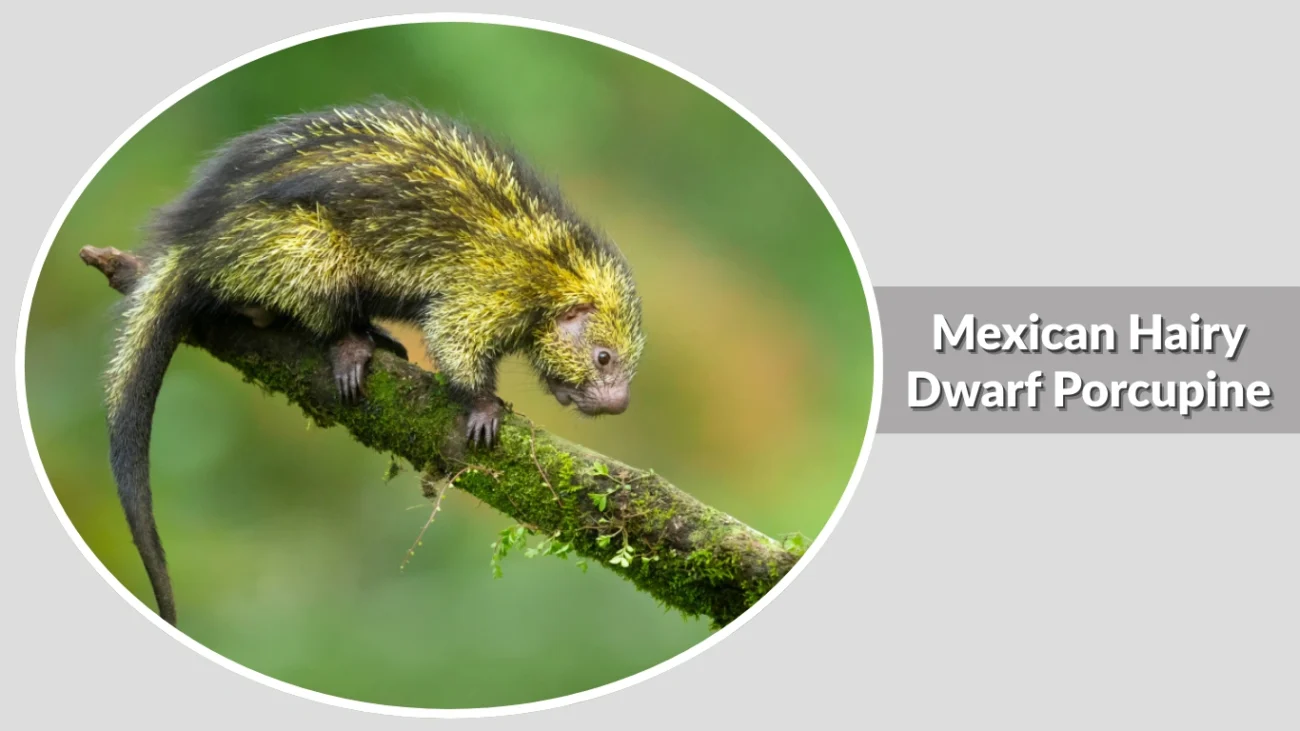
The Mexican hairy dwarf porcupine (Coendou mexicanus) is a small, tree-dwelling porcupine found in Mexico and parts of Central America. Known for its dense coat of hair covering many of its spines, it blends well into forest canopies.
Identification
- Small, compact body covered in hair and fine spines
- Prehensile tail for climbing and balance
- Coat color ranges from yellowish to dark brown
- Short snout with noticeable whiskers
- Clawed feet adapted for gripping branches
Habitat
This species inhabits tropical forests, cloud forests, and humid lowland woodlands. It prefers dense vegetation and spends most of its life in trees. It shelters in tree hollows, vine tangles, or leafy nests and is most common in undisturbed forested areas.
Behaviors
The Mexican hairy dwarf porcupine is solitary and nocturnal, moving quietly through the canopy. It uses its tail for balance and support while climbing. When threatened, it may curl up or display its spines but typically relies on height and camouflage for safety.
Diet
Its diet consists of fruits, leaves, young shoots, seeds, and occasionally tender bark. As a canopy forager, it plays a role in seed dispersal and helps maintain the ecological balance of the forest.
8. Andean Porcupine

The Andean porcupine (Coendou quichua) is a small, arboreal porcupine native to the mountainous forests of the Andes. Its dense coat and short spines help it blend into the mossy, cool environments it inhabits.
Identification
- Small body covered with a mix of hair and short spines
- Tail is prehensile and strong for climbing
- Coat appears dark brown to black, often with lighter speckling
- Rounded head with small eyes and a short snout
- Limbs equipped with curved claws for gripping branches
Habitat
Found in cloud forests, montane forests, and humid high-altitude woodlands, this species prefers dense canopy cover. It inhabits elevations from low mountain slopes to higher Andean regions, often sheltering in tree hollows, vine tangles, or epiphyte clusters.
Behaviors
The Andean porcupine is nocturnal and solitary, moving slowly through tree branches as it forages. It relies heavily on camouflage and elevation for protection. When disturbed, it may freeze, curl into a ball, or arch its spines outward. It rarely descends to the ground.
Diet
Its diet includes fruits, leaves, shoots, seeds, and bark. Living in diverse mountain forests, it consumes a variety of plant materials and contributes to seed dispersal across the Andean canopy ecosystem.
9. Black Dwarf Porcupine
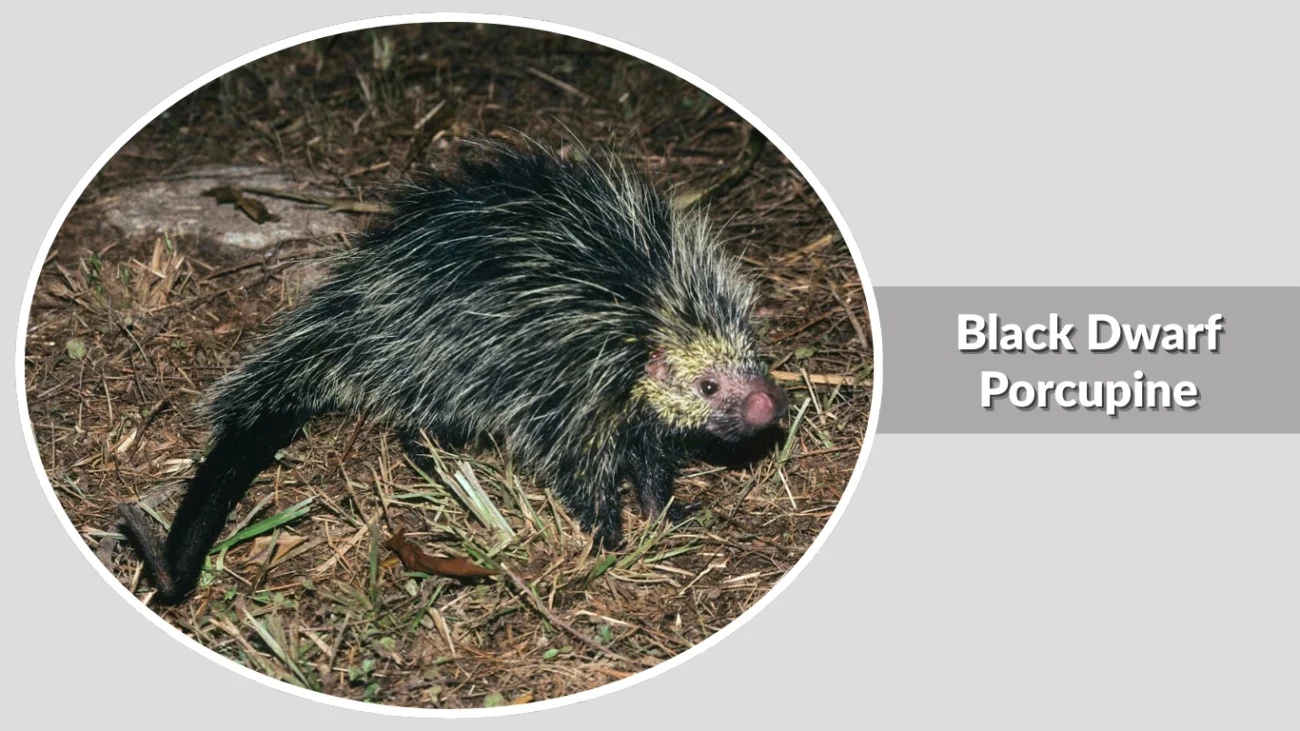
The Black dwarf porcupine (Coendou nycthemera) is a rare and elusive species native to the Amazon rainforest. With its dark coloration and small size, it remains one of the lesser-known arboreal porcupines.
Identification
- Small-bodied porcupine with short, sharp spines
- Dark black to brown coat aiding in nighttime camouflage
- Prehensile tail used for gripping branches
- Rounded face with small ears
- Limbs adapted for climbing in dense forest canopies
Habitat
This species inhabits lowland tropical rainforests, particularly in remote and undisturbed regions of the Amazon Basin. It prefers dense canopy areas and spends most of its life in trees, rarely descending to the forest floor.
Behaviors
The Black dwarf porcupine is nocturnal and extremely secretive, making it difficult for researchers to observe. It moves quietly through the canopy and relies on its dark coat to avoid detection. When threatened, it may curl into a defensive ball or display its spines.
Diet
Its diet primarily includes fruits, seeds, young leaves, and shoots. As a frugivore and foliage eater, it contributes to seed dispersal and plays an important ecological role in maintaining forest diversity.
10. Bicolored-Spined Porcupine
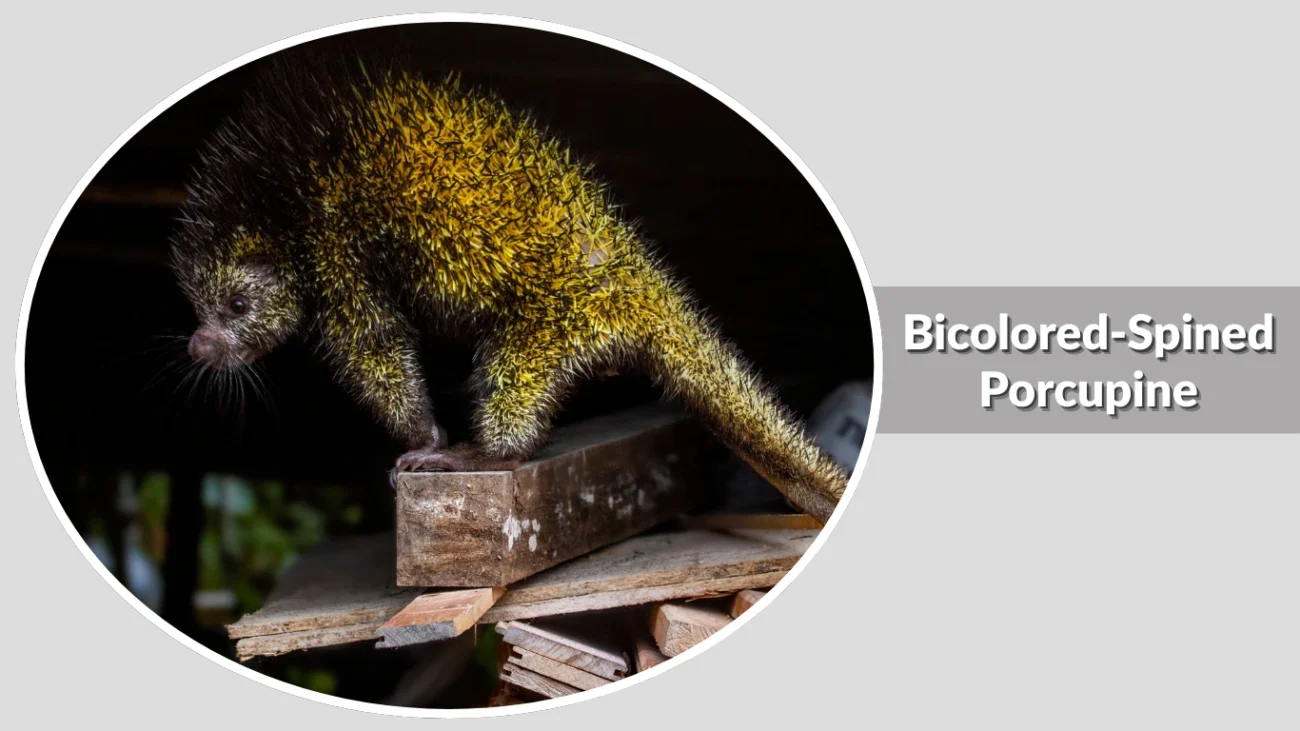
The bicolored-spined porcupine (Coendou bicolor) is a medium-sized arboreal species native to South America. Known for its distinctively colored spines, it is a quiet and solitary resident of forest canopies.
Identification
- Medium-sized with two-toned (bicolored) spines
- Coat ranges from yellowish to dark brown
- Prehensile tail for climbing
- Rounded body with a dense covering of spines
- Short snout and prominent whiskers
Habitat
This species inhabits tropical rainforests, montane forests, and forest edges across countries such as Peru, Ecuador, and Bolivia. It prefers high canopy environments and shelters in tree hollows or dense vegetation.
Behaviors
The bicolored-spined porcupine is nocturnal and solitary. It moves slowly through branches and uses its prehensile tail for stability. When threatened, it may arch its back, display its spines, or remain motionless to blend with its surroundings.
Diet
Its diet consists mainly of fruits, leaves, shoots, and seeds. By feeding on various plant materials, it aids in seed dispersal and contributes to maintaining the forest ecosystem’s plant diversity.
11. Bahia Hairy Dwarf Porcupine
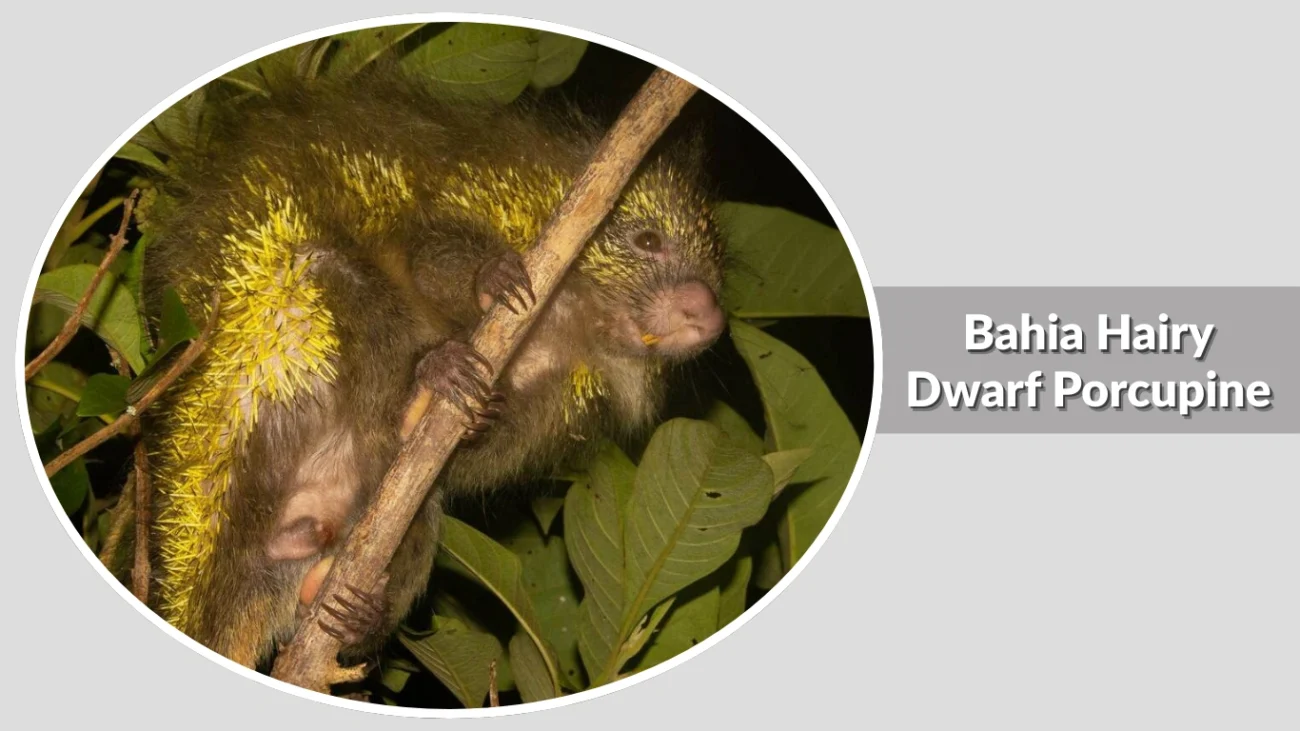
The Bahia hairy dwarf porcupine (Coendou insidiosus) is a small arboreal porcupine native to Brazil’s Atlantic Forest. Its dense coat of hair partially conceals its spines, giving it a softer appearance than many related species.
Identification
- Small body with a thick coat mostly hiding the spines
- Prehensile tail for gripping branches
- Coat color ranges from brown to yellowish tones
- Rounded head with small eyes and a blunt snout
- Limbs adapted for climbing dense forest vegetation
Habitat
This species is found in lowland and montane regions of the Atlantic Forest, one of the most biodiverse ecosystems in Brazil. It prefers dense, humid forests and typically shelters in tree hollows, vine tangles, or leafy nests high in the canopy.
Behaviors
The Bahia hairy dwarf porcupine is nocturnal and solitary, moving quietly through the upper forest layers. It relies on camouflage and height for safety. When threatened, it may remain motionless, curl up, or raise its hidden spines for defense.
Diet
Its diet includes fruits, leaves, flowers, seeds, and young shoots. As a canopy forager, it plays a role in the dispersal of fruit seeds and contributes to the regeneration of the Atlantic Forest ecosystem.
12. Paraguayan Hairy Dwarf Porcupine
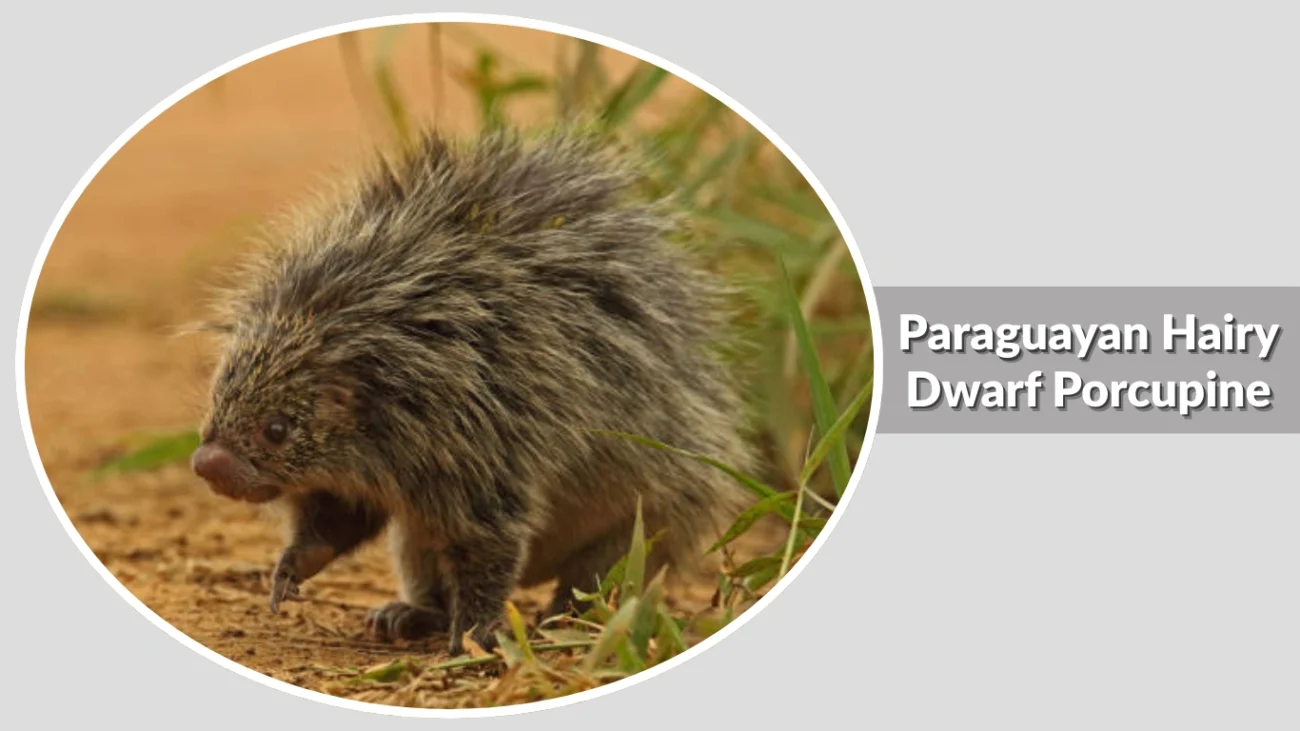
The Paraguayan hairy dwarf porcupine (Coendou spinosus) is a small arboreal porcupine found in South America, particularly in Brazil, Paraguay, and northern Argentina. Its spines are partly hidden by long hair, giving it a shaggy appearance.
Identification
- Small body with long hair covering many of the spines
- Prehensile tail for gripping branches
- Fur ranges from brown to black with lighter speckling
- Rounded head with short snout and noticeable whiskers
- Clawed feet adapted for climbing
Habitat
This species inhabits subtropical and tropical forests, including the Atlantic Forest and nearby woodland regions. It prefers dense canopy habitats and shelters in tree hollows, thick vine clusters, or leafy nests.
Behaviors
Paraguayan hairy dwarf porcupines are nocturnal and solitary, spending most of their lives in the trees. They move slowly and rely on camouflage for protection. When threatened, they may curl up or raise their spines but usually avoid confrontation by staying high in the canopy.
Diet
Their diet consists primarily of fruits, leaves, seeds, bark, and flowers. They play an important role in seed dispersal within their forest ecosystems and help maintain plant diversity.
13. Rothschild’s Porcupine
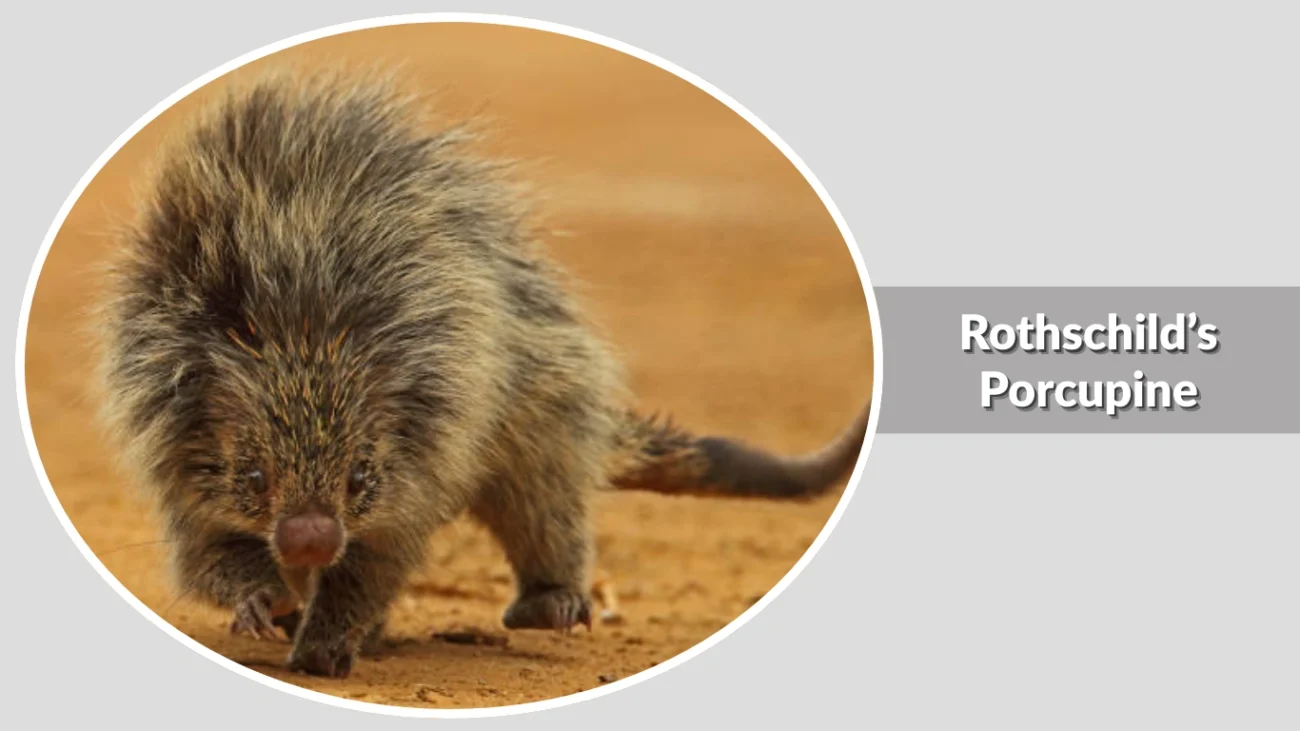
Rothschild’s porcupine (Coendou rothschildi) is a rare arboreal species found in Panama and parts of Central America. With its long hair partially concealing its spines, it blends easily into the forest canopy.
Identification
- Small to medium-sized porcupine with long, shaggy hair
- Spines are present but often hidden beneath the coat
- Coat coloration varies from brown to black
- Prehensile tail used for climbing
- Rounded body with strong, curved claws for gripping branches
Habitat
This species inhabits tropical rainforests and humid lowland forests. It prefers dense canopy cover and shelters in tree hollows, vine tangles, and leafy nests. Its range is limited, making sightings uncommon.
Behaviors
Rothschild’s porcupine is nocturnal and solitary. It moves slowly and quietly through trees, relying on camouflage for defense. When threatened, it may freeze or curl up, lifting its spines for protection. It rarely descends to the ground.
Diet
Its diet consists of fruits, young leaves, seeds, shoots, and bark. As an arboreal forager, it plays an important ecological role in seed dispersal throughout its forest environment.
14. Philippine Porcupine
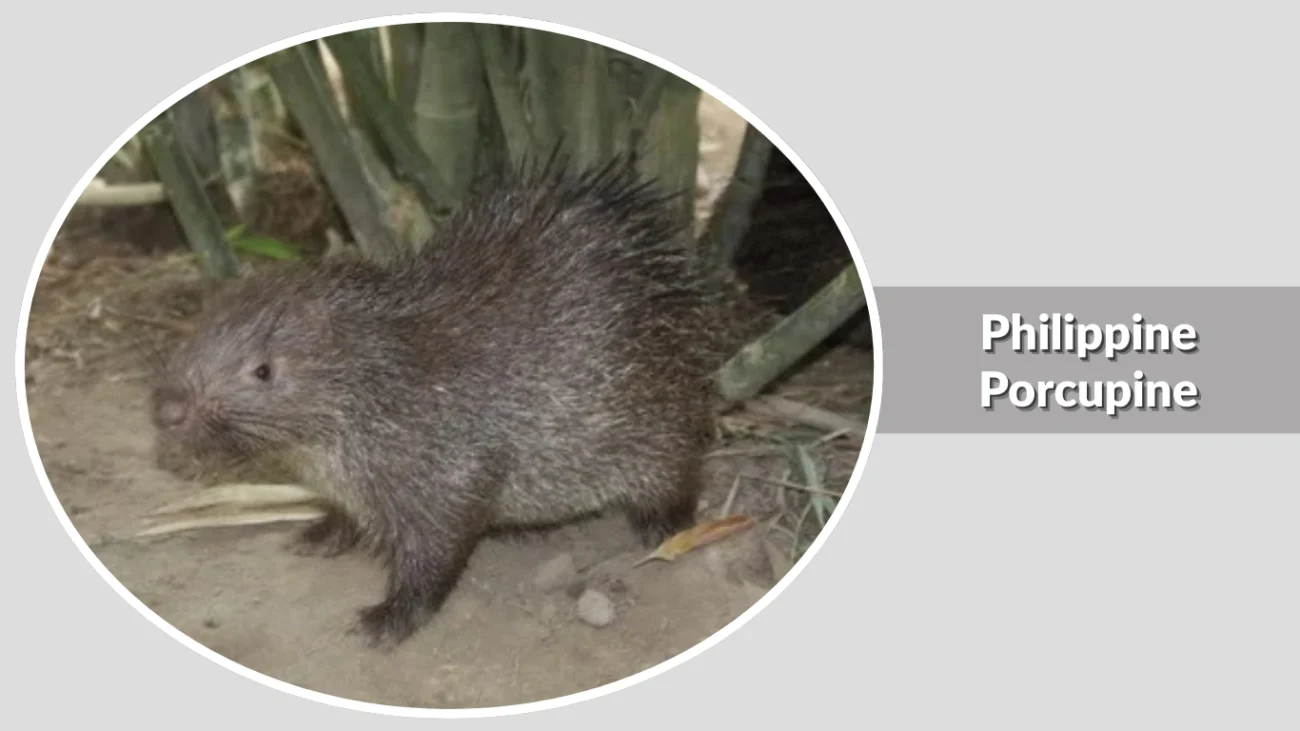
The Philippine porcupine (Hystrix pumila) is a small, ground-dwelling porcupine endemic to the Philippines, particularly the island of Palawan. Its compact size and dark, spiny coat make it well suited for life in dense tropical habitats.
Identification
- Small, stout body covered in sharp black-and-white quills
- Short legs with strong digging claws
- Dark face with small eyes and short whiskers
- Tail with short, thick quills rather than long rattling ones
- Overall compact build compared to larger Hystrix species
Habitat
This porcupine inhabits tropical forests, limestone caves, rocky slopes, and agricultural edges across Palawan. It prefers dense undergrowth and often shelters in burrows, crevices, or hollow logs. It adapts well to disturbed landscapes as long as vegetation cover remains.
Behaviors
The Philippine porcupine is nocturnal and solitary. When threatened, it erects its quills and may stomp or charge backward to defend itself. It is known to raid crops, which sometimes brings it into conflict with farmers. Despite this, it is generally shy and avoids humans.
Diet
Its diet includes roots, tubers, leaves, fruits, bark, and agricultural crops. It digs for underground food sources and consumes a variety of forest vegetation, contributing to ecological balance through seed dispersal and soil disturbance.
15. Sumatran Porcupine
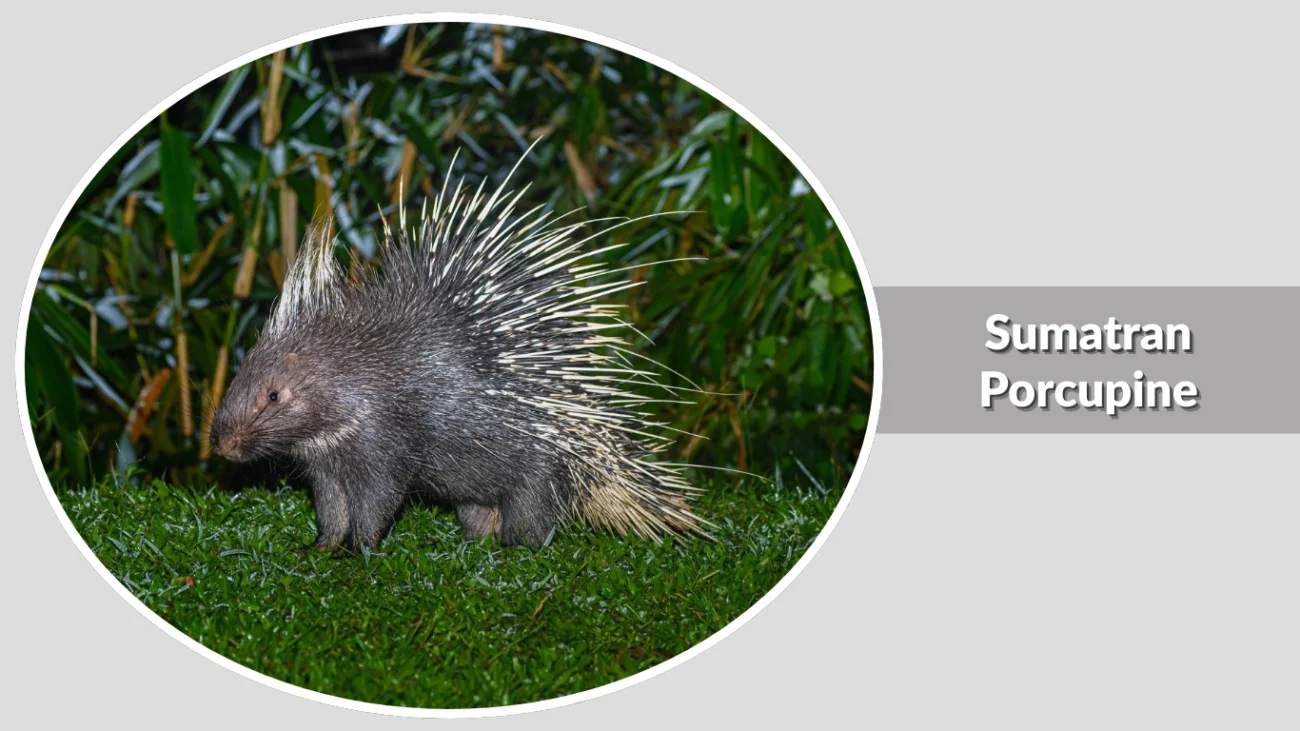
The Sumatran porcupine (Hystrix sumatrae) is a medium-sized, ground-dwelling porcupine native to Sumatra and surrounding regions. It is known for its bold black-and-white quills and its ability to thrive in diverse habitats across the island.
Identification
- Medium-sized body covered in long, sharp black-and-white quills
- Prominent crest of erectile quills along the back
- Short legs with strong digging claws
- Broad head with small eyes and thick whiskers
- Tail tipped with shorter, rattling quills
Habitat
This species occupies tropical forests, plantations, grasslands, and rocky hillsides throughout Sumatra. It often shelters in burrows, caves, or crevices and can adapt to disturbed habitats as long as sufficient cover is available.
Behaviors
Sumatran porcupines are primarily nocturnal and solitary. When threatened, they raise their quills, stamp their feet, rattle their tail quills, and may charge backward to defend themselves. They are strong diggers and create burrows for resting and raising young.
Diet
Their diet consists of roots, tubers, fruits, bark, shoots, and cultivated crops. They often forage on the forest floor and may dig for underground food sources, playing a role in soil aeration and seed dispersal within their ecosystems.
FAQs
What do porcupines use their quills for?
Porcupines use their quills as a defensive weapon against predators. When threatened, they raise and rattle their quills to appear larger and more intimidating. If a predator gets too close, the quills can detach on contact, embedding into the attacker. While porcupines cannot shoot quills, the barbed tips make them difficult to remove once lodged.
Are all porcupines good climbers?
Not all porcupines climb well. New World porcupines (found in the Americas) are excellent climbers and often live in trees, using their prehensile tails for balance. Old World porcupines (found in Africa, Asia, and Europe) are primarily ground-dwelling and rely more on burrows, digging skills, and powerful defenses rather than climbing ability.
What do porcupines eat in the wild?
Porcupines are herbivores that feed on leaves, fruits, flowers, bark, shoots, and roots. Arboreal species consume more fruits and young leaves, while ground-dwelling species often eat tubers and bark. Many porcupines also gnaw on bones to obtain essential minerals like calcium, which supports the growth and maintenance of their teeth and quills.
How do porcupines protect themselves from predators?
Their primary defense is their quills. When threatened, porcupines raise their quills, make rattling sounds, and may charge backward to drive the quills into a predator. Some species stomp their feet or emit strong odors. These defenses are usually highly effective, discouraging predators such as big cats, wolves, and large birds of prey.
Where do porcupines typically live?
Porcupines live in diverse habitats depending on the species. Tree-dwelling porcupines inhabit forests, rainforests, and mountainous woodlands, while ground-dwelling porcupines prefer grasslands, savannas, rocky areas, and caves. Many species adapt well to disturbed environments, including agricultural lands and forest edges, as long as food and shelter remain available.


