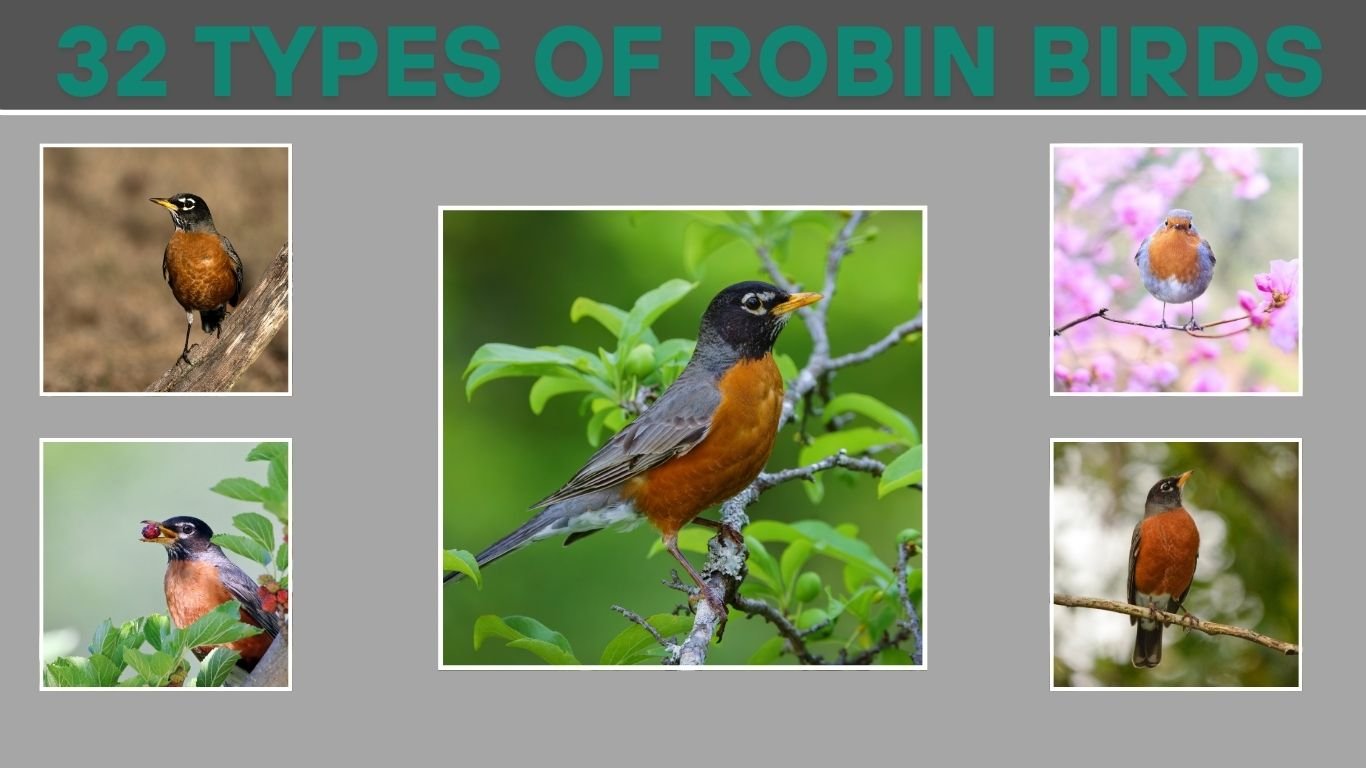
Robins are beloved birds known for their cheerful songs and vibrant plumage, but did you know there are many different species across the globe? From the iconic American Robin to the rare Black Robin of New Zealand, these birds vary widely in appearance, behavior, and habitat.
In this guide, we explore 32 fascinating types of robin birds, highlighting their unique traits and where they can be found. Let’s get started first one.
1. American Robin
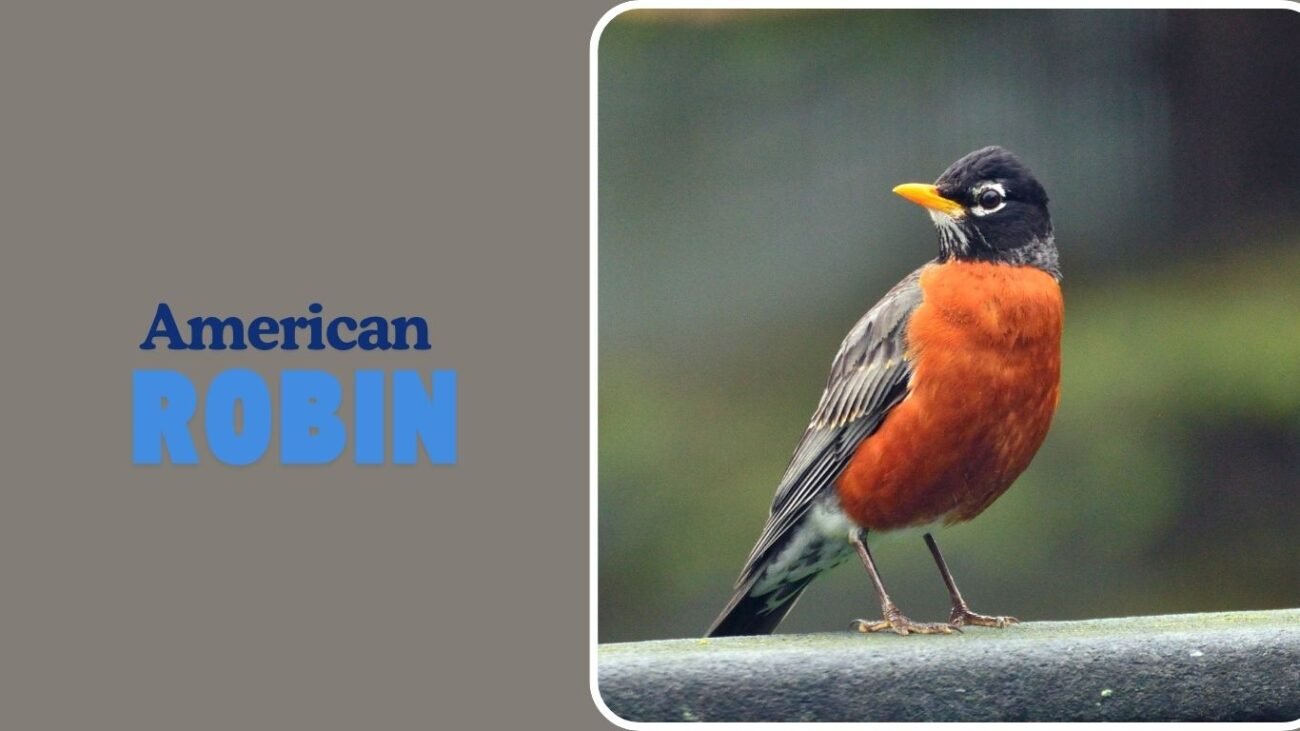
The American Robin is one of the most familiar songbirds in North America, known for its cheerful orange breast and melodious calls. It is often seen hopping on lawns in search of worms, especially during spring and summer.
Habitat and Distribution
American Robins are widespread across North America, ranging from Canada to Mexico. They prefer open woodlands, gardens, parks, and suburban areas.
Behavior
They are diurnal and spend much of their time foraging on the ground. Their song is a familiar sound at dawn and dusk. In winter, they often gather in large flocks and switch to a fruit-based diet.
Identification Features
- Reddish-orange breast
- Gray-brown upperparts
- White lower belly and undertail coverts
- Yellow beak
- White eye ring
- Medium-sized, around 9-11 inches in length
Breeding
American Robins breed in spring and summer. Females build nests using grass, twigs, and mud. They lay 3–5 light blue eggs, and both parents care for the young.
2. European Robin
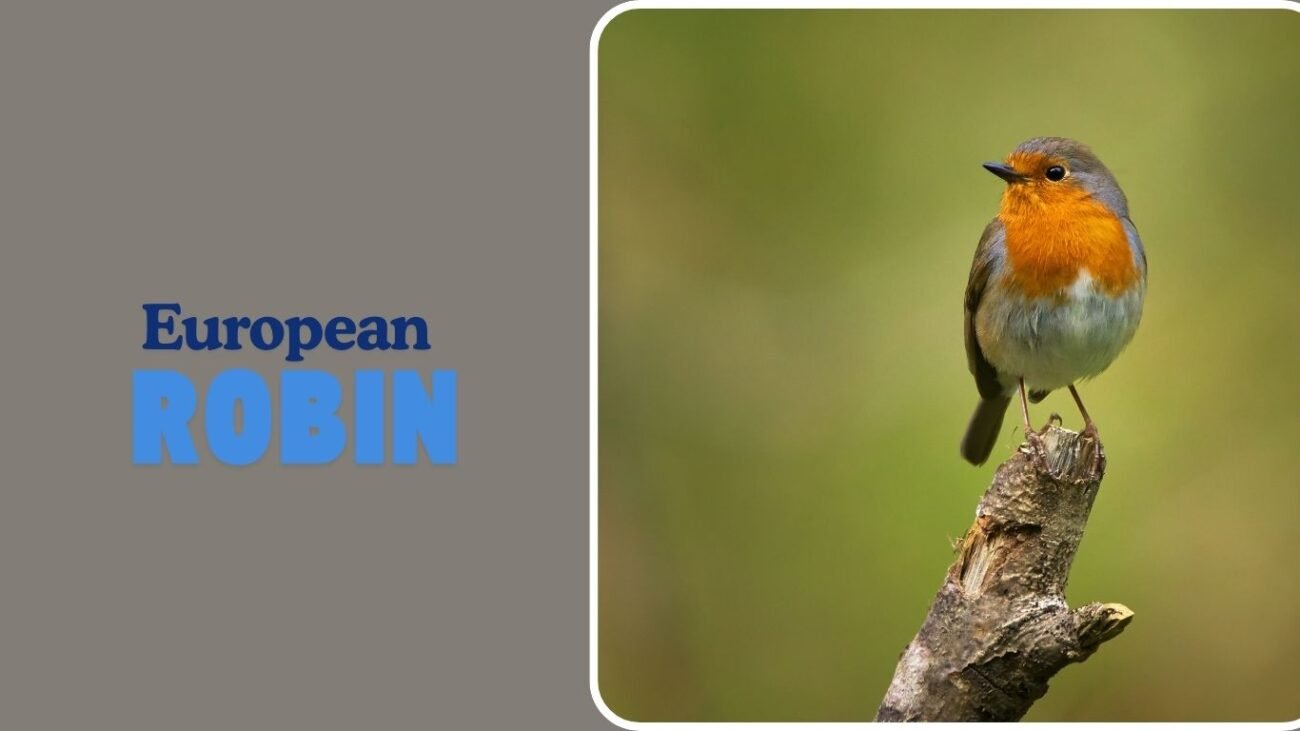
The European Robin is a small, plump songbird well-known across Europe. It is especially recognized for its bright orange-red face and breast, paired with a sweet, warbling song that’s often heard year-round.
Habitat and Distribution
Found throughout Europe, parts of North Africa, and western Asia, this robin thrives in woodlands, gardens, parks, and hedgerows. It’s a common garden bird in the UK and often seen near human habitation.
Behavior
Unlike the American Robin, the European Robin is highly territorial year-round. Males and females sing to defend their territories. They are active throughout the day and may become tame around people.
Identification Features
- Bright orange-red face and chest
- Brown upperparts and tail
- Whitish belly
- Thin, dark bill
- Large black eyes
- Small, round body shape (approx. 5 inches long)
Breeding
Breeding begins early in the year. Nests are often hidden in dense vegetation or man-made objects. Females lay 4–6 white or cream-colored eggs with reddish speckles, raising multiple broods in a season.
3. Indian Robin
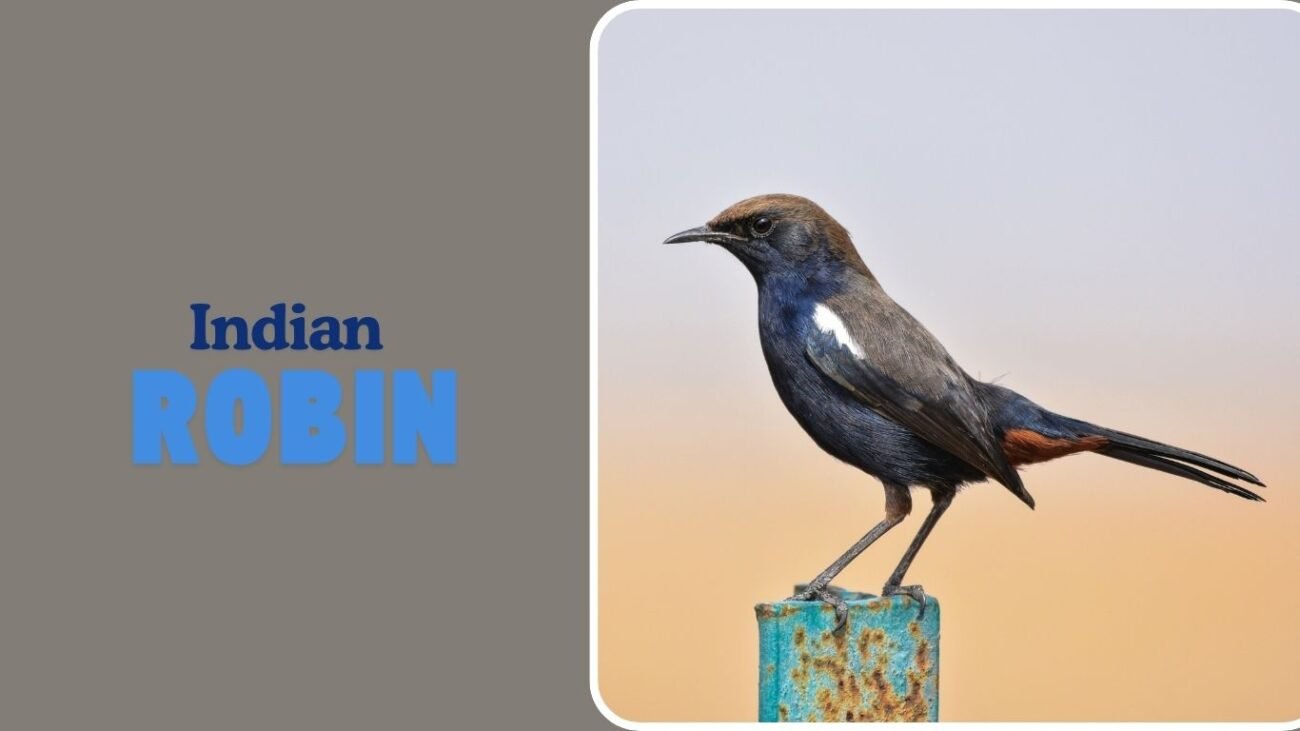
The Indian Robin is a compact and energetic bird found across the Indian subcontinent. Males are glossy black with a distinctive chestnut patch under the tail, while females are more subdued in color.
Habitat and Distribution
This robin is widespread in India, Nepal, Pakistan, Bangladesh, and Sri Lanka. It prefers open scrublands, farmlands, gardens, and even urban areas, often perching on low walls or fences.
Behavior
Indian Robins are known for their tail-flicking movements and alert posture. They are mostly insectivorous and often hunt from the ground. Males are territorial and sing from prominent perches during the breeding season.
Identification Features
- Males: glossy black with white shoulder patch and chestnut under-tail
- Females: gray-brown above, lighter below, chestnut under-tail
- Small size, about 6 inches in length
- Slender body with upright tail
Breeding
Breeding occurs from March to July. The nest is usually built in crevices, walls, or tree hollows using grass and fibers. Females lay 2–3 eggs, and both parents take part in feeding the chicks.
4. Oriental Magpie-Robin
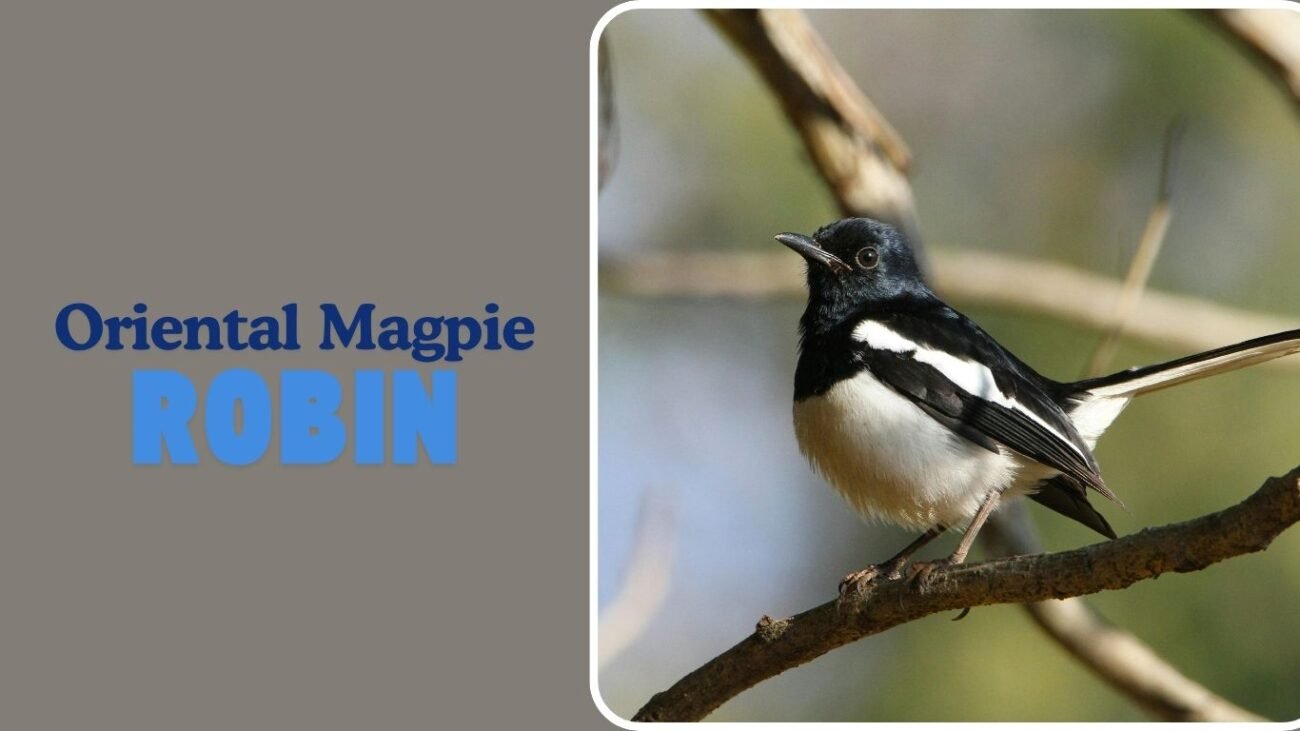
The Oriental Magpie-Robin is a striking bird known for its bold black-and-white plumage and rich, melodious song. It’s a common sight across South and Southeast Asia, often seen flitting between low branches and walls.
Habitat and Distribution
Widespread across India, Bangladesh, Sri Lanka, Thailand, Malaysia, Indonesia, and southern China. It inhabits gardens, wooded areas, towns, and plantations, often adapting well to human presence.
Behavior
Males are highly vocal during the breeding season, singing from rooftops or treetops. These robins are territorial and monogamous, often seen alone or in pairs. They are insectivorous but may also eat small fruits.
Identification Features
- Males: glossy black head, back, and upper breast
- White belly and wing patches
- Long black tail with white edges
- Females: grayish upperparts and duller underparts
- Length: around 7.5–8.5 inches
Breeding
Nesting takes place from March to July. Nests are built in tree holes or building crevices. Females lay 3–5 eggs, and both parents feed the young after hatching.
5. White-throated Robin
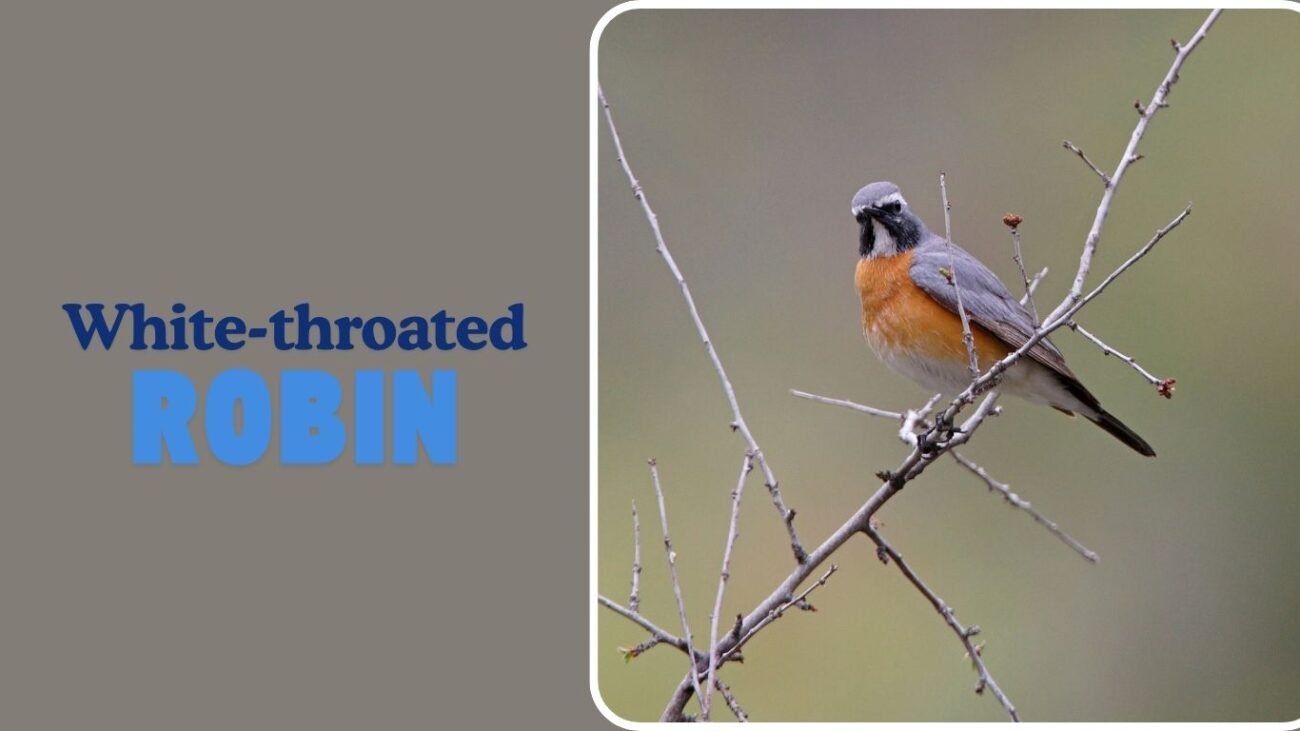
The White-throated Robin is a small, ground-feeding bird with a sharp appearance. Males have contrasting slate-blue and white plumage with a prominent eye stripe, while females are more brownish.
Habitat and Distribution
Breeds in the Middle East, Turkey, Iran, and Central Asia. Winters in East Africa. It favors scrubby hillsides, open woodlands, and dry mountain forests.
Behavior
Migratory in nature, this robin is shy and secretive, usually foraging close to the ground. It sings a melodic tune during breeding, often from a hidden perch.
Identification Features
- Males: blue-gray upperparts, white throat and belly
- Distinctive black-and-white eye stripe
- Rusty flanks
- Females: duller brown with pale underparts
- Medium-small size, about 6 inches long
Breeding
Breeding occurs in spring and early summer. The nest is a cup made of twigs and grasses, placed in low shrubs or rocky ledges. Typically lays 4–5 eggs per clutch.
6. Siberian Blue Robin
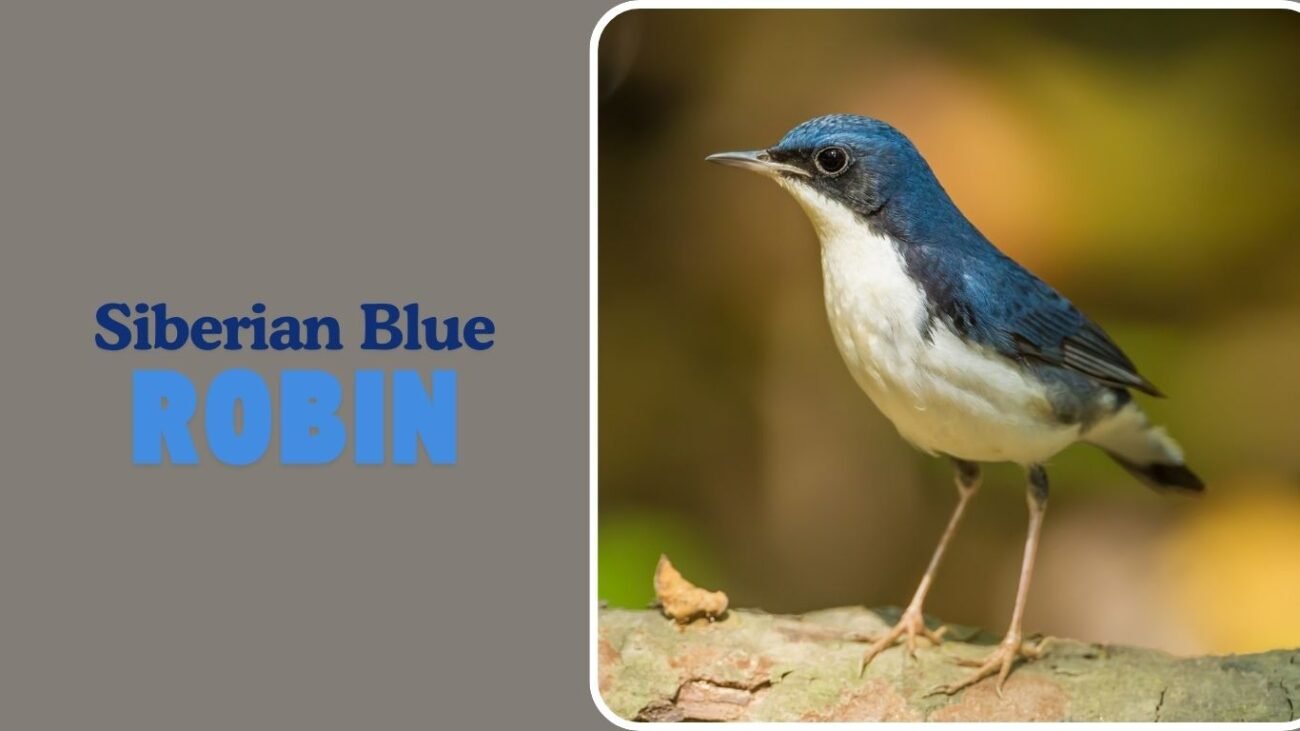
The Siberian Blue Robin is a secretive, ground-dwelling bird admired for the male’s deep blue plumage and the female’s subtle earthy tones. It is a long-distance migrant with a preference for dense undergrowth.
Habitat and Distribution
Breeds in eastern Siberia, northeastern China, Korea, and Japan. Winters in Southeast Asia, including Thailand, Malaysia, and Indonesia. Prefers damp forests with thick understory.
Behavior
Shy and elusive, often hopping along forest floors in search of insects and small invertebrates. They remain hidden in low cover and are more often heard than seen.
Identification Features
- Males: vivid cobalt-blue upperparts, white underparts
- White eye-ring
- Females: olive-brown upperparts, pale grayish belly
- Slender build, around 5.5–6 inches long
Breeding
Nests are usually built low in bushes or among tree roots, made of moss and leaves. Breeding occurs in May–July, and females lay 4–5 eggs. Only females incubate, but both parents feed the chicks.
7. Indian Blue Robin
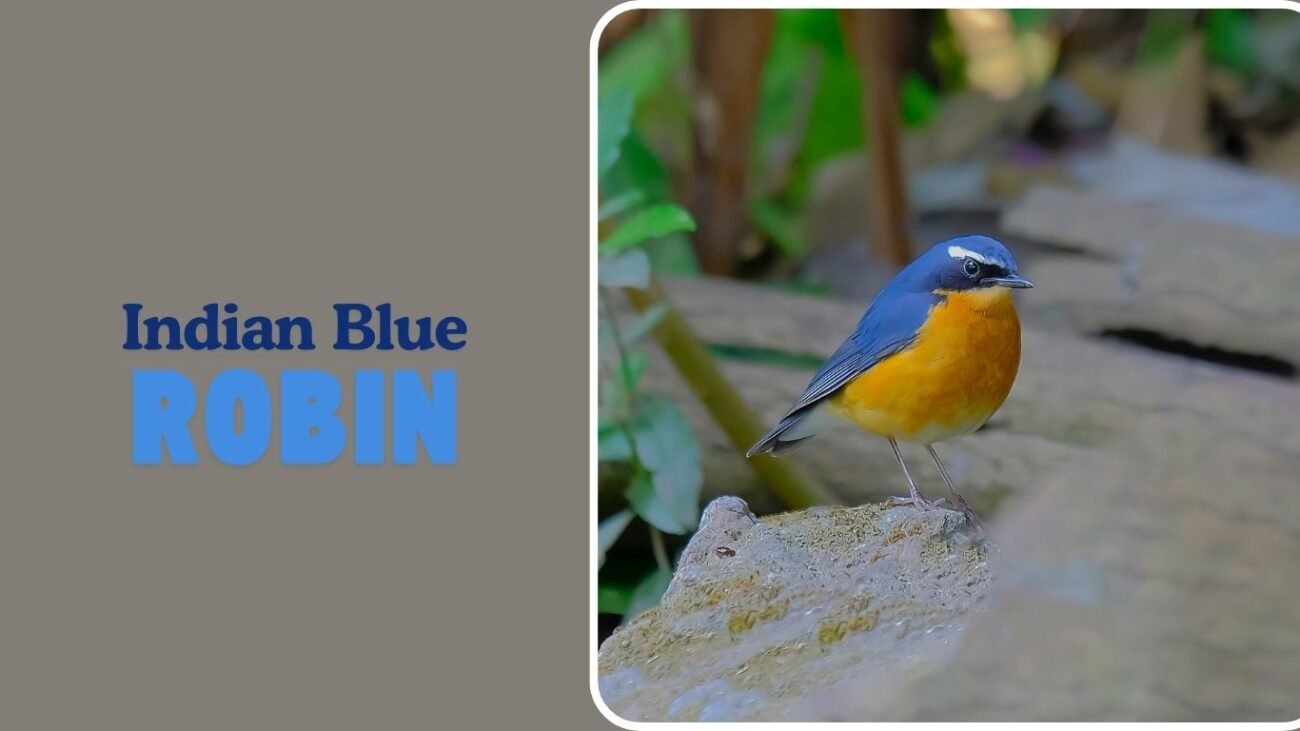
The Indian Blue Robin is a vibrant migratory songbird with a glowing blue back and an orange chest, creating a vivid contrast. It spends much of its time foraging quietly in dense ground cover.
Habitat and Distribution
Breeds in the Himalayas and migrates to southern India and Sri Lanka during winter. Inhabits moist forest edges, bamboo thickets, and shaded valleys.
Behavior
Secretive and solitary, it often hops low in the undergrowth. Known for its melodious song, usually heard during breeding. It is more active at dawn and dusk.
Identification Features
- Males: deep blue upperparts, bright orange chest, white belly
- White supercilium (eyebrow stripe)
- Females: dull brown with lighter underparts
- Compact body, around 5.5 inches long
Breeding
Breeds between May and July in the Himalayan region. Nests are built low in bushes or on the ground. Females lay 3–4 eggs, and both parents are involved in chick-rearing.
8. Cape Robin-Chat
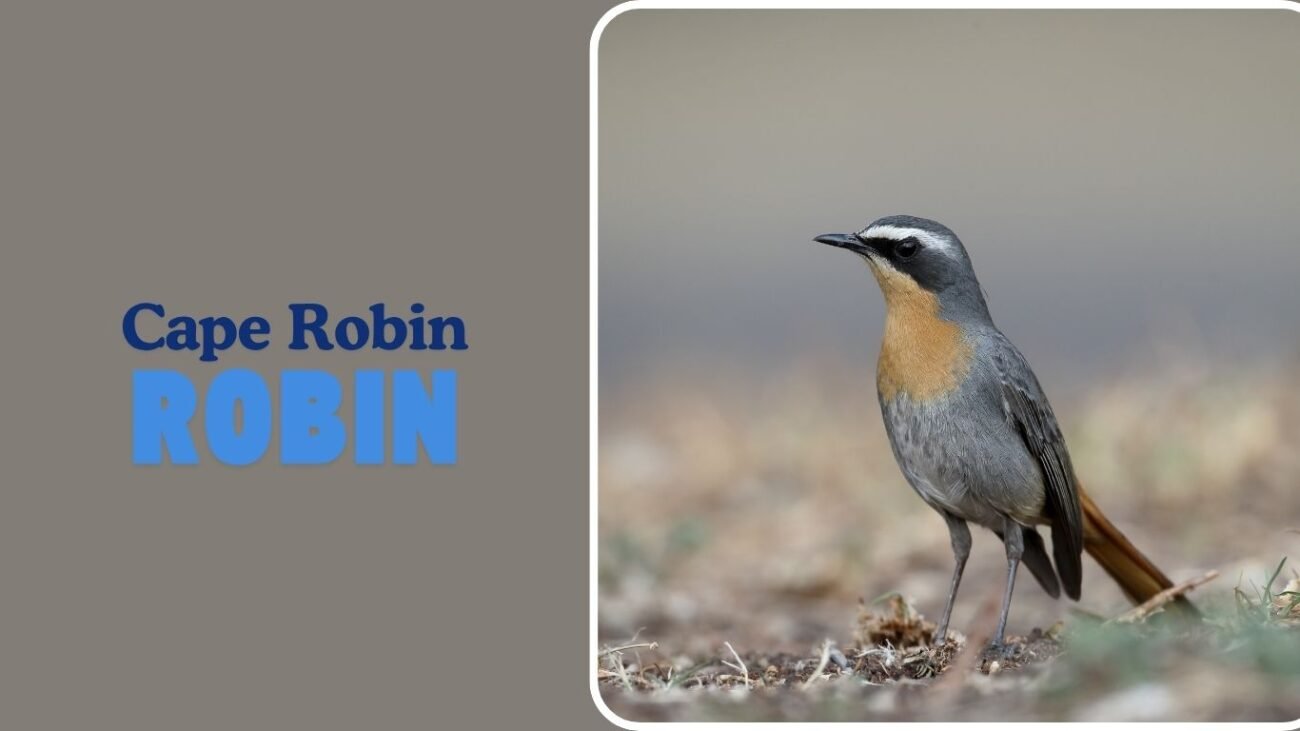
The Cape Robin-Chat is a charming and vocal bird native to southern Africa. Its striking orange chest and grey upperparts make it a favorite among birdwatchers, especially due to its beautiful, flute-like call.
Habitat and Distribution
Found throughout South Africa, Lesotho, Swaziland, Namibia, and Botswana. It inhabits gardens, forests, savannas, and mountainous regions, often near water sources or human dwellings.
Behavior
It is territorial and commonly seen foraging on the ground or singing from a low perch. Active during the day and known for mimicking other bird calls. Generally solitary or in pairs.
Identification Features
- Orange throat and chest
- Grey head and back
- White eyebrow stripe
- Black face mask
- Pale belly and rufous undertail
- Medium size, around 7 inches in length
Breeding
Breeds from late spring to summer. Nests are cup-shaped, built in dense shrubs or on ledges. Females lay 2–3 eggs, with both parents feeding the chicks.
9. White-browed Robin-Chat
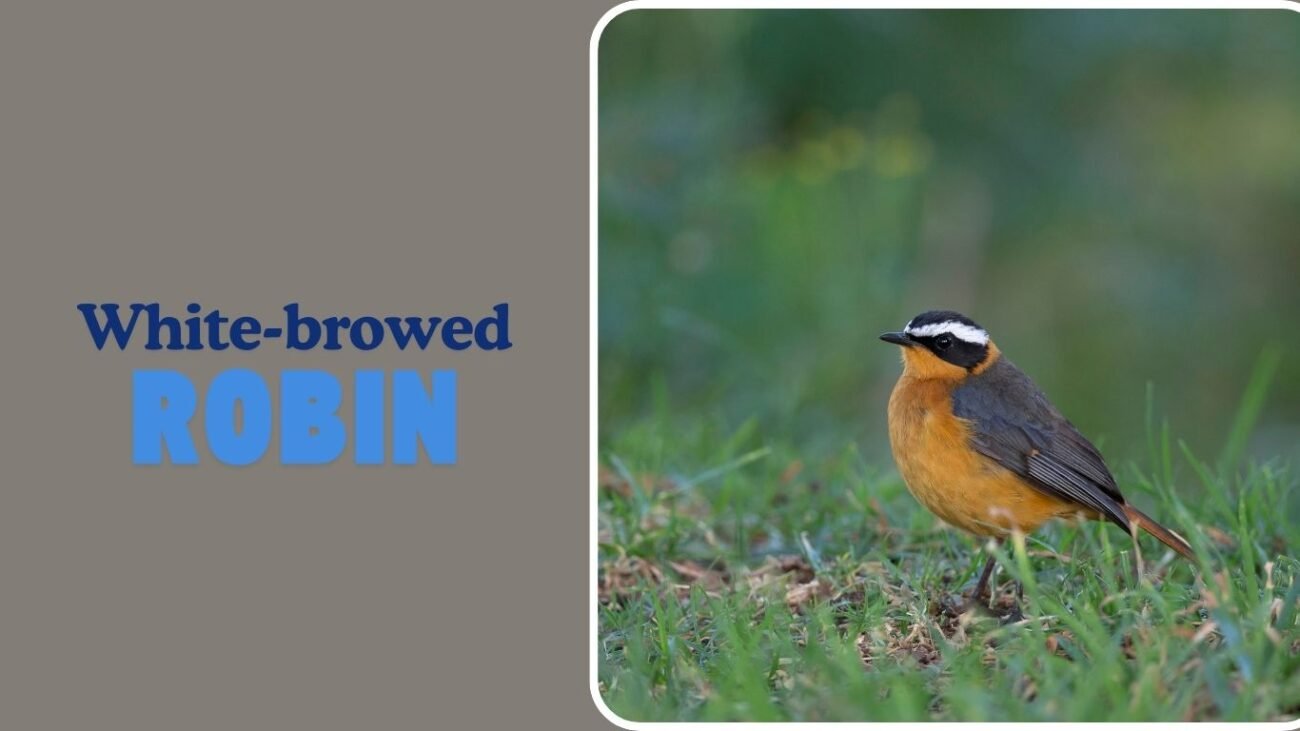
The White-browed Robin-Chat is a brightly colored African bird recognized for its vibrant orange and black contrast and distinctive white eyebrow stripe. It is known for its rich, musical songs.
Habitat and Distribution
Native to eastern and southern Africa, from Ethiopia to South Africa. It prefers dense woodlands, gardens, riverine forests, and suburban areas.
Behavior
Often seen hopping around in leaf litter or low branches. Active and vocal, especially during dawn and dusk. It may mimic other birds and calls loudly during courtship or territorial defense.
Identification Features
- Bright orange underparts
- Dark grey to black upperparts
- Prominent white supercilium (eyebrow)
- Slightly curved black bill
- White wing patch visible in flight
- Length: 7–8 inches
Breeding
Breeds mainly during the wet season. The nest is a cup of twigs and grass placed in a crevice, tree hole, or among thick vegetation. Typically lays 2–3 eggs, with both parents involved in feeding.
10. Snowy-crowned Robin-Chat
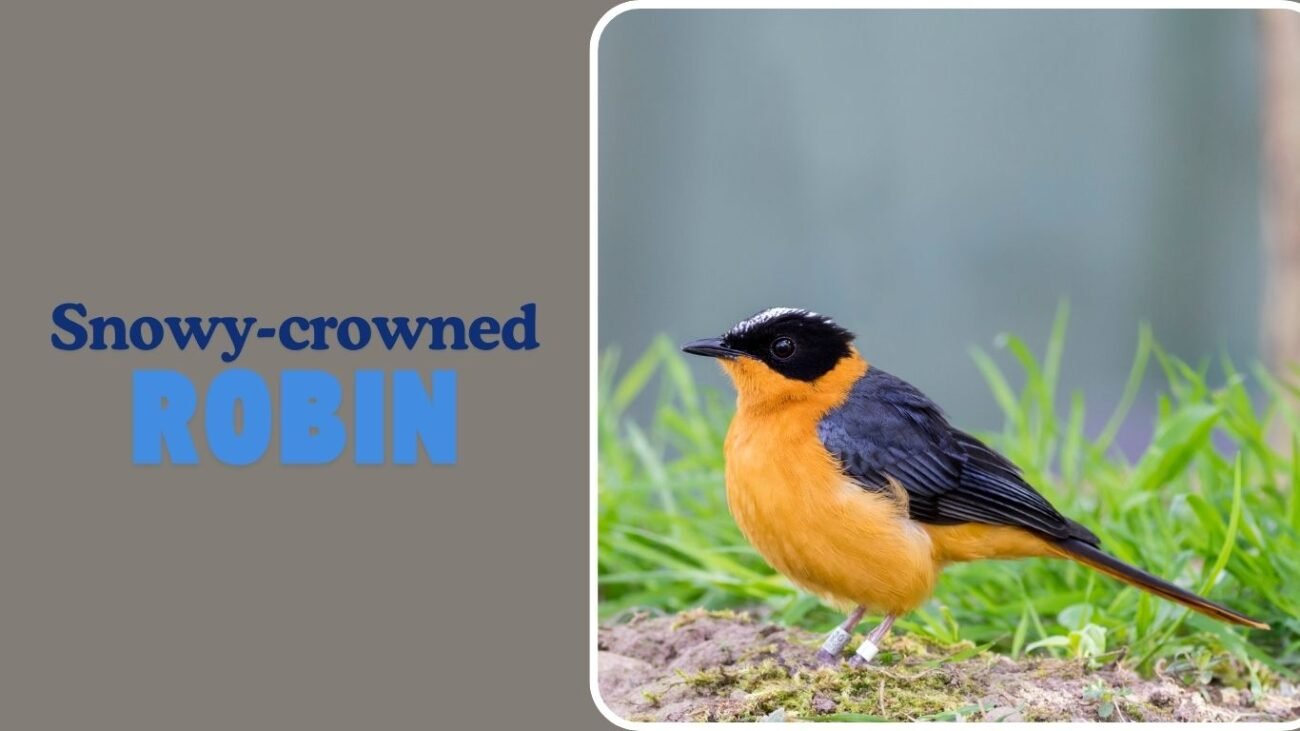
The Snowy-crowned Robin-Chat is a beautiful African songbird known for its contrasting crown and vibrant vocal range. It is shy but often heard singing from dense vegetation, especially during the breeding season.
Habitat and Distribution
Found in western and central Africa, including countries like Ghana, Nigeria, and the Democratic Republic of Congo. Inhabits dense forests, woodlands, and forest edges, often near streams or wetlands.
Behavior
Solitary and elusive, this robin-chat stays within thick undergrowth. It forages close to the ground and emits a rich, melodious song with imitations of other birds and sounds.
Identification Features
- Snow-white crown patch
- Black face and upperparts
- Bright orange chest and flanks
- White throat and belly
- Short, rounded wings
- Around 7 inches in length
Breeding
Nesting occurs in the rainy season. Nests are built in dense thickets or low branches. Females typically lay 2–3 eggs, and both parents share responsibilities for feeding and care.
11. White-starred Robin
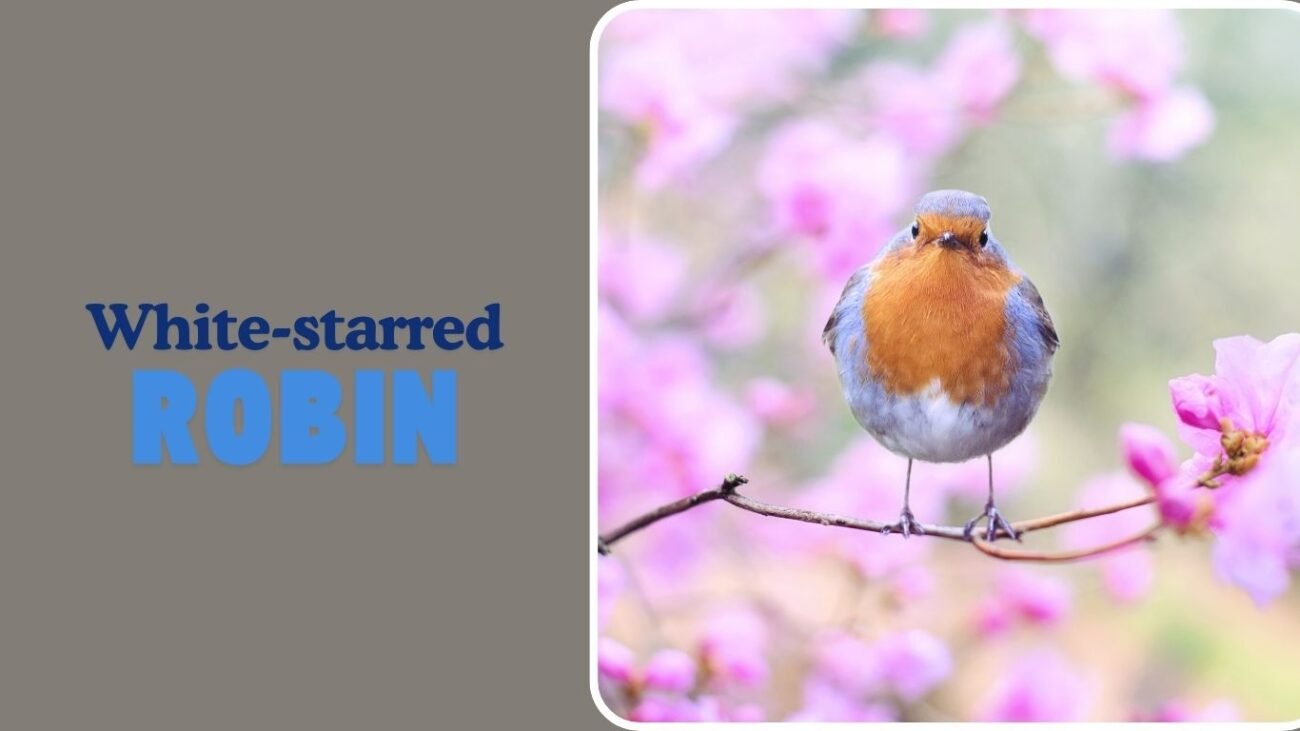
The White-starred Robin is a striking forest robin with a vibrant yellow belly and a distinctive white star-like patch on its cheek. It is found mostly in forested highland areas of eastern and southern Africa.
Habitat and Distribution
Common in montane forests of Kenya, Tanzania, Malawi, Zimbabwe, and Mozambique. Prefers dense, moist forests and forest edges at mid to high elevations.
Behavior
Secretive and usually solitary, often hopping through shaded undergrowth. It is active early in the morning and late in the afternoon. Recognized for its soft, whistling call.
Identification Features
- Bright yellow underparts
- Olive-green upperparts
- Black head with a clear white cheek spot (“star”)
- Slim legs and tail
- Size: about 5.5–6 inches
Breeding
Breeding generally coincides with the rainy season. The nest is built in a tree fork or low shrub using moss and plant fibers. The female lays 2–3 eggs, and both adults feed the nestlings.
12. Collared Robin
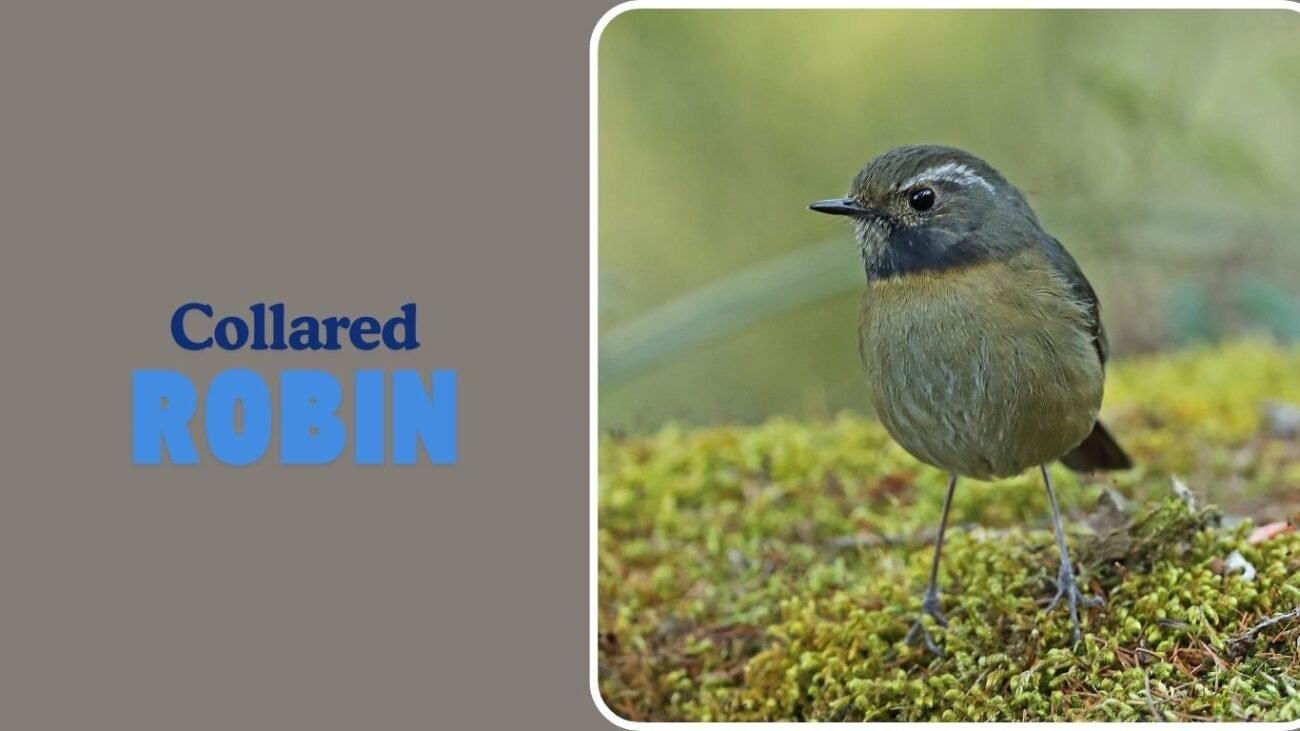
The Collared Robin is a lesser-known but distinctive forest robin found in parts of Southeast Asia. It gets its name from the unique white collar around its neck, which contrasts with its otherwise dark plumage.
Habitat and Distribution
Native to the mountains of Sumatra and the Malay Peninsula. It inhabits subtropical or tropical moist montane forests, usually at higher elevations.
Behavior
This robin is shy and elusive, spending most of its time within the forest understory. It feeds on insects and small invertebrates, often hopping on mossy logs or dense ground cover.
Identification Features
- Males: dark slate-gray to blackish upperparts
- Prominent white collar around the neck
- Pale or whitish belly
- Rounded wings and tail
- Small size, around 5.5 inches
Breeding
Breeding behavior is not well documented due to its secretive nature, but it likely nests in low shrubs or forest litter. Like many forest robins, it is assumed both parents help rear the chicks.
13. Hill Blue Flycatcher
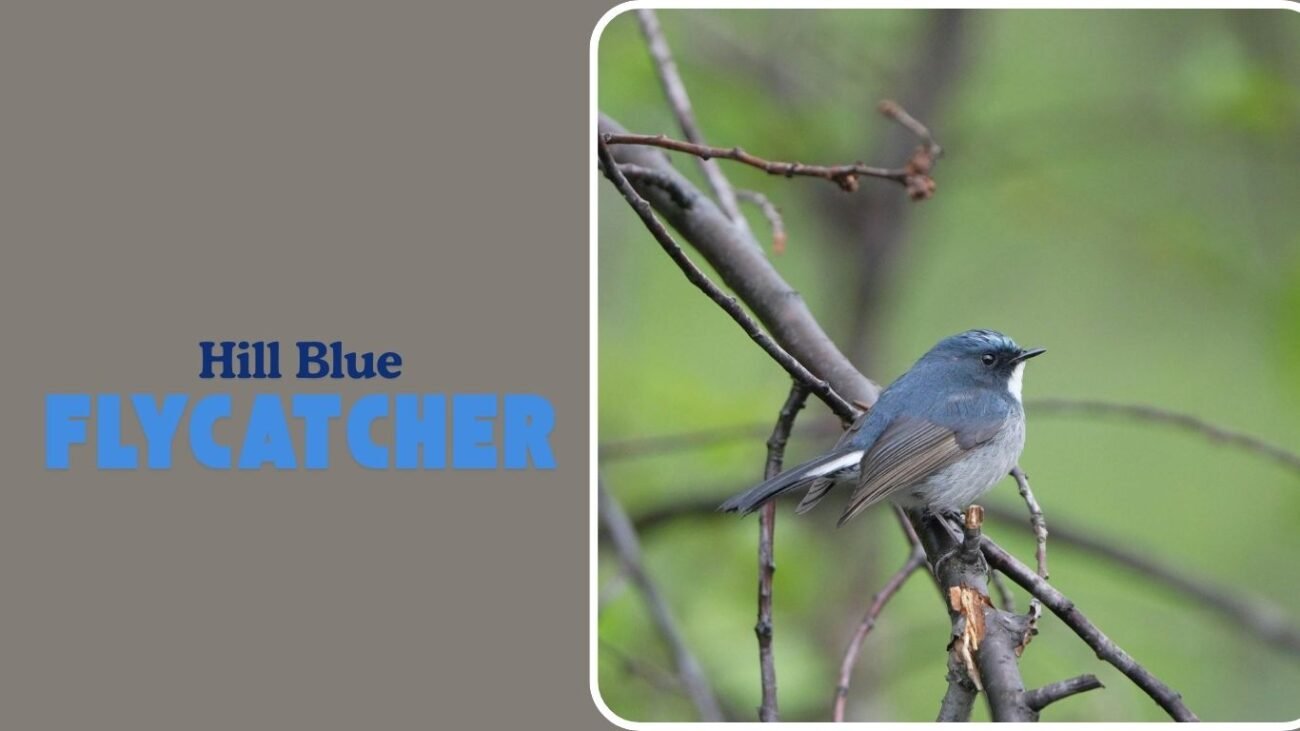
The Hill Blue Flycatcher is often grouped with robin-type birds due to its appearance and behavior. Males are a brilliant royal blue with an orange throat, making them stand out in the shaded forest environment.
Habitat and Distribution
Found in the foothills and mid-altitude forests of the Indian Subcontinent and Southeast Asia, including Nepal, India, Myanmar, Thailand, and Malaysia. Prefers dense forests near streams and gullies.
Behavior
These birds are agile and active, frequently flicking their tails and darting after insects. Males are territorial and sing a loud, sweet tune to mark their presence during breeding season.
Identification Features
- Males: bright blue upperparts, orange throat and upper chest
- White belly
- Females: duller blue with pale underparts
- Slender with medium-length tail
- Length: about 5.5–6 inches
Breeding
Nesting typically occurs from March to July. The nest is made in tree holes or root tangles, composed of moss and fine twigs. The female lays 3–4 eggs, and both parents feed the hatchlings.
14. Forest Robin
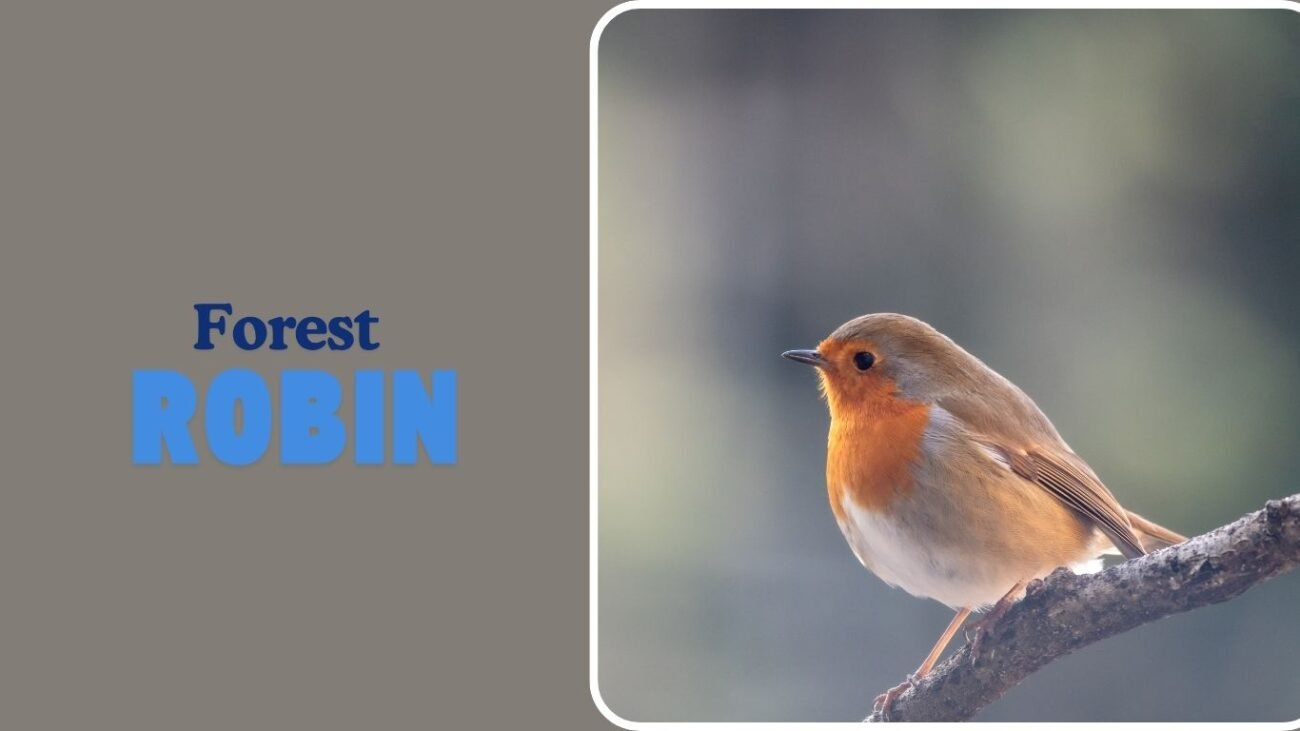
The Forest Robin is a group of small, vibrantly colored birds found in the rainforests of central and western Africa. They are known for their rich orange underparts and secretive behavior within dense foliage.
Habitat and Distribution
Found in tropical lowland forests across countries like Gabon, Cameroon, the Republic of Congo, and Equatorial Guinea. Prefers humid, shaded understory environments.
Behavior
Forest Robins are quiet and reclusive, spending most of their time near the forest floor. They forage for insects and small arthropods among leaf litter and roots. Their song is a soft, whistling tune often heard before the bird is seen.
Identification Features
- Bright orange breast and throat
- Olive or brown upperparts
- White belly
- Black eye with faint white eye-ring
- Small body size, about 4.5–5 inches
Breeding
Breeding habits are not widely documented due to their elusive nature. However, like other robin species, they are believed to build cup-shaped nests low in vegetation and raise 2–3 chicks per clutch.
15. Olive-backed Forest Robin
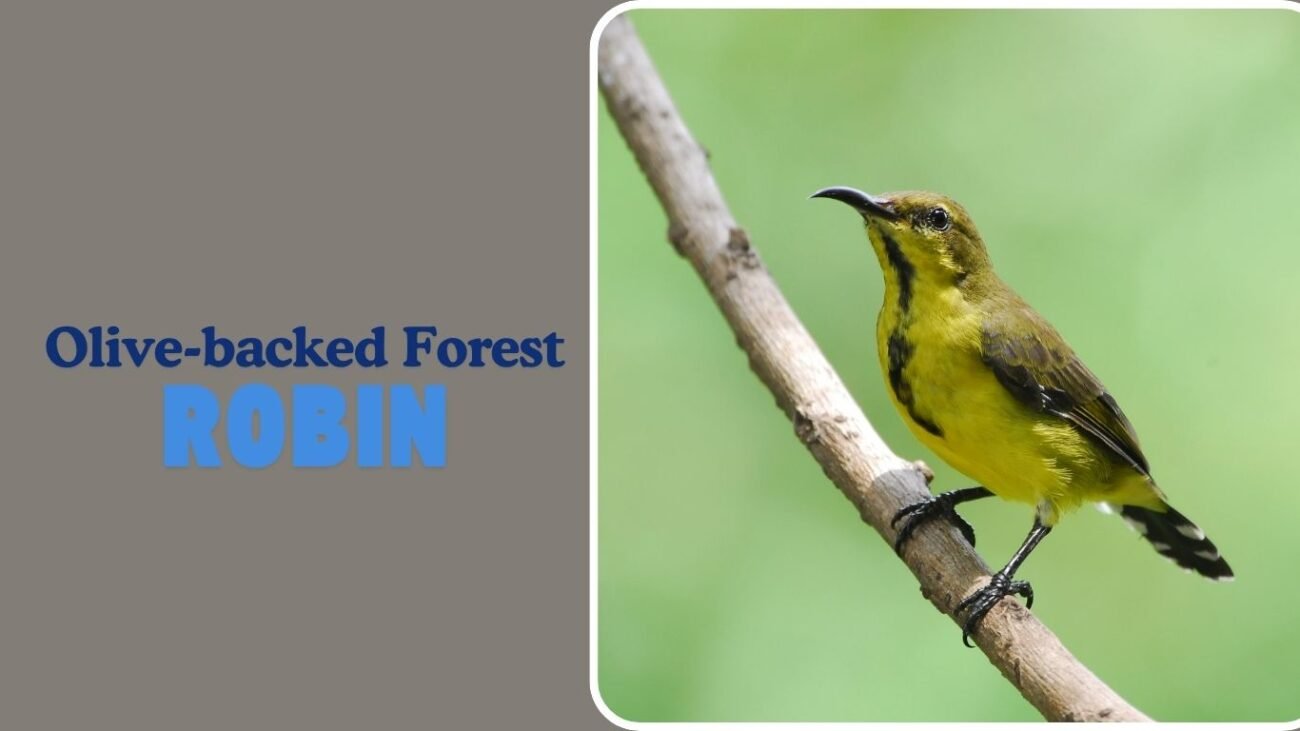
The Olive-backed Forest Robin is a striking subspecies within the forest robin group. It features a beautiful blend of olive-green upperparts and bright orange underparts, with a white belly creating strong color contrast.
Habitat and Distribution
Endemic to the forests of Gabon in Central Africa. Lives in dense, humid lowland forests with thick understory vegetation and limited light penetration.
Behavior
Extremely shy and seldom seen in the open. It moves quietly through the understory and forest floor, primarily feeding on insects. Its soft, repetitive calls are often the only clues to its presence.
Identification Features
- Olive-green upperparts and head
- Bright orange throat and chest
- Clean white lower belly
- Slender, upright stance
- Size: around 5 inches
Breeding
Little is known about its breeding behavior, but it is likely to follow typical robin nesting patterns, with cup-shaped nests in low bushes or forest debris and a clutch of 2–3 eggs.
16. East African Forest Robin
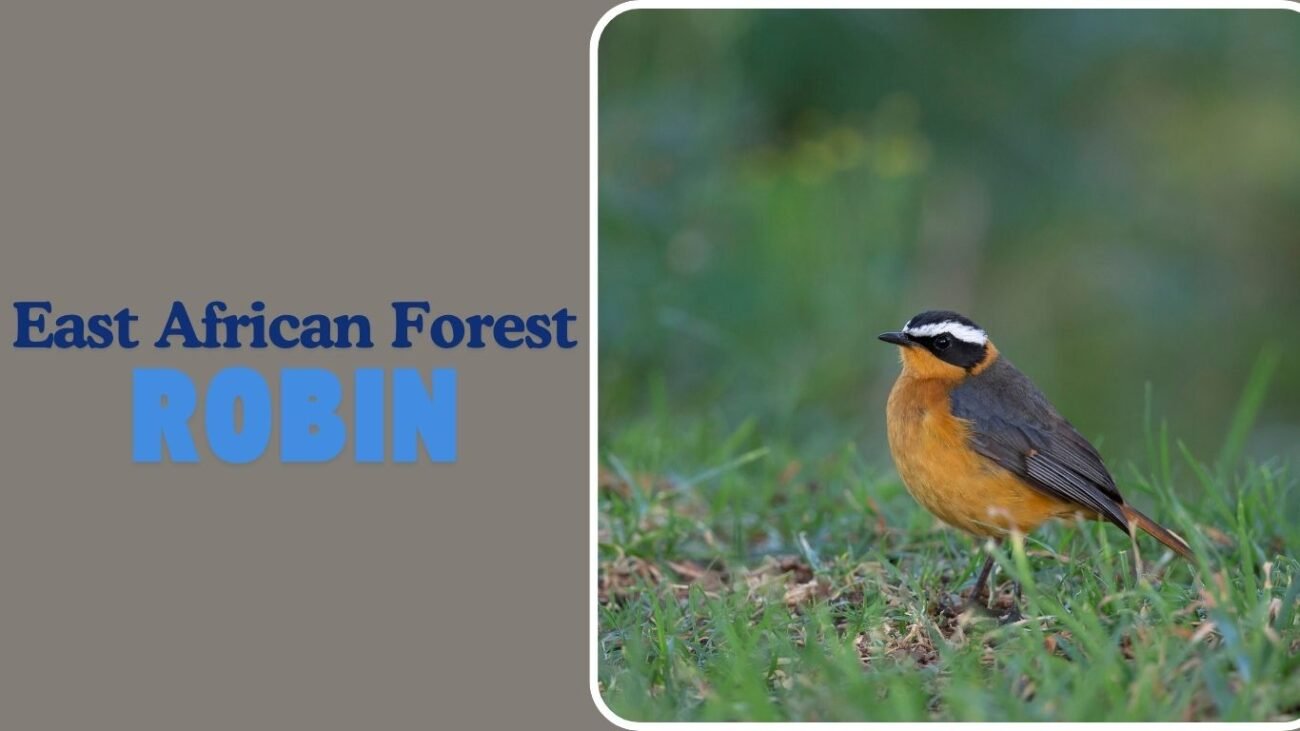
The East African Forest Robin is a colorful and elusive bird from the forests of eastern Africa. With its vivid chest and subtle green upperparts, it blends beautifully into its leafy environment.
Habitat and Distribution
Found mainly in the montane and lowland forests of Kenya, Tanzania, and surrounding regions. Prefers dense, moist forest habitats with thick undergrowth and plenty of cover.
Behavior
This robin is solitary and secretive, often found foraging quietly near the ground. It feeds on insects, spiders, and other invertebrates. Its song is soft and musical, typically heard during early morning hours.
Identification Features
- Bright orange chest and throat
- Olive-green to grayish upperparts
- Pale or whitish belly
- Fine dark bill
- Compact size, around 5–5.5 inches
Breeding
The nesting behavior is not extensively studied, but it is believed to nest in low shrubs or forest vegetation, using leaves and twigs to form a small cup-shaped nest. Lays 2–3 eggs per clutch.
17. Madagascar Magpie-Robin
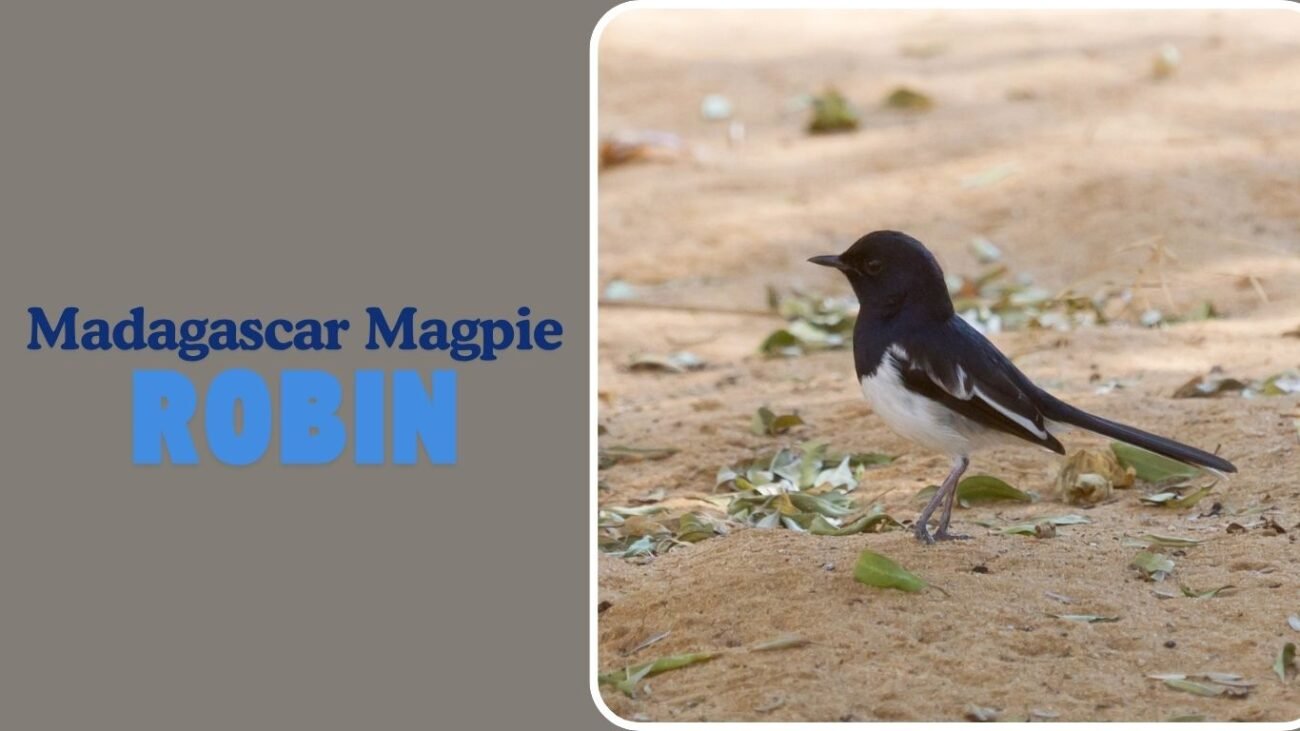
The Madagascar Magpie-Robin is a bold and adaptable bird found only on the island of Madagascar. Known for its contrasting black-and-white plumage, it has several regional subspecies with slight variations.
Habitat and Distribution
Widespread across Madagascar in forests, gardens, plantations, and even near villages. Found from sea level up to mid-elevation forests, adapting well to disturbed habitats.
Behavior
Active and inquisitive, often seen hopping along the ground or perching on branches. It has a varied song and is known to mimic other birds. This robin is territorial, especially during the breeding season.
Identification Features
- Males: black upperparts and throat with white belly and shoulder patches
- Females: duller brownish-black or gray with similar white areas
- Tail often flicked upwards
- Around 7 inches long
Breeding
Breeds during the rainy season. Nests are placed in cavities, crevices, or low shrubs and built using plant fibers and roots. Lays 2–4 eggs, and both parents help rear the young.
18. White-tailed Robin
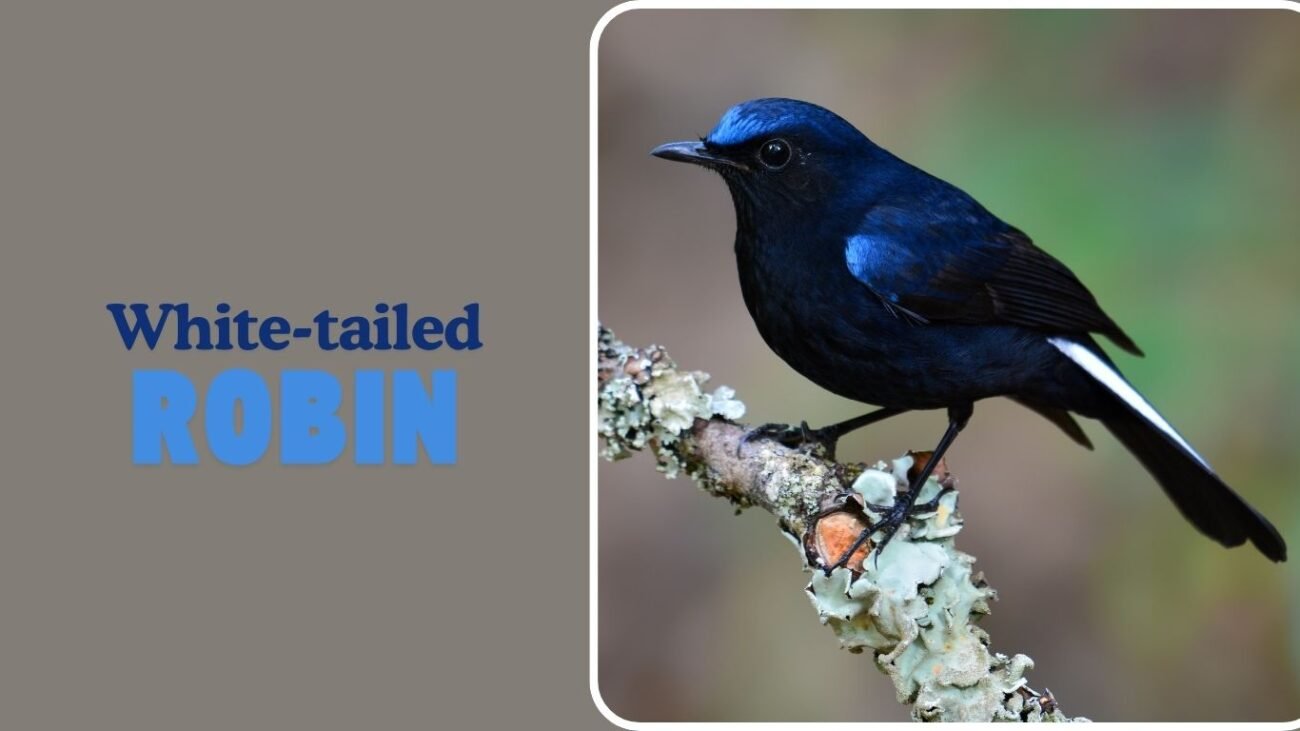
The White-tailed Robin is a sleek and striking forest bird, known for its rich dark plumage and distinctive white tail patches. Males are glossy and deep-colored, while females are more subdued in tone.
Habitat and Distribution
Found in the Himalayas, northeast India, Southeast Asia, and southern China. Prefers dense, moist evergreen forests, especially in hilly or mountainous regions.
Behavior
Shy and quiet, it usually forages near the ground or low in vegetation. It feeds on insects, small invertebrates, and sometimes berries. Males are territorial and may sing from hidden perches.
Identification Features
- Males: dark blue to black with prominent white tail sides
- Females: brown with duller white tail markings
- Pale blue shoulder patch (in some males)
- Strong legs and upright stance
- Size: 6.5–7 inches
Breeding
Breeding season is from April to July. The nest is typically built in tree roots, crevices, or rock ledges using moss and grass. Females lay 2–3 eggs, and both parents assist in raising the chicks.
19. Blue-fronted Robin
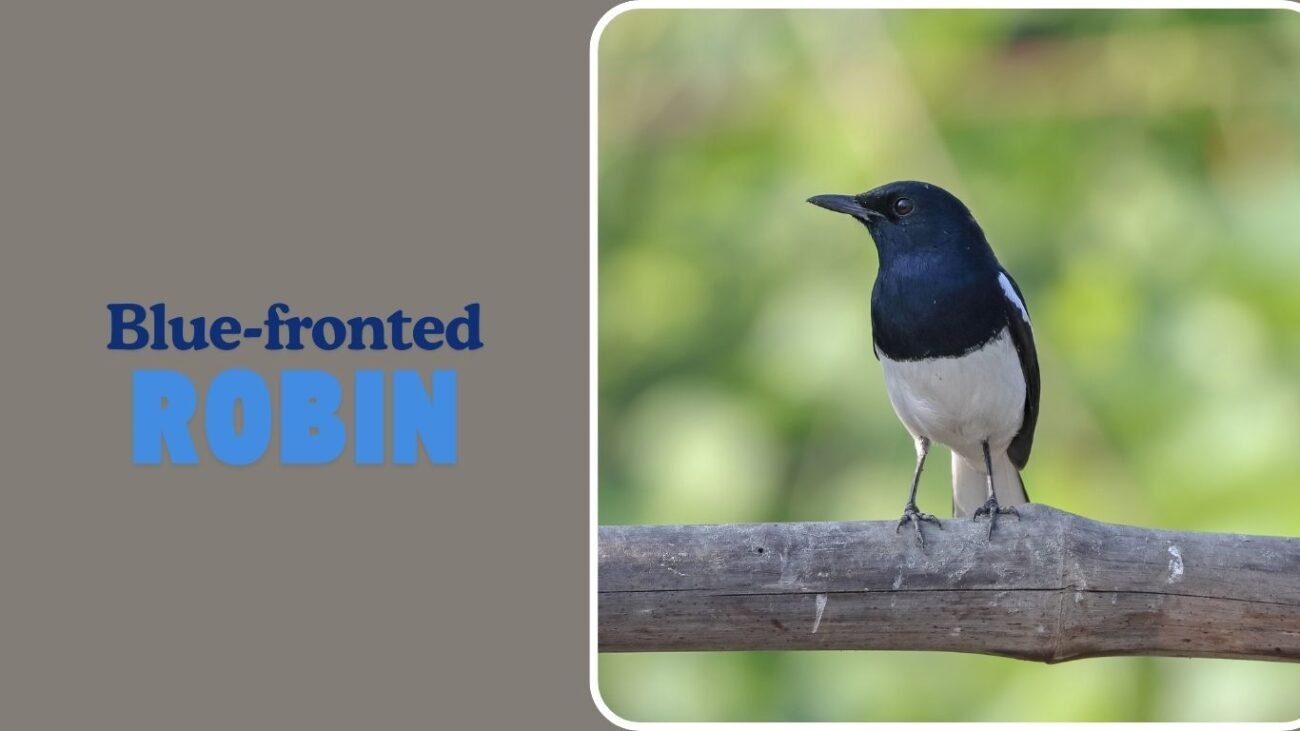
The Blue-fronted Robin is a rare and mysterious bird of the high-altitude forests. It features subtle beauty, especially in males with their blue foreheads and contrasting plumage, often making them a prized sighting among birders.
Habitat and Distribution
Occurs in the eastern Himalayas, including Nepal, Bhutan, northeast India, and parts of southwest China. Found in dense undergrowth of moist temperate forests, typically between 2,000–3,000 meters elevation.
Behavior
Very elusive and typically solitary, it forages close to the forest floor. Often remains hidden in thick cover, moving silently while feeding on insects and worms.
Identification Features
- Males: dull bluish forehead and crown, olive upperparts
- Pale throat and underparts
- Females: browner overall with little or no blue
- Thin bill and short tail
- Around 5–5.5 inches in size
Breeding
Little is known due to its elusive nature. Likely nests in mossy banks or dense shrubs. Like other forest robins, it is presumed to lay 2–3 eggs per season, with both parents participating in care.
20. Rufous-backed Robin
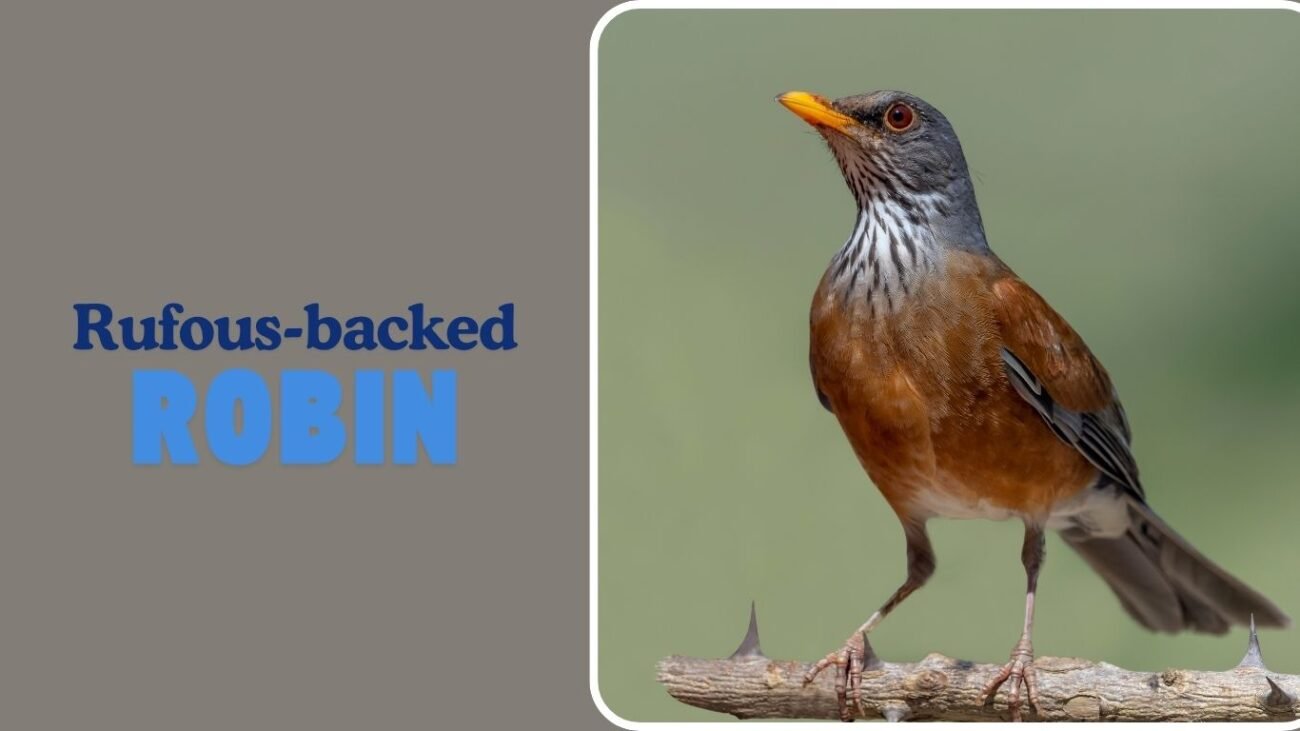
The Rufous-backed Robin is a medium-sized thrush-like robin known for its warm reddish-brown back and melodious, flute-like song. It is native to parts of Central America and is sometimes considered a close relative of the American Robin.
Habitat and Distribution
Found mainly in Mexico, especially in wooded regions, montane forests, and well-vegetated areas near towns or farmlands. Occasionally seen in the southwestern United States during migration.
Behavior
Often forages on the ground, flipping leaves to uncover insects. It is shy but becomes more visible during the breeding season when males sing from high perches.
Identification Features
- Rich rufous (reddish-brown) back and wings
- Grayish head and underparts
- White eye ring
- Yellowish bill
- Size: 9–10 inches in length
Breeding
Nests are built in low trees or shrubs using twigs and grass. Females lay 2–4 eggs, usually pale blue with brown speckles. Both parents share incubation and feeding duties.
21. White-throated Robin-Chat
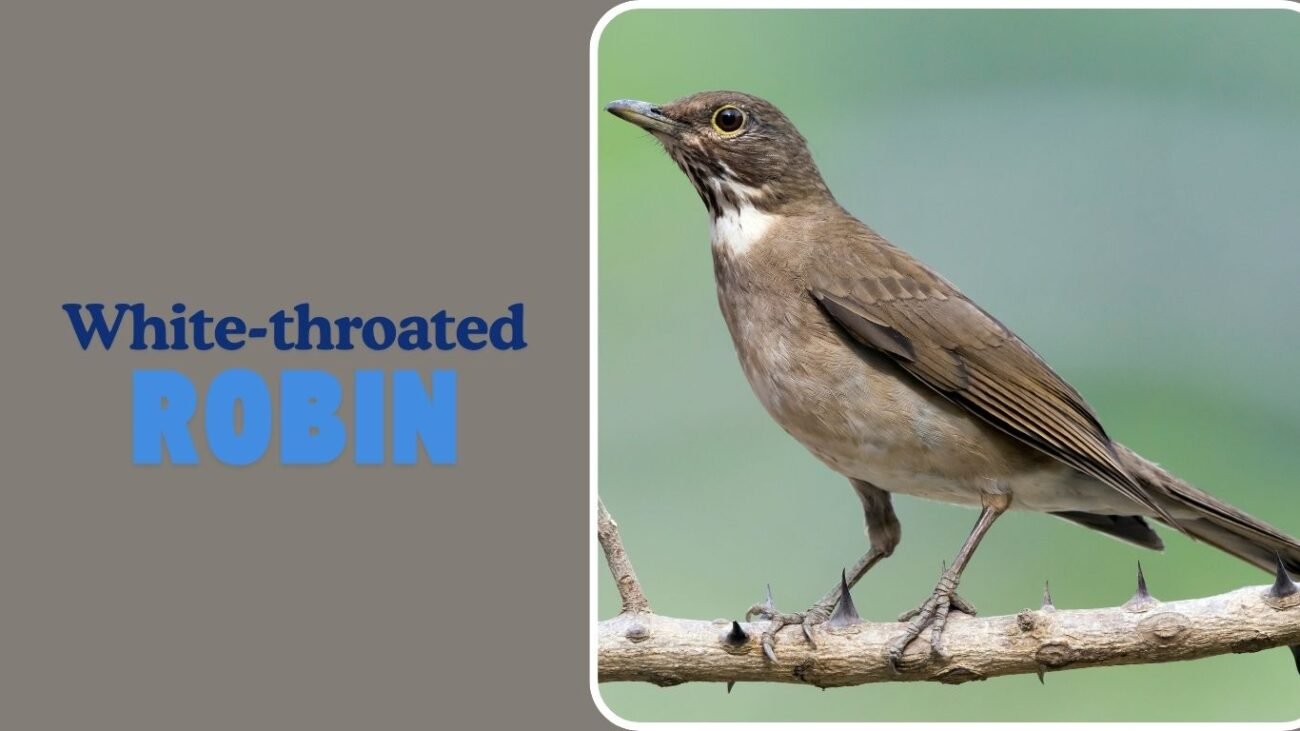
The White-throated Robin-Chat is a brightly colored bird with bold facial markings and a sweet, varied song. It is found in parts of eastern and southern Africa and is known for its vivid orange chest and lively behavior.
Habitat and Distribution
Occurs from Kenya and Tanzania to South Africa. Found in riverine forests, woodland edges, thickets, and sometimes large gardens with dense shrubbery.
Behavior
Active and often conspicuous, especially during the early morning. It sings frequently and can mimic the calls of other species. Forages near the ground or in low shrubs for insects and small fruits.
Identification Features
- White throat and belly
- Black face with white eyebrow stripe
- Bright orange chest and flanks
- Greyish back
- Medium size, around 6.5–7 inches
Breeding
Breeds during the rainy season. Nests are cup-shaped and hidden in dense vegetation. The female lays 2–3 eggs, and both parents participate in feeding the chicks.
22. Yellow-breasted Robin
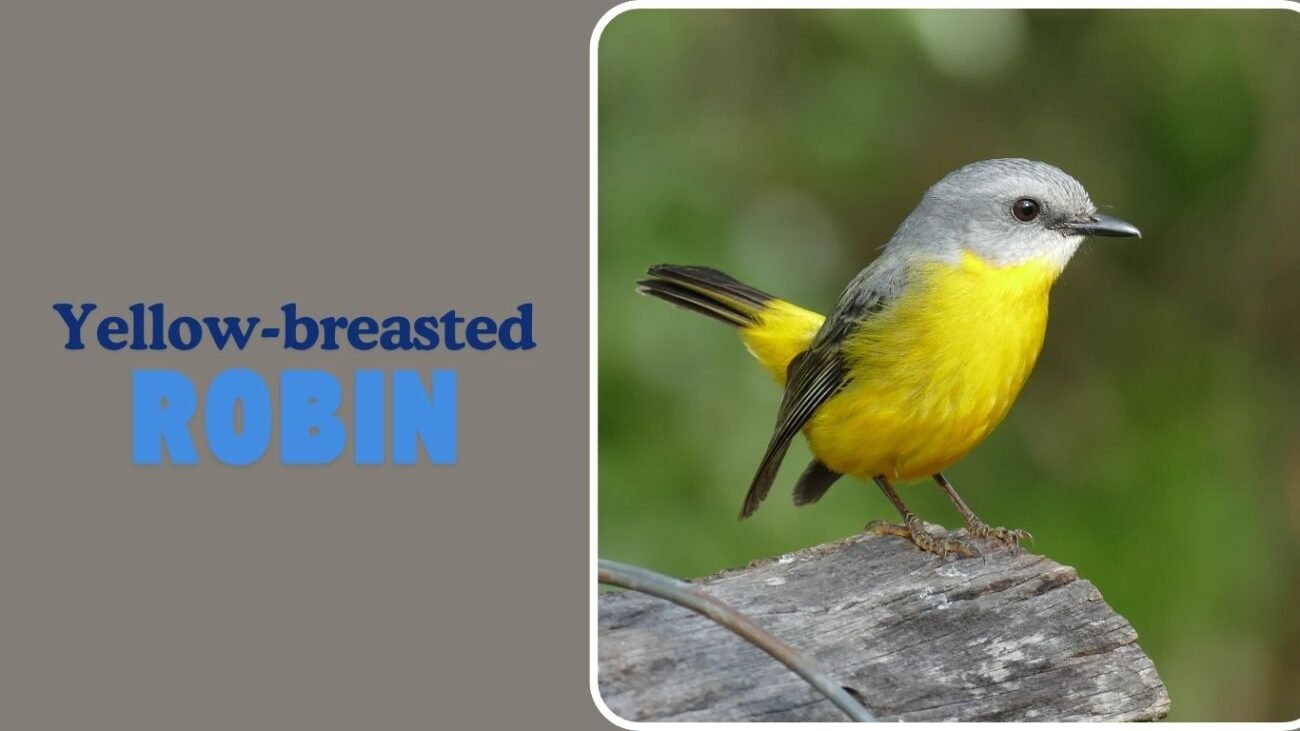
The Yellow-breasted Robin is a vibrant forest bird native to Australia, admired for its vivid yellow chest and gentle, upright posture. It is quiet and calm, often seen perched still in the forest understory.
Habitat and Distribution
Found in eastern Australia, from Queensland to Victoria. Prefers wet sclerophyll forests, temperate rainforests, and densely vegetated gullies, often at higher altitudes.
Behavior
Territorial and solitary or seen in pairs. It perches low, making short flights to catch insects from leaves or the forest floor. Not very vocal but has soft contact calls.
Identification Features
- Bright yellow breast and belly
- Olive-gray back and head
- White throat
- Slender black legs
- Medium size: about 5.5–6 inches
Breeding
Breeding takes place from August to January. The female builds a neat cup-shaped nest in a tree fork or shrub. She lays 2–3 eggs and primarily cares for the chicks, although the male assists with feeding.
23. Slaty Robin
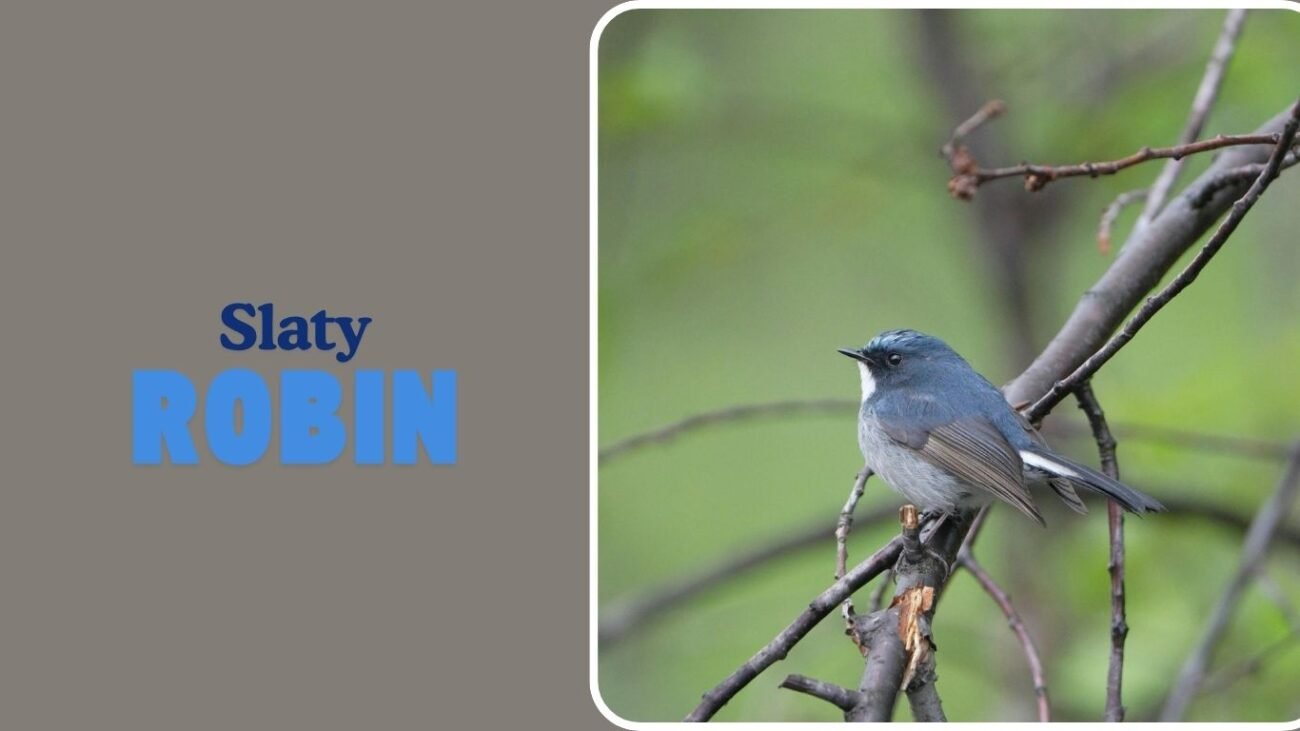
The Slaty Robin is a small, quiet bird of the montane forests of New Guinea. Its plain slate-gray color gives it a modest appearance, but it is a skilled insect hunter with a shy demeanor.
Habitat and Distribution
Endemic to New Guinea’s highland forests, typically found between 1,000–2,800 meters in elevation. Prefers dense undergrowth in mossy or humid forests.
Behavior
Usually solitary and elusive, hopping low among the vegetation in search of insects. It is non-migratory and tends to stay in thick cover. Song is soft and rarely heard.
Identification Features
- Males: dark slate-gray overall
- Females: lighter gray-brown
- Pale gray belly
- Short tail and thin bill
- Small size, around 5 inches
Breeding
Nesting behavior is not well documented. Likely builds a small nest in low shrubs or on moss-covered branches. Clutch size is typically 2–3 eggs, and both parents likely contribute to feeding.
24. Dusky Robin
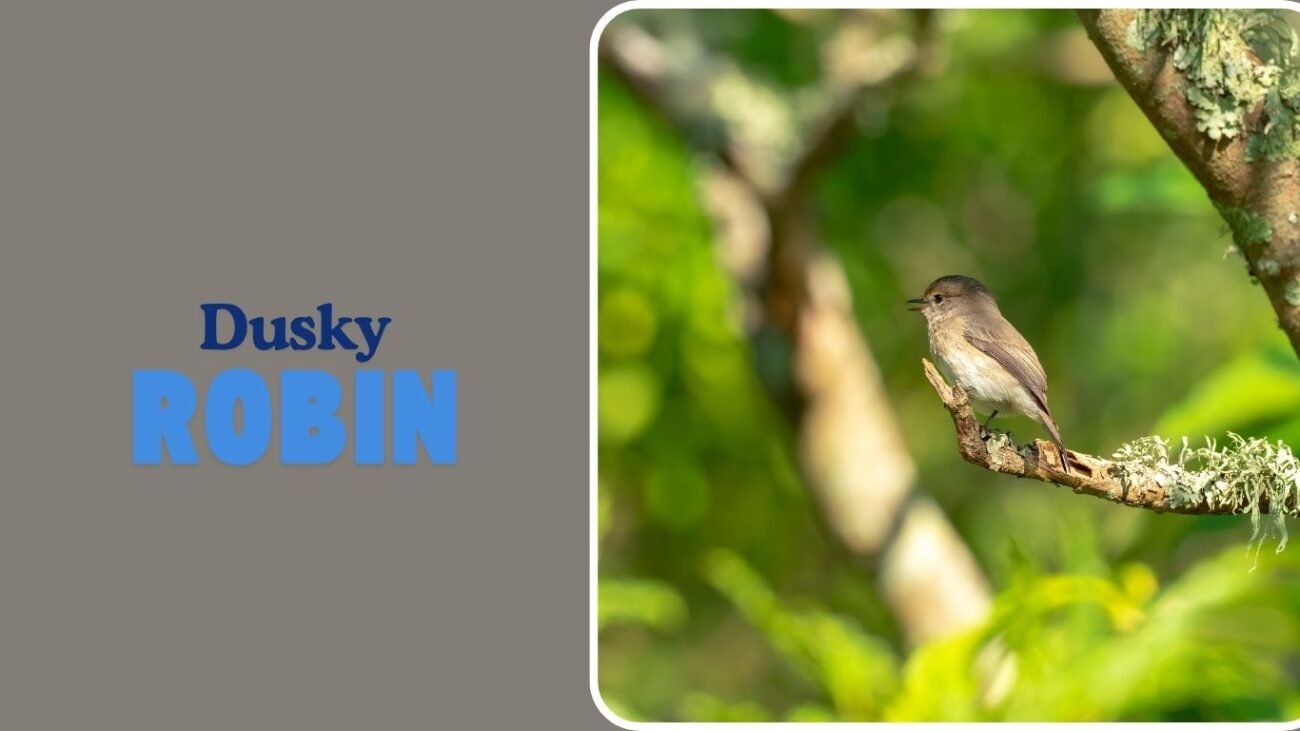
The Dusky Robin is a subdued but sturdy bird native to Tasmania. Though not brightly colored, its soft brown tones help it blend into its environment, making it a subtle yet important part of the local ecosystem.
Habitat and Distribution
Endemic to Tasmania and nearby Bass Strait islands. Found in dry forests, woodlands, and heathlands, especially in areas recovering from fire or logging.
Behavior
Often seen perched on low branches or fence posts, scanning for prey. It feeds mostly on insects and small invertebrates. Moves with short hops and low flights. Social outside of breeding season, sometimes forming loose flocks.
Identification Features
- Uniform dusky brown upperparts and underparts
- Slightly paler throat and belly
- Faint facial markings
- Thick legs and a stocky body
- Size: around 6.5 inches
Breeding
Breeds from August to January. The female builds the nest in low shrubs or hollow logs, using bark, grass, and fur. Usually lays 2–3 pale eggs. Only the female incubates, while both parents feed the young.
25. Bush Robin
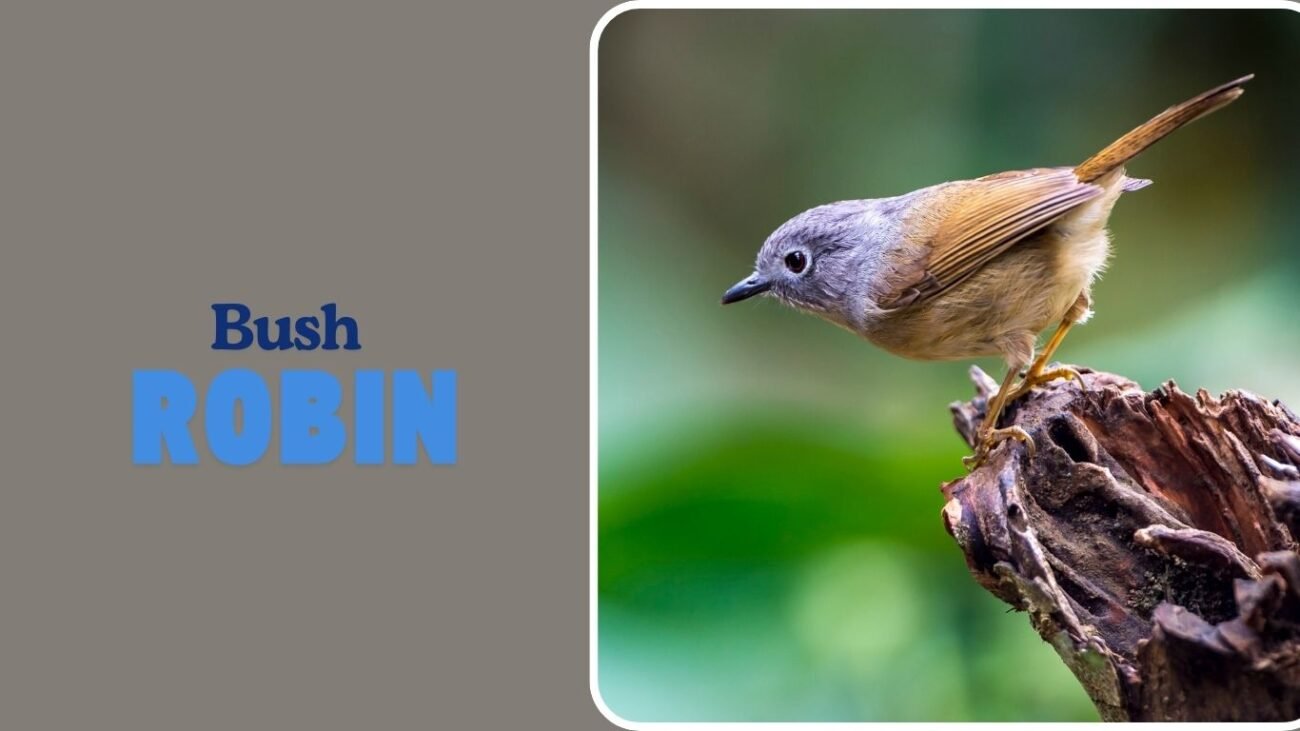
The Bush Robin refers to a group of small robins native to New Zealand, also known as tomtits in some regions. These birds are known for their tameness and bold personality, often approaching humans closely.
Habitat and Distribution
Found in New Zealand’s native forests, scrublands, and regenerating bush on both main islands and some offshore islands. Different subspecies are localized to specific regions.
Behavior
Curious and tame, often foraging near people. Feeds on insects, spiders, and small larvae by sallying from low perches. Uses a sit-and-wait hunting style and occasionally flutters to the ground to snatch prey.
Identification Features
- Males: black upperparts, white belly, yellow breast patch
- Females: brownish upperparts with paler belly
- Compact and rounded shape
- Flicking tail and short legs
- Size: around 5 inches
Breeding
Nesting starts in spring. The nest is cup-shaped, made of moss and fine materials, placed in tree hollows or rock crevices. Females lay 2–4 eggs and do most of the incubation, while both parents feed the chicks.
26. Yellow-bellied Robin
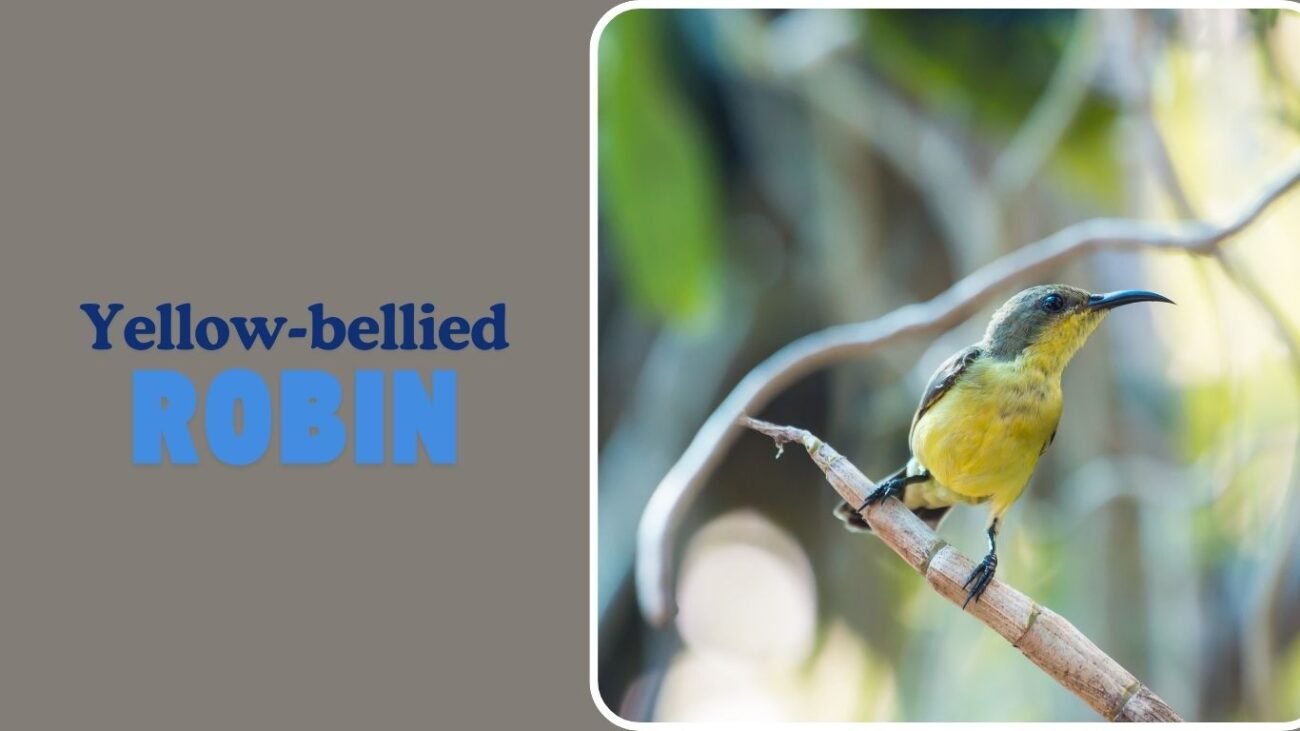
The Yellow-bellied Robin is a charming bird of eastern Australia, noted for its soft appearance and warm yellow belly. Though not as flashy as some other robins, it adds gentle color and song to forested landscapes.
Habitat and Distribution
Found in coastal and subcoastal rainforests and wet sclerophyll forests of eastern Queensland and northern New South Wales. Prefers dense, shady areas with thick undergrowth.
Behavior
Quiet and often seen perched motionless in low vegetation. Forages for insects by hopping on the forest floor or sallying out from a perch. Typically solitary or in pairs, and often stays within a defined territory.
Identification Features
- Yellow underparts
- Olive-gray to brownish upperparts
- Pale eye-ring and whitish throat
- Thin bill and dark legs
- Size: about 5–5.5 inches
Breeding
Breeds from August to January. The nest is a neat cup made of bark and plant fibers, placed in a low tree fork. The female lays 2 eggs and incubates alone, while the male helps feed the young.
27. Grey-headed Robin
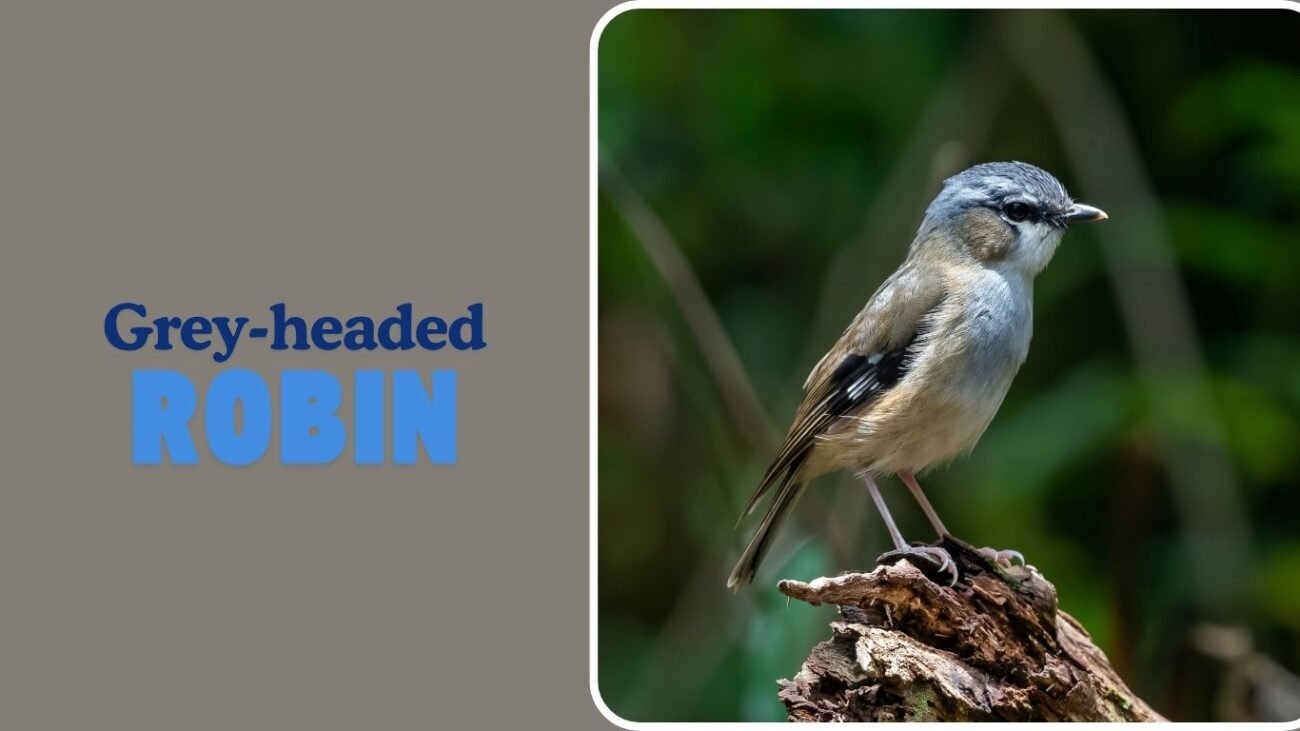
The Grey-headed Robin is a quiet and modest bird that blends well into the shaded forest habitats of northeastern Australia. It’s known for its upright stance and gray-toned head, contrasting with a paler body.
Habitat and Distribution
Occurs in upland rainforests of northeast Queensland, particularly in the Atherton Tablelands region. Found in shaded gullies and dense undergrowth at elevations above 600 meters.
Behavior
Spends most of its time on or near the ground, hopping through leaf litter in search of insects. Not very vocal, it uses a series of soft calls to communicate and maintain contact with mates.
Identification Features
- Pale gray head
- Light brownish upperparts
- White to pale gray belly
- Slightly darker wings and tail
- Around 5.5 inches long
Breeding
Breeds from September to January. Builds a deep cup nest lined with soft materials, hidden in dense foliage. The female lays 1–2 eggs, with both parents sharing chick-feeding duties.
28. Pale-yellow Robin
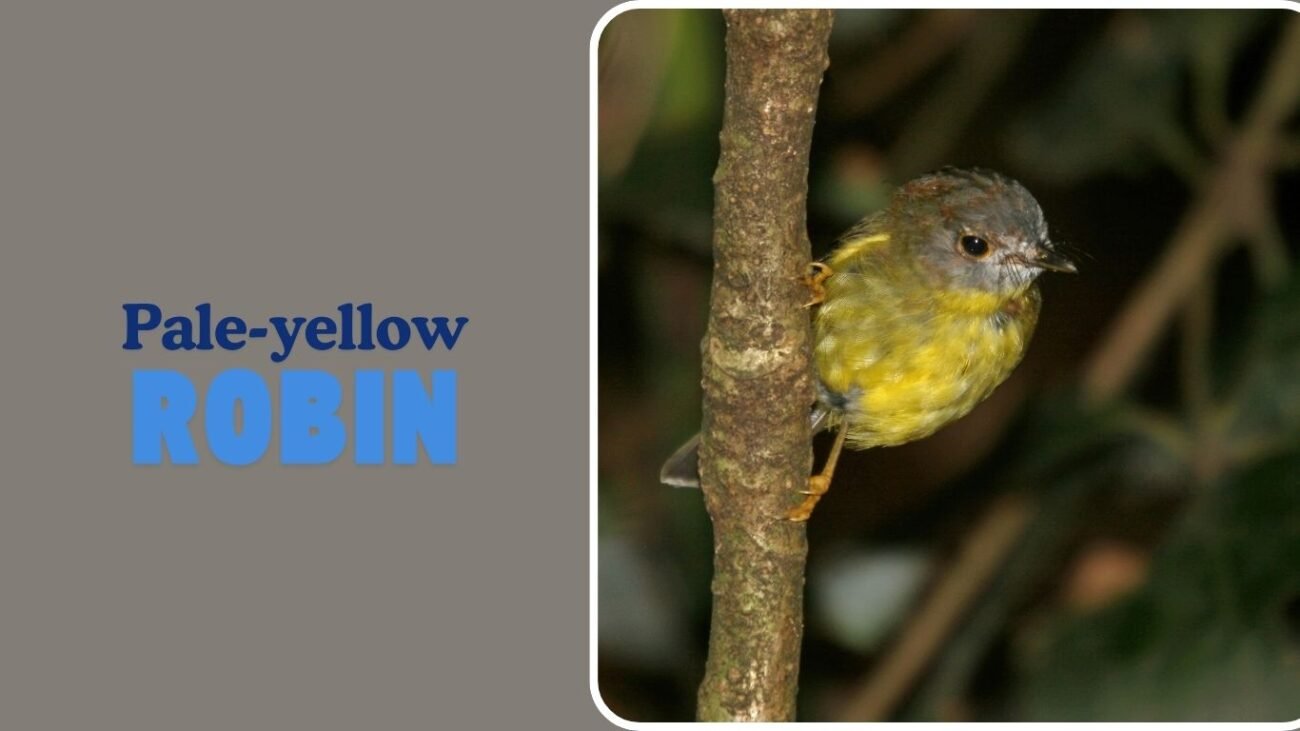
The Pale-yellow Robin is a soft-toned, delicate bird found in eastern Australia. With its gentle yellow wash and calm demeanor, it adds a subtle charm to the rainforest understorey where it quietly forages.
Habitat and Distribution
Native to coastal rainforests and wet forests of southeastern Queensland and northeastern New South Wales. Prefers shaded gullies and thickets, often near watercourses.
Behavior
Typically shy and solitary or seen in pairs. It perches quietly on low branches, darting out to capture insects from leaves or the ground. Its movement is slow and deliberate, and it calls with soft, thin whistles.
Identification Features
- Pale yellow underparts
- Olive-gray upperparts
- Pale face with a whitish eye-ring
- Small, rounded wings and thin bill
- Size: about 5 inches
Breeding
Breeding season runs from August to January. The female builds a well-camouflaged cup nest in hanging vines or shrubs. Clutch size is usually 2 eggs, and both parents help raise the young after hatching.
29. White-faced Robin
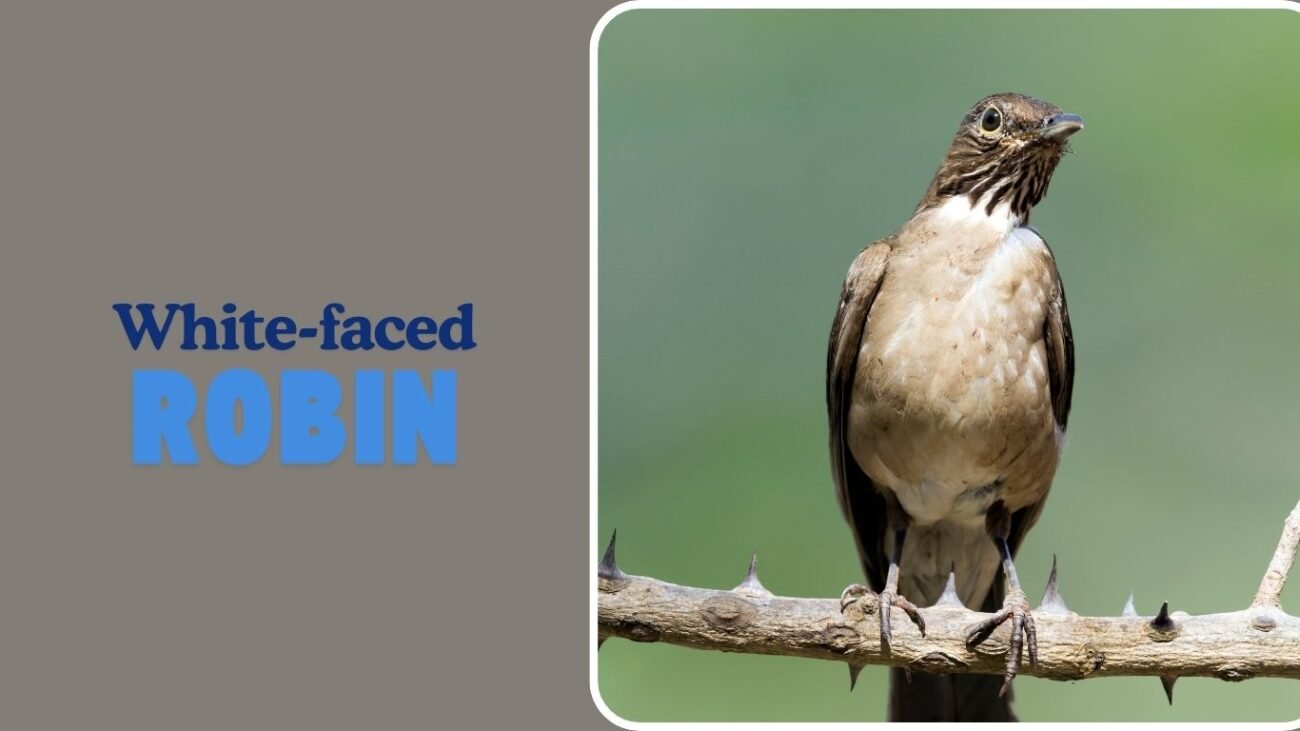
The White-faced Robin is a unique and eye-catching bird with its distinct facial contrast. Native to Papua New Guinea and parts of northeastern Australia, it is known for its upright posture and calm behavior.
Habitat and Distribution
Inhabits tropical and subtropical forests of northeastern Queensland and New Guinea. Prefers lowland rainforests and adjacent secondary growth, often at forest edges.
Behavior
Quiet and often motionless, usually seen perched low in dense vegetation. Forages for insects and spiders by making short flights to foliage or the ground. Not very vocal, but emits soft calls during breeding season.
Identification Features
- Clean white face and throat
- Gray upperparts
- Pale belly
- Thin black line separating the face from the crown
- Size: around 5.5 inches
Breeding
Breeding is timed with the wet season. The female builds a small nest of rootlets and moss in a low fork. Lays 2 eggs, with incubation mostly done by the female and both adults helping with feeding.
30. Mangrove Robin
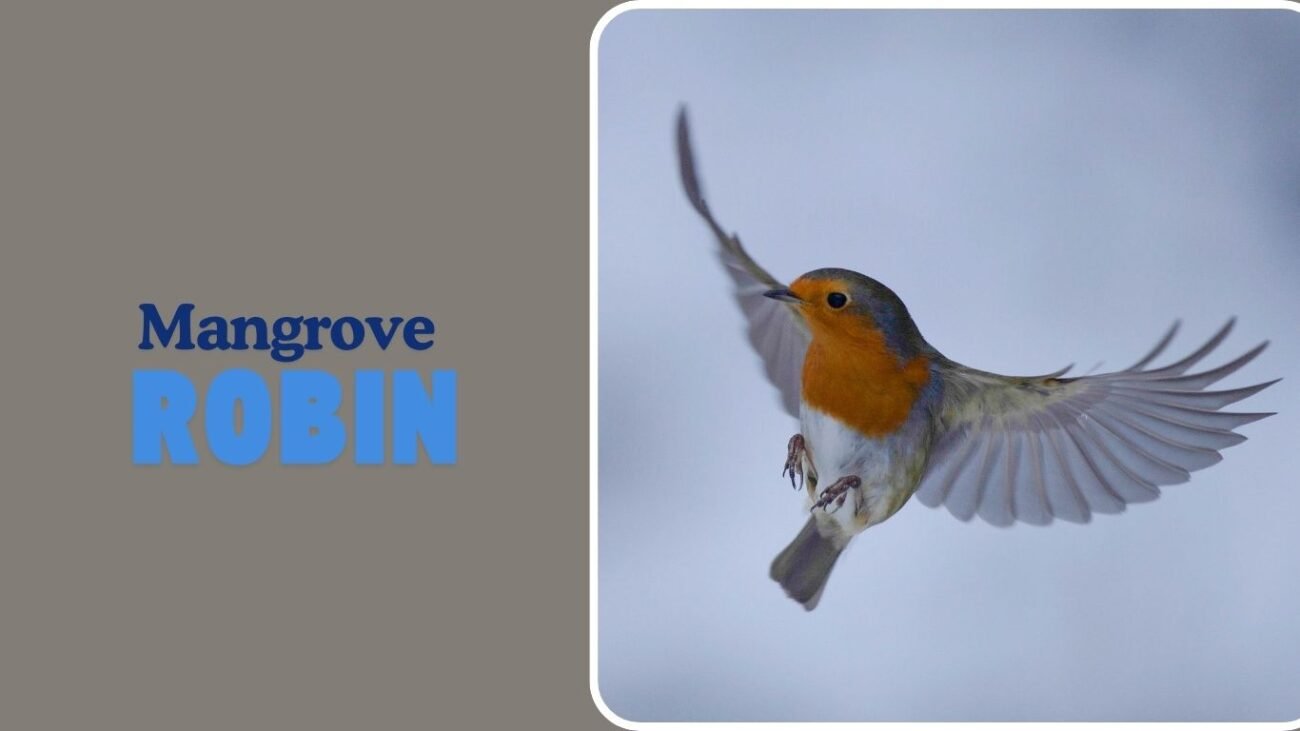
The Mangrove Robin is a sturdy, soft-plumaged bird that lives exclusively in mangrove habitats. It is well adapted to tidal environments and can often be seen hopping among roots and low branches.
Habitat and Distribution
Found in northern Australia, New Guinea, and parts of Southeast Asia. Prefers coastal mangrove forests, tidal creeks, and estuarine shorelines.
Behavior
Often seen alone or in pairs, patrolling branches and mudflats for insects and crustaceans. It is secretive and quiet, typically staying close to the ground or water level.
Identification Features
- Ashy gray upperparts
- White or pale gray underparts
- Faint white eyebrow
- Medium-length tail
- Size: about 6 inches
Breeding
Breeding season varies by region but typically coincides with the rainy season. Nest is built low in mangrove trees or shrubs. The female lays 2–3 eggs and cares for the nestlings with help from the male.
31. Ashy Robin
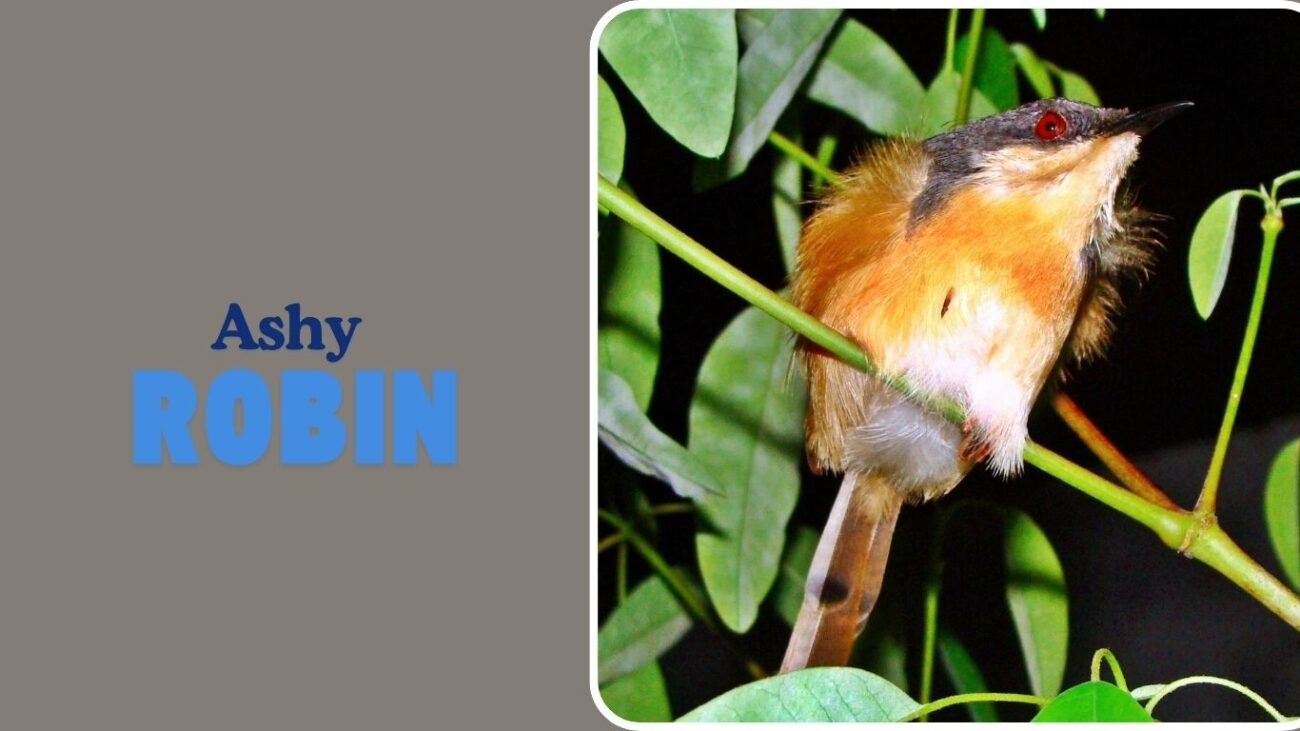
The Ashy Robin is a small, pale gray songbird that thrives in the high-altitude forests of New Guinea. It is one of the lesser-known robins, rarely seen due to its reclusive lifestyle.
Habitat and Distribution
Found in the montane forests of Papua New Guinea, especially at elevations above 1,500 meters. Prefers cool, mossy forest interiors.
Behavior
A quiet, ground-foraging bird that often hops through leaf litter and mossy areas. It is shy and tends to remain low, avoiding open spaces. Calls are soft and infrequent.
Identification Features
- Uniform ashy gray plumage
- Slightly paler throat and belly
- Thin black bill
- Short tail
- Size: approximately 5 inches
Breeding
Little is documented about its breeding habits. Presumed to build moss-lined nests in shrubs or tree crevices, with a clutch size of 1–3 eggs. Parents are likely to share feeding duties.
32. Black Robin (Chatham Island Robin)
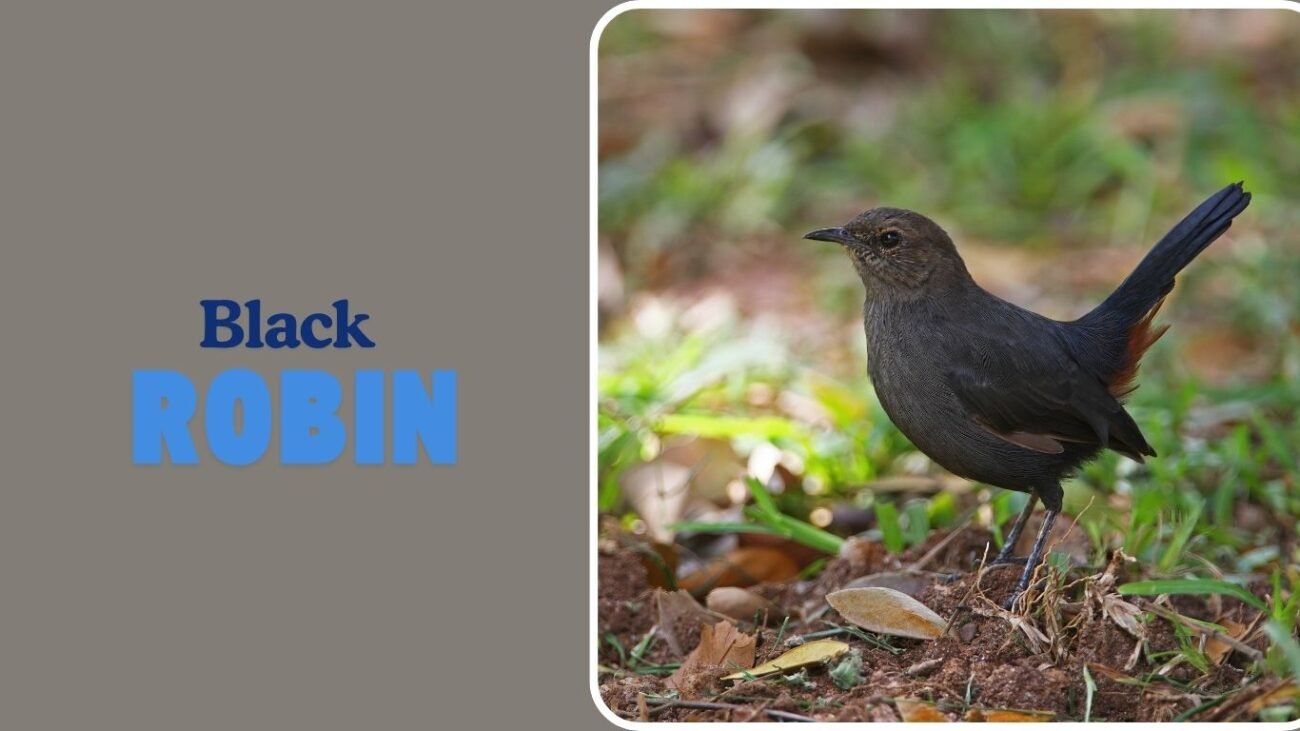
The Black Robin is a conservation icon, once considered one of the rarest birds in the world. Native to the Chatham Islands of New Zealand, it has been saved from extinction through heroic efforts.
Habitat and Distribution
Now limited to a few predator-free islands in the Chatham Islands group. Inhabits dense coastal forests and regenerating scrub.
Behavior
Usually seen foraging on the forest floor, searching for insects and small invertebrates. It is tame and inquisitive, often approaching researchers or visitors. Population is closely monitored by conservationists.
Identification Features
- Uniform black plumage in adults
- Brownish tones in juveniles
- Short tail and upright posture
- Pale bill and legs
- Small size: around 5.5 inches
Breeding
Breeds from September to January. Nests are built in tree cavities or dense shrubs. Typically lays 2 eggs per clutch. Conservation programs have assisted by fostering eggs and increasing survival rates dramatically.