Florida is home to a wide variety of woodpeckers, ranging from backyard regulars like the Downy and Red-bellied Woodpeckers to rare and endangered species like the Red-cockaded and the elusive Ivory-billed. Some are full-time residents, while others migrate in for the winter. This guide covers 10 woodpecker species found in Florida, including how to identify them, where they are found, their habitats, and how long they live.
1. Red-bellied Woodpecker

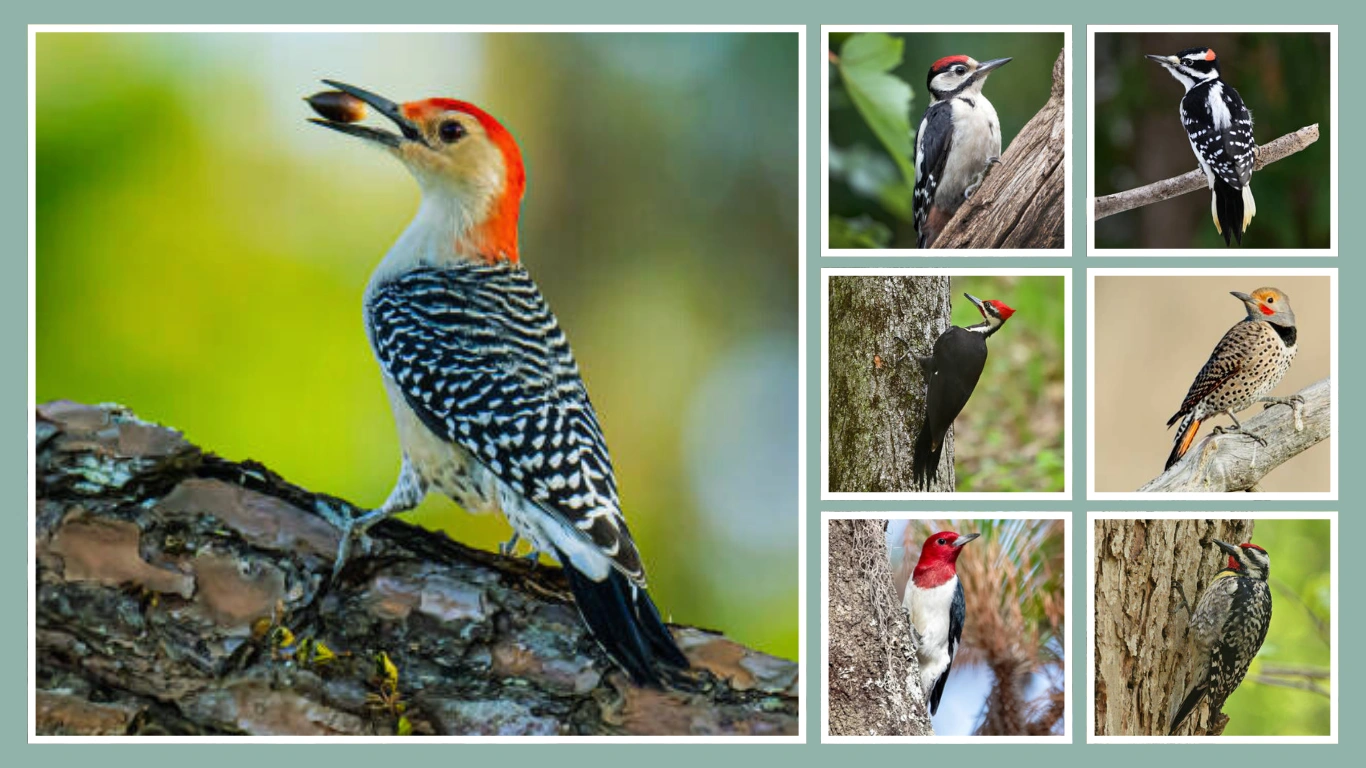
The Red-bellied Woodpecker (Melanerpes carolinus) is one of the most common and easily recognized woodpeckers in Florida. Despite its name, its red cap is more noticeable than the pale reddish tint on its belly.
Identification
- Size: 9 to 10.5 inches long
- Wingspan: 15 to 18 inches
- Plumage: Pale gray face and underparts, with bold black-and-white barring on the back
- Head: Males have a red crown and nape; females have red only on the nape
- Bill: Straight and strong
- Behavior: Often seen clinging to tree trunks or visiting backyard feeders
Where Found in Florida
Widespread throughout the entire state, including suburban neighborhoods, pine flatwoods, swamps, and coastal hammocks. Present year-round.
Habitat
Thrives in mixed woodlands, hardwood forests, cypress swamps, and urban parks. Very adaptable to human-altered environments with mature trees.
Lifespan
Typically lives 6 to 12 years in the wild. Longevity depends on habitat stability and availability of food and nesting sites.
2. Downy Woodpecker
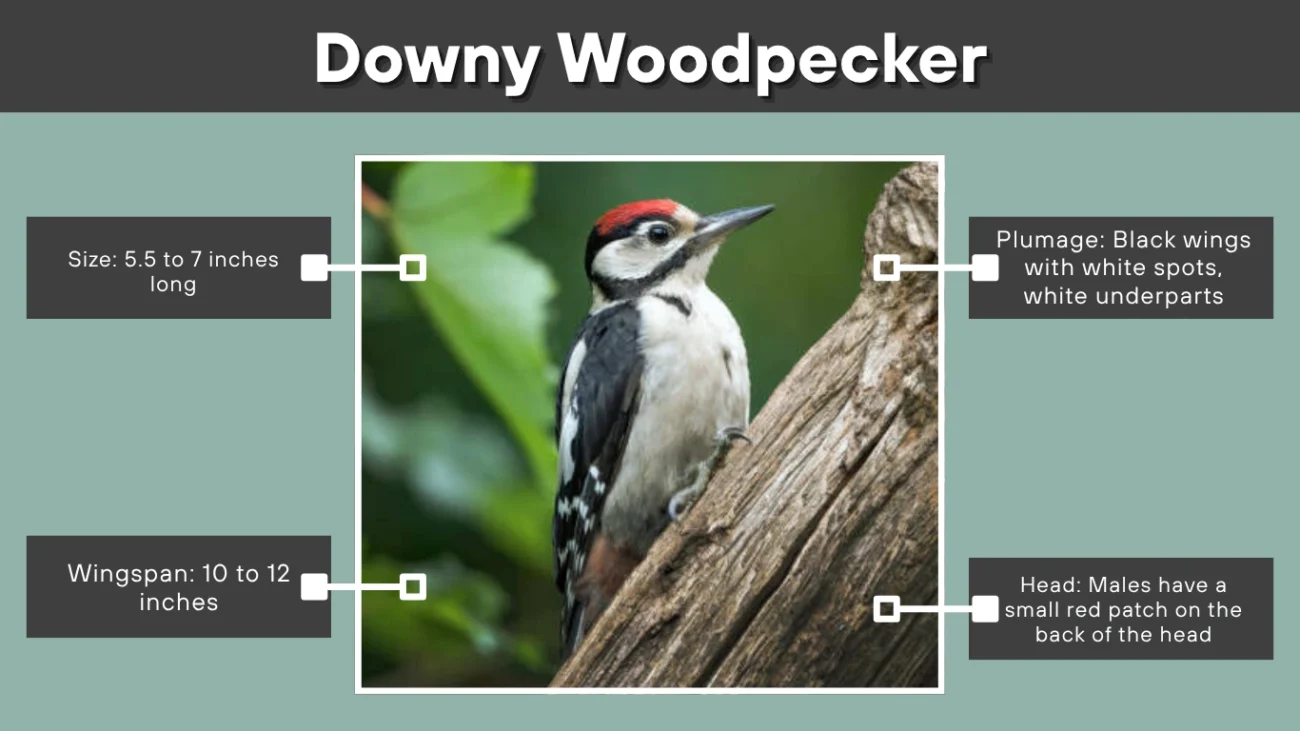
The Downy Woodpecker (Dryobates pubescens) is the smallest woodpecker in North America and a common sight throughout Florida. It’s especially active and approachable in backyards and gardens.
Identification
- Size: 5.5 to 7 inches long
- Wingspan: 10 to 12 inches
- Plumage: Black wings with white spots, white underside, and a black-and-white striped head
- Head: Males have a small red patch on the back of the head
- Bill: Short and stubby
- Behavior: Frequently seen moving along branches and tree trunks, pecking for insects
Where Found in Florida
Found year-round across the state, more commonly in northern and central Florida but also present in southern regions and the Keys.
Habitat
Occupies open woodlands, forest edges, gardens, parks, and suburban areas with trees. It prefers habitats with standing dead trees for foraging and nesting.
Lifespan
Generally lives 4 to 6 years in the wild, although individuals may survive up to 11 years in favorable conditions.
3. Hairy Woodpecker
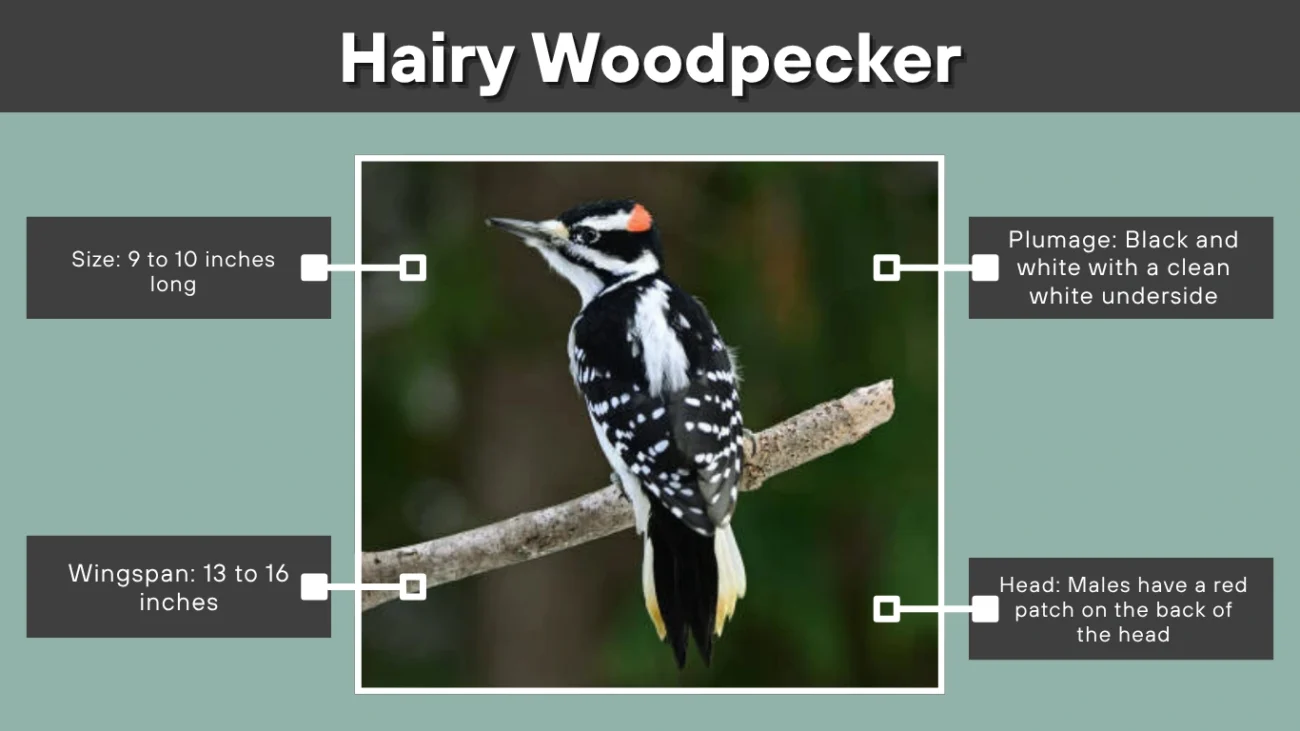
The Hairy Woodpecker (Dryobates villosus) is a medium-sized woodpecker often confused with the smaller Downy Woodpecker. It is more shy and prefers mature forests, where it can be heard drumming on trees before it is seen.
Identification
- Size: 9 to 10 inches long
- Wingspan: 13 to 16 inches
- Plumage: Crisp black-and-white coloration with a white underside and black wings marked with white spots
- Head: Males have a small red patch at the back of the head
- Bill: Long and nearly the same length as the head—much longer than the Downy’s
- Behavior: Tends to be quiet and deliberate; taps deeply into tree bark to reach beetle larvae
Where Found in Florida
Present year-round, though less common than the Downy Woodpecker. More frequently seen in northern and central Florida, especially in mature pine forests and large wooded tracts.
Habitat
Favors mature forests, particularly pine and mixed hardwood areas. Also seen in cypress swamps, wooded wetlands, and occasionally in well-wooded suburban parks. It typically nests in cavities it excavates in dead trees or snags.
Lifespan
Average lifespan ranges from 5 to 15 years. Their longer bill and deeper drilling habits allow them access to food sources less accessible to smaller species, improving their foraging success.
4. Pileated Woodpecker
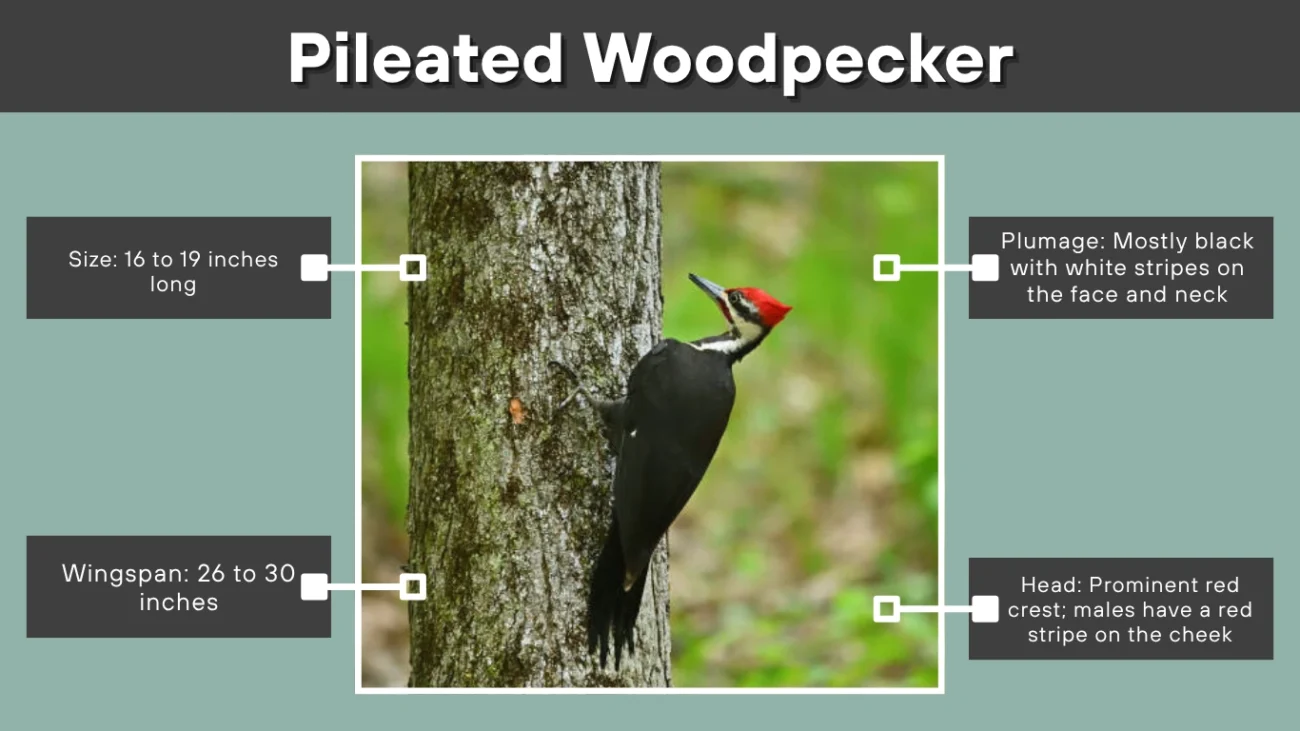
The Pileated Woodpecker (Dryocopus pileatus) is the largest woodpecker in Florida and one of the most visually striking. Its loud, echoing call and bright red crest make it unmistakable in the wild.
Identification
- Size: 16 to 19 inches long
- Wingspan: 26 to 30 inches
- Plumage: Mostly black with white stripes on the neck and large white patches visible in flight
- Head: Both sexes have a bright red crest; males also have a red stripe on the cheek
- Bill: Very long and chisel-like, ideal for deep excavations
- Behavior: Leaves large rectangular holes in trees; its loud drumming can be heard from a distance
Where Found in Florida
Commonly found across the state, including the Panhandle, central Florida woodlands, and even urban parks with mature trees. Year-round resident.
Habitat
Prefers large tracts of mature forest, including bottomland hardwoods, cypress swamps, and pine flatwoods. Often uses dead trees and stumps for nesting and feeding. Can adapt to rural and semi-urban areas with dense tree cover.
Lifespan
Typically lives 9 to 13 years in the wild, though some may exceed 15 years. Its reliance on old-growth trees for nesting makes it vulnerable to logging and habitat fragmentation.
5. Northern Flicker

The Northern Flicker (Colaptes auratus) is a large, brownish woodpecker often seen feeding on the ground — a behavior unique among woodpeckers. Florida is home to the “yellow-shafted” variety, easily identified by the yellow color under its wings and tail.
Identification
- Size: 11 to 12 inches long
- Wingspan: 16 to 20 inches
- Plumage: Brown body with black spots, a black crescent on the chest, and yellow underwings and tail
- Head: Males in Florida have a red patch on the nape and a black mustache mark
- Bill: Long, slightly curved
- Behavior: Regularly forages on the ground for ants, its primary food source
Where Found in Florida
Found throughout Florida year-round, though more common in winter when northern populations migrate south. Most widespread in open woodlands, parks, and suburban areas.
Habitat
Prefers open forests, woodland edges, grassy clearings, and suburban lawns with scattered trees. It nests in cavities in dead trees or wooden utility poles and often returns to the same feeding sites.
Lifespan
Average lifespan is 6 to 9 years in the wild. They benefit from diverse habitats and ground-foraging opportunities but are at risk from habitat loss and competition for nesting cavities.
6. Red-headed Woodpecker

The Red-headed Woodpecker (Melanerpes erythrocephalus) is a bold and colorful species known for its bright red head and white wing patches. Unlike most woodpeckers, it catches flying insects and stores food, including nuts and acorns, in tree crevices.
Identification
- Size: 7.5 to 9 inches long
- Wingspan: 16 to 17 inches
- Plumage: Entire head is bright red; body has white underparts, black back, and large white patches on the wings
- Bill: Strong and straight
- Behavior: Agile flier; often observed sallying from perches to catch insects mid-air
Where Found in Florida
Present year-round in northern and central Florida, particularly in open pine woodlands and agricultural areas. Less common in southern parts of the state.
Habitat
Favors open woodlands with scattered trees, pine savannas, and groves. Also found in pastures, orchards, and areas with dead trees for nesting and storing food. Requires standing snags and low competition to thrive.
Lifespan
Typically lives around 9 to 12 years in the wild. Populations are declining in some areas due to habitat loss, especially the removal of standing dead trees.
7. Yellow-bellied Sapsucker

The Yellow-bellied Sapsucker (Sphyrapicus varius) is a migratory woodpecker that visits Florida in the winter. It’s known for drilling neat horizontal rows of sap wells in tree bark, which attract not only the sapsucker but also other birds and insects.
Identification
- Size: 7 to 8.5 inches long
- Wingspan: 13 to 16 inches
- Plumage: Black-and-white back, pale yellowish belly, red crown; males have a red throat
- Bill: Medium-length and slightly pointed
- Behavior: Drills small holes in straight rows to feed on tree sap and insects
Where Found in Florida
Occurs throughout Florida during the winter months, from the Panhandle to the Keys. Most common from October through April.
Habitat
Prefers deciduous forests, woodlands, orchards, and even suburban areas with sap-producing trees like birch, maple, and hickory. Often returns to the same trees each year and may defend sap wells from other birds.
Lifespan
Lives approximately 5 to 7 years in the wild. Migratory behavior exposes it to risks, but wintering grounds in Florida offer relatively stable food sources and shelter.
8. Red-cockaded Woodpecker

The Red-cockaded Woodpecker (Dryobates borealis) is a federally endangered species, native to the southeastern U.S. and especially important to Florida’s longleaf pine ecosystems. It is unique among woodpeckers for living in family groups and nesting in living pine trees.
Identification
- Size: 7.5 to 9 inches long
- Wingspan: 14 to 16 inches
- Plumage: Black-and-white barred back, white cheeks
- Head: Males have a small red streak (the “cockade”) behind the eye, usually hidden
- Bill: Small and pointed
- Behavior: Social, non-migratory; lives in clusters and cooperatively raises young
Where Found in Florida
Most common in north and central Florida, especially in managed conservation areas such as Ocala National Forest, Apalachicola National Forest, and Osceola National Forest. Present year-round.
Habitat
Requires mature longleaf pine forests with an open understory. Excavates nesting cavities in living pine trees infected with heart rot, a process that can take over a year. Its dependence on old-growth pines makes it highly sensitive to logging and development.
Lifespan
Typically lives 6 to 12 years in the wild. Conservation efforts such as controlled burns and artificial cavity installation have helped stabilize populations in Florida.
9. Ivory-billed Woodpecker (Presumed Extinct or Extremely Rare)
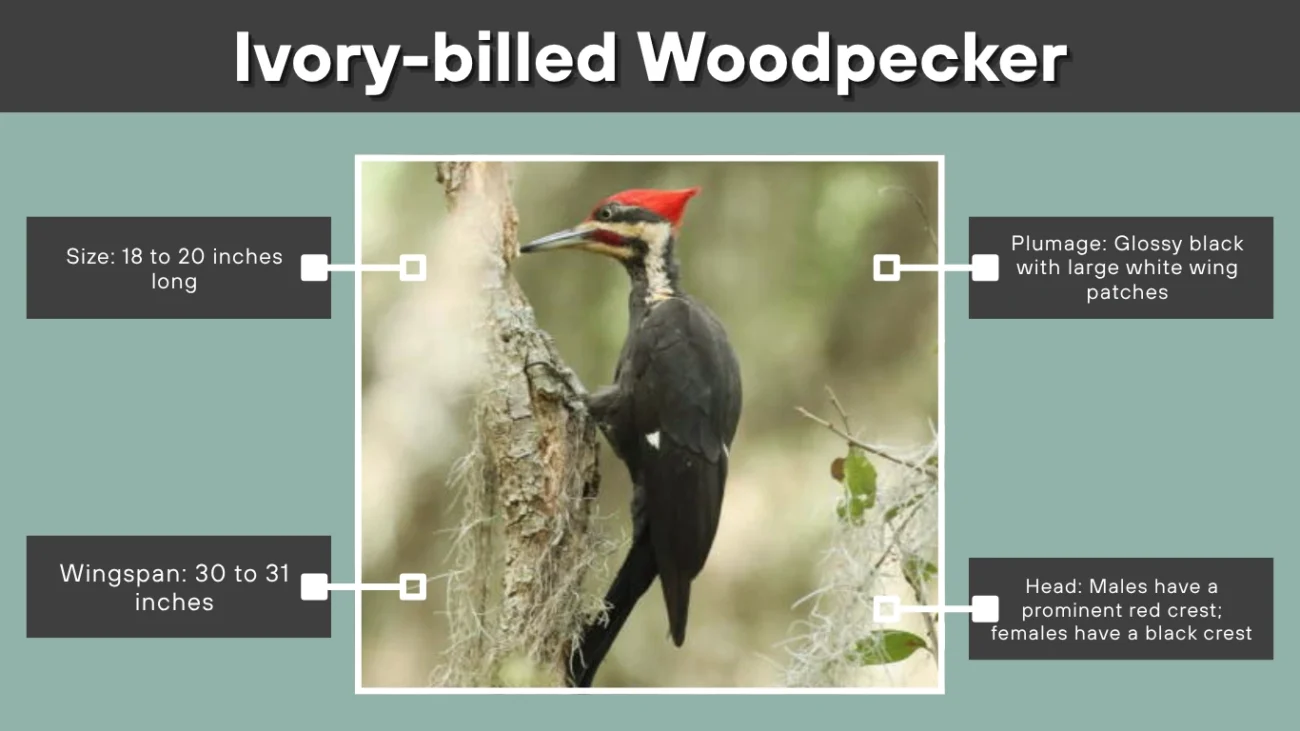
The Ivory-billed Woodpecker (Campephilus principalis) is one of the most legendary and controversial birds in North America. Once native to swampy forests in the southeastern U.S., including parts of Florida, it is now believed to be extinct or nearly so.
Identification
- Size: 18 to 20 inches long
- Wingspan: About 30 inches
- Plumage: Black body with white stripes down the neck and large white wing patches
- Head: Males had a bright red crest; females had a black crest
- Bill: Long, ivory-colored, and powerful
- Behavior: Known for loud, double-rap drumming and stripping bark in large sheets from dead trees
Where Found in Florida
Historically found in northern Florida’s swampy bottomland forests, especially the Panhandle. The last confirmed U.S. sightings were decades ago, with unverified reports continuing into the 2000s.
Habitat
Preferred vast, mature bottomland hardwood forests and cypress swamps with plentiful dead or dying trees. These habitats have largely disappeared due to logging and development.
Lifespan
Unknown due to its rarity, but estimated to live 10 to 15 years. If any individuals survive, they are extremely endangered with almost no viable population left for recovery.
10. Acorn Woodpecker (Rare Visitor)
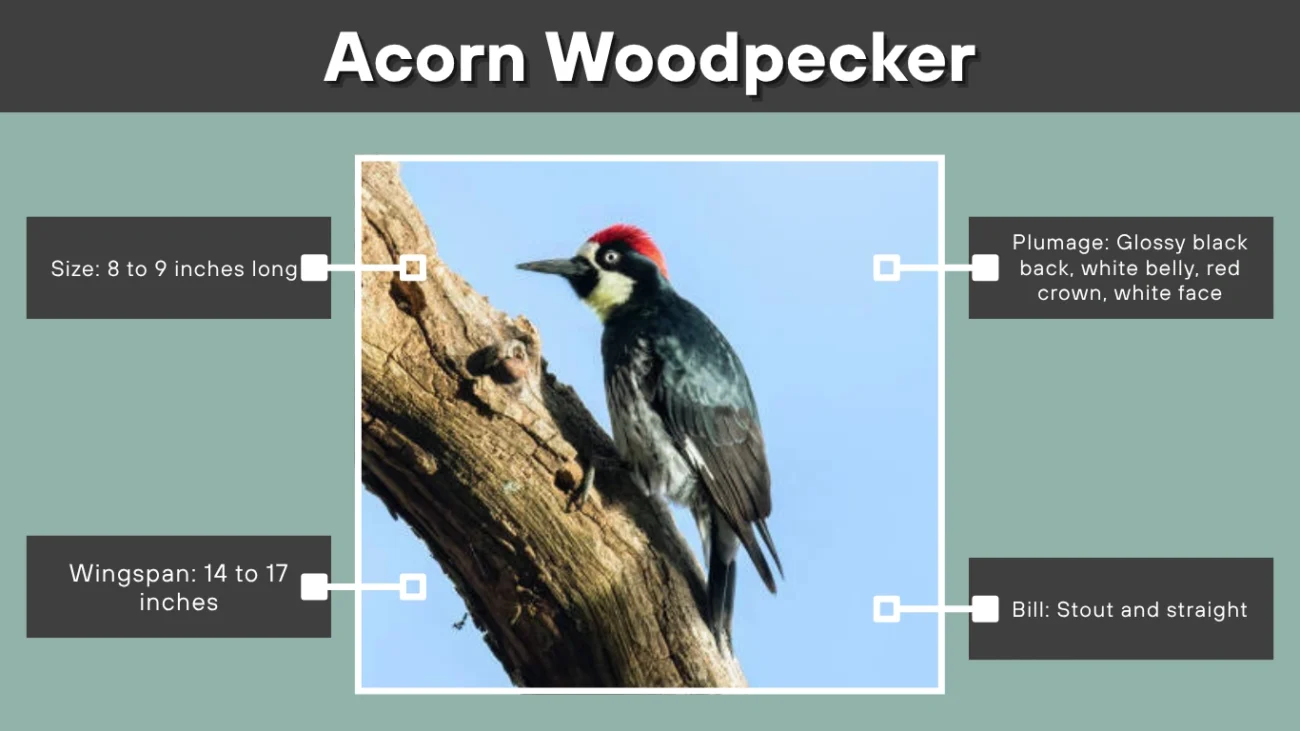
The Acorn Woodpecker (Melanerpes formicivorus) is a highly social woodpecker known for storing thousands of acorns in tree bark. While it is not a regular resident of Florida, it has been recorded occasionally in the western Panhandle.
Identification
- Size: 8 to 9 inches long
- Wingspan: 14 to 17 inches
- Plumage: Glossy black back, white belly, red crown, and white face with dark eye ring
- Bill: Straight and pointed
- Behavior: Lives in family groups and maintains large granary trees filled with acorns
Where Found in Florida
Extremely rare in Florida; occasional sightings have been reported in the western Panhandle near the Alabama border. Its core range is in the western U.S., Mexico, and Central America.
Habitat
Inhabits oak woodlands and mixed pine-oak forests in its primary range. When seen in Florida, it’s typically in wooded areas with acorn-producing trees.
Lifespan
Lives 8 to 12 years in the wild. Its cooperative breeding and food caching behaviors contribute to higher survival within family groups.
FAQs
What is the most common woodpecker in Florida?
The Red-bellied Woodpecker is the most commonly seen woodpecker throughout Florida. It adapts well to woodlands, urban parks, and even suburban neighborhoods with mature trees.
Are there any endangered woodpeckers in Florida?
Yes, the Red-cockaded Woodpecker is federally listed as endangered. It depends on mature longleaf pine forests and is mainly found in protected areas of northern and central Florida.
Do woodpeckers migrate in and out of Florida?
Some do. The Yellow-bellied Sapsucker is a migratory species that winters in Florida but breeds farther north. Most other woodpeckers in Florida are year-round residents.
Can woodpeckers damage homes or property in Florida?
While not common, woodpeckers like the Red-bellied or Downy may occasionally peck on wooden siding or eaves, especially during nesting season or when marking territory.
Where can I go birdwatching for woodpeckers in Florida?
Excellent places include Ocala National Forest, Apalachicola National Forest, Everglades National Park, and many state parks and wildlife management areas throughout Florida that preserve mature woodlands and natural habitats.