

Cowbirds are fascinating members of the blackbird family, best known for their unusual breeding strategy called brood parasitism—though not all species follow this rule. Spread across the Americas, these birds range from the small and glossy Shiny Cowbird to the large and powerful Giant Cowbird. Each species has unique behaviors, habitats, and roles in ecosystems, from influencing host bird populations to contributing to seed dispersal and insect control.
1. Brown-headed Cowbird
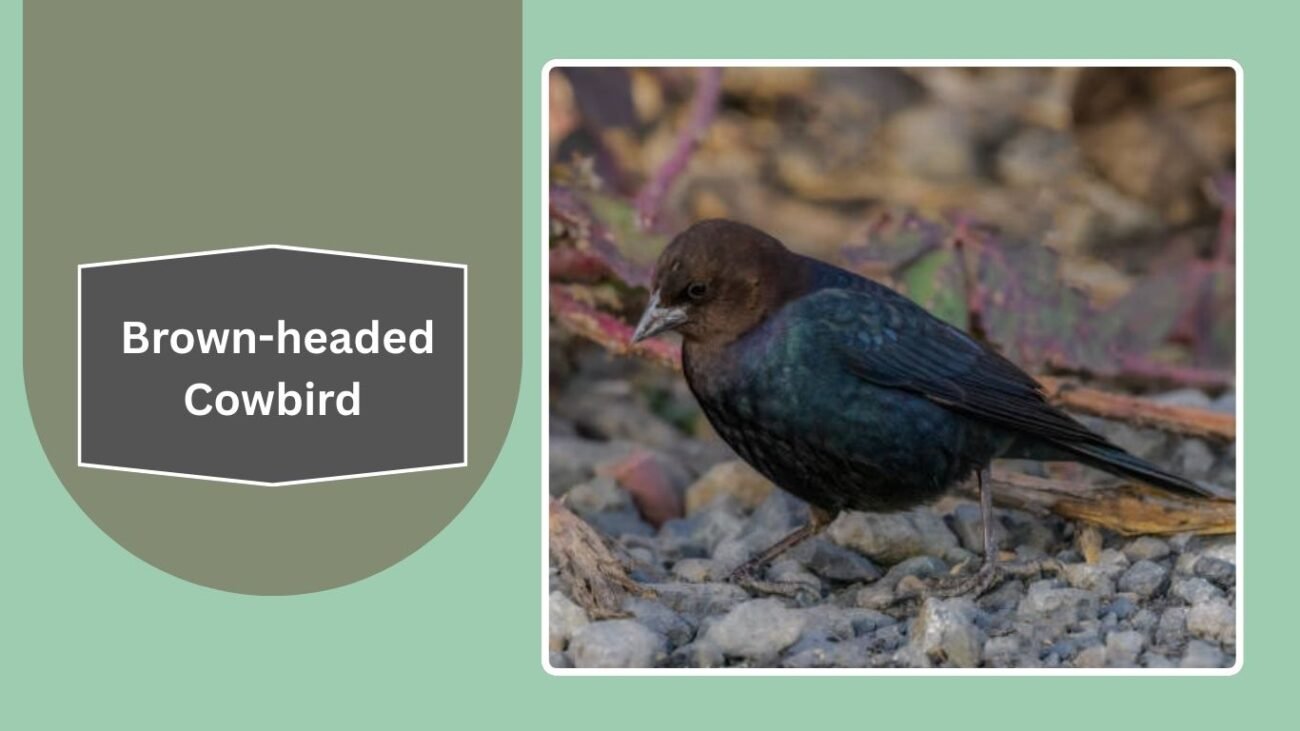
The Brown-headed Cowbird (Molothrus ater) is the most widespread cowbird species in North America. Known for its unique parasitic breeding behavior, it lays its eggs in the nests of other birds, leaving them to raise its young. Despite this, the species is highly adaptable and thrives in grasslands, farmlands, and suburban areas.
Identification
- Medium-sized blackbird, about 19–22 cm (7.5–8.5 in) long
- Males: glossy black body with a distinct brown head
- Females: plain brown with streaked underparts
- Short, conical bill suited for seed eating
- Slightly shorter tail compared to other blackbirds
Behavior
Brown-headed Cowbirds are social and often forage in flocks alongside other blackbirds and starlings. Their most notable behavior is brood parasitism, where females lay eggs in the nests of more than 200 different bird species. They feed mainly on seeds and insects, often following grazing animals to find food.
Habitat
They are found across North America, from southern Canada through the United States and into Mexico. They prefer open fields, grasslands, and farmlands but also adapt to suburban environments with scattered trees.
Importance
While considered pests due to their parasitic nesting strategy, they are part of natural ecosystems, influencing the breeding success and behaviors of host species. They also play a role in controlling insect populations and dispersing seeds.
2. Shiny Cowbird
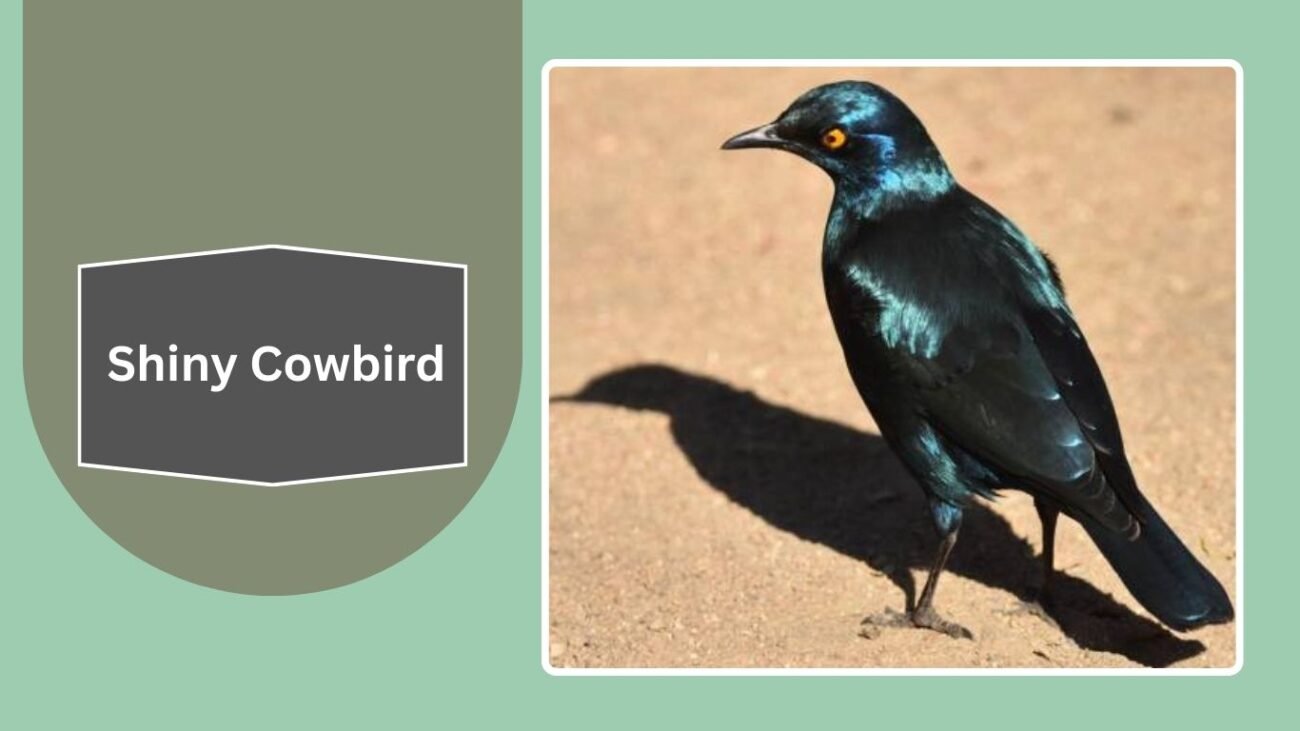
The Shiny Cowbird (Molothrus bonariensis) is a glossy blackbird native to South America but has expanded its range into the Caribbean and parts of North America. Like other cowbirds, it practices brood parasitism, often negatively impacting native bird species where it has been introduced. Its adaptability has made it one of the most successful cowbirds.
Identification
- Small to medium-sized bird, about 18–21 cm (7–8 in) long
- Males: glossy, iridescent purple-black plumage
- Females: dull brown with streaking on the underparts
- Short, conical seed-eating bill
- Relatively short tail compared to other blackbirds
Behavior
Shiny Cowbirds are aggressive brood parasites, frequently laying their eggs in the nests of smaller birds, including endangered species. They often remove host eggs to increase the survival of their own chicks. Their diet includes seeds, grains, and insects, and they are often seen foraging in open areas or near human settlements.
Habitat
They are native to South America but have spread widely across the Caribbean and into the southern United States. Shiny Cowbirds prefer open grasslands, agricultural fields, and forest edges, often thriving in disturbed habitats.
Importance
While ecologically influential, they are often considered a threat to native bird populations, especially on islands where host species are not adapted to brood parasitism. Their spread highlights the ecological challenges of invasive species.
3. Bronzed Cowbird

The Bronzed Cowbird (Molothrus aeneus) is a striking cowbird species found in the southern United States, Mexico, and Central America. Known for its metallic plumage and brood parasitic behavior, it is especially common in open habitats and agricultural areas where it can easily find host nests.
Identification
- Medium-sized bird, about 20–22 cm (8–8.5 in) long
- Males: glossy black plumage with a metallic bronze-green sheen
- Females: dull grayish-brown with less shine
- Distinctive red eyes in males
- Stout, conical bill and short tail
Behavior
Bronzed Cowbirds are brood parasites, laying eggs in the nests of other bird species such as orioles, sparrows, and wrens. Males perform elaborate courtship displays, puffing out feathers and producing rattling calls. They forage mostly on seeds, grains, and insects, often in flocks with other blackbirds.
Habitat
They inhabit open fields, farmlands, scrublands, and grasslands across Mexico, Central America, and the southern U.S. states like Texas and Arizona. They are often seen near cattle pastures, taking advantage of disturbed ground for feeding.
Importance
Bronzed Cowbirds impact host bird populations through parasitism but also contribute to seed dispersal and insect control. Their striking appearance and behaviors make them a notable species within their range.
4. Giant Cowbird
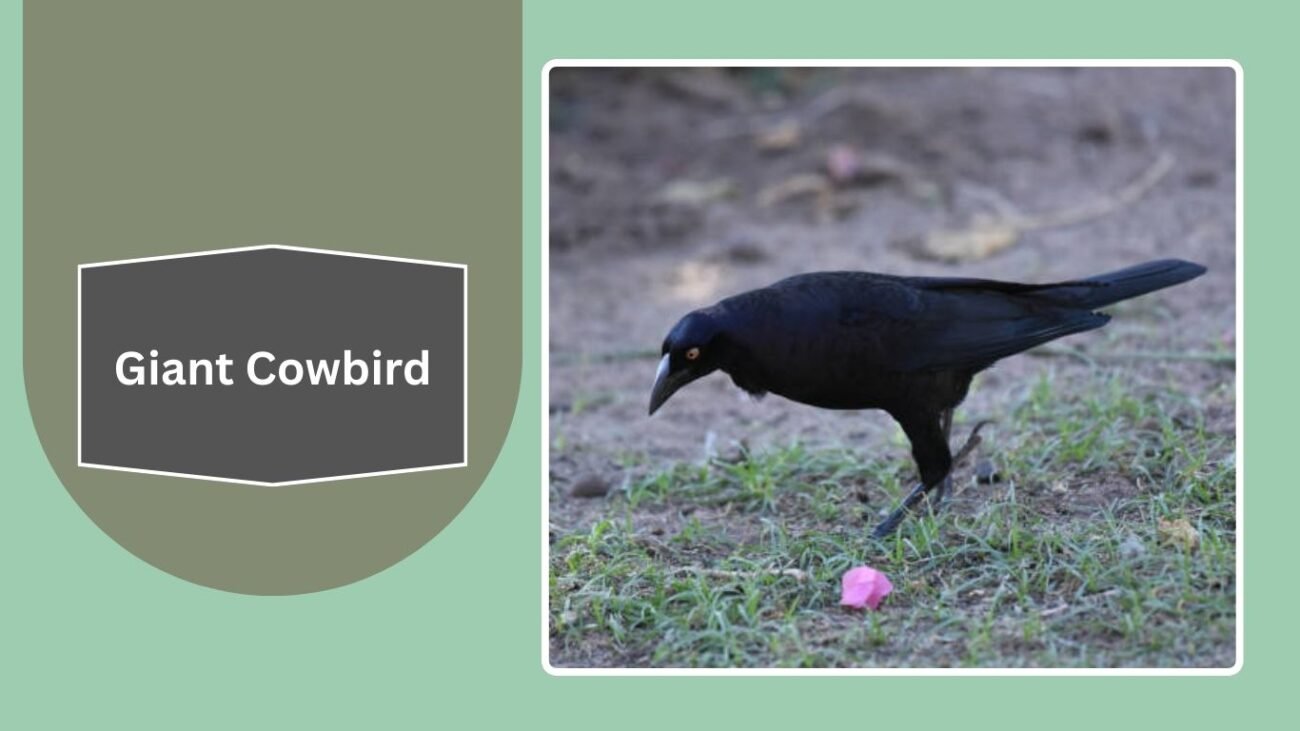
The Giant Cowbird (Molothrus oryzivorus) is the largest species of cowbird, found across Central and South America. Unlike other cowbirds, it mainly parasitizes the nests of oropendolas and caciques, which are large enough to support its big chicks. Its size, glossy plumage, and unique ecological role make it stand out among brood parasites.
Identification
- Large cowbird, about 36–40 cm (14–16 in) long
- Males: glossy black with an iridescent purple-blue sheen
- Females: slightly smaller, duller black or brownish plumage
- Heavy, conical bill
- Long tail compared to other cowbirds
Behavior
Giant Cowbirds specialize in laying eggs in the nests of colonial birds like oropendolas and caciques. Unlike many smaller cowbirds, their chicks often coexist with host young rather than outcompeting them. They usually forage in flocks, feeding on insects, fruits, grains, and sometimes following livestock to find food.
Habitat
They range from southern Mexico through Central America and across much of South America, inhabiting tropical forests, savannas, and agricultural areas. They are frequently seen in the canopy and near large bird colonies.
Importance
Giant Cowbirds play a unique role in ecosystems by interacting with colonial nesters rather than small songbirds. This reduces their negative impact compared to other cowbird species, making them an interesting exception in brood parasitic behavior.
5. Screaming Cowbird
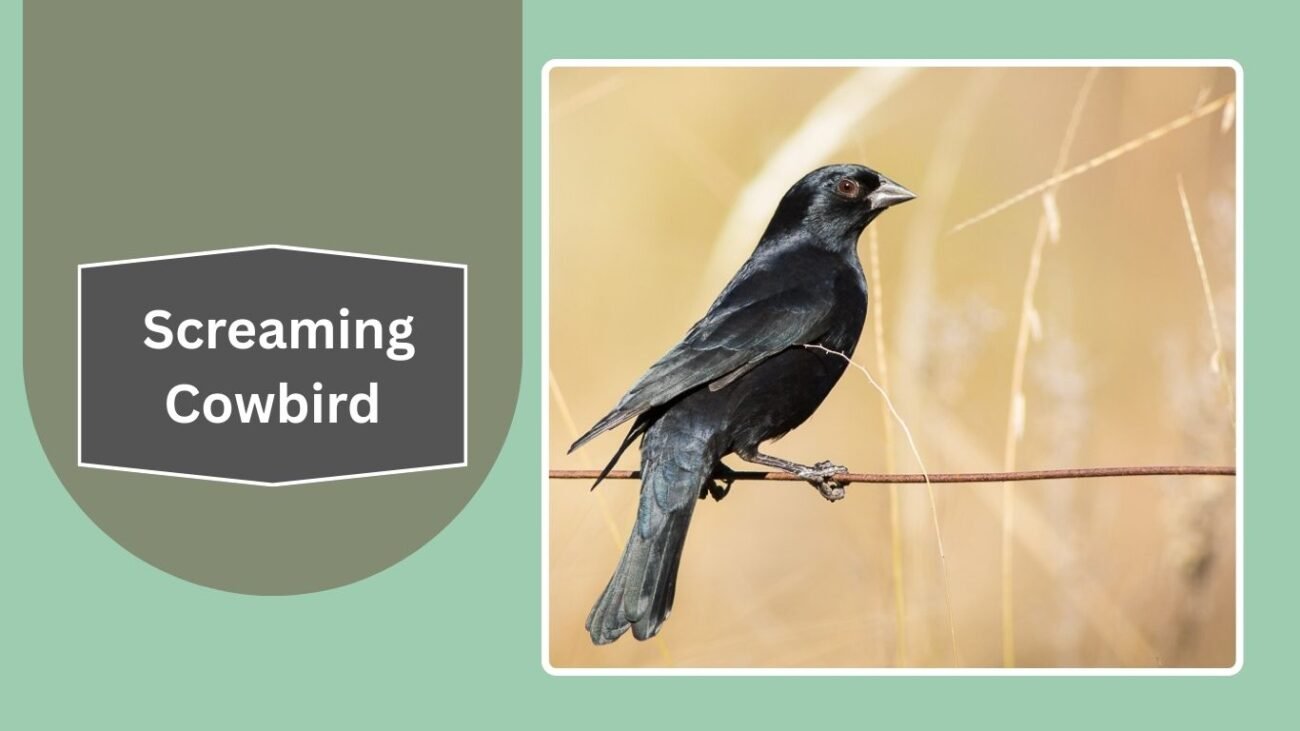
The Screaming Cowbird (Molothrus rufoaxillaris) is a brood-parasitic blackbird native to South America. Its name comes from its loud, harsh calls, which are often heard in open habitats. Unlike other cowbirds, it specializes in parasitizing the nests of the bay-winged cowbird, showing a more host-specific behavior.
Identification
- Medium-sized bird, about 19–21 cm (7.5–8 in) long
- Males: glossy black plumage with a faint purplish sheen
- Females: dark grayish-brown, slightly duller than males
- Strong, conical bill
- Short, squared tail
Behavior
Screaming Cowbirds almost exclusively target bay-winged cowbirds as hosts, laying their eggs in their nests. Their chicks mimic the host’s young, reducing the chance of rejection. They forage in flocks, feeding on insects, seeds, and small fruits, often in open fields or near human settlements.
Habitat
They are found across Argentina, Uruguay, Paraguay, Bolivia, and southern Brazil. Screaming Cowbirds prefer grasslands, savannas, and farmlands with scattered trees, frequently sharing habitats with bay-winged cowbirds.
Importance
This species is notable for its strong dependence on one host species, making it an interesting case in the study of parasitic bird behavior. Its presence also affects the population dynamics of bay-winged cowbirds in its range.
6. Bay-winged Cowbird
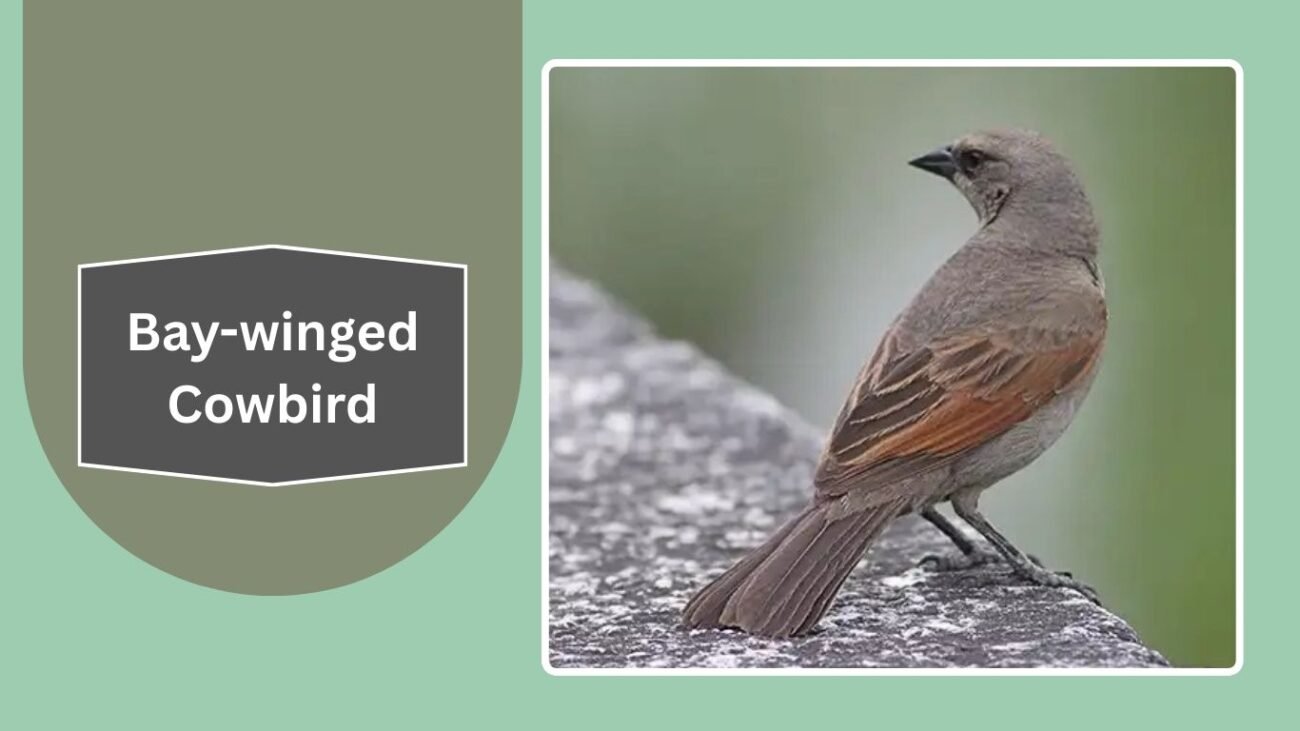
The Bay-winged Cowbird (Agelaioides badius) is a social and cooperative bird species native to South America. Unlike other cowbirds, it is not a brood parasite. Instead, it raises its own young and is often targeted by the Screaming Cowbird for parasitism. Its friendly nature and cooperative nesting behavior make it unique among cowbirds.
Identification
- Medium-sized bird, about 19–21 cm (7.5–8 in) long
- Plumage mostly brown with a chestnut or bay-colored wing patch
- Pale throat and belly, with darker back and wings
- Conical bill suited for seeds and grains
- Short tail and strong legs
Behavior
Bay-winged Cowbirds live in small groups and exhibit cooperative breeding, with multiple individuals helping to raise chicks. They build cup-shaped nests in trees or shrubs and are vigilant against parasitism from Screaming Cowbirds. Their diet consists mainly of seeds, fruits, and insects, and they forage both on the ground and in vegetation.
Habitat
They are native to Argentina, Uruguay, Paraguay, and parts of Bolivia and Brazil. Bay-winged Cowbirds prefer open savannas, farmlands, and scrublands, often staying close to human-altered landscapes.
Importance
As non-parasitic cowbirds, they play an important ecological role in seed dispersal and insect control. Their cooperative social structure also provides fascinating insights into bird behavior and evolutionary adaptations.