











Ostriches are the world’s largest and fastest-running birds, found mainly across Africa’s open plains and deserts. Though only a few true species exist, there are many regional and historical variants that differ in color, size, and habitat. From the majestic Common Ostrich to the extinct Arabian type, each represents a unique adaptation to its environment and climate across Africa and beyond.
1. Common Ostrich (Struthio camelus)

The Common Ostrich is the world’s largest living bird, renowned for its speed and striking appearance. Found across African grasslands and savannas, this flightless bird has evolved powerful legs for defense and running. Its impressive size and survival adaptations make it a remarkable species among modern birds.
Identification
- Scientific Name: Struthio camelus
- Size: Up to 9 feet tall
- Weight: 90–130 kg
- Coloration: Males have black and white feathers; females are gray-brown
- Legs: Long, muscular, two-toed feet ideal for speed and protection
- Wings: Small but useful for balance during running and courtship displays
Habitat
The Common Ostrich thrives in open savannas, grasslands, and arid deserts across Africa. It prefers flat, open areas with sparse vegetation, allowing clear visibility to spot predators from a distance and enough space to flee at high speeds.
Behaviors
Ostriches are social birds living in groups of 5–50. Males perform elaborate dances and booming calls during courtship. They are alert and defensive, capable of delivering lethal kicks. When threatened, they often run instead of hiding, reaching impressive speeds of up to 70 km/h.
Diet
As omnivores, ostriches eat a mix of plants, seeds, roots, flowers, insects, and small reptiles. They also swallow pebbles to help grind food in their gizzard, compensating for the absence of teeth. Their diet allows them to survive long periods without direct water intake.
Lifecycle
Female ostriches begin breeding around three years of age. They lay eggs in communal nests, where both parents share incubation duties. After about 42 days, chicks hatch covered in soft down and can run within hours. Young ostriches grow rapidly and reach adult size in less than a year.
2. Somali Ostrich (Struthio molybdophanes)

The Somali Ostrich is a distinct species native to the Horn of Africa, easily recognized by its bluish-gray neck and legs. Adapted to arid and semi-desert regions, it thrives in hot climates. This ostrich was once considered a subspecies of the Common Ostrich but is now classified as a separate species due to unique physical traits and genetic differences.
Identification
- Scientific Name: Struthio molybdophanes
- Size: Around 7–8 feet tall
- Weight: 90–120 kg
- Coloration: Males have glossy black feathers with vivid blue-gray necks and thighs; females are light brown
- Legs: Strong, blue-gray, adapted for desert terrain
- Wings: Used for balance and display during courtship
Habitat
The Somali Ostrich inhabits the arid plains and scrublands of Somalia, Ethiopia, Djibouti, and northern Kenya. It favors dry, open areas with scattered vegetation, thriving in conditions where temperatures are extreme and water is scarce.
Behaviors
Solitary or found in small groups, Somali Ostriches are cautious and territorial. Males guard their nesting areas fiercely, using booming calls and wing displays to warn intruders. During the breeding season, males dig shallow nests, and both parents take turns incubating the eggs.
Diet
This species feeds mainly on dry grasses, seeds, and leaves, occasionally supplementing its diet with insects and small reptiles. Its ability to extract moisture from food allows it to survive long periods without drinking, a vital adaptation to desert life.
Lifecycle
Females lay 12–15 eggs in communal nests, where both sexes share incubation. The eggs hatch after about six weeks, and chicks grow rapidly. Within months, they are strong enough to keep up with adults. Somali Ostriches live up to 40–45 years in the wild.
3. North African Ostrich (Struthio camelus camelus)

The North African Ostrich, also known as the Red-necked Ostrich or Barbary Ostrich, is the largest and most brightly colored ostrich subspecies. Native to the Sahel and North African regions, it once ranged across vast deserts but is now critically endangered due to habitat loss and hunting.
Identification
- Scientific Name: Struthio camelus camelus
- Size: Up to 9 feet tall
- Weight: 100–145 kg
- Coloration: Males have vivid red necks and legs; females are light brown-gray
- Legs: Long and muscular, adapted for desert running
- Wings: White-tipped feathers used for mating displays and balance
Habitat
The North African Ostrich inhabits arid and semi-arid regions, especially the Sahara and Sahel zones. It prefers open plains and desert edges where sparse vegetation provides both visibility and foraging opportunities.
Behaviors
This ostrich is territorial during the breeding season. Males perform impressive wing displays and deep booming calls to attract females. Outside breeding, they may gather in loose flocks for safety. Despite their size, they are swift runners capable of speeds over 60 km/h.
Diet
They are omnivorous, feeding on dry grasses, seeds, shrubs, fruits, and occasionally small vertebrates. Their digestive system allows them to extract moisture from food, helping them survive in extremely dry environments.
Lifecycle
Females lay 10–20 eggs in communal nests dug in sandy soil. Both parents share incubation duties for about 42 days. Chicks hatch fully active and are able to run shortly after birth. In the wild, this ostrich can live for more than 40 years.
4. Masai Ostrich (Struthio camelus massaicus)

The Masai Ostrich, found mainly in East Africa, is recognized by its pinkish neck and thighs. It is a powerful runner and an important species in African ecosystems, helping disperse seeds and control insect populations.
Identification
- Scientific Name: Struthio camelus massaicus
- Size: 7–9 feet tall
- Weight: 100–130 kg
- Coloration: Males have black plumage with pink necks; females are brownish-gray
- Legs: Long, pinkish, and strong with two toes for high-speed running
- Wings: Used for balance and courtship displays
Habitat
Masai Ostriches inhabit open savannas, grasslands, and semi-arid plains across Kenya and Tanzania. They thrive in regions with scattered trees and dry conditions, often seen near the Serengeti and Maasai Mara.
Behaviors
They are social birds that live in flocks of 5–50 individuals. During breeding season, males build large ground nests and perform dramatic displays with outstretched wings. When threatened, they either flee or defend themselves with powerful forward kicks.
Diet
Masai Ostriches feed on grass, seeds, fruits, flowers, and insects. They occasionally consume small reptiles or rodents. Like other ostriches, they ingest small stones to grind food in their gizzard, aiding digestion.
Lifecycle
Females lay 12–15 large eggs per clutch. Both parents share incubation for about six weeks, with males guarding the nest at night. Chicks grow rapidly and can reach adult size within a year. Their lifespan ranges from 40 to 45 years in the wild.
5. Southern Ostrich (Struthio camelus australis)

The Southern Ostrich, also known as the South African Ostrich, is native to the open grasslands and semi-desert regions of southern Africa. It’s one of the most commonly farmed ostrich species for its feathers, leather, and meat. This bird is strong, adaptable, and plays a vital role in maintaining grassland ecosystems.
Identification
- Scientific Name: Struthio camelus australis
- Size: 7–8 feet tall
- Weight: 90–120 kg
- Coloration: Males are black with white feathers; females are grayish-brown
- Legs: Gray, powerful, adapted for running and defense
- Wings: Used mainly for balance and display during courtship
Habitat
This ostrich thrives in open plains, savannas, and dry shrublands across South Africa, Namibia, Botswana, and Zimbabwe. It prefers flat terrain where visibility is high, allowing it to spot predators and escape quickly.
Behaviors
Southern Ostriches live in small groups or family units. Males are territorial during breeding seasons, performing elaborate wing-spreading displays. They communicate with booming calls and hissing sounds, especially when threatened or protecting nests.
Diet
These birds are omnivorous, eating seeds, shrubs, flowers, and small invertebrates. They also consume pebbles to aid digestion. Their efficient metabolism allows them to live in arid environments with limited water.
Lifecycle
Females lay around 10–15 eggs in shallow ground nests. Both sexes share incubation duties, and chicks hatch after about 42 days. Young ostriches are precocial, capable of walking and running within hours of hatching. They reach maturity in 3–4 years.
6. Arabian Ostrich (Struthio camelus syriacus)

The Arabian Ostrich, also known as the Syrian Ostrich, was once native to the Arabian Peninsula and the Middle East. Sadly, this subspecies became extinct in the mid-20th century due to overhunting and habitat loss. It was smaller than its African relatives but equally graceful and fast.
Identification
- Scientific Name: Struthio camelus syriacus
- Size: About 6–7 feet tall
- Weight: 80–100 kg
- Coloration: Males had lighter black plumage with pale necks; females were grayish-brown
- Legs: Long and pale, suited for desert travel
- Wings: Small but useful for balance and display
Habitat
Historically, the Arabian Ostrich lived in sandy and semi-arid deserts of the Arabian Peninsula, Syria, and Iraq. It preferred vast open spaces where it could run freely and escape predators such as cheetahs and humans.
Behaviors
This ostrich was typically solitary or lived in small groups. Males defended large territories during mating seasons and performed deep booming calls. Its defensive behavior included strong kicks and evasive running patterns to avoid predators.
Diet
The Arabian Ostrich fed on desert vegetation such as grasses, roots, and shrubs. It occasionally consumed insects and small animals. Adapted to dry environments, it could survive long periods without direct water intake, obtaining moisture from food sources.
Lifecycle
Females laid around 10–12 eggs per clutch, often in communal nests. Both parents shared incubation duties for about six weeks. The chicks grew rapidly, reaching near-adult size in less than a year. Unfortunately, hunting and egg collection led to its extinction by the 1960s.
7. Barbary Ostrich (Struthio camelus camelus)

The Barbary Ostrich, sometimes considered synonymous with the North African Ostrich, once roamed across North Africa, from Morocco to Egypt. Known for its bright red neck and legs, it’s among the largest ostrich subspecies. Sadly, it has become nearly extinct in the wild, though conservation breeding programs exist today.
Identification
- Scientific Name: Struthio camelus camelus
- Size: 8–9 feet tall
- Weight: 100–145 kg
- Coloration: Males are black with white plumes and red necks; females are sandy gray
- Legs: Long and reddish, strong enough for swift running
- Wings: Used for balance, shading, and courtship displays
Habitat
The Barbary Ostrich inhabited arid plains, open grasslands, and desert edges of the Sahara region. It preferred dry, sparsely vegetated areas, relying on wide visibility to detect predators early.
Behaviors
This ostrich was highly alert and territorial. During the breeding season, males performed wing-spreading dances and deep booming calls to attract females. Outside the breeding season, they lived in loose herds for protection and social interaction.
Diet
The Barbary Ostrich primarily ate seeds, roots, desert plants, and insects. It was well-adapted to desert life, obtaining most of its water from vegetation and surviving long periods without drinking.
Lifecycle
Females laid 10–15 eggs in a communal nest. The incubation period lasted about six weeks, shared by both parents. Chicks were quick to walk and feed themselves, growing rapidly within a few months. The species’ lifespan could reach up to 45 years.
8. Red-necked Ostrich (Struthio camelus camelus)

The Red-necked Ostrich, also known as the Sahel Ostrich, is the largest living subspecies of ostrich. Distinguished by its vivid red neck and legs, it inhabits the Sahel region of Africa. It’s a close relative of the Barbary Ostrich and shares many similar physical and behavioral traits.
Identification
- Scientific Name: Struthio camelus camelus
- Size: Up to 9 feet tall
- Weight: 100–150 kg
- Coloration: Males are black with white wing tips; females are brown-gray
- Legs: Bright red during breeding season, used for display and defense
- Wings: Broad, white-tipped, and used for balance and signaling
Habitat
The Red-necked Ostrich lives across the Sahel, stretching from Senegal to Sudan. It prefers dry grasslands and semi-desert regions, where sparse vegetation allows for easy movement and clear visibility.
Behaviors
This ostrich is social, living in herds of 10–30 individuals. Males establish territories and display dramatic mating dances with lowered wings and booming calls. They are fast runners, reaching speeds of up to 70 km/h to evade predators.
Diet
Their diet consists mainly of grasses, seeds, shrubs, and fruits, with occasional insects and small animals. Like other ostriches, they swallow small stones to grind food efficiently in their gizzards.
Lifecycle
Females lay around 10–20 eggs per breeding season, often sharing a communal nest. Both parents take turns incubating for about six weeks. The chicks are well-developed at birth and grow rapidly, achieving independence within a few months.
9. Blue-necked Ostrich (Struthio camelus australis)

The Blue-necked Ostrich is a southern African variety of the Common Ostrich, named for its bluish-gray neck and legs. Found mainly in the open plains of southern Africa, this bird is a symbol of endurance and adaptability. It is also among the most farmed ostrich types due to its calm temperament and valuable products.
Identification
- Scientific Name: Struthio camelus australis
- Size: 7–8 feet tall
- Weight: 90–120 kg
- Coloration: Males are black with blue-gray necks; females are brown-gray
- Legs: Blue-gray and strong, built for long-distance running
- Wings: Used for balance and to regulate body temperature
Habitat
The Blue-necked Ostrich inhabits dry savannas, shrublands, and semi-desert regions of Namibia, Botswana, and South Africa. It thrives in hot climates with limited vegetation and open spaces for visibility and speed.
Behaviors
These ostriches live in pairs or small family groups. Males are territorial and perform elegant wing-spreading dances to attract females. They communicate using low-frequency booms and hissing sounds to warn or court mates.
Diet
The Blue-necked Ostrich’s diet consists of seeds, grasses, leaves, and fruits. It occasionally consumes insects or small reptiles. Like other ostriches, it ingests small pebbles to aid digestion and can survive long periods without water.
Lifecycle
Females lay 10–15 eggs in a shared nest, where both parents take turns incubating. After about 42 days, the chicks hatch and are able to walk and feed immediately. They grow quickly, reaching near-adult size in under a year and living up to 40 years.
10. East African Ostrich (Struthio camelus massaicus)
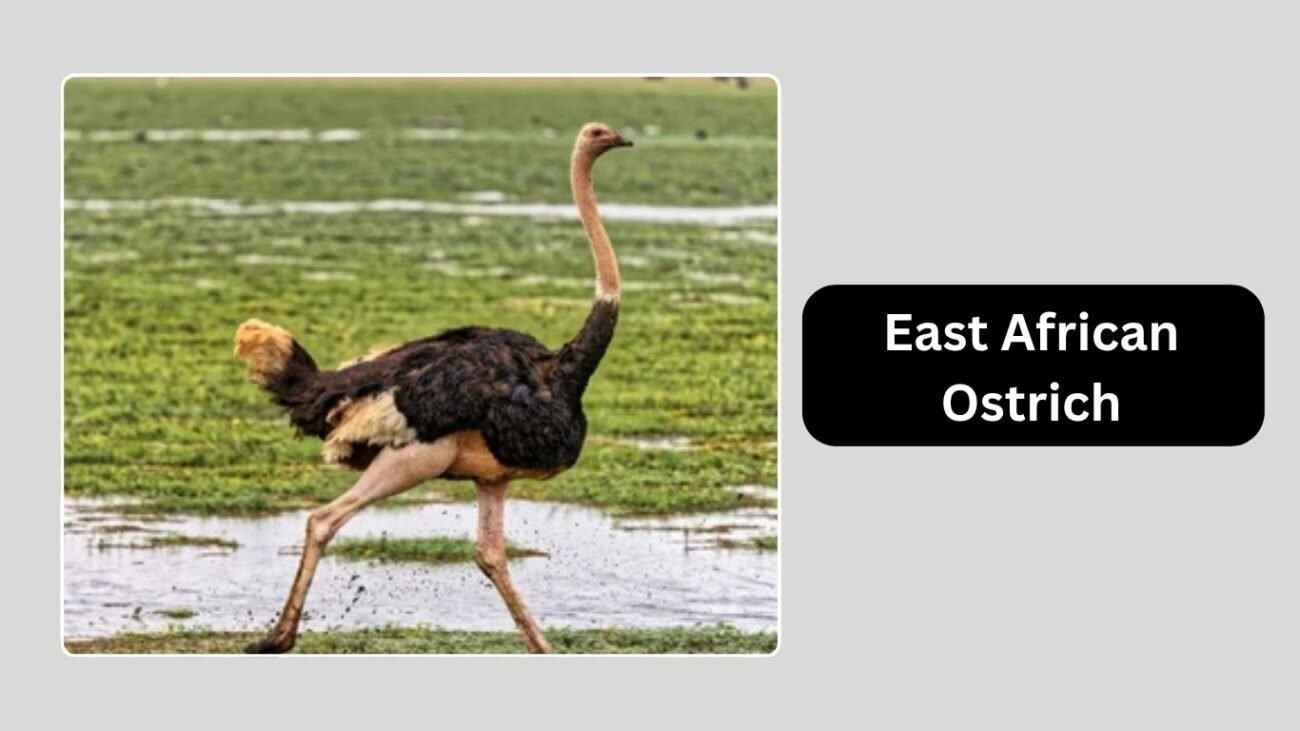
The East African Ostrich, also known as the Masai Ostrich, is native to Kenya, Tanzania, and parts of Uganda. It is recognized for its bright pink neck and legs, especially during mating season. This ostrich is a strong runner, thriving in the vast grasslands and open plains of East Africa.
Identification
- Scientific Name: Struthio camelus massaicus
- Size: 8–9 feet tall
- Weight: 100–135 kg
- Coloration: Males have black plumage with pink necks and thighs; females are brownish-gray
- Legs: Long, pinkish, powerful for fast running and defense
- Wings: Used for balance and courtship rituals
Habitat
East African Ostriches inhabit open savannas, grasslands, and semi-arid regions. They are commonly seen in the Serengeti, Maasai Mara, and other wildlife reserves. Their open habitats allow them to detect predators and use their incredible speed to escape danger.
Behaviors
They are social birds that live in herds, especially outside the breeding season. During courtship, males display bright colors and perform elaborate dances. These ostriches are also highly alert, using keen eyesight to watch for threats like lions or hyenas.
Diet
Their diet includes grasses, seeds, flowers, and fruits, along with occasional insects or small animals. They rely on moisture from plants, rarely needing to drink water. Their large digestive system allows efficient nutrient extraction from fibrous plants.
Lifecycle
Females lay 12–15 eggs in a communal nest, which both parents help incubate. The eggs hatch after six weeks, and chicks grow rapidly under parental care. Within a few months, they can run fast enough to avoid predators and become independent before reaching maturity at 3–4 years.
11. West African Ostrich (Struthio camelus camelus)

The West African Ostrich, a subspecies of the Common Ostrich, is native to the Sahel and savanna regions of western Africa. Known for its red neck and legs, this majestic bird once roamed widely across countries like Senegal, Mali, and Chad. Today, it is endangered due to habitat loss and overhunting.
Identification
- Scientific Name: Struthio camelus camelus
- Size: 8–9 feet tall
- Weight: 100–140 kg
- Coloration: Males are black with white plumes and red necks; females are brownish-gray
- Legs: Long, reddish, and muscular
- Wings: Broad and white-tipped, used for display and shade
Habitat
The West African Ostrich inhabits semi-arid grasslands, open plains, and savannas. It prefers flat areas with sparse vegetation where visibility is high. These regions often experience extreme heat, and the ostrich’s physiology helps it cope with such harsh environments.
Behaviors
They are mainly found in small groups, sometimes joining mixed herds with antelopes or zebras. Males are highly territorial during breeding, using booming calls and wing displays to warn rivals. They can run at speeds over 60 km/h when escaping predators.
Diet
Their diet includes seeds, grasses, roots, and leaves, along with insects and small reptiles. Like other ostriches, they swallow small stones to aid digestion. They can go without drinking water for long periods, deriving moisture from the plants they eat.
Lifecycle
Females lay 10–15 large eggs in a communal nest dug by the male. Both parents share incubation for about six weeks. The chicks hatch with soft down feathers and can walk soon after. They grow rapidly and reach maturity by around three years of age.
12. African Black Ostrich (Domesticated Hybrid)
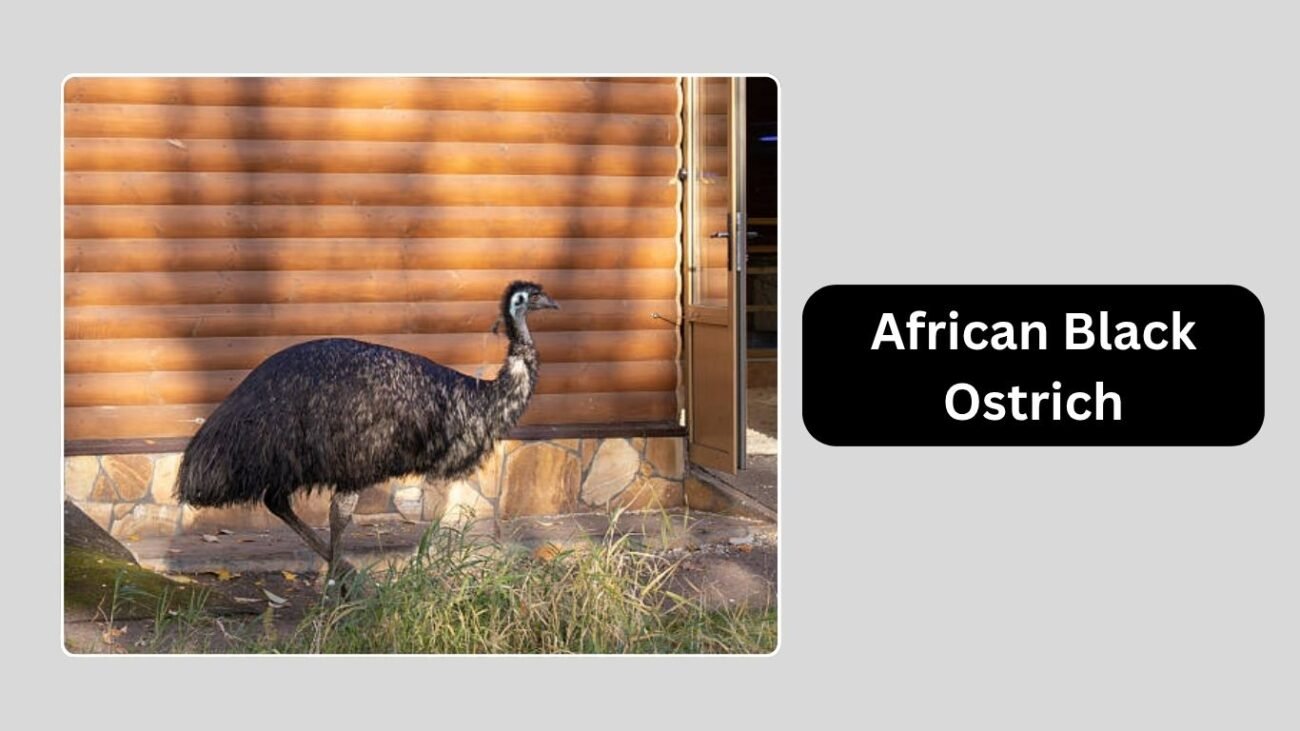
The African Black Ostrich is a domesticated hybrid breed, developed mainly for farming. It is smaller and calmer than its wild relatives, making it ideal for commercial production of meat, leather, and feathers. This breed is common in South Africa and other parts of the world where ostrich farming thrives.
Identification
- Scientific Name: Struthio camelus domesticus
- Size: 6–7 feet tall
- Weight: 90–110 kg
- Coloration: Males are deep black with white wing plumes; females are grayish-brown
- Legs: Shorter and lighter than wild species, aiding manageability
- Wings: Well-developed for courtship and balance
Habitat
The African Black Ostrich is primarily found in managed farms and reserves. It adapts easily to a variety of climates, including semi-arid and temperate regions. These birds prefer open enclosures that mimic their natural habitat for health and breeding success.
Behaviors
This domesticated ostrich is calm, social, and accustomed to human interaction. Males still perform natural courtship displays, though aggression is minimal compared to wild species. They thrive in groups and are easy to handle in farming environments.
Diet
They are fed a balanced diet of grains, alfalfa, and fresh greens, supplemented with minerals and grit to support digestion. Like wild ostriches, they swallow small stones to grind food in their gizzards effectively.
Lifecycle
In captivity, breeding occurs under controlled conditions. Females lay 10–20 eggs per season, which are often collected for incubation. Chicks hatch after 42 days and grow rapidly. Farmed ostriches can live up to 50 years, though most are raised for commercial purposes.
13. Zimbabwean Ostrich (Struthio camelus australis)

The Zimbabwean Ostrich is a regional variant of the Southern Ostrich, found across Zimbabwe’s savannas and open woodlands. Known for its resilience and adaptability, this ostrich thrives in warm, dry climates and plays a crucial role in maintaining ecological balance by dispersing seeds and controlling insects.
Identification
- Scientific Name: Struthio camelus australis
- Size: 7–8 feet tall
- Weight: 90–120 kg
- Coloration: Males are black with white-tipped wings; females are brownish-gray
- Legs: Grayish and muscular, adapted for long-distance running
- Wings: Used for balance and for display during courtship
Habitat
The Zimbabwean Ostrich inhabits dry grasslands, scrublands, and semi-arid regions throughout southern Africa. It is especially common in protected reserves and open plains where it can easily detect predators and access a variety of vegetation.
Behaviors
These ostriches live in small groups, often accompanied by antelope or zebra herds. Males establish dominance through loud booming calls and dramatic dances. When threatened, they rely on their speed, capable of running over 65 km/h, or deliver powerful defensive kicks.
Diet
The diet consists of grasses, seeds, flowers, and leaves, occasionally supplemented with insects and small reptiles. Like other ostriches, they swallow small stones to help grind plant material in their gizzard for digestion.
Lifecycle
Breeding occurs during the rainy season. Females lay 10–15 eggs per clutch in a communal nest, and both parents share incubation duties for about six weeks. The chicks hatch well-developed and grow quickly, reaching maturity in about three years.
14. Tanzanian Ostrich (Struthio camelus massaicus)

The Tanzanian Ostrich, often grouped with the East African or Masai Ostrich, is native to Tanzania’s vast plains and open savannas. Recognized by its striking pink neck and legs, this bird is a prominent feature of Tanzania’s wildlife reserves, including the Serengeti and Ngorongoro Crater.
Identification
- Scientific Name: Struthio camelus massaicus
- Size: 8–9 feet tall
- Weight: 100–135 kg
- Coloration: Males are black with pink necks and legs; females are gray-brown
- Legs: Long and pinkish, ideal for high-speed running
- Wings: Broad and white-tipped, used for balance and courtship
Habitat
The Tanzanian Ostrich thrives in open grasslands, semi-arid plains, and savanna regions. It prefers areas with scattered trees and wide visibility, which provide ideal conditions for foraging and predator detection.
Behaviors
They are social birds, living in flocks of 5–50 individuals. During the breeding season, males perform elaborate dances and booming calls to attract females. Territorial males fiercely defend their nesting grounds against rivals and predators.
Diet
Tanzanian Ostriches feed on grasses, seeds, leaves, and fruits, occasionally consuming insects or small vertebrates. They are adapted to dry environments and can survive long periods without drinking water, relying on moisture from plants.
Lifecycle
Females lay around 12–15 eggs per breeding cycle, usually in a communal nest. Both parents share incubation duties for about 42 days. The chicks hatch strong and active, capable of walking and running shortly after birth. Lifespan averages around 40–45 years in the wild.
15. Ethiopian Ostrich (Struthio molybdophanes)

The Ethiopian Ostrich, also known as the Blue-necked Ostrich, is native to the Horn of Africa, particularly Ethiopia and parts of Somalia and Kenya. Recognized by its bluish-gray neck and legs, it’s well-adapted to arid and semi-desert environments. This species is closely related to the Somali Ostrich and is known for its remarkable endurance in hot, dry climates.
Identification
- Scientific Name: Struthio molybdophanes
- Size: 7–8 feet tall
- Weight: 90–120 kg
- Coloration: Males are black with blue-gray necks and thighs; females are brownish-gray
- Legs: Bluish-gray, long, and muscular for swift running
- Wings: Used for balance, display, and to regulate body temperature
Habitat
The Ethiopian Ostrich inhabits dry savannas, desert plains, and bushlands of the Horn of Africa. It prefers open terrain with scattered vegetation, offering visibility and space to escape predators. It thrives in areas where temperatures are extreme and rainfall is scarce.
Behaviors
This ostrich is generally solitary or lives in small groups. Males are territorial during breeding and perform elaborate dances with wing displays to attract females. When threatened, they either flee at high speed or use powerful kicks for defense.
Diet
The Ethiopian Ostrich’s diet consists mainly of seeds, grasses, shrubs, and leaves. It occasionally feeds on insects and small vertebrates. Adapted to harsh environments, it can go long periods without drinking, deriving water from food sources.
Lifecycle
Females lay 10–15 eggs per clutch in communal nests. Both parents share incubation duties for about six weeks. The chicks hatch well-developed and can move within hours. They grow quickly, reaching near-adult size in about a year and can live up to 40 years in the wild.


