










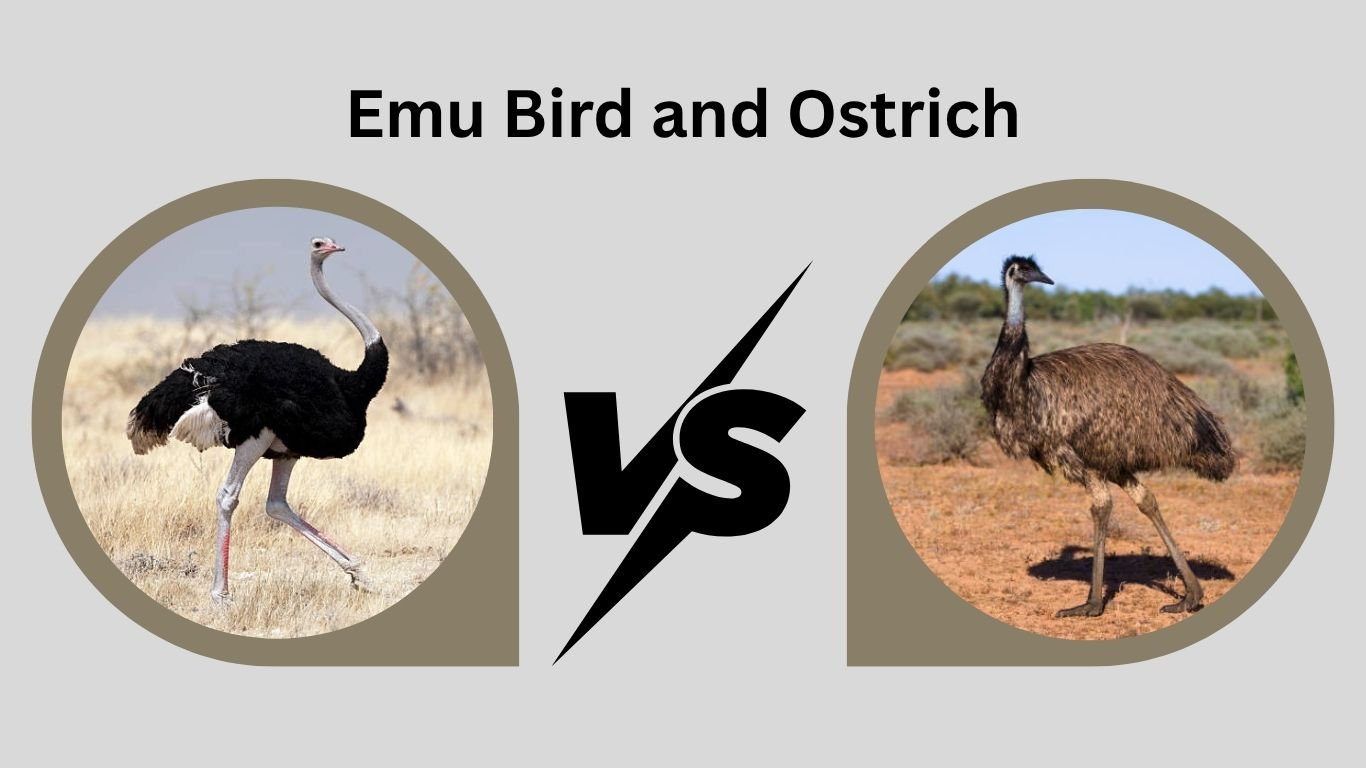
Emus and ostriches are among the largest and most fascinating flightless birds in the world. Both belong to the ratite family, known for their strong legs, large bodies, and inability to fly. While they share similarities, these birds live on different continents and have evolved unique traits suited to their environments. Let’s explore their differences in size, behavior, and biology in detail.
Overview of Emu and Ostrich
Emu Overview
The emu (Dromaius novaehollandiae) is native to Australia and is the country’s largest bird. Standing up to 6 feet tall, emus are covered in soft, shaggy brown feathers that help them blend into the dry outback. They thrive in open plains, woodlands, and semi-arid regions. Emus are highly adaptable and can travel long distances in search of food and water.
Ostrich Overview
The ostrich (Struthio camelus) is native to Africa and is the world’s largest bird. It can reach a height of 9 feet and weigh up to 150 kilograms. Unlike the emu, the ostrich has smoother feathers, a long bare neck, and powerful legs built for speed. Ostriches live mainly in African savannas and deserts, using their height to spot predators from afar.
Identification and Physical Traits
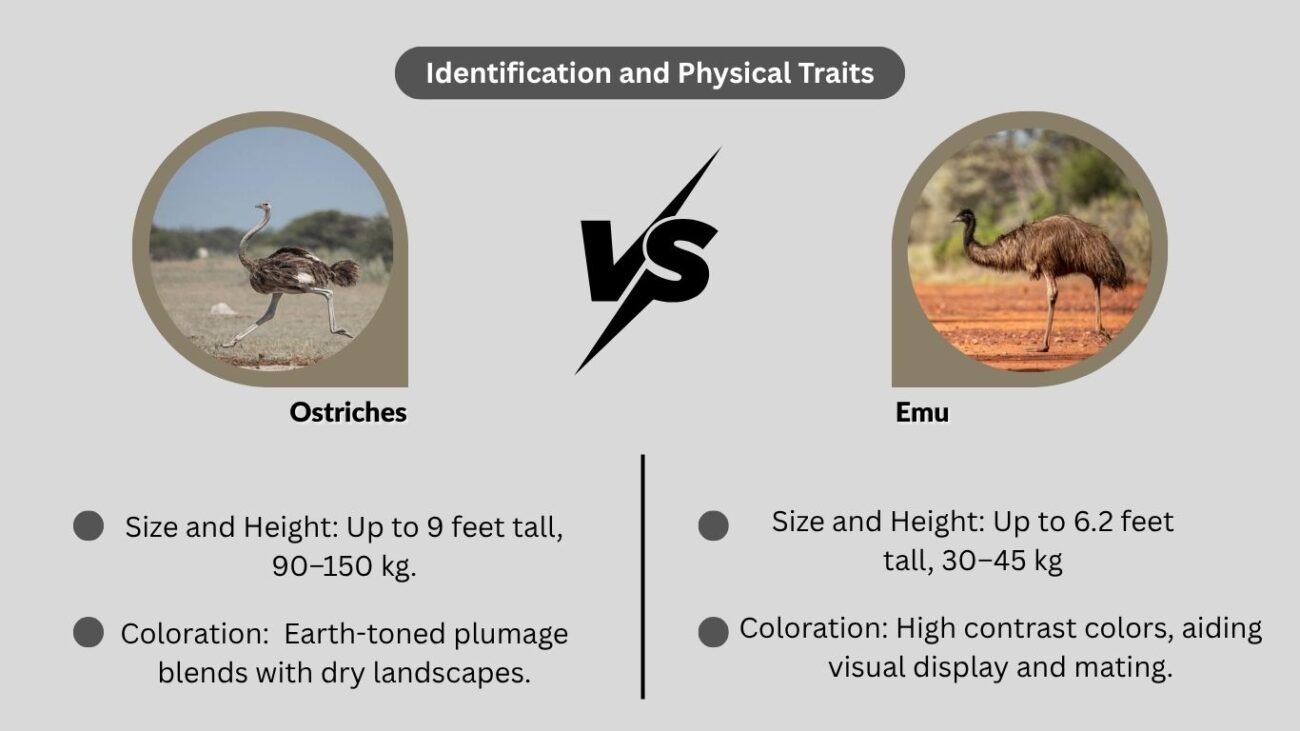
- Size and Height:
- Emu: Up to 6.2 feet tall, 30–45 kg.
- Ostrich: Up to 9 feet tall, 90–150 kg.
- Emu: Up to 6.2 feet tall, 30–45 kg.
- Feather Texture:
- Emu: Shaggy, soft, brown-gray feathers for camouflage.
- Ostrich: Smooth feathers; males are black and white, females gray-brown.
- Emu: Shaggy, soft, brown-gray feathers for camouflage.
- Neck and Head:
- Emu: Shorter neck, covered in downy feathers, bluish skin.
- Ostrich: Long bare neck, pink or gray, with large eyes.
- Emu: Shorter neck, covered in downy feathers, bluish skin.
- Beak:
- Emu: Flat and broad, ideal for pecking plants and insects.
- Ostrich: Stronger, slightly hooked tip for grazing.
- Emu: Flat and broad, ideal for pecking plants and insects.
- Legs and Feet:
- Emu: Three toes, built for balance and endurance.
- Ostrich: Two toes, built for speed and defense.
- Emu: Three toes, built for balance and endurance.
- Coloration:
- Emu: Earth-toned plumage blends with dry landscapes.
- Ostrich: High contrast colors, aiding visual display and mating.
- Emu: Earth-toned plumage blends with dry landscapes.
Habitat and Geographic Distribution
Emu Habitat
Emus are found across most of mainland Australia, excluding dense forests and very dry deserts. They prefer open plains and lightly wooded areas where they can forage easily. These birds are nomadic, moving great distances to follow rainfall patterns and food availability. Their strong legs and endurance make them well suited to Australia’s vast, harsh terrain.
Ostrich Habitat
Ostriches inhabit Africa’s savannas, grasslands, and semi-arid deserts. They thrive in regions with scattered vegetation and open space, allowing them to spot threats easily. Ostriches have adapted to survive extreme heat, often going days without water by extracting moisture from the plants they eat. Their long legs and height are advantages in these open landscapes, offering both speed and visibility.
Diet and Feeding Behavior
Emu Diet
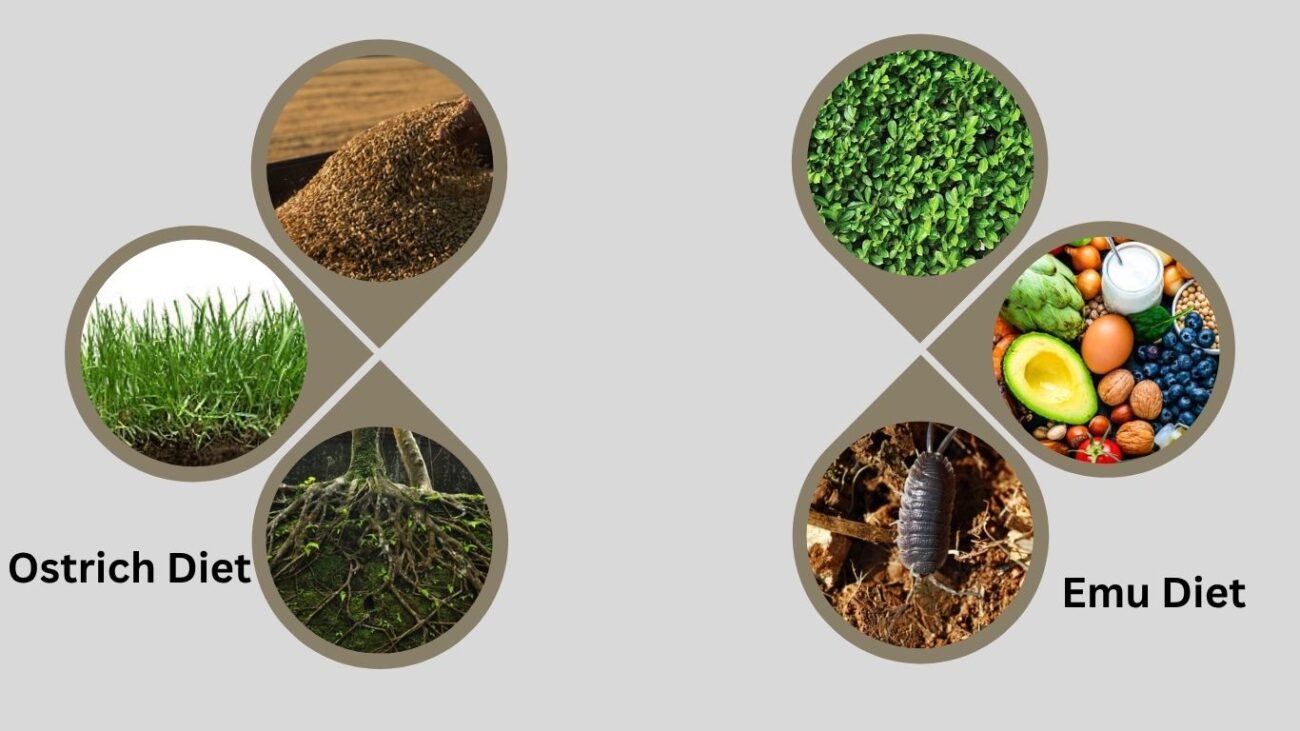
Emus are omnivorous and eat a mix of plants, seeds, fruits, and insects. Their diet changes with the seasons — during dry months, they rely on seeds and roots, while in wetter periods, they consume fruits and flowers. Emus swallow small stones and pebbles that help grind food in their gizzards, aiding digestion. They can also go for long periods without drinking water, obtaining moisture from the food they eat.
Ostrich Diet
Ostriches are primarily herbivorous, feeding on grasses, leaves, seeds, and roots. However, they occasionally eat insects or small reptiles for extra protein. Like emus, they swallow pebbles to grind food in their digestive systems. Ostriches can survive without direct water intake for days, drawing hydration from the plants they consume. Their strong digestive system allows them to eat tough vegetation that many animals avoid.
Behavior and Lifestyle
Social Behavior
Emus are usually solitary but may form loose groups during migration or breeding seasons. They are peaceful birds, though males can become aggressive when defending nests. Ostriches, on the other hand, are more social and often live in groups of 5 to 50 birds. Their social structure provides safety, with group members taking turns watching for predators.
Communication and Sounds
Emus produce deep booming and drumming sounds that can be heard over long distances. These calls help them communicate during mating and territory defense. Ostriches make a variety of vocalizations too, including booming sounds by males and hissing noises when threatened. Their loud calls are vital in open habitats where visibility is high but distances are vast.
Speed, Strength, and Movement
Running Speed Comparison
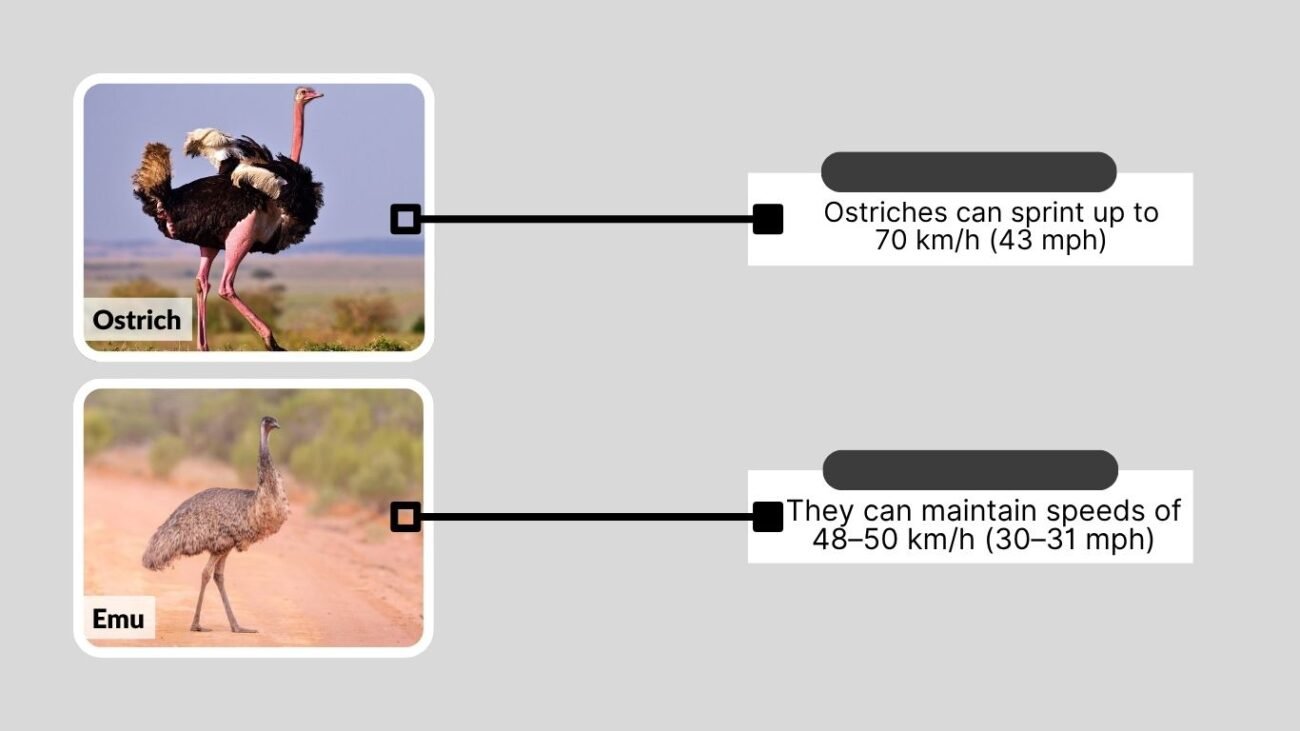
Both emus and ostriches are powerful runners, but the ostrich holds the record as the fastest bird on land. Ostriches can sprint up to 70 km/h (43 mph) and maintain steady speeds of around 50 km/h (31 mph). Their long, muscular legs give them a stride length of up to 5 meters.
Emus, while slower, are exceptional endurance runners. They can maintain speeds of 48–50 km/h (30–31 mph) for long distances. Their strong legs also help them travel great lengths across the Australian outback in search of food and water. This endurance helps them survive in vast and open landscapes.
Physical Adaptations
Both birds have evolved leg muscles designed for speed and defense. Ostriches have two toes on each foot, which reduces drag and increases speed. Their large, clawed inner toe can also deliver a powerful kick capable of killing predators like lions.
Emus have three toes per foot, giving them better balance on uneven terrain. Their legs are built more for endurance than raw power. Though not as lethal as ostriches, an emu’s kick can still cause serious injury to potential threats.
Reproduction and Breeding
Courtship and Mating
Emus and ostriches display fascinating mating behaviors. During the breeding season, male emus attract females with deep booming calls and rhythmic drumming sounds. Pairs form temporary bonds, and once eggs are laid, the male takes over incubation duties.
Ostrich courtship is more elaborate. Males perform dramatic displays by puffing up their feathers, spreading their wings, and dancing in circles while booming loudly. Females choose the strongest and most vibrant male as a mate. Dominant males often form harems, mating with several females during the season.
Egg and Nesting
Emu eggs are dark green, weighing about 500–700 grams each. They are laid in shallow nests built by males, who incubate them for about eight weeks. During this time, the male rarely eats or drinks, dedicating himself entirely to protecting the eggs.
Ostrich eggs are the largest in the world, weighing up to 1.5 kilograms each. They are creamy white and laid in a communal nest called a “dump nest,” where several females deposit their eggs. The dominant female’s eggs occupy the safest central spot, while others are placed around the edges.
Parental Roles
In emus, the male is solely responsible for incubating the eggs and caring for the chicks after they hatch. He teaches them to forage and protects them from predators. In ostriches, both parents share duties — the male guards the nest at night while the female incubates during the day. This cooperation ensures better protection from predators.
Lifespan and Predators
Emu Lifespan
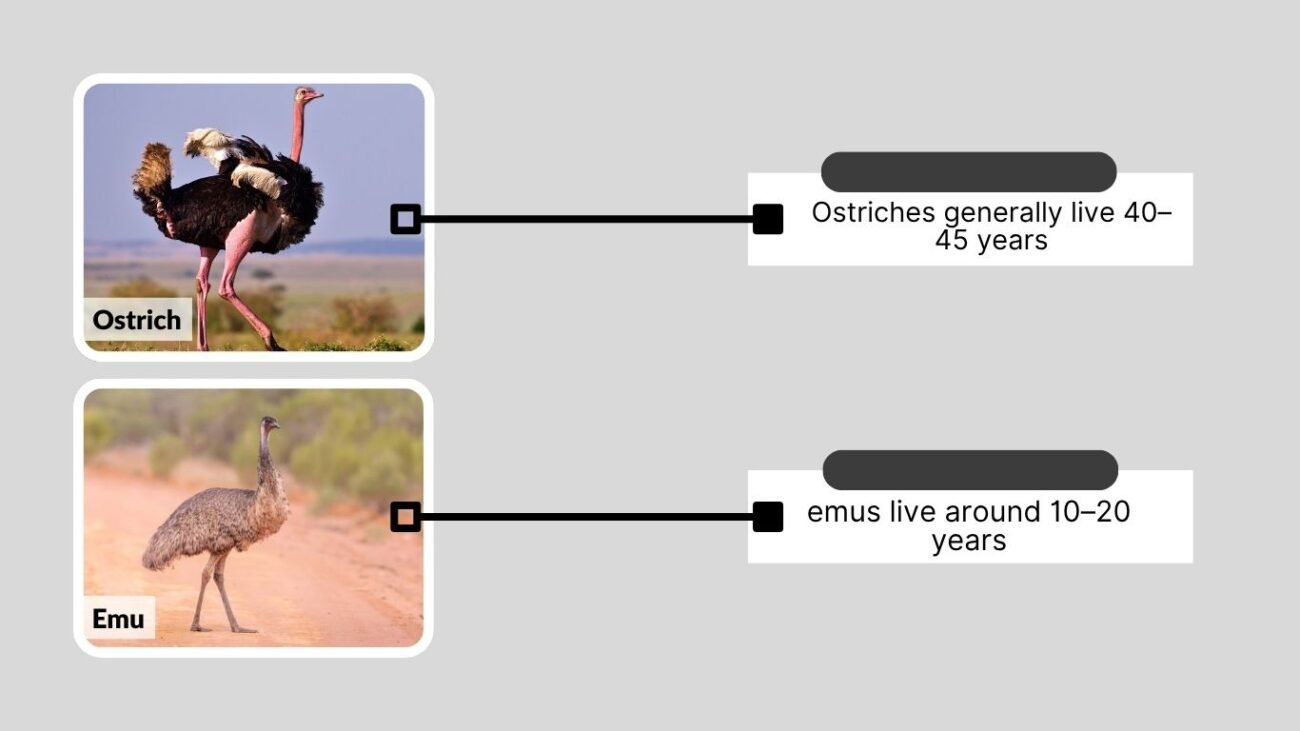
In the wild, emus live around 10–20 years, but in captivity, they can reach up to 30 years with proper care. Their main predators include dingoes, large eagles, and humans. Young chicks are particularly vulnerable to snakes and birds of prey.
Ostrich Lifespan
Ostriches generally live 40–45 years, and some individuals in captivity can live beyond 50 years. Their predators include lions, cheetahs, hyenas, and humans. Ostriches rely on their speed and powerful kicks to defend themselves. Their sharp claws and long legs make them capable of inflicting serious damage to attackers.
Human Interaction and Domestication
Emu in Human Culture
The emu has deep cultural significance in Australia, appearing in Aboriginal mythology as a symbol of creation and endurance. Aboriginal stories often link the emu’s image to the Milky Way, representing balance in nature.
In modern times, emus are farmed for their meat, oil, and leather. Emu oil is highly valued for its medicinal and cosmetic properties, particularly for skin care and anti-inflammatory uses. The industry has grown steadily, providing sustainable economic benefits across rural Australia.
Ostrich in Human Culture
Ostriches have long fascinated humans for their size and strength. In ancient Egypt, ostrich feathers symbolized truth and justice, while in Africa, they are still associated with pride and protection.
Ostrich farming is now a global enterprise, producing feathers, meat, and leather. Ostrich leather is prized for its durability and distinctive pattern, making it a luxury material in fashion. The birds are also popular attractions in wildlife parks worldwide.
Key Differences Between Emu and Ostrich
| Feature | Emu | Ostrich |
| Native Region | Australia | Africa |
| Height | Up to 6.2 ft | Up to 9 ft |
| Weight | 30–45 kg | 90–150 kg |
| Egg Color | Dark green | Creamy white |
| Top Speed | 50 km/h | 70 km/h |
| Toes per Foot | 3 | 2 |
| Parent Care | Male incubates and raises chicks | Both parents share care |
| Feather Type | Shaggy and soft | Smooth and sexual dimorphism |
| Social Behavior | Mostly solitary | Group living and social hierarchy |
| Lifespan | 10–20 years | 40–45 years |
Interesting Facts
- Emus can swim and travel long distances when needed.
- Ostriches have eyes larger than their brains, aiding long-range vision.
- Emus make deep drumming sounds using an inflatable throat sac.
- An ostrich’s kick can kill a predator with a single blow.
- Both birds have evolved without flight but mastered running survival strategies.
FAQs
How do emus differ from ostriches in size and behavior?
Ostriches are taller and heavier, reaching up to 9 feet and 150 kg, while emus grow to about 6 feet and 45 kg. Emus are generally solitary and nomadic, whereas ostriches live in structured groups. Ostriches are faster, but emus are better endurance runners suited for long travel.
Which bird runs faster: emu or ostrich?
The ostrich is faster, capable of sprinting at 70 km/h. Emus can reach about 50 km/h but sustain this speed longer. Ostriches use speed to evade predators, while emus rely on endurance and agility to navigate Australia’s tough terrain.
Do emus and ostriches belong to the same family?
Both belong to the ratite group of flightless birds, but they are from different families. The emu belongs to Dromaiidae, and the ostrich belongs to Struthionidae. They share evolutionary traits but diverged millions of years ago on separate continents.
Can emus and ostriches live together on farms?
Although both are farmed birds, keeping them together is not ideal. Their behavior, size difference, and territorial instincts can lead to aggression. Farms usually keep them separate to ensure safety and better breeding control.
What are the main uses of emu and ostrich products?
Emus are farmed for their oil, meat, and leather, while ostriches are primarily valued for feathers, meat, and luxury leather. Both provide eco-friendly alternatives to traditional livestock products and contribute to sustainable farming industries.


