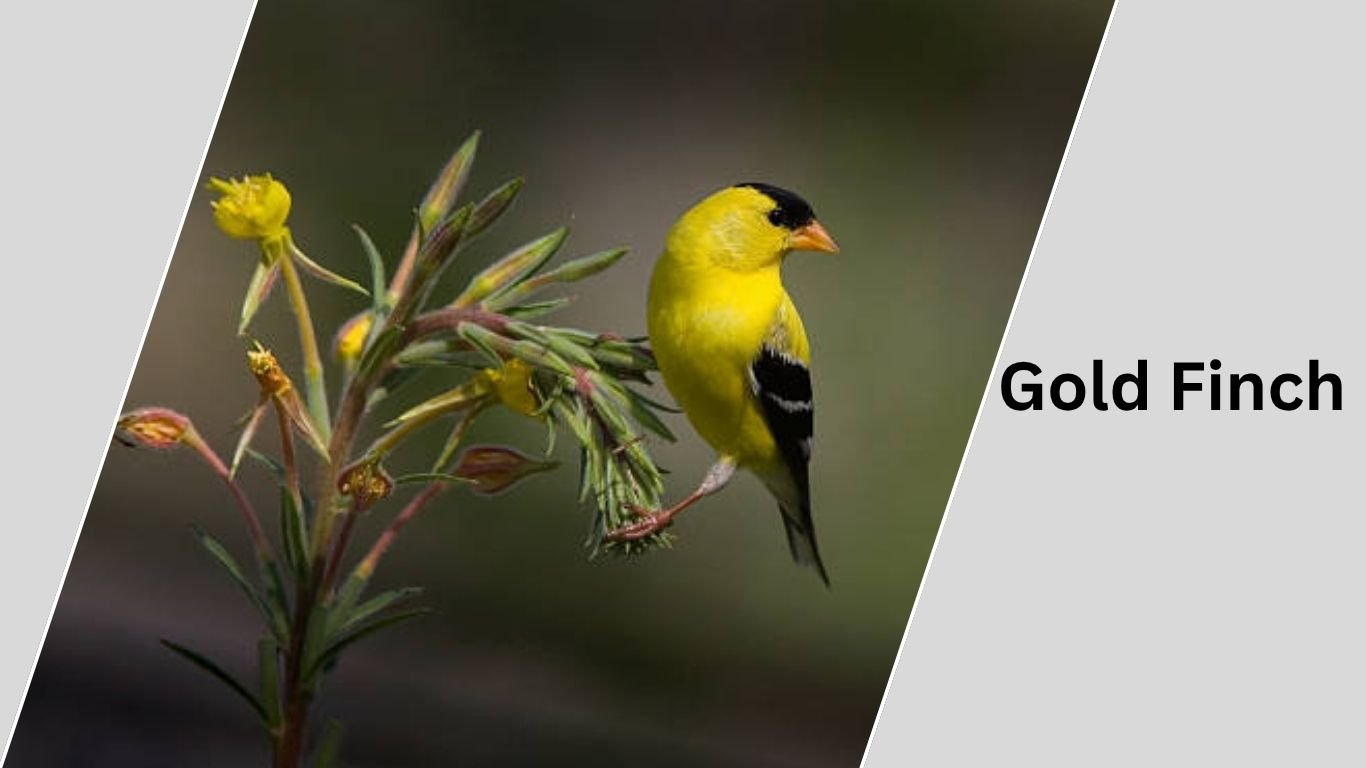
The goldfinch is one of nature’s most delightful birds, admired for its brilliant yellow plumage and cheerful song. Found across North America and Europe, these tiny finches brighten meadows, gardens, and farmlands. Known for their playful behavior and graceful flight, goldfinches are also deeply symbolic, representing joy, renewal, and spiritual freedom. In this guide, we’ll explore their species, habitats, diet, nesting habits, and what makes them such remarkable songbirds.
Identification and Species Overview

What Is a Goldfinch?
A goldfinch is a small, seed-eating bird belonging to the finch family (Fringillidae). It’s easily recognized by its striking yellow and black plumage, melodic voice, and agile flight. The name “goldfinch” refers to its golden color and affinity for thistle seeds. Across the world, several species share this name, each with unique traits but similar charm.
Types of Goldfinches Around the World
There are several well-known species of goldfinches, each native to different regions:
- American Goldfinch (Spinus tristis) – Common across North America, this species features bright yellow feathers and a black cap on males during summer.
- European Goldfinch (Carduelis carduelis) – Recognizable by its vivid red face and black-and-yellow wings, this bird is a favorite across Europe and parts of Asia.
- Lesser Goldfinch (Spinus psaltria) – Found in the southwestern U.S. and Mexico, it’s smaller, with greenish-yellow plumage.
- Gold-breasted Finch & Gouldian Finch – Exotic relatives from Africa and Australia, prized for their multicolored beauty.
Together, these variations reveal how adaptable and widespread goldfinches have become.
Distribution and Range
Goldfinches thrive in open spaces such as fields, orchards, and gardens where seeds are abundant.
- American Goldfinches breed throughout the U.S. and southern Canada, migrating slightly south during cold months.
- European Goldfinches are found from the British Isles through continental Europe and western Asia.
They prefer sunny areas rich in wildflowers, weeds, and shrubs — natural sources of food and nesting materials.
Appearance and Gender Differences
Male vs. Female Goldfinches

Male goldfinches are easily identified by their bright plumage and striking contrast of black wings and tail. During the breeding season, males of the American species display a vivid golden-yellow body with a sharp black cap. Females, on the other hand, are more subdued in tone — often olive or pale yellow — which provides camouflage while nesting.
Outside the breeding season, both sexes molt, and males lose some of their brilliance, turning more olive or brownish-yellow.
Seasonal Plumage Changes
Goldfinches are among the few birds that molt twice a year — in late winter and late summer.
- Summer plumage: Brilliant yellows and deep blacks used to attract mates.
- Winter plumage: Duller tones for better camouflage and energy conservation.
This transformation often leads birdwatchers to mistake them for different species in winter, but it’s simply part of their seasonal adaptation.
Habitat, Behavior, and Migration
Natural Habitats
Goldfinches prefer open areas with scattered trees and abundant wild plants. Meadows, gardens, and farmlands rich in seed-bearing weeds are ideal environments. They’re often spotted perched on thistles, dandelions, or sunflower heads, delicately plucking seeds with precision. Their adaptability allows them to live comfortably near humans, especially in backyards with bird feeders.
Behavior and Flight Style
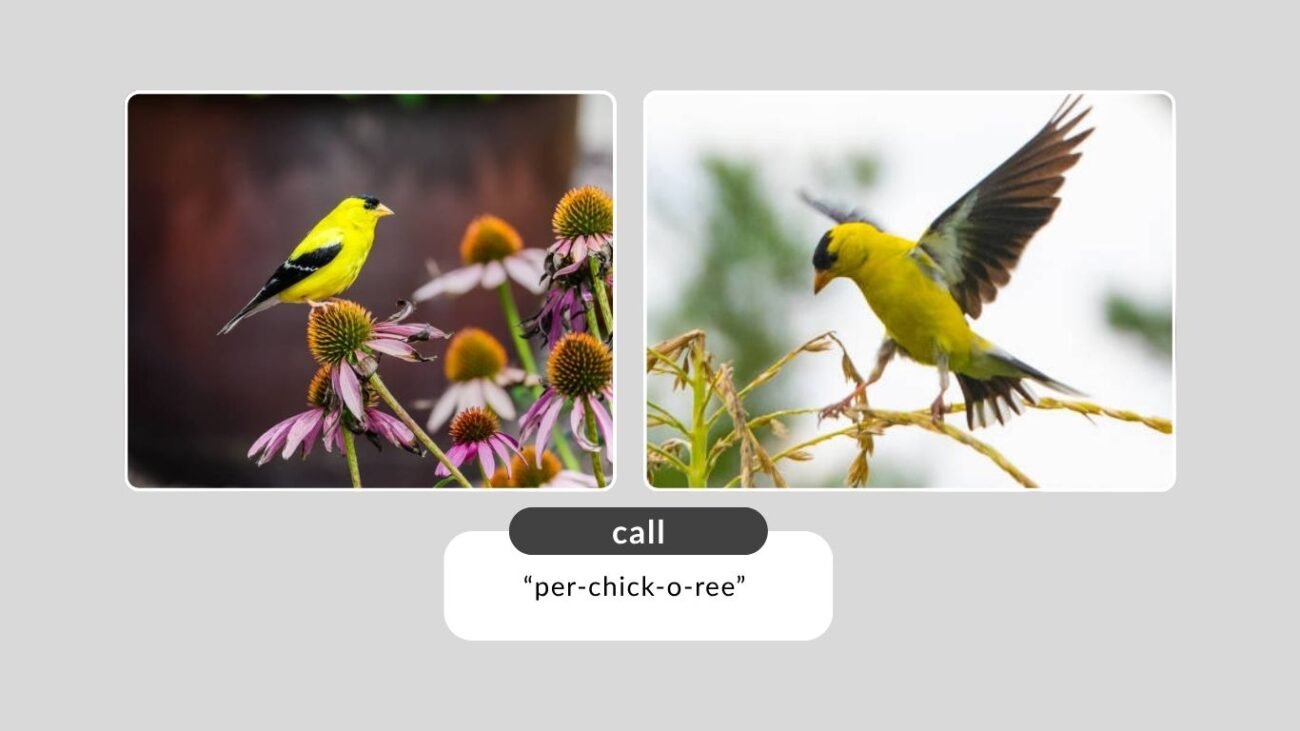
Goldfinches are highly social, active, and playful. They move in flocks, communicating through light, musical chirps. Their flight is distinct — a bouncy, undulating pattern that alternates between flapping and gliding. This characteristic rhythm, paired with cheerful calls, makes them easy to recognize even from a distance.
Migration Patterns
Unlike many birds, goldfinches are partial migrants.
- In North America, they move southward in winter, sometimes traveling hundreds of miles but rarely leaving the continent.
- European populations are often resident year-round, though northern groups may migrate to warmer regions.
Flocks gather during winter to forage for seeds, returning north in spring to breed. Their migration is closely tied to food availability rather than temperature alone.
Diet and Feeding Habits
What Do Goldfinches Eat?
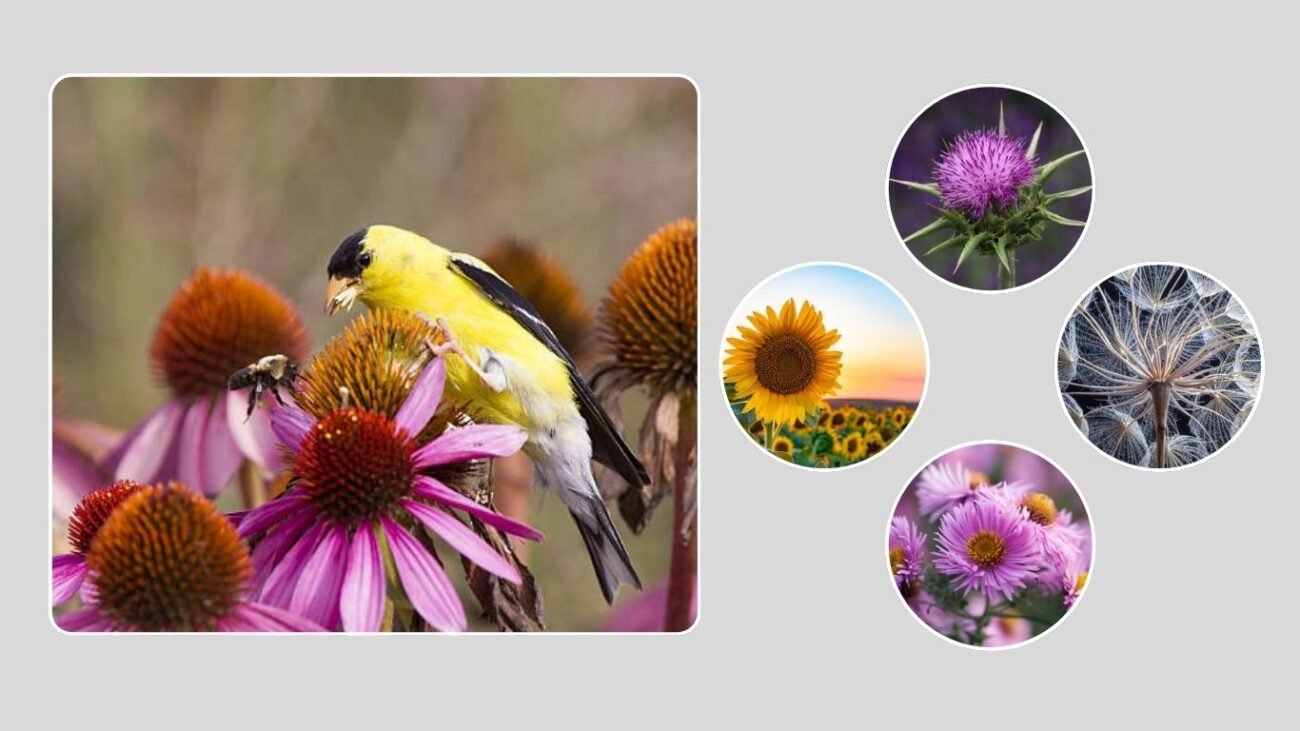
Goldfinches are primarily herbivorous, feeding almost exclusively on seeds. Their conical beaks are perfectly designed for extracting seeds from plants like:
- Thistles
- Sunflowers
- Dandelions
- Asters
They also eat small insects occasionally, especially during the breeding season when they need extra protein. Interestingly, their plant-based diet contributes to the vivid yellow pigment in their feathers.
Attracting Goldfinches to Your Yard
Attracting goldfinches is simple if you provide the right environment. Use nyjer (thistle) seed feeders, black oil sunflower seeds, or finch socks that allow them to cling and feed naturally. Provide a shallow birdbath for drinking and bathing. Avoid chemical sprays or pesticides — these can contaminate their food sources. With patience, you’ll often see entire families visiting your feeders during late summer.
Reproduction and Nesting Habits
Nesting Behavior
Goldfinches are unique among songbirds for their late breeding season, which typically begins in mid to late summer. This timing ensures an abundant supply of seeds for both adults and chicks. Females take the lead in nest building, selecting shrubs, trees, or tall plants as nesting sites. Using fine grasses, bark fibers, and spider silk, they construct a compact cup-shaped nest that’s both flexible and waterproof.
The female goldfinch’s skill in crafting secure nests helps protect the eggs from rain and predators. The nests are often located high enough to avoid ground threats but concealed within thick foliage for extra safety.
Eggs and Parenting
A typical clutch consists of four to six pale blue eggs. The female incubates them for about 12 to 14 days, while the male brings her food and guards the territory. After hatching, both parents feed the chicks a mixture of regurgitated seeds and soft insects for extra protein.
The chicks grow quickly and fledge within two to three weeks, although parents may continue to feed them for several days afterward. Interestingly, goldfinches are often among the last songbirds to finish breeding each year, sometimes raising their young well into September.
Life Cycle and Longevity
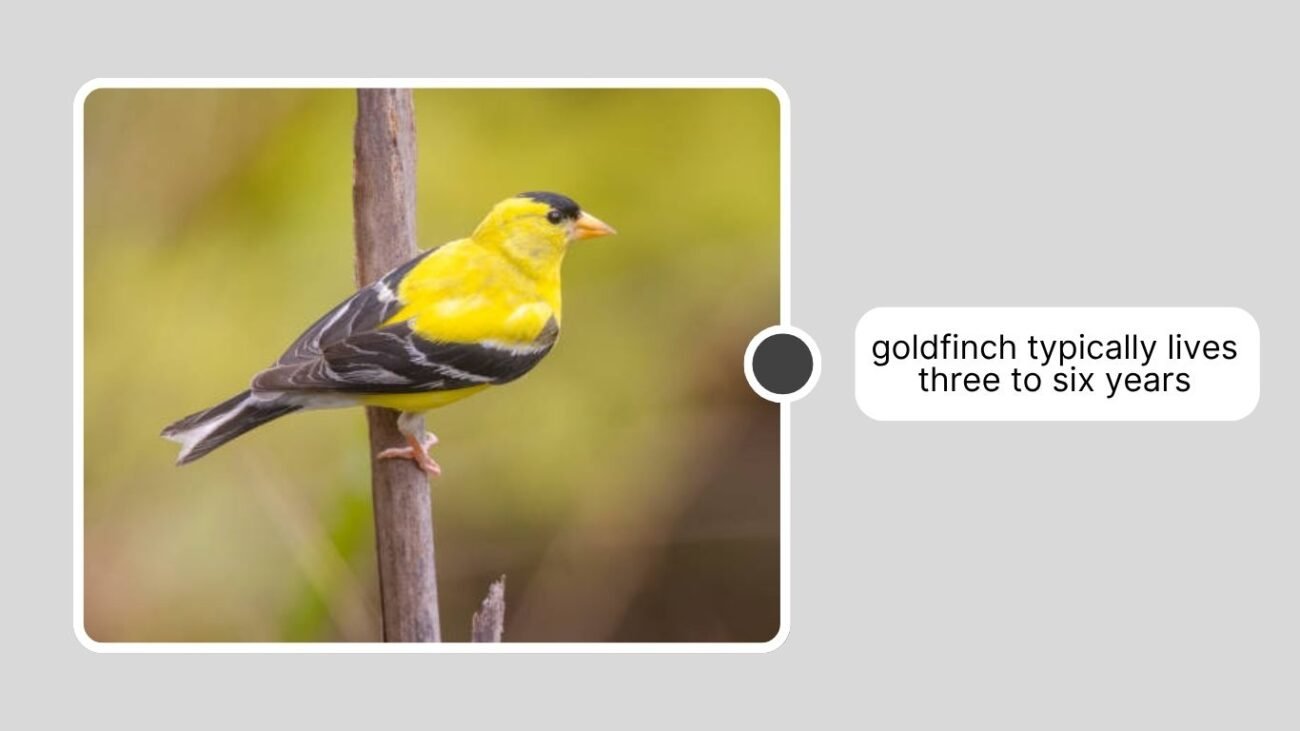
In the wild, a goldfinch typically lives three to six years, though some have been recorded living up to ten. They face threats from predators like snakes, hawks, and cats, as well as habitat loss. However, their adaptability to gardens and feeders has helped maintain strong populations in many regions.
After the breeding season, goldfinches molt once again, preparing for migration and the colder months ahead.
Sounds, Colors, and Symbolism
The Goldfinch Song and Call
Goldfinches are known for their bright, twittering songs and cheerful “per-chick-o-ree” calls. Their voices are light, melodic, and often delivered in flight, giving the impression of a fluttering melody across the sky.
- American Goldfinch: The call is a lively, rhythmic series of notes.
- European Goldfinch: Known for its fluid, bell-like trills and whistles.
These songs aren’t just beautiful — they serve practical purposes, such as establishing territory, attracting mates, and maintaining group communication while flying in flocks. Birdwatchers often identify goldfinches by ear before even spotting their brilliant yellow color.
The Symbolism of the Goldfinch
Throughout history, goldfinches have held deep cultural and spiritual meanings.
- In Christian art, the European Goldfinch is often shown in paintings of the Madonna and Child, symbolizing the soul, resurrection, and eternal life.
- In spiritual traditions, the bird represents joy, positivity, and transformation, encouraging people to embrace life’s beauty and freedom.
- Modern interpretations see the goldfinch as a symbol of happiness, endurance, and vitality, often inspiring poets and artists alike.
The combination of vivid color, graceful song, and gentle nature makes the goldfinch not only a visual delight but also a symbol of hope and renewal.
Key Takeaways
- The goldfinch is a small, vibrant songbird found across North America and Europe.
- Its bright yellow plumage and cheerful song make it one of the most beloved backyard birds.
- Goldfinches primarily eat seeds, especially thistles, sunflowers, and dandelions.
- They are late-season breeders, building well-crafted nests in midsummer.
- Their songs and symbolism have made them icons of joy, endurance, and light in art and culture.
- Adaptable and social, goldfinches are a sign of a healthy, nature-friendly environment.
FAQs
What do goldfinches eat?
Goldfinches mainly eat seeds from thistles, sunflowers, and dandelions. They occasionally consume insects, especially during nesting season when protein is vital for growing chicks. Providing nyjer seeds or sunflower hearts is the best way to attract them to your garden.
Where do goldfinches live?
Goldfinches prefer open areas like meadows, gardens, and woodland edges. In North America, they’re found throughout the United States and southern Canada, while the European Goldfinch ranges across Europe, western Asia, and parts of North Africa. They often live near fields with abundant wildflowers.
Do goldfinches migrate?
Yes, but their migration is partial. Many American Goldfinches move southward during winter, following food sources rather than warmth. Some European populations migrate short distances, while others remain in the same region year-round if seeds are plentiful.
When do goldfinches nest?
Goldfinches begin nesting later than most birds, usually from July to September. This ensures a rich supply of seeds and soft materials for nest construction. Their nests, often hidden in shrubs or small trees, are tightly woven and waterproof to protect the eggs and chicks.
What does a goldfinch symbolize?
Goldfinches symbolize joy, renewal, and spiritual freedom. In historical art, they represent the soul’s endurance and resurrection. In modern culture, their cheerful presence reminds people to appreciate life’s simple beauties and stay optimistic through challenges.