Mourning doves are among the most gentle and beloved birds across North America. Their soft cooing and graceful flight are familiar in both urban and rural landscapes. But what truly fascinates birdwatchers and nature lovers is how these doves raise their young. Understanding their nesting habits—where they build nests, how they care for their chicks, and how often they breed—gives us a deeper appreciation for their survival strategies. In this article, we’ll explore everything you need to know about mourning dove nesting, from site selection to fledging.
Where Mourning Doves Build Nests

Common Nesting Locations
Mourning doves aren’t picky when it comes to nesting spots. They’re known for their adaptability and often choose surprisingly exposed or precarious locations. Typical natural nesting spots include:
- Trees and shrubs, especially those with dense or evergreen foliage
- Flat branches or forks in trees
- Vines, hedges, and even low bushes
In suburban and urban environments, they expand their options to include:
- Window ledges
- Rain gutters
- Hanging planters
- Roof beams or porch lights
- Balcony railings
As long as the spot is relatively flat and away from direct disturbance, it’s fair game for a mourning dove nest.
Urban Nesting Adaptations
These birds have learned to live closely alongside humans. Unlike other bird species that shy away from developed areas, mourning doves often choose locations near people. They seem to tolerate moderate noise and traffic, especially in places where they’ve successfully raised broods before. However, constant handling or disruption can still drive them away, so it’s important to observe nests respectfully.
When Do Mourning Doves Nest?

Nesting Season Timeline
Mourning doves begin nesting as early as February in southern climates and March to April in northern regions. The season can stretch through late summer or even early fall, depending on weather and location. In warmer states like Florida or Texas, they may be seen nesting into October.
How Often They Nest
These doves are among the most prolific nesters in the bird world. A pair may raise 3 to 6 broods in a single year. With each nesting cycle lasting about a month, they have time to raise multiple sets of young between spring and fall. Once fledglings leave the nest, parents may immediately prepare for the next clutch.
Nest Construction Behavior

Materials Used
Mourning dove nests are often described as flimsy or poorly built, especially compared to songbirds that weave tight, cup-shaped structures. Their nests usually consist of:
- Twigs
- Grass stems
- Pine needles
- Small roots or feathers
There’s usually no soft lining, and light can often be seen through the base of the nest. Yet, despite its simple construction, the nest holds up well enough to raise chicks—at least when weather and predators cooperate.
Male and Female Roles
Nest building is a team effort:
- The male gathers the materials, flying off to find twigs and bringing them back one by one.
- The female arranges the pieces into a loose platform on the chosen site.
Building typically takes a few hours to two days. Once the nest is ready, egg-laying begins almost immediately.
Egg Laying and Incubation

Clutch Size
Mourning doves are known for consistency when it comes to laying eggs. They almost always lay two white eggs, though rarely, only one is laid due to disturbances or health factors.
Incubation Period
Incubation lasts about 14 to 15 days. Both parents share this duty in shifts:
- The male typically incubates during the daytime, giving the female time to rest and feed.
- The female takes over at night, keeping the eggs warm and protected.
During this time, they are extremely focused. Even minor disturbances—like pruning bushes near the nest—can cause a pair to abandon their clutch, especially early in the incubation stage.
Caring for the Chicks (Squabs)

Feeding Behavior
Once the eggs hatch, the chicks (called squabs) are entirely dependent on their parents. They are born with closed eyes, no feathers, and cannot regulate their own temperature. Both parents feed the chicks with a substance called crop milk—a protein-rich secretion produced in the crop lining.
Crop milk is unique and essential. For the first 3–5 days, it’s all the squabs receive. After that, the parents gradually transition to feeding them regurgitated, softened seeds.
Growth Timeline
- Day 1–3: Chicks are fed crop milk, remain completely reliant on warmth and protection.
- Day 4–7: They begin to develop down feathers, start opening their eyes.
- Day 8–12: Rapid growth occurs, and wing feathers emerge.
- Day 12–15: Fledging begins—squabs may leave the nest and perch nearby.
Even after fledging, parents may continue to feed the young for a few days while they learn to forage.
Mourning Dove Nest Reuse and Site Loyalty
Do They Reuse Nests?
Yes, mourning doves often reuse old nests or build new ones right beside previous ones. They may also reinforce a fragile nest with extra material for reuse in the next round of brooding. This strategy saves time during their busy breeding season.
Nest Failures and Risks
Despite their parental dedication, mourning dove nests face many challenges:
- Predators like crows, hawks, snakes, and cats
- Strong winds or storms can dislodge loose nests
- Human interference like pruning or nest relocation can lead to abandonment
Because of these risks, doves often have multiple nesting attempts in a year, improving their chances of success.
How to Attract Nesting Mourning Doves
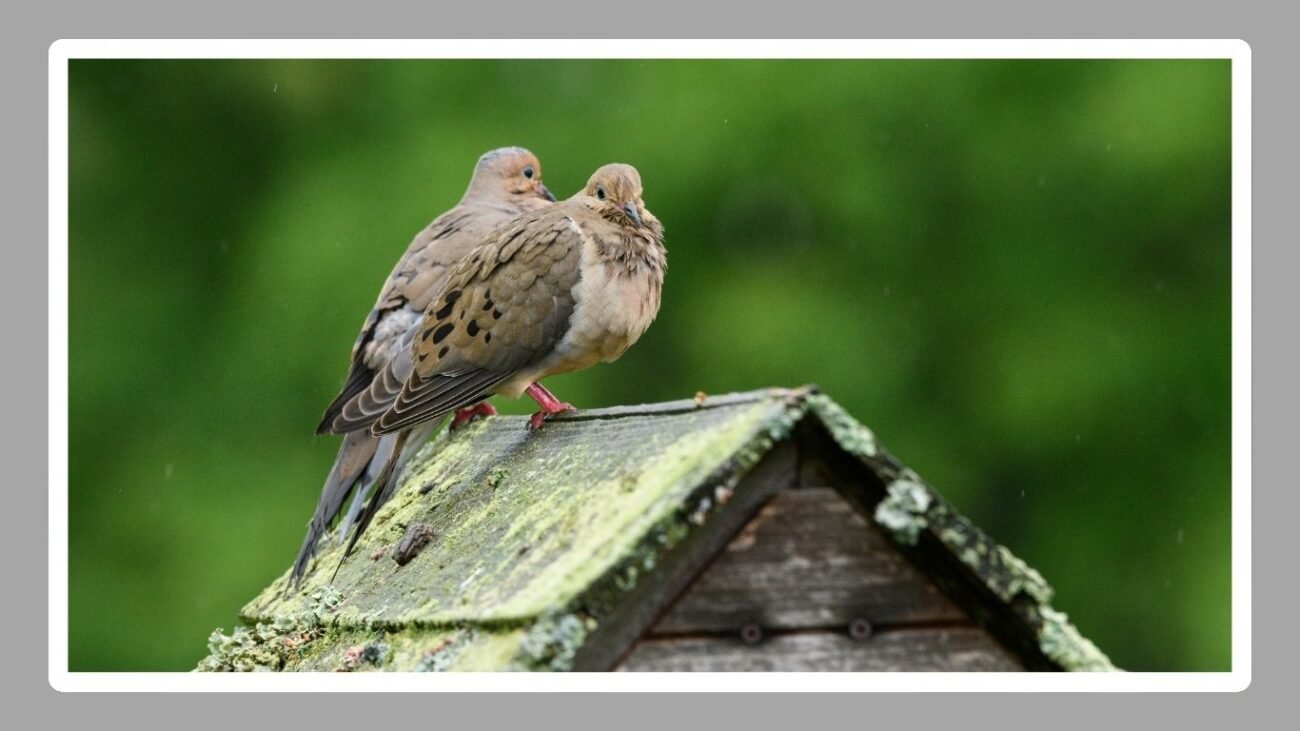
Provide Safe Nesting Areas
If you’d like to encourage mourning doves to nest in your yard:
- Offer platforms or nesting shelves under eaves or in quiet corners
- Grow dense shrubs, trees, or evergreens for natural cover
- Avoid using pesticides or chemicals nearby
- Install flat boards or nesting trays on fences or balconies
Avoid Disturbing Active Nests
Never touch or move a nest once eggs or chicks are present. Mourning doves can abandon nests easily, especially in the early days. Watch from a distance, and postpone any yard work around active nesting sites until the chicks have fledged.
Conclusion
Mourning doves are peaceful and nurturing birds, and their nesting habits reflect their quiet resilience. From flimsy-looking nests in odd places to the tender way they raise their young with crop milk, these birds remind us that nature doesn’t need perfection to thrive. If you’re lucky enough to host a mourning dove nest in your garden, give them space, offer support with food and water nearby, and enjoy the quiet miracle of life unfolding.
FAQs
How many times do mourning doves nest each year?
Mourning doves can nest up to six times per season, especially in warmer climates with long breeding windows.
Do mourning doves build good nests?
Not really—their nests are often loose and barely structured. Still, they function well enough for raising two chicks at a time.
Can I move a mourning dove nest?
No. It’s illegal in many areas to move an active nest, and doing so usually results in abandonment. Always observe and protect, but don’t interfere.
Do both dove parents care for the young?
Yes. Mourning doves are excellent co-parents, with both male and female sharing incubation and feeding duties equally.
What should I do if I find a baby mourning dove?
If the chick is fully feathered and hopping around, it’s likely learning to fly—leave it be. If it’s unfeathered or injured, contact a licensed wildlife rehabilitator.