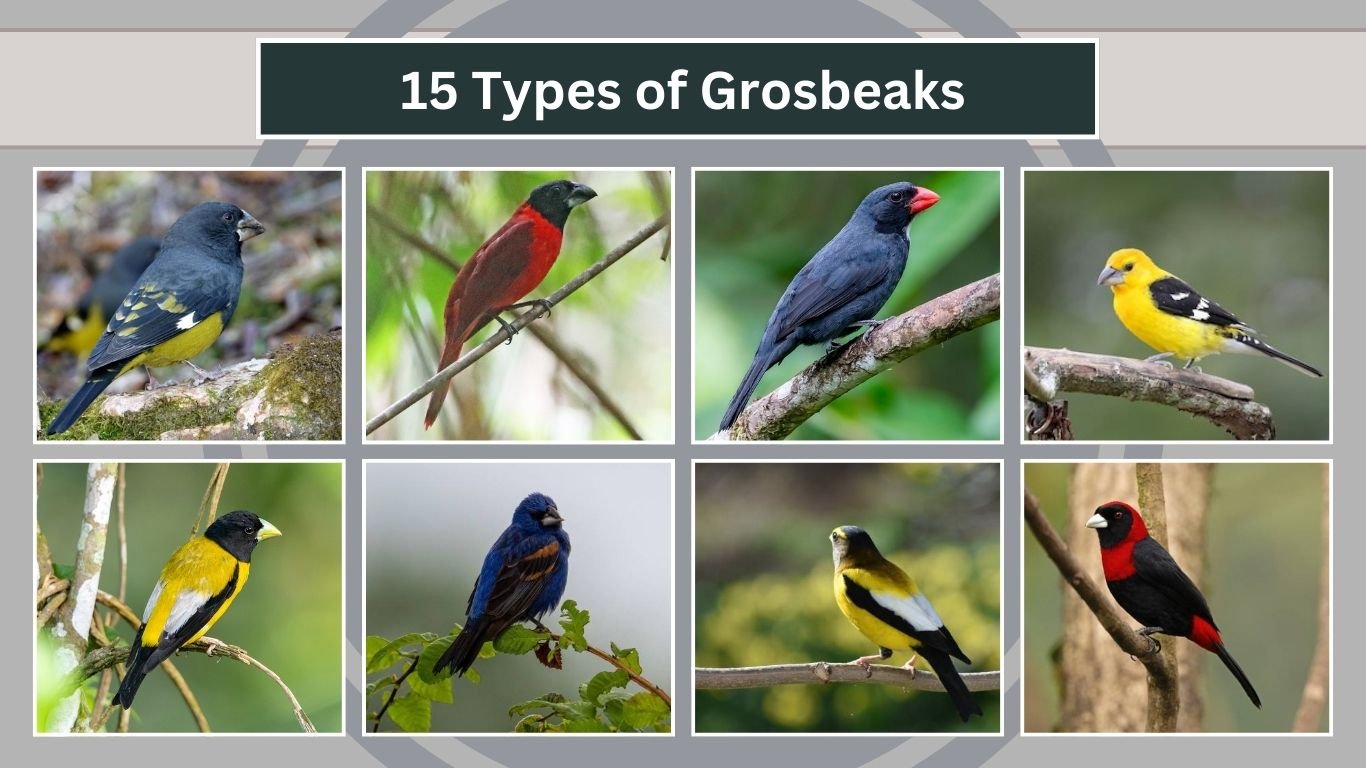
Grosbeaks are colorful, thick-billed songbirds found across North and South America, as well as parts of Asia. Their name comes from their large, conical bills, perfectly designed for cracking seeds and nuts. Despite belonging to different families, these birds share similar traits of bold plumage, melodic songs, and powerful builds. From the striking Evening and Rose-Breasted Grosbeaks of North America to the exotic Crimson-Collared and White-Winged Grosbeaks of Central and Asia’s highlands, each species offers unique charm. In this guide, we’ll explore 15 types of grosbeaks, highlighting their identification, natural habitats, and feeding behaviors.
1. Evening Grosbeak
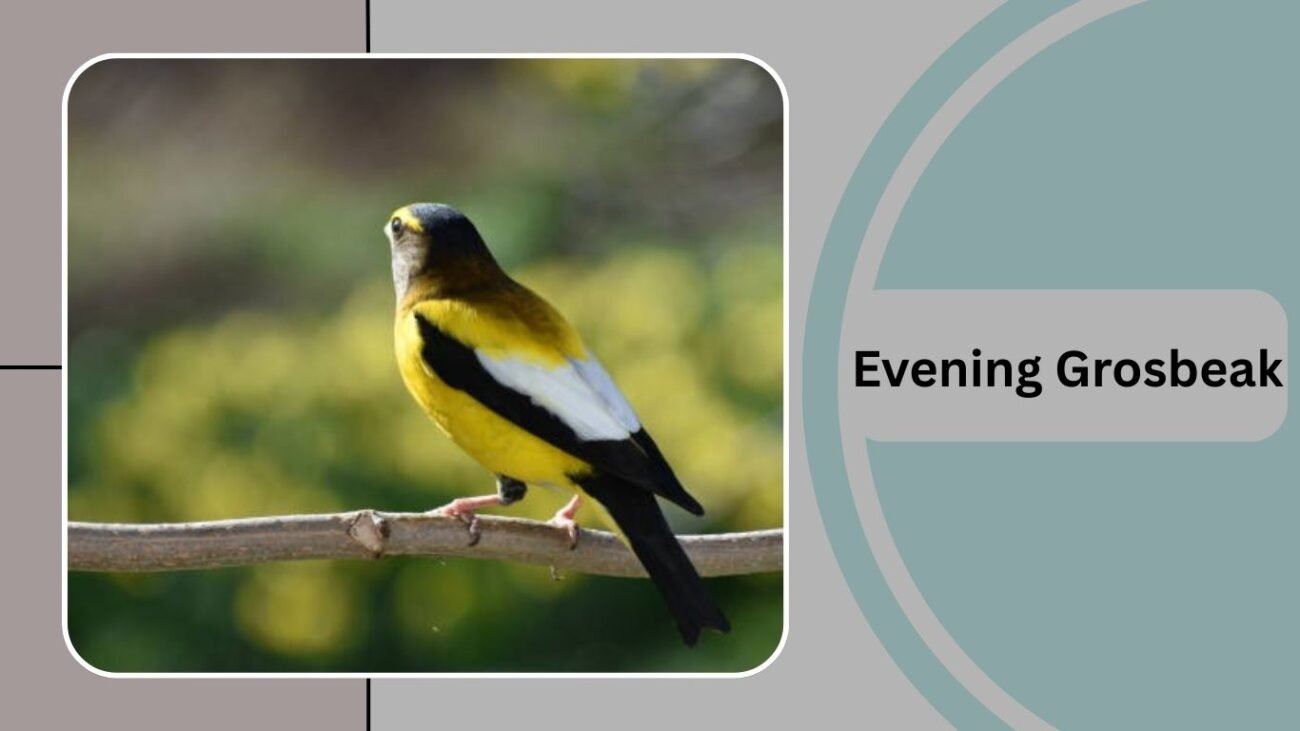
The Evening Grosbeak (Hesperiphona vespertina) is a striking finch-like bird known for its bold plumage, thick bill, and strong presence in northern forests. Its name comes from the bird’s habit of singing at twilight, though it is active throughout the day. Once considered a rare bird, it has expanded its range across North America, often visiting backyard feeders during winter in large, noisy flocks.
Identification
- Size: 6.3 to 7.1 inches
- Weight: 52 to 70 grams
- Male: Bright yellow body, bold black wings with large white patches, and a massive pale bill
- Female: More subdued grayish tones with hints of yellow on the flanks and neck, wings still marked with white patches
- Distinctive Trait: Large, conical pale bill designed for cracking seeds and cones
Natural Habitat
Evening Grosbeaks are primarily found in coniferous and mixed forests across Canada, the northern United States, and parts of the western mountains. They favor spruce, pine, and fir forests but are also drawn to suburban areas in winter where bird feeders provide sunflower seeds.
Behaviors and Diet
These grosbeaks are social and often travel in flocks, particularly during migration and winter. They are strong fliers and produce a sharp, metallic “cleep” call in flight. Their diet mainly consists of seeds from trees like maples, ashes, and conifers, as well as berries and insects during summer. At feeders, they readily consume sunflower seeds with their powerful bills.
2. Pine Grosbeak
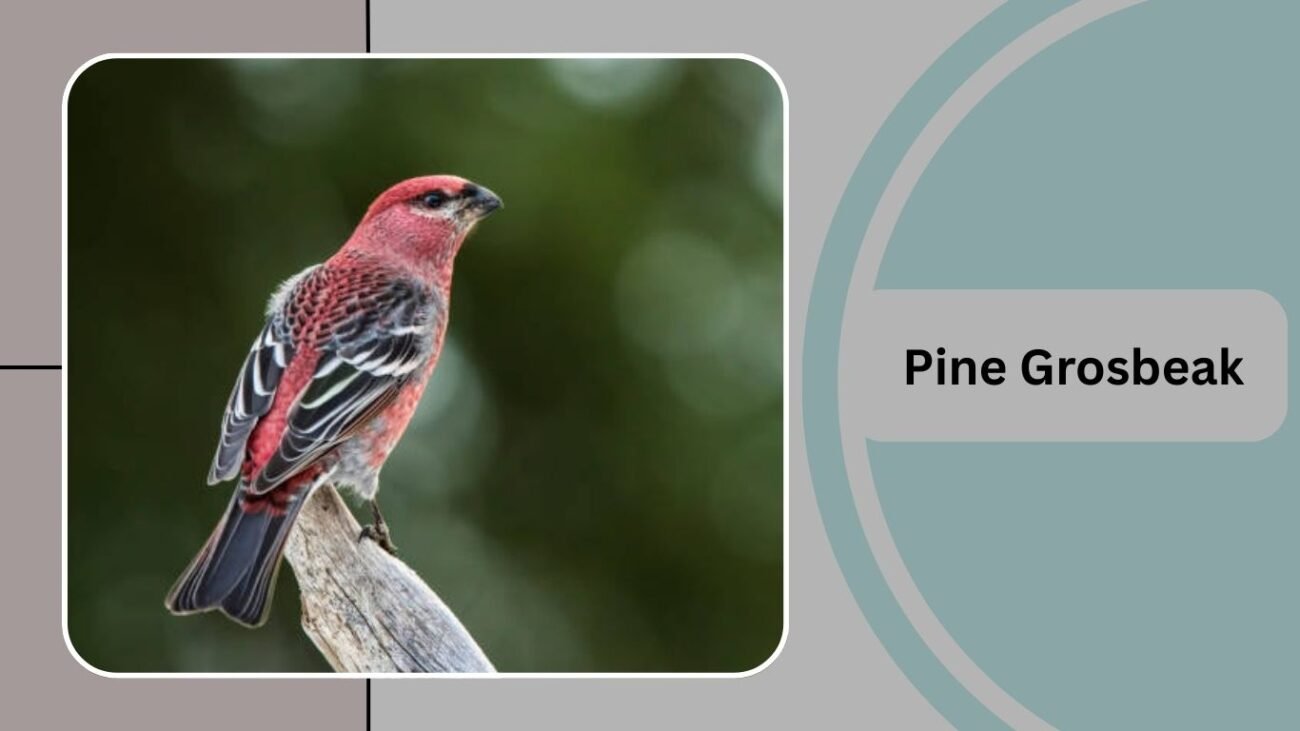
The Pine Grosbeak (Pinicola enucleator) is a large, gentle finch often called the “gentle giant” of the grosbeak family. Found across northern boreal forests, it is admired for its soft, flute-like calls and calm temperament. Despite its size, it is surprisingly tame and approachable, often allowing birdwatchers to observe it at close range.
Identification
- Size: 7.9 to 10 inches
- Weight: 52 to 78 grams
- Male: Rosy-red body with gray wings and tail, heavy pale bill
- Female: Yellowish-olive head and chest with grayish body
- Distinctive Trait: Large size and soft red or yellow tones depending on sex
Natural Habitat
Pine Grosbeaks inhabit coniferous forests across Alaska, Canada, Scandinavia, and Siberia. They prefer spruce, fir, and pine woodlands and often feed in tall trees or on the ground beneath them. In winter, they may wander southward in search of food, visiting orchards and backyard feeders.
Behaviors and Diet
They are slow-moving, peaceful birds that often forage in small flocks. Their diet consists of seeds, buds, berries, and fruits, especially mountain ash berries, which they consume in large quantities. During summer, they also eat insects to feed their young. Their call is a mellow, flute-like whistle, often heard echoing through northern forests.
3. Rose-Breasted Grosbeak
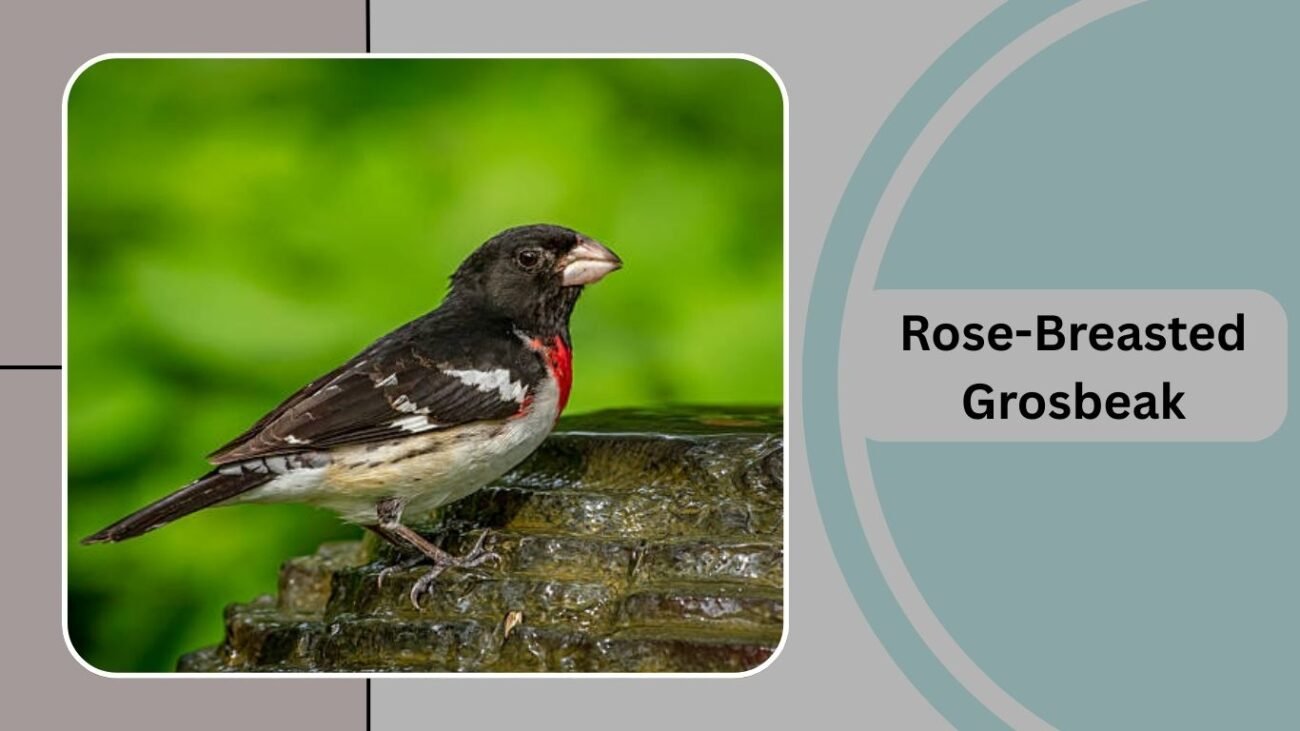
The Rose-Breasted Grosbeak (Pheucticus ludovicianus) is a striking songbird of North America, known for its bold black, white, and red plumage and melodious, robin-like song. It is a common migrant, delighting birdwatchers in spring as it returns to breed in forests and woodlands.
Identification
- Size: 7.1 to 8.3 inches
- Weight: 35 to 49 grams
- Male: Black head, white underparts, bold red triangle on breast, and black wings with white patches
- Female: Brown and streaked with a pale eyebrow stripe, resembling a large sparrow
- Distinctive Trait: Males have a brilliant red chest patch, making them one of the most colorful grosbeaks
Natural Habitat
Rose-Breasted Grosbeaks breed in deciduous and mixed forests across Canada and the northeastern United States. They migrate to Central and South America for winter, often traveling long distances in mixed flocks.
Behaviors and Diet
These grosbeaks are strong, seed-cracking specialists, using their stout bills to open sunflower seeds, berries, and fruits. They also feed on insects such as beetles, caterpillars, and grasshoppers, especially during breeding season. Their song is rich, sweet, and musical, often compared to an “improved” version of the American Robin’s song. Males and females often sing to each other while nesting, a rare behavior among songbirds.
4. Black-Headed Grosbeak
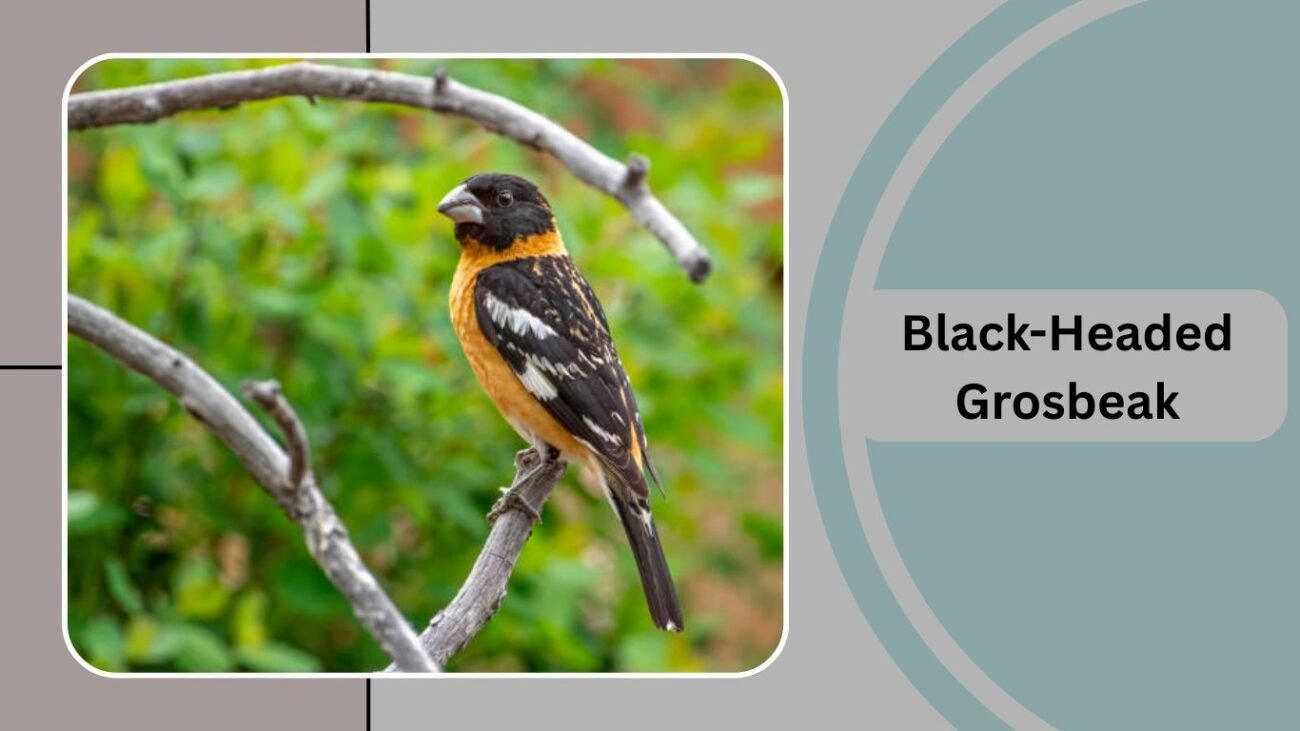
The Black-Headed Grosbeak (Pheucticus melanocephalus) is a vibrant bird of western North America, known for its bold plumage and sweet, rich song. Closely related to the Rose-Breasted Grosbeak, it shares similar habits but is adapted to more arid and open woodlands.
Identification
- Size: 7.1 to 7.5 inches
- Weight: 34 to 48 grams
- Male: Orange-cinnamon breast and belly, black head, wings, and tail with white wing patches
- Female: Brown, heavily streaked body with pale eyebrows, resembling a large sparrow
- Distinctive Trait: Striking orange breast and black head in males
Natural Habitat
These grosbeaks breed in deciduous and mixed woodlands, riparian corridors, and orchards across western North America. In winter, they migrate to Mexico and Central America.
Behaviors and Diet
Black-Headed Grosbeaks feed mainly on seeds, insects, and fruits. They are one of the few birds capable of safely eating monarch butterflies, which are toxic to most predators. Males sing melodious, robin-like songs to attract mates and defend territories, while both parents share nest-building and feeding duties.
5. Blue Grosbeak
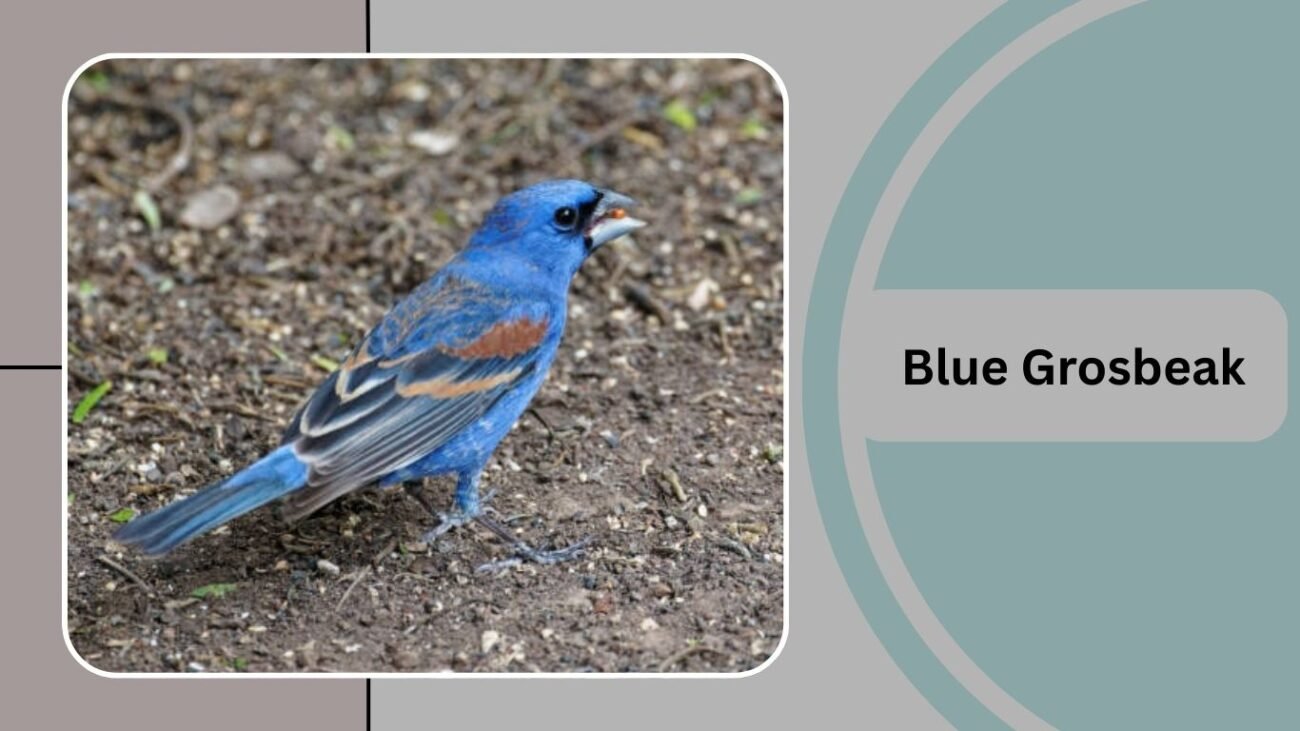
The Blue Grosbeak (Passerina caerulea) is a striking songbird with vivid blue plumage and a stout silver bill. A symbol of summer in the southern United States, it is often seen perched on fences and shrubs, singing its rich warbling song.
Identification
- Size: 5.5 to 6.3 inches
- Weight: 26 to 31 grams
- Male: Deep blue plumage with chestnut wing bars and large silver bill
- Female: Warm brown overall with faint wing bars, lighter underparts
- Distinctive Trait: Brilliant blue plumage in males, especially vivid during breeding season
Natural Habitat
Blue Grosbeaks prefer shrubby fields, woodland edges, hedgerows, and riparian areas. They breed in the southern and central United States and migrate to Mexico, Central America, and the Caribbean for winter.
Behaviors and Diet
They forage both on the ground and in vegetation, feeding on seeds, grains, and insects. During breeding, they eat grasshoppers, beetles, and caterpillars. Males often sing from high perches to declare territory. Despite their vibrant looks, they are secretive and cautious, often hiding in dense cover when disturbed.
6. Yellow Grosbeak
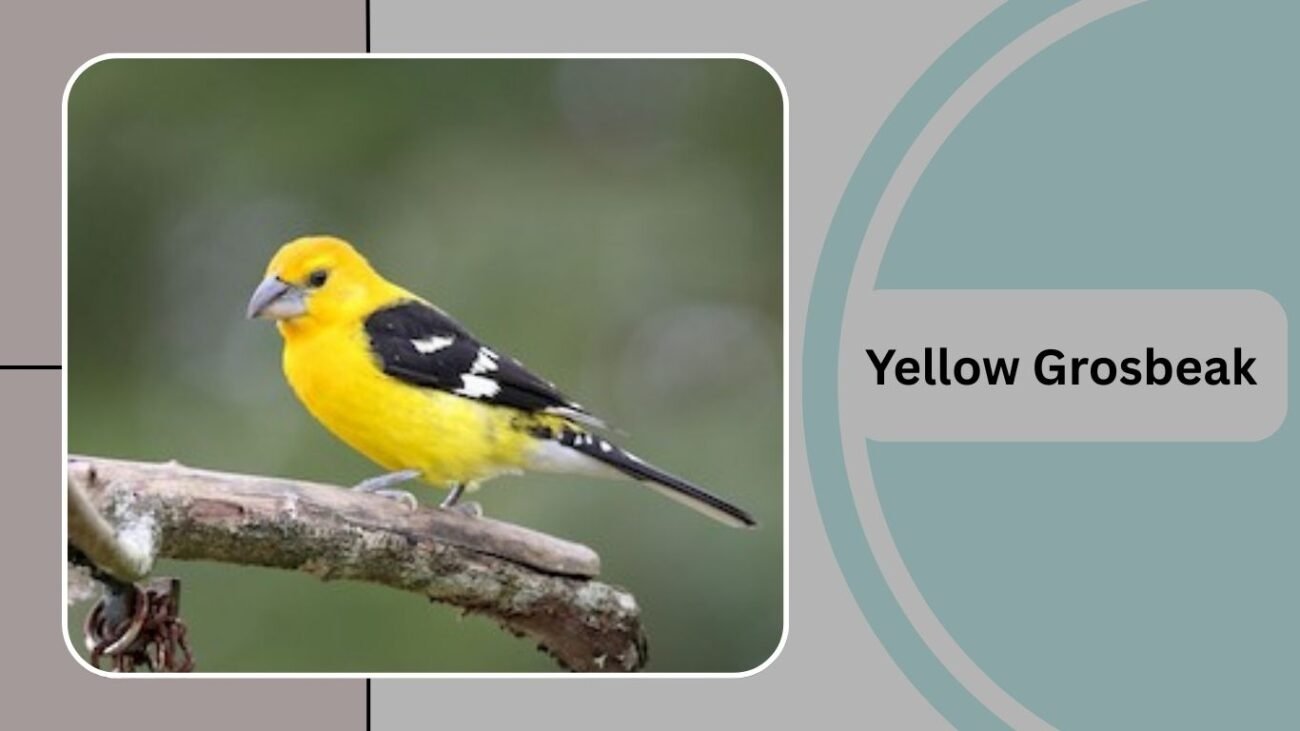
The Yellow Grosbeak (Pheucticus chrysopeplus) is a brilliantly colored bird native to Mexico and Central America. Its bright golden-yellow body makes it one of the most stunning grosbeaks, often compared to tropical orioles in appearance.
Identification
- Size: 7.9 to 8.7 inches
- Weight: 40 to 50 grams
- Male: Vivid golden-yellow plumage with black wings and tail, large pale bill
- Female: Duller yellowish-brown with streaked underparts
- Distinctive Trait: Bright golden coloration that shines in sunlight
Natural Habitat
Yellow Grosbeaks are found in tropical and subtropical forests, woodland edges, and gardens across western Mexico and into Central America. They are often seen in pairs or small groups, moving between fruiting trees and flowering shrubs.
Behaviors and Diet
These grosbeaks primarily eat seeds, berries, and fruits, but also consume insects when raising young. They are powerful seed-crackers with their thick bills and are known to forage noisily in flocks. Their sweet, melodious song resembles that of other grosbeaks but with a richer, tropical tone.
7. Crimson-Collared Grosbeak
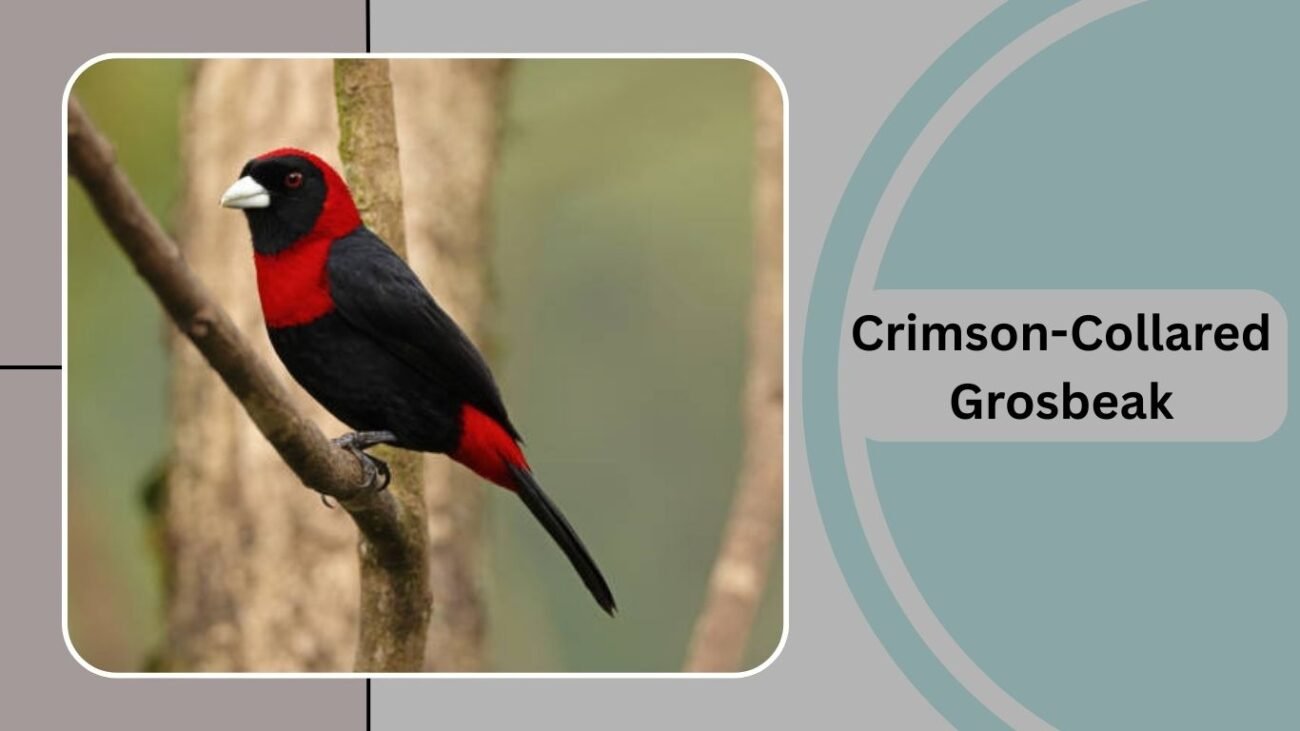
The Crimson-Collared Grosbeak (Rhodothraupis celaeno) is a rare and exotic grosbeak native to northeastern Mexico. Its striking red-and-black plumage makes it one of the most visually stunning birds in its range.
Identification
- Size: 7.5 to 8 inches
- Weight: 40 to 48 grams
- Male: Bold crimson-red head, chest, and collar, contrasting with black back, wings, and belly
- Female: Duller olive-green with faint red tones on chest and collar
- Distinctive Trait: Dramatic red-and-black color contrast in males
Natural Habitat
They inhabit subtropical forests, thickets, and woodland edges in northeastern Mexico. Occasionally, they wander into southern Texas, exciting birdwatchers when spotted.
Behaviors and Diet
Crimson-Collared Grosbeaks are shy and prefer dense cover, making them hard to observe. They feed mainly on seeds, fruits, and berries, but will also take insects when available. Males sing a sweet, whistled song from hidden perches, adding to their elusive nature. They are usually solitary or seen in pairs, unlike the flocking behavior of some other grosbeaks.
8. Black-Thighed Grosbeak
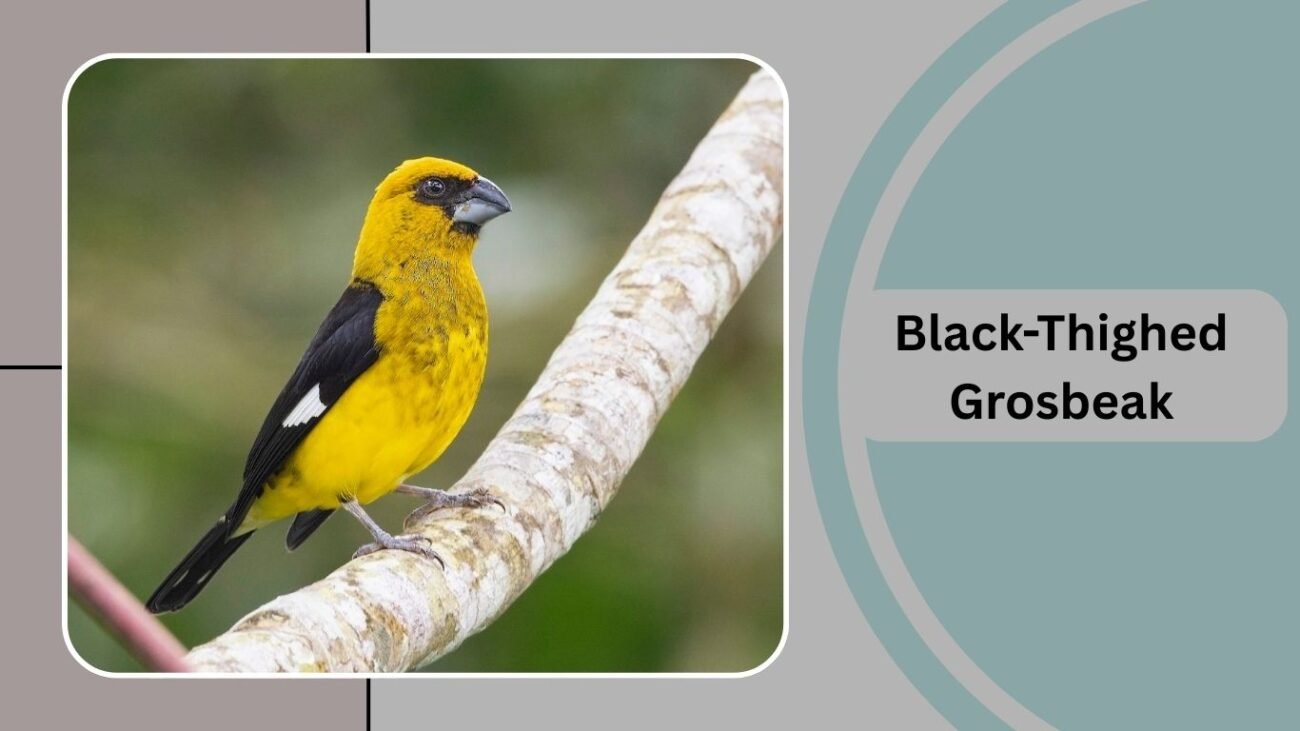
The Black-Thighed Grosbeak (Pheucticus tibialis) is a Central American species admired for its bold plumage and strong presence in mountain forests. Its name comes from the dark, black feathering on its thighs, a distinctive feature that sets it apart.
Identification
- Size: 7.5 to 8.3 inches
- Weight: 40 to 50 grams
- Male: Bright yellow underparts, black head and back, black thighs, and heavy pale bill
- Female: Duller olive-yellow overall with streaked upperparts
- Distinctive Trait: Bright yellow belly combined with dark black head and thighs
Natural Habitat
This grosbeak is native to highland forests of Costa Rica and western Panama, where it lives in montane oak and cloud forests. It is often spotted in the canopy but also visits lower shrubs in search of food.
Behaviors and Diet
Black-Thighed Grosbeaks feed on seeds, fruits, and insects. They use their thick bills to crack hard seeds and nuts with ease. These birds often forage in pairs or small groups, sometimes joining mixed-species flocks. Their song is a series of rich, warbling notes, often delivered from treetop perches.
9. Golden-Browed Grosbeak
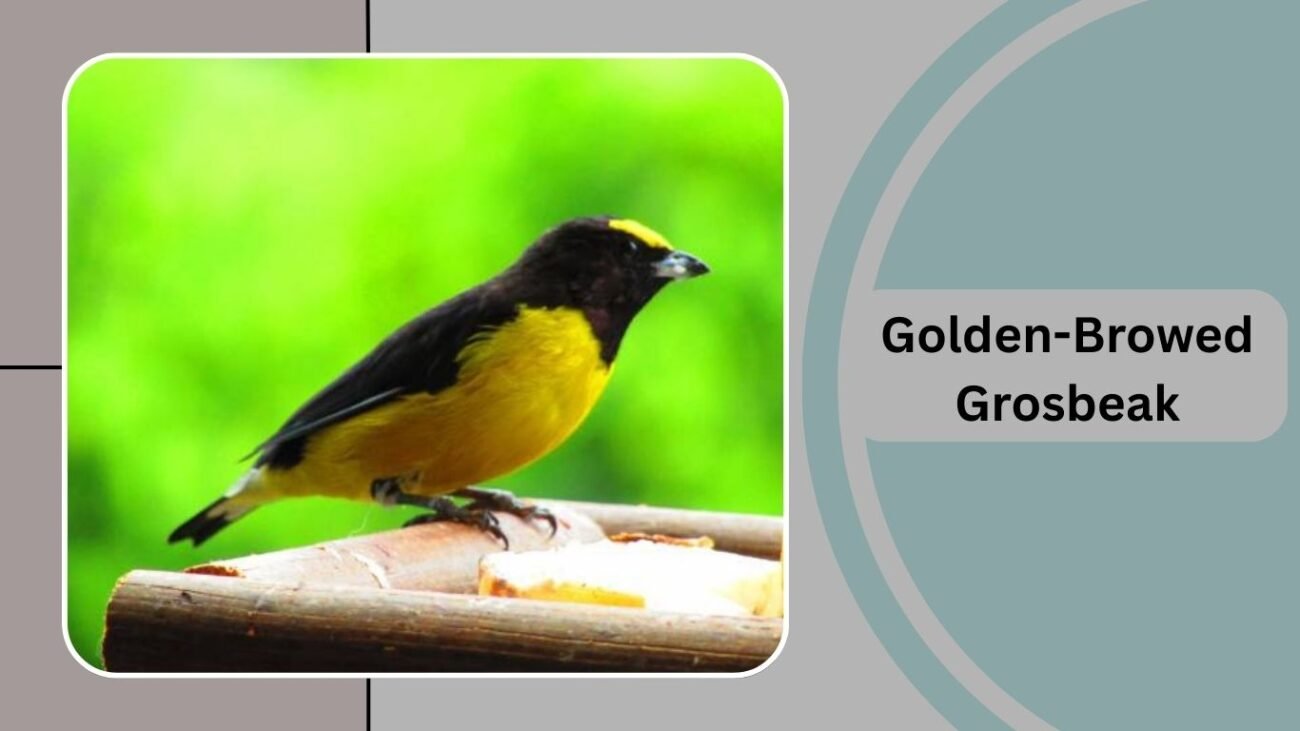
The Golden-Browed Grosbeak (Pheucticus chrysogaster) is a brilliantly marked bird found in the highlands of Central America. Its golden eyebrow and underparts make it stand out in the dense, green habitats it inhabits.
Identification
- Size: 7.5 to 8 inches
- Weight: 40 to 48 grams
- Male: Golden-yellow breast and eyebrow stripe, black head, wings, and back with white wing patches
- Female: Duller olive-yellow tones with streaked plumage, less vivid markings
- Distinctive Trait: Striking golden eyebrow stripe and underparts contrasting with dark wings
Natural Habitat
Golden-Browed Grosbeaks live in montane forests of southern Mexico, Guatemala, Honduras, and Nicaragua. They prefer humid cloud forests and forest edges at higher elevations.
Behaviors and Diet
They feed primarily on seeds, fruits, and berries, supplemented with insects during the breeding season. They are strong, deliberate foragers and often seen in small family groups. Their song is a rich series of whistles and warbles, sometimes described as similar to that of a thrush.
10. Slate-Colored Grosbeak
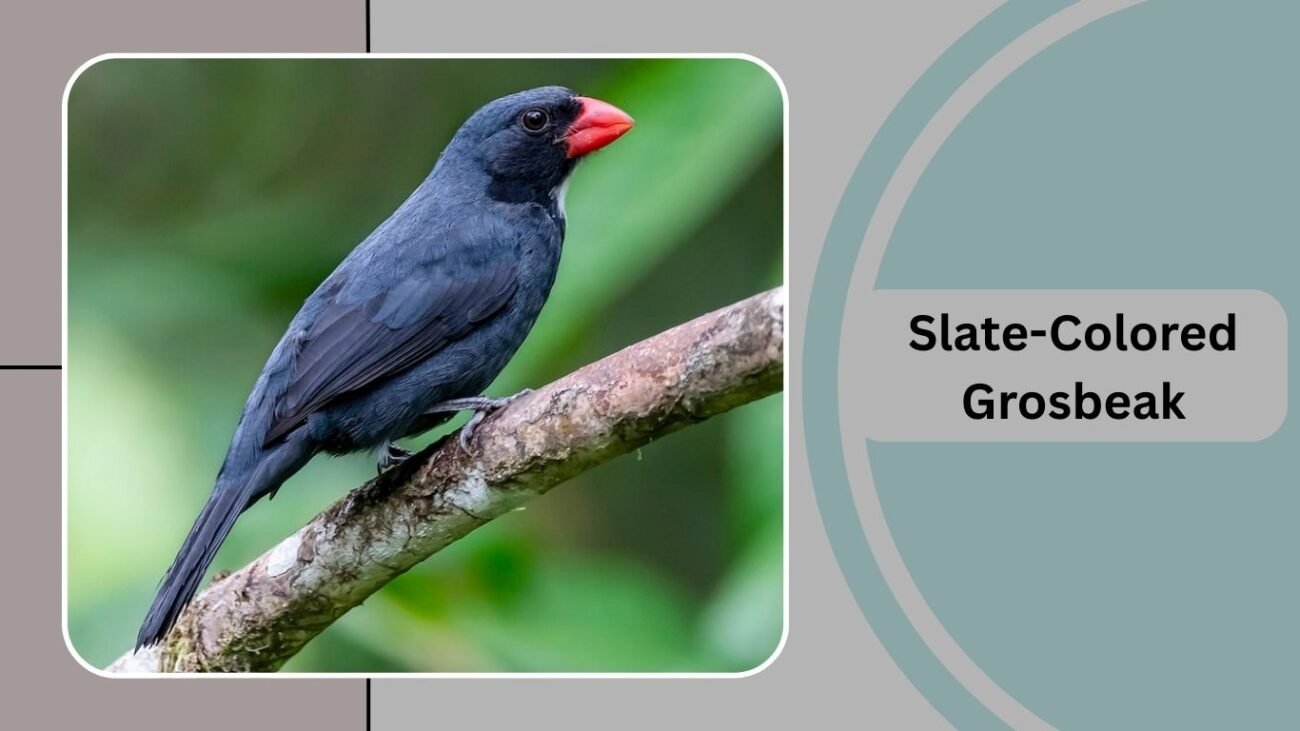
The Slate-Colored Grosbeak (Saltator grossus) is a large and powerful grosbeak found in Central and South America. Its dark, slate-gray plumage and massive bill give it a more somber appearance compared to its brightly colored relatives.
Identification
- Size: 8.3 to 9 inches
- Weight: 48 to 60 grams
- Male: Uniform slate-gray body with thick, heavy bill
- Female: Similar in color but slightly duller and smaller
- Distinctive Trait: Large size and uniform gray plumage, unlike most other grosbeaks
Natural Habitat
These birds live in tropical lowland forests from southern Mexico to northern South America. They are most often found in dense understory vegetation near rivers and forest edges.
Behaviors and Diet
Slate-Colored Grosbeaks feed on fruits, berries, seeds, and insects. They are usually shy and secretive, staying hidden in dense foliage, though their loud, whistled calls can reveal their presence. They are often solitary or seen in pairs rather than in large flocks.
11. Dusky Grosbeak
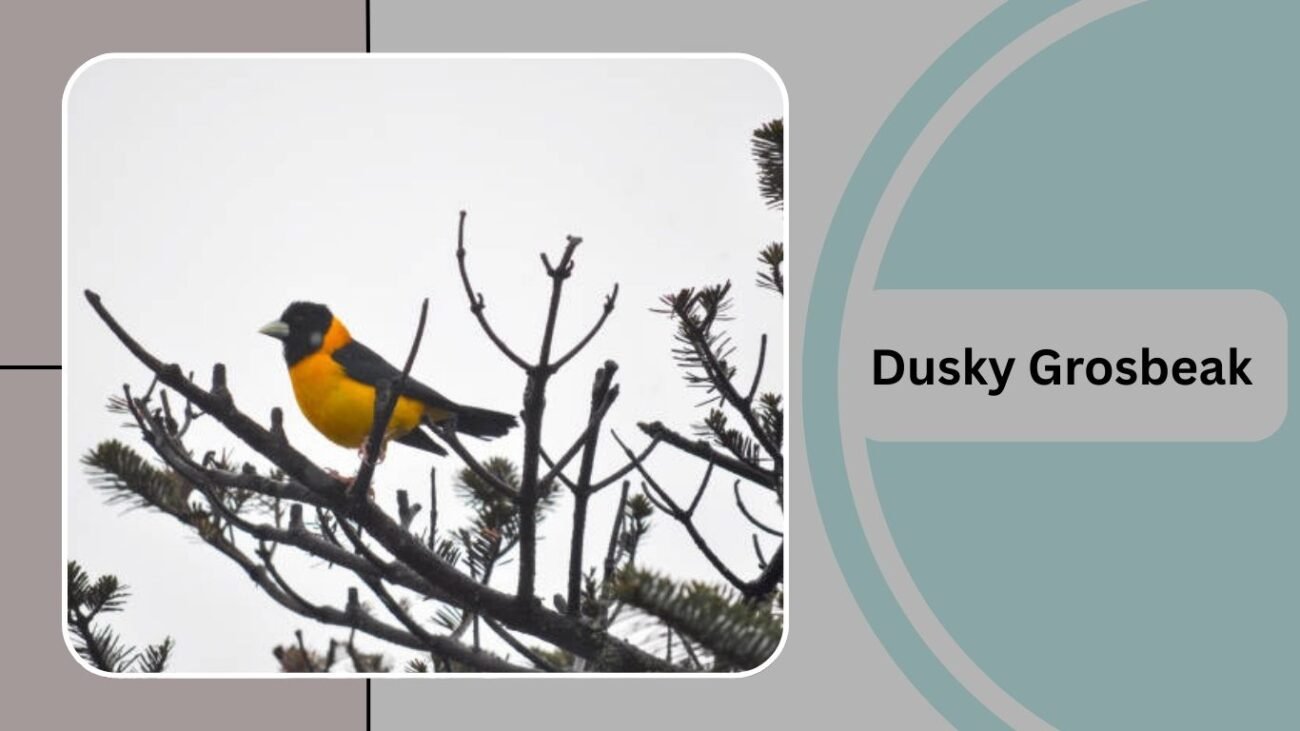
The Dusky Grosbeak (Pheucticus aurantiacus) is a lesser-known grosbeak found in parts of Central America. Its darker plumage and rich orange tones make it stand out among forest birds.
Identification
- Size: 7.5 to 8 inches
- Weight: 40 to 47 grams
- Male: Dark brownish back, orange underparts, with black wings marked by white patches
- Female: More olive-brown overall with paler underparts and less vibrant coloration
- Distinctive Trait: Combination of dusky-brown and orange hues in males
Natural Habitat
Dusky Grosbeaks inhabit montane forests and wooded valleys in Honduras, Nicaragua, Costa Rica, and Panama. They are typically found in higher elevations and along forest edges.
Behaviors and Diet
These grosbeaks primarily eat seeds, fruits, and insects. They forage both in trees and on the ground, often breaking open tough seeds with their heavy bills. They are relatively quiet birds, but their clear, whistled songs can sometimes be heard from the forest canopy.
12. Great Blue Grosbeak
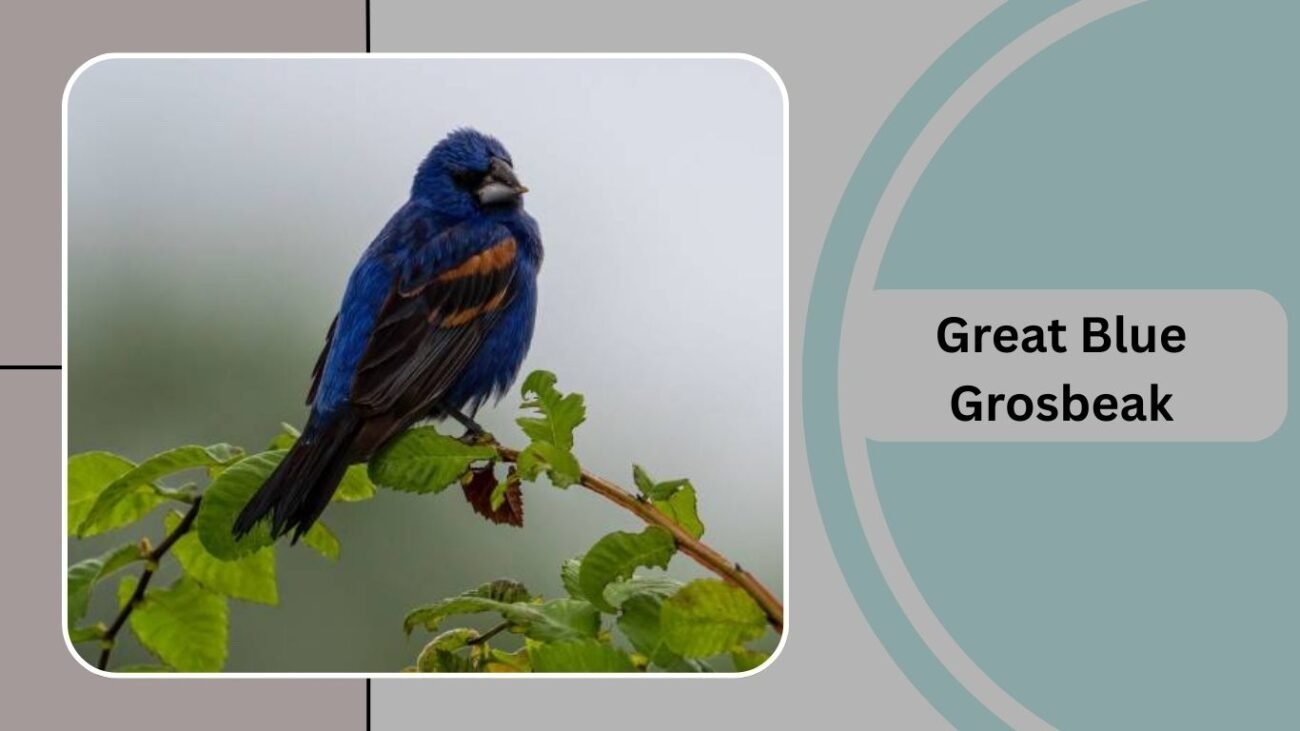
The Great Blue Grosbeak (Cyanoloxia glaucocaerulea) is a rare and stunning species native to parts of South America. Its rich blue plumage and powerful build make it one of the most striking members of the grosbeak family.
Identification
- Size: 7.5 to 8.5 inches
- Weight: 40 to 52 grams
- Male: Deep cobalt-blue plumage with darker wings and tail, large pale bill
- Female: Brownish with lighter underparts, showing faint blue tinges on wings and tail
- Distinctive Trait: Large size and intense, uniform blue coloration in males
Natural Habitat
This grosbeak inhabits lowland forests, scrublands, and riverine thickets in Uruguay, Brazil, Argentina, and Paraguay. It prefers areas with dense vegetation where it can forage and remain concealed.
Behaviors and Diet
Great Blue Grosbeaks feed mainly on seeds, fruits, and berries, cracking them open with their thick, powerful bills. They also consume insects during the breeding season. Generally solitary or seen in pairs, they are quiet birds, though males sing soft, whistled songs from hidden perches during courtship.
13. Hooded Grosbeak
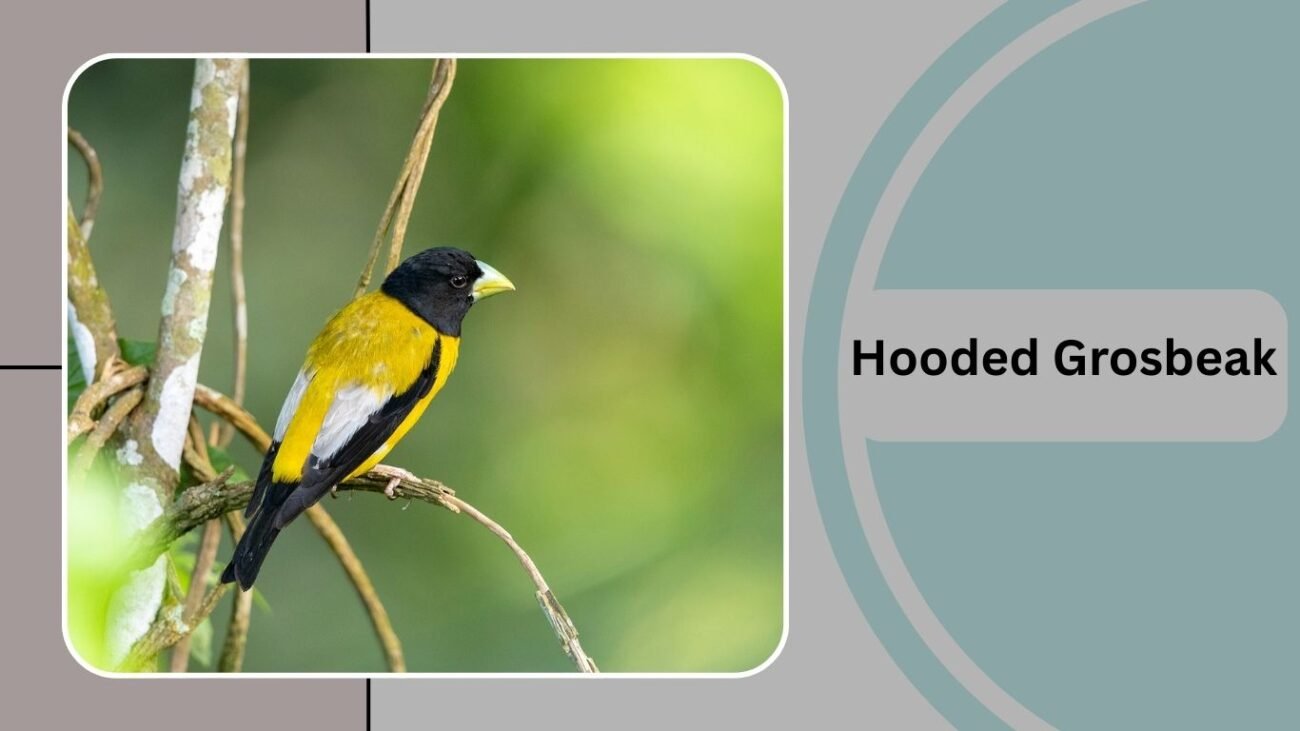
The Hooded Grosbeak (Hesperiphona abeillei) is a highland species from Mexico and Central America, recognized by its distinctive black hood and bright golden-yellow body. It is a close relative of the Evening Grosbeak but found further south.
Identification
- Size: 7.9 to 8.7 inches
- Weight: 48 to 58 grams
- Male: Bright golden-yellow body with black hood, wings, and tail, and thick pale bill
- Female: Olive-yellow overall with a darker hood and less vivid coloration
- Distinctive Trait: Black hood contrasting with golden-yellow plumage
Natural Habitat
Hooded Grosbeaks inhabit pine-oak forests, highland woodlands, and forest edges in Mexico and Guatemala. They are often found at elevations above 5,000 feet.
Behaviors and Diet
They primarily eat seeds and fruits but also take insects when available. Their strong bills allow them to crack even the toughest seeds and pine cones. Hooded Grosbeaks often move in small flocks, producing loud calls and whistles while foraging in treetops.
14. Red Grosbeak
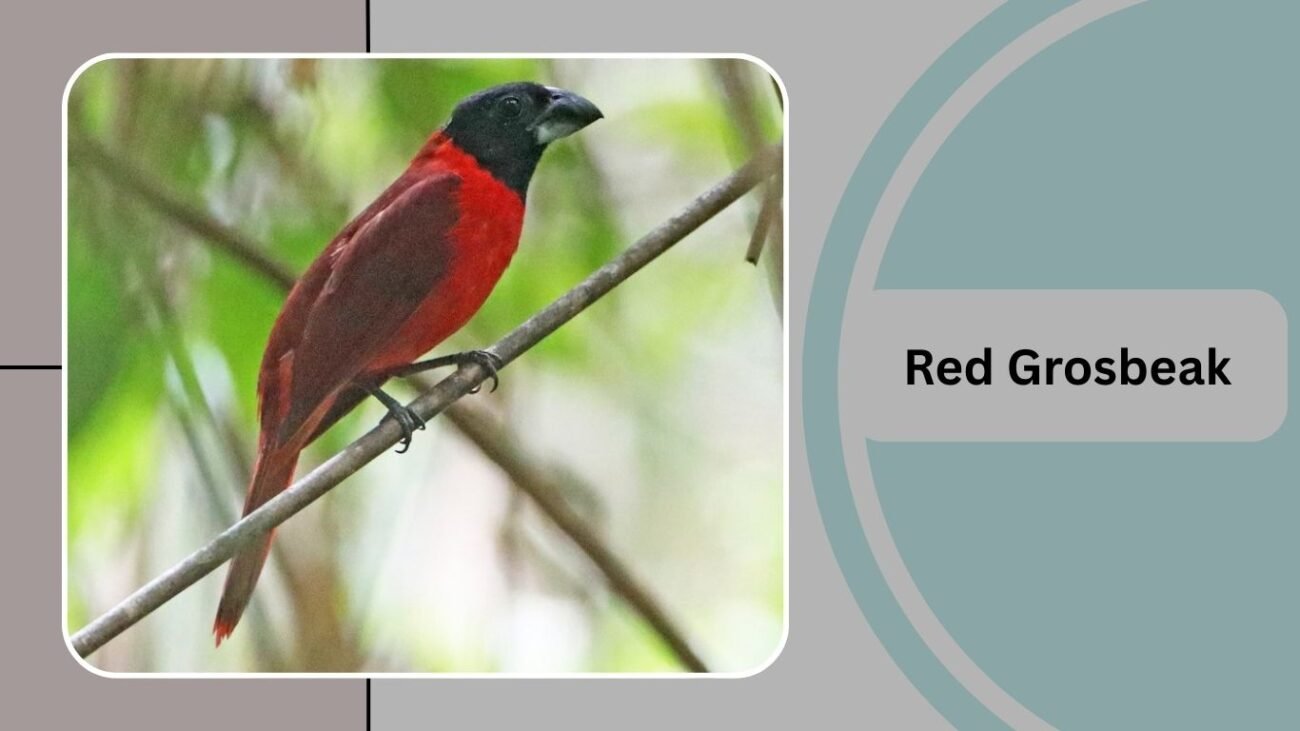
The Red Grosbeak (Cyanoloxia ricardii), sometimes referred to as the Ultramarine or Crimson Grosbeak depending on the region, is a vibrant South American species admired for its fiery plumage. Its bold coloration and strong build make it stand out in dense forests and scrublands.
Identification
- Size: 7.5 to 8.5 inches
- Weight: 40 to 50 grams
- Male: Brilliant crimson-red plumage with darker wings and tail, stout pale bill
- Female: Brownish with subtle reddish tinges on wings and tail
- Distinctive Trait: Deep, rich crimson coloration in males, glowing in sunlight
Natural Habitat
Red Grosbeaks inhabit forests, thickets, and scrubby regions in Bolivia, Argentina, and Paraguay. They prefer dense vegetation along river valleys and forest edges.
Behaviors and Diet
These grosbeaks forage mainly on seeds, fruits, and berries, using their thick bills to crush hard shells. During breeding, they also feed on insects such as beetles and caterpillars. They are usually solitary or found in pairs, their loud, whistled calls echoing through the undergrowth.
15. White-Winged Grosbeak
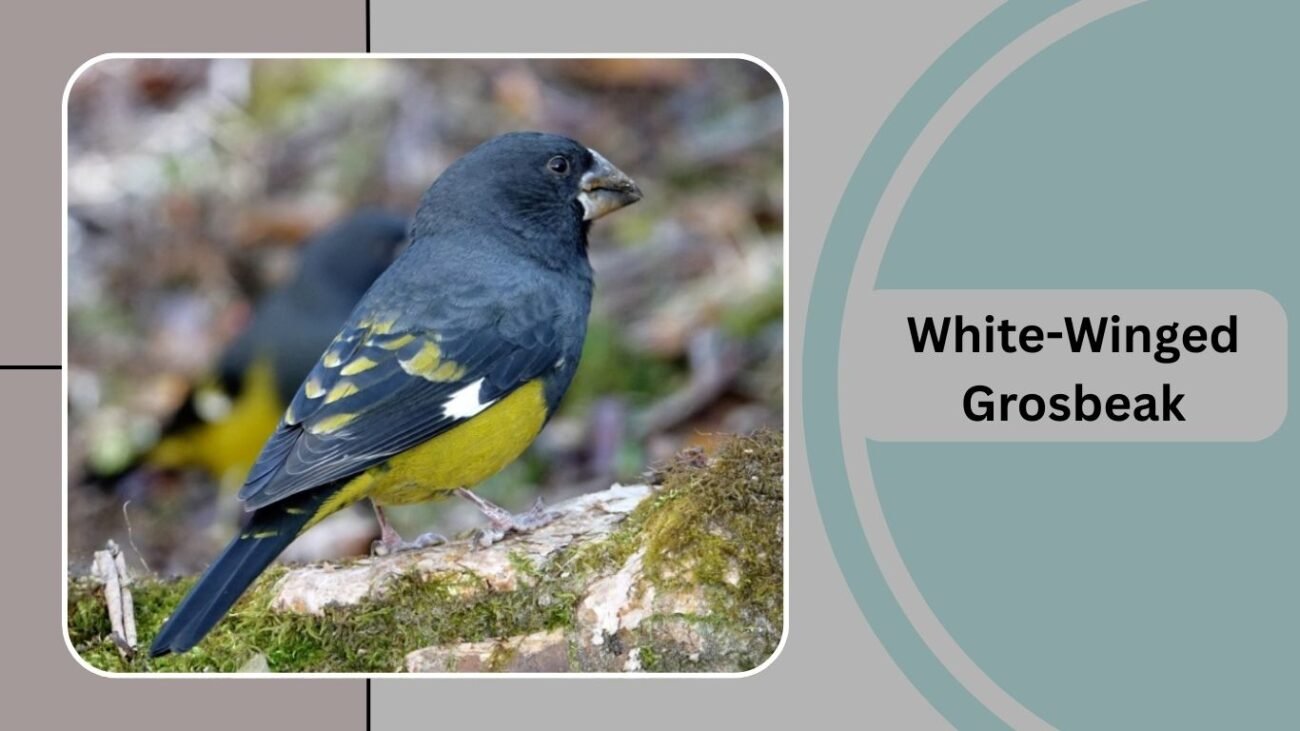
The White-Winged Grosbeak (Mycerobas carnipes) is a large and striking grosbeak found in the mountainous forests of Central and South Asia. Its contrasting plumage and powerful bill make it unmistakable.
Identification
- Size: 8.7 to 9.4 inches
- Weight: 48 to 65 grams
- Male: Blackish body with bold white wing patches and yellow belly
- Female: Olive-brown with streaked underparts, showing faint wing markings
- Distinctive Trait: Large size and conspicuous white wing patches visible in flight
Natural Habitat
These grosbeaks inhabit coniferous forests, alpine woodlands, and mountain valleys across the Himalayas, Tibet, and western China. They are often found at elevations above 6,000 feet.
Behaviors and Diet
White-Winged Grosbeaks feed on seeds, nuts, berries, and buds. Their strong bills allow them to crack open pine and spruce cones. They often form small flocks in winter, moving through mountain forests in search of food. Their calls are sharp and ringing, carrying across valleys in the highlands.