Hornbills are some of the most fascinating birds you’ll ever come across—known for their large curved bills and unique casques. From the towering Great Hornbill to the rare Narcondam Hornbill, each species has its own charm. In this guide, we’ll explore 13 types of hornbills, sharing key identification features, habitats, and interesting behaviors of each.
1. Great Hornbill

The Great Hornbill (Buceros bicornis) is one of the largest and most striking hornbill species. Known for its massive bill and prominent casque, it is native to the forests of the Indian subcontinent and Southeast Asia. This bird plays a vital role in seed dispersal and is deeply respected in various local cultures.
Identification
- Large size, up to 120 cm in length
- Yellow and black casque on top of the bill
- Males have red eyes; females have white-blue eyes
- Black body with white neck and belly
- Broad yellow and black markings on wings
- Long tail with white and black banding
Habitat
Found mainly in dense evergreen and moist deciduous forests, especially in the foothills of the Himalayas, Western Ghats, and Northeastern India.
Behavior
Great Hornbills are known for their loud calls and aerial displays. They form monogamous pairs and are often seen gliding across forest canopies in search of fruit.
2. Indian Grey Hornbill
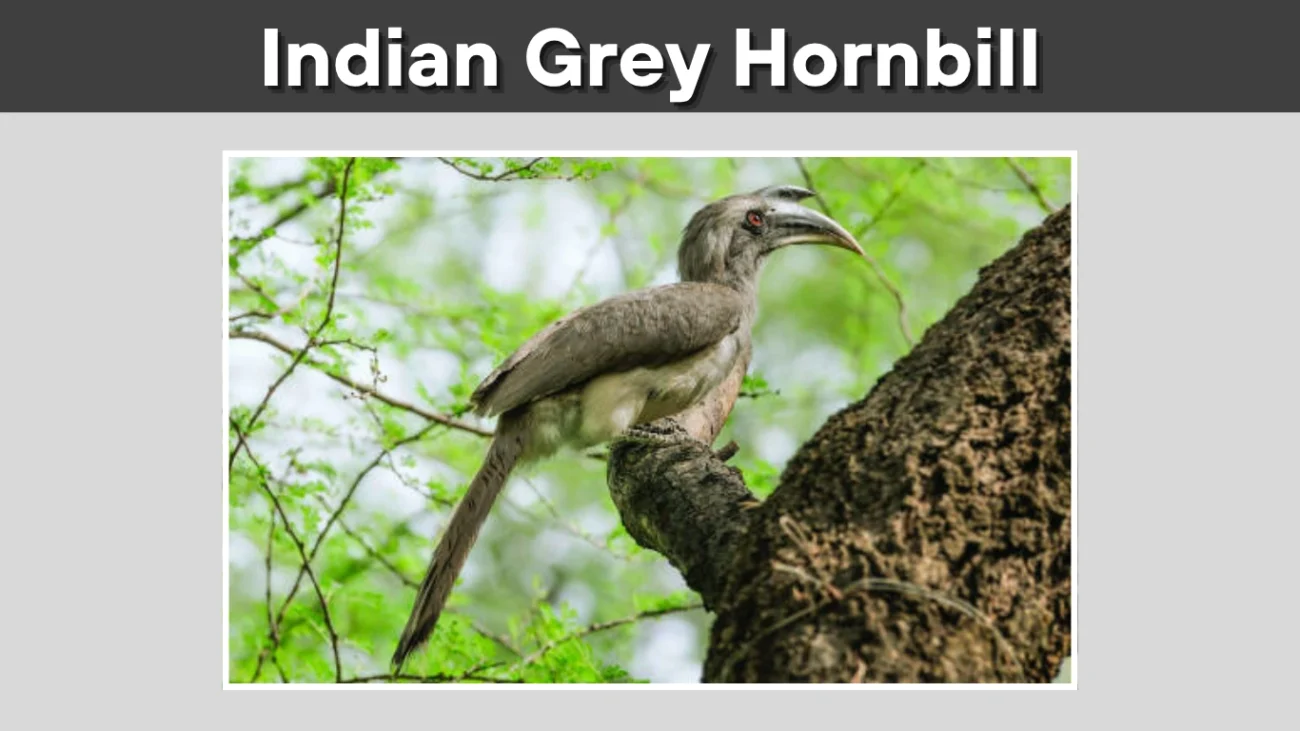
The Indian Grey Hornbill (Ocyceros birostris) is a medium-sized hornbill commonly found in urban areas, forests, and open woodlands of the Indian subcontinent. Unlike its more colorful relatives, it has a subdued grey-brown appearance, making it well-camouflaged in dry deciduous forests.
Identification
- Grey body with a pale belly
- Long, curved bill with a small casque
- Red eyes with black eye-rings
- Long tail tipped with white
- Prominent black line running from the beak to the eyes
Habitat
Widespread in India, especially in urban parks, gardens, and light forests, avoiding dense evergreen forests.
Behavior
Often seen in pairs or small groups. They are noisy during breeding season and primarily feed on fruits, though they also eat insects and small reptiles.
3. Malabar Pied Hornbill
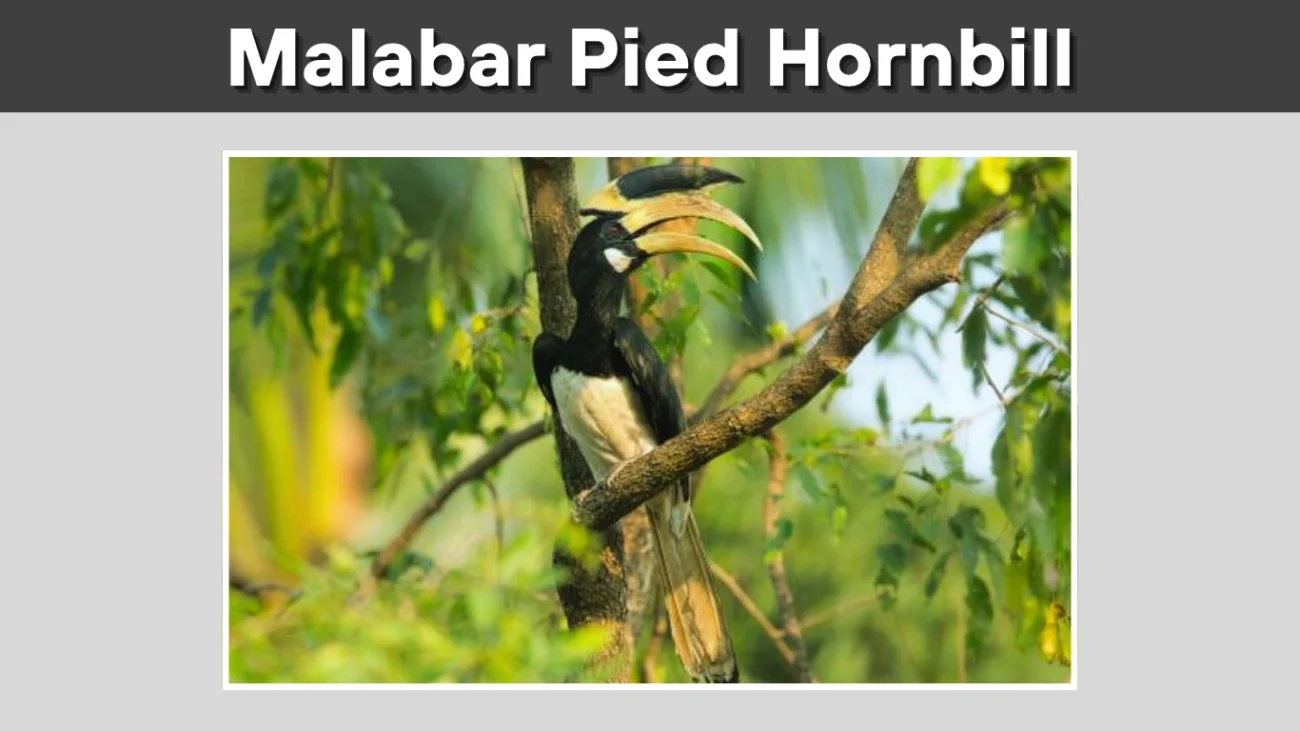
The Malabar Pied Hornbill (Anthracoceros coronatus) is a striking black-and-white hornbill native to the forests of peninsular India and Sri Lanka. Its prominent casque and striking contrast make it easy to recognize in the canopy.
Identification
- Glossy black body with a white belly
- Massive yellow bill with a black casque
- White tail with a broad black band
- Pale blue skin around the eyes
Habitat
Prefers moist deciduous and evergreen forests, especially near rivers and fruiting fig trees in the Western Ghats and central India.
Behavior
Feeds mainly on fruits, especially figs. Often nests in tree cavities where the female is sealed inside with mud and food is delivered by the male.
4. Rhinoceros Hornbill

The Rhinoceros Hornbill (Buceros rhinoceros) is a large and majestic bird found in the rainforests of Southeast Asia. It is culturally significant in many local traditions and known for its vibrant casque, which resembles a rhino’s horn.
Identification
- Large size with prominent orange-red casque curving upward
- Black body with white tail and thighs
- Bright red eyes in males, white in females
- Long, yellowish bill with orange base
Habitat
Inhabits lowland and montane tropical rainforests, particularly in Malaysia, Thailand, Borneo, and Sumatra.
Behavior
Solitary or seen in pairs. It is a fruit-eating bird, especially fond of figs, but may also eat insects and small animals.
5. Oriental Pied Hornbill
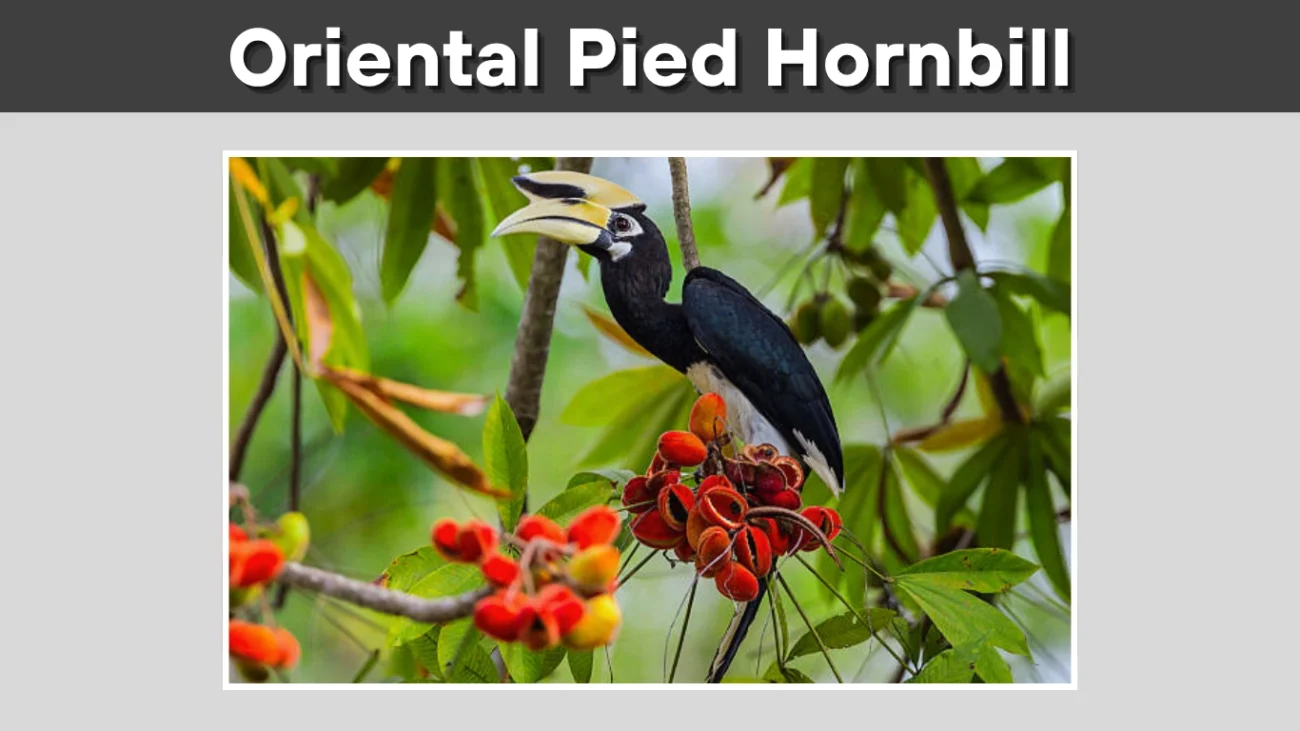
The Oriental Pied Hornbill (Anthracoceros albirostris) is a smaller and more adaptable hornbill species found across the Indian subcontinent and Southeast Asia. It is often seen in both forested and human-altered landscapes.
Identification
- Medium-sized with a white belly and black upperparts
- Yellow bill with a smaller black-marked casque
- White facial markings and tail tips
- Pale blue orbital skin
Habitat
Found in tropical forests, plantations, gardens, and even towns, especially near water bodies.
Behavior
Highly vocal and social. Diet includes fruits, insects, and small animals. Nests in tree cavities with the female sealed inside during incubation.
6. Wreathed Hornbill
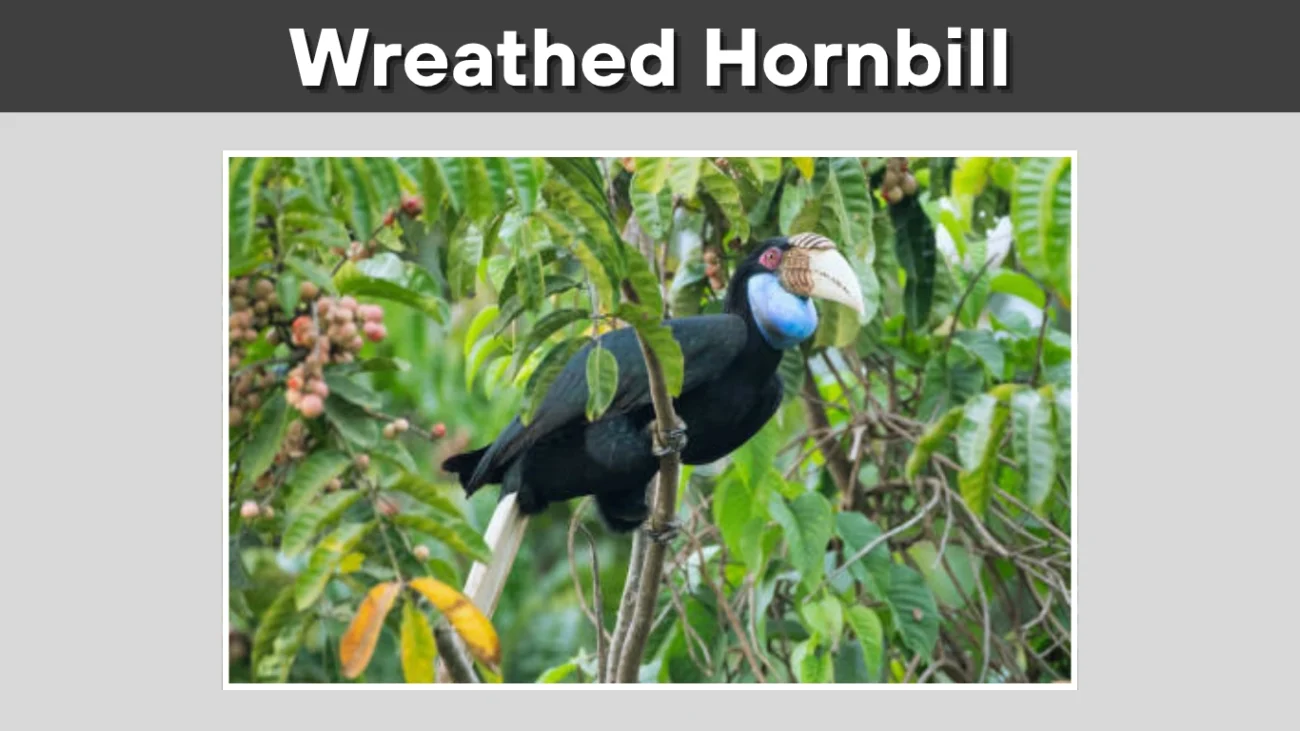
The Wreathed Hornbill (Rhyticeros undulatus) is a large forest hornbill found in Northeast India and Southeast Asia. It gets its name from the wrinkled, wreath-like ridges at the base of its bill.
Identification
- Black body with a white tail
- Yellow throat pouch in males, blue in females
- Long bill with ridged “wreath” markings near the base
- Casque is narrow and slightly curved
Habitat
Lives in dense evergreen forests and hilly tropical areas across Northeast India, Bhutan, Myanmar, and Indonesia.
Behavior
Usually seen flying in pairs or small groups. Diet includes fruits, insects, and small animals. Known for long-distance flights between feeding and roosting sites.
7. Narcondam Hornbill

The Narcondam Hornbill (Rhyticeros narcondami) is a rare and endangered hornbill found only on the volcanic Narcondam Island in the Andaman Sea, India. It is one of the few island-endemic hornbill species.
Identification
- Black body with white tail
- Large yellowish bill with a black casque
- Blue facial skin and reddish eye-ring
- Slightly smaller than the Great Hornbill
Habitat
Restricted to the forested slopes of Narcondam Island. Prefers evergreen and semi-evergreen forest habitats.
Behavior
Highly frugivorous, depending largely on native fruiting trees. Nests in tree cavities and plays a crucial role in seed dispersal on the island.
8. White-crowned Hornbill
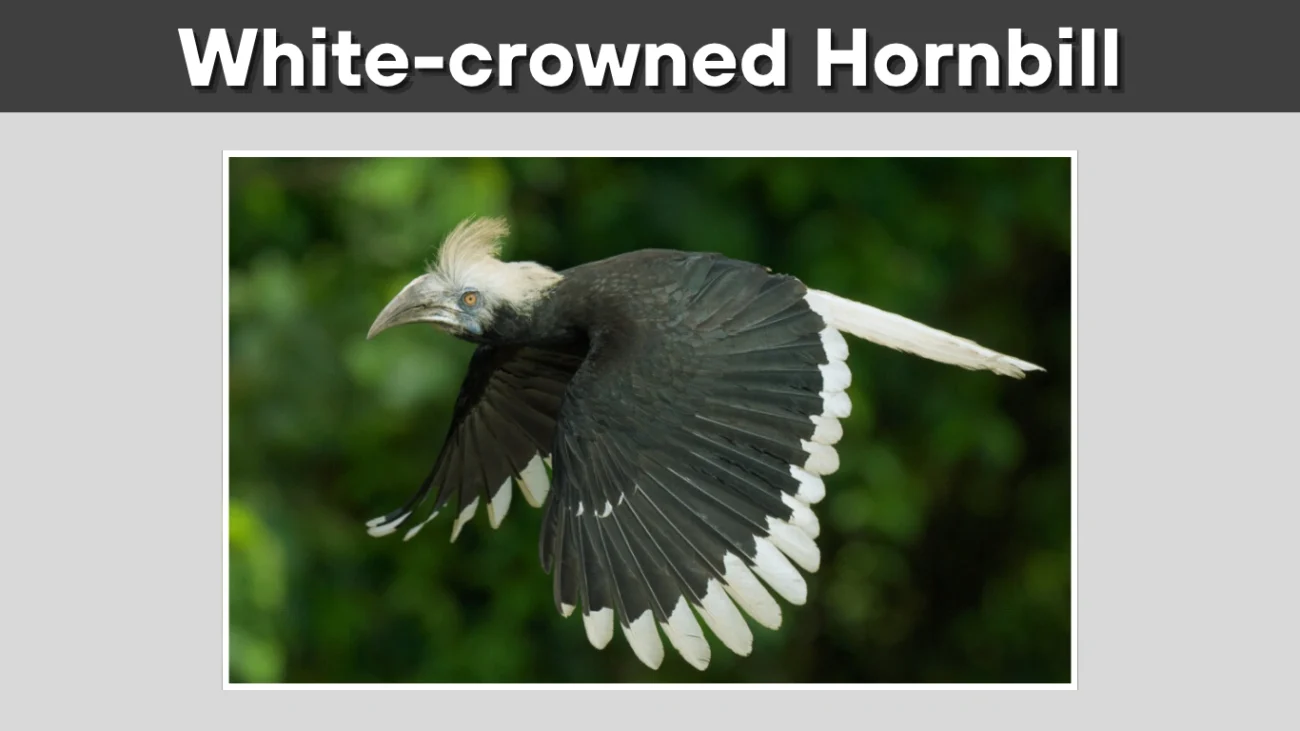
The White-crowned Hornbill (Berenicornis comatus) is a striking bird known for its unique white crest that resembles a crown. It inhabits dense tropical rainforests in Southeast Asia and is considered vulnerable due to habitat loss.
Identification
- White head, crest, and underparts
- Black body and wings
- Long tail with white tips
- Pale yellow bill with a small casque
Habitat
Found in lowland and hill rainforests of the Malay Peninsula, Sumatra, and Borneo.
Behavior
Lives in small groups. Feeds on insects, small animals, and fruits. Nests in tree cavities and is often heard calling loudly through the forest.
9. Southern Ground Hornbill
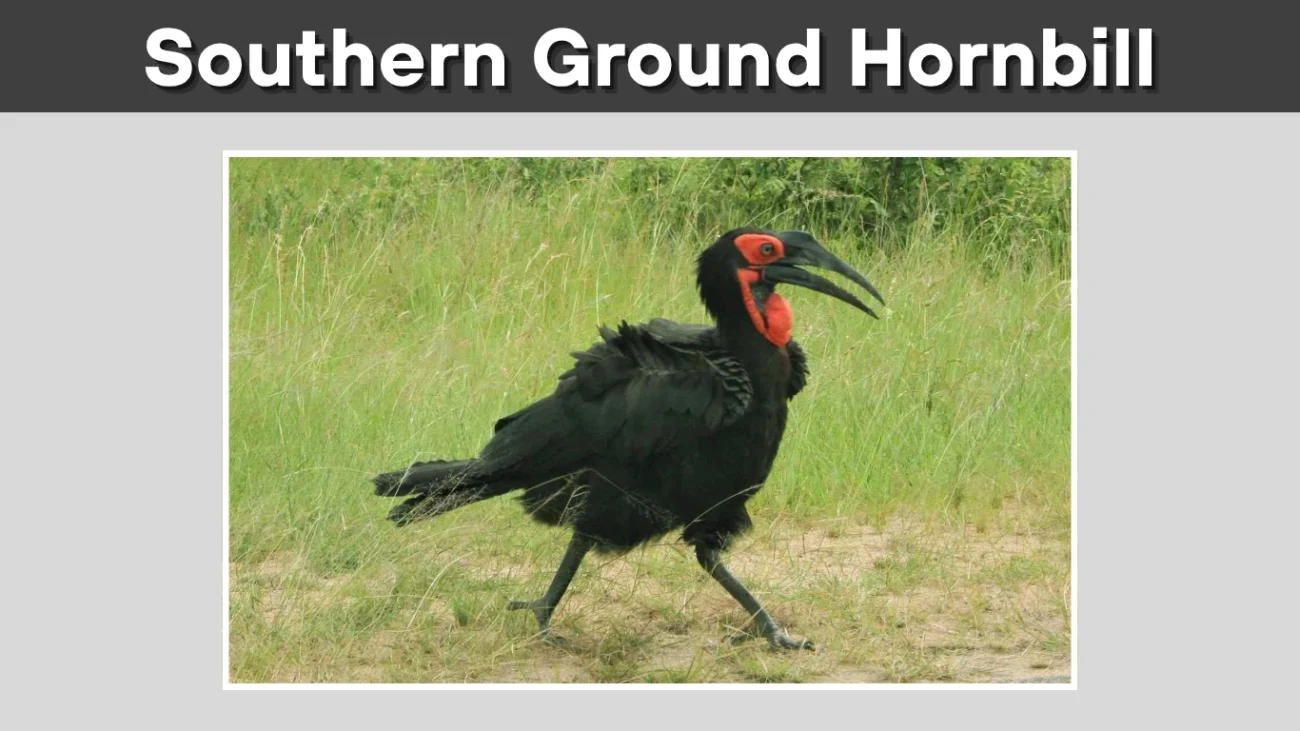
The Southern Ground Hornbill (Bucorvus leadbeateri) is a large, ground-dwelling hornbill native to the savannas of southern Africa. It is one of the few hornbills that spend most of their time on the ground.
Identification
- Black body with vivid red throat and facial skin
- Large black bill without a prominent casque
- White primary feathers visible in flight
- Females have a patch of blue on the throat
Habitat
Inhabits open woodlands, grasslands, and savannas of South Africa, Botswana, and Zimbabwe.
Behavior
Hunts on foot in family groups. Eats insects, reptiles, and small mammals. Known for deep booming calls that can carry for miles.
10. Abyssinian Ground Hornbill
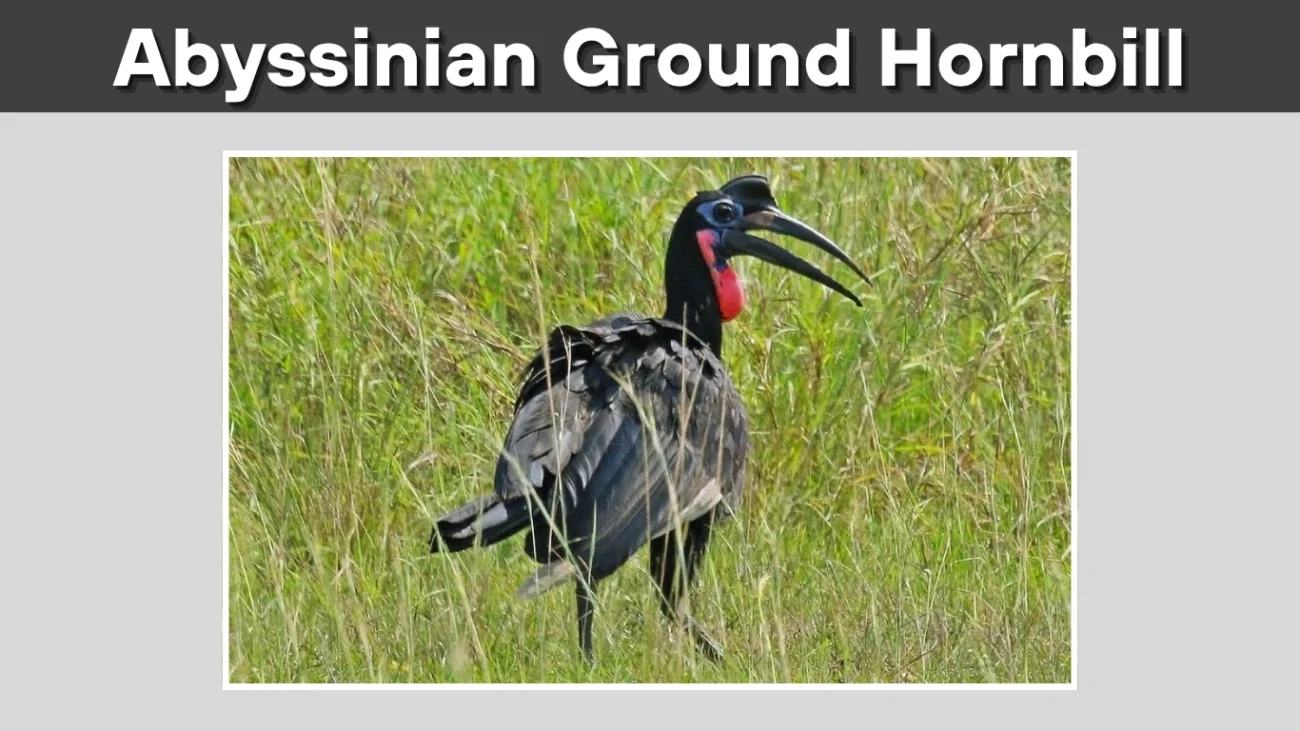
The Abyssinian Ground Hornbill (Bucorvus abyssinicus) is a large, terrestrial hornbill found in the grasslands and savannas of northeastern Africa. It is known for its distinctive blue and red facial skin and strong, stalking walk.
Identification
- Black body with bright blue and red facial skin (males)
- Females have all-blue facial skin
- Long eyelashes and white flight feathers
- Large black bill without a casque
Habitat
Common in open grasslands and lightly wooded areas of Ethiopia, Sudan, and Kenya.
Behavior
Ground-dwelling and carnivorous, feeding on insects, snakes, and small mammals. Walks slowly with a deliberate gait and nests in tree cavities.
11. Helmeted Hornbill

The Helmeted Hornbill (Rhinoplax vigil) is one of the most unique hornbills, recognized by its solid casque, which is used in aerial head-to-head battles. It is critically endangered due to illegal hunting for its casque, known as “hornbill ivory.”
Identification
- Black body with white belly and tail
- Large reddish casque that extends along the bill
- Bare, wrinkled red throat skin in males
- Very long central tail feathers
Habitat
Found in lowland rainforests of Thailand, Malaysia, Sumatra, and Borneo.
Behavior
Feeds mostly on fruits, especially figs. Known for loud, echoing calls and dramatic mid-air casque clashes. Nests in tall, mature forest trees.
12. Black-and-white-casqued Hornbill
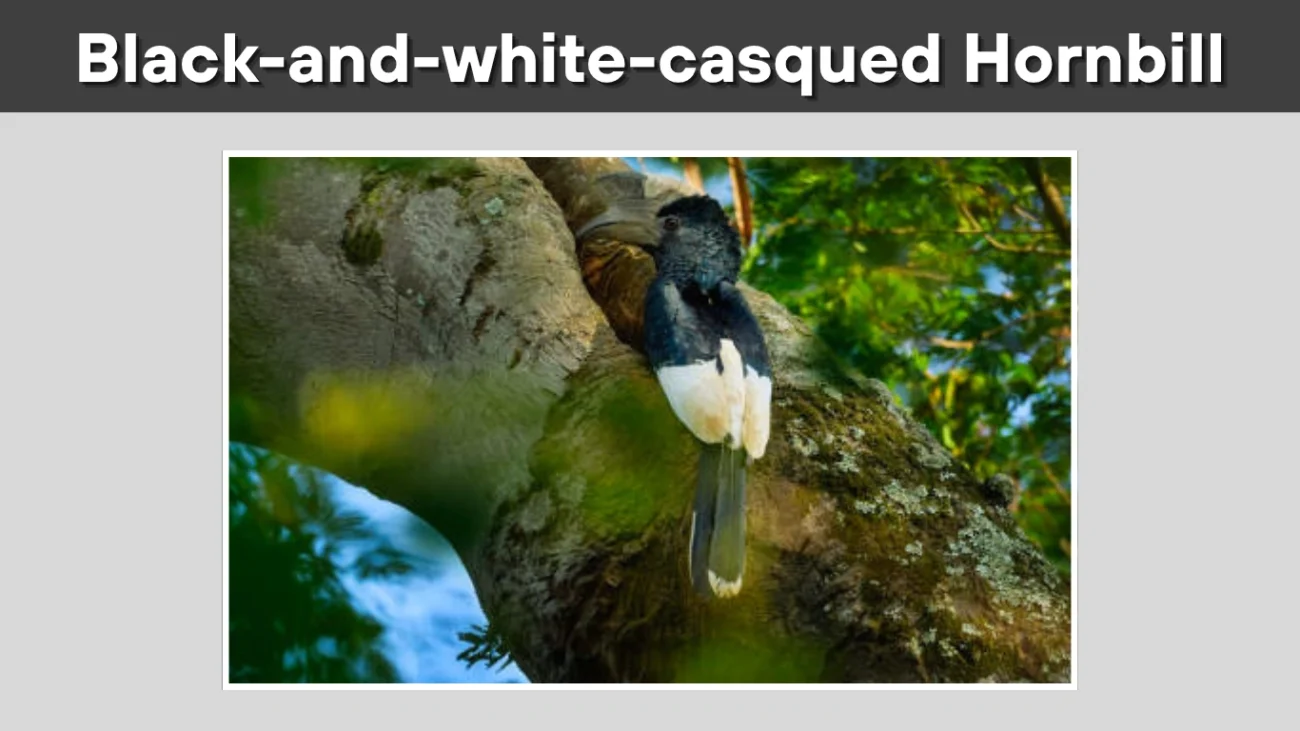
The Black-and-white-casqued Hornbill (Bycanistes subcylindricus) is a large African hornbill known for its contrasting plumage and prominent casque. It is common in central and western Africa’s tropical forests.
Identification
- Black upperparts with white underparts
- Large bill with a prominent black-and-white casque
- Males have a larger casque than females
- White tail with black base
Habitat
Lives in tropical rainforests, woodlands, and forest edges across countries like Uganda, Cameroon, and the Congo Basin.
Behavior
Often seen in pairs or small groups. Eats fruits, especially figs, but also consumes insects and small vertebrates. Nests in tree cavities.
13. Bushy-crested Hornbill
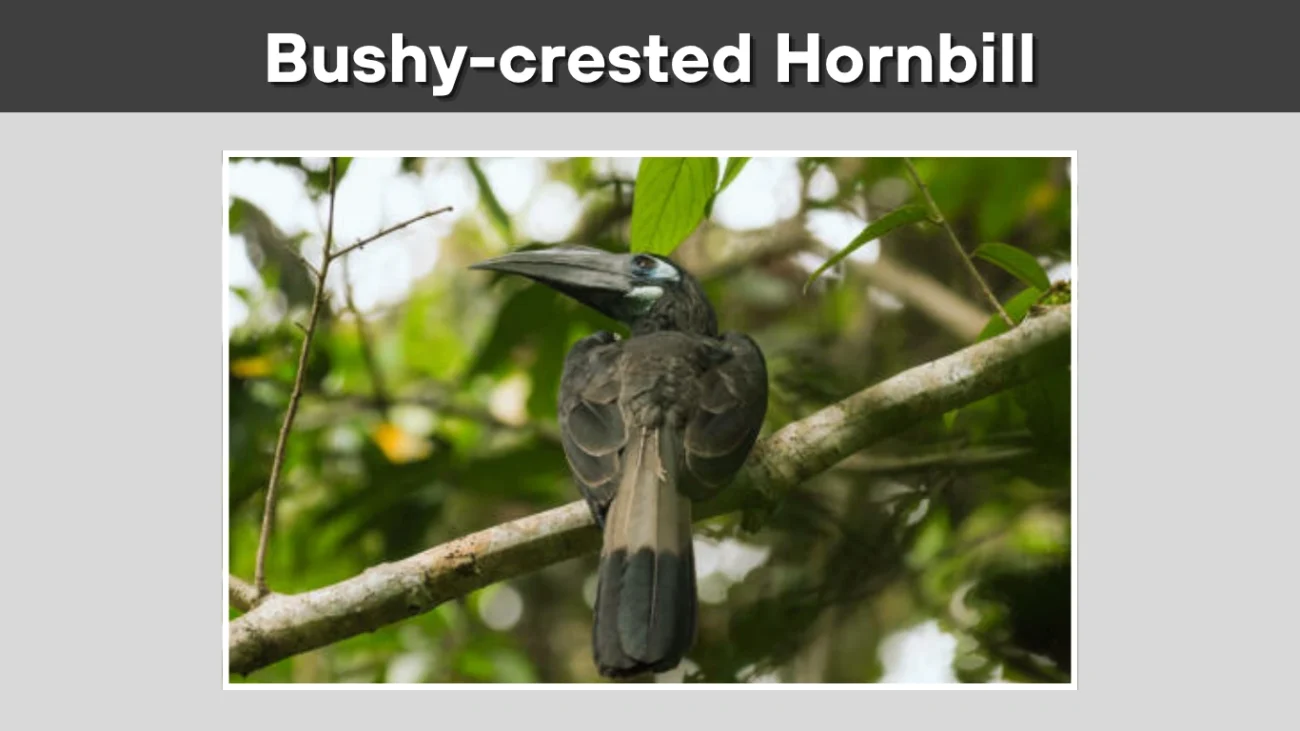
The Bushy-crested Hornbill (Anorrhinus galeritus) is a smaller, social hornbill species found in Southeast Asia. It’s recognized by its ragged crest and cooperative breeding habits.
Identification
- Brownish-black plumage
- Shaggy crest on the head
- Pale bill with no casque
- Blue facial skin around the eyes
Habitat
Found in lowland forests and hilly woodlands across Thailand, Malaysia, and Borneo.
Behavior
Lives in flocks and breeds cooperatively, with multiple individuals helping raise young. Feeds on fruits, insects, and small animals. Very active and vocal in the canopy.
Here are 5 FAQs to include at the end of your hornbill article:
FAQs
1. What is the purpose of the hornbill’s casque?
The casque, a hollow structure on top of the bill, varies by species. It’s often used for sound amplification, mating displays, and in some species like the Helmeted Hornbill, for head-to-head combat during territorial fights.
2. Are hornbills endangered?
Several hornbill species are endangered or vulnerable due to habitat loss and hunting. The Helmeted Hornbill, in particular, is critically endangered because of illegal trade in its solid casque.
3. Do hornbills mate for life?
Yes, many hornbill species form long-term pair bonds. They are known for their unique nesting behavior, where the female is sealed inside a tree cavity and the male brings her food during incubation.
4. What do hornbills eat?
Hornbills are primarily frugivores, feeding on fruits like figs. However, they also eat insects, small mammals, reptiles, and bird eggs, depending on the species.
5. Where can hornbills be found?
Hornbills are native to Africa and Asia. African hornbills are mostly found in savannas and open woodlands, while Asian hornbills inhabit tropical and subtropical forests, particularly in India, Southeast Asia, and the Indonesian islands.