










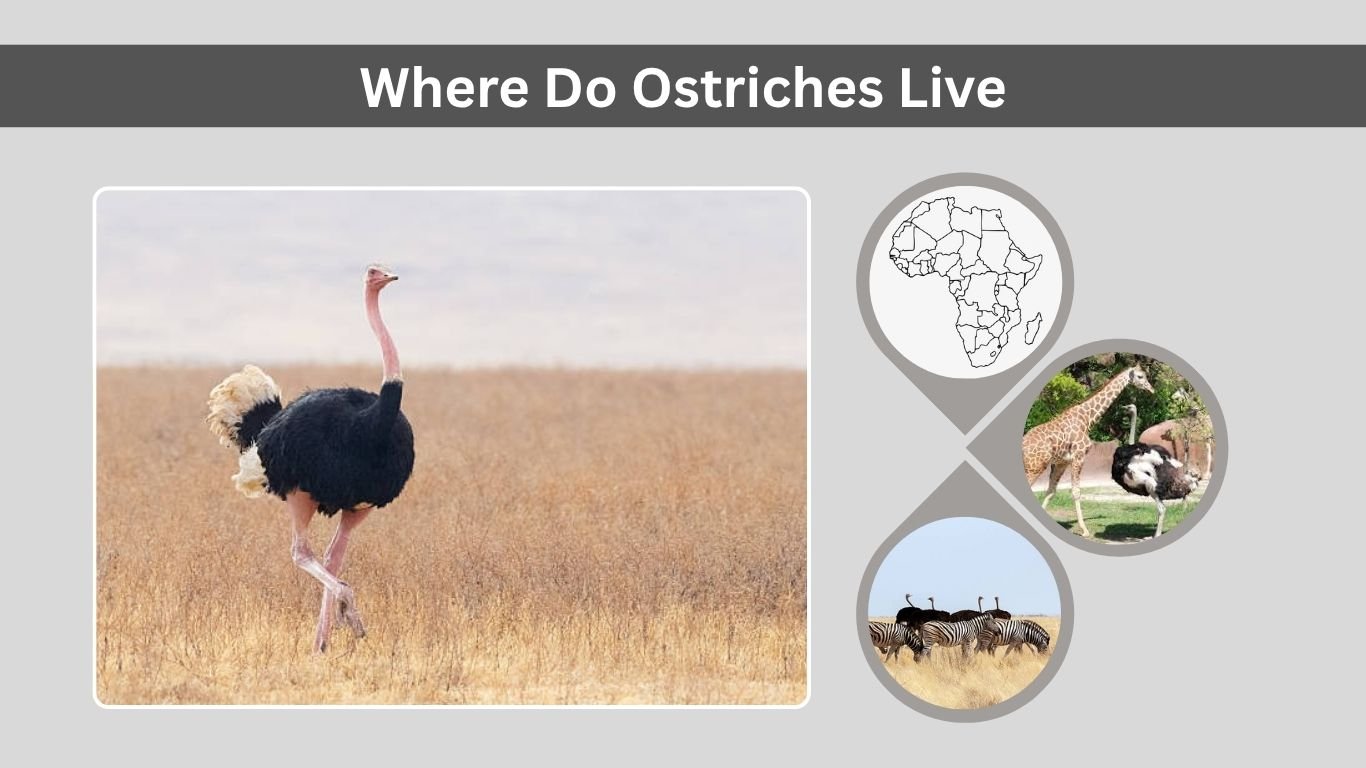
Ostriches are the world’s largest birds, famous for their incredible speed and ability to thrive in some of the harshest environments on Earth. Native to Africa, these flightless giants live across open grasslands, semi-deserts, and savannas, where their long legs and keen eyesight help them survive. Understanding where ostriches live reveals how perfectly they are adapted to the wild landscapes of Africa — and how human activity has influenced their habitats today.
Understanding Ostrich Habitat
Ostriches are ground-dwelling birds that prefer wide, open spaces with clear visibility. Unlike most birds, they rely on running rather than flying, so they thrive in areas free from thick forests or steep terrain. They are primarily found in dry, warm regions where vegetation is sparse but enough to provide food like seeds, grasses, and insects.
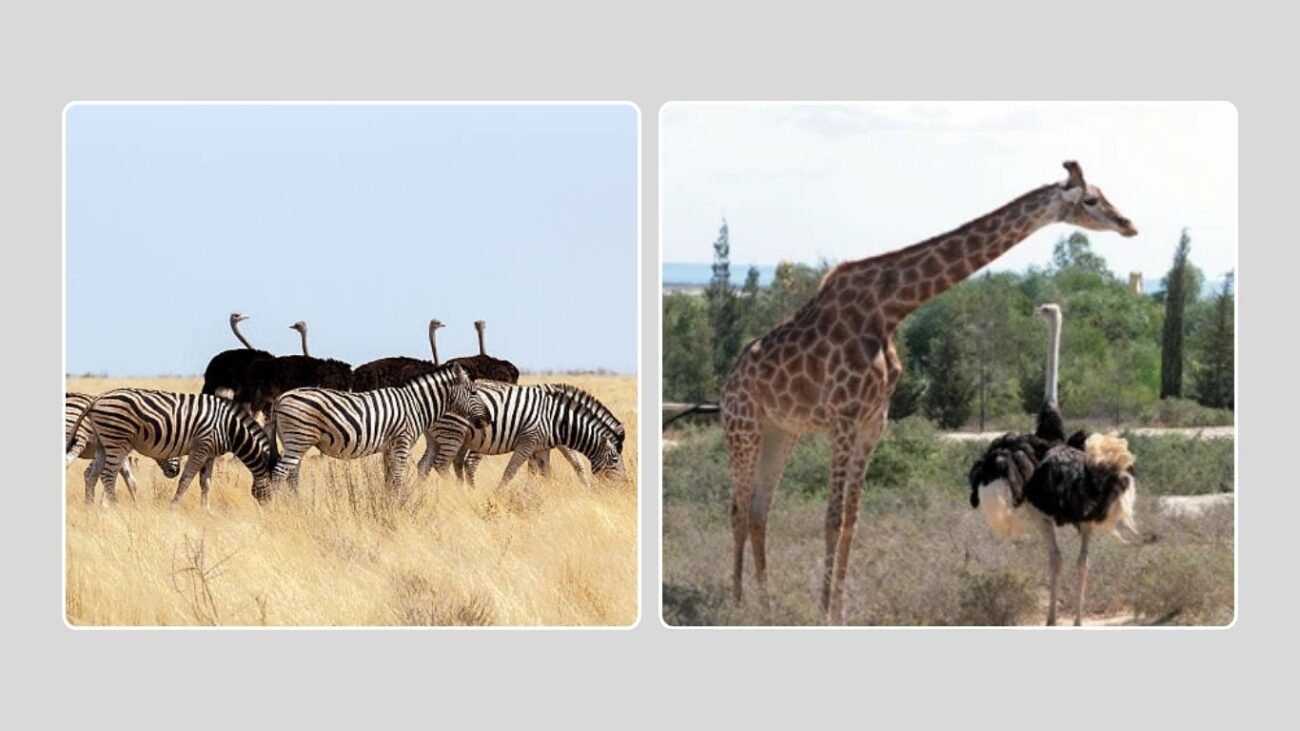
In the wild, ostriches live in small groups called flocks, often sharing their range with grazing animals such as zebras or antelopes. Their sharp vision allows them to spot predators from a distance, giving nearby animals early warnings — a perfect example of natural cooperation in the African ecosystem.
Natural Range and Distribution

Where Do Ostriches Live in the Wild
Wild ostriches inhabit sub-Saharan Africa, stretching from southern to eastern parts of the continent. They are especially common in South Africa, Namibia, Botswana, Kenya, Tanzania, and Ethiopia. These regions offer the perfect combination of open plains, dry climate, and grass vegetation that supports their survival.
Their natural range once extended much farther north — even into parts of North Africa and the Arabian Peninsula — but centuries of hunting and habitat loss have reduced their distribution. Today, most wild ostriches are found in national parks and wildlife reserves, where conservation efforts protect them from poaching and land encroachment.
Where Do Ostriches Live in Africa
Ostriches are highly adaptable within Africa’s varied landscapes. They live in savannas, arid plains, and semi-desert areas, but avoid dense forests and high mountains. The open environment allows them to detect predators early and use their speed for escape. Some ostriches live near seasonal water sources, while others survive in drier areas by getting moisture from the plants they eat. Their ability to withstand extreme heat makes them perfectly suited to the African climate.
Ostrich Habitat Characteristics
The habitats where ostriches live are typically flat or gently sloping terrains with scattered shrubs and short grasses. This open visibility gives them a strategic advantage against predators like lions and cheetahs. Ostriches also prefer environments that provide both feeding grounds and nesting sites — areas with loose soil or sand for laying eggs.
Vegetation in these habitats includes acacia shrubs, desert grasses, and hardy plants that survive long dry periods. Ostriches often forage early in the morning or late afternoon to avoid the midday heat, relying on both fresh vegetation and small insects for nutrition.
Biomes Where Ostriches Thrive
Savannas and Grasslands
The African savanna is one of the most common ostrich habitats. It’s a biome characterized by alternating wet and dry seasons, dotted with acacia trees and tall grasses. During the wet season, the savanna provides abundant food and shade, while the dry season tests the ostrich’s endurance. These environments allow ostriches to thrive alongside other grazers, sharing food sources and benefiting from collective predator awareness.
Their nesting behavior also depends on the savanna’s rhythm. Female ostriches lay eggs in shallow ground nests that are carefully hidden in tall grass. The group often shares one communal nest, with a dominant female selecting the best eggs to incubate — a remarkable example of cooperation within their social structure.
Semi-Deserts and Arid Plains
Beyond the savannas, ostriches also inhabit semi-desert regions where rainfall is scarce. In places like the Kalahari Desert and Namib Desert, they have developed extraordinary heat-tolerance and water conservation abilities. Ostriches rarely drink directly from water sources; instead, they absorb moisture from roots, leaves, and even dew collected on plants.
Their feathers play a vital role in survival — the loose, airy structure insulates them from the heat while allowing sweat evaporation. During hot afternoons, ostriches often lie down and reduce movement to conserve energy. At night, cooler temperatures allow them to travel longer distances in search of food.
Adaptations to Harsh Climates
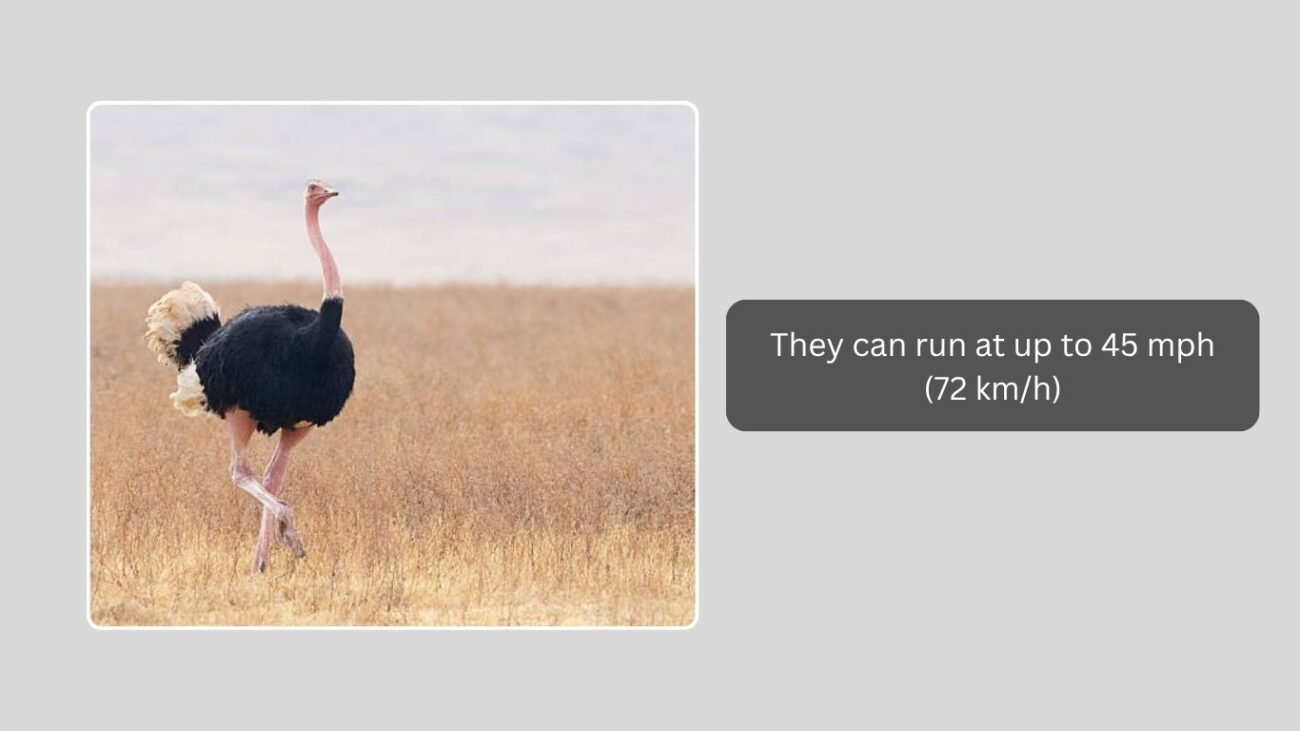
Ostriches are equipped with physical and behavioral traits that allow them to live in climates that would challenge most animals. Their long legs not only make them exceptional runners but also help lift their bodies away from the hot ground. They can run at up to 45 mph (72 km/h), using speed as their main defense.
Feathers act like insulation — trapping air to protect against heat during the day and cold at night. Unlike most birds, ostriches do not have sweat glands; instead, they pant and expand their throat to release heat. They can survive for days without water, relying on metabolic moisture from plants. These adaptations make ostriches one of the most efficient desert-dwellers in the animal kingdom.
Common and Regional Ostrich Species
Where Do Common Ostriches Live
The common ostrich (Struthio camelus) is the most widespread species, found across central and southern Africa. It prefers open grasslands, semi-arid deserts, and lightly wooded areas, where it can graze and spot predators easily. Common ostriches form the majority of the continent’s population and are often seen in national reserves such as the Serengeti and Etosha.
Other Ostrich Subspecies
There are several regional subspecies, each adapted to specific environments:
- Somali Ostrich (Struthio molybdophanes) – Found in the Horn of Africa (Ethiopia, Somalia, and Kenya’s arid regions). Recognized by its bluish neck and legs.
- Masai Ostrich (Struthio camelus massaicus) – Inhabits East Africa, especially Tanzania and Kenya’s grasslands.
- South African Ostrich (Struthio camelus australis) – Common in Namibia, Botswana, and South Africa; often farmed for meat and leather.
- North African Ostrich (Struthio camelus camelus) – Once widespread across the Sahara and Sahel, now limited to small populations due to habitat loss.
Each subspecies plays an essential ecological role in its region, helping maintain the balance of grassland ecosystems.
Ostriches Outside Africa
Farming and Introduced Populations
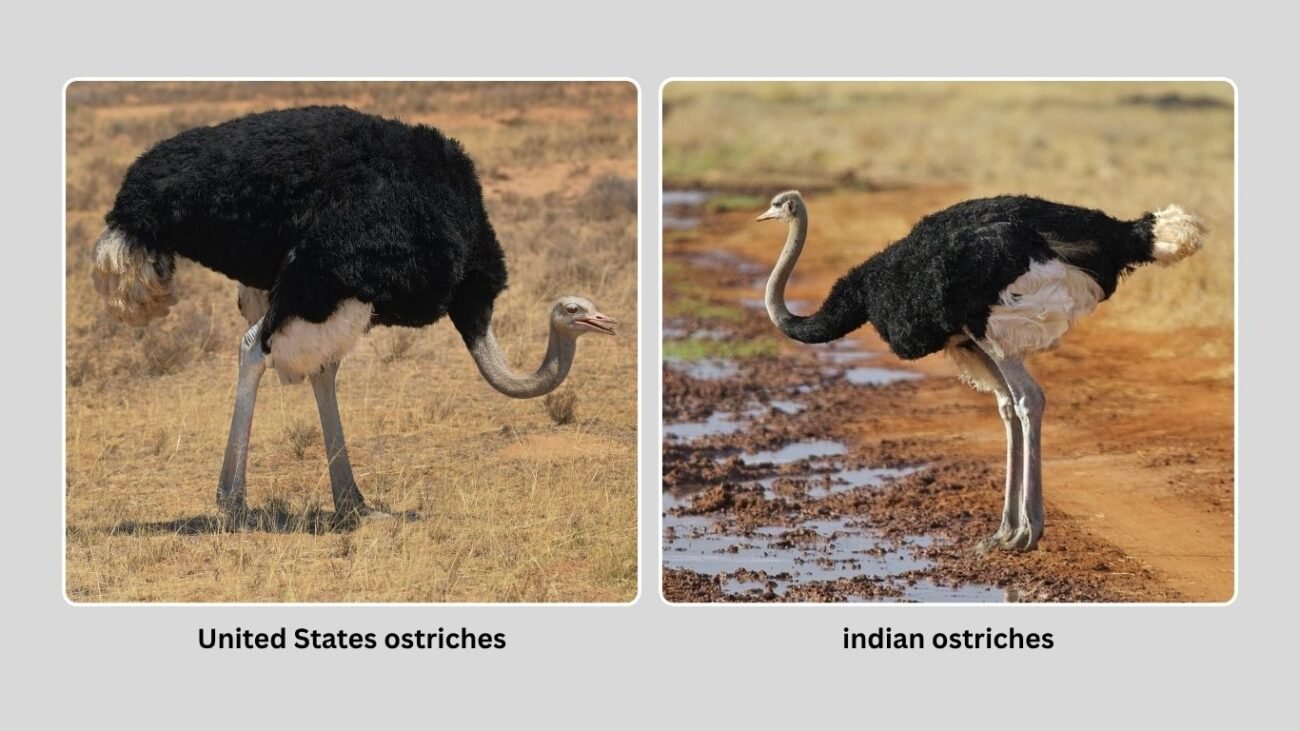
While ostriches are native to Africa, they can now be found around the world — primarily on ostrich farms. These farms exist in places such as Australia, the United States, India, and parts of Europe, where the climate mimics that of the African savannas. Farmers raise ostriches for meat, leather, feathers, and eggs, making them one of the most commercially valuable birds on Earth.
Modern ostrich farming began in South Africa in the 19th century and later spread globally. Today, countries like Texas (USA) and Rajasthan (India) maintain controlled environments that resemble natural ostrich habitats: dry, open, and warm. Ostriches adapt easily to these managed landscapes because of their strong resistance to temperature extremes and flexible diet.
Examples of Farmed Habitats
In the United States, ostriches are found mainly in Texas, Arizona, and California, where the semi-arid climate supports their needs. These farms offer fenced open spaces for movement, along with dust-bathing areas and artificial nesting grounds.
In Australia, ostrich farming once thrived but declined due to strict wildlife regulations. However, some private farms continue raising them for export.
In India, the Rajasthan and Gujarat regions provide an ideal climate for ostrich rearing, where dry conditions mirror African savannas.
Modern Distribution and Conservation
Where Ostriches Live Today
In the wild, ostriches are now limited mostly to protected reserves and national parks. Conservation programs across Africa ensure that populations remain stable, protecting them from poaching and overfarming. Major habitats include Kruger National Park (South Africa), Etosha National Park (Namibia), and Serengeti National Park (Tanzania).
Beyond Africa, the global farming industry has created sustainable ostrich populations worldwide. Although these birds live outside their native habitat, their behavior and physiology remain unchanged. Ostriches continue to play a role in global education and eco-tourism as symbols of adaptability and endurance.
Habitat Restoration Efforts
Organizations in Africa are actively working to restore degraded grasslands for ostriches and other wildlife. Initiatives in Kenya, Botswana, and South Africa include replanting native grasses, managing water sources, and restricting overgrazing. These efforts not only protect ostrich populations but also preserve entire ecosystems.
In addition, ostrich farming contributes to wildlife conservation by reducing hunting pressure on wild birds and providing economic incentives for sustainable land use.
Ostriches and Other Animals in Their Environment
Coexistence with Other Species
Ostriches share their habitat with a variety of animals such as zebras, gazelles, giraffes, and wildebeests. Their relationship with these animals is beneficial: while herbivores graze and stir up insects, ostriches use their excellent eyesight to detect predators like lions or cheetahs. This mutual awareness helps protect all species in the area.
Ostriches also play a key ecological role by dispersing seeds through their droppings, promoting plant growth and maintaining vegetation balance across grasslands. Their nests provide shelter for smaller animals, making them a subtle but important contributor to biodiversity.
Comparison: Emus and Ostriches
Though often compared, emus and ostriches live on opposite sides of the world. Emus are native to Australia, while ostriches are strictly African. Both are large, flightless birds, but their environments differ. Emus live in temperate and semi-arid regions, relying on forest edges and shrublands, whereas ostriches thrive in open plains.
Despite their distance, both birds evolved similarly, showing nature’s tendency to create efficient runners in open landscapes.
Ostrich Habitat and Human Influence
Humans have significantly shaped ostrich habitats through both positive and negative actions. Expansion of agriculture, fencing, and urban development have reduced the natural range of wild ostriches. In some areas, overgrazing by livestock competes with ostriches for food.
However, the rise of ostrich farming and eco-tourism has had a positive effect. Sustainable ostrich farming practices create economic opportunities for local communities while helping maintain viable populations. National parks and wildlife reserves across Africa continue to prioritize ostrich protection, ensuring their habitats remain open and natural.
Ostrich Habitat Map and Global Spread
Ostriches are primarily distributed across southern, eastern, and central Africa, but their global presence has expanded through farming. A map of their range would show:
- Wild populations in Africa’s savannas and semi-deserts (Namibia, Botswana, Kenya, Tanzania, South Africa).
- Farmed populations in North America, Europe, Asia, and Australia.
- Conservation zones across Africa designed to protect native flocks.
The global spread of ostriches reflects both their adaptability and humanity’s appreciation for this extraordinary species. Today, you can find ostriches living naturally in Africa — and thriving artificially in ranches around the world.
FAQs
Where do most ostriches live today?
Most ostriches live in the wild plains and savannas of Africa, particularly in South Africa, Namibia, and Botswana. Many also live on farms worldwide, where conditions mimic their natural environment.
Do ostriches live in Australia?
Ostriches are not native to Australia, though they were introduced there for farming. Wild ostriches no longer exist in Australia, but emus—another large flightless bird—are common.
Where do ostriches live in the wild?
Wild ostriches inhabit open grasslands, dry deserts, and savannas across sub-Saharan Africa. They prefer areas with tall grass and scattered shrubs, where visibility and food are abundant.
Do ostriches live in the United States?
Yes, ostriches live in the United States on ranches and farms, mainly in warm regions like Texas, Arizona, and California. These farms provide similar habitats to African plains.
What kind of biome do ostriches live in?
Ostriches live in savanna and semi-arid biomes, characterized by grassy plains, scattered trees, and alternating wet and dry seasons. These regions offer the open space and visibility they need to survive.


