










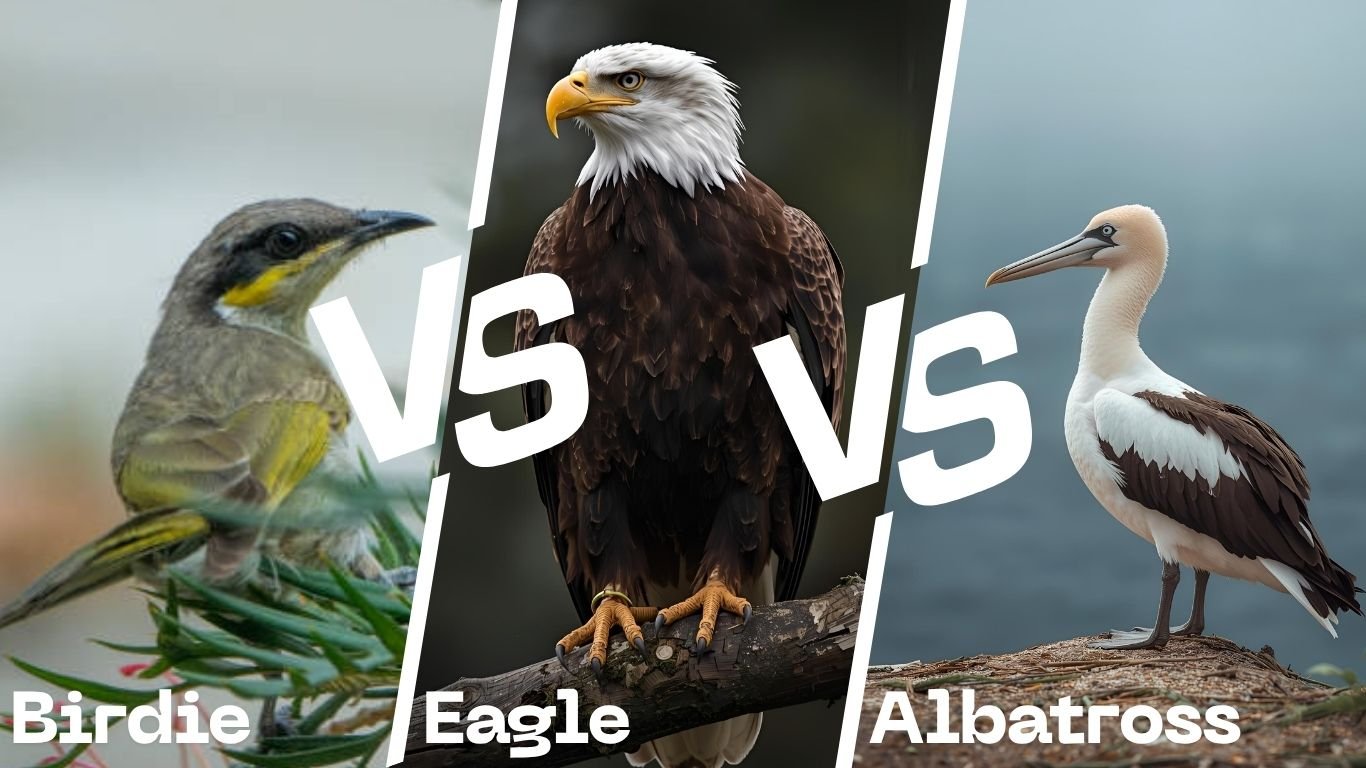
Golf has one of the most fascinating scoring systems in sports. Instead of just using numbers, golfers use bird names like birdie, eagle, and albatross to celebrate their best shots. These terms represent how many strokes under par a player scores on a hole. Each one becomes increasingly harder to achieve — from the common birdie to the legendary albatross. In this article, we’ll explore the 10 key differences between these golf achievements and uncover what makes each so special.
Birdie vs Eagle vs Albatross: Key Differences
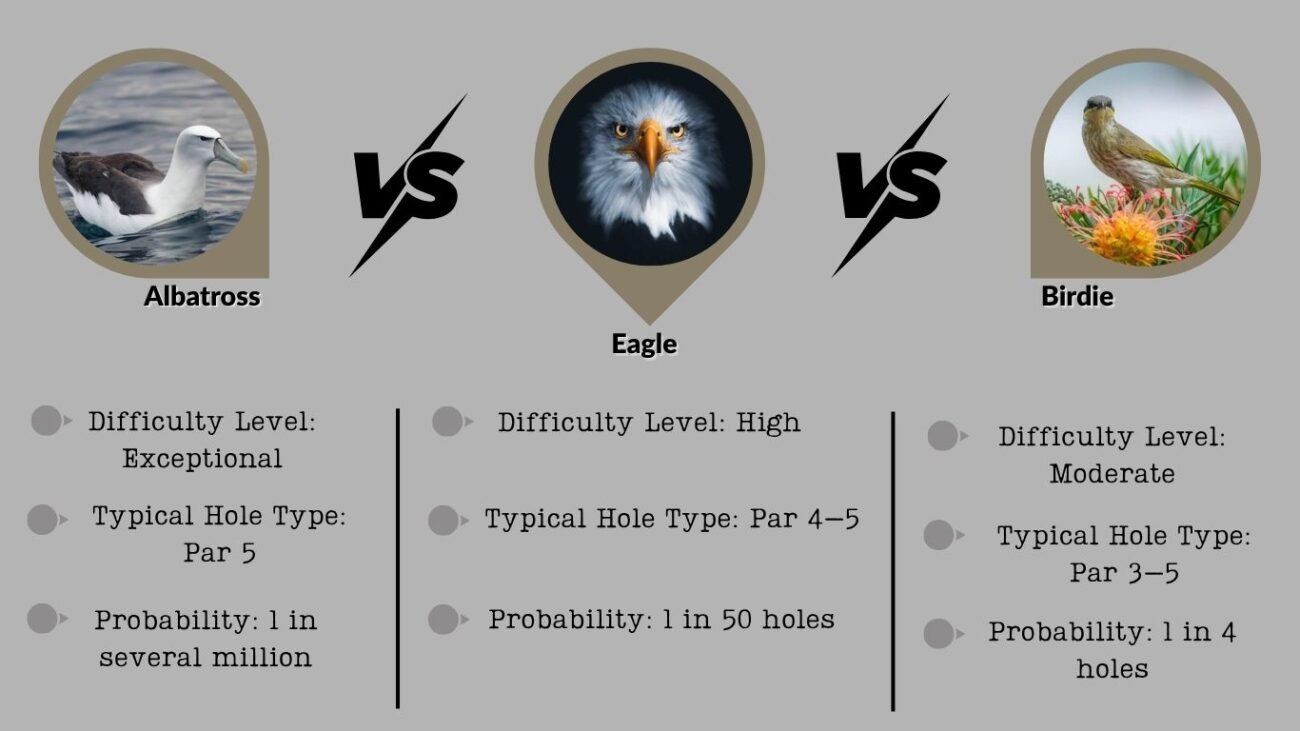
To understand how these golf terms compare, here’s a detailed breakdown of their scoring values, rarity, difficulty, and symbolic meaning.
| Aspect | Birdie | Eagle | Albatross (Double Eagle) |
| Meaning | One stroke under par | Two strokes under par | Three strokes under par |
| Example (Par 5) | Finishing in 4 strokes | Finishing in 3 strokes | Finishing in 2 strokes |
| Frequency | Common for professionals | Rare but achievable | Extremely rare (fewer than 1 in 6 million shots) |
| Difficulty Level | Moderate | High | Exceptional |
| Symbolism | Skill, precision, and control | Power, mastery, and dominance | Rarity, perfection, and legend |
| Typical Hole Type | Par 3–5 | Par 4–5 | Par 5 (sometimes short Par 4) |
| Probability (Approx.) | 1 in 4 holes (for pros) | 1 in 50 holes (for pros) | 1 in several million |
| Term Origin | U.S. slang “bird” for something excellent | Chosen as a stronger bird than birdie | British origin, symbolizing rarity and grace |
| Emotional Impact | Builds confidence | Boosts morale, energizes round | Once-in-a-lifetime thrill |
| Common Alternative Name | — | — | Double Eagle |
Definition and Meaning
Birdie
A birdie means scoring one stroke under par on a single hole. If a hole’s par is 4 and a golfer completes it in 3 strokes, that’s a birdie. It’s considered an excellent score and is quite achievable for skilled amateurs and professionals.
Eagle
An eagle means scoring two strokes under par. For example, shooting 3 on a par-5 hole qualifies as an eagle. Achieving an eagle usually requires long, accurate shots and precise putting — it’s a true sign of power and control.
Albatross (Double Eagle)
An albatross, also known as a double eagle, means finishing a hole three strokes under par. This is one of golf’s rarest feats, usually accomplished on par-5 holes when a golfer holes their second shot.
Origin of Each Term
The origins of these bird-based terms date back over a century and reflect the evolving culture of golf.
- Birdie: The word “bird” was 19th-century American slang for something outstanding or cool. Around 1903, golfers began using “birdie” to describe a great shot — and the term stuck.
- Eagle: Since an eagle is a larger and stronger bird, it naturally came to represent an even better score — two under par.
- Albatross: The term originated in the United Kingdom, inspired by the rare and majestic seabird. Its scarcity in nature mirrors the incredible difficulty of achieving an albatross in golf.
Each word captures not just a score but a sense of achievement and pride that resonates with the sport’s tradition.
Scoring Value
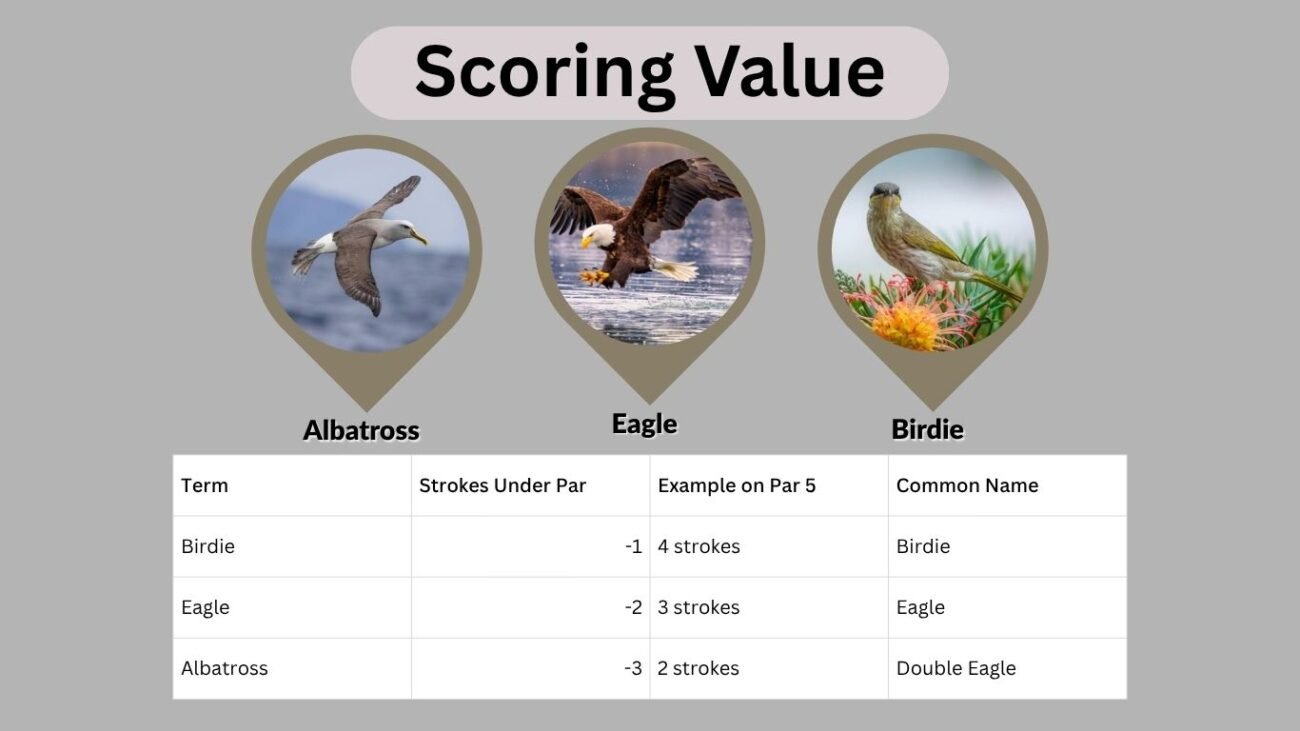
Golf’s scoring system revolves around “par,” the expected number of strokes for a hole. Anything less than par is considered excellent. Here’s how each score compares:
| Term | Strokes Under Par | Example on Par 5 | Common Name |
| Birdie | -1 | 4 strokes | Birdie |
| Eagle | -2 | 3 strokes | Eagle |
| Albatross | -3 | 2 strokes | Double Eagle |
A birdie feels satisfying, an eagle thrilling, but an albatross? It’s legendary — the kind of shot golfers dream about their entire careers.
Difficulty and Rarity
The rarity of each score is one of their biggest differences.
- Birdie: Fairly common for professionals; amateurs achieve it occasionally.
- Eagle: Difficult but possible for advanced players. Requires either a long drive or perfect approach shot.
- Albatross: Exceptionally rare. Even most PGA Tour players go their entire careers without one.
In fact, albatrosses are rarer than hole-in-ones. While thousands of hole-in-ones are recorded each year, only a handful of albatrosses are documented in professional tournaments. This rarity adds a mythical quality to the achievement — making it golf’s ultimate badge of honor.
Frequency in Professional Golf
Birdies Are Common Highlights
In professional tournaments, birdies happen often. Top players like Rory McIlroy or Scottie Scheffler might score 4–6 birdies in a single round. For them, it’s a vital part of staying under par across 18 holes.
Eagles Are Powerful Turning Points
Eagles are less frequent but have a major psychological impact. They can instantly shift a player’s position on the leaderboard, creating excitement for both fans and players.
Albatrosses Are Almost Mythical
The albatross stands in a league of its own. Only about 1 in 6 million golf shots results in an albatross. Famous moments, such as Louis Oosthuizen’s albatross at the 2012 Masters, are etched into golf history forever.
How They’re Achieved
Birdie
To make a birdie, golfers must combine distance control with precision. It often comes from a strong drive followed by an accurate approach shot and a solid putt.
Eagle
Eagles demand power and precision. Commonly achieved on par-5 holes, players must reach the green in two strokes and sink the putt — or hole out a long approach on a par-4.
Albatross
Scoring an albatross requires extraordinary skill — or a touch of luck. Typically, it’s a perfectly executed second shot on a par-5 that lands directly in the hole. Some even occur on par-4s when the first drive finds the cup, though that’s exceedingly rare.
Popular Usage and Geographic Preference
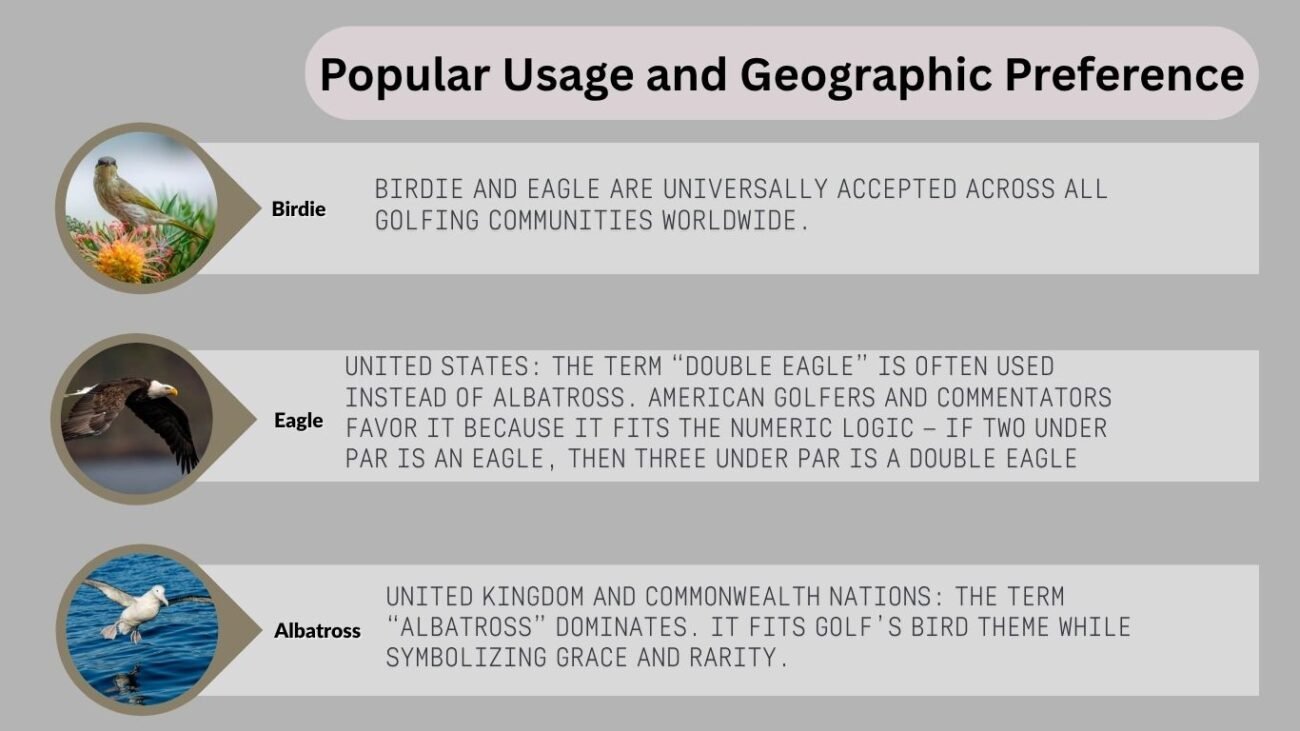
While golf is a global sport, terminology can vary depending on location.
- United States: The term “double eagle” is often used instead of albatross. American golfers and commentators favor it because it fits the numeric logic — if two under par is an eagle, then three under par is a double eagle.
- United Kingdom and Commonwealth nations: The term “albatross” dominates. It fits golf’s bird theme while symbolizing grace and rarity.
- Birdie and Eagle are universally accepted across all golfing communities worldwide.
This slight linguistic difference adds cultural charm to the game — a reminder that golf’s language evolves just as much as its traditions.
Symbolism Behind Each Bird
Beyond their numerical meaning, these birds carry deep symbolism reflecting the spirit of golf.
Birdie: The Symbol of Skill and Confidence
A birdie reflects precision and composure. It’s a reward for consistent accuracy and smart course management. Players who frequently score birdies are usually calm and confident under pressure.
Eagle: The Mark of Power and Freedom
The eagle represents strength, courage, and mastery. It’s majestic — much like hitting a powerful drive or making a perfect chip-in from distance. In golf, an eagle can turn the tide of a match and symbolizes taking bold risks that pay off.
Albatross: The Rarest Achievement
The albatross stands for rarity, endurance, and perfection. It mirrors the bird’s long-distance flight over oceans — a metaphor for skill that soars beyond limits. Achieving one in golf cements a player’s name in history, just as spotting a real albatross is a once-in-a-lifetime experience.
Real-World Examples and Famous Moments
Birdies in Professional Play
Birdies happen often in professional tournaments, but their timing can make them memorable. Players like Tiger Woods and Rory McIlroy often use birdies to build momentum early in a round, setting up low scores that define championship wins.
Eagles That Changed Games
Eagles are more dramatic — often met with roars from the crowd. Dustin Johnson’s long putt for eagle at the 2020 Masters, for instance, became a defining moment that secured his victory. These shots capture both raw power and precision.
Historic Albatrosses
Albatrosses are so rare that each one becomes part of golf folklore:
- Louis Oosthuizen (2012 Masters): His perfect 4-iron from 253 yards dropped into the hole on Augusta’s second hole.
- Gene Sarazen (1935 Masters): Known as “the shot heard ’round the world,” Sarazen’s albatross helped him win in a playoff.
- Shaun Micheel (2004 PGA Championship): Another legendary example of flawless execution.
Each albatross tells a story of excellence that transcends generations.
Emotional and Strategic Impact
Golf is as psychological as it is physical. Each under-par score creates a unique emotional wave.
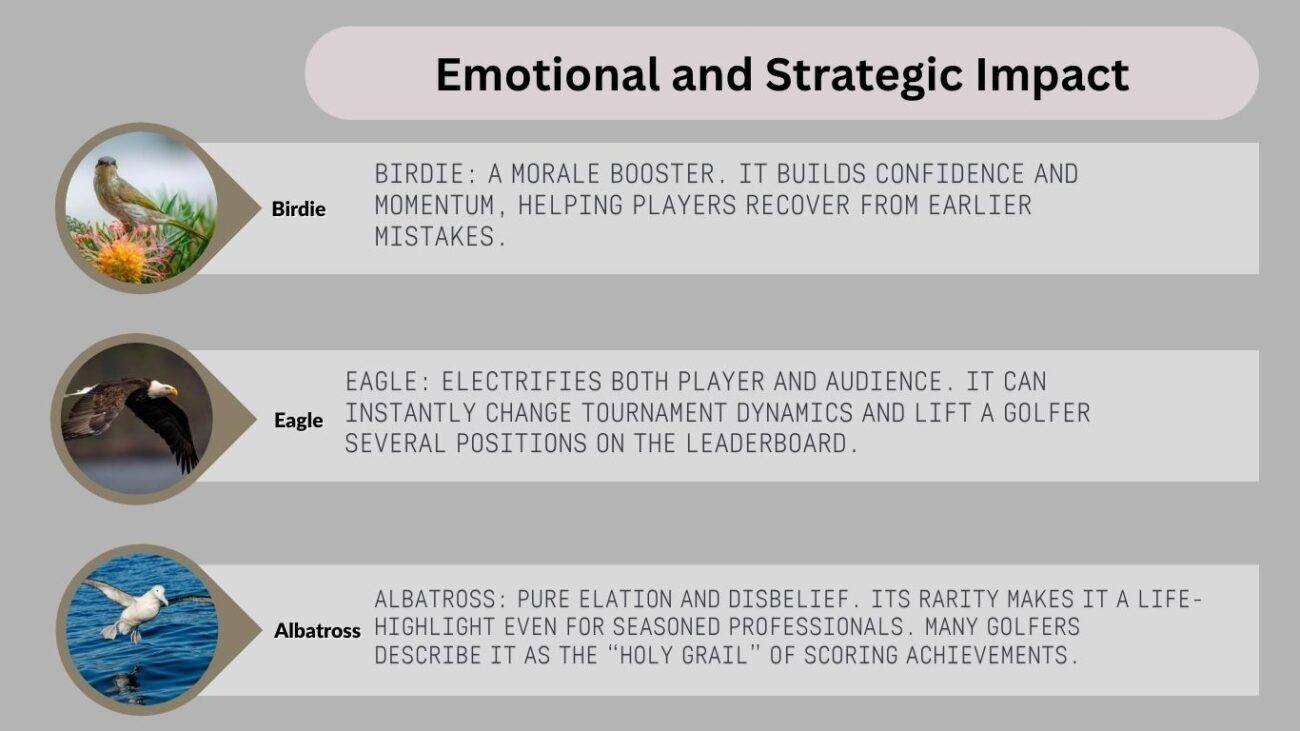
- Birdie: A morale booster. It builds confidence and momentum, helping players recover from earlier mistakes.
- Eagle: Electrifies both player and audience. It can instantly change tournament dynamics and lift a golfer several positions on the leaderboard.
- Albatross: Pure elation and disbelief. Its rarity makes it a life-highlight even for seasoned professionals. Many golfers describe it as the “holy grail” of scoring achievements.
Strategically, these scores encourage calculated risk-taking — driving longer, shaping shots creatively, and seizing opportunities to shorten the course. The emotional satisfaction often fuels stronger performances in subsequent holes.
Bonus Section – Beyond the Albatross: Condor and Ostrich
Condor (Four Under Par)
A condor represents four strokes under par, making it even rarer than an albatross. There have been only a handful of verified condors in history, typically achieved by holding a tee shot on a par-5 with the help of strong winds or elevated fairways.
Ostrich and Phoenix (Five or More Under Par)
The ostrich and phoenix are mythical terms for even lower scores — five under par or more. These have never been officially recorded but exist as part of golf lore, symbolizing the impossible pursuit of perfection.
These terms add color and imagination to golf’s vocabulary, illustrating how the sport celebrates both realism and fantasy in equal measure.
Key Takeaways
- Birdie = 1 stroke under par
- Eagle = 2 strokes under par
- Albatross / Double Eagle = 3 strokes under par
- Condor = 4 strokes under par
- Bird names symbolize levels of rarity and excellence.
- The albatross is one of the rarest achievements in sports, even less common than a hole-in-one.
- “Double Eagle” is the American term; “Albatross” is used internationally.
- Each step up — from Birdie to Eagle to Albatross — reflects growth in precision, power, and mastery.
FAQs
Is a Double Eagle the same as an Albatross?
Yes, both mean scoring three strokes under par on a single hole. The difference is mostly regional — “Double Eagle” in the U.S. and “Albatross” elsewhere.
What’s rarer: an Albatross or a Hole-in-One?
An albatross is far rarer. While thousands of holes-in-one are made yearly, only a few dozen albatrosses have ever been recorded in professional golf history.
Why are bird names used for golf scores?
Golfers began using the term “bird” in the early 1900s American slang meaning “cool” or “excellent.” The pattern continued — bigger birds for bigger achievements.
How can a golfer score an Albatross?
By holding their second shot on a par-5 or first shot on a short par-4. It requires immense power, accuracy, and often a bit of luck.
What’s better than an Albatross in golf?
A Condor, which is four under par, though it’s almost mythical. Only a handful of verified condors exist, achieved under highly unusual conditions.


