










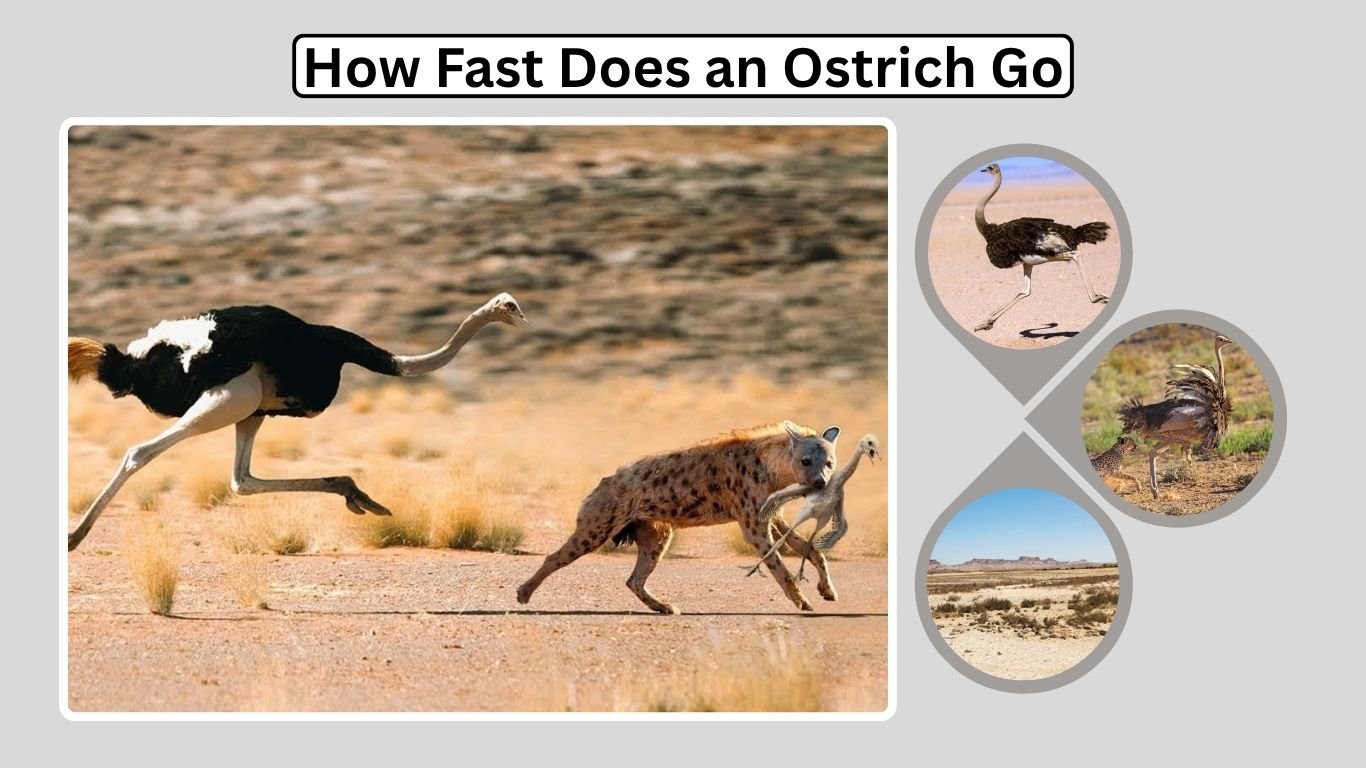
The ostrich, known as the world’s fastest bird on land, can run at astonishing speeds that outpace most animals in its environment. With long, powerful legs and a lightweight frame, this bird has evolved for high-speed survival. Its impressive running ability not only helps it escape predators but also fascinates scientists studying biomechanics and natural engineering.
Understanding Ostrich Speed

Average and Maximum Running Speeds
An adult ostrich typically runs at speeds between 30 to 40 miles per hour (48 to 64 km/h). When threatened, it can reach top speeds of up to 45 miles per hour (72 km/h) in short bursts. This incredible pace is sustained for about 10–15 minutes before fatigue sets in. Factors such as age, health, and terrain play major roles in determining how fast an individual ostrich can go.
Comparison with Other Fast Animals
When compared to other animals, the ostrich’s speed stands out. Although a cheetah can sprint faster—up to 70 mph—it can only sustain that pace for around 20 seconds. Horses average around 35–40 mph, which puts ostriches on nearly equal footing. Unlike flying birds, ostriches are flightless, yet they dominate the ground speed category among all bird species.
Physical Adaptations That Enable Speed
Leg Structure and Muscle Power
Ostriches possess long, muscular legs designed for maximum propulsion. Each leg has two toes, unlike most birds that have three or four, reducing drag while running. The larger inner toe acts like a spring-loaded lever, providing extra push-off power. Strong thigh and calf muscles generate explosive energy with every stride, helping maintain both speed and balance.
Body Design for Aerodynamics
The ostrich’s body is streamlined for minimal air resistance. Its lightweight frame and reduced wing size help it stay agile. While it cannot fly, its wings serve an important purpose — acting as stabilizers during high-speed runs. These wings spread slightly when turning, helping the bird maintain control on uneven ground. Its center of gravity is perfectly aligned for stability and speed.
Respiratory and Cardiovascular Efficiency
To sustain such energy-demanding activity, ostriches rely on a large heart and lung capacity. Their respiratory system efficiently circulates oxygen throughout the body, ensuring endurance even in hot desert climates. This physiological efficiency allows ostriches to run long distances without overheating, a crucial advantage in the African savanna.
Ostrich Running Mechanics
Stride Length and Motion
One of the most fascinating features of the ostrich’s speed is its incredible stride length, which can reach 10 to 16 feet (3 to 5 meters) in a single step. This long stride, combined with powerful leg extension, allows it to cover ground rapidly. The coordination between the legs, torso, and neck helps maintain rhythm and minimize energy loss during sprints.
Balance and Use of Wings
While running, ostriches skillfully use their wings for balance. During high-speed turns, they spread their wings like rudders, maintaining control and preventing falls. Their long necks counterbalance the movement of their legs, ensuring that the bird stays steady even at maximum velocity. This balance system is a natural adaptation for life in open, predator-filled plains.
Speed as a Survival Strategy
Predator Evasion
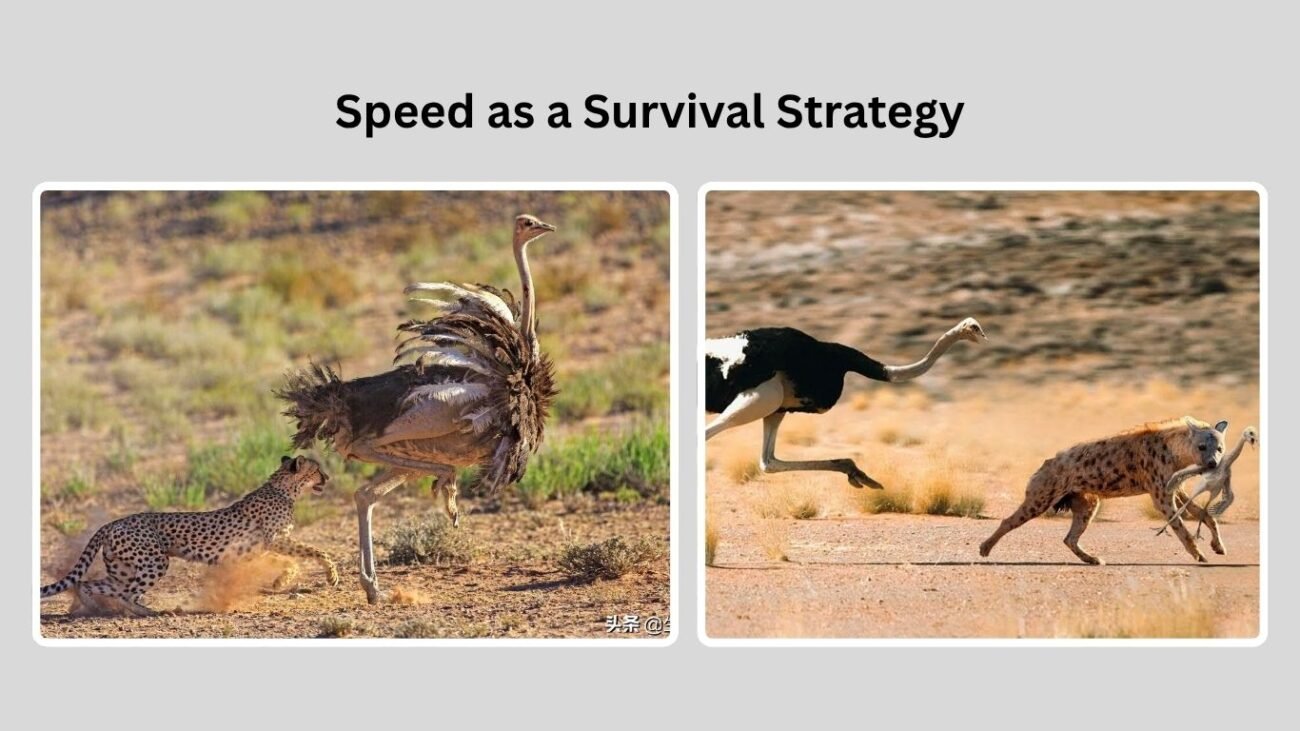
Speed is the ostrich’s primary defense mechanism. When chased by predators such as lions, cheetahs, or hyenas, it relies on its quick acceleration and ability to run in zigzag patterns to escape pursuit. If cornered, an ostrich can also deliver powerful kicks capable of injuring or killing a predator, using its muscular legs as both a weapon and a means of defense.
Endurance Over Short Bursts
Unlike many animals that rely on short sprints, ostriches combine speed with endurance. They can maintain high speeds for longer durations compared to predators that tire quickly. This endurance is key for survival in vast, open habitats where hiding is not an option — running is their only means of escape.
Ostrich Speed in Scientific Research
Biomechanics Studies
Ostrich speed has fascinated scientists studying biomechanics and motion. Research shows that their tendons act like elastic springs, storing and releasing energy efficiently. This mechanism allows them to cover long distances with minimal energy use. These insights have inspired engineers developing robots and prosthetic limbs, using ostrich movement as a model for high-efficiency, bipedal locomotion.
Comparative Evolution
From an evolutionary standpoint, ostriches belong to the ratite family, along with emus, rheas, and cassowaries. Over millions of years, they adapted to life on open plains where flight was unnecessary but speed was essential. Their ancestors were slower, but through natural selection, ostriches evolved longer legs and lighter bodies, optimizing for survival through running.
Human Comparisons and Records
Ostrich vs. Human Speed
Humans, even the fastest sprinters, are no match for the ostrich. The record set by Usain Bolt peaks at 27.8 mph (44.7 km/h), while an ostrich can easily surpass 40 mph (64 km/h). The reason lies in anatomy—ostriches have longer strides and stronger muscles optimized for forward propulsion, while humans rely on endurance over short bursts of speed.
Racing and Observation
Ostrich racing is a unique cultural sport in some African and American regions. While mostly recreational, it demonstrates the bird’s incredible agility. In such events, ostriches can be seen reaching speeds of up to 45 mph under controlled conditions. Scientists also use these races to measure biomechanics and observe the bird’s natural stride efficiency.
Environmental and Behavioral Factors

Terrain and Habitat Influence
Ostriches thrive in savannas, grasslands, and semi-desert regions, where their long legs are perfectly adapted for running on open ground. The dry terrain offers firm footing, reducing drag and slippage. Their ability to maintain speed even on uneven or sandy surfaces highlights their adaptability to various environments.
Behavioral Aspects
Speed isn’t just for escape — ostriches also use it during courtship displays and territorial defense. Males perform impressive runs and wing displays to attract females. When threatened, they rely on their instincts to decide between fighting or fleeing, using speed strategically based on the situation. Their alertness and quick reaction times make them effective survivors.
Conservation and Observation
Tracking Speed in the Wild
Modern researchers use GPS collars and motion sensors to monitor ostrich movement patterns. These tools record speed, distance, and behavior throughout the day. Findings show that ostriches adjust their pace depending on temperature and predator activity, slowing down in heat and sprinting during cooler times or when pursued.
Human Impact
Habitat loss and hunting threaten ostrich populations in some areas. As human activity expands into open plains, ostriches lose safe ground for running and nesting. Conservation efforts now focus on preserving wide, open spaces and natural habitats so these remarkable birds can continue displaying their unmatched speed and endurance.
FAQs
How fast can an ostrich run?
An ostrich can run at speeds of up to 45 miles per hour (72 km/h), making it the fastest bird on land. It typically maintains a steady pace of 30–40 mph (48–64 km/h) over longer distances, depending on age, health, and terrain conditions.
How long can an ostrich maintain top speed?
Ostriches can sustain their peak speed for a few minutes before tiring. However, they can run at moderate speeds for much longer distances, allowing them to escape predators efficiently while conserving energy through elastic leg movements.
Why are ostriches so fast?
Ostriches evolved for speed due to predator pressure in open habitats. Their long legs, elastic tendons, and strong muscles generate immense power, while their lightweight body minimizes resistance. This combination gives them both explosive acceleration and impressive endurance.
Is the ostrich the fastest bird on land?
Yes. The ostrich holds the title of the fastest bird on land. While other birds excel in flight, no land bird can match the ostrich’s ground-running ability. Its specialized anatomy and gait allow it to dominate terrestrial speed records among avian species.
Can humans outrun an ostrich?
No human can outrun an ostrich in a sprint or over distance. Even world-class sprinters are far slower, with maximum speeds under 28 mph (45 km/h). Ostriches achieve longer strides and more efficient motion through natural evolution, making them unbeatable runners.


