











Cheetahs are renowned for their incredible speed, agility, and hunting prowess. These majestic big cats can be found across a variety of habitats, from the open savannas of Africa to the arid deserts of the Middle East. In this article, we explore 5 distinct types of cheetahs, each adapted to their unique environments. From the widely distributed African cheetah to the rare Kalahari cheetah, learn about their characteristics, habitats, and conservation challenges. Join us on a journey to discover the fascinating world of these speedsters.
1. African Cheetah

The African cheetah (Acinonyx jubatus jubatus) is the most well-known and widely distributed subspecies of cheetah. It is found across sub-Saharan Africa and is renowned for being the fastest land animal, capable of reaching speeds up to 60 miles per hour in short bursts. Known for its agility and hunting prowess, the African cheetah plays a crucial role in its ecosystem by controlling populations of smaller herbivores and maintaining a balance in the food chain.
Identification
- Size: African cheetahs are medium-sized cats, with males weighing between 110 to 140 pounds and females slightly lighter at 110 pounds. They have a slim and aerodynamic build, which aids in their incredible speed. Their long legs and flexible spine contribute to their speed and agility.
- Coat: Their coat is typically tan or golden with distinctive black spots, providing camouflage in the grasslands and savannas where they are often found. Unlike many other big cats, they do not have a mane, but they do have tear marks under their eyes, which help reduce the sun’s glare.
- Tail: The cheetah’s tail is long and muscular, covered in spots, and used for balance during high-speed chases.
- Eyes: They have large, round eyes that provide excellent vision, crucial for spotting prey from a distance.
Habitat and Range
African cheetahs are primarily found in open grasslands, savannas, and semi-arid regions. They are distributed throughout sub-Saharan Africa, but they are increasingly confined to protected areas and wildlife reserves due to habitat loss and human encroachment. The cheetah’s preference for wide, open spaces allows them to use their speed to hunt effectively, covering vast areas in search of prey.
Behavior and Diet
The African cheetah is known for its exceptional hunting speed and agility, making it a highly specialized predator. Unlike other big cats that rely on strength to bring down their prey, the cheetah uses speed to chase down herbivores like gazelles, impalas, and springboks. Their hunting technique involves stalking their prey quietly and then sprinting to catch them. The cheetah’s acceleration is remarkable, reaching speeds of up to 60 mph in mere seconds, but they can only sustain this for short distances, typically around 200 to 300 meters.
While they are fast and efficient hunters, cheetahs are not as strong as lions or leopards, so they often face competition from these larger predators, especially after a kill. They rely on their speed and stealth to avoid conflict.
Conservation Status
The African cheetah is classified as “Vulnerable” by the International Union for Conservation of Nature (IUCN), with an estimated population of around 7,000 individuals in the wild. The primary threats to their survival include habitat loss, human-wildlife conflict, and illegal wildlife trade. Conservation efforts focus on protecting cheetah habitats, reducing human-wildlife conflict, and promoting the coexistence of cheetahs with local communities.
2. Asiatic Cheetah

The Asiatic cheetah (Acinonyx jubatus venaticus), also known as the Persian cheetah, is a critically endangered subspecies of cheetah native to the Middle East and parts of South Asia. Unlike its African counterpart, the Asiatic cheetah has a much smaller population and is primarily found in Iran. The species is an essential part of the region’s biodiversity, playing a vital role in controlling populations of herbivores.
Identification
- Size: Asiatic cheetahs are slightly smaller than their African relatives, with males weighing between 110 to 140 pounds, and females being a bit lighter. Their slim and aerodynamic body is built for speed, similar to the African cheetah, with long legs and a flexible spine for swift movement.
- Coat: The coat is usually pale yellow with black spots, although it is often lighter than that of the African cheetah. The spots are smaller and more closely spaced, offering camouflage in their natural environment.
- Tail: Like other cheetah subspecies, the Asiatic cheetah has a long, spotted tail that aids in balance while running at high speeds.
- Eyes: The eyes of the Asiatic cheetah are large and round, allowing it to have exceptional vision, which is important for spotting prey over long distances.
Habitat and Range
Historically, the Asiatic cheetah was found across the Middle East, the Arabian Peninsula, and parts of Central Asia. Today, however, their range has dramatically shrunk, and they are now only found in isolated pockets in Iran. The cheetah prefers open, arid landscapes such as deserts and semi-deserts, where its speed can be fully utilized to catch prey. Their habitat is threatened by human activities, including habitat degradation and fragmentation.
Behavior and Diet
Asiatic cheetahs are solitary, primarily nocturnal hunters. They prey on a variety of animals, including gazelles, wild goats, and smaller ungulates. Much like their African cousins, Asiatic cheetahs rely on their speed to catch prey, chasing them down in short, fast sprints. They are not as effective at fighting off scavengers, so they must make their kills quickly. Their hunting strategies are similar to those of African cheetahs, using stealth to get close to their prey before sprinting at high speeds.
Due to the small population, the cheetahs’ prey density is relatively low, making their hunting success rate crucial to their survival.
Conservation Status
The Asiatic cheetah is classified as “Critically Endangered” by the IUCN, with fewer than 50 individuals believed to remain in the wild, confined to the central and eastern parts of Iran. The main threats to their survival include habitat loss, human-wildlife conflict, and the decline in prey species. Conservation efforts are focused on habitat protection, anti-poaching measures, and working with local communities to mitigate human-cheetah conflict. Efforts to establish wildlife corridors are crucial for ensuring the long-term survival of the Asiatic cheetah.
3. King Cheetah

The King cheetah (Acinonyx jubatus rex) is a rare and distinctive variation of the cheetah species, known for its unique and striking coat pattern. Unlike other cheetahs, the King cheetah has larger, elongated black patches on its fur, often forming a “tear mark” pattern that runs down the back. This variation is not a separate subspecies but rather a rare genetic mutation, most commonly found in Southern Africa.
Identification
- Size: King cheetahs are similar in size to other cheetah subspecies, with males weighing between 110 to 140 pounds and females slightly lighter. They have the same slender, streamlined body, built for speed, with long legs and a flexible spine.
- Coat: The most striking feature of the King cheetah is its coat. It has a unique, mottled pattern with wide, dark bands that create a “blotchy” appearance, as opposed to the regular spots of a typical cheetah. The coat is a mixture of golden and black fur, often with a lighter underside.
- Tail: The tail is long and well-defined, similar to other cheetahs, with dark rings and a white tip.
- Eyes: The King cheetah has large, dark eyes, providing excellent vision, which is essential for spotting prey in the wild.
Habitat and Range
The King cheetah is found in limited areas in Southern Africa, primarily in regions of South Africa, Zimbabwe, and Mozambique. The unique fur pattern is rare, and King cheetahs are usually found in specific, isolated populations. They typically inhabit open savannas and grasslands, where they can utilize their speed to hunt small to medium-sized ungulates.
Behavior and Diet
King cheetahs are solitary, nocturnal hunters, much like other cheetahs. They rely on their speed to chase down prey, typically targeting gazelles, impalas, and other small antelopes. While their appearance is strikingly different from other cheetahs, their hunting strategies remain the same—using stealth and speed to ambush prey. King cheetahs are also known to be vulnerable to competition from other large predators like lions and hyenas.
Conservation Status
The King cheetah is not a separate species but rather a genetic variation of the African cheetah. However, due to their rarity, King cheetahs are often considered rare and valuable in the wild. Their population is very low, and they are primarily found in captivity, with breeding programs established to preserve the genetic trait. Conservation efforts are focused on preserving cheetah populations in the wild and ensuring that rare genetic traits like the King cheetah are protected. While not yet classified as a distinct subspecies, the King cheetah’s unique appearance makes it an important symbol of the cheetah’s genetic diversity.
4. Southeast African Cheetah
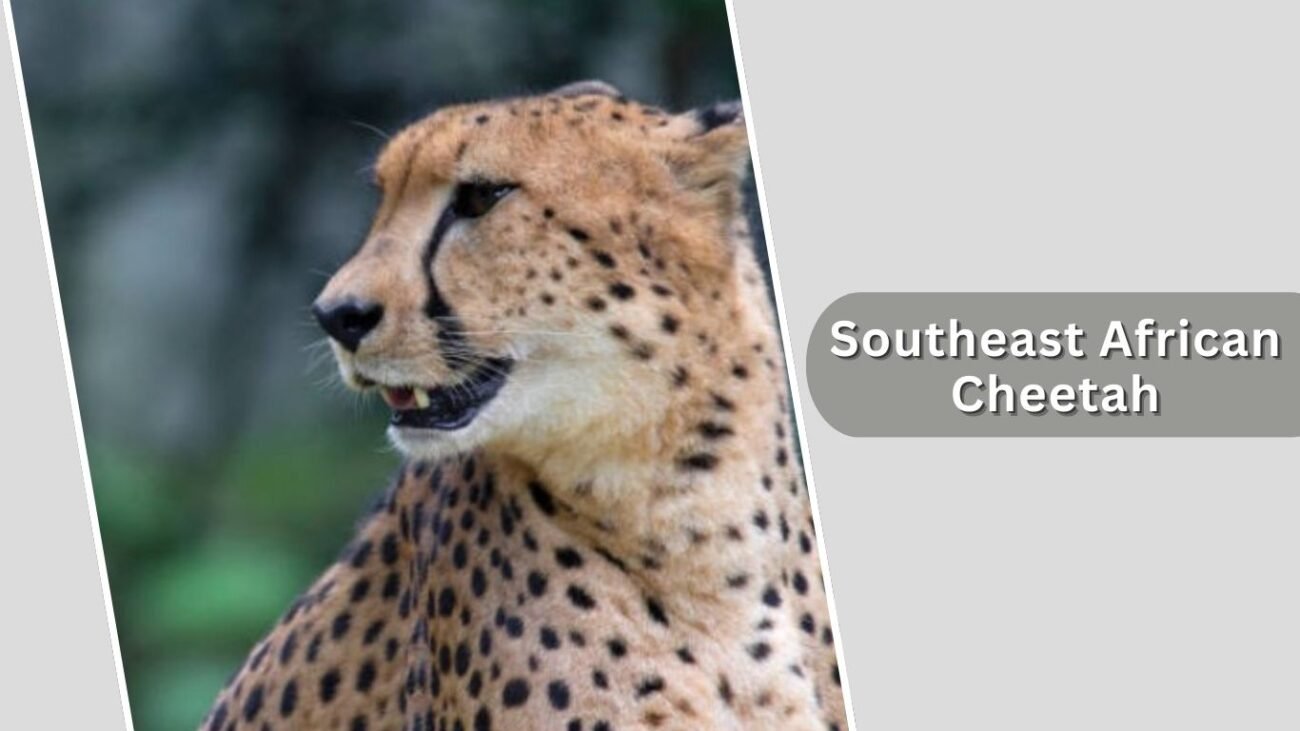
The Southeast African cheetah (Acinonyx jubatus guttatus) is a subspecies native to the southeastern regions of Africa, including countries like Botswana, Zimbabwe, and Mozambique. This subspecies is part of the larger population of African cheetahs, but it is distinguished by its specific geographic range and slight differences in physical traits and behavior compared to other cheetahs.
Identification
- Size: Southeast African cheetahs are slightly smaller than some of their counterparts, with males typically weighing between 110 to 140 pounds, and females weighing a bit lighter at 100 to 120 pounds. They have a sleek, muscular body, which is built for speed and agility.
- Coat: Their coat is typically golden-yellow with numerous black spots, offering them camouflage in their grassy and savanna habitats. The spots are well-defined, and the coat is short, which helps regulate their body temperature during high-speed chases.
- Tail: The tail is long, slender, and covered with dark rings and a white tip, which helps with balance during high-speed running.
- Eyes: The Southeast African cheetah’s large, round eyes are usually amber or greenish in color and are essential for spotting prey at long distances.
Habitat and Range
Southeast African cheetahs are primarily found in the open savannas, grasslands, and semi-arid regions of southeastern Africa, with key populations in countries such as Botswana, Zimbabwe, and Mozambique. They are typically found at lower elevations and often occupy regions with sparse vegetation that provide the open spaces required for their high-speed hunting techniques.
Behavior and Diet
The Southeast African cheetah is primarily solitary and nocturnal, though it may occasionally hunt during the early hours of the day. They are excellent hunters, known for their speed and precision. These cheetahs prey on a wide range of herbivores, including gazelles, impalas, and small antelopes. Their hunting style involves stalking their prey from a distance, getting as close as possible before using explosive bursts of speed to chase and capture it. Unlike lions and leopards, cheetahs do not typically scavenge from other predators and rely on their own hunting skills for survival.
Conservation Status
The Southeast African cheetah is classified as “Vulnerable” by the IUCN. While it has a larger population compared to some other subspecies of cheetahs, its numbers are still decreasing due to habitat loss, human-wildlife conflict, and competition with larger predators like lions. Conservation efforts are focused on habitat protection, reducing human-wildlife conflict, and ensuring that cheetahs have access to suitable prey in the wild.
5. Kalahari Cheetah
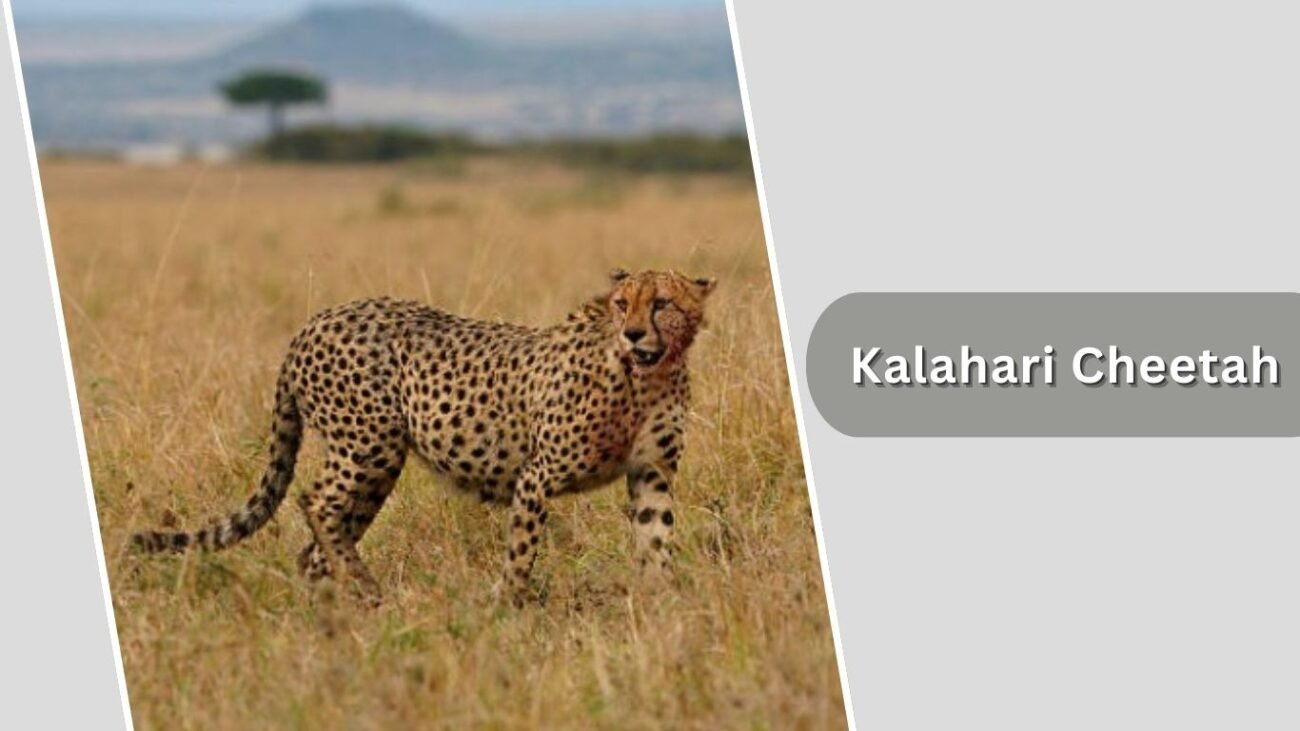
The Kalahari cheetah (Acinonyx jubatus panthera) is a subspecies native to the Kalahari Desert region in Southern Africa, which spans parts of Botswana, Namibia, and South Africa. This subspecies has adapted to the harsh desert environment, characterized by vast arid landscapes and minimal rainfall. The Kalahari cheetah has unique behavioral and physical traits that enable it to survive in this challenging habitat.
Identification
- Size: Kalahari cheetahs are similar in size to other cheetah subspecies, with males typically weighing between 110 to 140 pounds, and females being slightly lighter. They have a lean and muscular build, with a long, slender body designed for high-speed chases.
- Coat: Their coat is generally a light golden yellow, speckled with small black spots that provide camouflage in the sandy desert environment. The coat is short, helping them regulate their body temperature in the extreme heat.
- Tail: The tail is long and bushy with dark rings and a white tip, providing balance during high-speed running.
- Eyes: Like other cheetahs, the Kalahari cheetah has large, round eyes that are essential for spotting prey from a distance, especially in the open desert.
Habitat and Range
The Kalahari cheetah’s range is primarily confined to the Kalahari Desert, which spans southern Botswana, parts of Namibia, and South Africa. The environment is harsh, with hot temperatures and minimal vegetation. Despite the arid conditions, the Kalahari Desert provides plenty of open space, which is essential for the cheetah’s hunting style, allowing them to use their speed and agility effectively.
Behavior and Diet
Kalahari cheetahs are solitary and primarily nocturnal hunters. They are known for their excellent speed, capable of reaching up to 60 miles per hour in short bursts. Their primary prey includes small to medium-sized ungulates such as springbok, impala, and steenbok. Unlike other predators, cheetahs do not rely on strength to take down prey; instead, they depend on their speed to catch prey in a sprint. The open terrain of the Kalahari Desert allows cheetahs to use their speed advantage, but they must be cautious of larger predators, such as lions, which often steal their kills.
Conservation Status
The Kalahari cheetah is classified as “Vulnerable” by the IUCN. While the cheetah’s population in the Kalahari region is relatively stable, the subspecies faces threats due to habitat degradation, human-wildlife conflict, and competition with larger predators. Conservation efforts in the region focus on habitat preservation, reducing human-wildlife conflict, and promoting coexistence between cheetahs and local farmers. Additionally, the establishment of protected areas and wildlife corridors is crucial for the long-term survival of the Kalahari cheetah.
FAQs
What is the fastest cheetah subspecies?
The fastest cheetah subspecies is the African cheetah (Acinonyx jubatus jubatus), capable of reaching speeds up to 60 miles per hour during short bursts, making it the fastest land animal on Earth.
How many types of cheetahs are there?
There are five main subspecies of cheetahs: the African cheetah, Asiatic cheetah, King cheetah, Southeast African cheetah, and Kalahari cheetah. Each subspecies has distinct physical traits and habitats.
Where can the Asiatic cheetah be found?
The Asiatic cheetah is primarily found in Iran, where it is critically endangered. Historically, it ranged across parts of the Middle East and Central Asia but now has a significantly reduced population.
What is the King cheetah known for?
The King cheetah is recognized for its unique coat pattern, which consists of large, dark blotches and stripes rather than the typical small black spots found on other cheetahs. This rare coat pattern is a result of a genetic mutation.
How do cheetahs hunt and catch prey?
Cheetahs rely on speed and agility to catch prey. They typically stalk their prey quietly, get as close as possible, and then sprint at incredibly high speeds to catch it. Unlike lions and leopards, they do not typically scavenge from other predators.


