










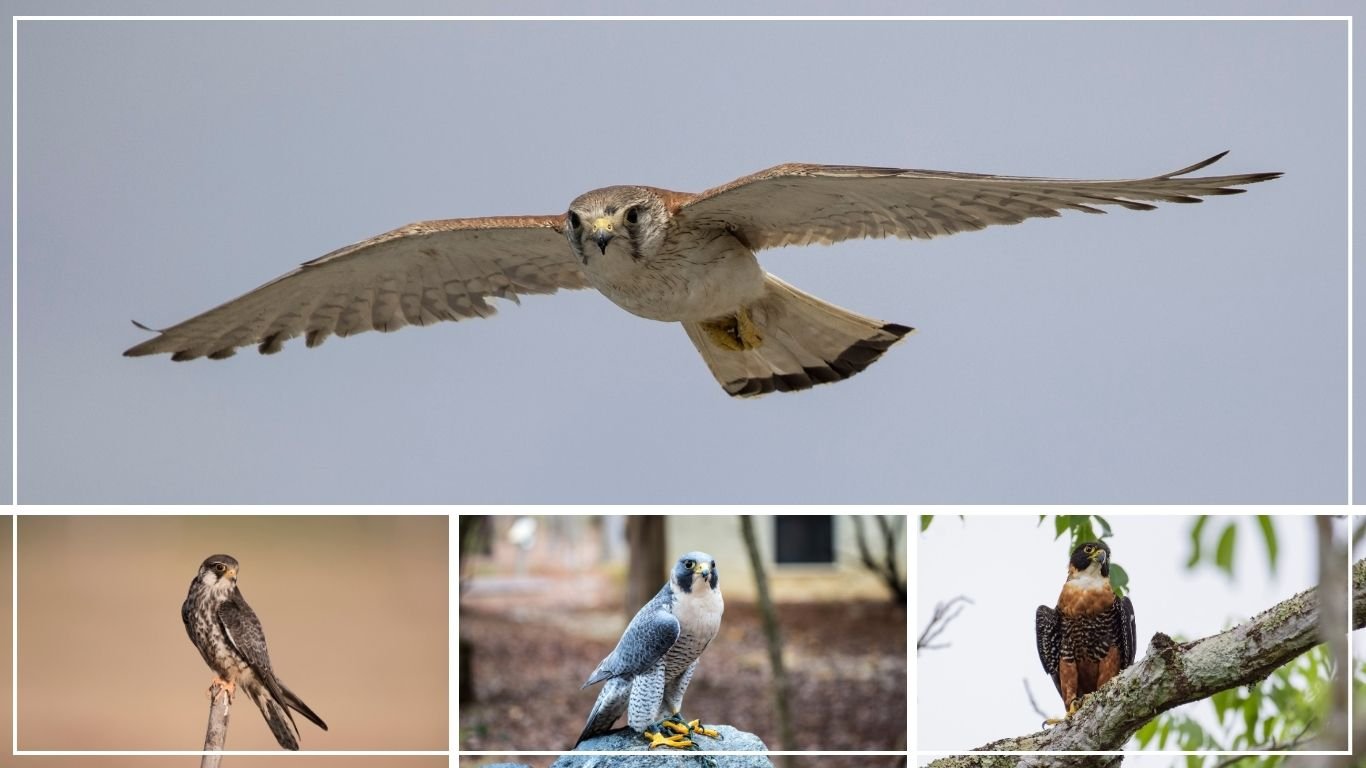
Falcons are nature’s precision hunters—fast, agile, and incredibly diverse. From the lightning-fast Peregrine to the colorful American Kestrel and elusive Grey Falcon, each species has its own hunting style and habitat. In this guide, you’ll discover 20 fascinating falcons found across the globe, with insights into their appearance, behavior, and where they live. Whether you’re a birder or just curious, these raptors will leave you amazed.
1. Peregrine Falcon (Falco peregrinus)

The Peregrine Falcon is one of the most famous and widespread birds of prey in the world. Known for its incredible speed and precision, it holds the title of the fastest bird on Earth, reaching diving speeds over 240 mph (386 km/h) during a hunt.
Identification
- Medium-sized raptor (14–19 inches long)
- Blue-gray back and wings
- Pale underparts with fine dark bars
- Distinct black “moustache” mark on the face
- Long, pointed wings and short tail
Habitat
Found on every continent except Antarctica. Inhabits coastal cliffs, mountains, river valleys, and increasingly urban environments, where it nests on tall buildings and bridges.
Behavior
A powerful aerial predator that primarily hunts birds mid-flight. Known for its dramatic stoops (diving attacks) and sharp talons. Solitary and territorial during breeding. Often uses the same nesting site year after year.
Color Pattern
Slate-blue upperparts and creamy underparts with dense black barring. The dark helmet and mustache stripe contrast sharply with its pale face, giving it a fierce, streamlined appearance in the sky.
2. American Kestrel (Falco sparverius)

The American Kestrel is the smallest and most colorful falcon in North America. Despite its small size, it’s a fierce predator often seen perched on wires or hovering over fields in search of prey.
Identification
- Small size (8–12 inches long)
- Rufous back and tail
- Blue-gray wings in males; browner in females
- Two bold black facial stripes
- Long tail and pointed wings
Habitat
Common in open areas like meadows, farmlands, deserts, and grasslands. Also seen in suburban areas with open spaces and nest boxes.
Behavior
Often hovers in place while hunting for insects, small mammals, and birds. Known for bobbing its head and tail while perched. Nests in cavities, often using old woodpecker holes or nest boxes.
Color Pattern
Males are brightly colored with blue wings and rusty backs, while females have more uniform brown plumage. Both sexes show bold black-and-white markings on the face and tail.
3. Merlin (Falco columbarius)
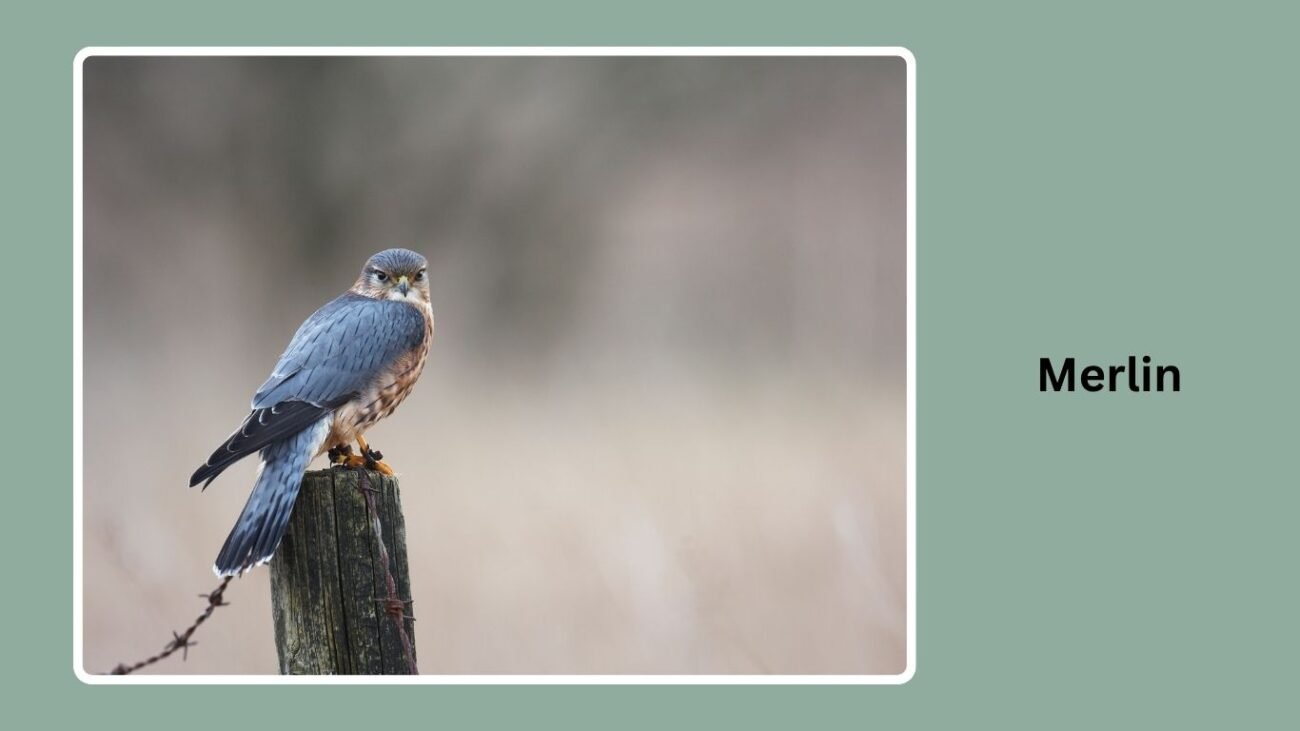
The Merlin is a compact, fast-flying falcon that specializes in surprise attacks. It’s found across the Northern Hemisphere and is especially well-known for its swift, low-altitude hunting style.
Identification
- Small to medium size (9–12 inches long)
- Stout, muscular body with pointed wings
- Males: slate-gray back, pale underparts with dark streaks
- Females and juveniles: browner overall with heavy streaking
- Narrow tail with dark bands
Habitat
Breeds in northern forests, grasslands, and tundra. Winters in open fields, urban parks, and coastal areas. Adapts well to various habitats as long as prey is abundant.
Behavior
Chases small birds in rapid, low-level pursuits. Often hunts in open spaces and may ambush prey near bird feeders. Less vocal and showy than other falcons.
Color Pattern
Dark, streaky underparts and barred tail distinguish it from similar species. Males have blue-gray backs, while females and juveniles are rich brown. The overall look is bold and powerful despite its size.
4. Gyrfalcon (Falco rusticolus)

The Gyrfalcon is the largest falcon species in the world and a powerful predator of the Arctic tundra. It comes in a range of color morphs, from pure white to dark gray, and is revered for its strength and hunting skills.
Identification
- Large size (19–25 inches long)
- Thick body with broad wings
- Color morphs: white, gray, dark gray, and blackish
- Heavily marked underparts with bold streaks or spots
- Strong, hooked bill and heavily feathered legs
Habitat
Breeds in Arctic tundra regions of North America and Eurasia. In winter, may move south to coastal cliffs, open plains, and mountainous areas.
Behavior
Preys on large birds such as ptarmigans and ducks. Uses both powerful pursuits and stealth attacks. Often nests on cliffs and ledges far from human disturbance.
Color Pattern
Plumage varies widely—white morphs are snowy with dark spots, while gray morphs are slate-colored with barred underparts. The thick, bulky build and fierce look are unmistakable.
5. Eurasian Hobby (Falco subbuteo)
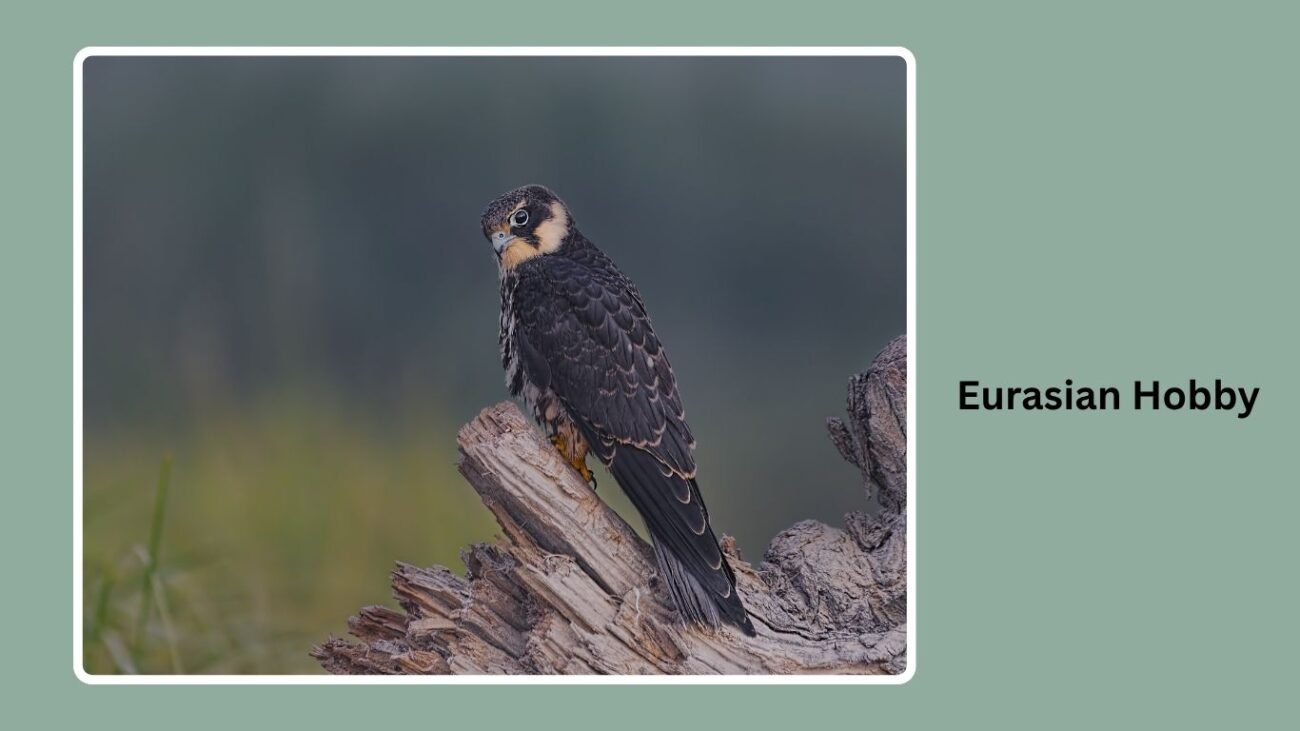
The Eurasian Hobby is a sleek, swift falcon known for catching insects and small birds mid-flight. It’s admired for its agility and graceful hunting style, often seen darting over open fields or wetlands.
Identification
- Medium size (10–13 inches long)
- Long, pointed wings and tail
- Blue-gray upperparts and black-streaked white underparts
- Rufous “trousers” on legs
- Bold black facial stripe
Habitat
Breeds in woodlands and open countryside across Europe and Asia. Winters in sub-Saharan Africa and southern Asia, favoring wetlands, savannas, and grasslands.
Behavior
Feeds on dragonflies, swallows, and other small flying prey. Hunts mostly in the evening or early morning with fast, agile flight. Nests in old crow or magpie nests.
Color Pattern
Dark back, white chest with vertical streaks, and reddish thighs give it a distinctive, handsome look. The strong contrast and slim build set it apart in flight.
6. Lanner Falcon (Falco biarmicus)

The Lanner Falcon is a powerful and versatile bird of prey found across Africa, parts of southern Europe, and the Middle East. Known for its speed and hunting efficiency, it’s a favorite among traditional falconers and often confused with the Saker Falcon due to similar appearance.
Identification
- Size: 15–20 inches long
- Wingspan: 3.5–4 feet
- Blue-gray back and wings (in adults)
- Pale underparts with brown streaks
- Cream-colored head with a dark mustache and crown
Habitat
Prefers open savannas, deserts, grasslands, and rocky outcrops. Found near cliffs or mountainous terrain, where it nests on ledges. Occasionally spotted in semi-arid farmlands.
Behavior
A fierce hunter that preys on birds and small mammals, often in cooperative pairs. Attacks prey in fast horizontal chases rather than dramatic dives. Highly territorial during nesting. Uses speed and surprise more than height.
Color Pattern
Adults have a contrasting pale head and reddish nape with a dark malar stripe. The body is lightly streaked below, with sandy, earthy tones on the back and wings, making it well-camouflaged in arid environments.
7. Saker Falcon (Falco cherrug)

The Saker Falcon is a large, powerful falcon native to Eurasian steppes and semi-deserts. A prized bird in Middle Eastern falconry, it is also one of the most threatened falcon species due to trapping and habitat loss.
Identification
- Size: 18–24 inches long
- Wingspan: 3.5–4.5 feet
- Broad-chested and muscular build
- Brown upperparts with paler, streaked underparts
- Pale face with faint or broken dark mustache stripe
Habitat
Occupies dry, open country—steppes, grasslands, and desert edges from Eastern Europe to Central Asia. Often nests on cliffs or in old raptor nests. Winters in the Middle East, India, and North Africa.
Behavior
Aggressive hunter of medium-sized birds, hares, and ground squirrels. Hunts with direct, high-speed attacks. Unlike peregrines, Sakers use lower, faster chases close to the ground. Loyal to nesting territories and often return to the same site annually.
Color Pattern
Typically brown above and buffy white below, with fine brown streaking. Juveniles are darker and more uniform, while adults lighten with age. Their earthy tones make them blend seamlessly into steppe environments.
8. Prairie Falcon (Falco mexicanus)

The Prairie Falcon is a fierce and adaptable raptor native to the arid and semi-arid regions of western North America. It’s similar in shape to the Peregrine Falcon but is lighter in build and better suited for life in dry, open habitats.
Identification
- Size: 15–20 inches long
- Wingspan: 3.5–4 feet
- Brown upperparts with pale underparts and dark spotting
- Dark armpit patches visible in flight
- Bold facial stripe and pale eyebrow
Habitat
Inhabits deserts, prairies, open grasslands, canyons, and dry mountain foothills across the western United States and parts of Mexico. Nests on cliffs or steep rock ledges.
Behavior
Hunts birds, lizards, and small mammals like ground squirrels, using fast low-level attacks. Known for its powerful wingbeats and stamina in flight. Often seen perched on fence posts or rock outcroppings scanning the landscape.
Color Pattern
Earthy brown above and creamy below, with dark mottling. The underwing’s dark “armpits” are a key field mark when it’s flying overhead.
9. Red-footed Falcon (Falco vespertinus)

The Red-footed Falcon is a striking small falcon of eastern Europe and central Asia, best known for its sexual dimorphism—males and females look distinctly different. It migrates to southern Africa for winter.
Identification
- Size: 11–13 inches long
- Wingspan: About 2.5 feet
- Male: Slate-gray body with red legs and eye-ring
- Female: Pale head, rusty underparts, and gray back
- Both have slender builds and pointed wings
Habitat
Breeds in open lowlands, steppes, and farmlands with scattered trees. Winters in southern Africa in open savannas and wetlands. Prefers areas with abundant insects.
Behavior
Feeds mainly on flying insects like dragonflies and beetles. Often hovers while hunting and is agile in the air. Nests colonially, frequently using old crow or rook nests.
Color Pattern
The male’s solid bluish-gray and red accents contrast beautifully with the female’s warmer, buff and rust hues. Their plumage and colony-nesting behavior make them stand out among falcons.
10. Eleonora’s Falcon (Falco eleonorae)

Eleonora’s Falcon is a graceful, long-distance migrant named after a medieval Sardinian ruler who protected birds of prey. It’s notable for its late summer breeding cycle, timed with autumn bird migrations that provide food for its chicks.
Identification
- Size: 13–15 inches long
- Wingspan: 3.2–3.5 feet
- Two morphs: dark (all blackish-brown) and pale (gray back with pale underside)
- Long, narrow wings and tail
- Slim body and black facial markings
Habitat
Breeds on rocky Mediterranean islands and sea cliffs. Winters in Madagascar and East Africa. Prefers coastal and island habitats far from human disturbance.
Behavior
Feeds mainly on small migrating birds during breeding season and large insects during winter. Often hunts in the evening with swift, acrobatic chases. Nests on cliff ledges, sometimes in loose colonies.
Color Pattern
Dark morphs are chocolate brown, while pale morphs have grayish upperparts with buff underparts and light streaking. Both have long wings and elegant flight, easily recognized by shape and behavior.
11. Bat Falcon (Falco rufigularis)

The Bat Falcon is a small, powerful falcon native to tropical forests in Central and South America. True to its name, it often hunts bats, but it also catches birds and large insects with impressive agility.
Identification
- Size: 9–12 inches long
- Wingspan: Around 2 feet
- Blackish back and head with a white collar
- Rich orange-rufous chest and legs
- Short, hooked bill and dark eyes
Habitat
Inhabits tropical lowland forests, forest edges, and river valleys from Mexico to northern Argentina. Often seen perched high on dead snags or treetops overlooking open areas.
Behavior
Hunts at dawn and dusk, especially targeting bats as they leave or return to roost. Also preys on birds, insects, and occasionally reptiles. Quick, agile flier that can catch prey mid-air in dense forest gaps.
Color Pattern
Glossy black upperparts with a contrasting white throat and orangey underparts. Juveniles are browner and duller. Its bold coloring and small but fierce build make it a standout in tropical skies.
12. Aplomado Falcon (Falco femoralis)

The Aplomado Falcon is a long-legged, elegant falcon found across the grasslands and savannas of South and Central America, with reintroduction efforts underway in parts of the southwestern U.S. It resembles a small hawk but moves with the speed and finesse of a falcon.
Identification
- Size: 14–18 inches long
- Wingspan: About 3 feet
- Slate-gray back, white face with a bold black mask
- Reddish underparts and thighs (“aplomado” means “lead-colored” in Spanish)
- Long tail with white bands
Habitat
Found in open habitats like savannas, deserts, scrublands, and marsh edges from Argentina to northern Mexico. In the U.S., reintroduced populations exist in Texas and New Mexico.
Behavior
Hunts birds, insects, and small mammals—often in pairs using clever tactics like flushing prey. Also known to steal from other raptors. Nests in trees, cliffs, or even man-made platforms.
Color Pattern
The striking black-and-white facial pattern, red belly, and sleek shape make it easy to identify. Its contrasting dark wings and banded tail are bold in flight.
13. Collared Falconet (Microhierax caerulescens)
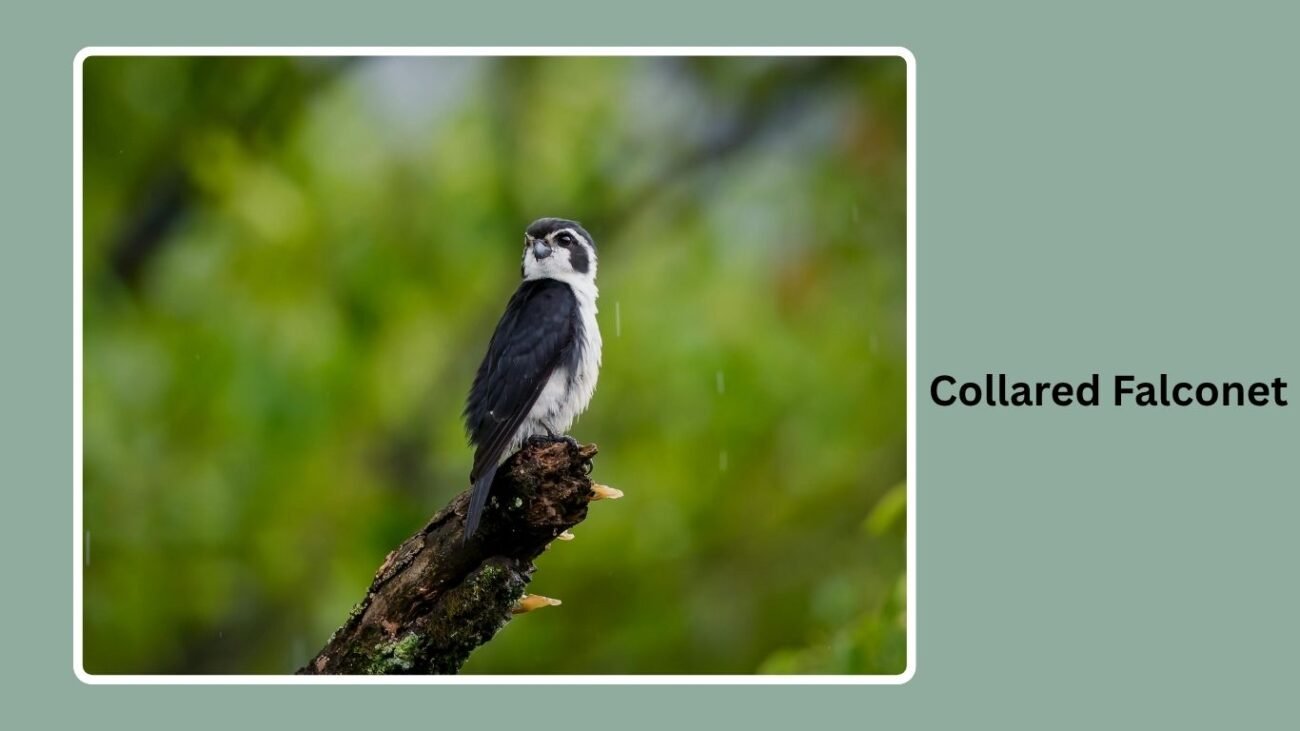
The Collared Falconet is one of the smallest raptors in the world, native to the forests of South and Southeast Asia. Despite its tiny size, it’s a fierce and agile predator with bold markings.
Identification
- Size: 6–7 inches long
- Wingspan: About 1 foot
- Black back and crown, white face and underparts
- Broad white collar around the neck
- Short tail and strong, curved bill
Habitat
Found in foothill forests, clearings, and forest edges of the Himalayas, northeast India, Myanmar, and Thailand. Often perches on exposed branches or tree tops.
Behavior
Feeds on insects, small lizards, and occasionally small birds. Waits patiently on perches, then makes swift, precise attacks. May be seen in small groups or pairs.
Color Pattern
Compact body with bold black, white, and chestnut markings. The white collar and face contrast sharply with the dark upperparts, giving it a striking appearance despite its size.
14. New Zealand Falcon (Falco novaeseelandiae)
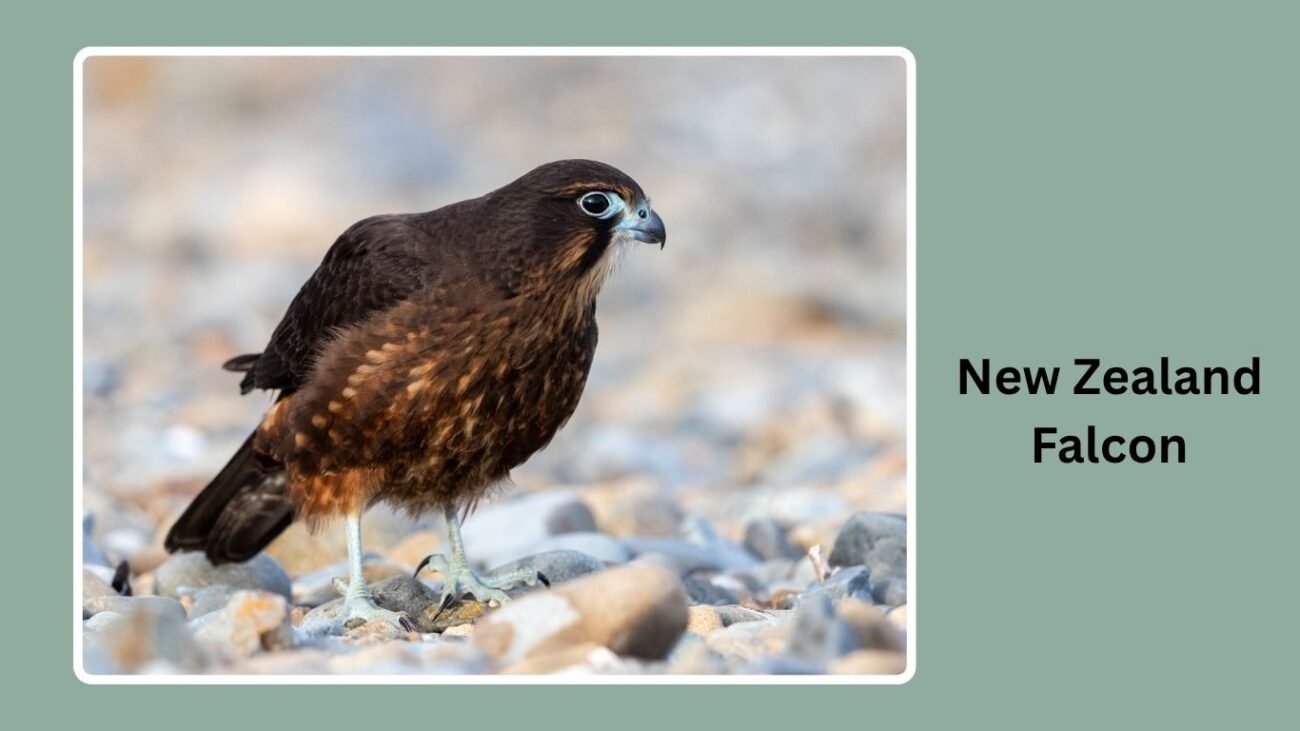
Also known as the Kārearea, the New Zealand Falcon is a fast, fierce raptor endemic to New Zealand. It’s known for hunting in dense forests as well as open country and is culturally significant to the Māori people.
Identification
- Size: 15–18 inches long
- Wingspan: About 2.5 feet
- Dark brown back and wings
- Streaked cream-colored underparts
- Yellow eye-ring and legs with a hooked dark bill
Habitat
Occurs in a range of habitats across New Zealand including forests, tussock grasslands, farmland, and even urban areas. Nesting often occurs on the ground or cliff ledges.
Behavior
Powerful flyer and aggressive hunter—known to attack prey mid-air and even challenge much larger birds. Feeds on birds, insects, and small mammals. Very territorial during breeding.
Color Pattern
Dark chocolate brown above, pale and heavily streaked below. The bold eyes and yellow cere give it a striking, intense expression.
15. Barbary Falcon (Falco pelegrinoides)
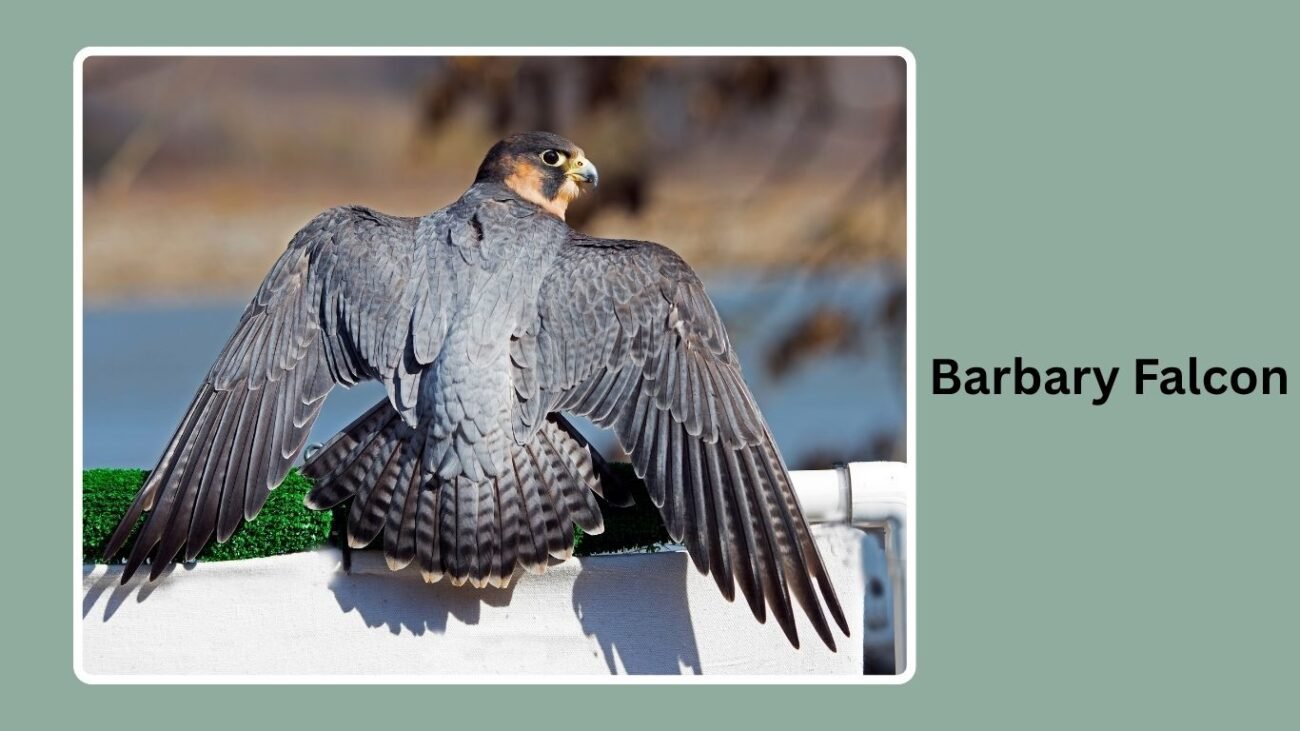
Closely related to the Peregrine Falcon, the Barbary Falcon is found in arid parts of North Africa, the Middle East, and Central Asia. It is slightly smaller and paler than its cousin and adapted to desert and mountain life.
Identification
- Size: 13–15 inches long
- Wingspan: Around 3 feet
- Pale bluish-gray upperparts
- Buff underparts with light streaking
- Black facial mustache and crown
Habitat
Inhabits deserts, dry mountains, and rocky cliffs. Prefers arid, open terrain near coastlines or highlands. Occasionally nests on buildings in urban areas of the Middle East.
Behavior
Hunts birds in flight, especially pigeons and small songbirds. Uses a stoop like the Peregrine but is more common in hot, dry regions. Solitary and territorial, often returning to the same cliff nest year after year.
Color Pattern
Lighter overall than the Peregrine Falcon, with warmer buff tones on the chest and face. The combination of soft coloring and desert adaptations makes it distinctive.
16. Laggar Falcon (Falco jugger)
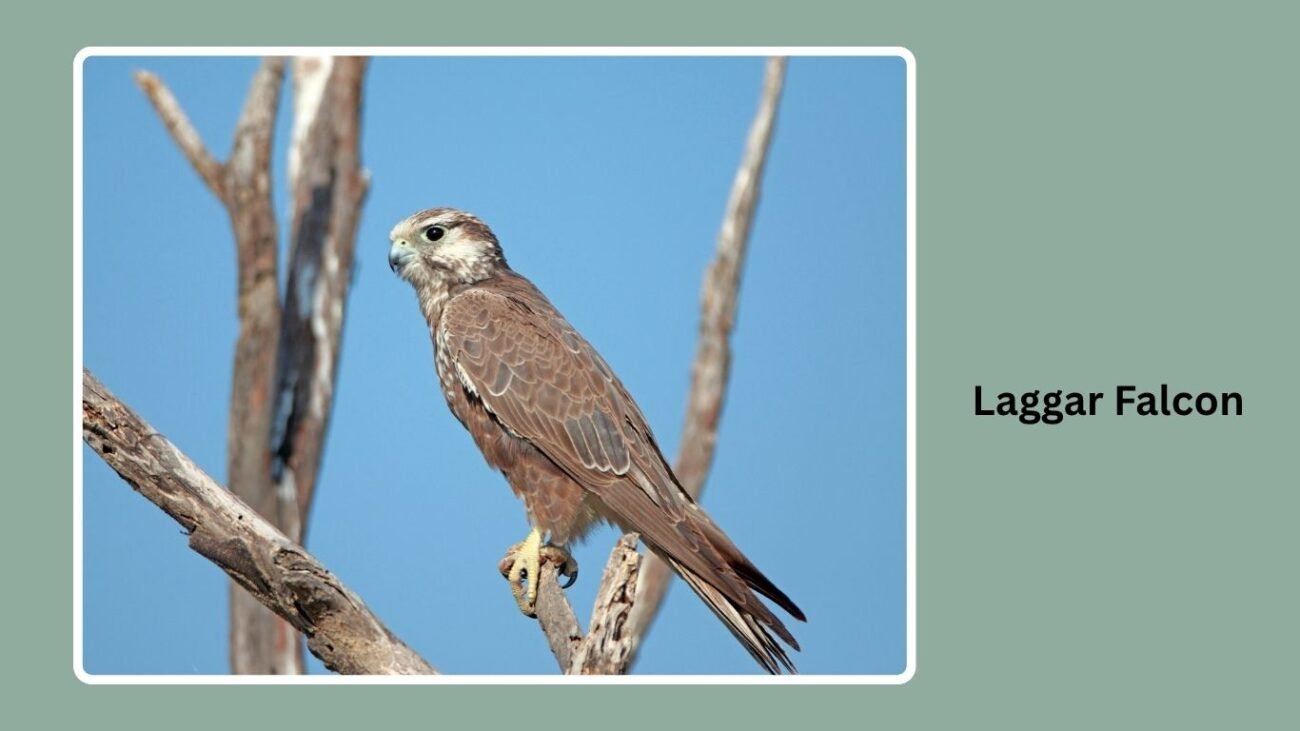
The Laggar Falcon is a robust, medium-sized falcon native to the Indian subcontinent. Once widespread, its population has declined due to habitat loss and hybridization with escaped falconry birds.
Identification
- Size: 15–18 inches long
- Wingspan: About 3.5 feet
- Dark brown upperparts
- Pale, streaked underparts
- Thick “moustache” mark and bluish cere
Habitat
Found in open country, dry plains, agricultural fields, and foothills across India, Pakistan, and Nepal. Often nests on cliffs, buildings, or large trees.
Behavior
Feeds on birds, rodents, and large insects. Hunts in open airspace using speed and agility. Tolerant of human-altered environments but less common than in past decades.
Color Pattern
Dusky brown overall with buffy underparts and streaking. Juveniles are darker with more uniform tones. Often confused with juvenile Peregrines but with heavier build and duller plumage.
17. Orange-breasted Falcon (Falco deiroleucus)
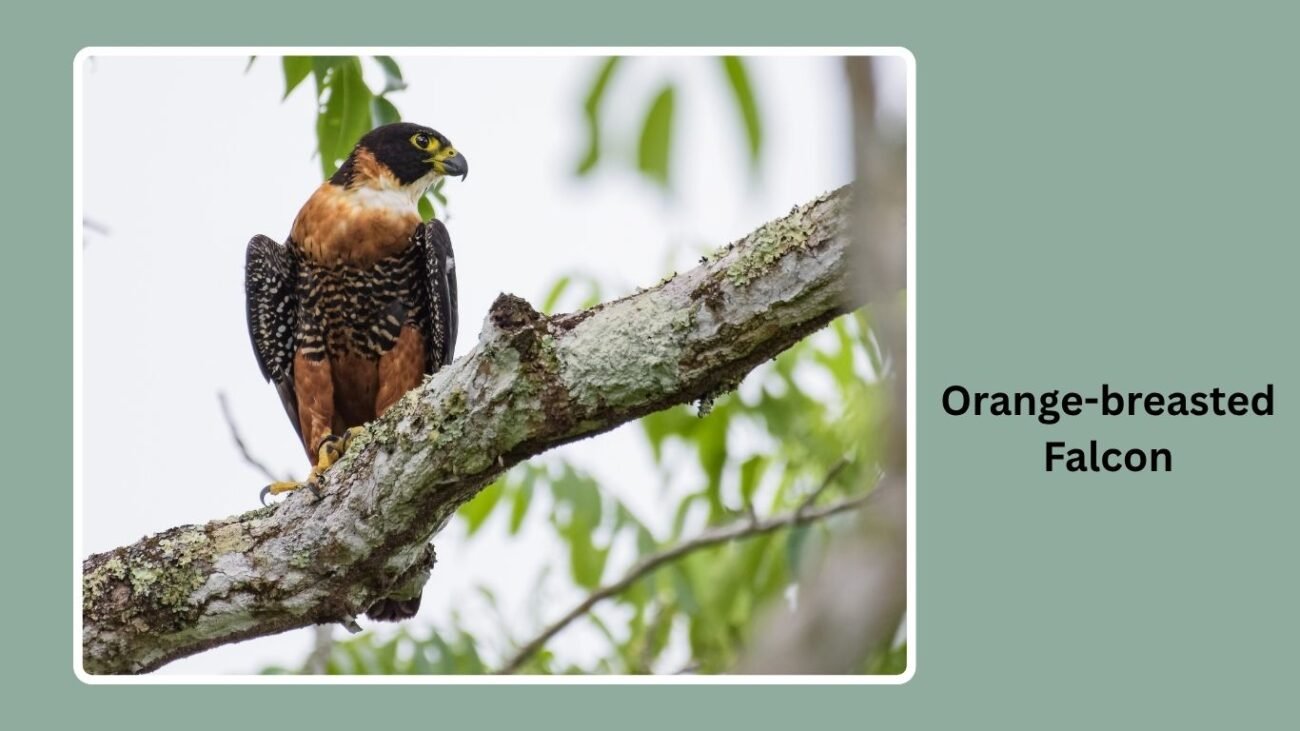
The Orange-breasted Falcon is a rare, forest-dwelling falcon of Central and South America. It’s strikingly beautiful and powerful, yet one of the least studied falcons due to its elusive nature.
Identification
- Size: 14–17 inches long
- Wingspan: Around 3 feet
- Glossy black back and head
- Bright orange chest and thighs
- White throat and strong facial markings
Habitat
Resides in tropical rainforests and cliffside habitats from southern Mexico to northern Argentina. Most frequently found in high-canopy or vertical cliff zones.
Behavior
Feeds primarily on small to medium birds caught mid-flight. Prefers forest edges and open air above the canopy. Typically nests on cliffs or tall forest trees.
Color Pattern
Boldly patterned: dark back, vibrant orange underside, and a white throat patch bordered by a black malar stripe. Their vivid coloration and rarity make them highly sought after by birders.
18. Nankeen Kestrel (Falco cenchroides)
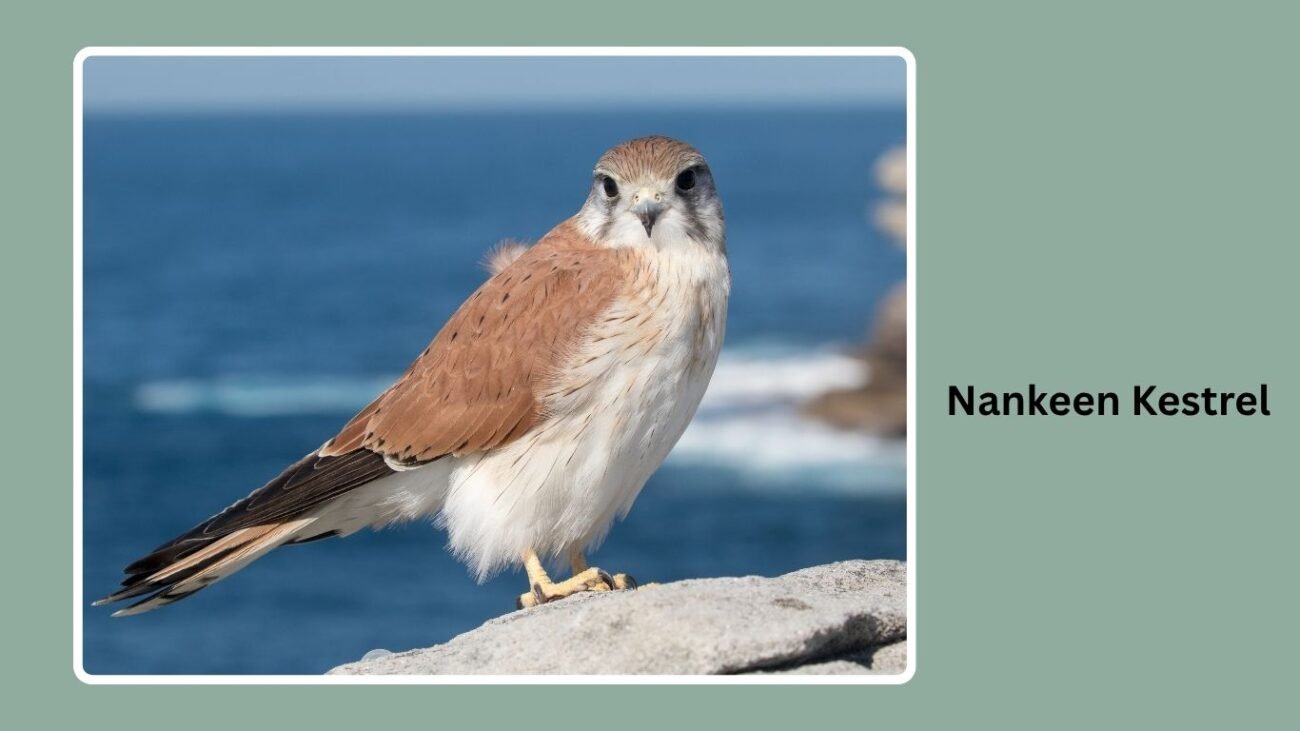
The Nankeen Kestrel, also known as the Australian Kestrel, is a small and slender falcon commonly found across Australia. It’s often seen hovering over open landscapes, searching for prey with exceptional eyesight.
Identification
- Size: 11–13 inches long
- Wingspan: 26–31 inches
- Rufous back and crown with black streaks
- Pale underparts with light spotting
- Narrow black bars on tail and wingtips
Habitat
Widespread across Australia in grasslands, coastal cliffs, farmland, deserts, and urban areas. Also found in parts of New Guinea and nearby islands.
Behavior
Known for its ability to hover in place while scanning the ground. Feeds on insects, small mammals, reptiles, and occasionally small birds. Often perches on fences, poles, or wires.
Color Pattern
Warm rufous upperparts contrast with creamy, lightly speckled underparts. Males are slightly paler and sleeker than females, but both share the same distinct markings.
19. Grey Falcon (Falco hypoleucos)
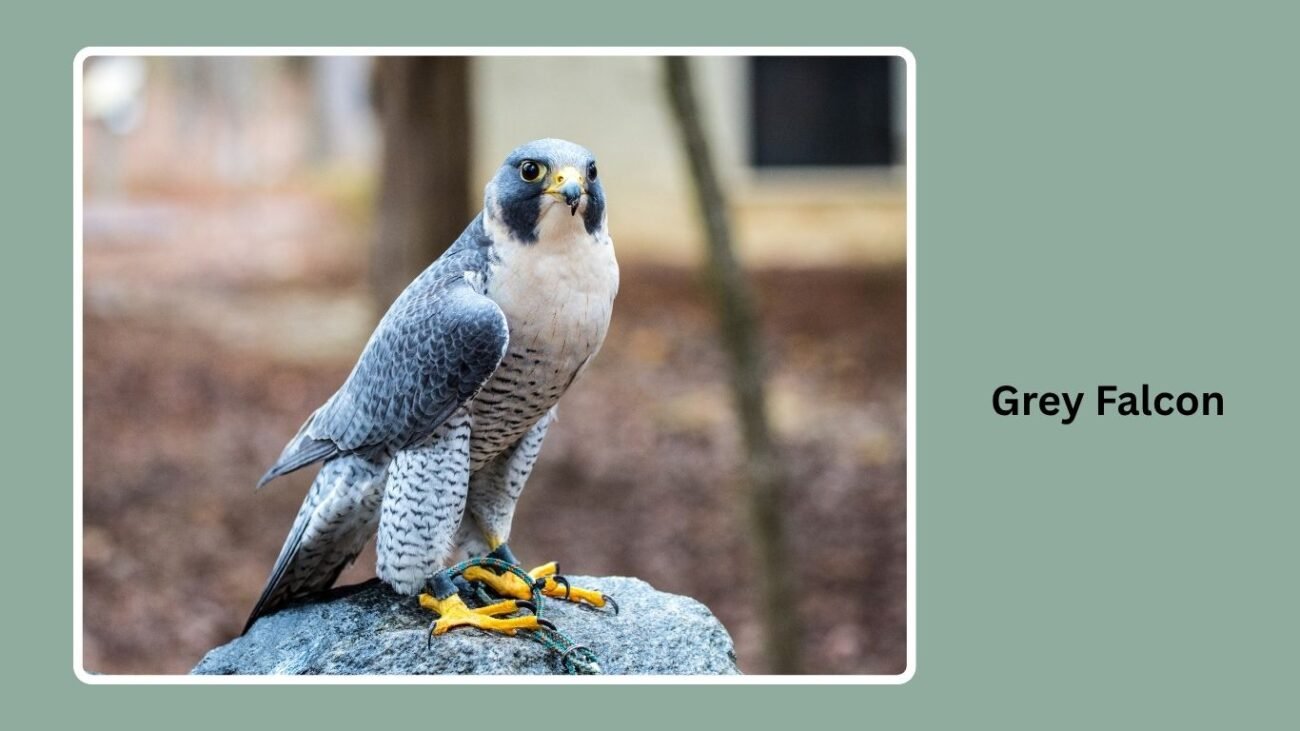
The Grey Falcon is one of the rarest and most elusive raptors in Australia. Adapted to life in arid inland regions, this pale falcon is built for speed and long-distance flight across the vast outback.
Identification
- Size: 14–16 inches long
- Wingspan: About 3 feet
- Pale gray overall with subtle barring
- Yellow cere, eye-ring, and legs
- Short tail and long wings
Habitat
Found in the dry interior of Australia, particularly in desert woodlands, savannas, and remote cattle stations. Rare and sparsely distributed.
Behavior
Feeds mostly on small birds, reptiles, and insects. Hunts with swift, direct flight or ambushes from high perches. Often seen alone or in pairs, soaring silently over open country.
Color Pattern
Uniformly silvery-gray body with very light streaking or barring. Its soft tones blend well into arid landscapes, making it hard to spot even when in flight.
20. Amur Falcon (Falco amurensis)
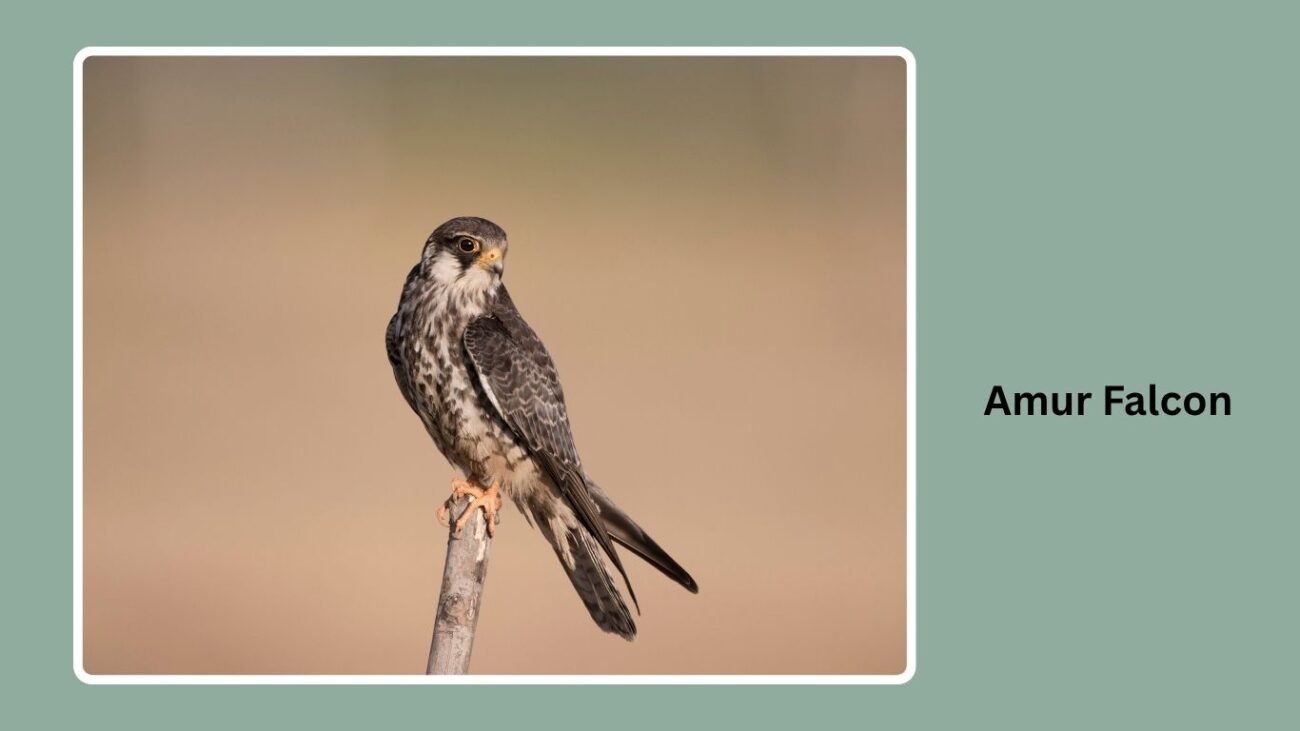
The Amur Falcon is a small, migratory falcon famous for its remarkable long-distance journey from East Asia to southern Africa. Agile and fast, it’s often seen in large flocks during migration, feeding on swarming insects.
Identification
- Size: 11–13 inches long
- Wingspan: About 2.5 feet
- Male: Dark gray body with red legs and under-tail
- Female: Gray back, streaked underparts, and orange eye-ring
- Both have pointed wings and slim build
Habitat
Breeds in eastern Russia, northern China, and Mongolia. Winters in southern Africa, passing through India in massive flocks. Prefers grasslands, farmlands, and forest edges during migration.
Behavior
Feeds primarily on insects, especially termites and locusts. Known for aerial acrobatics and group hunting. Roosts communally in trees or on wires during migration, sometimes in the thousands.
Color Pattern
Males are sleek and dark with bold reddish accents, while females are paler with heavy streaking. Their graceful flight and large flocks make them a spectacle during migration.


