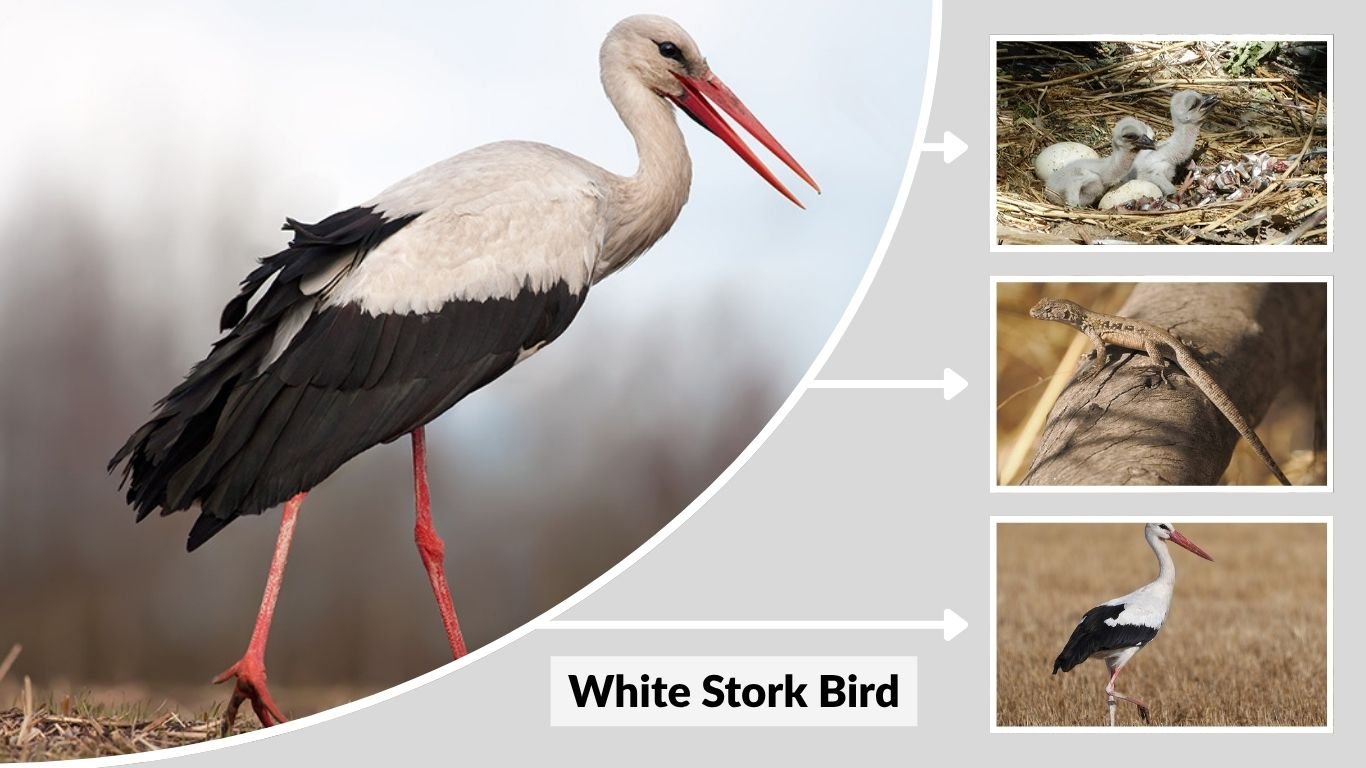
White storks are tall, graceful birds known for their long legs, large wings, and striking white and black feathers. They are commonly found across Europe, Asia, and Africa, especially during their migration seasons. These birds play an important role in the ecosystem as natural pest controllers. In this article, you’ll learn what white storks eat in the wild, how their diet changes with the seasons, and how human activities have influenced their food choices.
Overview of White Stork Feeding Behavior

Hunting Style and Techniques
White storks are opportunistic feeders. They mostly forage on the ground, walking slowly and using their long, pointed beaks to snatch prey. Instead of using speed or surprise, they rely on steady movement and keen eyesight to detect prey such as insects or small animals hiding in grass or shallow water.
Feeding Habits in the Wild vs. Human-Settled Areas
In natural settings like wetlands, grasslands, or farmlands, storks feed on a variety of small animals. However, in human-modified areas, especially in parts of Eastern Europe or North Africa, some white storks have learned to search for food in garbage dumps, agricultural fields, or even near roadsides. This shows how adaptable their feeding behavior can be.
Role of Vision and Beak in Finding Food
White storks have excellent eyesight, which helps them locate small moving prey even from a distance. Their long beaks are sensitive and precise, perfect for catching slippery fish, frogs, or digging into soft soil to pull out worms and insects.
Primary Diet of White Storks

White storks are carnivores and eat a wide variety of small animals. Their diet depends on what’s available in their habitat and season. Below are the main types of food they prefer:
Insects and Small Invertebrates
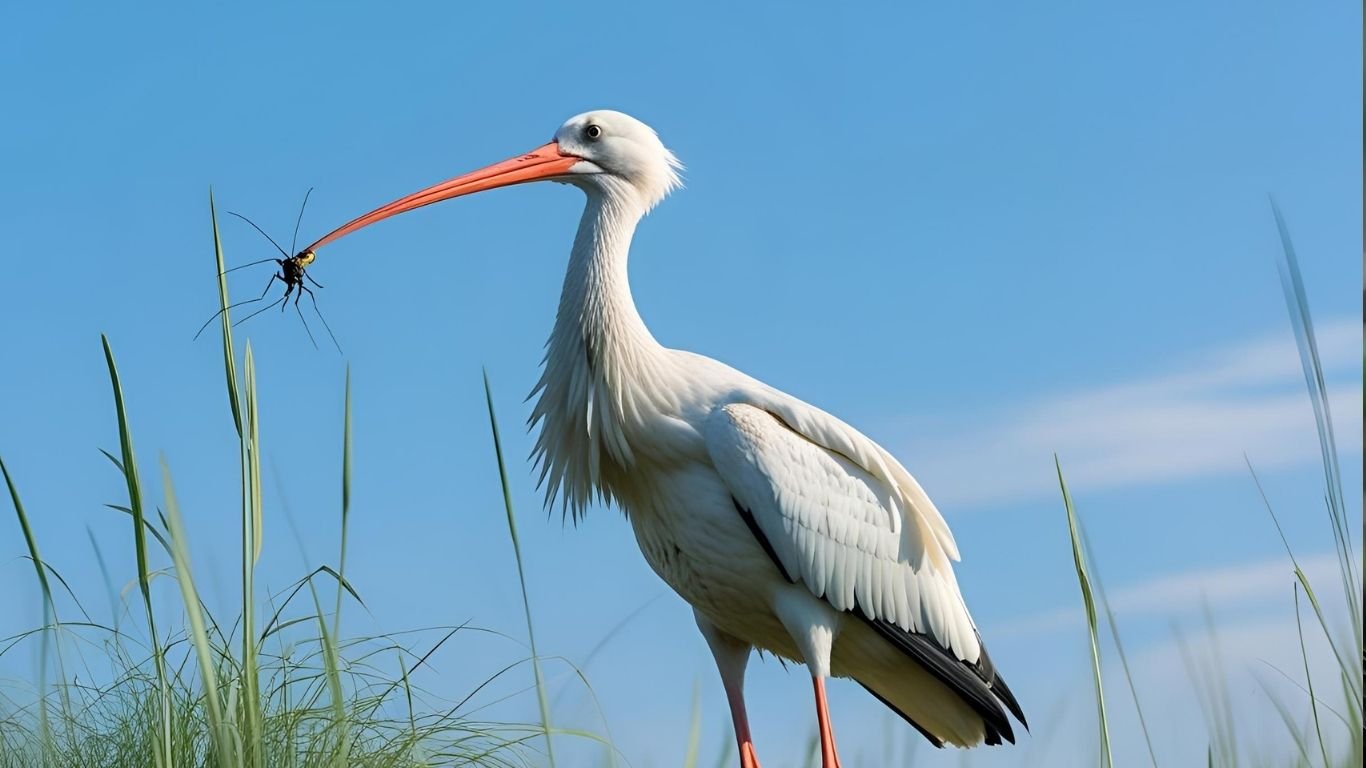
This is the most common part of a white stork’s diet, especially in spring and summer. They love:
- Grasshoppers
- Beetles
- Locusts
- Earthworms
- Crickets
These insects are easy to find in open fields and meadows and are a quick source of protein.
Amphibians and Reptiles
White storks often hunt near ponds, marshes, or rice fields. There, they feed on:
- Frogs
- Tadpoles
- Newts
- Small lizards
- Occasionally small snakes
These provide more nutrition and are especially important during breeding season when adult storks need extra energy.
Small Mammals
When available, white storks will also eat rodents such as:
- Mice
- Voles
- Shrews
- Young moles
These mammals are found in grassy fields or near farms and give storks a high-protein meal.
Diet of Young White Storks (Chicks)
How Parents Feed the Chicks
Parent storks feed their chicks by regurgitating food directly into the nest. The chicks then pick the soft, semi-digested food from the ground of the nest or from the parent’s beak.
What Food Is Regurgitated
The regurgitated meal may include:
- Crushed insects
- Soft pieces of frogs or lizards
- Bits of small fish or worms
The food is easier for chicks to swallow and digest, especially during their first few weeks of life.
Growth Needs and Feeding Frequency
Young storks grow quickly, and their feeding needs increase rapidly. Parents may feed them several times a day, especially during their first 3–4 weeks. As chicks grow, they begin to eat larger and more solid pieces of food.
Seasonal and Regional Diet Differences
Food Sources During Breeding Season (Europe)
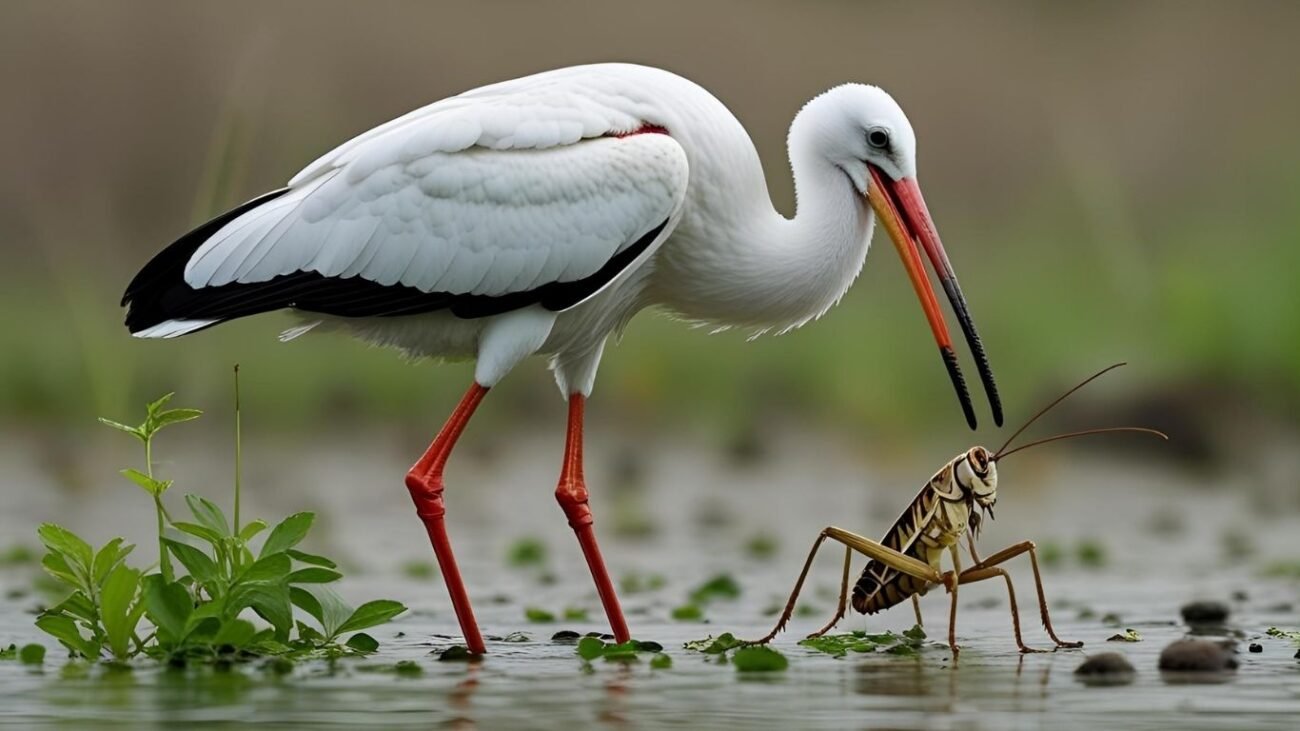
During spring and summer in Europe, white storks take advantage of the abundance of prey. Fields, meadows, and wetlands are full of:
- Earthworms after rain
- Grasshoppers and beetles
- Frogs and tadpoles in shallow water
- Rodents like field mice
This high-protein diet helps them stay energized while raising chicks.
Migratory Feeding Habits (Africa and Asia)
In winter, white storks migrate to Africa or parts of southern Asia. There, their diet changes based on the environment. In dry savannas or semi-arid regions, they may rely more on:
- Locusts and other large insects
- Reptiles like lizards
- Occasional carrion or roadkill
In rice paddies or wetter areas, they continue feeding on frogs, fish, and aquatic insects.
Urban vs. Rural Diet Shift
In modern times, storks living near human settlements have adjusted their diet. In rural farmlands, they follow plowing tractors to catch exposed worms and bugs. In urban or suburban zones, some storks feed at garbage dumps, where they may consume:
- Rotten meat scraps
- Food packaging (accidentally)
- Small bones or leftover bread
This shift can sometimes be harmful, especially when they ingest plastic or spoiled food.
Impact of Human Activity on Diet
Feeding on Landfills and Waste Sites
In several European countries, white storks are frequently seen near landfills. These places offer an easy but risky source of food. Storks may become dependent on garbage and stop migrating, which can affect their natural cycles.
Threats from Eating Harmful Human Waste
White storks sometimes eat:
- Plastic wrappers
- Toxins from decaying food
- Pieces of glass or sharp metal
These can injure their digestive systems or cause long-term health issues.
Adaptation in Agricultural Landscapes
Not all human impact is negative. In farm areas, irrigation systems and flooded rice fields create ideal feeding spots. White storks also benefit when farmers use fewer pesticides, increasing the insect population.
Role of White Stork Diet in Ecosystem
Pest Control Benefits
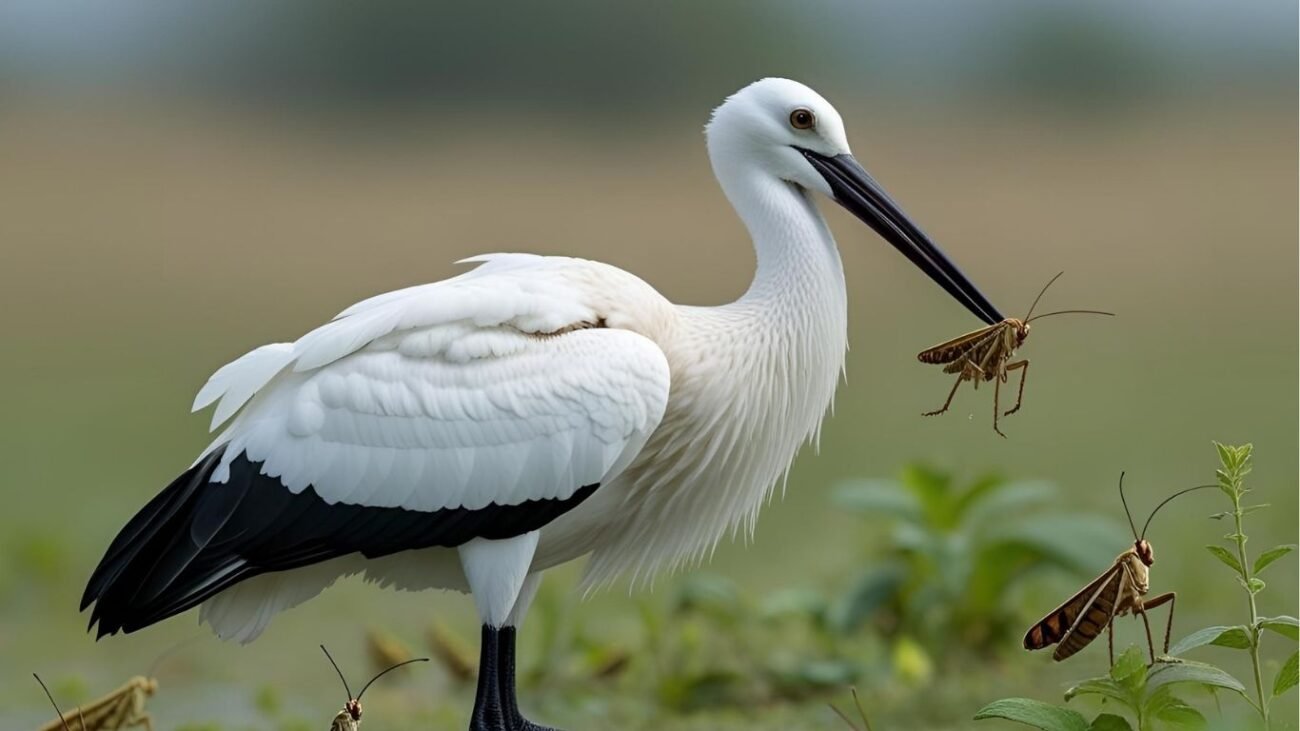
By eating large numbers of insects, rodents, and frogs, white storks help control pests naturally. Farmers often welcome their presence, especially during insect outbreaks or rodent seasons.
Ecological Balance
White storks are part of a delicate food chain. They help keep populations of small animals in check, which in turn supports the balance of grassland and wetland ecosystems.
Risks of Imbalanced Diet in Human-Modified Areas
When storks depend too much on human waste, their health declines. It also reduces their role as natural hunters and weakens their ability to migrate or raise healthy chicks.
FAQs:
1. Do white storks eat snakes?
Yes, white storks do eat snakes, but only small and non-venomous species. Snakes are part of their diet, especially in warmer regions where reptiles are more abundant. Storks usually swallow them whole after striking them with their sharp beak. They prefer easier prey, but when food is limited, snakes can be a valuable protein source.
2. What do baby white storks eat?
Baby white storks, also called chicks, don’t hunt for themselves. Their parents regurgitate food into the nest for them. This food is usually soft and partially digested, making it easier for the chicks to consume. It often includes crushed insects, tiny frogs, bits of fish, and soft-bodied worms. As the chicks grow, the parents bring more solid food until the young can handle full-sized prey.
3. Can white storks eat bread or human food?
White storks may eat bread or food scraps if they forage near landfills or urban areas, but it’s not healthy for them. Bread lacks the nutrients they need and can lead to digestive problems. Processed human foods may also contain chemicals or preservatives that are harmful to wild birds. Long-term consumption of such items can weaken their immune systems and reduce their ability to reproduce.
4. Do white storks eat other birds?
While it’s rare, white storks have been known to eat the chicks or eggs of other small bird species, especially those nesting on the ground. This usually happens when other food sources are scarce. However, storks do not regularly hunt birds and this behavior is considered opportunistic rather than common.
5. What is the stork’s role in controlling pests?
White storks help keep ecosystems healthy by controlling pest populations. They feed on large numbers of insects such as grasshoppers, beetles, and locusts—many of which can damage crops. They also eat rodents like mice and voles, which are common farm pests. Their presence in agricultural areas can reduce the need for chemical pesticides, making them valuable allies to farmers and the environment.